How to Obtain Adjustment of Status and Work Permit
November 28, 2025
Adjustment of status and work permit applications can transform your immigration journey from temporary to permanent residence. The process involves multiple forms, strict deadlines, and complex eligibility requirements.
We at Law Offices of Jeffrey A. Thompson guide clients through every step of this life-changing process. Success depends on proper documentation, timing, and avoiding common pitfalls that delay approval.
Who Can Apply for Adjustment of Status
Adjustment of status eligibility centers on three primary pathways that determine whether you can apply for a green card while you remain in the United States. Marriage-based applications represent the fastest route, with immediate relatives of U.S. citizens who face no annual limits or waiting periods. Family preference categories for permanent residents typically wait 2-4 years according to current State Department data. Employment-based petitions depend heavily on priority dates, with EB-1 categories that move quickly while EB-3 applicants from India and China face decades-long backlogs.
Marriage-Based Green Card Applications
Spouses of U.S. citizens qualify as immediate relatives and can file Form I-485 immediately after marriage. The process requires proof of a bona fide marriage through joint financial accounts, lease agreements, and insurance policies. Conditional permanent residence applies to marriages under two years old, which require Form I-751 filing during the 90-day period immediately before your conditional residence expires. Same-sex marriages receive identical treatment after the 2013 Windsor decision. Spouses of permanent residents fall under family preference F2A category, which currently experiences minimal delays for most countries.
Employment Categories and Priority Date Requirements
Employment-based adjustment requires an approved Form I-140 petition and current priority date in your category. EB-1 extraordinary ability workers can self-petition and typically face no wait periods. EB-2 advanced degree holders need labor certification except for National Interest Waiver cases. EB-3 skilled workers experience the longest delays, particularly applicants from oversubscribed countries. Priority dates must be current in the Visa Bulletin before you file Form I-485, which makes proper calendar coordination essential for successful applications.
Asylum and Refugee Pathways
Asylum recipients can apply for adjustment one year after they receive asylum status through Form I-485. Refugees become eligible immediately upon arrival and must apply within one year of admission to the United States. Both categories require continuous physical presence and demonstration of good moral character. Derivative family members who were included in the original asylum or refugee case can apply simultaneously. These humanitarian categories face no numerical limitations, which makes them reliable pathways to permanent residence when applicants meet eligibility requirements.
Once you determine your eligibility pathway, the next step involves preparation of the actual application package and documentation requirements.
How Do You Complete the Application Process
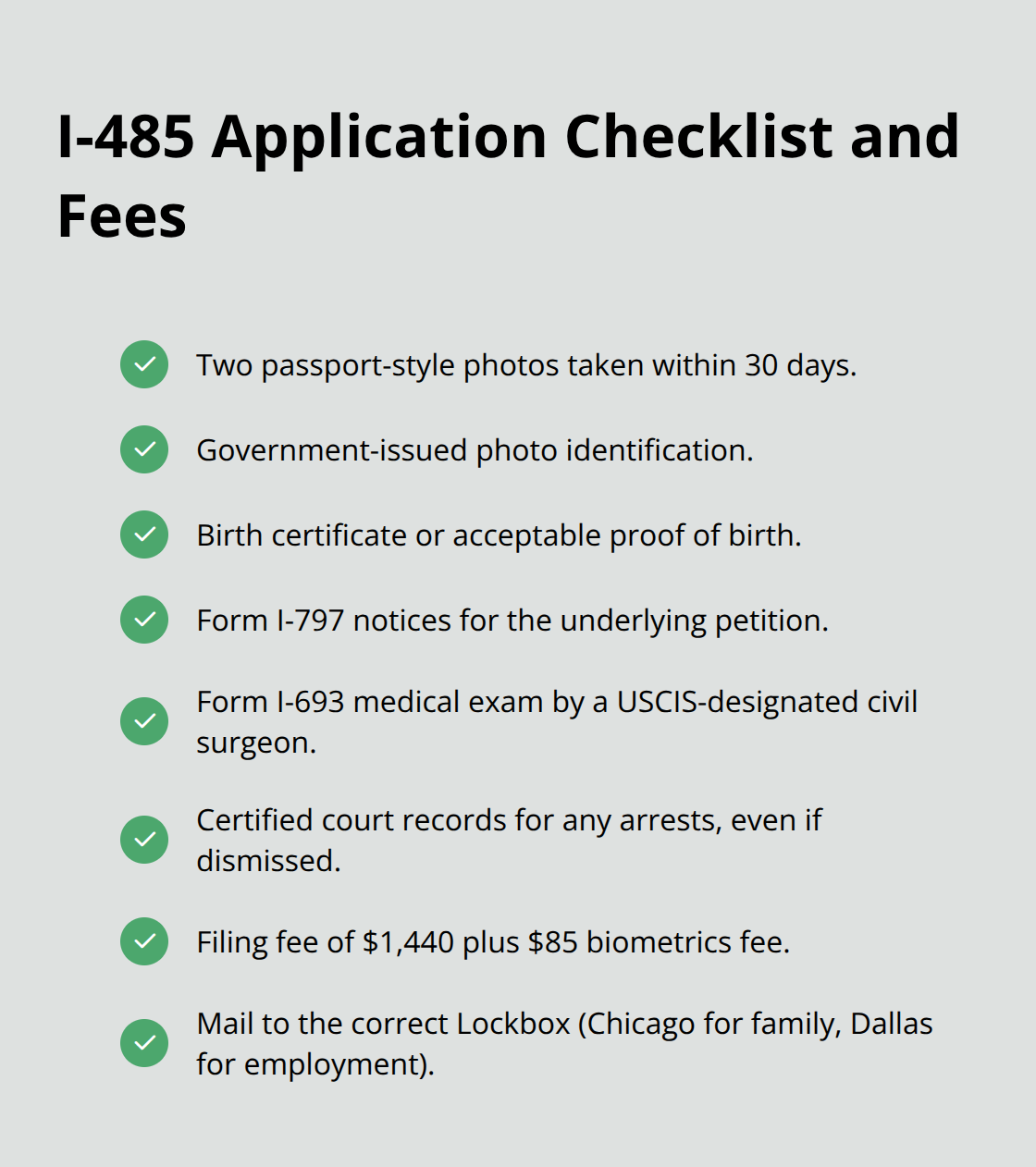
Form I-485 submission demands precise documentation and timing that determines your application’s success. You must submit two passport-style photographs taken within 30 days, government-issued photo identification, and birth certificate or equivalent proof of birth. Include Form I-797 approval or receipt notices for your underlying petition, plus Form I-693 medical examination completed by a USCIS-designated civil surgeon. Criminal history documentation must include certified court records for any arrests (even dismissed charges). The filing fee reaches $1,440 for most applicants, with biometrics services adding $85. Mail your complete package to the Chicago Lockbox facility for family-based cases or the Dallas Lockbox for employment-based applications within 30 days of filing your underlying petition if concurrent filing applies.
Biometrics and Interview Scheduling
USCIS schedules your biometrics appointment 4-6 weeks after they receive your I-485 application at their Application Support Centers nationwide. You should arrive 15 minutes early with your appointment notice and valid photo identification. Missing this appointment triggers automatic denial, though you can request one rescheduling for emergencies. Interview scheduling varies dramatically by field office, with New York and Los Angeles experiencing 18-24 month delays while smaller offices like Hartford process cases within 8-12 months. You must prepare original documents that match your submitted copies, including unexpired passports, marriage certificates with raised seals, and employment authorization letters.
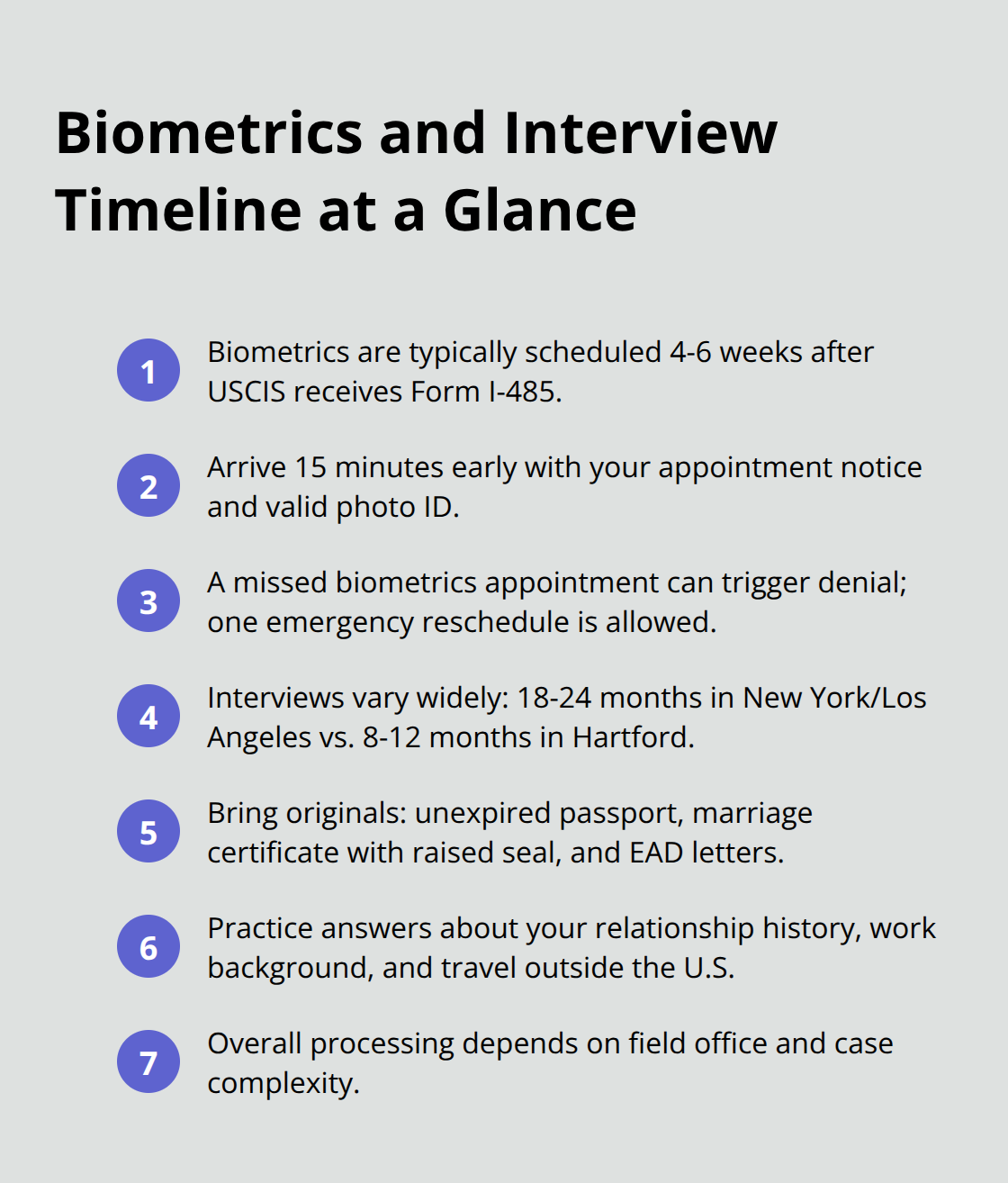
Practice answering questions about your relationship history, work background, and travel patterns outside the United States. The entire process can take several months depending on your field office and case complexity.
Employment Authorization During Processing
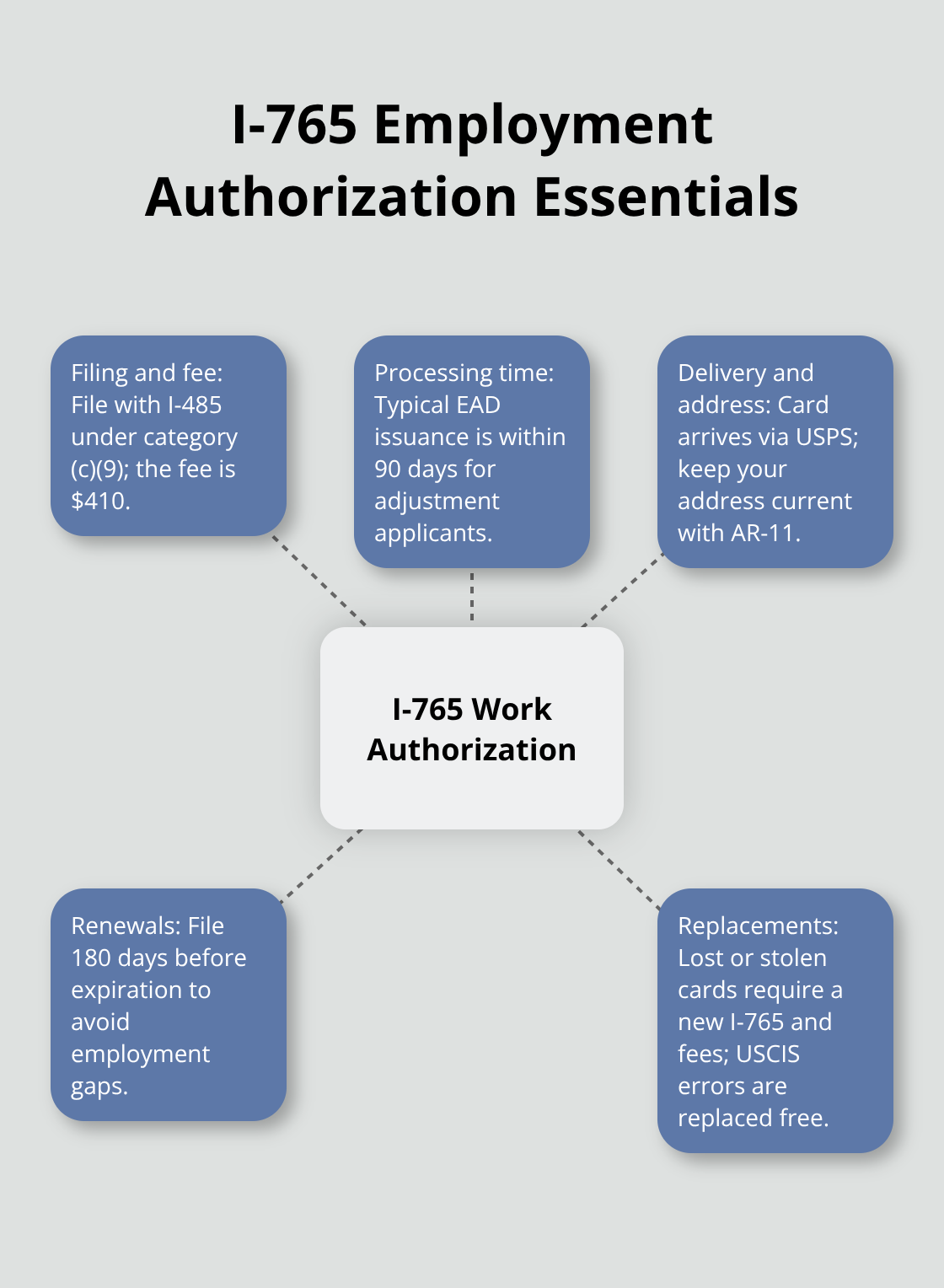
You should file Form I-765 concurrently with I-485 using category (c)(9) for adjustment applicants, which costs $410 and provides work authorization within 90 days. Submit identical photographs and documentation as your I-485 package to avoid processing delays. Your Employment Authorization Document arrives via USPS Priority Mail to your current address (making address updates essential through AR-11 forms). Renewal applications must be filed 180 days before expiration to prevent work authorization gaps. Lost or stolen EAD cards require new I-765 applications with full fees, while USCIS errors in card production qualify for free replacements through online service requests.
Even with perfect documentation and timing, many applicants face unexpected challenges that can derail their cases without proper preparation and response strategies.
What Obstacles Will You Face During Your Application
USCIS issues Requests for Evidence in adjustment cases, typically demanding additional proof of bona fide marriage, updated medical examinations, or financial documentation. You must respond within the exact timeframe specified (usually 87 days) with comprehensive evidence that directly addresses each point raised. Missing deadlines results in automatic denial without appeal rights. Processing delays stretch beyond posted timeframes in major metropolitan areas like New York and Los Angeles due to officer shortages and increased caseloads. Criminal history complications affect applicants, requiring certified court dispositions even for dismissed charges or expunged records. Immigration violations like overstays or unauthorized employment trigger inadmissibility grounds that demand waivers through Form I-601 applications, which add months to your timeline and cost $930 in additional fees.
Financial Support Documentation Challenges
Form I-864 Affidavit of Support denials occur when sponsors fail to meet 125% poverty guideline requirements or provide insufficient tax documentation. Joint sponsors become necessary when primary petitioners earn below the required income threshold for their household size according to poverty guidelines. Asset documentation must equal five times the income shortfall through bank statements, property appraisals, or stock portfolios with current market values. Household size calculations include the sponsor, spouse, unmarried children under 21, and all previous I-864 beneficiaries still requiring support. Self-employment income requires three years of tax returns plus profit-loss statements signed by certified accountants. Public benefits usage by sponsors within five years triggers additional scrutiny and potential contract enforcement actions against the sponsoring party.
Prior Immigration Violations
Unlawful presence calculations begin the day after authorized stay expires and trigger 3-year bars for 180-365 days or 10-year bars for over one year of unlawful presence. Immediate relatives of U.S. citizens receive forgiveness for unlawful presence but must still address other violations like unauthorized employment or visa fraud. Work without authorization requires detailed explanations and evidence of economic necessity, particularly for students who exceeded F-1 practical training limits. Multiple entries on tourist visas with extended stays create patterns that immigration officers interpret as preconceived intent to immigrate.
Medical Examination Complications
Civil surgeons must complete Form I-693 within 60 days of your adjustment interview, and expired medical reports require complete re-examination with new fees ($200-500 depending on location). Vaccination requirements include COVID-19, influenza, MMR, and Tdap shots that must be current according to CDC guidelines. Medical inadmissibility grounds include communicable diseases, mental disorders with harmful behavior, and drug abuse history that requires specialist evaluations. Class A medical conditions like active tuberculosis automatically bar adjustment until treatment completion and medical clearance.
Final Thoughts
Adjustment of status and work permit applications take 12-18 months from submission to approval, though processing times differ significantly by field office location. Family-based cases in smaller USCIS offices often complete within 8-12 months, while employment-based applications in major metropolitan areas extend beyond 24 months due to increased caseloads and officer shortages. Professional legal guidance becomes essential when you navigate complex documentation requirements, respond to Requests for Evidence, or address immigration violations that trigger inadmissibility grounds.
Immigration attorneys help prevent costly mistakes that lead to denials and lengthy delays in your permanent residence journey. We at Law Offices of Jeffrey A. Thompson provide comprehensive immigration law services to help clients overcome legal hurdles. Our dedicated representation covers every aspect of the adjustment process, from initial paperwork preparation through final approval.
Your immigration journey requires patience, attention to detail, and strategic planning throughout each phase of the application process (particularly during the documentation phase). Success depends on proper preparation, timely responses to USCIS requests, and maintenance of legal status while your case remains pending. The adjustment of status and work permit process demands careful coordination of multiple forms and deadlines to achieve your permanent residence goals.
Share this post: