How to Adjust Status with K1 Visa: Step-by-Step Guide
December 5, 2025
Getting married to a U.S. citizen on a K1 visa is just the beginning of your immigration journey. The next step involves adjusting your status to become a permanent resident.
We at Law Offices of Jeffrey A. Thompson have guided countless couples through the K1 visa adjustment of status step-by-step process. This comprehensive guide breaks down each requirement, form, and deadline you need to know to successfully transition from fiancé visa holder to green card recipient.
What Documents Do You Need for K1 Status Adjustment
The 90-day marriage requirement forms the foundation of your K1 status adjustment eligibility. You must marry the same U.S. citizen who filed your original I-129F petition within this strict timeframe. Missing this deadline permanently disqualifies you from status adjustment in the United States.
Essential Forms for Your Application Package
Form I-485 serves as your primary application for permanent residence. You must submit this form alongside Form I-864 Affidavit of Support, Form I-693 medical examination, and your marriage certificate as proof of your qualifying relationship. Form I-485 requires your I-797 approval notice from the original K1 petition, two passport-style photographs, and certified copies of all foreign documents with English translations.
Medical Examination Requirements
The medical examination must be completed by a USCIS-designated civil surgeon. Forms completed after November 1, 2023, never expire according to current USCIS policy (this change eliminates previous expiration concerns). Your civil surgeon will conduct the required vaccinations and health screenings before signing your Form I-693.
Financial Support Documentation
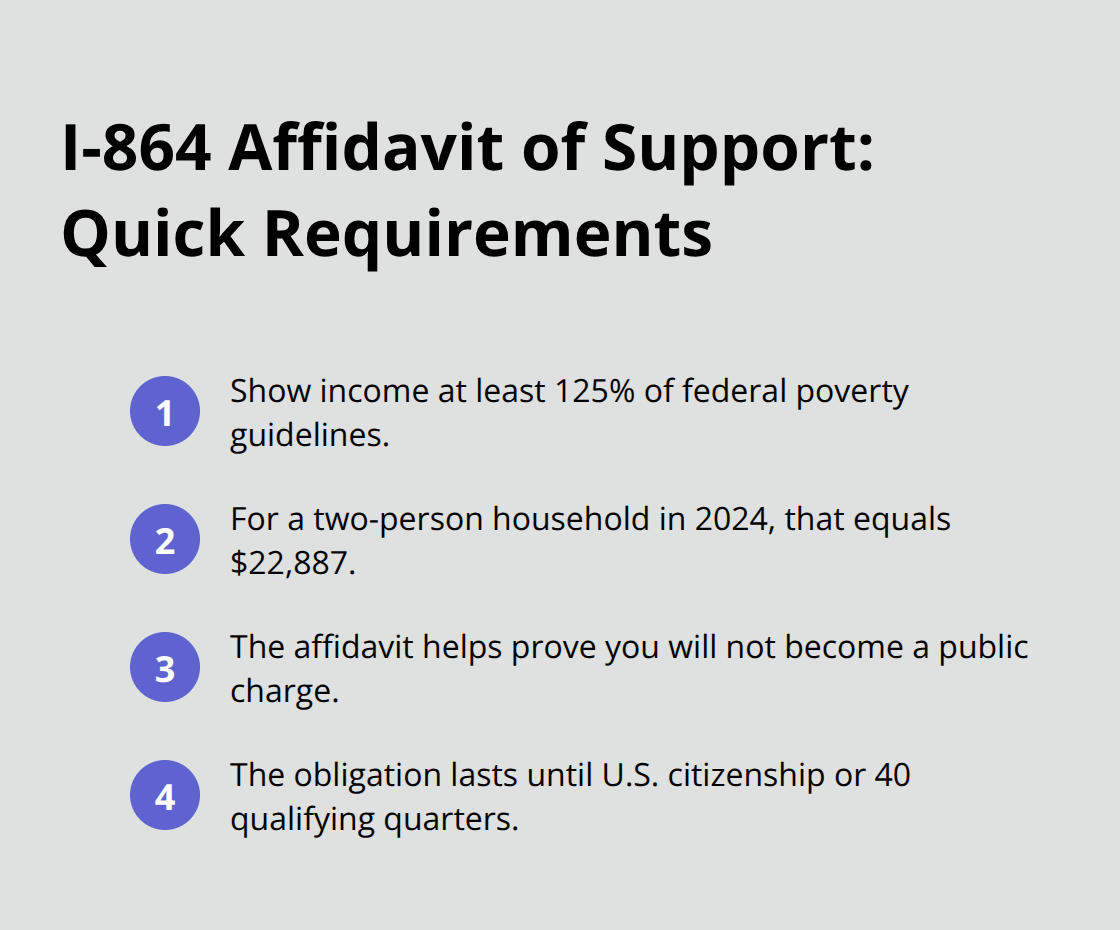
Your spouse must file Form I-864 to demonstrate income at least 125% above the federal poverty guidelines. This equals $22,887 for a two-person household in 2024. The affidavit of support proves you will not become a public charge and remains legally binding until you become a U.S. citizen or work for 40 qualifying quarters.
Processing Timeline and Fees
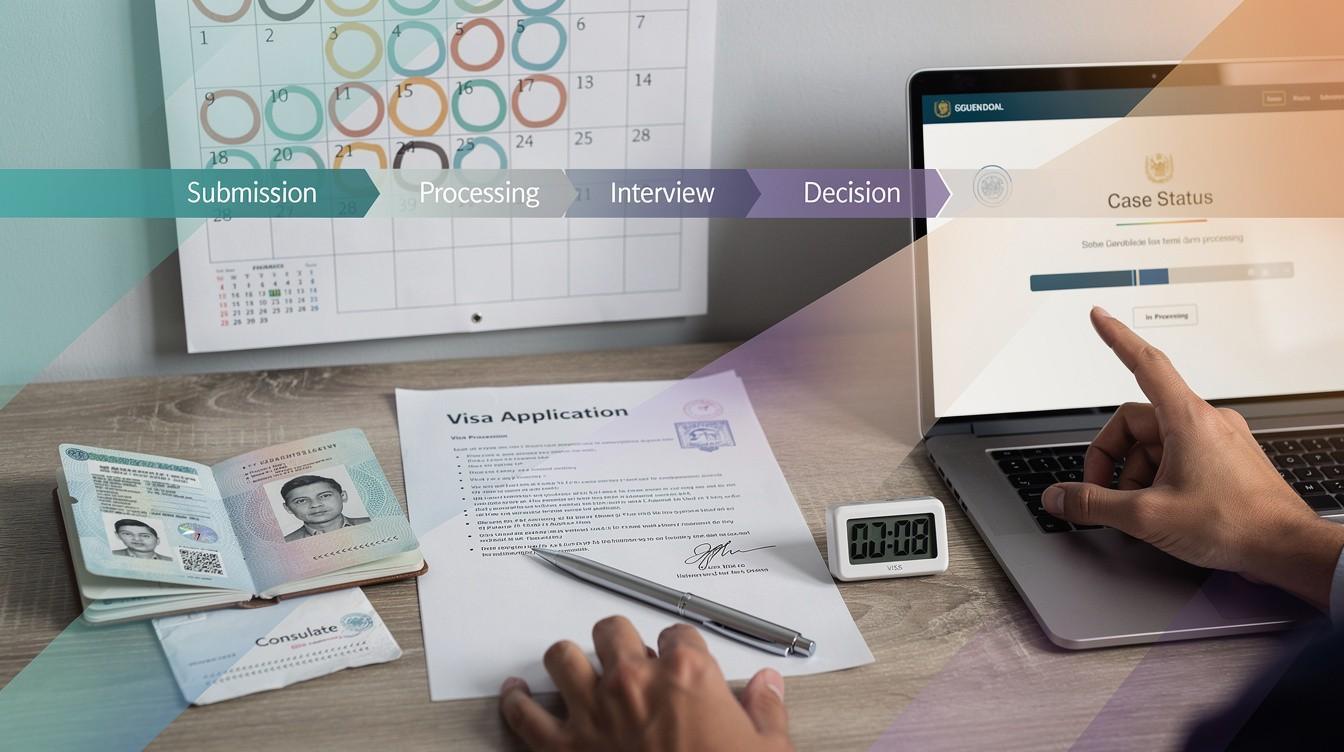
USCIS processes I-485 applications in an average of 8-13 months for family-based cases, though K1 adjustments often process faster at 6-8 months. The total fee reaches $1,760 for most applicants, including the $1,140 I-485 fee plus $630 for biometrics services. Payment methods changed in October 2025, requiring credit card, debit card, or ACH transactions only.
Missing any required initial evidence triggers automatic rejection, not just a request for additional documentation. This strict policy makes thorough preparation essential before you submit your complete application package and move forward with the next phase of your adjustment process.
How Do You Complete Your I-485 Application Package
Fill Out Form I-485 Accurately
Enter your exact name as it appears on your passport and birth certificate in Part 1 of Form I-485. USCIS rejects applications when names don’t match between documents. Write your Alien Registration Number from your I-94 arrival record and list your current U.S. address as your mailing address. Part 2 requires your basis for adjustment – select category (a) for immediate relative of U.S. citizen and reference your approved I-129F petition number. Part 3 causes the most errors when applicants answer questions about prior immigration violations or arrests incorrectly. Answer every question truthfully since USCIS cross-references your responses with government databases.
Organize Your Supporting Documents
Your document package must include originals or certified copies of your birth certificate, marriage certificate dated within 90 days of K1 entry, and I-94 arrival record. Submit two identical passport-style photographs taken within 30 days of filing, with your name and A-number written lightly on the back. Include a copy of your spouse’s tax returns for the past three years with Form I-864, plus recent pay stubs and employment verification letter. Keep the medical examination Form I-693 in the sealed envelope from your civil surgeon (never open this envelope yourself). Arrange documents in the order listed in the I-485 instructions to prevent processing delays.
Submit Your Complete Application Package
Mail your package via certified mail with return receipt to the Chicago Lockbox facility, not your local field office. USCIS requires payment by credit card, debit card, or ACH transaction through Form G-1450. Include Form G-1145 on top of your package to receive text and email notifications when USCIS receives your application. Sign Form I-485 with your original signature in blue ink, as copies or electronic signatures cause automatic rejection.
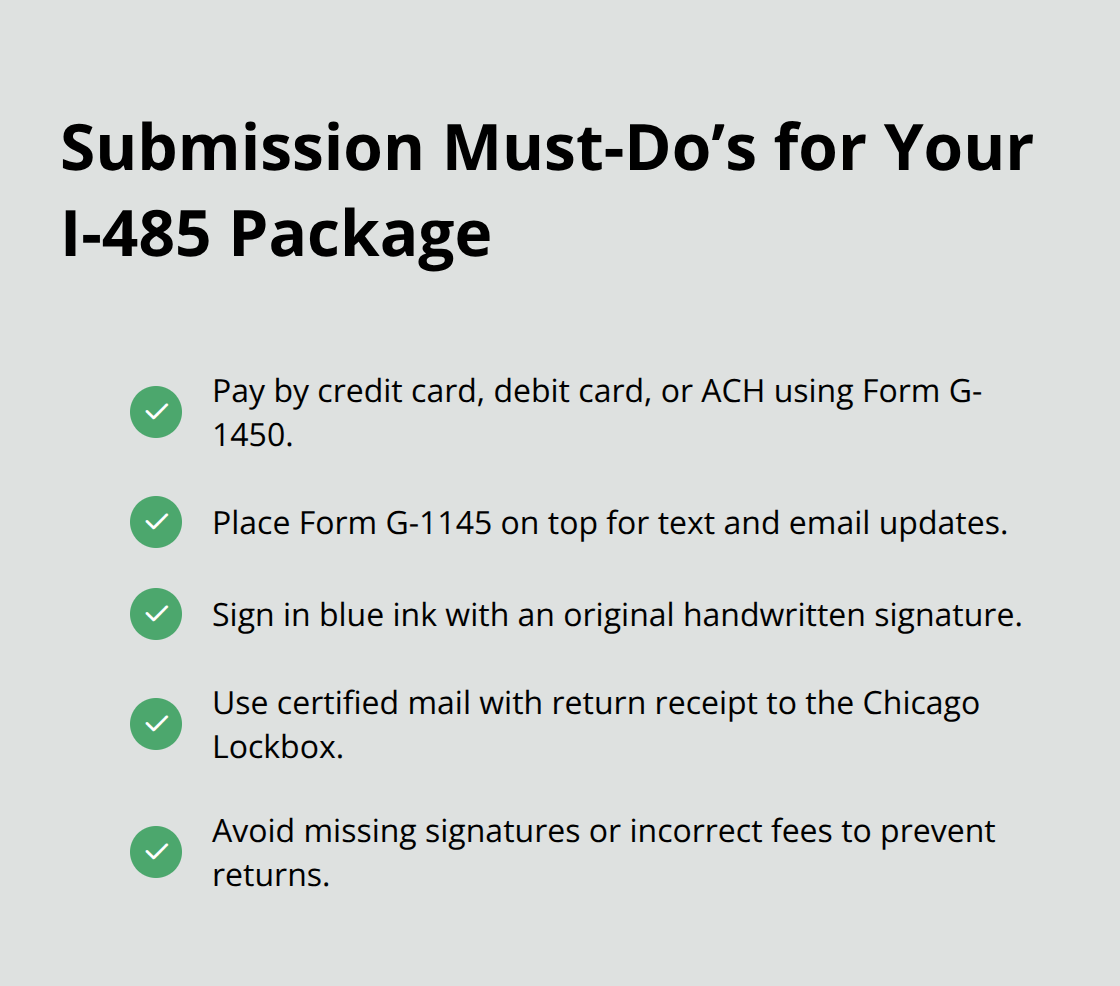
Applications with missing signatures or incorrect fees face immediate return without review, which adds months to your processing timeline.
The biometrics appointment represents your next major milestone after USCIS accepts your application package.
What Challenges Await During Status Adjustment
Request for Evidence Response Strategy
USCIS issues Requests for Evidence in approximately 35% of I-485 cases when initial documentation appears incomplete or requires clarification. The most common RFE triggers include missing vaccination records, insufficient financial documentation, or questions about marriage legitimacy. You receive exactly 87 days from the RFE notice date to respond with complete evidence. Never submit partial responses hoping to buy more time – USCIS denies applications when responses arrive incomplete or late. Organize your RFE response with a cover letter that addresses each requested item specifically, followed by tabbed sections that contain the exact evidence requested. Submit responses via certified mail with tracking to document delivery within the deadline.
Medical Examination Problem Resolution
Civil surgeons are required to perform medical examinations according to HHS regulations, which can lead to application delays if not completed properly. The most problematic mistakes include missing signatures on vaccination records, incomplete tuberculosis screening documentation, or failure to complete mental health evaluations when required. Schedule your medical examination at least 30 days before you file I-485 to allow time for corrections if problems arise. Vaccination catch-up requirements often surprise applicants – measles, mumps, rubella, and COVID-19 vaccinations must be current according to CDC guidelines (this applies to all age groups). Request a copy of your completed I-693 from the civil surgeon before they seal it to verify accuracy, though you cannot open the sealed envelope yourself.
Interview Preparation Tactics
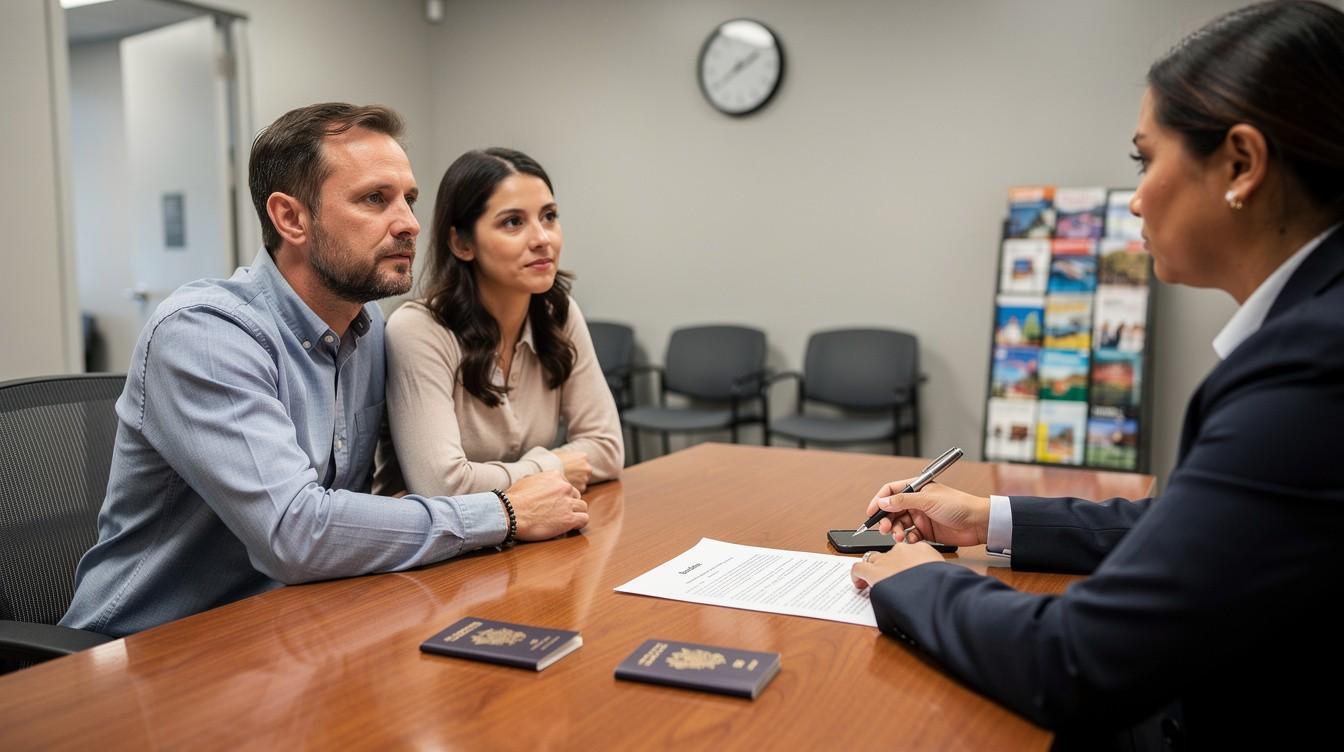
USCIS schedules interviews for approximately 40% of K1 adjustment cases, particularly when marriage occurred close to the 90-day deadline or when age gaps exceed 10 years. Marriage interviews focus heavily on daily life details that prove relationship authenticity. Prepare specific answers about household routines, financial arrangements, and future plans together.
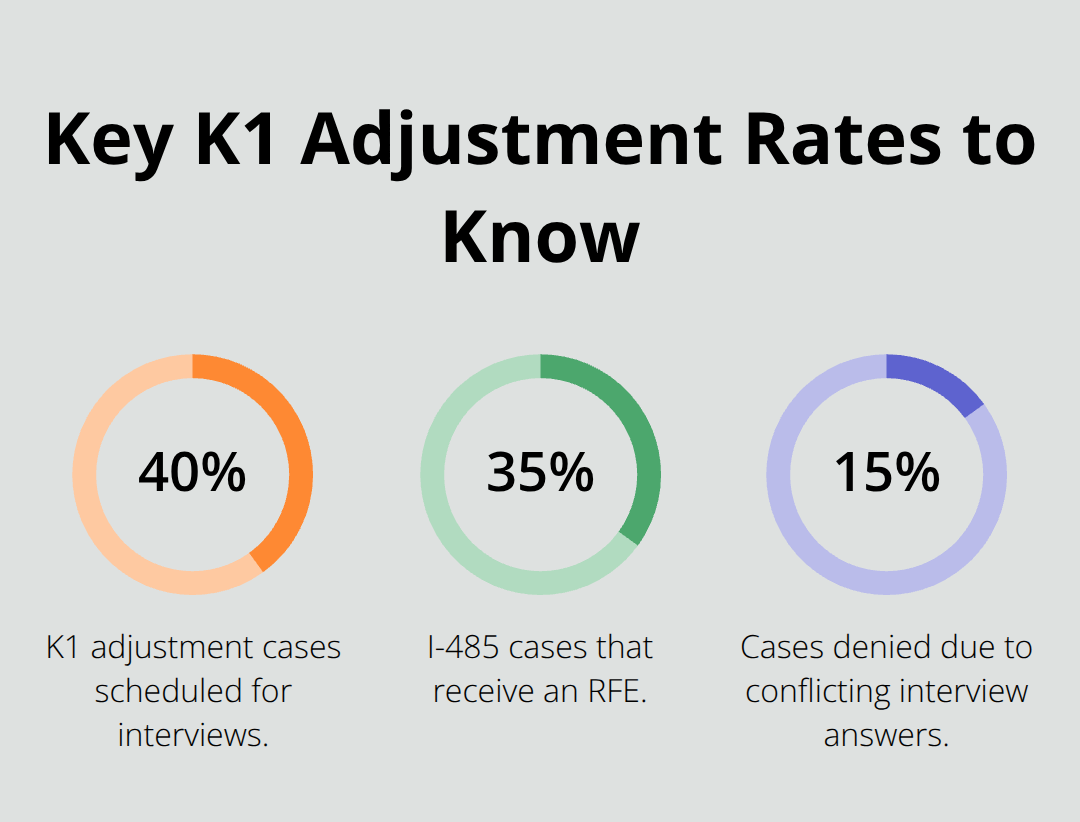
Bring original documents that include joint bank statements, lease agreements, insurance policies, and photographs that span your entire relationship timeline. Practice answering questions separately with your spouse about wedding details, living arrangements, and relationship history. Inconsistent answers about basic facts like wedding date, honeymoon location, or household responsibilities trigger additional scrutiny and potential denial (this happens in roughly 15% of cases where couples provide conflicting information).
Final Thoughts
The K1 visa adjustment of status step-by-step process demands precise documentation and strict deadline compliance. USCIS automatically rejects applications with missing initial evidence, while incomplete RFE responses result in denial. The 90-day marriage requirement and complete Form I-485 package determine your application’s success.
Complex cases with prior violations or criminal history require professional legal guidance. We at Law Offices of Jeffrey A. Thompson help clients navigate the adjustment process and overcome legal obstacles. Our immigration law experience identifies potential problems before they affect your application.
Permanent residency approval provides work authorization, travel freedom, and citizenship eligibility (this represents the culmination of your immigration journey). Proper preparation and professional assistance when needed protect your immigration future. Your American dreams become reality through successful status adjustment.
Share this post: