How to Adjust Status Through the Diversity Visa Lottery
December 19, 2025
Winning the diversity visa lottery is just the first step. The real challenge comes when you need to adjust your status and navigate the complex immigration process.
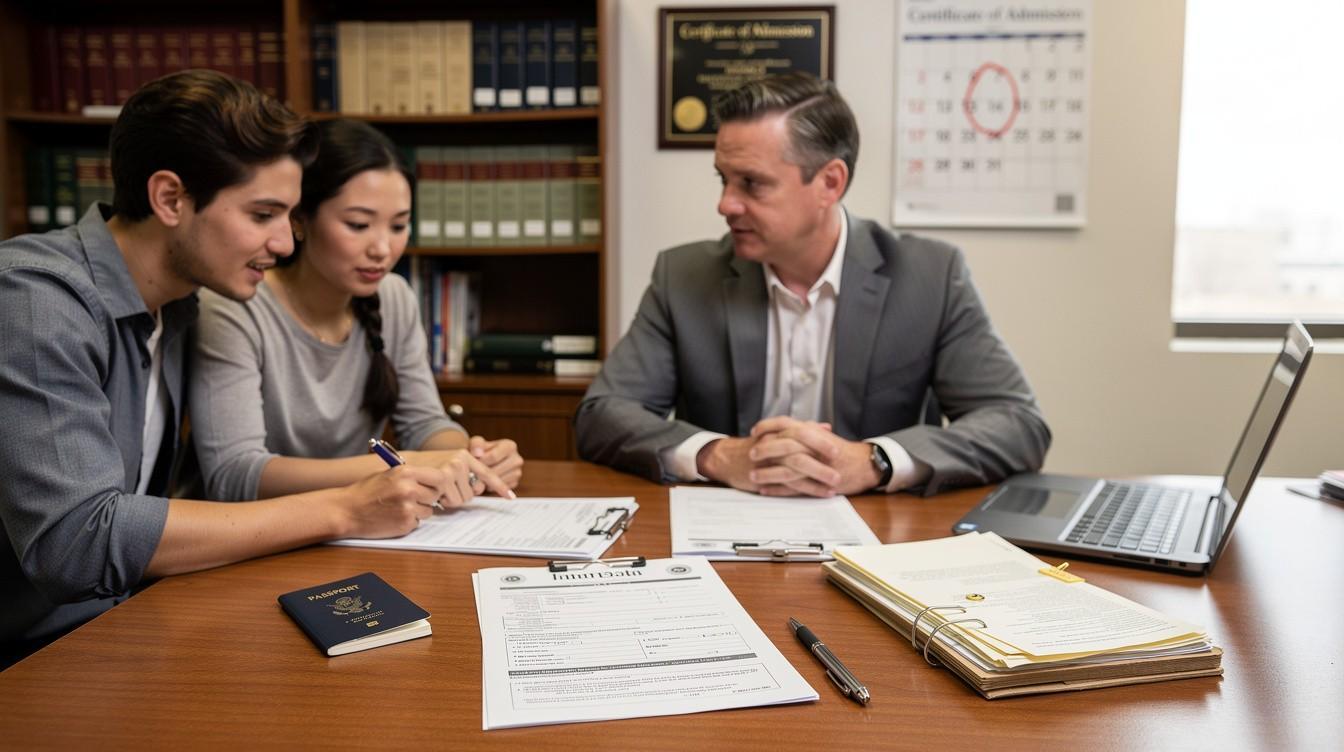
At Law Offices of Jeffrey A. Thompson, we guide clients through every stage of diversity visa lottery adjustment of status. This guide walks you through filing requirements, documentation, and common pitfalls that could delay your application.
What Makes You Eligible for Diversity Visa Adjustment
The diversity visa lottery makes 50,000 immigrant visas available annually according to the U.S. Department of State, but winning the lottery differs vastly from qualifying to adjust your status in the United States. Most diversity visa winners live outside America and complete their immigration process through consular processing at a U.S. Embassy or Consulate abroad. However, if you’re already in the United States with valid nonimmigrant status at the time of your selection, you can pursue adjustment of status domestically. This pathway exists for a small subset of lottery winners, and understanding whether you qualify represents your first critical decision.
How the Department of State Notifies Selectees
The Department of State uses the Electronic Diversity Visa website as the sole official notification channel-not email, not mail, not any other method. You check your selection status on the E-DV website, and if selected, you must complete specific steps before you can proceed. If you’re physically present in the U.S., the next question becomes whether adjustment of status through USCIS is even available to you. Not every diversity visa selectee inside America qualifies for domestic adjustment.
Determining Your Eligibility for Domestic Adjustment
Your eligibility hinges on factors like your current immigration status, admissibility under U.S. law, and whether you can demonstrate you meet the program’s education or work experience requirements. The diversity visa program requires you to have a high school education, or its equivalent, or two years of qualifying work experience in an occupation requiring at least two years of training. You’ll need documentation proving you meet one of these requirements when you file, whether that’s your diploma, transcripts, or employment records with detailed job descriptions.

Tracking the Visa Bulletin for Filing Eligibility
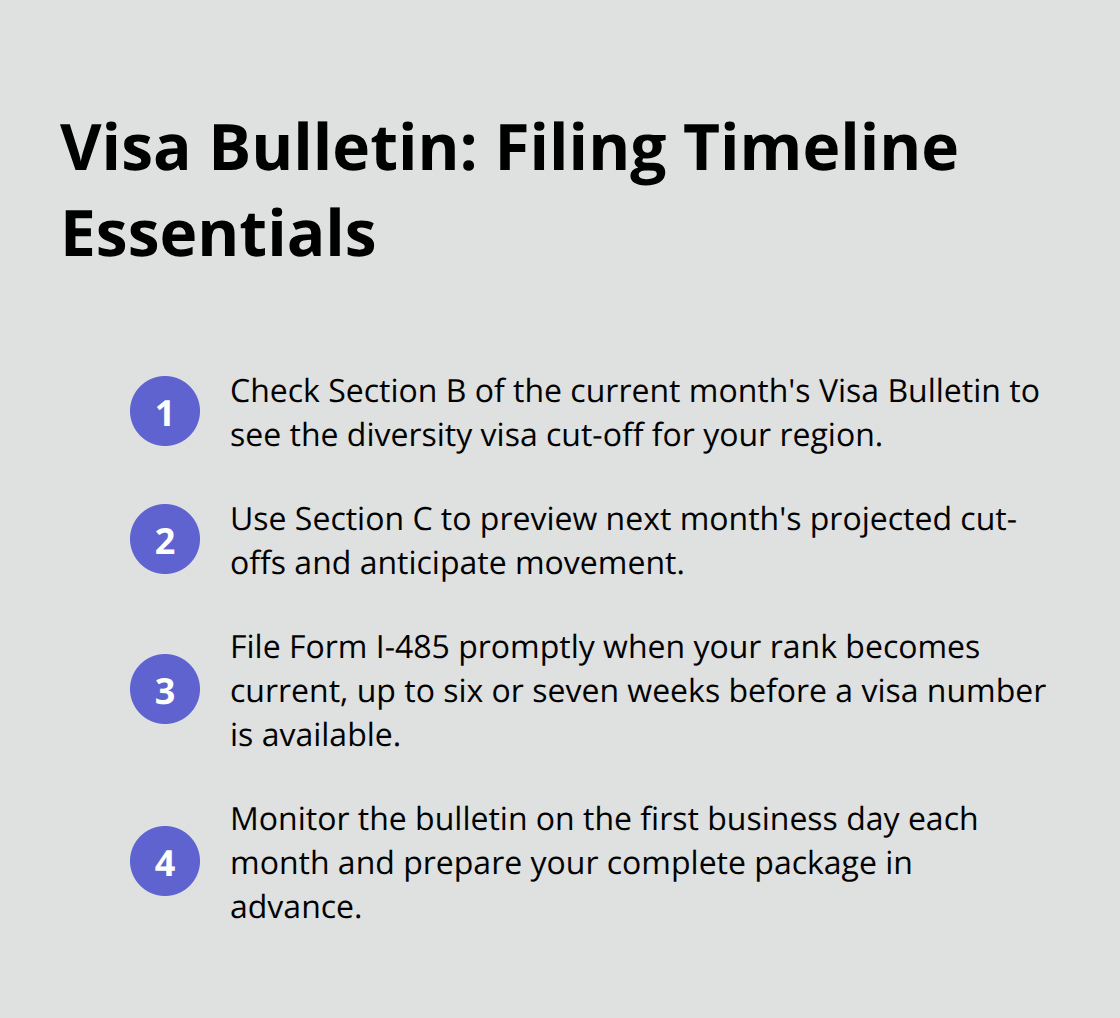
The Department of State publishes the Visa Bulletin monthly, and this document determines when you can actually file your adjustment application. Section B of the current month’s bulletin shows the diversity visa cut-off for your geographic region, while Section C previews next month’s cut-offs. You can file Form I-485 up to six or seven weeks before a visa number becomes available for your rank, which means checking the bulletin regularly isn’t optional-it’s essential strategy. If your rank falls below the current month cut-off, you’re eligible to file immediately.
The September 30 Deadline You Cannot Miss
Missing the filing window costs you time, and the entire adjustment process must complete by September 30 of the fiscal year your lottery pertains to. The visa numbers don’t carry over to the next year, which makes this deadline non-negotiable. Many applicants fail because they don’t track the bulletin closely or misunderstand how their rank number works within their geographic region. Once you confirm your eligibility and understand your filing timeline, the next phase involves gathering and preparing the extensive documentation that USCIS requires for your I-485 application.
Building Your I-485 Application Package
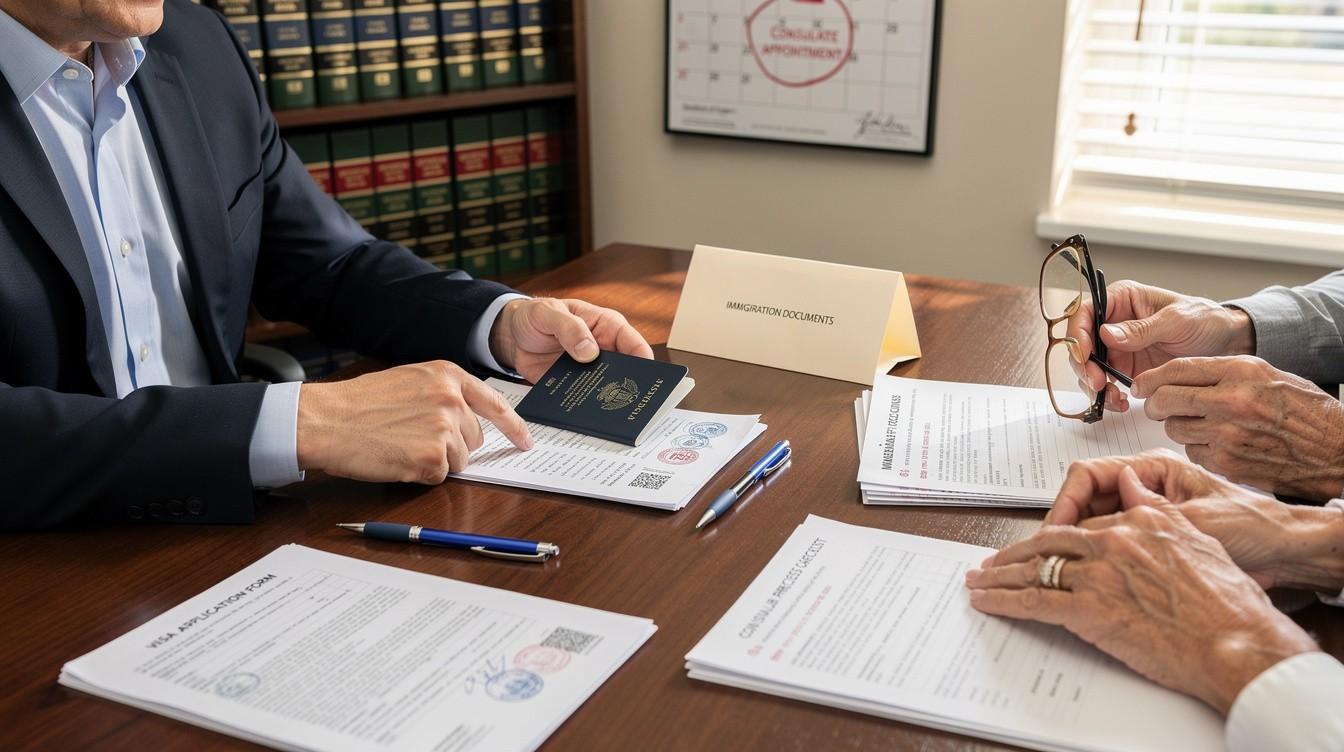
Filing Form I-485 with USCIS marks the moment your diversity visa adjustment moves from planning to official processing. USCIS requires specific documents, and submitting incomplete paperwork triggers delays that consume months of your timeline. You must include your original diversity visa selection letter from the DOS Electronic Diversity Visa Program, the DOS DV program processing fee receipt, two passport-style photographs, a government-issued photo ID, your birth certificate, and copies of relevant passport pages showing your nonimmigrant visa and admission or parole stamp. Additionally, you need your Arrival/Departure Record (Form I-94) or CBP admission stamp, evidence of continuous lawful status since arriving in the United States, and documentation proving you meet the diversity visa education or work experience requirement. If you have any criminal history, include certified police and court records showing all charges, arrests, or convictions. The medical examination form I-693 must be completed by a USCIS-designated civil surgeon and submitted with your application packet. For derivative applicants like your spouse or children, provide marriage certificates, birth certificates, or adoption decrees along with evidence they were included in your original DV entry. Start gathering these documents immediately after you confirm your eligibility to file. Many applicants underestimate how long obtaining certified documents from their home country takes, and delays in receiving police certificates or birth records frequently push people past their filing windows.
Schedule Your Medical Examination Early
Your civil surgeon conducts the medical examination, and you can find a designated civil surgeon by entering your address, city, state, or ZIP code on the USCIS website. Schedule your appointment well before you file Form I-485 because the examination results remain valid for only two years. The civil surgeon checks your vaccination status and may require additional vaccinations to meet U.S. standards. Plan ahead for this step since appointment availability varies by location and some civil surgeons maintain lengthy waiting lists. Completing your medical exam early gives you time to address any health issues the civil surgeon identifies before you submit your I-485 package.
Obtain Police Certificates From Every Country
Background checks happen simultaneously with your medical clearance, and USCIS requests police certificates for every country where you have resided for more than six months since turning sixteen. Some countries issue police certificates easily within weeks, while others require months or refuse to issue them altogether. If a country cannot provide a certificate, you must submit written documentation explaining why and provide secondary evidence like court records or official statements. The State Department’s Reciprocity by Country resource details what civil documents each country requires for immigrant visa applicants. Missing police certificates or providing expired ones delays your entire case, so verify your country’s specific requirements before assuming you know what’s needed.
Prepare for Your USCIS Interview
Your USCIS interview determines whether you receive your green card or face additional requests for evidence. Bring original documents and certified copies of everything you submitted, organized by category. USCIS officers verify that you actually meet the education or work experience requirement through detailed questioning about your employment history or educational credentials. They examine your financial situation to evaluate whether you could become a public charge (the ground of inadmissibility that applies even though diversity visa applicants do not file an Affidavit of Support). Bring bank statements, employment letters, and tax returns demonstrating financial stability. The officer will ask about your immigration history, any trips outside the United States, and your intentions regarding residence and employment. Inconsistencies between your written application and verbal statements can derail approval, so review your entire I-485 package before the interview. Answer questions directly and honestly without volunteering extra information. If you have any concerns about admissibility issues, consult with an immigration attorney before your interview rather than discovering problems during the appointment. Once USCIS receives your complete application with medical results and background clearances, your case enters the queue for an interview at your local USCIS field office. The timing varies by location, but expect several months between filing and interview scheduling. Understanding what happens after your interview-and how to respond if USCIS requests additional evidence-requires knowledge of the next critical phase in your adjustment journey.
Where Diversity Visa Applications Actually Fail
The most common reason USCIS denies diversity visa adjustment applications has nothing to do with eligibility and everything to do with careless mistakes on Form I-485. Applicants submit incomplete packages that lack certified copies of documents, forget to include their DOS DV selection letter, or fail to provide the DV processing fee receipt. USCIS does not accept excuses about documents being difficult to obtain from your home country. The agency simply returns your entire application as incomplete, which costs you weeks or months while you scramble to gather missing paperwork. One missing document triggers a Request for Evidence that delays your case by 60 to 90 days. Your rank number continues moving through the Visa Bulletin during this time, and if your cut-off passes while your application sits incomplete, you lose your filing eligibility for that fiscal year. The solution requires obsessive attention to detail before you submit anything to USCIS. Create a checklist of every single document the agency requires, then verify each item exists in your package before sealing the envelope.
Document Checklist That Prevents Rejection
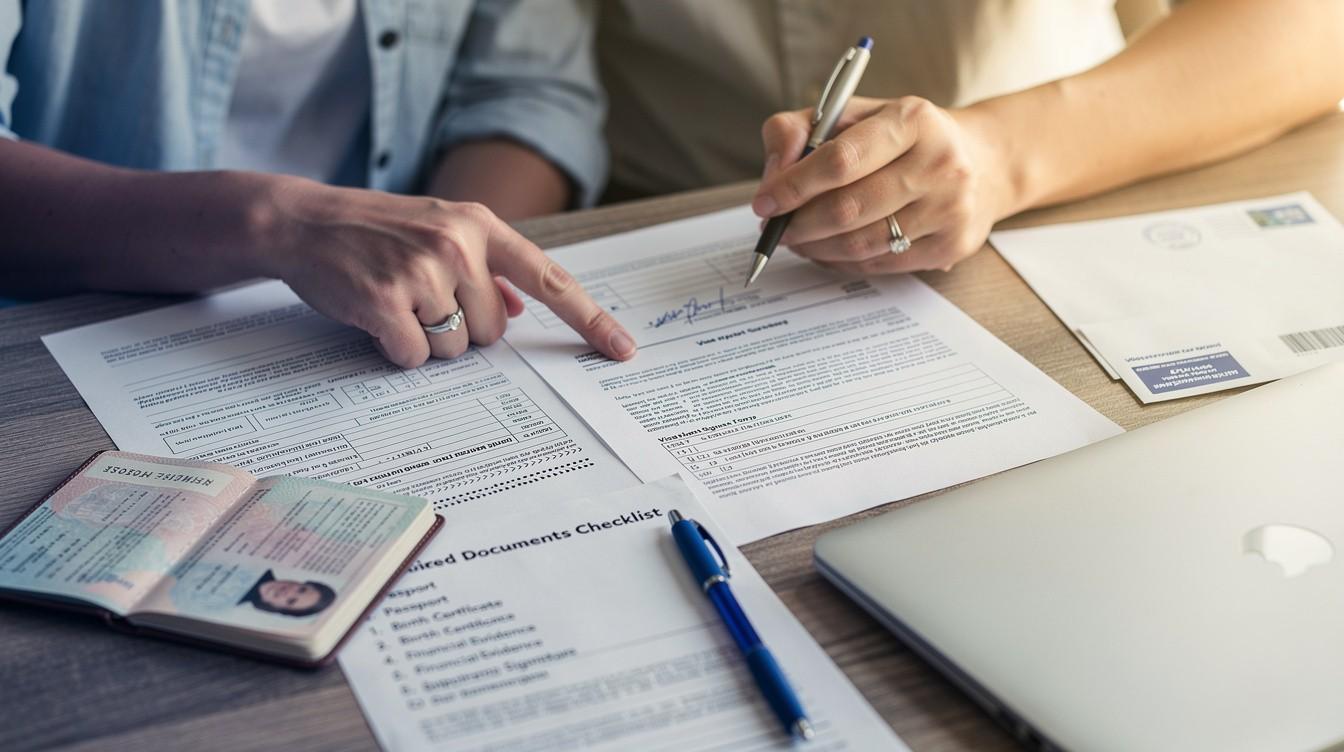
Your DOS DV selection letter, DOS processing fee receipt, two passport-style photographs, government-issued photo ID copy, birth certificate copy, relevant passport pages, Form I-94 or admission stamp, medical exam results from a designated civil surgeon, and police certificates from every country where you lived more than six months since age sixteen all belong in that package. You must also include proof of continuous lawful status. Derivative applicants need marriage certificates, birth certificates, or adoption decrees showing they were included in your original DV entry. Missing any single item triggers rejection.
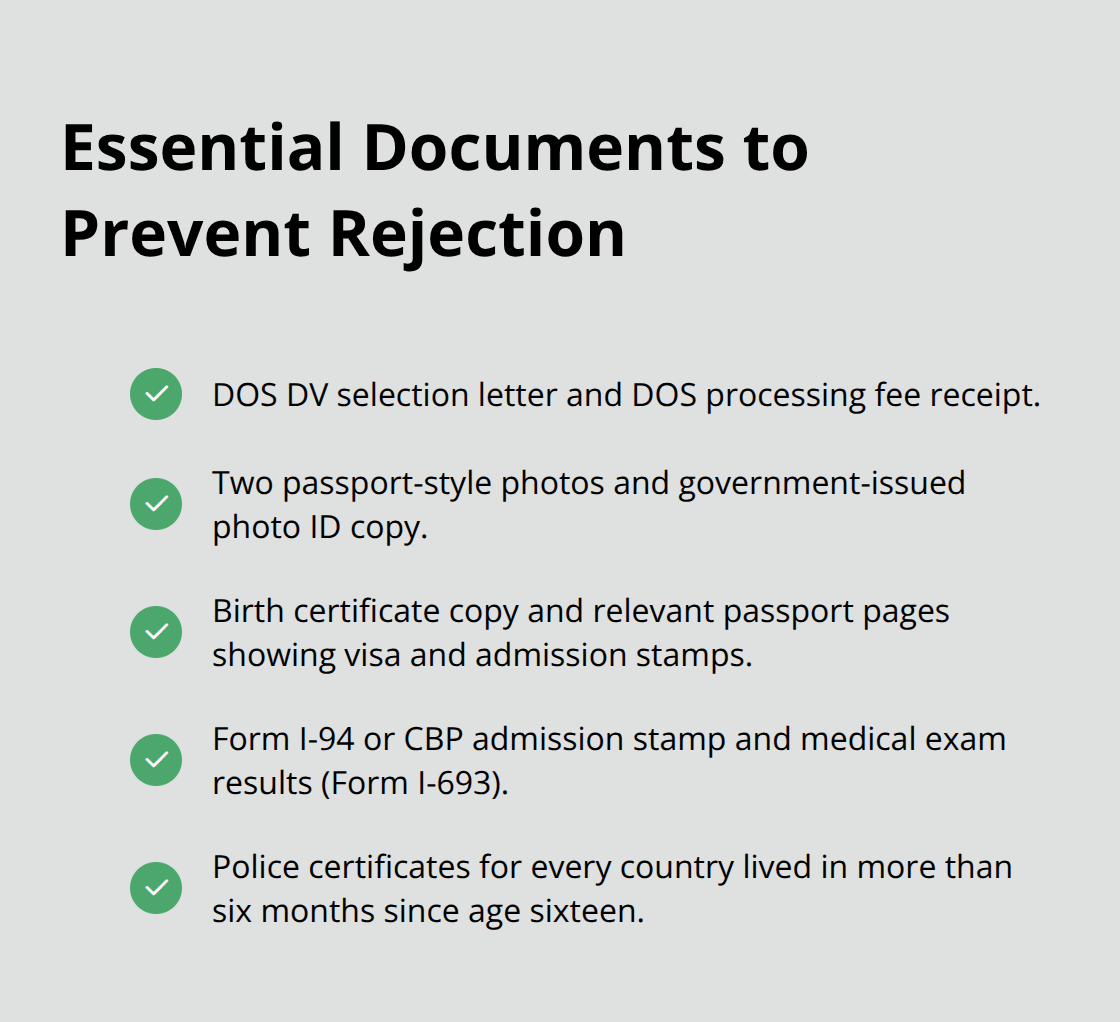
The DOS DV selection letter and processing fee receipt represent the two documents applicants most frequently forget, yet USCIS treats them as non-negotiable. Without these items, the agency cannot verify your lottery selection or confirm you paid the required DV fee to the Department of State. Review the official checklist to ensure your application package is complete.
Timing Your Filing Window Perfectly
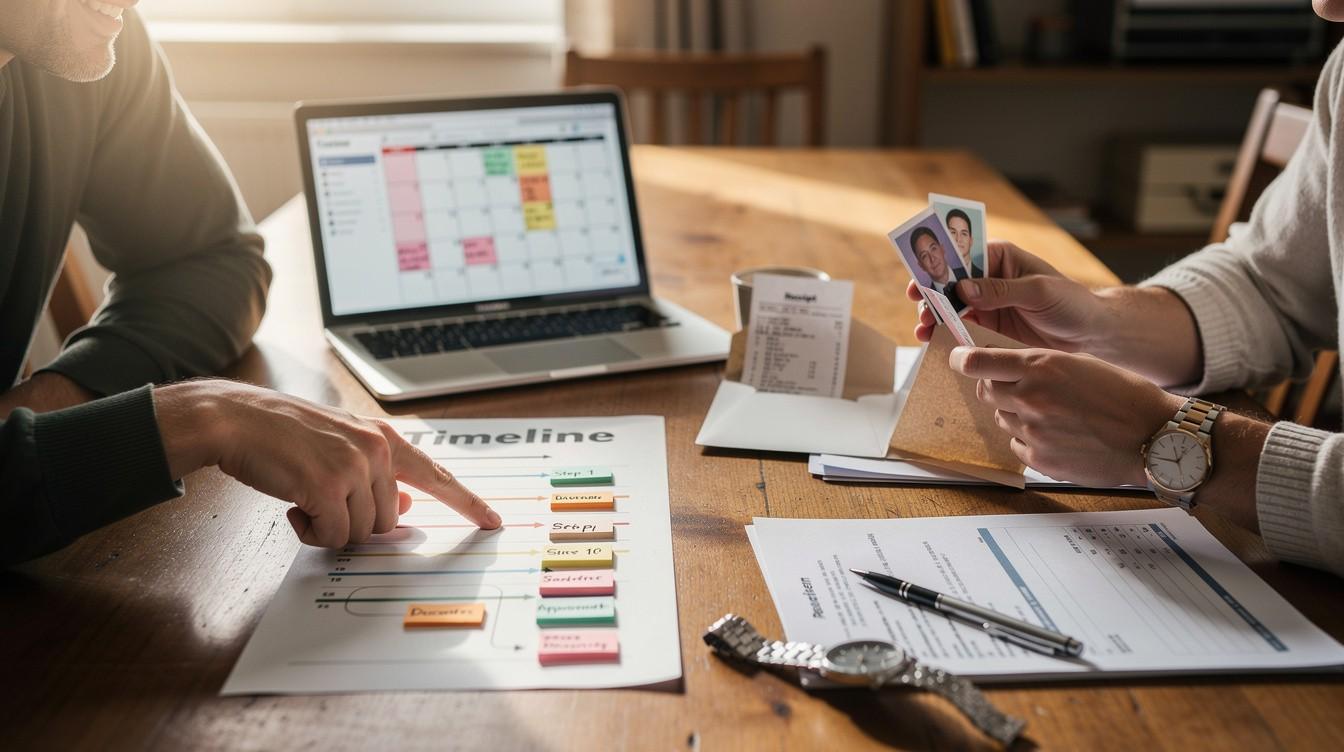
Your rank number and the monthly Visa Bulletin determine when you can actually file, and most applicants misunderstand this critical relationship. You cannot file Form I-485 until your rank falls below the current month cut-off for your geographic region according to the Department of State. Once your rank becomes current, you have a narrow window before the cut-off advances and your number falls out of range again. Some applicants wait too long thinking they will file next month, then watch their rank slip past the current cut-off without submitting anything. The entire adjustment process must complete by September 30 of the fiscal year, which means waiting for next month’s bulletin could cost you your opportunity entirely. Check the Visa Bulletin on the first business day of each month and compare your rank to Section B immediately. If your number appears current, file your I-485 within days, not weeks. Do not assume you understand your geographic region’s cut-off without verifying it against your actual rank. Applicants from countries with lower immigration rates to the U.S. sometimes see their numbers move forward by hundreds or thousands monthly, while others watch their ranks advance slowly. The Department of State also publishes Section C showing next month’s projected cut-offs, which helps you anticipate when your number might become current. Using this preview, you can prepare your complete application package in advance and submit immediately when your rank becomes eligible. Many applicants file too early before their rank actually becomes current, which triggers automatic rejection. Others file too late after their window closes, forcing them to wait an entire year for the next lottery cycle if they remain selected.
Proving Financial Stability Without an Affidavit of Support
Diversity visa applicants do not file Form I-864 (Affidavit of Support), which confuses many people into thinking they do not need to demonstrate financial capacity at all. The public charge ground still applies to your case, meaning USCIS will examine your financial situation during your interview. The agency looks for evidence that you will not become dependent on government assistance programs. Bring bank statements showing liquid assets, employment letters from your U.S. employer confirming your salary and position, recent tax returns, and documentation of property ownership if applicable. USCIS officers typically want to see several months of bank statements rather than a single account snapshot. If your savings appear insufficient, employment letters become critical because they establish ongoing income. Some applicants arrive in the U.S. with minimal savings and expect their future employment to satisfy the public charge evaluation, which rarely works. The officer needs concrete evidence of current financial resources, not promises about future earning potential. If you are self-employed, bring business tax returns for at least two years, profit and loss statements, and documentation showing your business operates legitimately. Cryptocurrency holdings, stocks, or retirement accounts count as assets, but you need documentation proving ownership and value. If family members will provide financial support, obtain written statements from them describing their relationship to you and their commitment to assistance, though this carries less weight than your own resources.
Final Thoughts
Adjusting your status through the diversity visa lottery requires precision at every stage, from tracking the Visa Bulletin monthly to submitting certified documents before September 30 of your fiscal year. Missing a single deadline or document triggers delays that compound quickly, and visa numbers do not carry over to the next year. You must treat every requirement as absolute and every filing window as non-negotiable to succeed in this process.
An immigration attorney reviews your complete application before submission, identifies potential admissibility issues, and represents you during your USCIS interview. This professional guidance prevents costly mistakes and increases your approval odds significantly by catching errors that could derail your case. We at Law Offices of Jeffrey A. Thompson assist clients through every stage of the diversity visa lottery adjustment of status, from paperwork preparation to overcoming legal hurdles.
Contact Law Offices of Jeffrey A. Thompson to discuss your diversity visa adjustment and protect your opportunity to become a lawful permanent resident. Your family members who were included in your original DV entry and live abroad must apply for diversity immigrant visas at a U.S. Embassy or Consulate before September 30, so timing matters for them as well. Let us help you navigate this complex process and achieve your American dream.
Share this post: