
How to Adjust Status After Final Removal Order
December 29, 2025
A final order of removal can feel like the end of your immigration journey, but it’s often not. We at Law Offices of Jeffrey A. Thompson know that several legal pathways exist to challenge this decision and adjust your status.
The key is understanding your options and acting fast. Deadlines matter in removal cases, and missing them can close doors permanently.
What Happens After a Final Removal Order
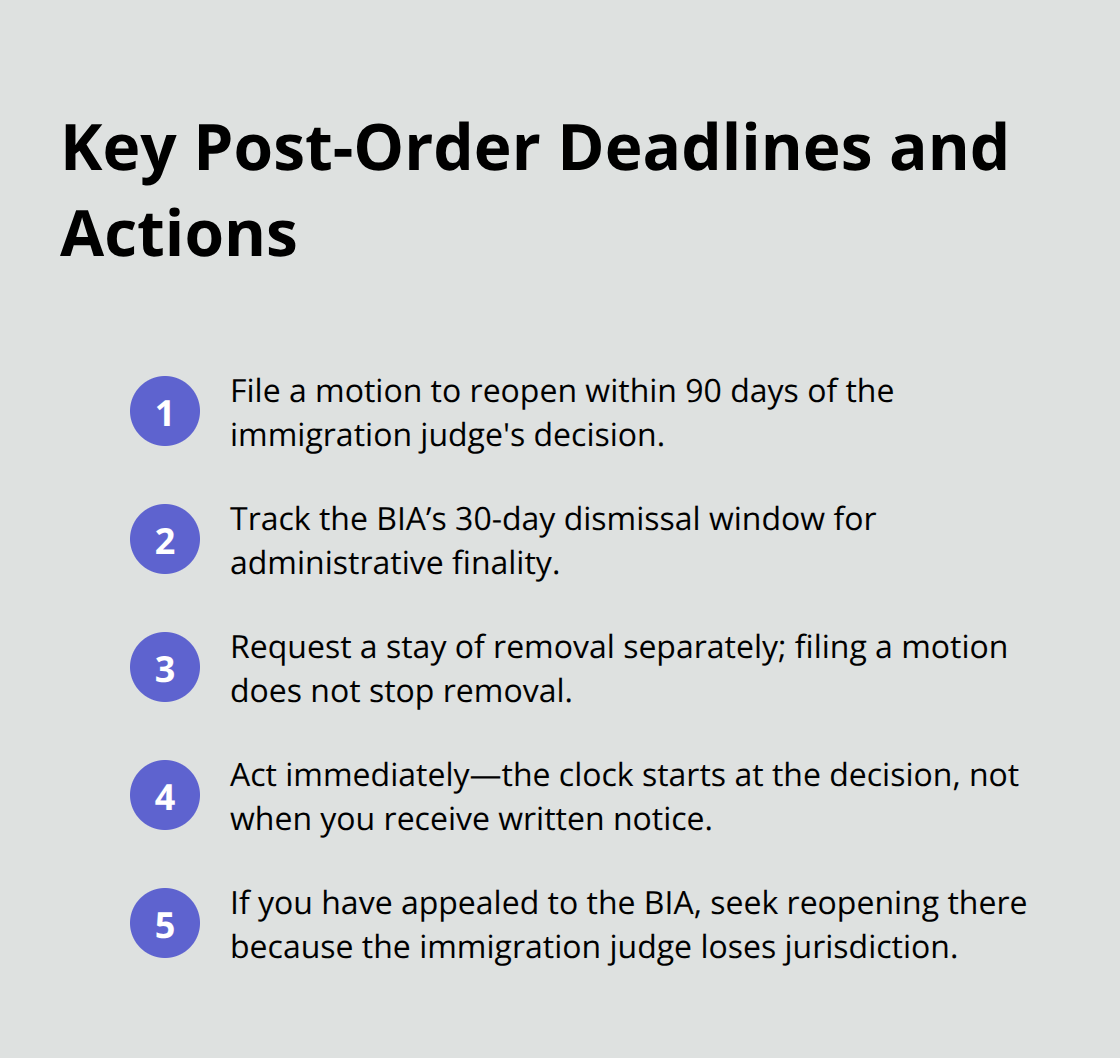
A final removal order means the immigration court has made a binding decision to remove you from the United States, and all standard appeals have been exhausted. The Board of Immigration Appeals must dismiss your appeal within 30 days of your removal order for it to become final at the administrative level, but even then, legal pathways remain available. You have approximately 90 days from the immigration judge’s decision to file a motion to reopen, which is your most direct tool for challenging the order itself. This window is tight, and missing it typically means losing your opportunity to present new evidence or pursue relief like asylum, withholding of removal, or protection under the Convention Against Torture. The clock starts immediately after the judge’s decision, not after you receive written notice, so you must act within days, not weeks.
Understanding Bars to Relief and Reopening Requirements
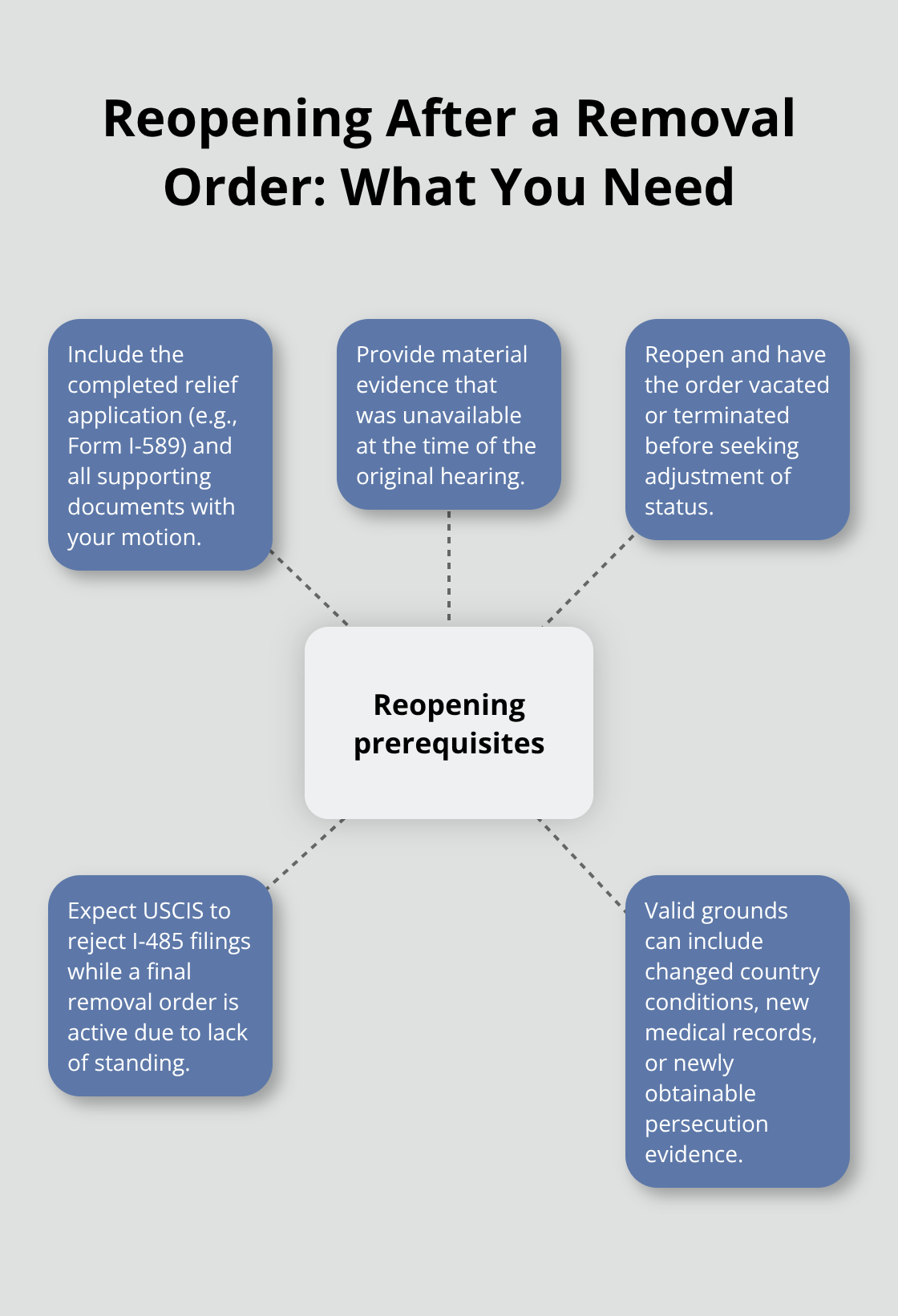
A final removal order creates what immigration law calls bars to relief. These are eligibility obstacles that prevent you from adjusting status or accessing certain protections unless you first reopen the removal order. If you want to adjust status through Form I-485 after a removal order, USCIS will likely reject your application because you lack the legal standing to file while the removal order is active. To pursue adjustment, you must reopen proceedings and get the removal order vacated or terminated. Your motion to reopen must include the actual relief application (such as Form I-589 for asylum) along with all supporting documents, not just a request to reopen. The new evidence you submit must be material and unavailable at the time of your original hearing. Changed country conditions for your home nation, new medical documentation, or evidence of persecution you couldn’t previously obtain all qualify as valid grounds.
When Immigration Judges Reopen Cases on Their Own
Immigration judges have discretion to reopen cases on their own motion, meaning you are not limited to the 90-day window if the judge finds sufficient reason. This sua sponte power exists to correct errors or address new circumstances that affect the fairness of the proceedings. However, you cannot rely on this happening. You must file your own motion within the deadline to protect your rights.
The Critical Role of Stays of Removal
Filing a motion to reopen does not automatically stop your removal or deportation. You must separately request a stay of removal to pause enforcement while your motion is pending, and success depends on showing that you have a substantial likelihood of success on the merits of your underlying relief claim. Many people assume that filing a motion buys them time, but without a stay order, Immigration and Customs Enforcement can remove you at any point. You cannot file a motion to reopen after you have already appealed to the Board of Immigration Appeals, as the immigration judge loses jurisdiction once an appeal is filed. If you have already appealed, you must address reopening at the BIA level instead.
Building a Strong Motion to Reopen
An experienced immigration attorney can determine whether reopening is viable in your situation, identify which relief options you actually qualify for, and file motions that meet the strict regulatory requirements under 8 CFR 1003.23(b)(3). The difference between a well-prepared motion and a hastily filed one often determines whether you get a second chance or watch your deadline pass. An attorney assists you in navigating the process, from gathering evidence to overcoming legal hurdles that stand between you and potential relief. The stakes are high enough that professional guidance makes a measurable difference in outcomes.
What Relief Options Actually Work After Removal
Cancellation of Removal: The High Bar
Cancellation of removal stands as one of the most powerful tools available, but it remains out of reach for most people facing final removal orders. To qualify, you must prove continuous physical presence in the United States for at least 10 years, good moral character throughout that period, and that your removal would result in exceptional and extremely unusual hardship to a U.S. citizen or lawful permanent resident spouse, parent, or child. The hardship standard is deliberately high-immigration judges approve only a fraction of cancellation claims each year. You cannot have been convicted of certain crimes, and your 10-year presence must remain unbroken by trips outside the country lasting more than 90 days or multiple absences totaling more than 180 days.
If you meet these requirements, cancellation offers a pathway to permanent residency without needing to leave the country. The evidentiary burden falls entirely on you. Medical records showing your child’s serious condition, employment documentation spanning a decade, and testimony from family members about the impact of your removal all become necessary components of your case.
Form I-485 and the Reopening Prerequisite
Adjustment of status through Form I-485 after a removal order requires that the removal order first be reopened and vacated, which circles back to the motion to reopen strategy outlined earlier. Once the order is gone, you must verify that a visa number is available in your category by checking the Department of State Visa Bulletin, which publishes monthly updates on visa availability for family-based and employment-based categories.
Concurrent filing rules allow you to submit your I-485 simultaneously with an underlying petition in certain categories, including immediate relatives of U.S. citizens. This option only applies if your removal order has been successfully challenged. Waivers under INA 212(i) and 212(a)(9)(B) can forgive certain grounds of inadmissibility, such as fraud or unlawful presence, but these waivers demand proof that a qualifying relative would suffer extreme hardship if you were denied status.
Withholding of Removal and Convention Against Torture Protection
Withholding of removal and Convention Against Torture protection represent narrower relief options that may prevent deportation to countries where you face persecution or torture. To win a Convention Against Torture case, you must show that it is more likely than not that the government will torture you in your home country. These protections do not grant you permanent residency or work authorization in the United States. They function as defensive measures rather than pathways to immigration benefits.
An immigration attorney can assess which combination of relief options applies to your specific circumstances and whether the evidence you have supports a viable claim under one or more of these pathways. The attorney assists you in determining which relief strategy offers the strongest foundation for your case, given the facts and evidence available to you.
Why You Need an Attorney for Removal Cases
A final removal order creates immediate pressure to act. The moment this order lands in your hands, the complexity of your situation multiplies exponentially. A motion to reopen must satisfy strict regulatory requirements under 8 CFR 1003.23(b)(3), and the difference between a properly filed motion and one that misses a single procedural element often determines whether you receive a second chance or lose your opportunity forever.
Procedural Requirements That Courts Demand
Immigration judges receive hundreds of motions annually and reject those that lack proper evidence, fail to include required forms like EOIR-28 for representation, or submit relief applications without complete supporting documentation. The 90-day deadline is absolute in most cases, with only narrow exceptions for changed country conditions or fraud. You cannot afford delays or second attempts. An attorney verifies the correct filing location, confirms that original signatures appear on all required documents (not electronic signatures where prohibited), and ensures your motion includes Form EOIR-33/IC updating your address. These details separate successful motions from rejected ones.

Identifying Which Relief Options Actually Apply
An experienced immigration attorney identifies which relief options actually apply to your specific circumstances rather than pursuing every option indiscriminately. Many people waste months on cancellation of removal claims when their criminal history disqualifies them entirely, or they attempt Form I-485 adjustments without recognizing they lack visa availability in their category according to the Department of State Visa Bulletin. An attorney conducts the eligibility analysis that determines whether reopening is viable, whether you meet the 10-year continuous presence requirement for cancellation, and which hardship documentation will actually persuade an immigration judge.
Evidence Gathering and Strategic Timing
Removal defense after a final order requires you to gather evidence that was either unavailable or undiscoverable at your original hearing. This means obtaining updated country condition reports from your home nation, securing new medical records, collecting employment letters spanning your years in the United States, and obtaining sworn statements from family members about the hardship your removal would cause. An attorney knows which types of evidence immigration judges actually find compelling and which documents merely add bulk to your file.
Avoiding Procedural Traps
An attorney identifies procedural traps that catch unrepresented individuals. Filing a motion to reopen before appealing to the Board of Immigration Appeals does not extend your appeal deadline, so timing matters strategically. If you have already appealed, you cannot file with the immigration judge anymore; your motion must go to the BIA instead. The attorney also secures a stay of removal separate from your motion to reopen, as filing the motion alone does not automatically stay an order of removal or deportation, and ICE can remove you while your case is pending.
Specialized Knowledge for Complex Cases
Removal cases demand specialized knowledge of both defensive strategy and the intricate rules governing relief options. An attorney assists clients in navigating these obstacles with precision and speed, managing the practical logistics that courts demand and identifying which combination of relief options offers the strongest foundation for your case.
Final Thoughts
A final order of removal does not end your immigration future. You have concrete pathways forward through motions to reopen, cancellation of removal, Form I-485 adjustment of status, and protective relief options like withholding of removal. The 90-day window to file a motion to reopen is your most critical deadline, and missing it closes the door on challenging the removal order itself and pursuing relief that depends on reopening.
Acting quickly accomplishes multiple objectives at once. You preserve your right to file a motion to reopen within the regulatory deadline, you gather the evidence immigration judges actually find persuasive (from country condition reports to medical documentation to employment records spanning your years in the United States), and you secure a stay of removal before enforcement becomes imminent. Speed also prevents the emotional and financial toll of living under an active removal order while your case remains unresolved.
An experienced immigration attorney identifies which relief options actually apply to your circumstances, files motions that meet strict procedural requirements, and manages the evidence gathering that determines whether you succeed or fail. Contact Law Offices of Jeffrey A. Thompson today to discuss your situation and explore the relief options available to you.
Share this post: