
How to Adjust Status from K1 Visa to Green Card
March 9, 2026
You’ve married your K1 visa fiancé and now face the adjustment of status process. This path to a green card involves specific forms, documents, and deadlines that trip up many applicants.
At Law Offices of Jeffrey A. Thompson, we’ve guided countless couples through this transition. This guide walks you through what you need, what mistakes to avoid, and what comes next.
What Happens After You Marry on a K1 Visa
The K1 visa serves one specific purpose: getting you to the United States to marry your U.S. citizen sponsor within 90 days of arrival. Once you marry, the K1 itself becomes useless. Your path forward is adjustment of status, which transforms your temporary fiancé status into permanent residence. This isn’t optional or flexible. If you don’t marry within 90 days, you must leave the country. If you do marry, you must file Form I-485 to adjust your status.
Processing Times and What to Expect
The adjustment process typically takes 8.2 months on average according to USCIS data, though timelines vary significantly by service center. Some applicants wait 6 months, others wait over a year. This variability matters because you cannot work or travel freely until your adjustment is approved, making delays costly and frustrating.
You’ll need to demonstrate that your marriage is genuine, that you’re financially supported, and that you meet all admissibility requirements. The government filing fee for Form I-485 is $1,440, though you can request a fee waiver using Form I-912 if you’re experiencing financial hardship.
Documentation That Proves Your Genuine Relationship
Many couples make their first mistake here: underestimating the documentation burden. USCIS doesn’t accept vague evidence of a genuine relationship. They want joint bank accounts, co-owned property deeds, photos throughout your marriage, and birth certificates of any children you’ve had together. Without this documentation, you’ll receive a Request for Evidence (RFE) that extends your timeline by months.
Gather these materials now rather than scrambling when USCIS requests them. The stronger your evidence package, the faster your adjustment moves forward.
Medical Exam and Vaccination Requirements
Your K1 medical examination from abroad may still be valid for your adjustment, but vaccination requirements under current CDC guidelines must be met regardless. If your medical exam is older or doesn’t include all required vaccinations, you’ll need a new exam from a USCIS-approved physician in the United States, which typically costs between $200 and $650.
Required vaccinations include measles, mumps, rubella, polio, tetanus, hepatitis B, and others per CDC guidelines. Don’t assume your childhood vaccines are sufficient. USCIS requires proof of specific vaccines administered after certain dates, and incomplete vaccination records will delay your adjustment. Many applicants discover vaccination gaps at their medical exam appointment, forcing them to schedule additional appointments to complete the series before submitting Form I-485.
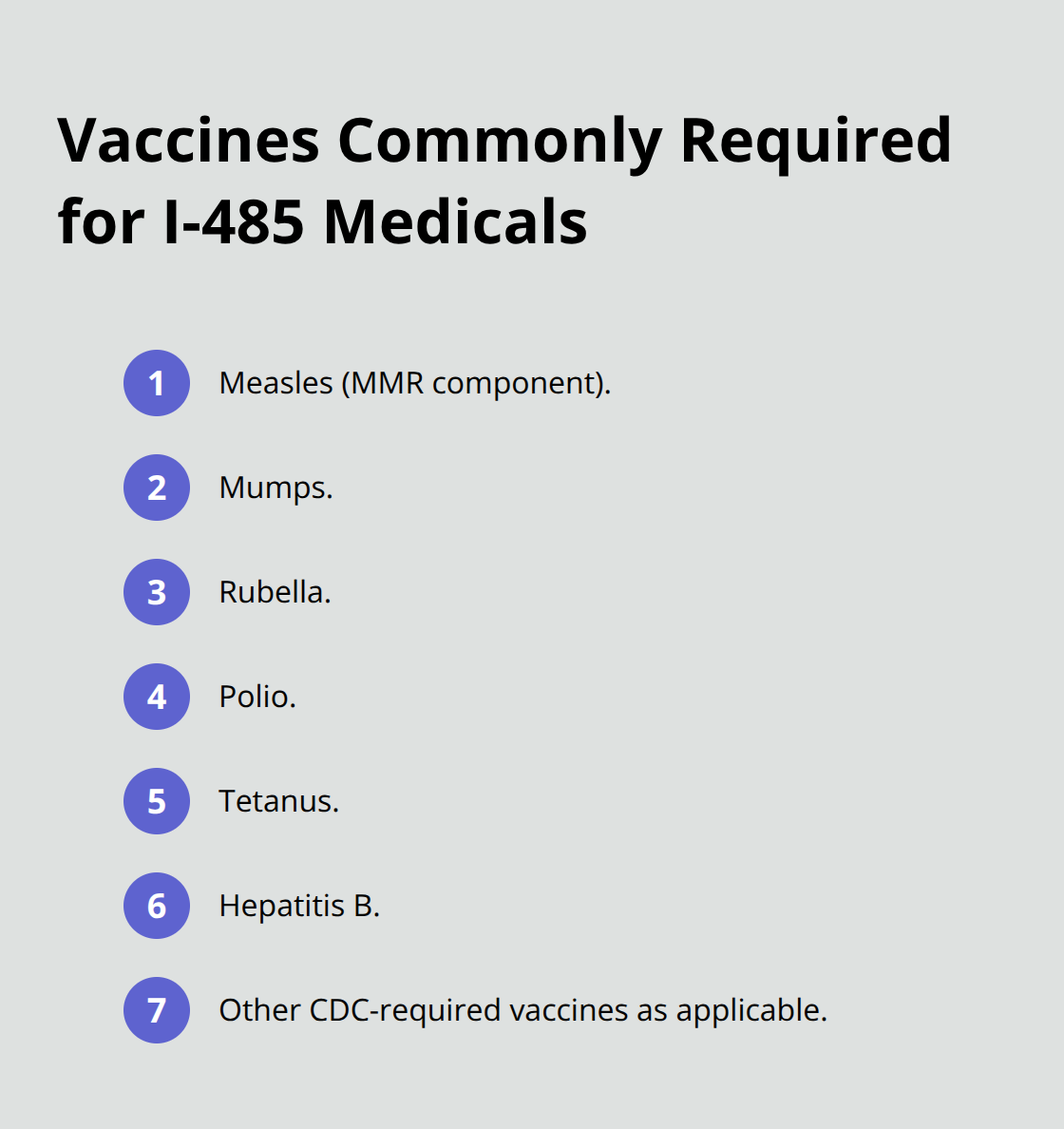
Try reviewing your vaccination records now and scheduling appointments before filing.
The 90-Day Marriage Deadline
The 90-day marriage window is real and firm. You entered the United States on a K1 visa valid for six months, but your adjustment eligibility depends on marrying within 90 days. After that window closes, you lose eligibility for adjustment of status and must pursue consular processing abroad instead, which is significantly more complicated.
Your Sponsor’s Financial Obligation
Your U.S. citizen spouse must file Form I-864, the Affidavit of Support, demonstrating household income at 125% of the federal poverty guideline. For 2026, this means a sponsor supporting one person must earn approximately $17,875 annually. If your spouse’s income falls short, a joint sponsor can add their income to meet the threshold.
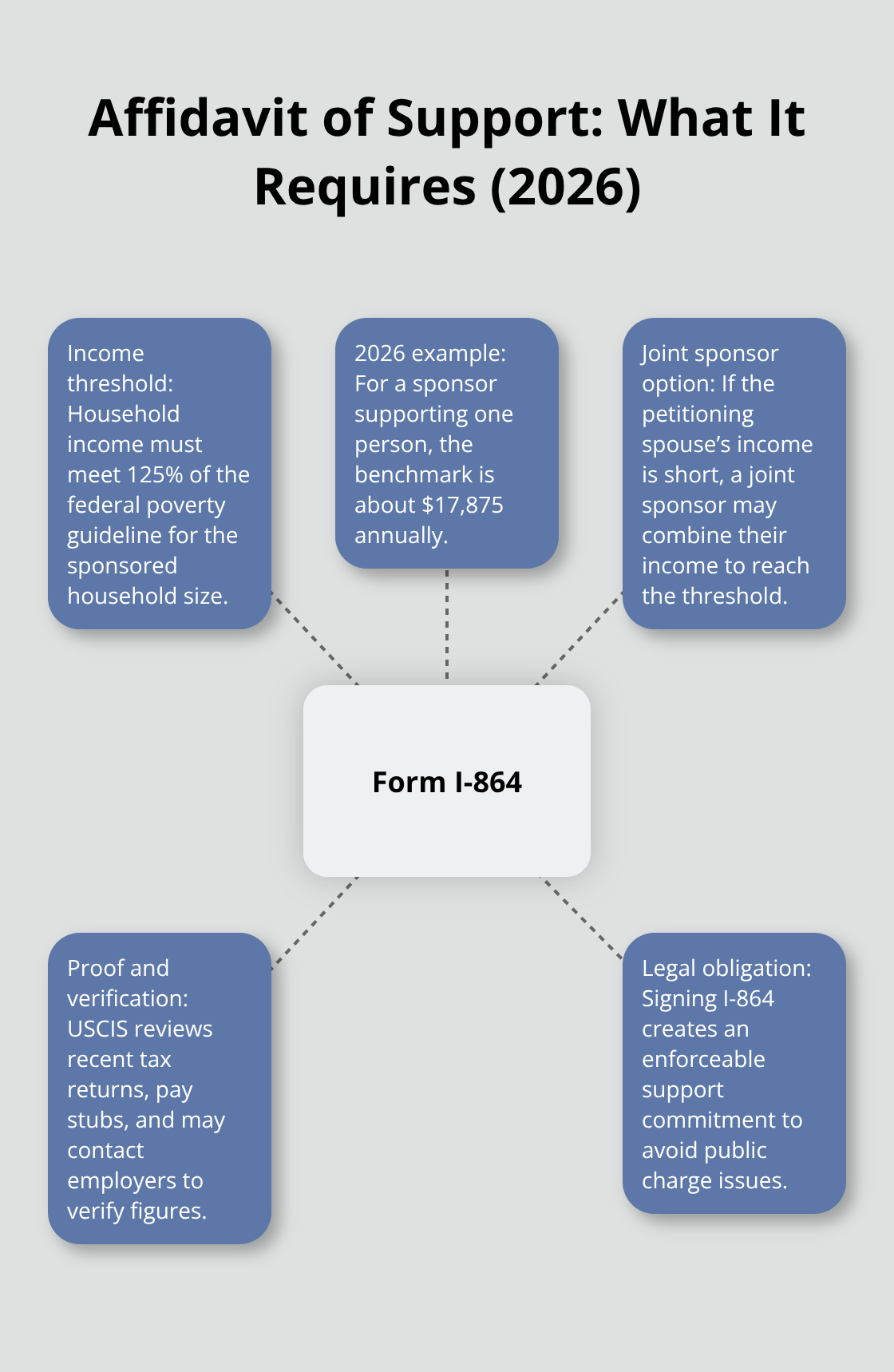
USCIS verifies this through recent tax returns and pay stubs, so don’t estimate or round figures. The affidavit creates a legal obligation for your sponsor to support you financially, preventing you from becoming a public charge. With your relationship documented and your medical requirements met, you’re ready to tackle the actual Form I-485 submission-the document that officially starts your path to permanent residence.
Building Your Document Package
USCIS approves adjustments only when you provide tangible evidence that your marriage is genuine, that you meet medical requirements, and that your sponsor can financially support you. Start gathering documents immediately after marriage because missing even one item forces USCIS to send a Request for Evidence, which delays approval by months. Your marriage certificate forms the foundation, but it represents just the beginning of what you need.
Proving Your Genuine Relationship
Include joint bank account statements from the past six months, co-owned property deeds, utility bills showing both names, and photos of you together throughout your marriage. Add birth certificates of any children you’ve had together. USCIS specifically looks for financial interdependence and shared life decisions, not romantic gestures. If you lack joint accounts or property, gather lease agreements in both names, joint tax returns if applicable, and affidavits from family members or friends who witnessed your relationship developing. The stronger your evidence package, the less likely USCIS becomes suspicious about whether your marriage was entered for immigration benefits rather than genuine commitment.
Medical Examination Requirements
Your medical examination must occur with a USCIS-approved physician, not your regular doctor. The exam costs between $200 and $650 depending on your location and whether vaccines require separate appointments. Many applicants waste time and money by scheduling with non-approved providers or assuming their existing medical records satisfy requirements.
The physician documents vaccination status for measles, mumps, rubella, polio, tetanus, hepatitis B, and others per CDC guidelines. If your vaccination records show gaps or missing dates, the physician cannot approve your exam until you complete the series. Plan for multiple visits if vaccines require spacing between doses. Once the exam is complete, the physician seals the results in an envelope that goes directly into your I-485 package.
Financial Documentation and Sponsorship
Your sponsor’s Form I-864 must demonstrate household income at 125% of the federal poverty guideline according to USCIS standards. For 2026, supporting one person requires approximately $17,875 annually. Your spouse provides recent tax returns, pay stubs from the past two months, and employment verification letters. If income falls short, a joint sponsor can add their earnings, though they must also complete Form I-864 with their own documentation.
USCIS verifies everything through IRS databases and employer contacts, so inflated figures create fraud allegations that destroy your case. Gather these documents now rather than scrambling when you’re ready to file. With your relationship documented, medical requirements met, and financial proof assembled, you move toward the actual Form I-485 submission-the document that officially starts your path to permanent residence.
What Mistakes Destroy Your I-485 Application
Form I-485 submissions fail most often because applicants rush the process or misunderstand what USCIS requires. The form itself runs 16 pages and demands precision on every line. A single incorrect date, missing signature, or omitted document triggers a Request for Evidence that delays your case by months. Three critical errors appear repeatedly: submitting incomplete forms, skipping biometrics appointments, and ignoring USCIS deadlines.
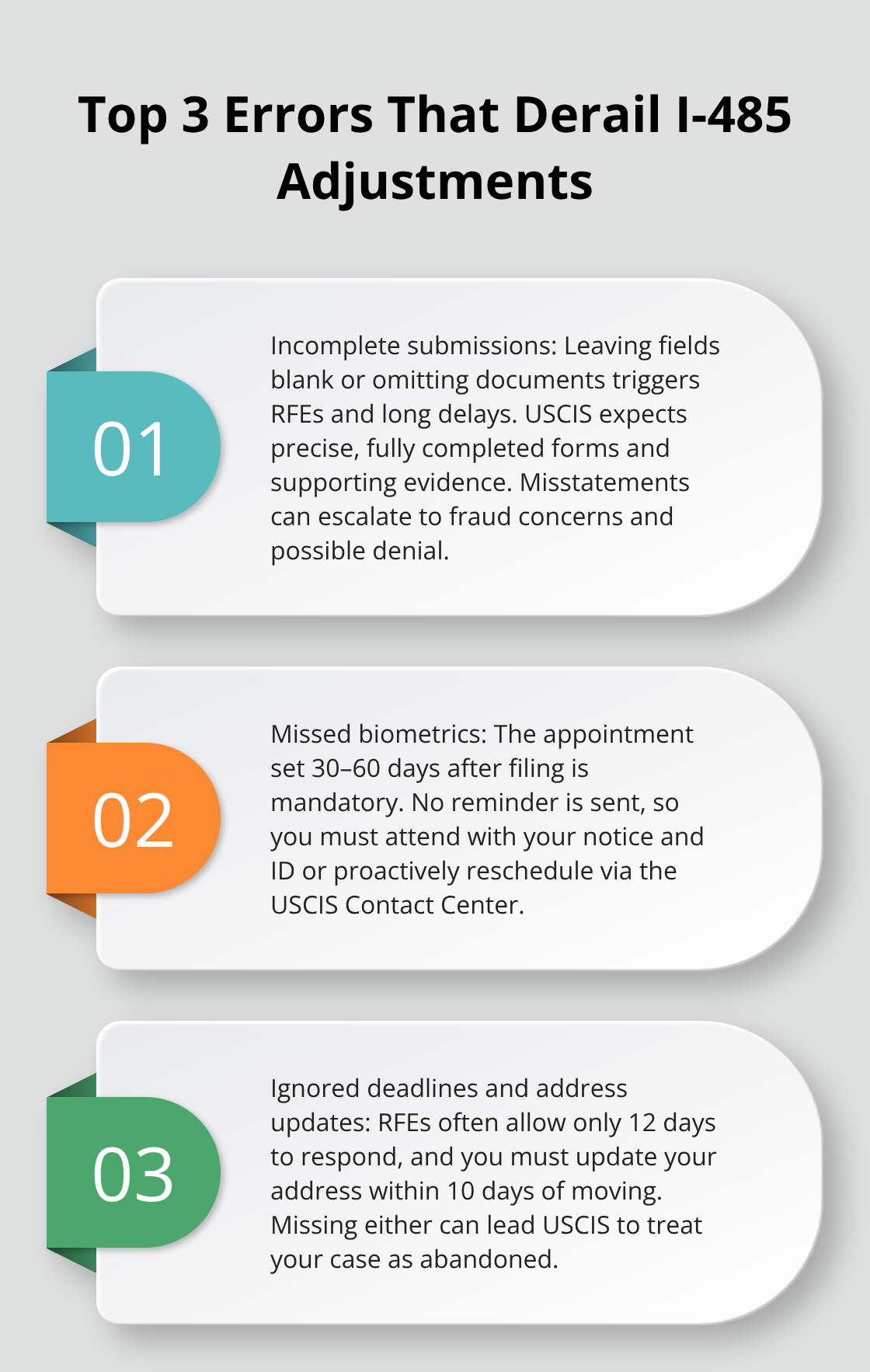
Each mistake costs time and creates unnecessary stress when approval sits within reach.
Incomplete Form I-485 Submissions
Applicants leave fields blank, assuming USCIS will overlook missing information or that they can provide details later. This assumption fails. USCIS processes thousands of applications monthly and has zero tolerance for incomplete submissions. If you skip the employment history section, fail to list all prior addresses, or provide an incomplete list of dependents, USCIS sends an RFE that demands corrections. An RFE response delays your case significantly. Worse, if you misrepresent your work history or prior residence, you risk fraud allegations that can result in case denial and deportation proceedings.
Before you mail Form I-485, print the instructions from USCIS and work through every single field. Verify that your name matches your passport exactly, that all dates align with your I-94 and other documents, and that you sign the form in blue ink, not black. Have your spouse review the entire form before you mail it. Small errors that seem insignificant create massive delays.
Your medical examination results, Form I-864 from your sponsor, your marriage certificate, passport copies, and birth certificate must all accompany the I-485 in the exact order USCIS specifies. Missing even one document forces USCIS to return your entire package and restart the clock.
Biometrics Appointments You Cannot Skip
After USCIS receives your I-485, they send a Notice of Action that schedules you for biometrics within 30 to 60 days. This appointment is mandatory and non-negotiable. You must attend on the specified date and bring your appointment notice and valid identification. Skipping this appointment or arriving late causes USCIS to mark you as a no-show, which can result in case denial.
USCIS does not send reminder notices. The appointment date on your Notice of Action is your only notification. Mark it on your calendar immediately upon receiving the notice. If an emergency prevents attendance, contact the USCIS Contact Center before your appointment date to request a reschedule. Attending biometrics on time demonstrates to USCIS that you take your application seriously and will comply with immigration procedures.
Deadlines and Address Changes That Matter
Missing deadlines and failing to respond to USCIS requests destroys otherwise strong cases. USCIS gives you 12 days to respond to most RFEs, though you can request additional time in writing if circumstances warrant. Many applicants never receive their RFE letters because they failed to update their address with USCIS within 10 days of moving. Your address change must occur before USCIS mails the RFE, or you will never receive it and USCIS will assume you abandoned your case.
Update your address immediately if you move. If USCIS requests additional documents or information, provide everything they ask for within the deadline. Do not provide partial responses or argue about why you think their request is unnecessary. USCIS controls the process, and cooperation matters far more than opinion. Submit responses with proof of delivery so you have evidence that USCIS received your materials. These three mistakes-incomplete submissions, missed biometrics appointments, and ignored deadlines-account for the vast majority of unnecessary delays and denials in adjustment cases.
Final Thoughts
USCIS approves your I-485 and you become a lawful permanent resident once you submit everything on time and attend your biometrics appointment. If your marriage is less than two years old at approval, your green card arrives as conditional and valid for two years. You then file Form I-751 within 90 days of expiration to remove conditions by providing evidence that your marriage remains genuine, after which you receive a standard ten-year green card.
Your immediate next steps involve obtaining a Social Security Number through the Social Security Administration and updating your address with USCIS if you move. Many permanent residents also begin exploring citizenship eligibility, which typically requires five years of permanent residence, though spouses of U.S. citizens can apply after three years. The adjustment of status K1 visa process feels overwhelming when you’re in the middle of it, but breaking it into stages makes it manageable.
Immigration matters involve both legal complexity and personal stakes that deserve expert support. If you face questions about your specific situation, need help with Form I-485 preparation, or encounter complications during your adjustment process, contact Law Offices of Jeffrey A. Thompson for guidance tailored to your case.
Share this post: