
How to Adjust Status with a Diversity Visa
December 22, 2025
Winning a diversity visa is an incredible opportunity, but the adjustment of status process can feel overwhelming without proper guidance. We at Law Offices of Jeffrey A. Thompson have helped countless clients navigate this complex path successfully.
This guide walks you through each step, from eligibility requirements to interview preparation, so you can avoid costly mistakes and move forward with confidence.
Who Qualifies to Adjust Status as a Diversity Visa Winner
Not every diversity visa winner can adjust status within the United States. The Department of State allocates roughly 55,000 immigrant visas annually through the diversity visa program, but only a small percentage of winners are positioned to adjust domestically. You must meet three hard requirements to proceed: you need an active diversity visa selection from the lottery, you must have entered the United States lawfully and maintained continuous lawful status since arrival, and you must be admissible under immigration law. If you entered the country illegally or overstayed a previous visa, adjustment of status is generally off the table, though rare exceptions exist. The Department of State publishes visa availability monthly in the Visa Bulletin, and your diversity visa rank number must fall below the published cutoff for your category before you can file Form I-485. This means checking the Visa Bulletin every month is non-negotiable-missing the window when your number becomes current can cost you an entire year.
Verify Your Visa Availability Before Filing
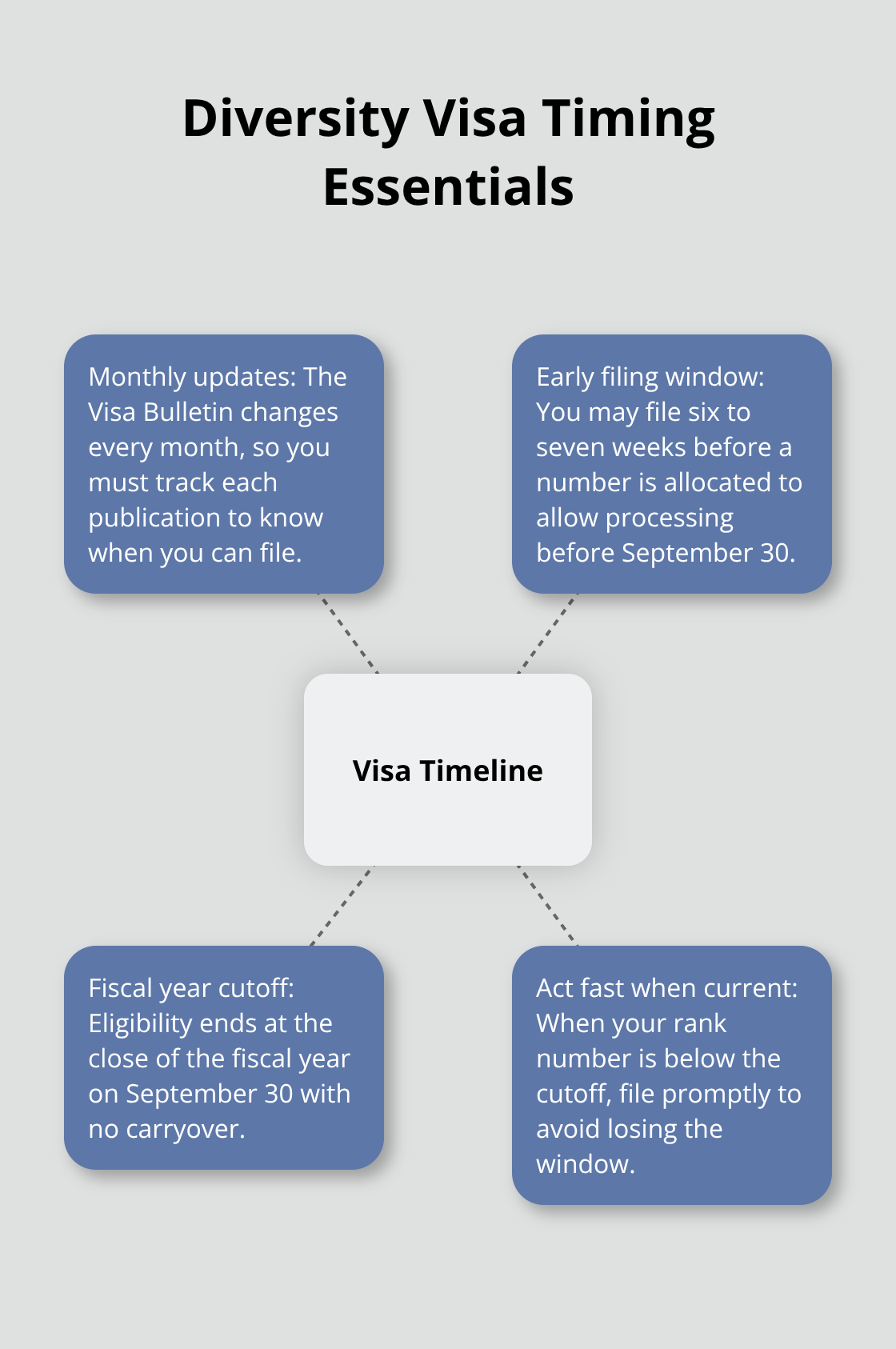
The Visa Bulletin determines whether you can move forward. Your diversity visa rank number must fall below the published cutoff for your category in the month you plan to file. The Department of State updates this information monthly, so you cannot afford to miss a single publication. Applicants may file for adjustment up to six or seven weeks before a visa number is allocated, which gives you time for processing before the fiscal year ends on September 30. After that deadline passes, your diversity visa eligibility expires, and you cannot carry it over to the next fiscal year. Check the Visa Bulletin consistently and mark your calendar for publication dates to avoid this trap.
Complete Your Medical Examination with a Designated Civil Surgeon
Before submitting your I-485, you must complete a medical examination with a USCIS-designated civil surgeon and obtain Form I-693. This exam covers communicable diseases, mental and physical disorders, and vaccination status. The civil surgeon must be on the USCIS list-using any other doctor invalidates the examination. Schedule this appointment early because some civil surgeons have long wait times, and you cannot submit your application without this form. The examination results remain valid for one year from the date the civil surgeon signs the form, so timing your appointment strategically helps you avoid having to repeat the process.
Gather Police Certificates from Every Country Where You Lived
Police certificates from every country where you’ve lived for more than six months since age 16 are mandatory. The Department of State’s Reciprocity by Country page specifies exactly which countries require certificates and how to obtain them-some nations have specific forms, while others make certificates unavailable entirely. If a certificate is genuinely unobtainable, document your good-faith effort and submit a written explanation. Police certificates expire after two years, so if you obtained one more than two years ago and still live in that country, you must bring a new one to your interview. This timing requirement catches many applicants off guard, so plan accordingly.
Obtain Your Birth Certificate and Other Identity Documents
You’ll need a certified long-form birth certificate showing both parents’ names and the place of birth; short-form certificates will not work. If your birth certificate is unavailable, submit a certified government statement explaining why plus secondary evidence like a baptismal certificate or adoption decree. Gather a photocopy of the biographic data page of your valid passport and bring the original to your interview. Prepare translations of any required documents in addition to the originals, and bring everything to your interview appointment. With these documents in hand, you move closer to submitting your complete I-485 package.
Filing Your I-485 and Moving Forward
Assemble Your Complete Document Package
Form I-485 runs 20 pages, but the real work lies in assembling the supporting documents correctly. You must include your Department of State Electronic Diversity Visa Program selection notice, the receipt showing you paid the diversity visa processing fee, Form I-693 from your civil surgeon, police certificates from every country where you lived, your original long-form birth certificate, certified court records if you have any arrests or convictions, copies of your passport biographic pages, and your Arrival/Departure Record Form I-94 if applicable. The USCIS Policy Manual requires two passport-style photographs, evidence that you meet the diversity visa education or work experience requirement (transcripts or documented work history), and proof you have continuously maintained lawful status since entering the United States. If you held J-1 or J-2 visa status, include documentation of compliance with or waiver of the two-year foreign residence requirement. Missing even one document delays your case significantly, so create a checklist and verify every single item before you submit.

Pay Your Filing Fee and Understand Processing Timelines
The filing fee for Form I-485 under the diversity visa program is $1,440, and this fee is non-refundable regardless of the outcome. You must pay this fee in addition to any biometric services fee that USCIS charges. Processing timelines vary considerably depending on your USCIS service center location, but expect several months before your interview is scheduled; in some cases, processing takes up to about 14 months. USCIS prioritizes diversity visa adjustment cases, which generally leads to faster processing than standard adjustment of status applications. You can file Form I-765 for employment authorization and Form I-131 for advance parole concurrently with your I-485, which allows you to work and travel while waiting for a decision.
Prepare for Your USCIS Interview
Your interview takes place at a USCIS service center near your address, and while USCIS may waive interviews in some diversity visa cases, you should prepare as if an interview will happen. The officer will ask about your background, your diversity visa entry, your work and education history, and your ties to the United States. Answer questions directly and honestly; any inconsistency between your written answers and your oral responses raises red flags. After USCIS approves your I-485, the agency mails your green card to your address as proof of lawful permanent resident status. If USCIS denies your application, you have the right to appeal the decision in cases of wrongful denial.
The approval of your I-485 marks a major milestone, but your journey doesn’t end there-especially if you have family members abroad who need to complete their own visa processing.
What Errors Derail Most Diversity Visa Adjustments
Incomplete documentation stops your application cold
The most dangerous mistake applicants make is submitting incomplete documentation. USCIS will not accept a partial I-485 package, and even one missing document forces you to start over, which costs you months of processing time you cannot afford to lose. You need the Department of State Electronic Diversity Visa Program selection notice, the diversity visa processing fee receipt, Form I-693 signed by your civil surgeon, certified police certificates from every country where you lived for more than six months since age 16, your original long-form birth certificate, certified court records if you have arrests or convictions, copies of your passport biographic pages, your Form I-94 if applicable, two passport-style photographs, and proof of your education or work history.
Many applicants gather most documents correctly but fail on the police certificates because they underestimate how long it takes to obtain them from foreign governments. The USCIS Policy Manual requires every document to be present before adjudication begins. Create a physical checklist and verify each item exists in your packet before you file. Do not estimate or assume a document will arrive later.
The Visa Bulletin Timeline Controls Your Entire Case
Your second critical error is misunderstanding the Visa Bulletin timeline. The cutoff numbers change monthly, and your diversity visa rank number must fall below the current cutoff to file your I-485. You can submit your application six to seven weeks before a visa number is allocated, but if you file too early when your number is not yet current, USCIS will reject your application outright.
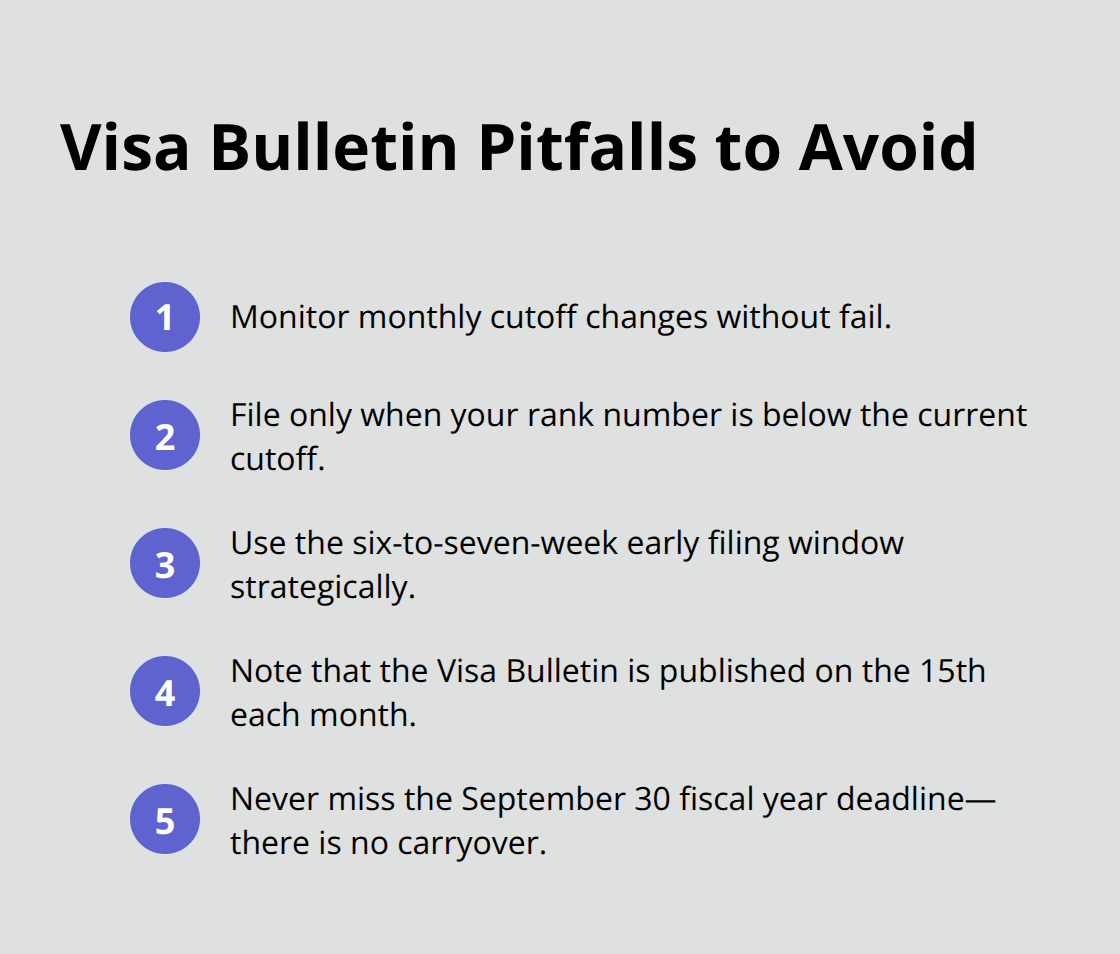
The Department of State publishes the Visa Bulletin on the 15th of each month, and you must check it religiously starting the month after your selection number is announced. One missed publication means one lost month, and with only a nine-month window between lottery selection and the September 30 deadline, you cannot recover from that mistake. Missing the deadline means losing your entire diversity visa eligibility for that fiscal year, with no carryover to the next year.
Withholding Information Guarantees Denial and Worse
Never withhold information about previous immigration violations, criminal history, or visa overstays. USCIS conducts thorough background checks on every diversity visa applicant, and they will discover any inconsistencies between what you report and what their investigation uncovers. The consequences of discovered fraud or misrepresentation include permanent deportation bars and lifetime ineligibility for future immigration benefits.
If you overstayed a previous visa or entered illegally, disclose this immediately to an immigration attorney who can evaluate whether you qualify for a waiver or if adjustment is genuinely impossible for you. Attempting to hide these issues guarantees denial and potential criminal referral.
Final Thoughts
USCIS approval of your I-485 confirms your lawful permanent resident status, and your green card arrives by mail within weeks. If you have a spouse or children abroad who were listed on your diversity visa entry, you must request that USCIS notify the appropriate U.S. Embassy or Consulate so your family members can apply for their immigrant visas. Your family members must receive their visas before September 30 of the fiscal year or before the annual diversity cap is reached, so timing matters enormously for them as well.
The diversity visa adjustment of status process demands precision, complete documentation, and strict adherence to federal timelines. One missed deadline or one incomplete document can cost you an entire year of eligibility, and the stakes are far too high for mistakes. We at Law Offices of Jeffrey A. Thompson in Brockton, Massachusetts, specialize in immigration law and help clients overcome legal obstacles while managing all paperwork required for successful adjustment.
If you have questions about your eligibility, your documentation, or your timeline, contact Law Offices of Jeffrey A. Thompson to discuss your case with an experienced immigration attorney. Your American dream depends on getting this right the first time.
Share this post: