How to Adjust Your Status Through Marriage
March 27, 2026
Marriage offers a direct path to permanent residency in the United States, but the adjustment of status through marriage requires careful planning and precise execution.
At Law Offices of Jeffrey A. Thompson, we’ve guided countless couples through this process. The steps ahead involve specific eligibility requirements, detailed documentation, and strategic timing to avoid costly mistakes.
Eligibility Requirements for Marriage-Based Immigration
Who Qualifies to Sponsor You
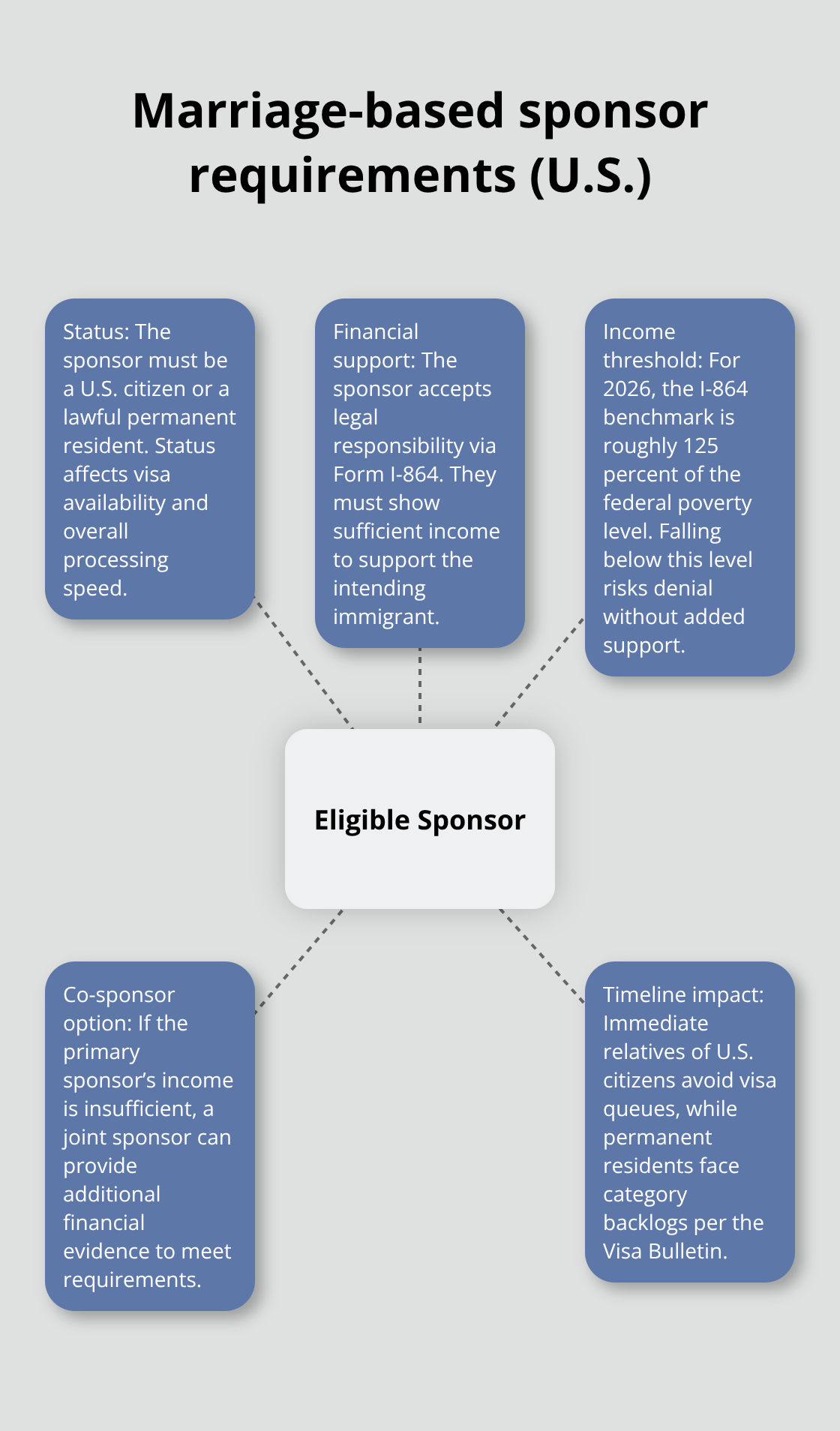
To adjust status through marriage, you need a sponsor who meets specific federal requirements. Your sponsor must be either a U.S. citizen or a lawful permanent resident, and they must prove their ability to financially support you. The U.S. citizen sponsorship route moves faster than permanent resident sponsorship because immediate relatives of U.S. citizens skip the visa availability queue entirely. If your sponsor is a permanent resident, you fall into the family preference category, which means you’ll wait for visa availability according to the Department of State Visa Bulletin.
This distinction matters significantly for your timeline. U.S. citizens can sponsor spouses without waiting periods, while permanent residents face backlogs that can stretch years depending on your country of origin. Your sponsor must also complete the Affidavit of Support Form I-864, which legally obligates them to support you financially. The income threshold for 2026 sits at roughly 125 percent of the federal poverty level.
If your sponsor’s income falls short, they can add a co-sponsor, typically a family member or employer, who provides additional financial documentation. This option opens the door for couples where the primary sponsor lacks sufficient income on their own.
Medical Exams and Background Checks
USCIS requires a medical examination by a designated civil surgeon before your I-485 interview, and this exam costs between $100 and $500 depending on your location. The medical exam includes vaccinations, tuberculosis screening, and a general health assessment. You must complete this exam within a specific window-it cannot be older than three months before you file, and it must remain valid through your interview.
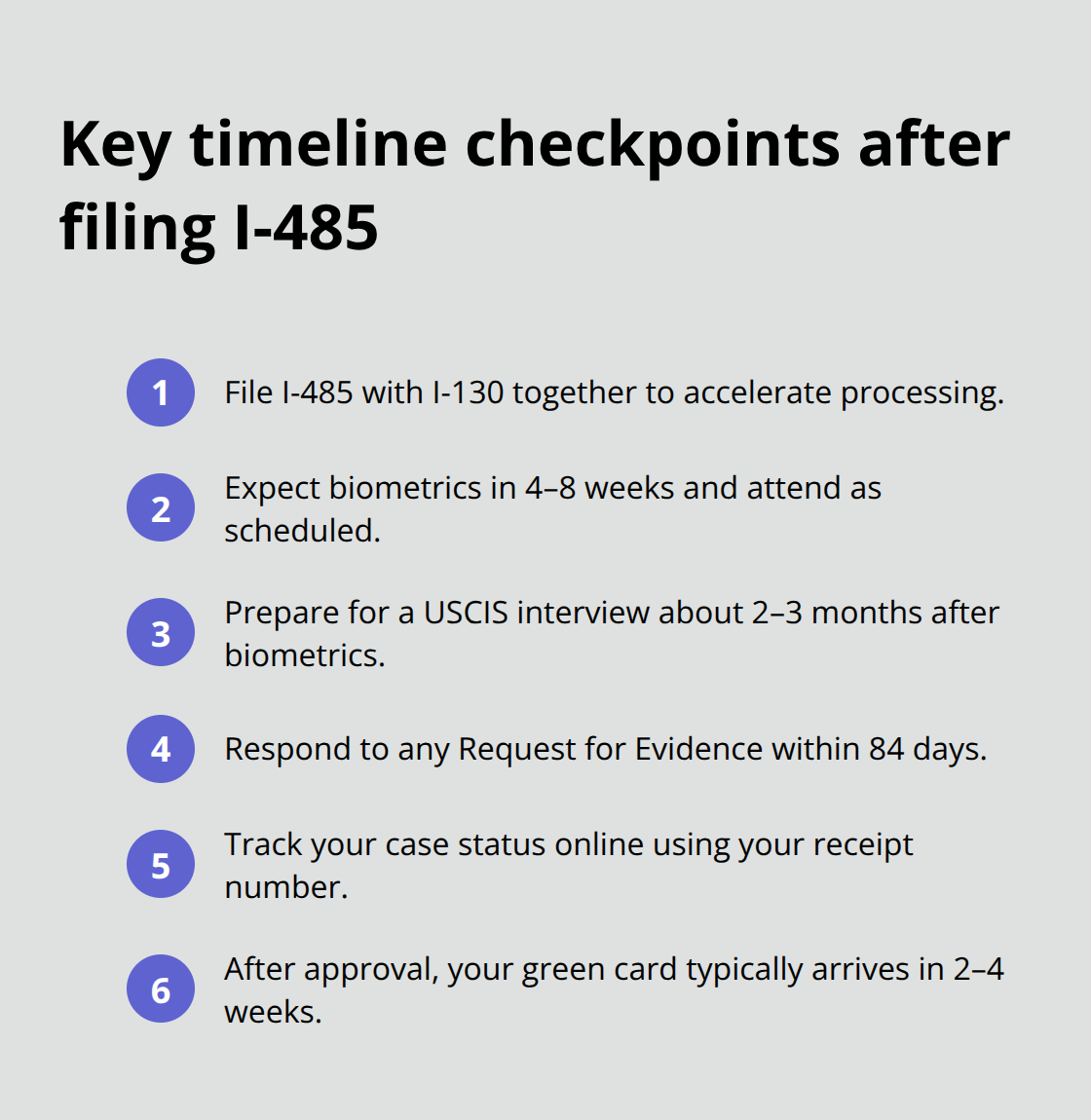
Many applicants schedule their exam too early or too late, forcing them to pay for a second examination. Background checks happen simultaneously with your biometrics appointment, where USCIS collects your fingerprints, photographs, and signature. The biometrics appointment typically occurs four to eight weeks after you file Form I-485, and you must attend or risk automatic denial.
What USCIS Discovers During Background Checks
USCIS cross-references your fingerprints against FBI databases and immigration records. Criminal convictions, prior deportations, or immigration violations can bar you from adjustment of status entirely. If you have any criminal history, misdemeanor or felony, disclose it fully on your application because USCIS will discover it anyway. Honest disclosure sometimes allows for waivers, while concealment guarantees denial.
Your next step involves understanding the specific forms and documentation that USCIS requires for your marriage-based petition.
Filing Your I-485 and Managing the Application Timeline
Submit Your I-485 with Complete Documentation
Form I-485 becomes official with USCIS when you submit it together with Form I-130 (Petition for Alien Relative), which accelerates your timeline significantly. The filing fee for I-485 is $1,440, and medical examination costs run $100 to $500 depending on your location. USCIS processes marriage-based I-485 applications in approximately 11.5 months on average, though this varies by service center. You must submit complete and accurate documentation when you file because USCIS will not accept incomplete applications-errors force you to withdraw and refile with additional fees.
Gather your birth certificate, valid passport, marriage certificate, and proof of termination of any prior marriages. Include joint bank statements or lease agreements that show your genuine relationship. Provide the Affidavit of Support Form I-864 with three years of tax returns from your sponsor. Translate any non-English documents into certified English versions. Submit clear photocopies rather than originals unless USCIS specifically requests originals, as this prevents document loss and delays. Mail your application to the correct USCIS address listed on the form instructions-submitting to the wrong location causes processing delays.
Attend Your Biometrics Appointment
Your biometrics appointment arrives four to eight weeks after filing, and attendance is mandatory. USCIS collects your fingerprints, photographs, and signature during this appointment. Missing it results in automatic denial.
The appointment notice arrives by mail and specifies the date, time, and location. Bring your receipt notice and valid identification to the appointment. Sign the acknowledgment certifying that the information in your application is complete and accurate.
Prepare for Your USCIS Interview
The interview typically follows biometrics within two to three months. A USCIS officer verifies your information and assesses whether your marriage is genuine. Prepare by reviewing every document you submitted and practicing answers to questions about how you met your spouse, your relationship timeline, shared finances, and household responsibilities. Bring originals of all documents submitted with your I-485, including your passport, official travel documents, and Form I-94. Honest, consistent answers demonstrate the authenticity of your relationship.
Respond to Requests for Evidence and Track Your Status
If USCIS issues a Request for Evidence, you have 84 days to respond with the requested materials-do not ignore these notices. Processing times vary by service center, but you can check your case status online using your receipt number. Once USCIS approves your I-485, your green card arrives in the mail within two to four weeks. Common mistakes during this phase include missing deadlines, submitting incomplete evidence, and failing to report address changes to USCIS within 10 days of moving.
Common Mistakes That Cost You Time and Money
Thousands of marriage-based green card applications face rejection or severe delays because applicants overlook specific documentation requirements or miss strict deadlines. These preventable errors compound into months of additional waiting and thousands of dollars in refiling fees. The most damaging mistake is underestimating how thoroughly USCIS scrutinizes evidence of a genuine relationship.
Insufficient Documentation of Your Genuine Relationship
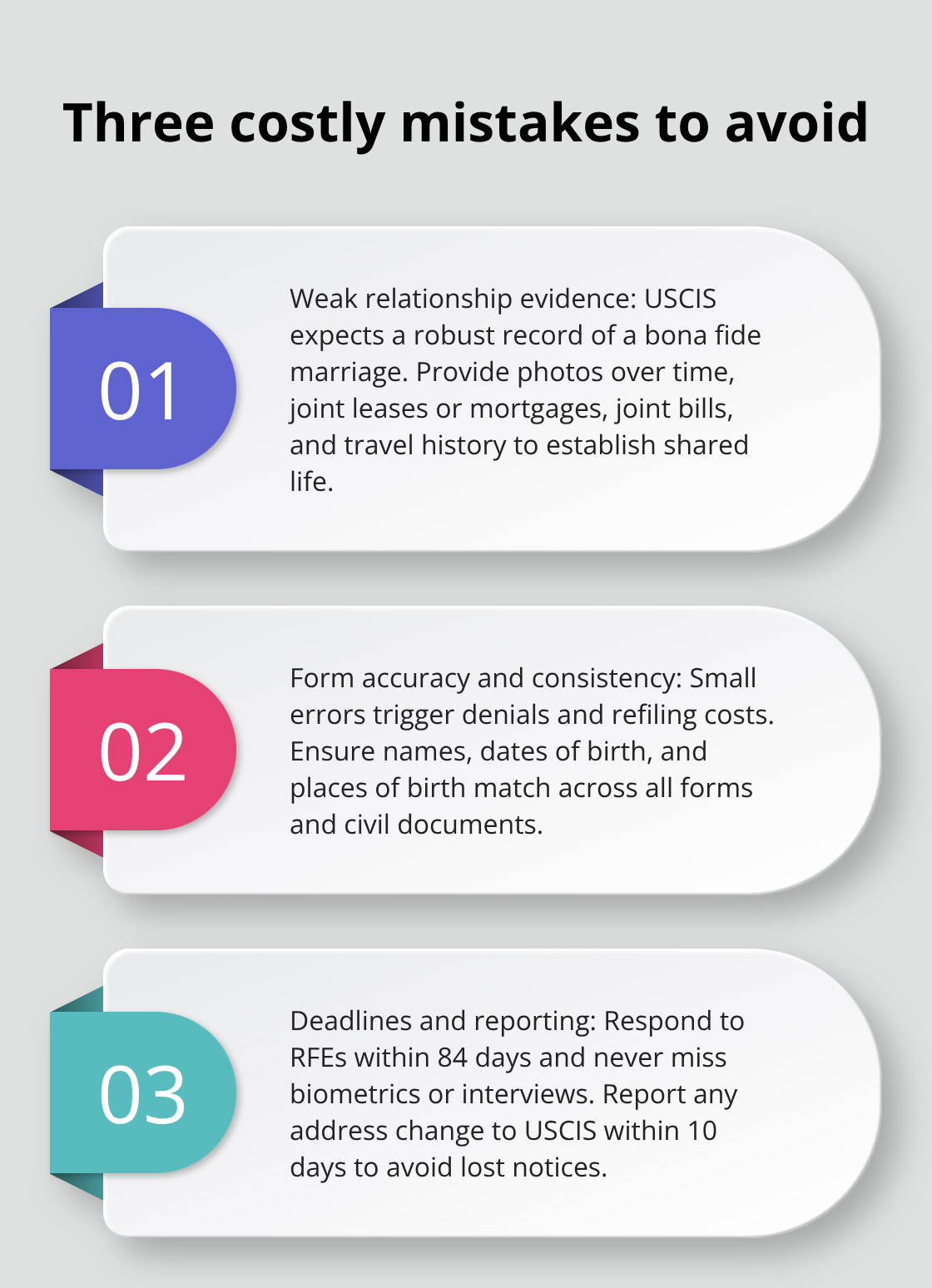
Joint bank statements alone will not convince USCIS that your marriage is real. You need photos spanning years, lease agreements or mortgage documents showing both names, birth certificates of children born to the marriage, and joint utility bills. Travel records together and detailed timelines of how you met and built your life matter equally. USCIS officers interview thousands of applicants annually and identify manufactured relationships within minutes. If your documentation appears thin or inconsistent with your interview answers, denial follows immediately.
Form Accuracy and Consistency Errors
Under federal regulation 8 CFR 245.2, Form I-485 must be complete and accurate at filing. A single spelling mistake, a date entered incorrectly, or a blank field triggers automatic denial. USCIS does not contact you to fix errors-they simply deny your application, and you must refile with an additional $1,440 filing fee plus new biometrics and medical examination costs totaling another $100 to $500. Cases where applicants listed their name differently across forms or used inconsistent birth dates force them to start over entirely. Your name, birth date, and place of birth must match perfectly across Form I-130, Form I-485, your birth certificate, and your passport.
Missing Deadlines and Failing to Report Changes
When USCIS issues a Request for Evidence, you have exactly 84 days to respond. Applicants who wait until day 80 to gather documents often miss the deadline by a few days, resulting in automatic denial with no opportunity to appeal. Moving to a new address without notifying USCIS within 10 days creates serious problems-your approval notice or green card arrives at your old address and you never receive it, which USCIS interprets as abandonment of your case.
Maintaining Valid Status During Processing
Many applicants fail to maintain valid immigration status while their application is pending. If your visa expires or you work without authorization before your Employment Authorization Document is approved, you jeopardize your entire case. Your medical examination cannot be older than three months when you file, and it must remain valid through your interview. Plan backward from your expected interview date, not forward from your filing date (scheduling your medical exam too early forces you to pay for a second one). These errors reflect fundamental requirements that USCIS enforces consistently across all cases, and applicants who ignore them pay the price in delays, additional fees, and emotional stress.
Final Thoughts
Adjustment of status through marriage succeeds when you combine accurate documentation, strict deadline compliance, and honest communication with USCIS. Your eligibility, your sponsor’s financial capacity, and the authenticity of your relationship form the foundation of your case. Medical examinations, background checks, and biometrics appointments are standard requirements that protect both you and the immigration system, and missing a single deadline or submitting incomplete documentation costs you months of additional waiting and thousands of dollars in refiling fees.
We at Law Offices of Jeffrey A. Thompson understand the stakes involved in your immigration journey. Immigration law changes frequently, and what worked for someone else’s case may not apply to yours. An experienced immigration attorney identifies risks specific to your situation, prepares your documentation to withstand USCIS scrutiny, and guides you through the interview process with confidence.
Your next step is straightforward: gather your documents, verify your eligibility, and prepare for the months ahead. If you face any uncertainty about your specific circumstances, contact our office for a consultation to discuss your case with an attorney who specializes in family-based immigration. The investment in professional guidance now prevents costly mistakes later and significantly increases your approval odds.
Share this post: