
How to Check Your Adjustment of Status Priority Date
December 1, 2025
Your adjustment of status priority date determines when you can move forward with your green card application. This date controls your place in line for permanent residency.
We at Law Offices of Jeffrey A. Thompson see clients struggle with tracking their priority dates daily. Understanding how to monitor this date prevents costly delays and missed opportunities in your immigration journey.
What Is Your Priority Date and Why Does It Control Everything
Your priority date marks the exact moment USCIS received your initial immigration petition, typically Form I-130 for family-based cases or Form I-140 for employment-based applications. The Department of State uses this date to establish your position in the green card queue, with the annual cap of 366,000 green cards divided between family-based and employment-based categories that creates inevitable backlogs.
How to Locate Your Priority Date on Official Documents
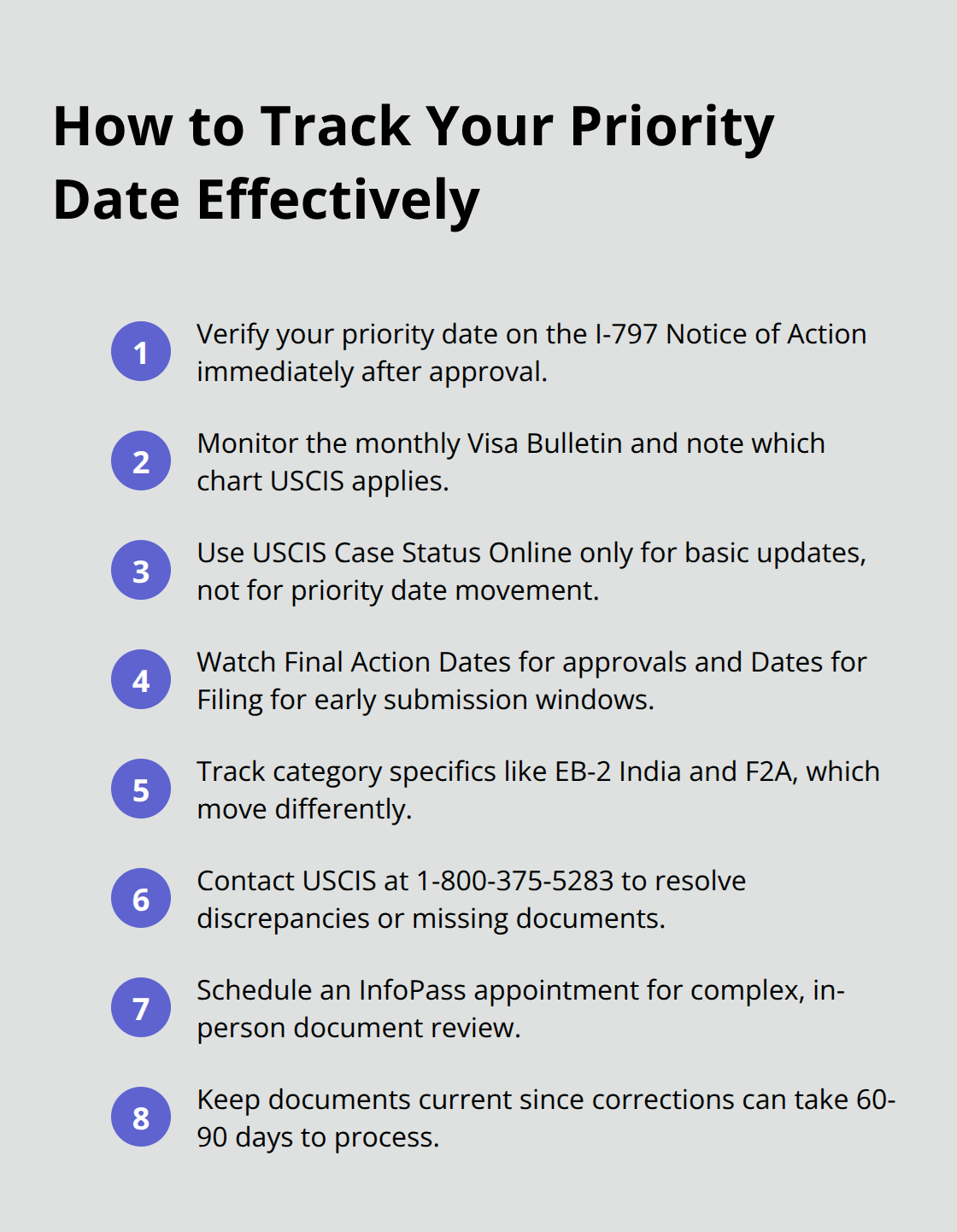
The I-797 Notice of Action displays your priority date prominently after USCIS approves your petition. This document serves as your official record, and you should verify this date immediately upon receipt. USCIS processes approximately 226,000 family-based and 140,000 employment-based green cards annually, which makes accurate priority date verification essential for proper application timing.
Priority Dates Control Your Green Card Timeline
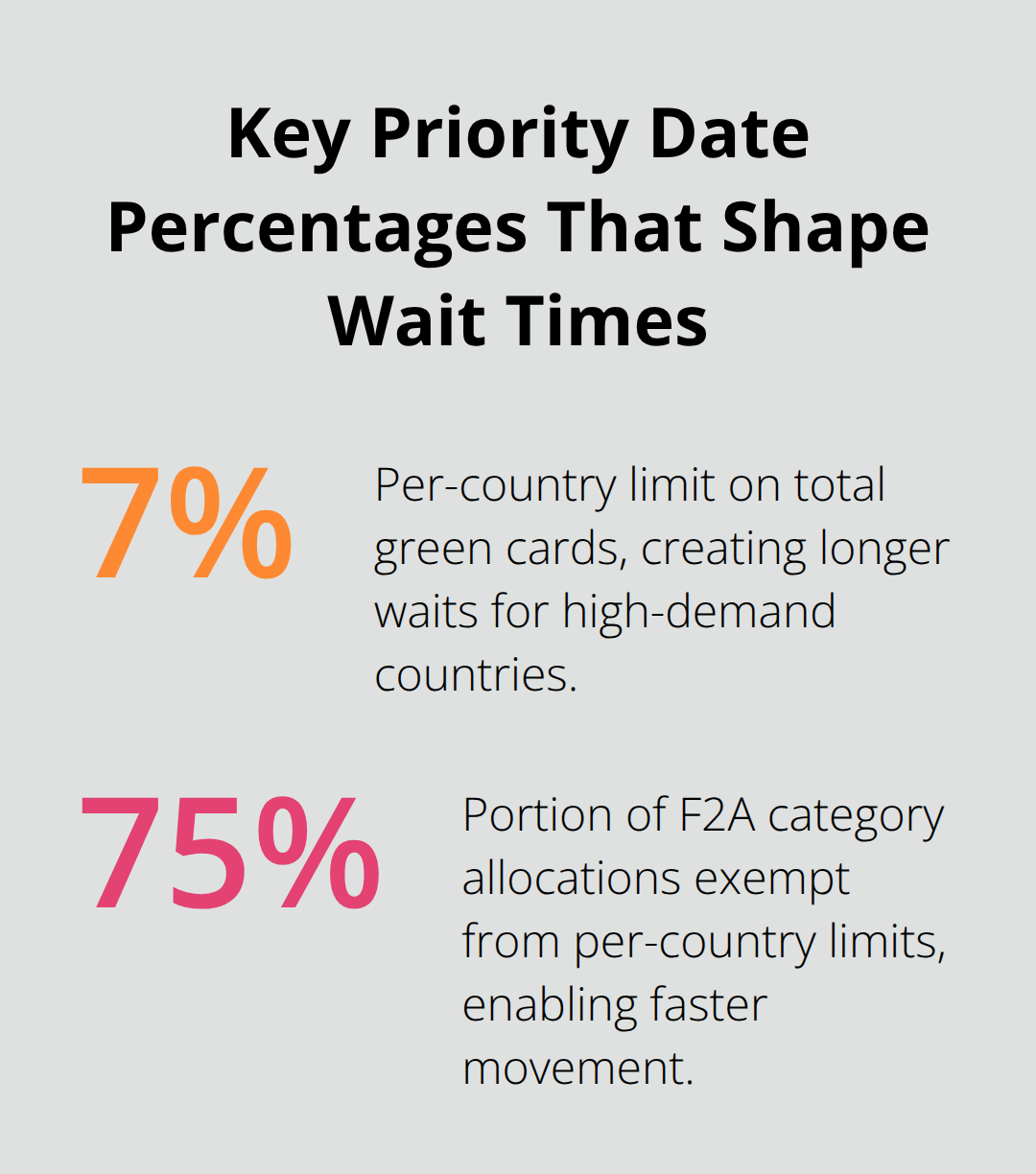
The monthly Visa Bulletin published by the Department of State shows current processing dates for each category. When your priority date becomes earlier than the published cutoff date, you can file Form I-485 for adjustment of status. Countries like China, India, Mexico, and the Philippines face longer waits due to the 7% per-country limit (with some categories experiencing decades-long backlogs).
Filing Date Versus Priority Date Creates Common Confusion
Your filing date marks when you submit Form I-485, while your priority date establishes your queue position from the original petition. The Visa Bulletin includes two charts: Final Action Dates determine when USCIS can approve your case, while Dates for Filing allow early submission when visa numbers become available. This distinction prevents application rejections and wasted filing fees.
Now that you understand what your priority date means and where to find it, you need to know the specific methods to track its status and monitor when it becomes current for your case.
How Do You Track Your Priority Date Movement
Use USCIS Case Status Tool for Basic Updates Only
The USCIS Case Status Online tool provides basic application updates but does not show priority date progression or current status relative to Visa Bulletin cutoffs. This tool displays generic processing stages like “case received” or “case approved” without indicating when your priority date becomes current. The Department of State’s monthly Visa Bulletin remains the definitive resource for tracking your actual position in the green card queue, published around the 9th of each month with updated cutoff dates for all preference categories.
Monitor Monthly Visa Bulletin Updates With Precision
The Visa Bulletin contains two critical charts that determine your filing eligibility. The Final Action Dates chart shows when USCIS can approve your case, while the Dates for Filing chart indicates early submission opportunities when available. USCIS announces which chart applies each month, typically favoring the more restrictive Final Action Dates during high-demand periods.
Countries with heavy application volumes like India face employment-based EB-2 dates creating significant backlogs. Family-sponsored F2A categories for spouses and children of permanent residents often show current status due to the 75% allocation unaffected by per-country limits (making these cases move faster than other family categories).
Contact USCIS Through Multiple Channels When Documents Conflict
USCIS customer service at 1-800-375-5283 handles priority date discrepancies and missing documentation issues. The National Customer Service Center operates Monday through Friday from 8 AM to 8 PM Eastern Time with multilingual support available. Schedule InfoPass appointments through the USCIS website for complex cases that require in-person document review at local field offices.
Priority date corrections typically require 60-90 days for processing (making early verification essential before filing adjustment applications). When your priority date appears incorrect or conflicts with your records, immediate action prevents delays that could cost months or years in the green card process. Your priority date appears on Form I-797 Notice of Action that USCIS issues after it approves your petition.
Even with accurate priority date tracking, many applicants face common issues that can derail their adjustment of status timeline if not addressed properly.
What Should You Do When Priority Date Problems Arise
Handle Non-Current Priority Dates With Strategic Planning
When your priority date remains years away from current status, focus on status maintenance and document preparation rather than passive waiting. Employment-based applicants should renew their H-1B or other work visas well before expiration, as status gaps can complicate adjustment applications later. Family-based petitioners must avoid extended trips abroad that exceed 180 days without advance parole, which can trigger abandonment presumptions that derail green card eligibility.
The F2A category for spouses and children of permanent residents receives 87,934 annual allocations with 75% exempt from per-country limits, which creates faster movement than other family categories. EB-2 India applicants face decades-long waits due to high demand and the 7% per-country cap (making job portability through AC21 provisions essential for career advancement while maintaining priority dates).
Combat Priority Date Retrogression Through Immediate Action
Retrogression occurs when cutoff dates move backward due to unexpected demand surges, which affects thousands of applicants who thought their cases would proceed. The October 2020 retrogression moved EB-2 India dates back by over three years and caught many applicants unprepared with expired documents. When retrogression hits, immediately update all supporting documents including medical exams, police certificates, and employment authorization documents that expire during extended waiting periods.
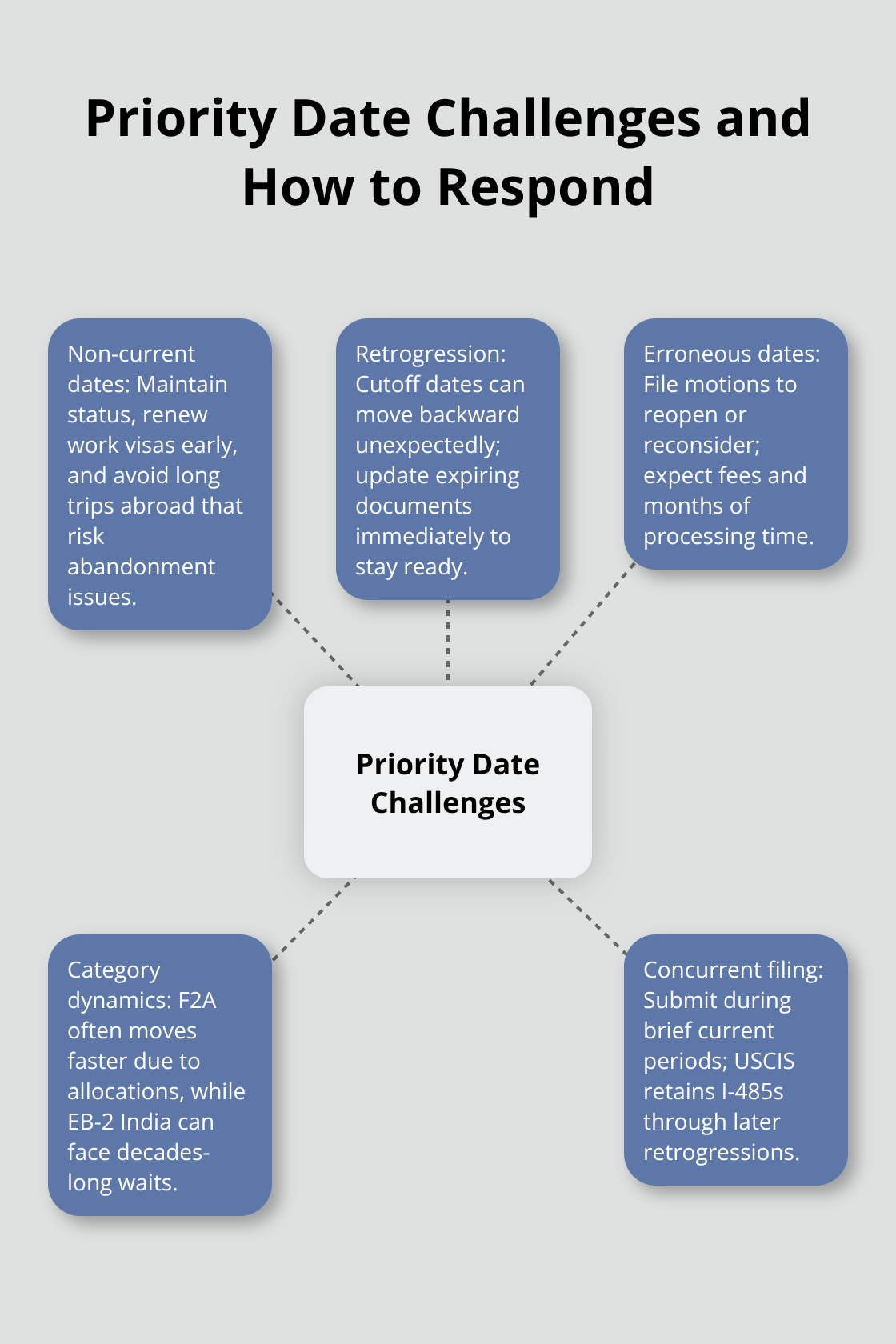
File concurrent applications when possible during brief current periods, as USCIS holds completed I-485 applications even during subsequent retrogressions. This strategy saved thousands of applicants processing time when dates became current again in fiscal year 2022.
Correct Erroneous Priority Date Information Before Filing Deadlines
Priority date errors on Form I-797 require immediate correction through USCIS motions to reopen or reconsider (typically costing $675 in filing fees plus months of processing delays). Common errors include wrong petition receipt dates or transferred priority dates from previous applications that USCIS fails to recognize properly. Document all correspondence with dates and reference numbers, as USCIS customer service representatives often provide conflicting information that requires written confirmation for legal protection.
Submit correction requests with original petition receipts, canceled checks, and certified mail records that prove actual filing dates. Priority date corrections average 90-120 days for completion, which makes early verification essential before adjustment application deadlines approach.
Final Thoughts
Your adjustment of status priority date demands consistent attention to monthly Visa Bulletin updates and accurate document verification. The 366,000 annual green card cap creates inevitable backlogs that make precise date tracking essential for successful applications. Your priority date controls everything from filing eligibility to approval timing, which makes understanding this system vital for permanent residency success.
Professional legal guidance becomes necessary when priority date errors occur, retrogression affects your case, or complex documentation issues arise. We at Law Offices of Jeffrey A. Thompson help clients navigate immigration challenges from paperwork preparation to overcoming legal hurdles in their journey toward permanent residency. Our immigration law expertise provides the dedicated representation needed for successful adjustment of status applications.
You must maintain current status while your priority date advances and prepare all required documents well before filing deadlines. Respond immediately to any priority date discrepancies that could delay your case (as corrections typically require 90-120 days for completion). Regular Visa Bulletin monitoring combined with proper legal support creates the foundation for achieving your American dreams through successful green card approval.
Share this post: