
How to Get EAD During Adjustment of Status Process
January 5, 2026
Waiting to work while your adjustment of status application is pending can feel like a standstill. The good news is that you don’t have to stay unemployed during this process.
An Employment Authorization Document, or EAD, lets you work legally in the United States while USCIS reviews your adjustment of status case. We at Law Offices of Jeffrey A. Thompson help clients navigate this process every day, and we know the steps that make it work.
What EAD and Adjustment of Status Actually Do
An Employment Authorization Document is a physical card issued by USCIS that grants you legal permission to work in the United States. It’s not theoretical access-it’s a document your employer will ask to see during the hiring process. The EAD card contains your photo, a unique number, and an expiration date, and it serves as proof that you have the right to work. According to USCIS, most adjustment of status applicants who file Form I-765 alongside Form I-485 receive their EAD within two to three months as of mid-2025, reflecting faster processing than in previous years. This timeline matters because it directly affects when you can start earning income while your green card application moves through the system. Without an EAD, you cannot legally work in any position, regardless of the job or employer. A pending green card application alone grants zero work authorization.
Why Filing Both Forms Together Matters
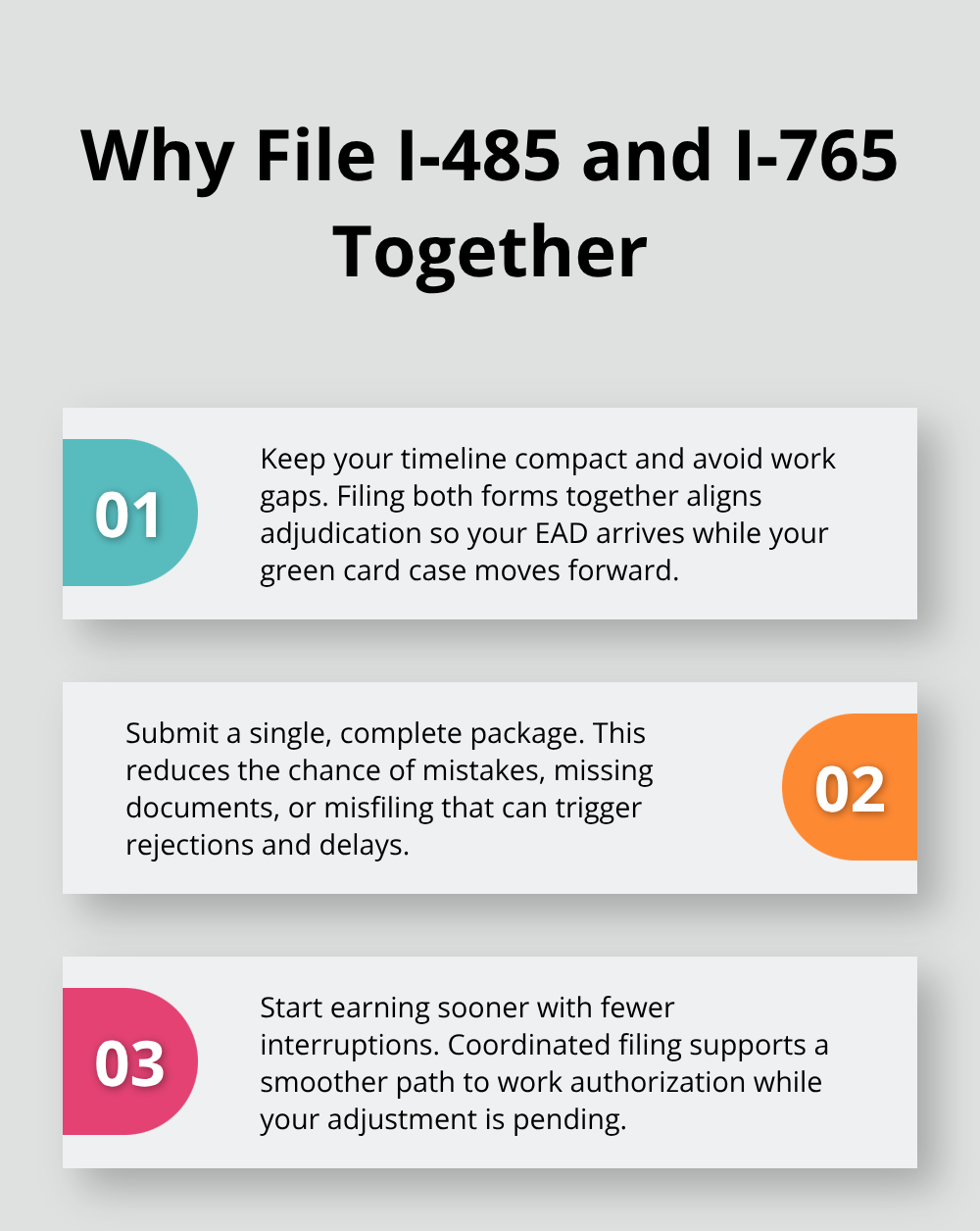
Adjustment of status is the process of applying for permanent residency without leaving the United States. When you file Form I-485, you ask USCIS to approve you as a lawful permanent resident while you remain in the country. Most people filing I-485 also file Form I-765 at the same time, which is the smarter approach because it keeps your timeline compact and prevents gaps in employment. Filing both forms together means you submit one application package with all required documents, reducing the risk of missing deadlines or misfiling.
The Freedom Your EAD Provides
The EAD you receive during adjustment of status carries no restrictions on job type or employer-you can work in any lawful occupation, switch jobs freely, and change industries without notifying USCIS. This flexibility is a major advantage over work visas like H-1B, which tie you to a specific employer and require sponsorship for job changes. The EAD gives you genuine freedom to build your career while your green card is pending. With this authorization in hand, you move forward in your professional life without the constraints that bind visa holders to single employers.
Getting Your Application Started
File Both Forms in One Package
File Form I-485 and Form I-765 together represents the only practical path forward if you want to work during adjustment of status. When you submit both forms in a single package to USCIS, you eliminate processing delays and reduce the chance of missing critical deadlines. The filing fee for an EAD based on a pending I-485 is $260, and you must include this payment with your application. USCIS accepts electronic payments through Form G-1450 (credit or debit card) or Form G-1650 (ACH bank transfer), so plan your payment method before you file.
Choose Your Filing Method
You can file both forms online through your USCIS account or by mail, depending on your preference and circumstances. Online filing moves faster, but if you choose to mail your application, the address depends on your specific eligibility category-check the official USCIS Where to File list for Form I-765 to use the correct address. Include Form G-1145 with your submission to receive email and text notifications when USCIS accepts your application, which helps you track progress immediately.
Prepare Your Documentation Correctly
The documents you need include your government-issued photo ID (passport works), Form I-94, two passport-style photos, and the receipt notice once you file I-485. Do not mix pages from different form editions-use the current version of each form consistently throughout your entire package, as mismatched pages trigger a rejection that delays your EAD approval by weeks or months.

Plan Your Renewal Timeline
Timing your renewal correctly prevents work authorization gaps that could leave you unemployed unexpectedly. If your EAD will expire while your I-485 remains pending, file your renewal Form I-765 no later than 90 days before expiration and no earlier than 180 days before expiration. This window exists because USCIS needs enough lead time to process your renewal but also because filing too early can complicate your case.
Track Your Card’s Arrival
After approval, expect your physical EAD card to arrive within about two weeks via USPS Priority Mail. Keep your mailing address current with both USCIS and USPS throughout this process, because a single address change oversight can result in your card being returned to USCIS undelivered, forcing you to request reissuance and losing weeks of potential work time. If your card does not arrive within the expected timeframe, you can submit a non-delivery inquiry to USCIS through your online account rather than waiting passively. Once your EAD arrives, you hold the legal authorization to start working-but knowing what happens next in your adjustment process helps you stay prepared for the decisions ahead.
Timeline and What to Expect
How Long EAD Processing Actually Takes
Most adjustment of status applicants who file Form I-765 alongside Form I-485 receive their EAD within two to three months as of mid-2025, according to USCIS data. This represents a significant improvement from previous years when processing stretched six months or longer. However, this timeline assumes your application is complete and filed correctly. If you submit missing documents or use outdated form editions, USCIS will reject your application and send it back to you, erasing weeks of processing time. The processing clock restarts from zero when you resubmit.
Card Production and Delivery
After USCIS approves your Form I-765, the physical card production takes approximately two weeks, then USPS Priority Mail delivers it to your address. The total wait from submission to card in hand typically spans three to four months under current conditions, not the two to three months USCIS advertises for approval alone. Your mailing address matters tremendously here.
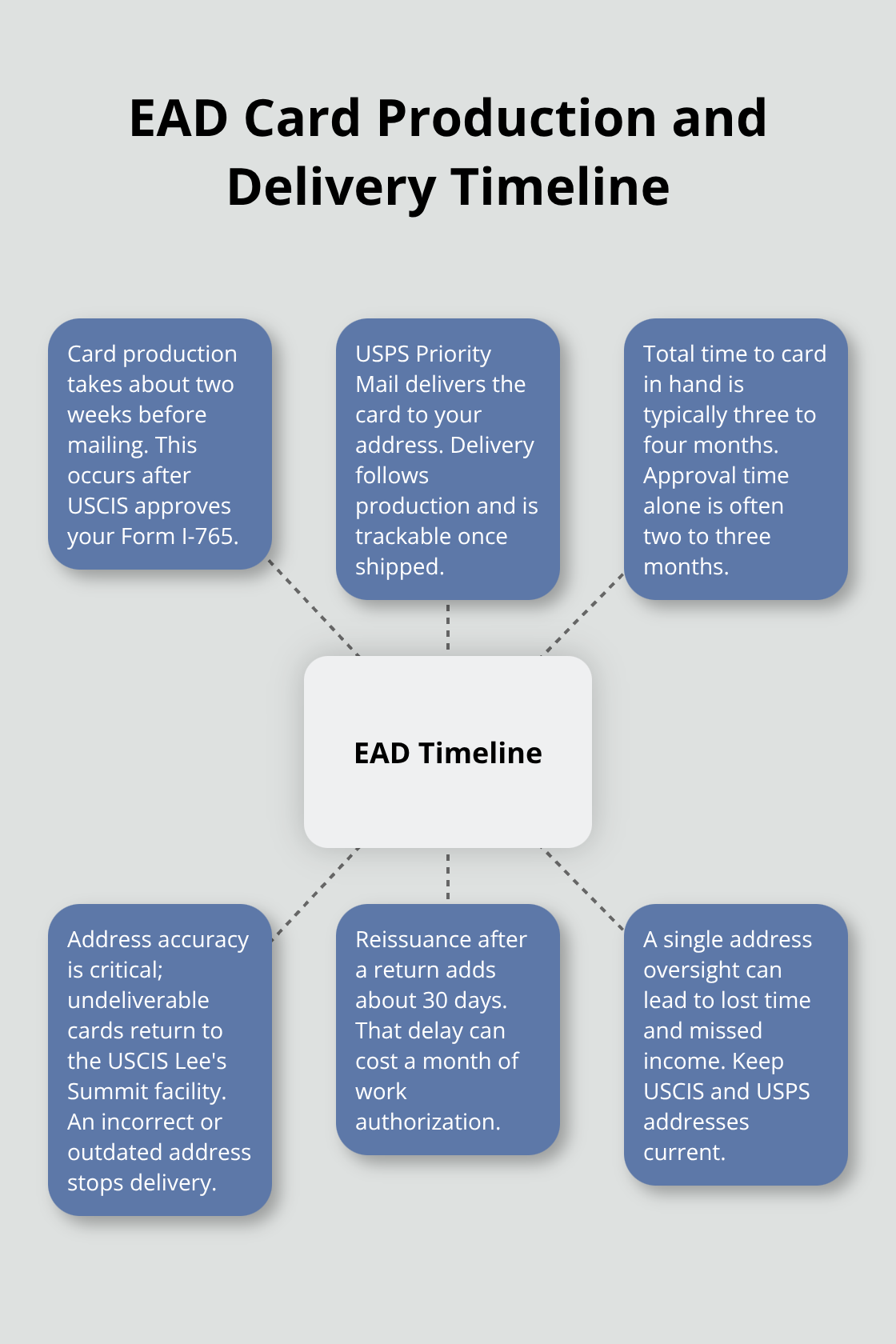
If USPS cannot deliver your card because your address changed after filing or you provided incorrect information, the card returns to the USCIS Lee’s Summit Production Facility undelivered. You then must request reissuance, and processing takes another 30 days from the date USCIS receives your replacement request. A single address oversight costs you a month of lost work authorization.
Service Center Processing Variations
USCIS processes EAD applications in service center batches, and your timeline depends partly on which service center handles your case. The USCIS Case Processing Times page shows processing estimates, and these vary by location. Some centers process faster than others due to staffing and case volume. File your Form I-765 online whenever possible because online submissions move through USCIS systems faster than mail-in applications.
Tracking Your Application and Corrections
You can track your case status through your USCIS online account, and once approved, the system displays your USPS tracking number so you monitor card delivery in real time. If your EAD arrives and contains incorrect information due to a USCIS error, USCIS corrects it at no cost. If the error is yours, you must file a new Form I-765 with the $260 fee and return the incorrect card. The Service Request Management Tool (SRMT) on the USCIS website streamlines corrections and replacement requests, reducing processing delays compared to mail-in requests.
Starting Work With Your EAD
When your EAD finally arrives, you hold unrestricted work authorization immediately. You can accept job offers, change employers, or switch industries without notifying USCIS. This freedom exists because the EAD granted through adjustment of status carries no employer sponsorship requirements or occupational restrictions. Start your job search before your card arrives if possible, because the moment you receive it, you can work the same day.
Final Thoughts
Your adjustment of status EAD application removes the financial strain of waiting months without work authorization. Submit Form I-765 alongside Form I-485, expect approval within two to three months, and receive your card within four months total. The work authorization you obtain carries no employer sponsorship requirements, so you can change jobs, switch industries, or negotiate better pay without notifying USCIS.
The practical steps demand attention to detail but remain straightforward. File both forms together in one package, use current form editions, include the $260 fee, and keep your mailing address updated with USCIS and USPS. Plan your renewal timeline before your current EAD expires to prevent work authorization gaps that could interrupt your income.
We at Law Offices of Jeffrey A. Thompson in Brockton, Massachusetts, help clients navigate the adjustment of status EAD process and overcome immigration obstacles that stand between them and their goals. Attorney Thompson provides compassionate, knowledgeable legal representation tailored to your specific situation. Contact us today to discuss your case with an experienced immigration attorney.
Share this post: