
How to Handle Arriving Aliens and Adjustment of Status
January 19, 2026
Navigating immigration status changes can feel overwhelming, especially when you’re unfamiliar with terms like arriving aliens and adjustment of status. These concepts shape your path to permanent residency, and understanding them matters.
At Law Offices of Jeffrey A. Thompson, we help clients move through this process with clarity and confidence. This guide breaks down what you need to know and do.
What Are Arriving Aliens and How Does Adjustment Work
Understanding Arriving Alien Status
An arriving alien is someone who enters the United States and wants to change their immigration status while physically present in the country. This classification matters because it determines which government agency handles your case and what rules apply to you. If you’re an arriving alien, USCIS may handle your adjustment application, but if your case lands in removal proceedings, an immigration judge takes over instead. The distinction sounds technical, but it directly affects your timeline, your options, and whether you can work while your case is pending. Most people don’t realize that simply crossing the border or arriving at an airport puts you into this classification, which then opens specific pathways to permanent residency that aren’t available to others.
The Adjustment of Status Process
Adjustment of status is the legal process of becoming a lawful permanent resident-holding a green card-without leaving the United States. You file Form I-485 to request this change. The process requires that an immigrant petition be filed for you first, usually Form I-130 for family-based cases or Form I-140 for employment-based cases, though some categories like immediate relatives of U.S. citizens can file both at the same time.
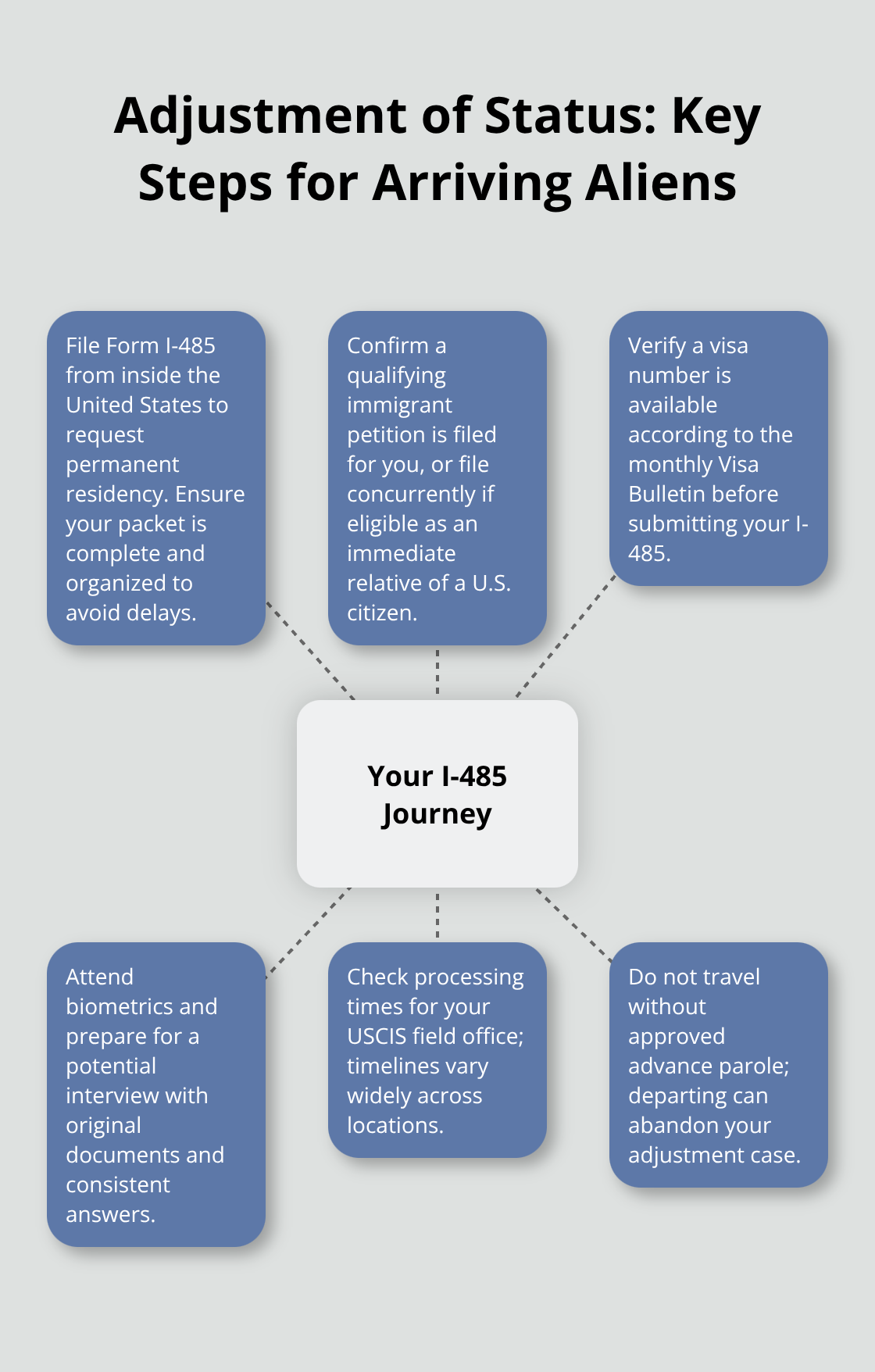
You must also have a visa number available before filing, which means checking the monthly Visa Bulletin from the Department of State to know when you can actually submit your application.
What Happens After You File
Once you file, you’ll attend a biometrics appointment to provide fingerprints and photos, then likely face an interview where you bring original documents. The entire process typically takes months, and processing times vary significantly by USCIS field office-some offices handle I-485 cases in under a year while others take three years or more. USCIS publishes processing time data by field office and form type, so you can check realistic timelines for your specific location before you file.
How Arriving Aliens Differ From Non-Arriving Aliens
Non-arriving aliens pursue consular processing abroad, meaning they leave the United States, go to a U.S. embassy or consulate in their home country, and complete the visa interview there. This approach has different rules, different timelines, and different risks. For arriving aliens specifically, leaving the United States during adjustment without advance parole approval will abandon your case, so travel decisions carry real consequences that non-arriving aliens don’t face in the same way. Understanding these differences helps you plan your next moves and avoid costly mistakes.
How to Qualify and Prepare Your Application
Start by confirming your eligibility before investing time and money in the adjustment process. You must fall into one of USCIS’s immigrant categories-family-based, employment-based, diversity visa, special immigrant, or immediate relative of a U.S. citizen. Each category has its own requirements. Immediate relatives of U.S. citizens have the fastest path because visa numbers are always available for them, meaning you can file Form I-485 at the same time as the underlying petition. Other categories require waiting for a visa number to become current according to the monthly Visa Bulletin from the Department of State. Check the specific category requirements on USCIS.gov before filing anything, because filing in the wrong category or at the wrong time results in rejection and lost filing fees. Some arriving aliens mistakenly assume they can file without a visa number available, but USCIS will reject your entire application if you do. The receipt date-the stamped date USCIS receives your application-is what counts legally, so improper filing means you lose that date and must start over.
Confirming Your Eligibility Category
USCIS assigns each applicant to a specific immigrant category, and this classification determines your timeline and filing options. Immediate relatives of U.S. citizens move fastest because visa numbers never run out for this group. Employment-based categories (first through fifth preference) and family-based preference categories operate under annual caps, which means you wait for your priority date to become current in the monthly Visa Bulletin. Diversity visa winners, special immigrants, and other categories follow their own rules. Misidentifying your category leads to outright rejection, so verify your classification on USCIS.gov or consult an immigration attorney before submitting anything.
Gathering the Documents USCIS Requires
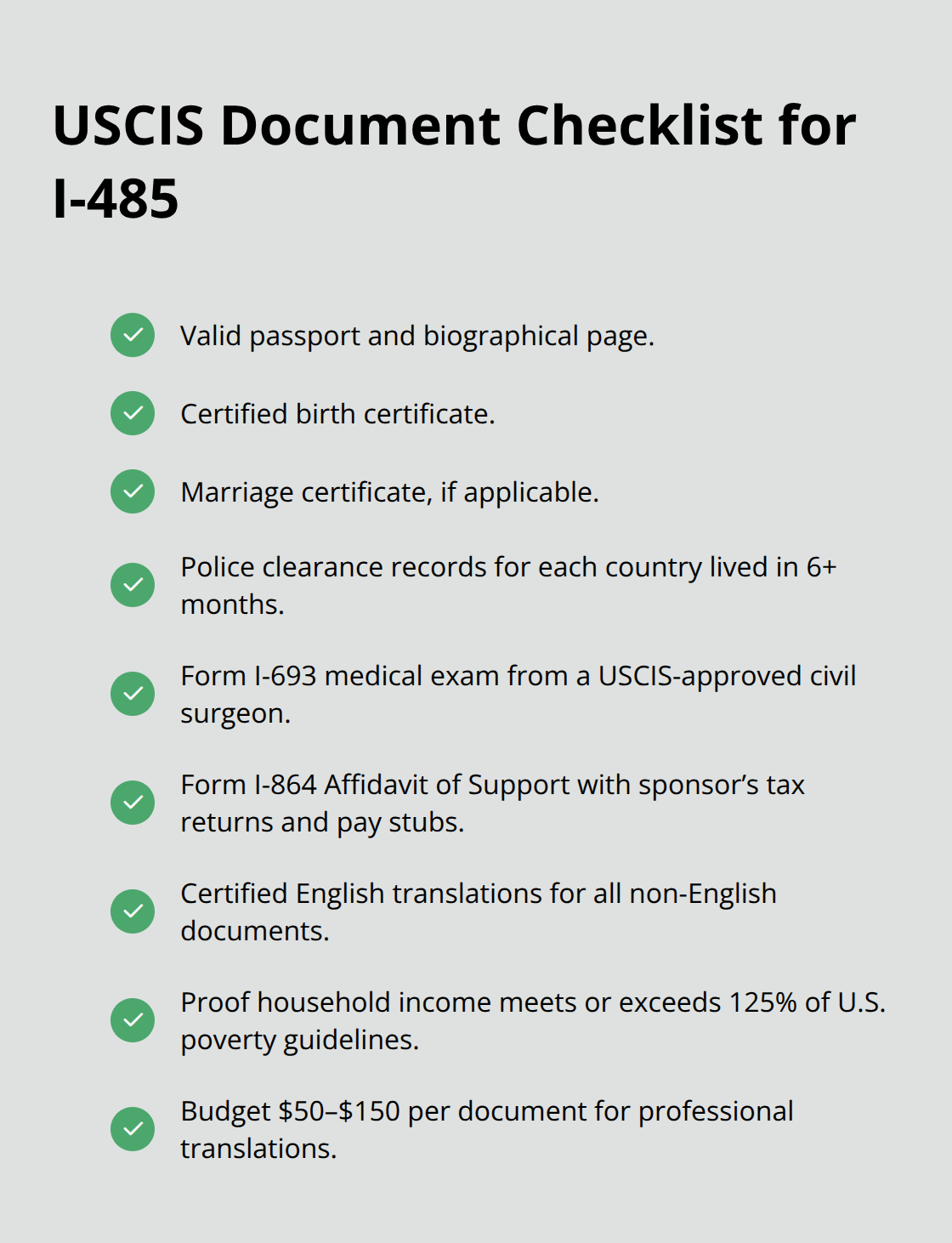
Collect originals and certified copies of your passport, birth certificate, marriage certificate if applicable, police clearance records from every country where you lived for more than six months, and medical examination results from an USCIS-approved civil surgeon. USCIS also requires financial support documentation, typically Form I-864 Affidavit of Support signed by your sponsor, along with their tax returns and pay stubs proving they meet income thresholds. You must show that your household income is equal to or higher than 125% of the U.S. poverty level for your household size. Translation matters too-any document not in English must have a certified English translation attached. Many applicants skip this step or use informal translations, which causes USCIS to issue a Request for Evidence that delays your case by months. Professional translations cost between $50 and $150 per document but prevent costly delays.
Filing Form I-485 to the Correct Location
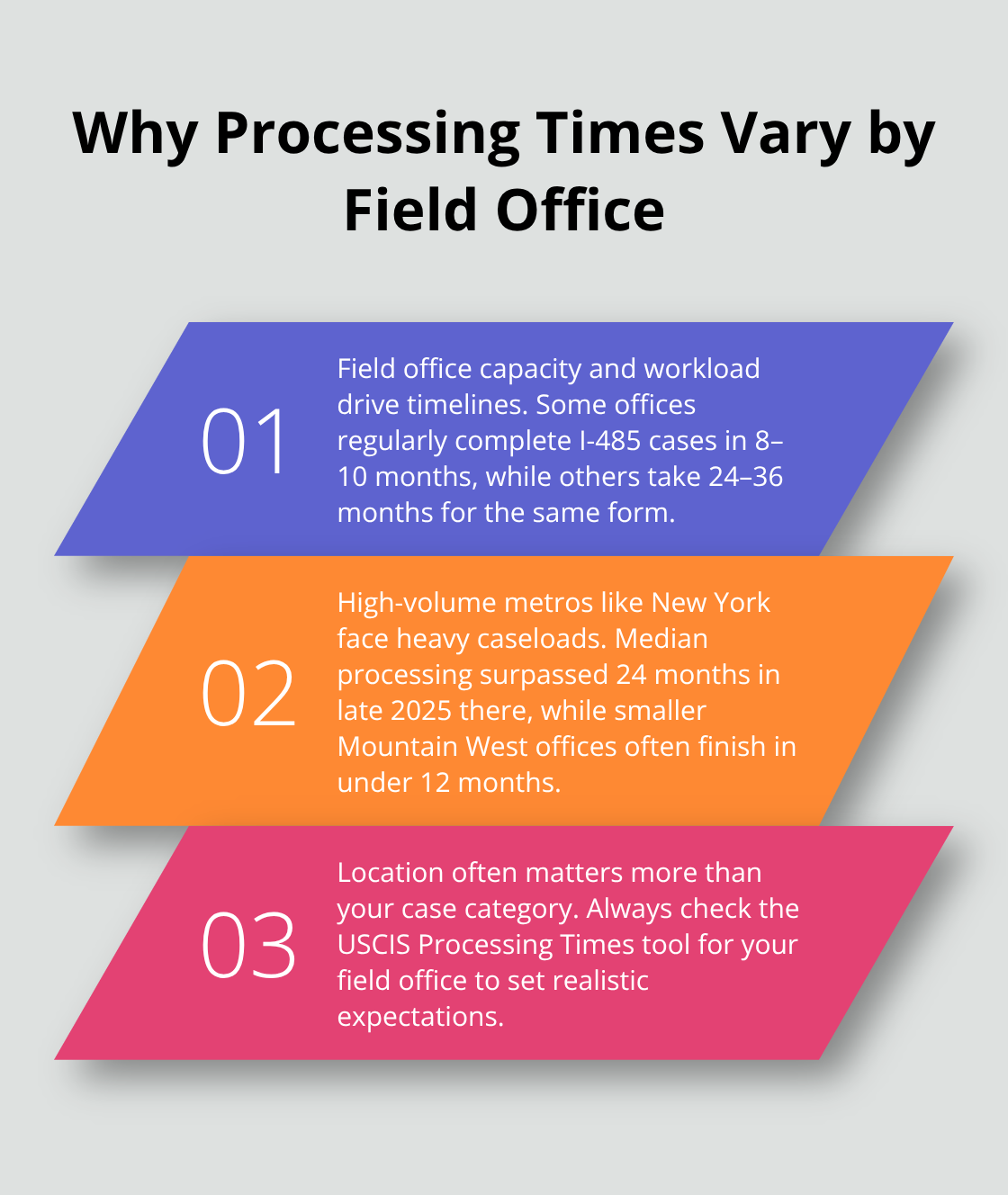
File Form I-485 with the correct USCIS field office for your location, not the one nearest to you. USCIS has specific filing addresses by category and state, and sending your application to the wrong office gets it rejected or relocated, destroying your filing date. If you qualify under INA 245(i), you must also file Form I-485 Supplement A alongside the main form. Pay the correct filing fee-currently $640 for most applicants plus $85 for biometrics-or request a fee waiver if your household income falls below 200 percent of the federal poverty line. Include all supporting documents in the exact order USCIS specifies, because caseworkers review thousands of applications and disorganized files get flagged for Request for Evidence. The USCIS Processing Times dataset shows that field offices with the most organized filings move cases faster, with some offices completing I-485 decisions in 8–10 months while others take 24–36 months.
What Happens Next in Your Case
After USCIS receives your properly filed application, you’ll receive a receipt notice with your case number and biometrics appointment date. Attend that appointment to provide fingerprints, photos, and your signature-missing this appointment results in case denial. USCIS may then schedule an interview where you bring original documents and answer questions about your application. Some cases receive a Request for Evidence if information or documents are missing, outdated, or need clarification. Responding by the deadline prevents denial, so track all USCIS notices carefully and set calendar reminders for response deadlines. Processing times vary dramatically by field office and category, so check the USCIS Processing Times dataset for your specific location to set realistic expectations.
What Slows Down Your Adjustment Case
Processing backlogs affect every adjustment application, and USCIS field offices vary dramatically in speed. According to USCIS Processing Times data, some field offices complete I-485 cases in 8 to 10 months while others take 24 to 36 months for the same form. The New York field office, which handles a massive volume of adjustment cases, reported median processing times of over 24 months as of late 2025, while smaller offices in the Mountain West process cases in under 12 months. Your specific location matters more than your category or circumstances, so check the USCIS Processing Times dataset for your field office before filing to understand what you face.
USCIS receives far more applications than it has staff to review, and immigration law requires thorough background checks, medical examinations, and security clearances before approval. The All USCIS Application and Petition Form Types dataset shows quarterly counts of pending I-485 cases by field office, revealing where the worst congestion exists. If your office has 50,000 pending cases and processes 300 per month, you face a 14-month wait minimum just to reach the front of the line.
Medical Examinations and Background Checks
Medical examination delays USCIS civil surgeons often book appointments weeks or months out. If your examination results show any health issues that require further evaluation, USCIS will issue a Request for Evidence that restarts your timeline. Background checks also create holdups when USCIS needs clarification on police records, employment history, or travel documents. Missing documents at your interview also trigger delays because USCIS will request evidence instead of making an immediate decision, adding 30 to 60 days to your case.
Prepare Your Documents for the Interview
Interview preparation determines outcomes more than any other factor, and most denials stem from inconsistency or missing documents rather than ineligibility. Bring original documents to your interview, not copies, and bring certified English translations for every document not in English. USCIS adjudicators compare what you wrote on Form I-485 with what you say in person, and discrepancies raise red flags that lead to Request for Evidence or outright denial. If you stated you lived in one country for six years on your application but told the interviewer you lived there for five years, that inconsistency will be documented. Practice your answers beforehand and align your story across all documents, including your passport, birth certificate, and travel records. Many applicants fail because they misunderstand questions or provide information the interviewer did not ask for, creating confusion that gets interpreted as dishonesty. Answer only what is asked, keep responses factual and brief, and bring a translator if your English is limited (miscommunication during an interview can destroy an otherwise strong case).
Common Reasons for Denial
Denial reasons most commonly include failure to establish eligibility, insufficient financial support documentation, medical examination failures, criminal history disqualifications, or material misrepresentation on the application. If USCIS denies your case, you have limited options-you may file Form I-290B to request reconsideration or reopen the case, but this rarely succeeds unless you have new evidence or can prove USCIS made a legal error. An immigration attorney identifies weak spots in your file and helps you prepare responses that prevent denial. We at Law Offices of Jeffrey A. Thompson assist clients in navigating this process, from paperwork to overcoming legal hurdles, helping them achieve their American dreams with compassionate and knowledgeable representation tailored to your specific needs.
Final Thoughts
Adjustment of status for arriving aliens involves multiple steps, strict deadlines, and significant consequences for errors. You must confirm your eligibility category, collect certified documents with professional translations, file to the correct USCIS location with proper fees, attend biometrics appointments, prepare thoroughly for your interview, and respond promptly to any requests for evidence. Processing times range from 8 months to 36 months depending on your field office, so you should expect delays and plan accordingly.
One missing translation, one inconsistent statement, or one misfiled form destroys your receipt date and forces you to restart the entire process. USCIS adjudicators review thousands of applications monthly and flag disorganized files for requests for evidence that add months to your timeline. Medical examinations, background checks, and document inconsistencies create common obstacles that derail otherwise qualified applicants, and handling this process alone exposes you to rejection, abandoned cases, and lost filing fees.
We at Law Offices of Jeffrey A. Thompson assist clients navigating arriving aliens and adjustment of status from start to finish. Our team handles paperwork preparation, eligibility verification, interview coaching, and legal obstacles that arise during your case. Contact us today to discuss your specific situation and move forward toward your green card with confidence.
Share this post: