
How to Navigate Arriving Alien Adjustment of Status
March 13, 2026
Arriving alien adjustment of status is one of the most direct paths to permanent residency in the United States, but the process involves multiple steps and strict requirements that trip up many applicants.
At Law Offices of Jeffrey A. Thompson, we’ve guided hundreds of clients through this immigration pathway. This guide breaks down what you need to know about eligibility, documentation, common obstacles, and realistic timelines so you can move forward with confidence.
What Makes an Arriving Alien Different
The Legal Definition and Its Impact
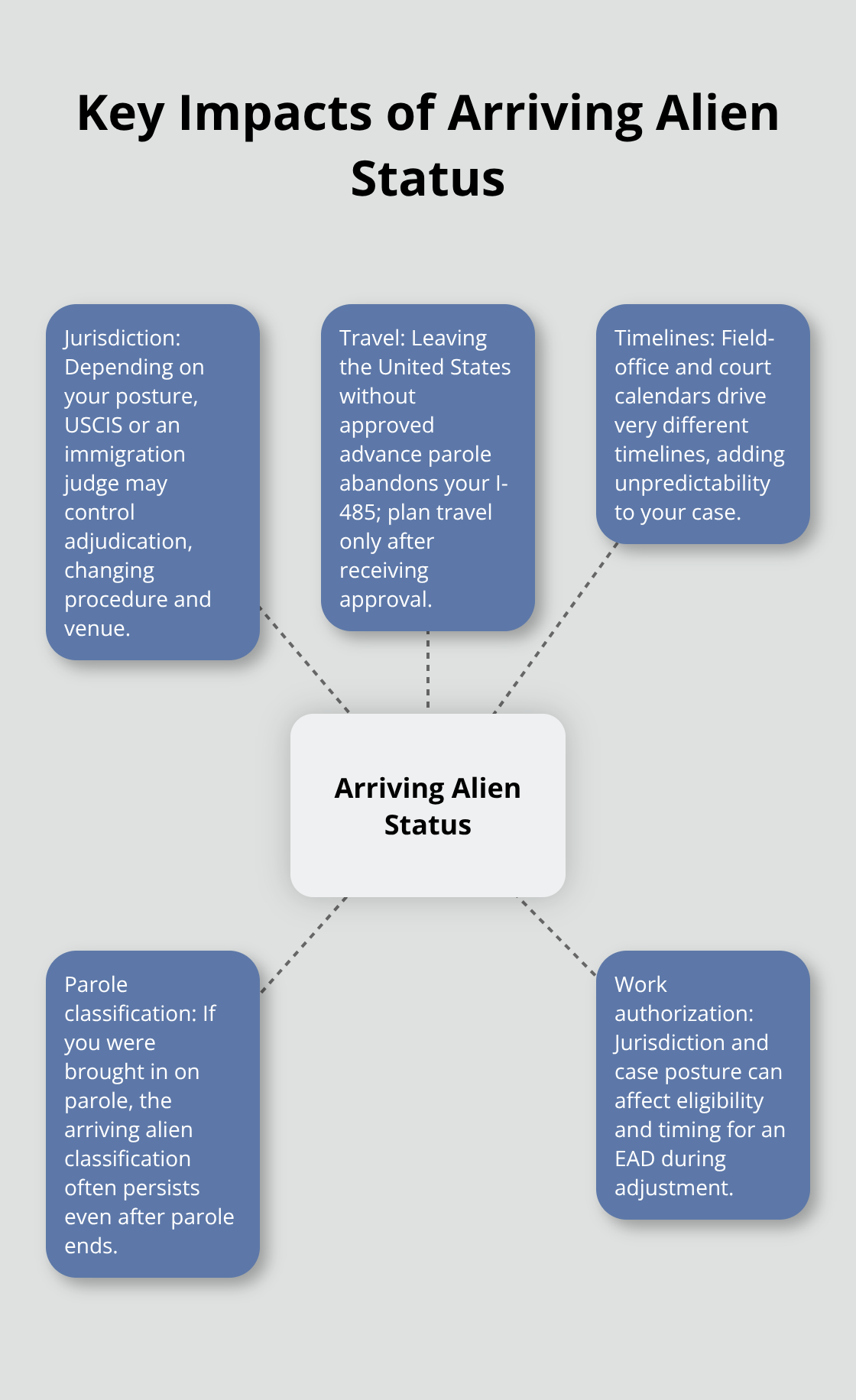
An arriving alien carries a specific legal meaning that shapes how you adjust status and what rules govern your case. According to 8 CFR 1.2, you qualify as an arriving alien if you enter or attempt to enter the United States at a port of entry, seek transit through a port of entry, or face interdiction in international or U.S. waters and are brought into the United States by any means. This definition matters because it affects jurisdiction, timelines, and whether you can leave the country during your adjustment process. If parole brought you into the United States, you retain your arriving alien classification even after that parole ends or is revoked-unless you obtained advance parole before departing the country. This distinction separates arriving aliens from adjustment applicants who were already in the U.S. and adjusted their status later. The difference carries real consequences: it determines whether USCIS or an immigration judge handles your case, and it directly impacts your ability to travel without abandoning your application.
Visa Availability and Priority Dates
Your eligibility to adjust status as an arriving alien hinges on having an approved immigrant petition or qualifying under an exemption, paired with an immediately available visa number. Immediate relatives of U.S. citizens face the fastest path because visa numbers are always available for them, eliminating any waiting period. For employment-based and family-based preference categories, you must monitor the Department of State Visa Bulletin monthly to track when your priority date becomes current. Processing times vary dramatically by location-the New York field office reports medians exceeding 24 months, while Mountain West offices process cases in under 12 months according to USCIS Processing Times data.
Filing Requirements and Correct Procedures
Most arriving aliens file Form I-485 at the correct USCIS field office for their category, along with Form I-485 Supplement A if INA 245(i) applies to you. Filing fees total $725 ($640 for the form plus $85 for biometrics), though fee waivers become available if household income falls below 200 percent of the federal poverty level. Confirming your exact eligibility category before filing prevents costly mistakes-misfiling or selecting the wrong category leads to outright rejection and loss of your receipt date. Verify your category on USCIS.gov or with an immigration attorney, then file to the correct address for that category to avoid relocation or rejection of your entire application. Getting this step right from the start determines whether your case moves forward smoothly or stalls before it begins.
Filing Your I-485 and Gathering Required Documents
Submitting Your Application Correctly
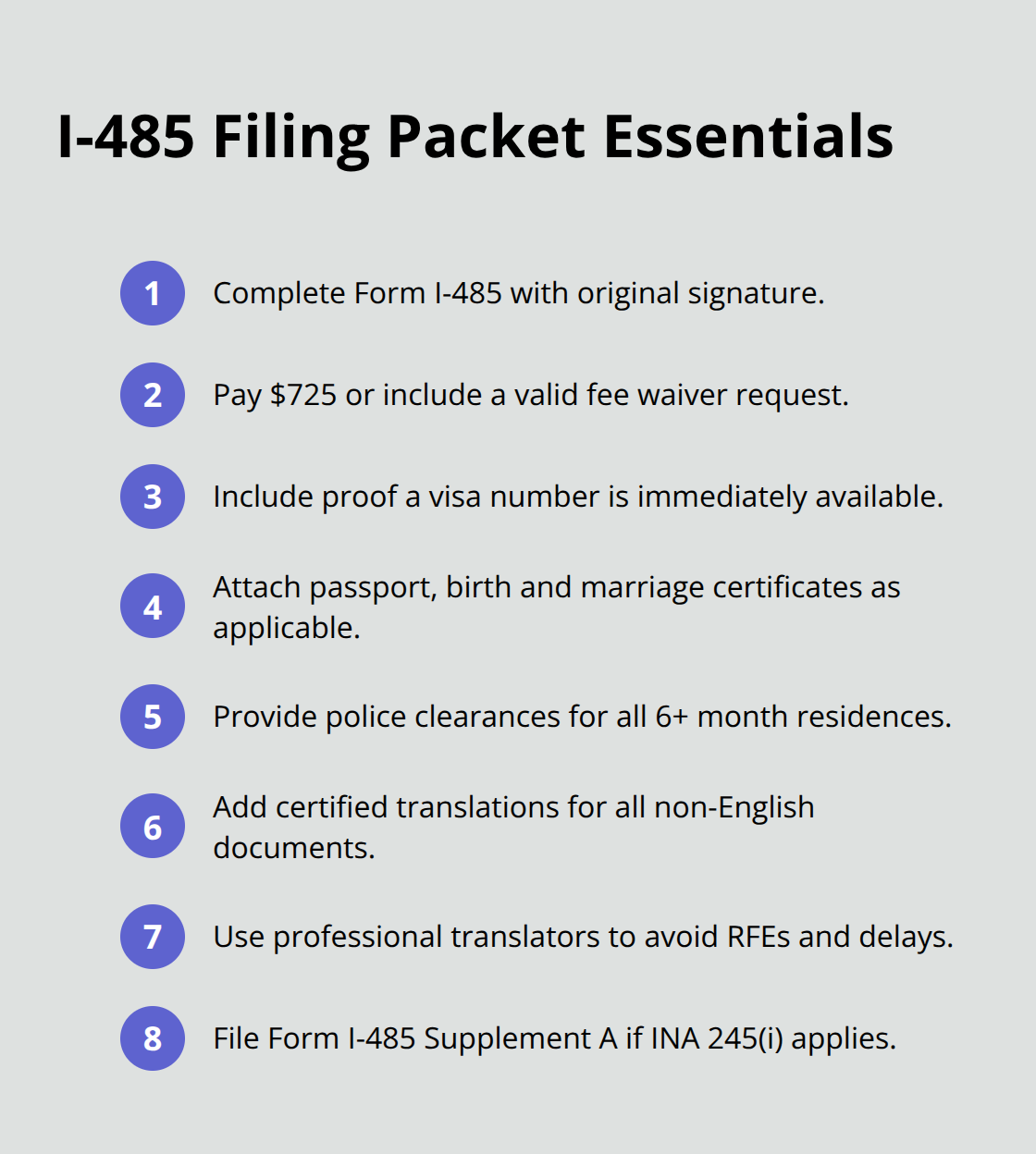
Filing Form I-485 requires precision-small errors halt applications before USCIS reviews them. Confirm you are filing at the correct USCIS field office for your category, as mailing to the wrong location causes rejection or forces USCIS to relocate your case and wastes months. Your application packet must include the completed I-485 form with an original signature (electronic signatures work only for approved e-filing), the filing fee of $725 or a valid fee waiver request, and proof that a visa number is immediately available for your category. Attach your passport, birth certificate, marriage certificate if applicable, and police clearances from every country where you lived more than six months. Non-English documents require certified translations, which typically cost $50 to $150 per document-professional translation services prevent unclear documents from triggering Requests for Evidence that add 30 to 60 days to your timeline. If INA 245(i) applies to you, file Form I-485 Supplement A alongside your main application.
Completing Your Affidavit of Support and Documentation
Your sponsor must complete Form I-864 Affidavit of Support and provide recent tax returns and pay stubs demonstrating sufficient income to support you. USCIS uses this form to verify your sponsor can prevent you from becoming a public charge. After USCIS receives your properly filed application with a stamped receipt date, you will receive a biometrics appointment notice directing you to an Application Support Center. At that ASC visit, you must sign an acknowledgment confirming the accuracy of all information in your file-this is your opportunity to flag any errors before they become problems.
Managing Medical Examinations and Background Checks
Medical examinations and background checks occur in parallel and can delay your case if results require further evaluation. You must complete a medical examination with a USCIS-designated civil surgeon who conducts a physical exam, reviews your vaccination history, and tests for communicable diseases. If the examination reveals any condition requiring further investigation or if your vaccination records need clarification, the civil surgeon will request additional medical records, extending your timeline by 30 to 60 days. Background checks verify your criminal history, security concerns, and admissibility status across all countries where you have lived or worked. Request your background check results and medical examination findings from USCIS if you believe delays are occurring; transparency helps identify whether a Request for Evidence is coming.
Understanding Travel Restrictions During Adjustment
Arriving aliens face strict travel rules during adjustment. Do not leave the United States during your adjustment without advance parole, because departing without it will abandon your entire application. Advance parole requires a separate Form I-131 Application for Travel Document filed before you leave, and approval takes 6 to 12 weeks, so plan accordingly if travel is necessary. Arriving aliens in removal proceedings face an additional layer of scrutiny because immigration judges-not USCIS-adjudicate their cases, which introduces unpredictability in timelines and may affect work authorization eligibility during the process.
What Stops Arriving Alien Applications and How to Fix Them
Inadmissibility Grounds That Block Adjustment
Inadmissibility grounds derail more arriving alien cases than almost any other factor. The difference between identifying these issues upfront and encountering them during your interview determines whether you adjust or face deportation. An arriving alien with criminal history, health issues, security concerns, or prior immigration violations enters adjustment with a significant liability that requires either a waiver or proof of ineligibility before filing.
Criminal convictions present the most common barrier. If you have a criminal conviction-even a misdemeanor-consult an immigration attorney before filing, because certain crimes trigger permanent bars to adjustment that no waiver can fix. Drug offenses, crimes of moral turpitude, and aggravated felonies typically block adjustment entirely. Other convictions may qualify for waivers under INA 212(i) if you meet strict income and family relationship requirements.
Health-related grounds include communicable diseases detected during your medical exam and certain mental health conditions. These grounds often qualify for waivers, but you must request them proactively before USCIS denies your case. If your medical examination reveals tuberculosis, syphilis, or Hansen’s disease, the civil surgeon will refer you for treatment before your case can proceed, adding months to your timeline.
Security-related inadmissibility grounds cover terrorism support, espionage, and persecution involvement. These grounds rarely qualify for waivers and often result in denial. Request your complete background check results from USCIS if you suspect an issue exists; transparency now prevents shock at your interview.
Work Authorization: Timing and Eligibility
Employment authorization and travel documents represent your lifeline during adjustment, yet arriving aliens often misunderstand when they become available and what restrictions apply. You can apply for work authorization on Form I-765 once USCIS receives your properly filed I-485, though approval typically takes 6 to 12 weeks. Do not resign from your job expecting immediate work eligibility.
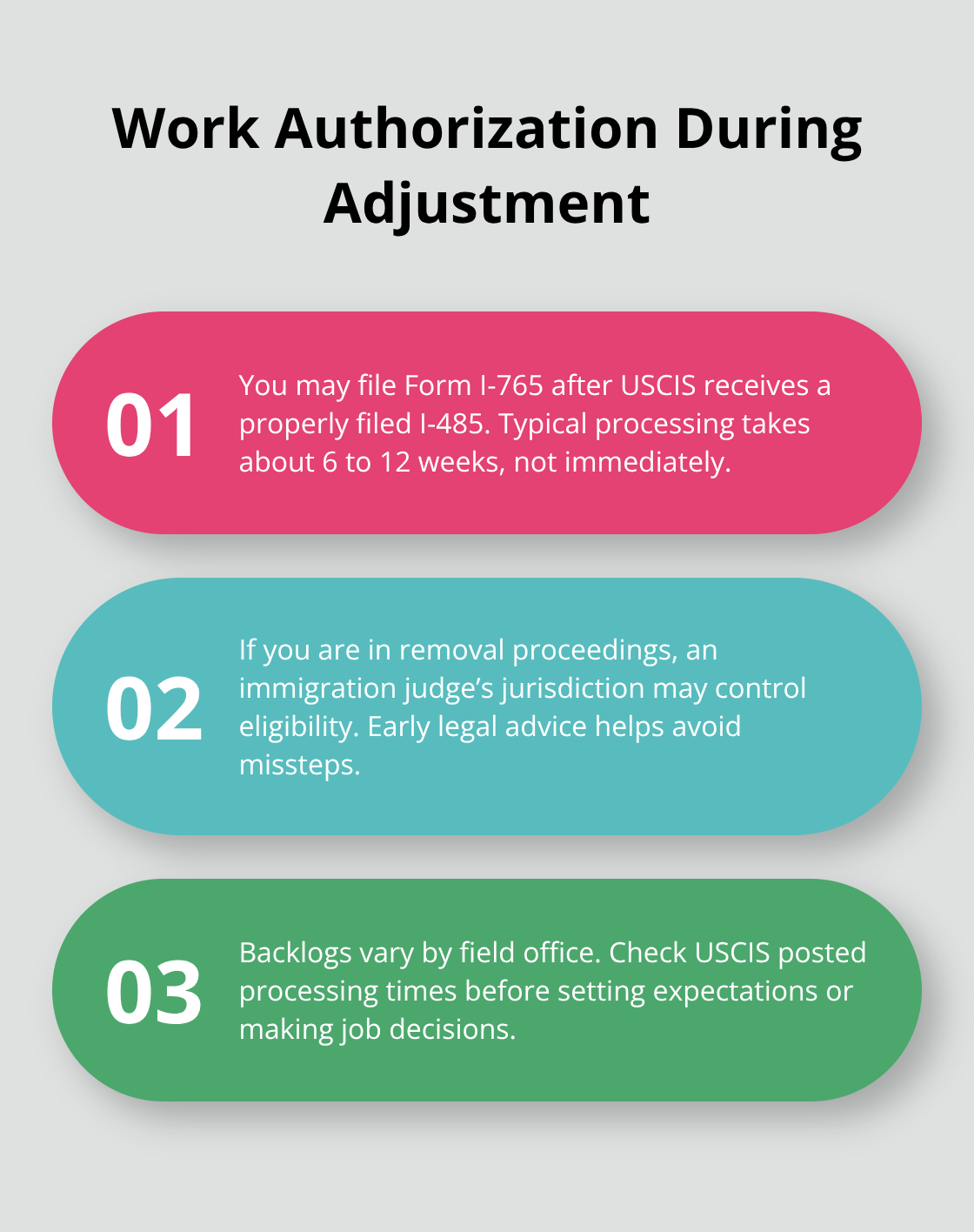
File Form I-765 the moment your receipt notice arrives. If you are in removal proceedings, work authorization eligibility depends on whether an immigration judge has jurisdiction over your case-this uncertainty makes early legal guidance essential because arriving aliens in removal face different rules than those with USCIS jurisdiction alone.
Processing delays affect work authorization because field offices are severely backlogged. Check current USCIS processing times for your specific field office before calculating when you expect authorization.
Travel Documents and Advance Parole
Travel documents require advance parole via Form I-131, and processing times range from 6 to 12 weeks depending on your field office and whether you include a travel request. Some arriving aliens qualify for expedited processing if they face extreme hardship, but USCIS rarely grants expedite requests without strong documentation of financial or medical necessity.
Do not plan your employment or travel around estimated timelines. Instead, assume delays will occur and build flexibility into your life circumstances during the adjustment period. An immigration attorney can assess whether your situation qualifies for expedited processing and help you prepare the necessary documentation to support such a request.
Final Thoughts
Arriving alien adjustment of status demands precision at every stage, from confirming your eligibility category to filing at the correct USCIS office to managing travel restrictions that could derail your entire application. The process tests your patience through medical examinations, background checks, and processing delays that stretch across months or years depending on your field office location. Small mistakes cost you your receipt date and force you to start over.
We at Law Offices of Jeffrey A. Thompson recognize that arriving aliens navigate a uniquely complex immigration pathway. Your status as an arriving alien determines whether USCIS or an immigration judge handles your case, affects your ability to leave the country, and shapes which rules govern your adjustment. This complexity demands more than form completion-it requires someone who understands the intersection of arriving alien law, removal proceedings, and adjustment eligibility to identify weaknesses in your file before they become problems.
Confirm your eligibility category, gather your required documents, and consult an immigration attorney before filing. An attorney identifies issues that could trigger denials, helps you respond to Requests for Evidence, and guides you from paperwork through approval. Contact Law Offices of Jeffrey A. Thompson in Brockton, Massachusetts, to discuss your arriving alien adjustment case and move forward with confidence.
Share this post: