How to Prepare Adjustment of Status Documents
March 20, 2026
Adjustment of status documents can make or break your immigration case. Getting them right from the start saves months of delays and frustration.
We at Law Offices of Jeffrey A. Thompson have helped hundreds of applicants navigate this process successfully. This guide walks you through exactly what you need, how to organize it, and the mistakes to avoid.
What Documents You Actually Need for Adjustment of Status
Adjustment of Status requires three categories of documents that USCIS scrutinizes heavily. First, you need identity and civil records: a valid passport, birth certificate with certified English translation if not originally in English, government-issued photo ID, and two passport-style photographs. USCIS rejects applications that lack any of these items. Second, you must prove your immigration category eligibility. If you are married to a U.S. citizen, submit the Form I-130 approval notice or file it concurrently with your I-485. For employment-based cases, provide your approved I-140 petition or file it together. Family-based applicants must submit evidence of the relationship-marriage certificate, adoption papers, or birth certificate showing the petitioner as parent. Third, financial sponsorship documentation is non-negotiable. The Form I-864 Affidavit of Support requires your sponsor’s last three years of tax returns, W-2 forms, and a recent employment verification letter. USCIS denies applications outright when the I-864 is missing or incomplete.
Medical Examination Requirements
The medical examination (Form I-693) must be completed by a USCIS-approved civil surgeon and submitted sealed with your application. This change eliminates the need to repeat medical exams if your case takes longer than expected.
Processing Times by Category
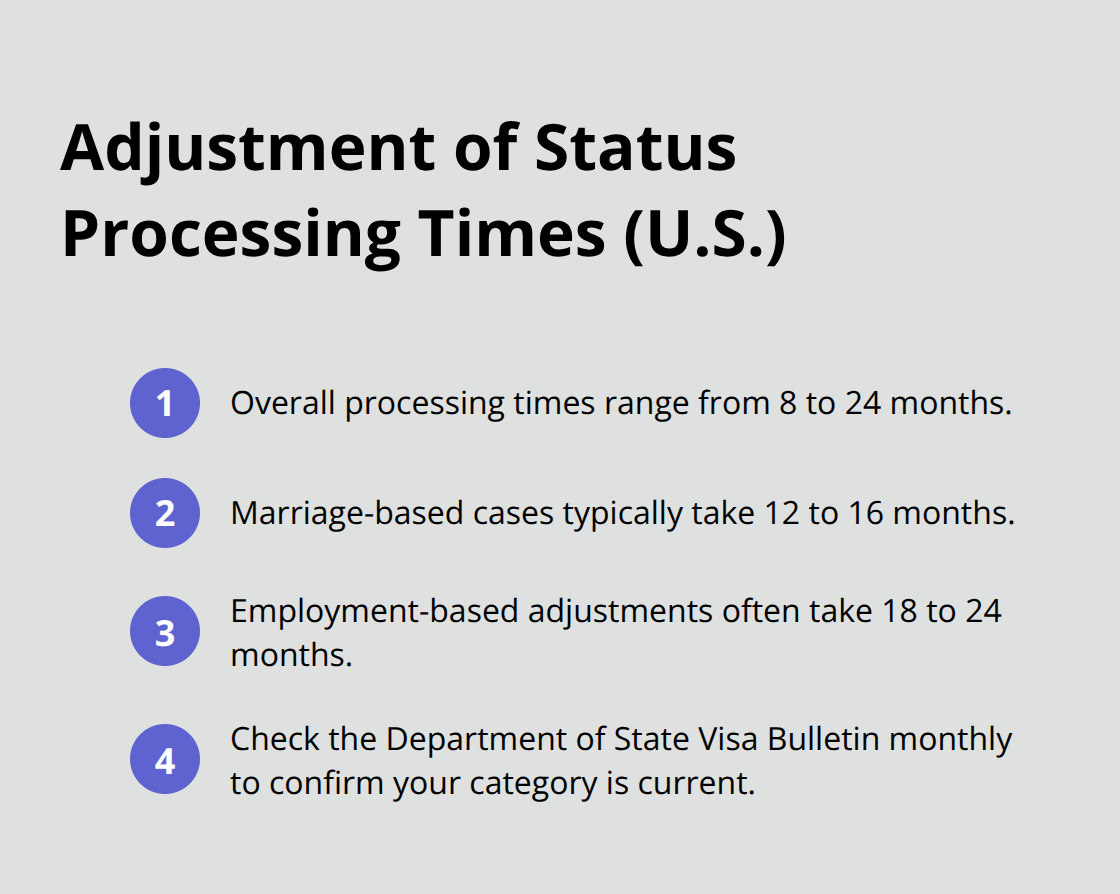
Processing times range from 8 to 24 months depending on your immigration category and field office. Marriage-based cases typically process faster at 12 to 16 months, while employment-based adjustments often take 18 to 24 months. Your priority date matters if you apply through employment sponsorship-check the Department of State Visa Bulletin monthly to confirm your category remains current before you file.
Entry Status and Eligibility Barriers
If you entered the U.S. on a valid visa, you likely qualify for adjustment. However, if you entered without inspection, you generally cannot adjust status except under INA 245(i) provisions, which apply only to certain family-based cases with grandfathered priority dates before April 30, 2001. Overstaying a visa does not bar adjustment if you entered lawfully, but entering without inspection creates a nearly insurmountable barrier. Criminal convictions, security issues, or fraud in prior immigration applications can trigger deportability grounds that require a Form I-601 waiver before you proceed. These barriers demand careful evaluation before you submit your application.
Building Your Document Package the Right Way
Create a Master Checklist First
Start with a master checklist before you collect anything. USCIS will reject your entire application if even one required document is missing, and you cannot simply resubmit the same package-you must file a new I-485 and pay the full filing fee again. Create a spreadsheet with three columns: document name, status (collected, in progress, not applicable), and notes. This simple system prevents costly oversights that plague many applicants.
Gather Identity and Civil Documents
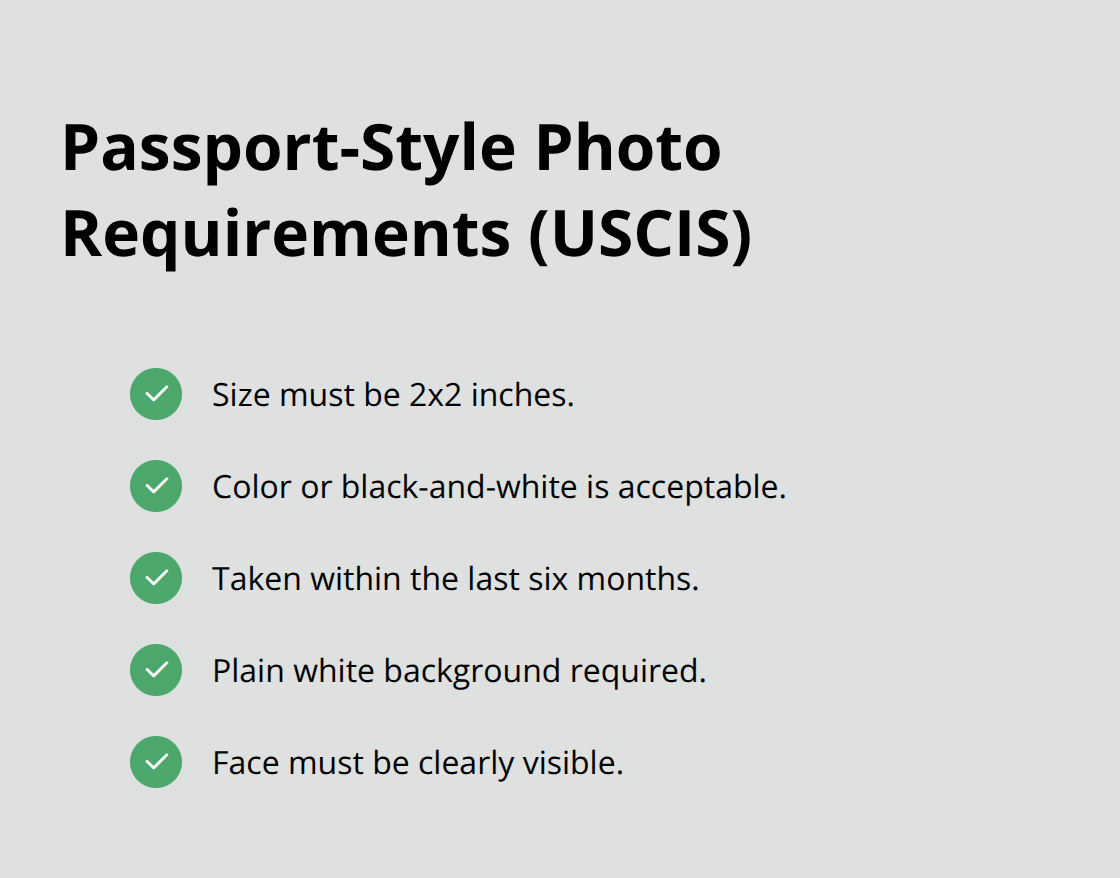
For identity documents, collect your valid passport, government-issued photo ID, and birth certificate. If your birth certificate is not in English, hire a certified translator immediately rather than waiting until the last moment. USCIS requires the translator to sign a certification statement confirming accuracy and completeness of the translation. Passport-style photographs must meet strict requirements: 2×2 inches, color or black-and-white, taken within the last six months, with a plain white background and your face clearly visible. Do not use photos from social media or professional headshots that fail to meet these specifications.
Schedule Medical Examinations Early
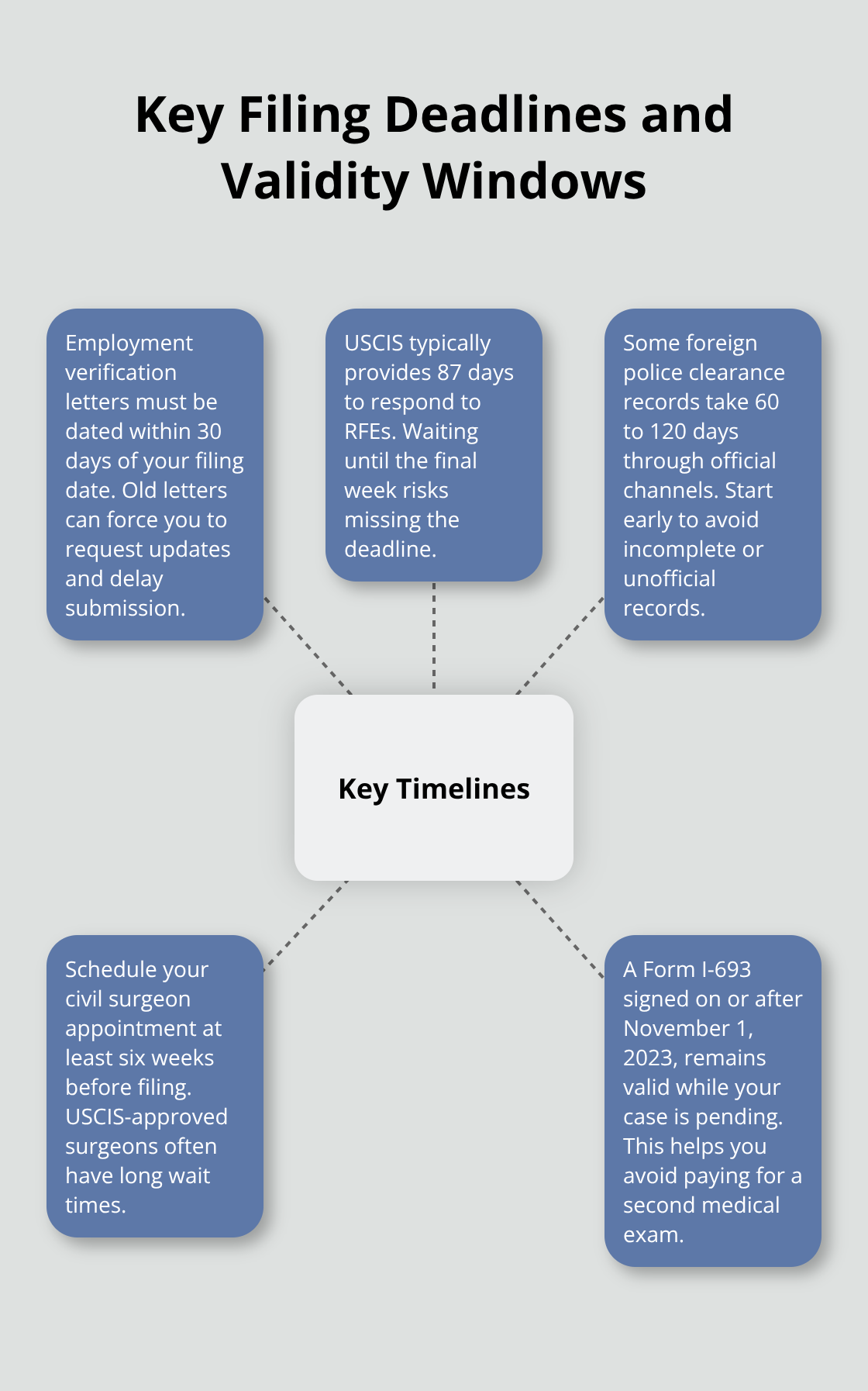
Medical examination records demand equal attention. Schedule your civil surgeon appointment at least six weeks before your planned filing date because USCIS-approved civil surgeons often have long wait times. A Form I-693 signed on or after November 1, 2023, is valid while your case is pending, which means you avoid the nightmare scenario of paying for a second medical exam if your case takes longer than expected. Bring all required vaccination records and health insurance documents to your appointment.
Obtain Police Clearance Records
Police clearance records must come from every country where you lived for more than six months since turning 16. Contact the foreign police department directly or use their official channels rather than relying on third-party document services, which frequently submit incomplete or outdated records that trigger Requests for Evidence.
Compile Financial Documentation and Organize Everything
Financial documentation represents your third critical pillar. Your sponsor must provide the last three years of federal tax returns, not just summaries or transcripts. USCIS cross-references tax return information against IRS databases, so discrepancies between what your sponsor claims and what the IRS has on file will halt your case. Employment verification letters must be dated within 30 days of your filing and include the sponsor’s job title, annual salary, and start date. For self-employed sponsors, include business tax returns, profit and loss statements, and a certified accountant letter explaining the business structure.
Store all original documents in a fireproof safe or safety deposit box until you file. Make photocopies of everything and organize them in the exact order specified in the USCIS Form I-485 instructions-this prevents the agency from losing pages during scanning. Number each page consecutively and include a cover page stating your name, A-number if you have one, and total page count. Do not use binders, brads, or heavy staples because USCIS disassembles applications for scanning. Single-sided copies on standard 8.5 x 11-inch white paper only. Many applicants waste weeks gathering documents only to discover formatting errors that require complete re-copying. Verify every document against the official Form I-485 instructions on USCIS.gov before you print anything. If your documents contain sensitive information like Social Security numbers or financial account details, black out those numbers on copies you submit unless USCIS specifically requests them unredacted. This protects your identity while still meeting documentation requirements.
Once you complete your document package, you face the next critical decision: whether to file your application yourself or work with an immigration attorney who can identify potential issues before submission and guide you through the adjustment of status process.
Document Errors That Derail Applications
The gap between a completed application and an approved one often comes down to preventable mistakes in how you fill out forms and organize supporting materials. USCIS processes over 1 million adjustment of status cases annually, and the agency’s own data shows that incomplete or inaccurate submissions account for a substantial portion of Requests for Evidence that extend processing timelines by months. The most dangerous mistake applicants make is submitting forms with contradictory information across different documents. If your birth date differs between your passport, birth certificate, and Form I-485, USCIS will flag this immediately and request clarification, adding 30 to 90 days to your timeline. Your sponsor’s income on the Form I-864 must match exactly what appears on their tax returns and W-2 forms, down to the dollar. USCIS cross-references this information electronically with IRS databases, so discrepancies trigger automatic RFEs.
Translation and Language Requirements
Non-English documents require complete English translations with a certification statement signed by the translator, not a partial translation or an unofficial family member’s version. Missing translations on even one document can result in outright rejection. The Form I-693 medical examination causes delays when applicants submit it unsigned, undated, or without the civil surgeon’s official seal. Many applicants also fail to include the two required passport-style photographs or submit photos that don’t meet the 2×2-inch specification with a plain background. USCIS will reject your entire application for missing or non-compliant photos rather than request replacements.
Tax Returns and Employment Verification
Timing mistakes compound document problems significantly. The Form I-864 Affidavit of Support requires tax returns from the past three years, but applicants frequently submit incomplete returns or omit required schedules. If your sponsor is self-employed, you must include Schedule C from their tax return along with a profit and loss statement and a letter from a certified accountant explaining their business income. Submitting only the first page of a tax return without schedules is treated as incomplete and triggers an RFE. Employment verification letters must be dated within 30 days of your filing date. Many applicants collect employment letters months in advance, then miss the filing window, which forces them to request updated letters and delay their submission.
Police Records and Foreign Documentation
Police clearance records from foreign countries present their own timeline challenges because some governments take 60 to 120 days to issue records through official channels. Starting this process early prevents last-minute scrambling that often results in incomplete or unofficial records. Contact your local police department or state agency to request your PCC, or use official channels rather than relying on third-party document services, which frequently submit incomplete or outdated records.
Form Completion and Signature Requirements
The Form I-485 itself must be printed from the official USCIS website with the correct edition date visible on every page. Using an outdated form version causes automatic rejection. Your signature on the Form I-485 cannot be a printed signature or a digital copy; it must be handwritten in blue or black ink. Unsigned or improperly signed applications are rejected without review. Applicants also make critical errors by failing to respond promptly to RFEs when they arrive. USCIS typically provides 87 days to respond, but many applicants wait until the final week, and document collection delays push responses past the deadline, which results in case denial. An immigration attorney can review your complete document package before filing to catch these errors before USCIS sees them, preventing the delays and rejections that plague self-filers.
Final Thoughts
Document preparation determines whether your adjustment of status application succeeds or stalls in a cycle of Requests for Evidence. The process demands precision, organization, and attention to details that seem minor until USCIS flags them. Start with a master checklist, gather documents in the exact order USCIS requires, and verify every translation and signature before you submit anything. Your timeline matters because employment verification letters expire, medical exams have validity windows, and police records take months to obtain from foreign governments.
Missing even one document forces you to file an entirely new application and pay the full filing fee again, which costs thousands of dollars and delays your green card by months or years. Self-filers who catch errors early can correct them before submission, but applicants who discover problems after USCIS rejects their package waste significant time and money. An immigration attorney reviews your complete adjustment of status documents before filing, identifies potential issues that USCIS will flag, and confirms your forms contain consistent information across all supporting materials.
We at Law Offices of Jeffrey A. Thompson in Brockton, Massachusetts, assist clients in navigating the adjustment of status process from paperwork through approval. Attorney Thompson provides expert guidance on overcoming legal hurdles and helps you achieve your American dream by handling the complex documentation requirements that derail many applicants. Contact Law Offices of Jeffrey A. Thompson to discuss your case and determine the best path forward for your immigration goals.
Share this post: