
EAD Work Permit Pending: What It Means for Your Adjustment of Status
August 21, 2026
Waiting for your EAD work permit pending decision can feel like being stuck in limbo. You’re ready to work, but uncertainty about your employment authorization and green card timeline creates real stress.
At Law Offices of Jeffrey A. Thompson, we help clients navigate this exact situation every day. This guide breaks down what your pending status means and how it affects your adjustment of status application.
What EAD Status Really Means for Your Work Authorization
An Employment Authorization Document, or EAD, is a physical card issued by USCIS that proves you have permission to work in the United States. It’s not a green card and it’s not a visa-it’s a standalone work permit that allows you to legally accept employment while your adjustment of status case is pending. The card displays a category code, an expiration date, and a biometric identifier. When your EAD is pending, you’re in a waiting period where USCIS hasn’t yet decided whether to approve or deny your work authorization request. This status differs from an approved EAD, which gives you immediate work rights, and from a denied EAD, which prohibits legal work in the United States. Understanding which status applies to you matters because it directly affects what you can and cannot do on the job market.
Processing Times and What Controls Them
EAD processing times have changed significantly. As of December 5, 2025, USCIS reduced the maximum EAD validity period to 18 months for certain categories including C09 (adjustment of status applicants), C08/C10 (asylum and NACARA relief), and A03/A05/A10 (refugees and asylees). This reduction means you’ll face more frequent renewal cycles and more time spent waiting for approvals. Processing times typically range from several months to over a year depending on your category and USCIS workload.
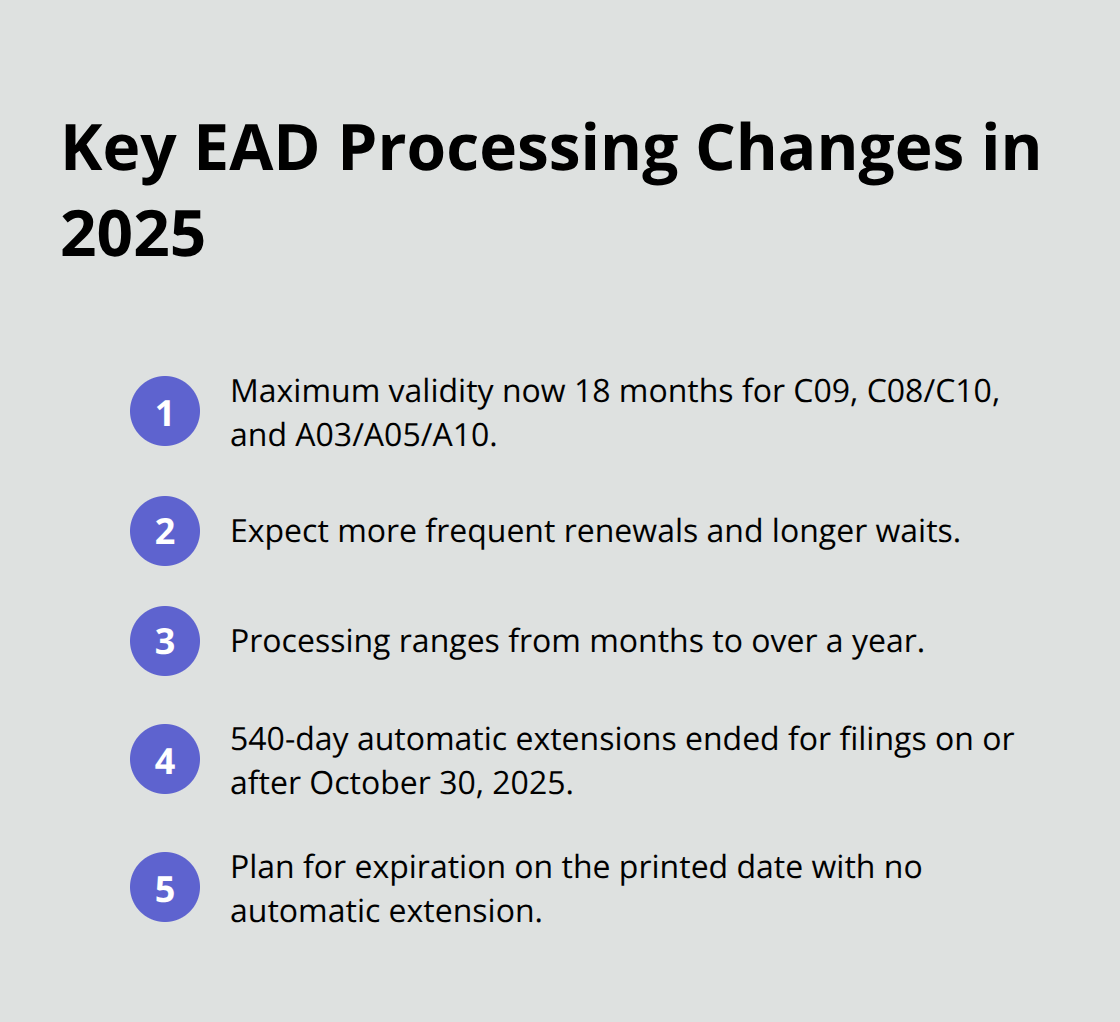
The USCIS Interim Final Rule published on October 30, 2025 also ended automatic 540-day EAD extensions for timely renewals in these same categories. If you filed your EAD before October 30, 2025, you may still qualify for that extension, but applications filed after that date are not. Plan for your work authorization to expire on its printed date with no automatic extension if you filed your renewal on or after October 30, 2025. Backlogs, incomplete applications, and background check delays cause processing delays. You can check your case status on the USCIS website using your receipt number, though the online tracker often lags behind actual processing.
How Your Pending Status Connects to Your Green Card Application
Your pending EAD status becomes especially important when you’re also waiting for your adjustment of status decision. Your I-485 green card application and your EAD application are connected but separate. An approved EAD lets you work while your green card application processes, which can take years in some cases. A denied EAD while your I-485 is still pending means you lose work authorization immediately, even though your green card case continues. This creates real financial pressure and forces you to make difficult decisions about employment.
The Risk of Starting Work While Your EAD Remains Pending
Starting a job while your EAD is pending carries significant risk because you could lose authorization mid-employment if USCIS denies your work permit request. Your employer will conduct I-9 verification, which requires valid work authorization documentation. If your EAD status changes before you complete your employment, you and your employer both face compliance issues. Understanding your employer’s policies about employment authorization verification and what happens if your status changes protects you from unexpected job loss. Waiting for approval before starting new employment whenever possible reduces this risk substantially, or at minimum, discuss your pending status with your employer upfront so they understand the situation.
How Your EAD Connects to Your Green Card Timeline
Your EAD application and your I-485 adjustment of status application are administratively linked but legally separate. USCIS treats them as two distinct petitions, which means your green card can receive approval while your EAD remains pending, or your EAD can face denial while your I-485 continues processing. This separation creates a critical distinction: an approved EAD gives you work authorization for its printed validity period, which now maxes out at 18 months for C09 applicants.
The Risk of Work Authorization Loss During Pending Status
If USCIS denies your EAD while your green card application is still pending, you immediately lose the legal right to work in the United States, regardless of your I-485 status. Many applicants mistakenly believe that a pending green card application automatically protects their work authorization, but that’s not how the system operates. Your work permit expires on its printed date unless you file a timely renewal before that date.
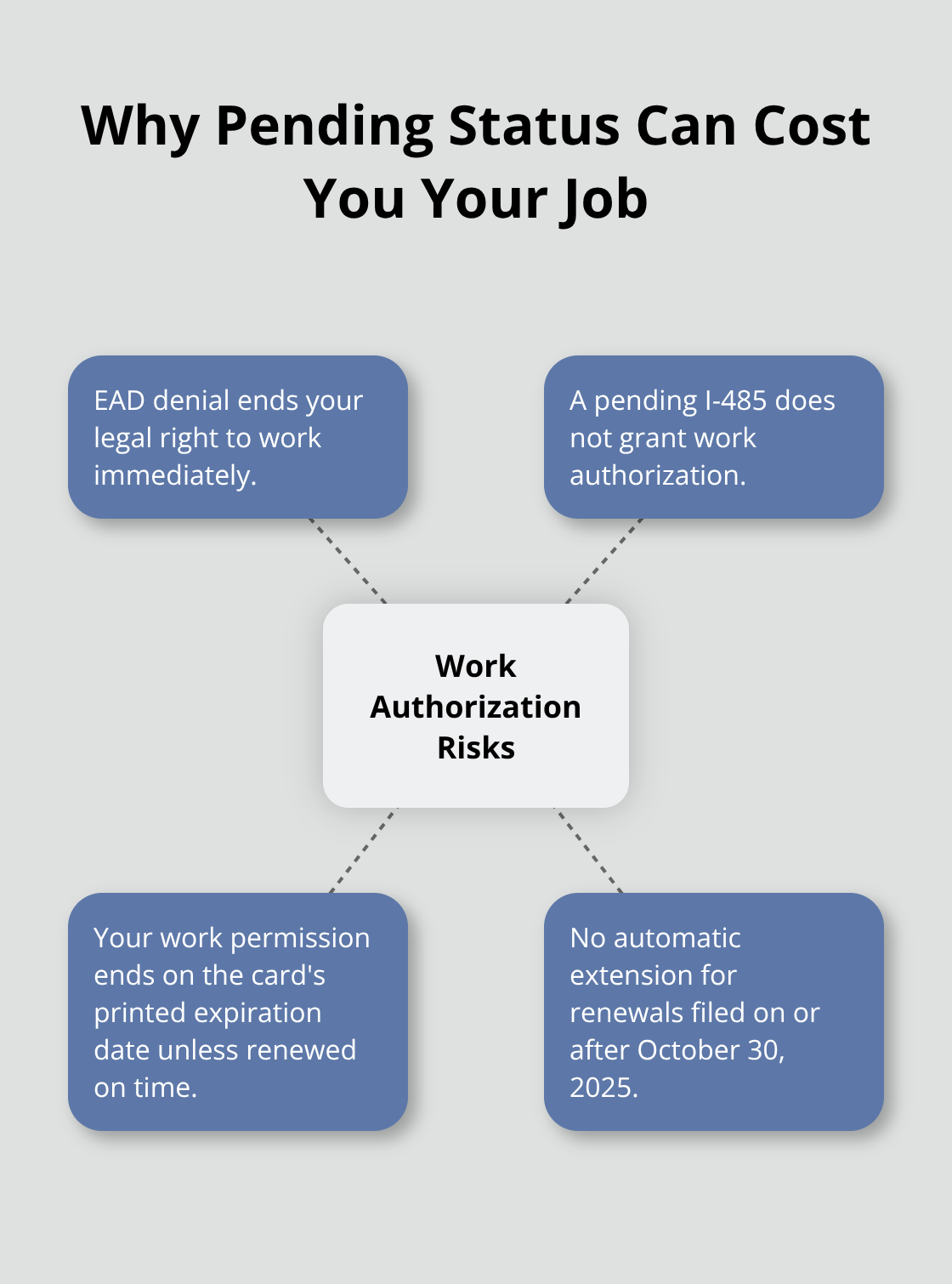
The ending of automatic extensions for applications filed on or after October 30, 2025 means you cannot rely on continued work authorization if you miss your renewal deadline.
Why Your EAD Expiration Date Demands Immediate Action
The most dangerous scenario occurs when your EAD expires and USCIS hasn’t yet made a decision on your I-485. You stop being legally authorized to work the moment your card expires, even if your green card case is actively under review. Your employer cannot legally keep you on payroll once your work authorization lapses, and you face potential deportation if you continue working without valid authorization.
The 18-month maximum validity period for new EADs means renewal cycles will happen more frequently than in the past, increasing your chances of facing an expiration before your green card adjudication. File your EAD renewal as soon as you’re eligible, which is typically 180 days before expiration. Don’t wait for your green card decision to file your renewal. The two applications operate on completely different timelines, and treating them as one unified process leads to employment authorization gaps that damage your case and your financial stability.
What Happens After EAD Denial
If your EAD denial occurs while your I-485 is pending, your only path forward involves maintaining your status through some other means, such as continuing with your previous visa category if you remain eligible, or filing for a different category of work authorization entirely. Neither option is simple, and both require immediate legal consultation to assess your specific circumstances. An immigration attorney can review your case details and identify which alternatives actually apply to your situation. The decisions you make in the weeks following an EAD denial will shape your ability to work and remain in the United States legally. Your next step involves understanding exactly what documentation USCIS requires to prove your continued eligibility for work authorization during this transition period.
Safeguard Your Pending Status
Protecting your pending EAD status requires active management, not passive waiting. The documentation you maintain, the work decisions you make, and the actions you avoid will determine whether your case stays on track or faces unexpected complications. Your pending status is fragile because USCIS operates on strict timelines and documentation requirements that demand precision. One missing document or one misstep can trigger a denial that forces you into employment limbo while your green card application continues processing.
Organize Your EAD Documentation for Quick Access
Store your EAD receipt notice, your I-485 approval notice, and all correspondence from USCIS in one secure location that you can access quickly. Your receipt notice contains your case number, which you’ll need to check your status online or contact USCIS. If USCIS requests additional documentation, they’ll reference your receipt number, and you’ll waste critical time searching for it if it’s scattered across files or old email accounts. Create a physical folder and a digital backup of every document related to your pending status. Include your birth certificate, passport, visa stamps, employment history, tax returns from the past three years, and any medical examination results. USCIS frequently requests tax documentation to verify your income stability and your employer’s legitimacy. The IRS processes amended returns slowly, so having your most recent three years of returns ready prevents delays if USCIS asks for them.
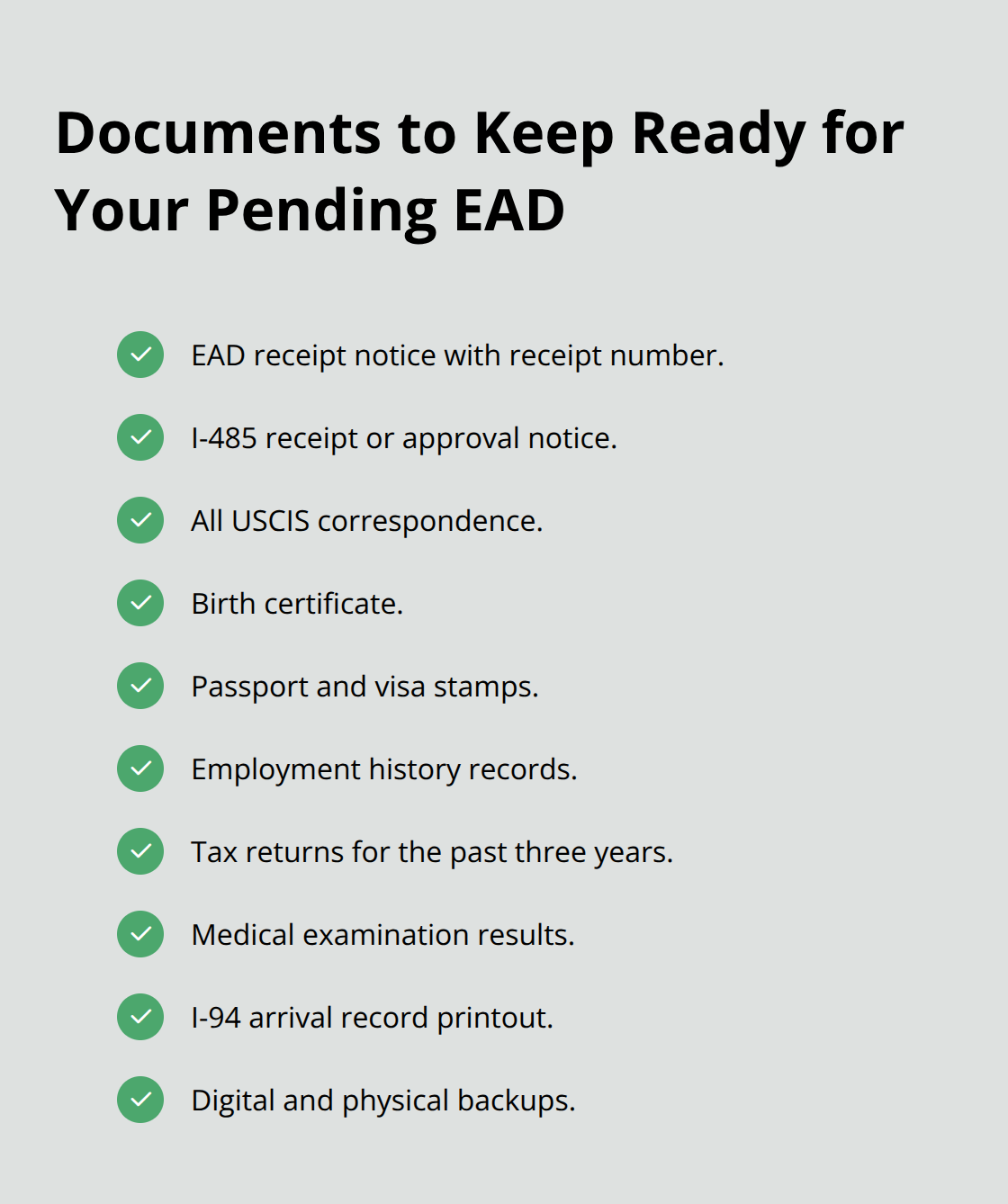
Your I-94 arrival record, which you can print from the CBP website, serves as proof of your current immigration status and your authorized period of stay. Print it and store it with your other documents. Your employment authorization depends partly on maintaining lawful status throughout your pending period, and your I-94 provides that evidence.
Know What Work You Can Legally Perform While Pending
Your pending EAD status does not grant you legal work authorization. This distinction matters enormously because starting work while your EAD is pending violates immigration law, regardless of your employer’s willingness to hire you. You can only begin working once USCIS approves your EAD and you receive the physical card. Some applicants mistakenly assume that filing an EAD application grants temporary work rights, but USCIS makes no such provision for pending cases. If you’re currently employed and your EAD is pending, you face a different scenario. Your employer conducted I-9 verification based on whatever work authorization you held when you started. That authorization might be an H-1B visa, an L-1 visa, or another category. Your pending EAD doesn’t change your current work status, but it creates a critical window where you need to plan for the transition. Once your EAD approval arrives, your previous visa category becomes irrelevant for employment purposes. Your work authorization shifts entirely to your EAD. If your EAD gets denied, you revert to whatever visa status you held before, assuming you maintained that status. Many applicants lose track of their original visa expiration dates while waiting for their EAD decision. If your H-1B, L-1, or other visa expires before your EAD decision arrives, you lose all work authorization regardless of your pending green card application. Check your passport right now for your current visa expiration date. If it expires within 12 months, contact an immigration attorney immediately because you may need to extend or change your status before the visa expires. Continuing to work on an expired visa, even with a pending EAD, constitutes unauthorized employment and triggers deportation proceedings.
Avoid Actions That Jeopardize Your Pending Case
Changing jobs while your EAD is pending creates immediate risk because your new employer will conduct I-9 verification, and you cannot provide a valid EAD. Some immigration attorneys advise staying with your current employer until your EAD approves, and this advice has merit because it eliminates the verification problem. If you absolutely must change jobs, your new employer must verify your work authorization through your current visa status, not your pending EAD. Working outside the United States on any visa category while your I-485 is pending abandons your adjustment of status application. USCIS interprets foreign travel as an intent to abandon your green card case. If you must travel, consult an attorney before leaving the country because you may need an advance parole document to re-enter legally. Missing an interview notice from USCIS guarantees a denial. USCIS mails interview notices to the address you provided on your I-485, which is why you must update your address with USCIS if you move. Set up mail forwarding with the postal service and check your mail weekly. Failing to respond to a Request for Evidence within the deadline causes automatic denial. USCIS typically allows 84 days to respond to RFEs, and they will not extend this period without exceptional circumstances. The moment you receive an RFE, contact an immigration attorney because the response requires legal precision. Submitting false information on your I-485 or your EAD application, even unintentionally, creates grounds for deportation. Double-check all dates, addresses, and employment history before submitting anything to USCIS. Working in a position that violates your visa category restrictions while your EAD is pending creates a record that USCIS will discover during their background investigation. If your H-1B allows work only for Company A, and you take a side job at Company B while your EAD is pending, that violation becomes part of your permanent immigration file. Your pending status requires you to maintain strict compliance with your current authorization while waiting for your new authorization to arrive.
Final Thoughts
Check your EAD work permit pending status online through the USCIS case tracker using your receipt number, which appears on the notice USCIS sent when they accepted your application. The online tracker updates periodically, though delays between actual processing and online updates are common. Set a calendar reminder for 180 days before your current EAD expires so you can file your renewal application early and prevent the authorization gaps that create employment complications.
Prepare mentally and financially for both approval and denial scenarios so you avoid shock if either outcome arrives. If USCIS approves your EAD, you will receive the physical card within two to three weeks of the approval notice, and your new work authorization begins on the card’s issue date. If denial occurs, contact an immigration attorney within days because your options narrow quickly once your work authorization expires, and some applicants qualify for extensions of their previous visa status while others may pursue different categories entirely.
We at Law Offices of Jeffrey A. Thompson understand that navigating your pending EAD status while managing your adjustment of status application creates genuine uncertainty about your future. An immigration attorney reviews your specific circumstances, identifies risks before they become problems, and coordinates your EAD renewal timing with your I-485 adjudication timeline to prevent employment authorization gaps that damage both your financial stability and your immigration case. Contact us to discuss your situation and develop a strategy that protects your work authorization while your green card application processes.
Share this post: