Parent Immigration Options: Securing a Visa for Your Family
August 17, 2026
Sponsoring a parent to immigrate to the United States involves navigating multiple visa categories, complex paperwork, and financial commitments. We at Law Offices of Jeffrey A. Thompson help families understand their parent immigration options and move through this process with confidence.
The steps ahead require careful planning, from filing the initial petition to attending medical exams and background checks. This guide walks you through each stage so you know exactly what to expect.
Choosing the Right Visa Category for Your Parent
Immediate Relatives Have a Significant Advantage
The immigration system offers two distinct pathways for sponsoring parents, and understanding which applies to you determines everything from processing speed to approval likelihood. As a U.S. citizen, your parent qualifies as an immediate relative, which means no annual visa caps apply and processing moves significantly faster than other family categories. USCIS data shows that immediate relatives typically receive approval decisions within 12 to 18 months, whereas preference categories for extended family members face backlogs spanning years or even decades. This distinction matters enormously. If you hold a green card rather than citizenship, you cannot petition for your parents at all, which is why establishing your citizenship status before filing is non-negotiable. The immediate relative pathway exists exclusively for U.S. citizens sponsoring parents, and this advantage should shape your entire application strategy from day one.
Filing Form I-130 for Each Parent
You must file Form I-130 for each parent separately, and the specific documentation you submit depends on your parent’s location and circumstances. For a parent living abroad, submit the I-130 along with your birth certificate clearly showing both your name and your parent’s name, plus proof of your U.S. citizenship if you weren’t born domestically. If your parent was born outside the United States and you were born out of wedlock, you must provide evidence of legitimation before your eighteenth birthday to establish the legal parent-child relationship. Adoptive parents require certified adoption documentation showing the adoption occurred before you turned sixteen, combined with proof of your living arrangements with that parent. Step-parents need your birth certificate, the civil marriage certificate between your birth parent and stepparent, and records confirming any prior marriages ended.
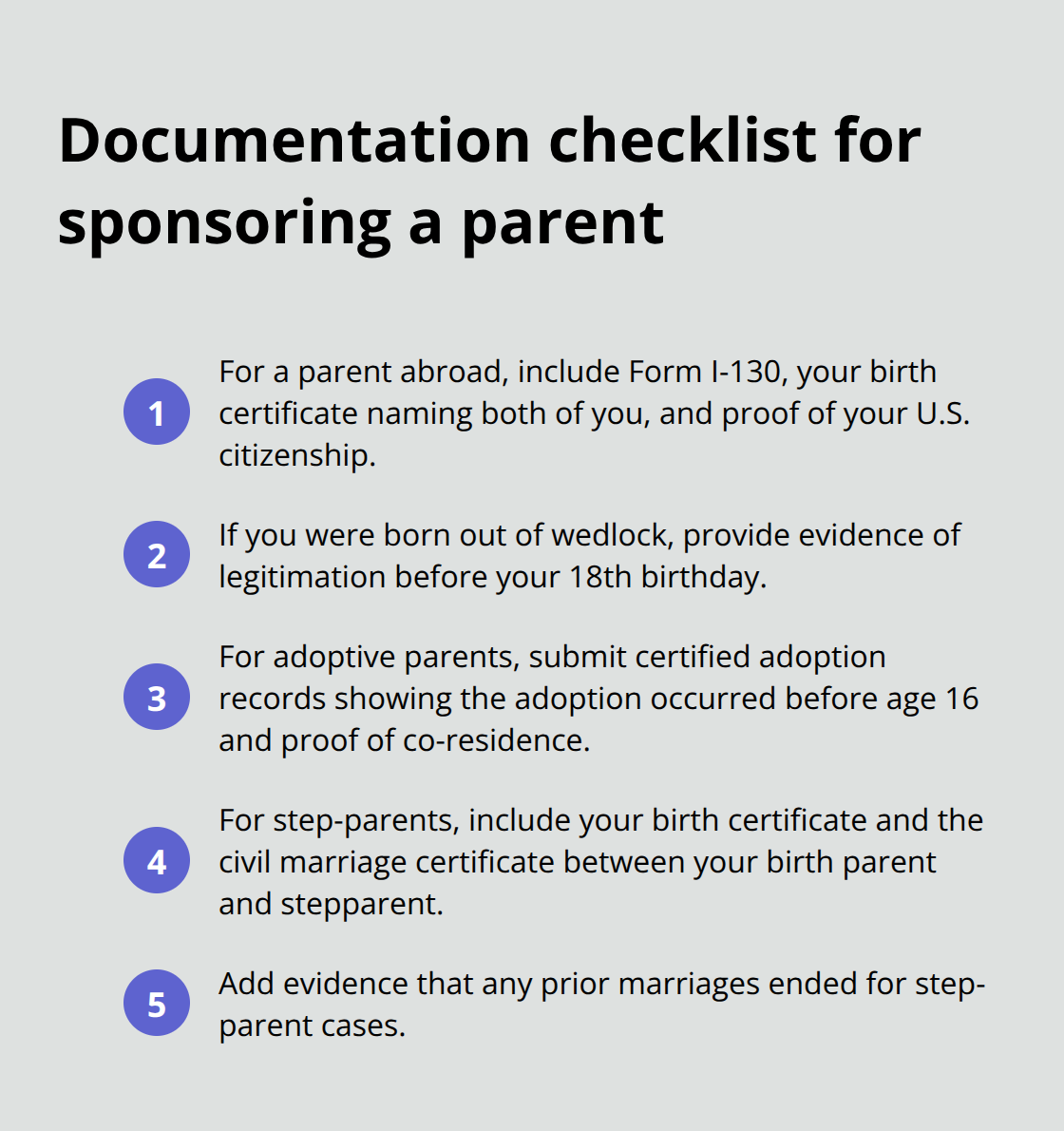
These requirements exist to prevent fraud, and submitting incomplete documentation guarantees delays or denials.
Consular Processing and Adjustment of Status
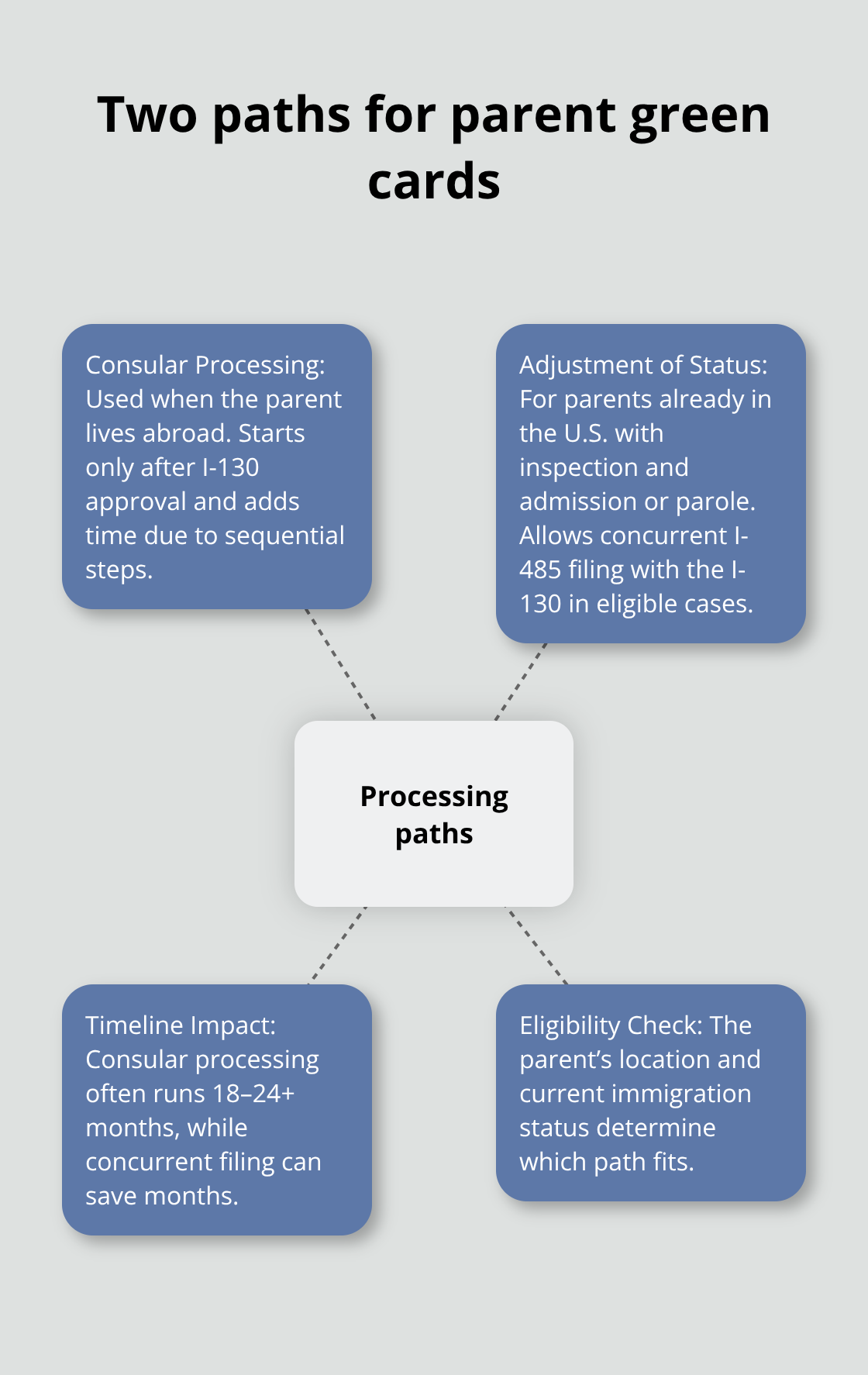
Once USCIS approves your I-130 petition, your parent proceeds to either consular processing at their local U.S. consulate if abroad, or adjustment of status if already in the United States. Parents in the country can file Form I-485 concurrently with the I-130, potentially compressing the timeline significantly. This concurrent filing option saves months compared to sequential processing, making it worth exploring if your parent meets eligibility criteria for adjustment of status (including having been inspected and admitted or paroled into the country). Your parent’s location and current immigration status determine which path makes sense for your situation, and understanding these distinctions helps you move forward strategically.
The next phase of your application involves gathering financial documentation and preparing for medical examinations, both of which play critical roles in whether USCIS approves your petition.
Filing Your I-130 Petition and Managing the Timeline
Understanding the I-130 Form and Documentation Requirements
The I-130 petition is your official request to USCIS to recognize your parent as an immediate relative eligible for a green card. You file this form separately for each parent, and USCIS processes it first before your parent moves to the next stage. The form itself is straightforward, but the supporting documents determine whether you face delays or quick approval.
Your birth certificate showing both your name and your parent’s name is non-negotiable, along with proof of your U.S. citizenship such as a passport, naturalization certificate, or birth certificate if you were born in the United States. If your parent’s circumstances differ-such as adoption before age sixteen, a step-parent relationship, or birth outside the U.S. when you were born out of wedlock-your documentation requirements expand accordingly.
Incomplete submissions trigger USCIS requests for additional evidence, which typically add three to six months to processing time. Gather everything upfront rather than responding to requests later.
Processing Timelines for I-130 Petitions
USCIS currently processes I-130 petitions for immediate relatives within approximately 12 to 18 months from filing, though this timeline varies by local USCIS office. Some offices in high-volume areas like Los Angeles or New York process cases slower than offices in smaller cities. Your specific location affects how quickly USCIS moves your petition through the system.
After submitting your I-130, you will receive a receipt notice with a priority date. This date determines when a visa becomes available for your parent.
Choosing Between Consular Processing and Adjustment of Status
Your parent’s location determines whether they complete visa processing abroad at a U.S. consulate or adjust status inside the United States, and this choice substantially affects your overall timeline. If your parent lives outside the U.S., consular processing begins after USCIS approves your I-130, meaning your parent waits for approval before starting the visa interview process at their nearest consulate. This sequential approach typically extends the total process to 18 to 24 months or longer.
The Concurrent Filing Advantage
If your parent is already in the United States and meets adjustment of status eligibility-meaning they entered through a port of entry with inspection and admission or parole-you can file Form I-485 concurrently with the I-130, potentially compressing your timeline by six to twelve months. Concurrent filing is a strategic advantage that many families overlook. Your parent must have been physically admitted or paroled into the country to qualify; merely entering illegally disqualifies them from adjustment of status and forces the consular processing route, which requires your parent to leave the U.S. and complete processing abroad.
Critical Immigration Status Considerations
This distinction is critical because returning to a consulate after illegal entry triggers the ten-year bar, preventing your parent from returning to the U.S. for a decade. Understanding your parent’s current immigration status before filing prevents catastrophic mistakes. Your next step involves gathering the financial documentation that USCIS requires to verify your ability to support your parent throughout their immigration journey.
Supporting Your Parent Financially and Medically
The Affidavit of Support and Your Financial Obligation
Form I-864, the Affidavit of Support, is not optional and represents your legal commitment to support your parent for the next ten years. USCIS requires this form to verify you earn at least 125 percent of the federal poverty line. If your income falls short, you can add a joint sponsor who meets the income threshold, but that person becomes equally liable for your parent’s support. This obligation persists even if your parent becomes a U.S. citizen, making it a serious financial commitment many sponsors underestimate.
Medical Examinations and Health Requirements
Medical examinations USCIS designated civil surgeons must complete before your parent’s green card approval. Your parent undergoes a physical examination, blood tests, and vaccinations during this process. Any health conditions requiring treatment must be addressed immediately to avoid delays or denials. USCIS may request additional documentation if your parent has chronic illnesses or prior medical issues, so transparency about health history prevents complications later.
Background Checks and Inadmissibility Issues
Background checks run simultaneously with medical exams, examining criminal history, immigration violations, and security concerns. USCIS denies applications for serious criminal convictions, prior deportations, or security-related issues, so understanding your parent’s full background before filing prevents wasted time and application fees. If your parent has a criminal record, certain waivers may be available to overcome inadmissibility, but these require advance planning and documentation. Addressing potential problems early gives you time to gather evidence and explore legal remedies rather than facing denials months into the process.
Why Legal Representation Matters
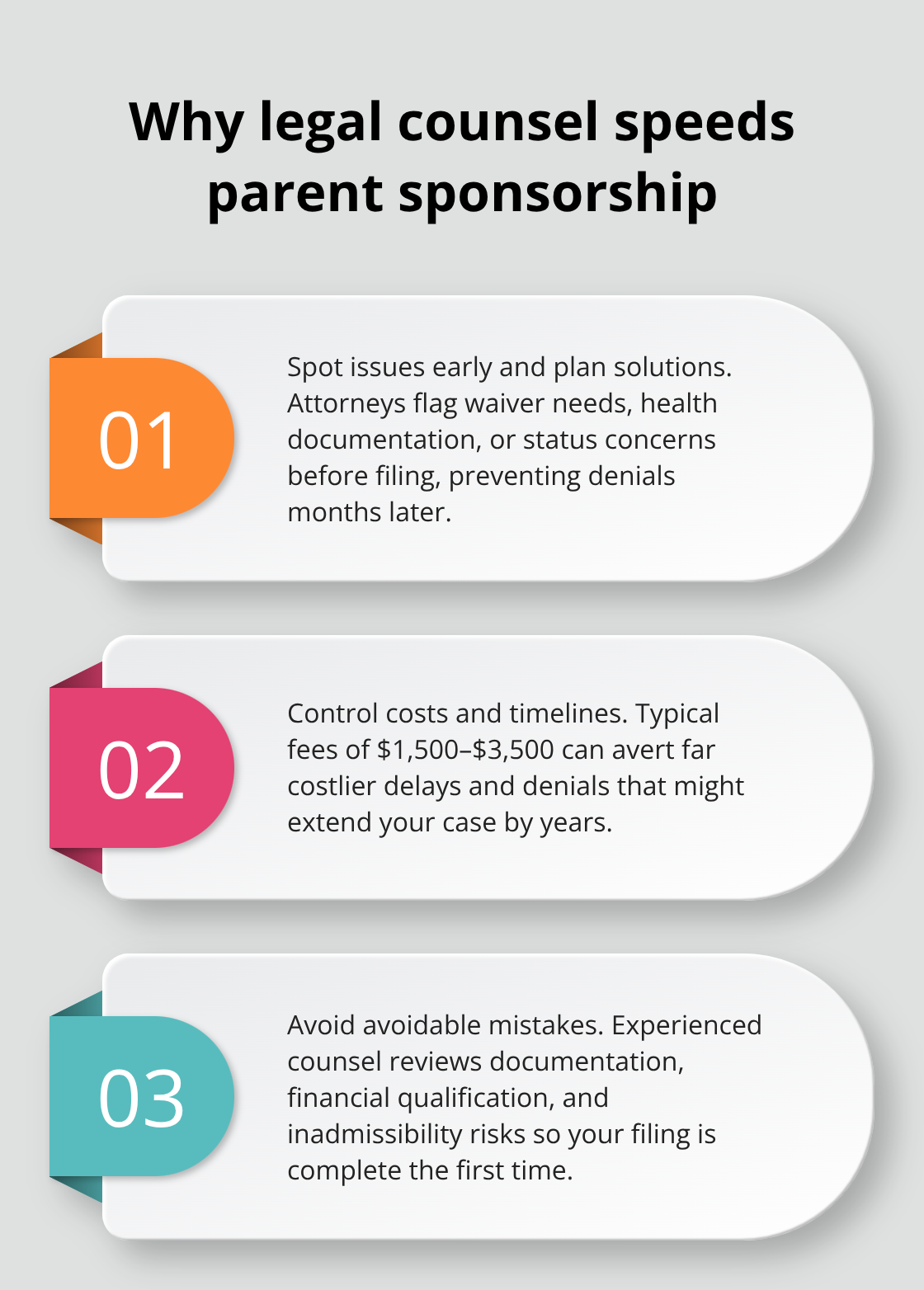
An immigration attorney identifies potential problems early, such as criminal records that require waivers or health conditions that need pre-treatment documentation, allowing you to address these issues proactively rather than facing denials months into the process. Attorney fees typically range from $1,500 to $3,500 for straightforward parent sponsorship cases, but this investment prevents far costlier delays and denials that can extend your timeline by years. We at Law Offices of Jeffrey A. Thompson assist clients in navigating the immigration process, from paperwork to overcoming legal hurdles, helping them achieve their family reunification goals. An experienced attorney catches mistakes in documentation, financial qualification, or inadmissibility issues before submission, transforming what could become an expensive problem into a manageable solution.
Final Thoughts
Sponsoring a parent to immigrate to the United States requires you to complete several non-negotiable steps in the correct order. You must verify your U.S. citizenship status first, as only citizens can petition for parents, then file Form I-130 separately for each parent with accurate birth certificates and citizenship documentation. Simultaneously, you should gather financial records to demonstrate you meet the 125 percent poverty line threshold for the Affidavit of Support, or identify a joint sponsor if your income falls short. Once USCIS approves your petition, your parent either proceeds to consular processing abroad or adjusts status domestically if already in the country with valid admission.
The entire parent immigration options process typically spans 18 to 24 months for immediate relatives, though concurrent filing can compress this timeline significantly. Your parent’s location and current immigration status determine whether you pursue consular processing or adjustment of status, and this choice affects your overall timeline substantially. Processing times vary by USCIS office location, with high-volume areas moving slower than smaller jurisdictions, so you should contact your local office for specific estimates.
Start your application now and gather your birth certificate, proof of citizenship, and your parent’s documentation immediately. If your parent has any criminal history, prior immigration violations, or health concerns, you should consult an immigration attorney before filing to explore available waivers or remedies. Contact Law Offices of Jeffrey A. Thompson to discuss your specific situation and develop a strategy tailored to your family’s needs.
Share this post: