Fiancé Visa Eligibility: Who Qualifies for the K-1 Visa
November 23, 2026
Getting engaged to someone from another country brings joy-and paperwork. The K-1 fiancé visa is the legal pathway to bring your foreign fiancé to the United States, but fiancé visa eligibility requirements are strict and specific.
At Law Offices of Jeffrey A. Thompson, we help couples navigate these requirements every day. Understanding what USCIS looks for can mean the difference between approval and denial.
What Exactly Is a K-1 Visa
The K-1 visa is a nonimmigrant visa category that allows a foreign national to enter the United States for the specific purpose of marrying a U.S. citizen within 90 days. USCIS processes approximately 20,000 to 25,000 K-1 visa petitions annually, making it a common but highly scrutinized pathway. The visa exists because the U.S. immigration system recognizes that some couples cannot marry in their home country due to visa restrictions, legal complications, or safety concerns. Once your fiancé arrives on a K-1 visa, you have exactly 90 days to marry. After marriage, your spouse can then apply for adjustment of status to become a permanent resident. This differs fundamentally from a tourist visa, which explicitly prohibits any intent to immigrate.
Processing Timeline and Real Expectations
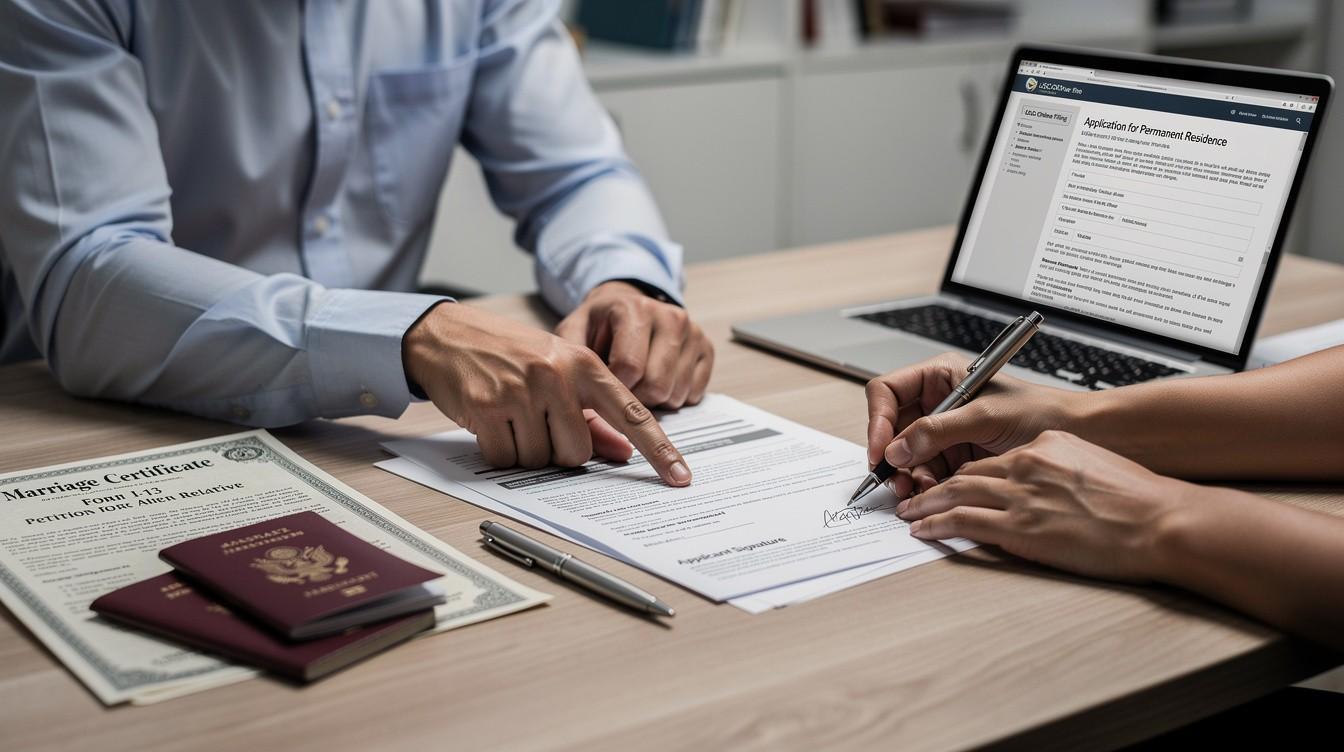
The K-1 petition process typically takes 4 to 6 months from initial filing to approval, though cases can move faster or slower depending on USCIS workload and the completeness of your application. After USCIS approves your petition, your fiancé must then go through consular processing at a U.S. embassy or consulate, which adds another 2 to 4 months. Many couples underestimate this timeline and file petitions expecting rapid results. USCIS requires extensive documentation proving your relationship is genuine and not fraudulent, including evidence of communication, travel history showing you’ve met in person, photographs together, and affidavits from friends or family. The financial requirement is also substantial-the petitioner must demonstrate an income at or above 100% to 125% of the federal poverty line, depending on family size and circumstances.
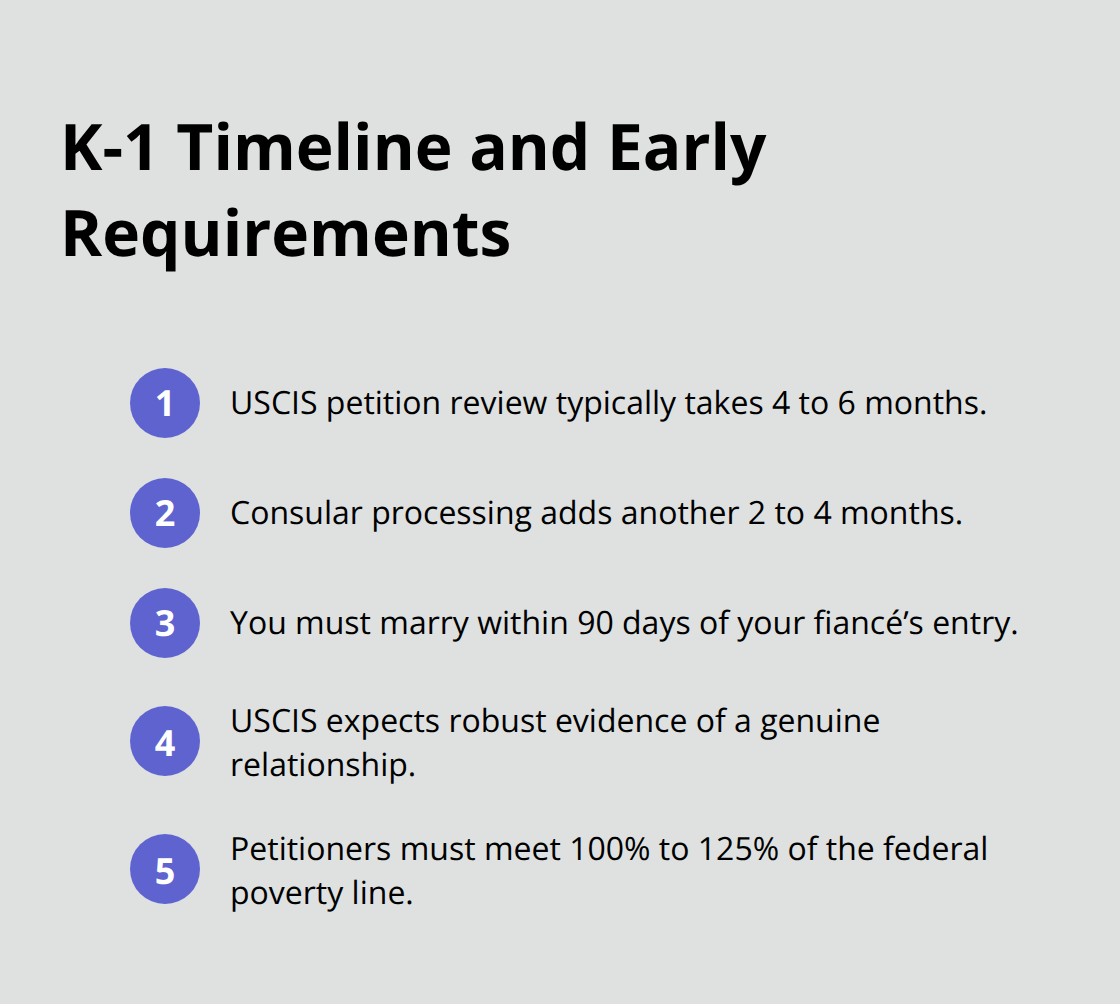
For 2024, a single U.S. citizen petitioner must meet the HHS Poverty Guidelines to sponsor a fiancé, though this figure increases if you have dependents.
How K-1 Differs From Other Visa Routes
The K-1 visa differs fundamentally from marriage-based green card petitions filed after you marry abroad. If you marry your fiancé abroad first, you would petition for them using the IR-2 or CR-2 visa category, which follows a different timeline and has slightly different requirements. The K-1 forces the marriage to happen within 90 days on U.S. soil, whereas marriage-based petitions allow more flexibility. Another critical distinction is that the K-1 visa does not grant work authorization or a Social Security number until after marriage and adjustment of status. Your fiancé cannot legally work during those initial 90 days waiting to marry, which creates financial pressure for many couples. Some couples mistakenly believe a K-1 visa is easier than other family-based immigration options, but that’s not accurate-USCIS scrutinizes K-1 applications heavily because the visa category has historically been associated with fraudulent marriages and human trafficking concerns (making the burden of proof entirely yours to demonstrate legitimacy).
Why Documentation Matters Most
USCIS officers examine K-1 applications with particular intensity. They want to see concrete proof that your relationship is real and that you both intend to marry. Vague or incomplete documentation leads to denials far more often than applicants realize. The next section covers the specific eligibility requirements that determine whether USCIS approves or rejects your petition.
What USCIS Actually Looks For in K-1 Applications
Proving your relationship is genuine
USCIS approval hinges on three pillars: proving your relationship is genuine, demonstrating financial capacity, and passing background screening. The relationship requirement is where most denials originate. USCIS rejects vague claims of love or brief online connections as proof.
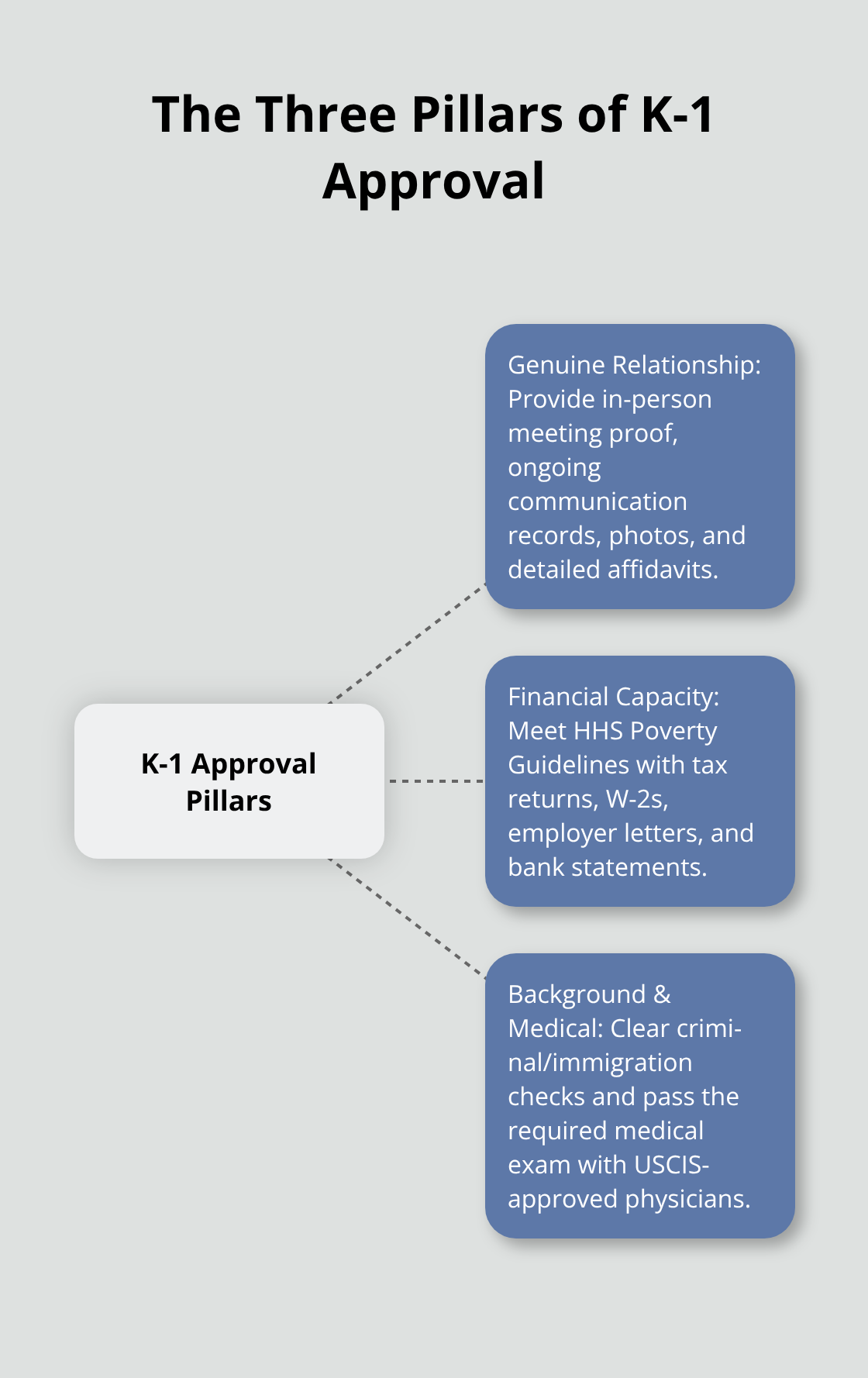
You need concrete evidence that you met in person multiple times, communicated consistently over months or years, and made concrete plans to marry. Officers examine your phone records, messaging apps, travel receipts, hotel bookings, and photographs together. If your relationship spans fewer than six months, USCIS views it with suspicion regardless of other documentation. They look for patterns that show genuine commitment, not a rushed decision made for immigration purposes.
Affidavits from friends and family members carry significant weight, but generic statements don’t help. Detailed accounts of how you met, what you do together, and why you’re committed to marriage matter far more. USCIS wants to see that people in your life can attest to your bond and your intentions.
Meeting Financial Requirements
Financial requirements are equally unforgiving. The petitioner must prove income at or above the HHS Poverty Guidelines, and USCIS verifies this through tax returns, W-2 forms, employment letters, and bank statements. For 2024, a two-person household requires a minimum annual income of $20,440. If your income falls short, you can use a co-sponsor-typically a family member-but that person must also complete the I-864 Affidavit of Support form and meet the same income requirements.
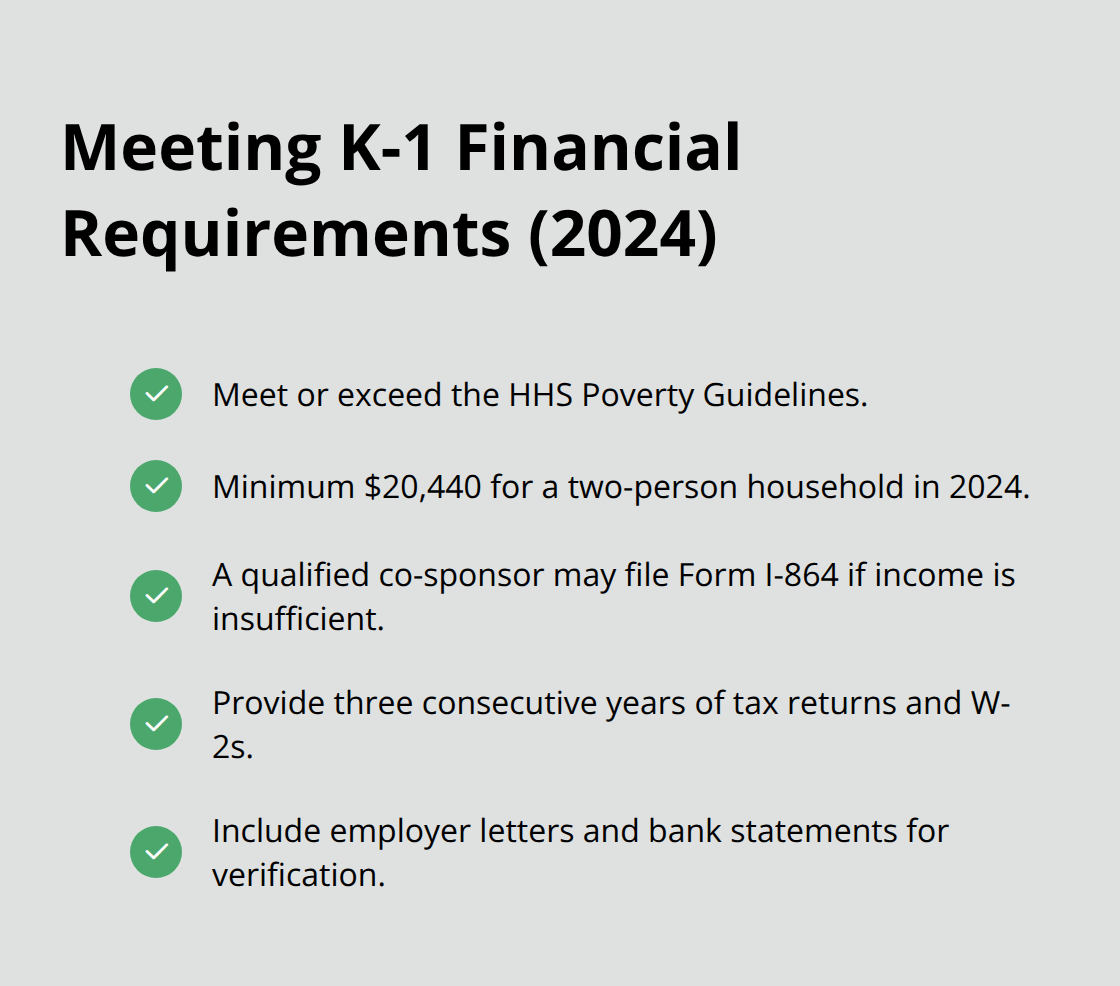
USCIS takes this obligation seriously because they want assurance your fiancé won’t become a public charge. Many applicants underestimate how thoroughly USCIS examines financial documents; discrepancies between tax returns and employment letters trigger requests for additional evidence or outright denials. Incomplete or inconsistent financial paperwork creates the second-largest category of K-1 rejections after relationship documentation issues.
Passing Background and Medical Screening
Background checks examine criminal history, immigration violations, and security concerns. Any felony conviction, domestic violence charge, or fraud history creates substantial obstacles. Even misdemeanors can cause problems depending on the offense and timing. USCIS also screens for immigration fraud, visa overstays, or prior deportations. Medical examinations through USCIS-approved physicians check for communicable diseases and health conditions that might make your fiancé inadmissible. The medical exam is mandatory and cannot be skipped regardless of health status.
These three components work together to determine your application’s fate. Understanding each one separately helps you prepare stronger documentation, but the real challenge lies in addressing all three simultaneously while maintaining accuracy and completeness throughout your petition.
Why K-1 Applications Get Rejected
USCIS issued 343 percent more denials for relationship-based visa petitions in recent months, and incomplete submissions create the majority of rejections. The most common reason for denial is insufficient evidence of a genuine relationship. Consular officers may ask for additional information, such as photographs and other proof that the relationship with your U.S. citizen fiancé(e) is genuine.
Relationship Documentation Failures
USCIS officers have reviewed thousands of K-1 applications and spot red flags instantly. They look for relationships that moved too fast, lack in-person meetings, or show communication gaps spanning weeks or months. If your messaging history contains large time periods where you didn’t contact each other, officers interpret this as proof the relationship isn’t serious. They also examine whether you met in person within the first year of your relationship. Meeting only once or twice before filing raises serious questions.
Phone records matter tremendously here. If you claim to talk daily but your phone bills show minimal international calls, the discrepancy destroys your credibility. USCIS cross-references every claim you make against supporting documentation, and inconsistencies lead to denials faster than missing documents. Affidavits from friends and family members must contain specific details about your relationship, not generic statements about your commitment.
Financial Documentation Problems
Financial documentation issues rank as a major denial category, and they’re often avoidable with proper preparation. Many petitioners submit tax returns that don’t match their employment letters, creating immediate red flags. USCIS requires three consecutive years of tax returns, and they verify income through the IRS directly. If you show different income figures across documents, expect a Request for Evidence that often leads to denial when applicants can’t explain the discrepancies.
Self-employed individuals face particular scrutiny because their tax returns are harder to verify than W-2 wages. USCIS wants to see consistent business income across multiple years, not sudden spikes that coincide with filing your K-1 petition. Bank statements must also align with your claimed income. If you earn $60,000 annually but your bank statements show minimal deposits, officers question whether your financial information is accurate.
Many applicants also fail to account for dependents properly. The poverty line thresholds increase with each family member you support, and USCIS counts everyone living in your household (including adult children or aging parents). This oversight creates denials that applicants could have prevented with careful household accounting.
Medical and Security Barriers
Medical and security concerns form another rejection pathway, though these are often outside your control once discovered. USCIS-approved physicians conduct medical examinations, and certain conditions like tuberculosis or untreated syphilis create legal barriers to entry. Criminal history also poses serious obstacles. USCIS doesn’t overlook minor offenses, and even old charges can surface during background checks.
Domestic violence convictions are permanent disqualifiers. Immigration fraud or visa overstays in your fiancé’s past create nearly insurmountable barriers because USCIS views these as indicators of dishonesty. These rejection pathways work together to determine your application’s outcome, and addressing all of them simultaneously requires careful attention to detail and honest documentation throughout your petition.
Final Thoughts
K-1 fiancé visa eligibility rests on three pillars that USCIS will not compromise on: genuine relationship proof, financial capacity, and clean background screening. Your documentation must align perfectly across every claim you make, and vague statements about love or incomplete financial records will result in rejection. USCIS scrutinizes these applications intensely because this visa category has attracted fraudulent petitions historically, placing the burden of proof entirely on you.
Many couples file K-1 petitions without professional guidance and face preventable denials that cost time and money. Immigration law contains technical requirements that appear straightforward but hide significant pitfalls, and a single inconsistency between documents can derail your entire petition. We at Law Offices of Jeffrey A. Thompson help clients navigate these complexities, identifying weaknesses in your documentation before USCIS does and strengthening your petition’s chances of approval.
Attorney Thompson provides expert guidance tailored to your specific circumstances, understanding both the law and the real-world consequences of mistakes. Your fiancé visa eligibility determination deserves professional attention from someone who has guided couples through this process successfully.
Share this post: