Consular Processing Steps: A Clear Roadmap For Massachusetts Applicants
November 16, 2026
Moving to the United States through consular processing can feel overwhelming, especially when you’re navigating the system from Massachusetts. The consular processing steps involve multiple stages, each with specific requirements and timelines that need careful attention.
At Law Offices of Jeffrey A. Thompson, we’ve guided countless applicants through this journey. This roadmap breaks down exactly what you need to do, from initial preparation through your visa interview and beyond.
What Consular Processing Is and Why It Matters for You
Consular processing is the pathway you use to obtain an immigrant visa from outside the United States. Unlike adjustment of status, where you apply for permanent residency while already in the country, consular processing requires you to apply at a U.S. embassy or consulate in your home country or another location abroad. The key difference is straightforward: consular processing is for people outside the U.S., while adjustment of status is for those already inside. This distinction matters enormously because it affects your timeline, the forms you file, and whether you can work or travel during the application.
If you entered the U.S. on a visa and then want to become a permanent resident, you might think you can adjust status here. That’s often true, but not always. Some applicants cannot adjust status in the U.S. due to how they entered or their immigration history, which means consular processing becomes your only option. Choosing the wrong route costs time and money, so getting this decision right from the start is non-negotiable.
Who Must Use Consular Processing
You need consular processing if you are applying for an immigrant visa from outside the United States. This applies to family-based applicants whose U.S. citizen or permanent resident relative filed an I-130 petition for you, as well as employment-based applicants whose employer filed an I-140 petition. Diversity visa lottery winners also use consular processing, along with special immigrant categories. The critical requirement is that an approved petition exists and a visa number is available.
According to the U.S. Department of State, processing times typically range from 6 to 12 months depending on your visa category and consulate workload. Immediate relatives of U.S. citizens-including spouses, unmarried children under 21, and parents of citizens aged 21 and older-move faster because they are not subject to annual visa caps. Other family categories face visa bulletin backlogs that can create multi-year delays. Employment-based categories have their own timelines based on priority dates and country-specific caps.
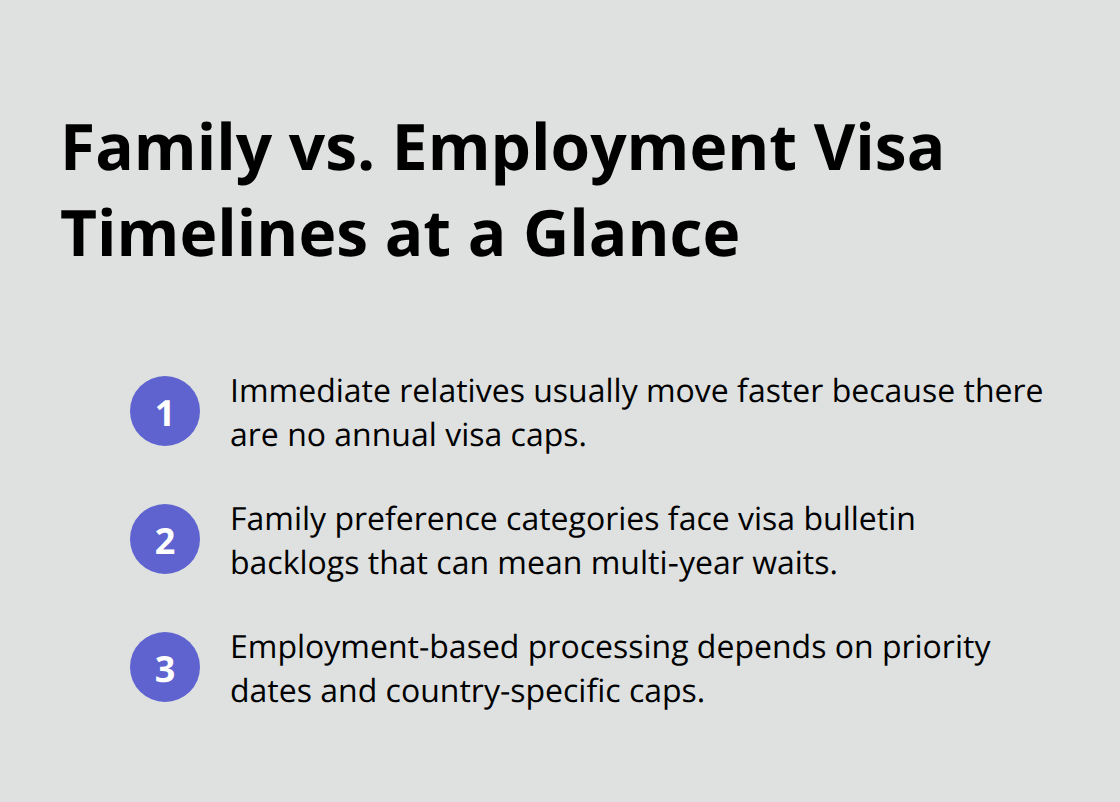
Understanding which category you fall into determines how long you’ll wait and what steps come next.
The Timeline From Start to Green Card
The consular processing timeline breaks into distinct phases, each with its own requirements and waiting periods. First, USCIS must approve your petition, which typically takes several months depending on whether you filed I-130 or I-140. Once approved, your case moves to the National Visa Center, or NVC, which handles fee collection and document requests.
The NVC notifies both the petitioner and you when it receives your case and when a visa number becomes available. Once a visa number is assigned, you must complete the DS-260 online immigrant visa application and submit required documents including your passport, birth certificate, police clearance certificates, and the I-864 Affidavit of Support (proving financial sponsorship). You’ll then schedule a medical examination with a U.S.-approved physician before your consular interview.
The interview itself is where a consular officer makes the final determination on your visa. After approval, you receive the visa packet and travel to the United States, entering as a lawful permanent resident. Your physical green card arrives by mail within weeks. The entire process from petition filing to arrival typically spans 6 to 12 months for immediate relatives, but preference categories can take significantly longer due to visa number availability.
What Happens Next in Your Application
With a clear understanding of consular processing and your timeline, the next phase focuses on the specific documents and forms you need to prepare. Each document serves a purpose in your case, and missing or incomplete paperwork can delay your visa interview or result in a denial.
Building Your Document Package
Collecting the Documents the NVC Requires
The National Visa Center will request specific documents once your petition receives approval and a visa number becomes available. You must submit these documents within the timeframe the NVC provides, typically 30 to 60 days. Missing this deadline delays your case significantly.
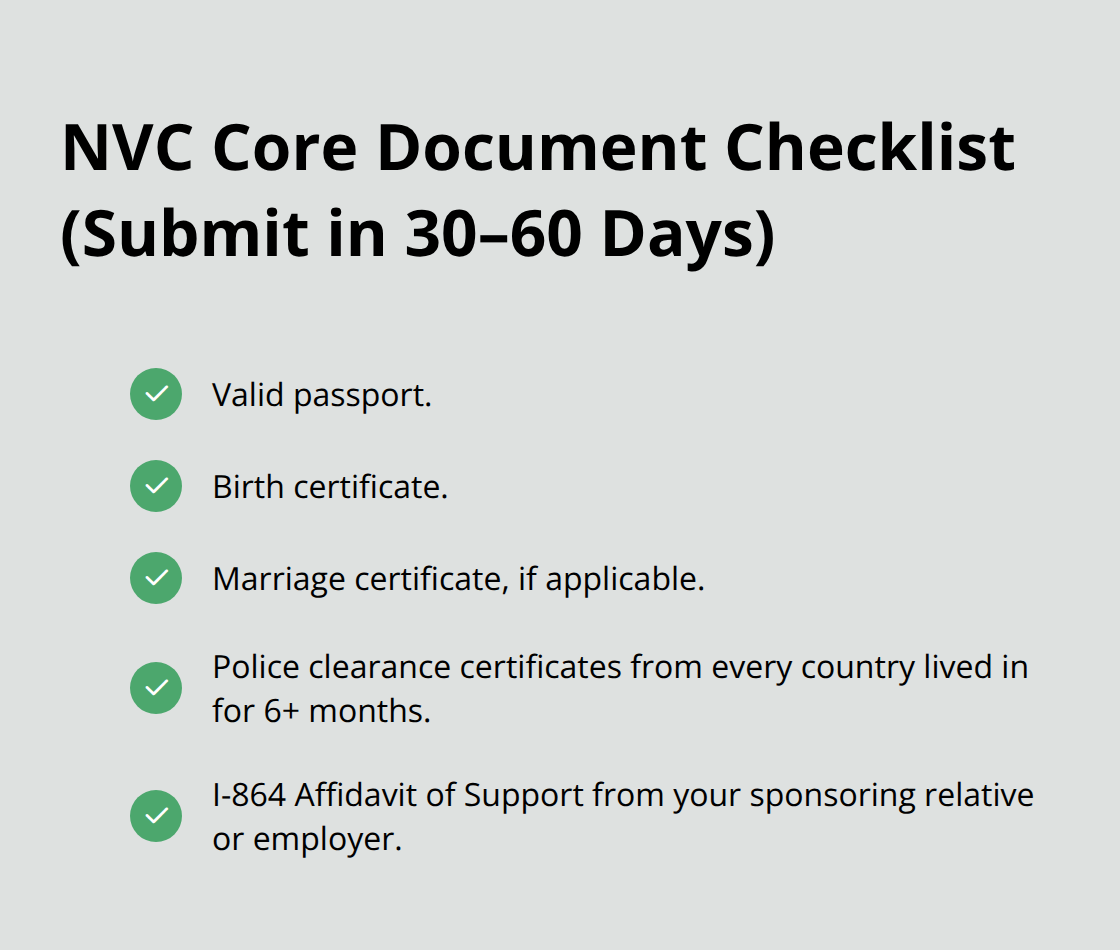
The core documents include your valid passport, birth certificate, marriage certificate (if applicable), police clearance certificates from every country where you lived for more than six months, and the I-864 Affidavit of Support from your sponsoring relative or employer.
The I-864 proves your sponsor meets income thresholds that are adjusted annually based on poverty guidelines. If your sponsor’s income falls short, you need a joint sponsor with separate tax returns and a separate I-864 form. The NVC also requires civil documents in certified copies, not photocopies. Many applicants submit documents that fail because they lack certification from the issuing government agency. Contact your local vital records office or courthouse directly to request certified copies; do not rely on copies you may already have at home.
Financial Documentation and Tax Records
Gather your complete tax returns for the past three years and recent pay stubs. The consular officer reviews financial sponsorship carefully, and inconsistent tax records are a leading cause of requests for additional evidence. Ensure your tax filings match the income figures you report on the I-864. Discrepancies between what your sponsor claims and what tax records show will trigger delays or denials.
If you have any criminal history, even minor offenses, disclose this immediately to an immigration attorney. Immigration law defines crimes differently than state law does, and what seems minor locally may render you inadmissible federally. An attorney can assess whether waivers are necessary and what evidence you should prepare.
Medical Examination Requirements
You need a medical examination completed by a U.S. State Department-approved civil surgeon. The NVC provides a list of approved physicians in your country. Schedule this appointment only after the NVC confirms you are ready to proceed, as the medical results remain valid for only one year. The examination includes blood work, a chest X-ray, and a review of your vaccination history. If the physician identifies any health concerns, you may need follow-up documentation before your consular interview.
Preparing for Your Consular Interview
Your consular interview is the final step before visa issuance, and preparation determines whether you succeed or face denial. Arrive at the consulate at least 15 minutes early with all required documents organized in the order the NVC specified. Bring originals and copies of everything-the consular officer may keep some documents in your file. Expect the interview to last between 2 and 5 minutes if everything is in order, though complex cases take longer.
The officer will ask about your background, your relationship to your sponsor, your employment history, and your intentions in the United States. Answer directly and concisely; rambling responses waste time and create confusion. If you do not understand a question, ask the officer to repeat or rephrase it. Lying or providing inconsistent information is grounds for permanent inadmissibility, even if the lie seems minor. The officer will verify key facts against your DS-260 application and documents, so ensure everything matches perfectly.
What Happens After Your Interview
If you have any criminal history, unlawful presence, or other potential grounds for inadmissibility, work with an immigration attorney beforehand to determine whether waivers are necessary. A provisional unlawful presence waiver, filed on Form I-601A, allows you to request a waiver decision before departure, though approval does not guarantee the visa will be granted.
After the interview, the officer will either approve your visa immediately, request additional documents via Section 221(g), or deny your application. If denied, ask for specific reasons and a list of documents that might strengthen a future application. You have approximately one year to reapply after a 221(g) refusal. With your visa approved and documents in hand, the final phase involves understanding what happens when you arrive at the U.S. port of entry and how to maintain your status as a new permanent resident.
What Really Derails Your Consular Processing Application
Document Problems That Stop Your Case
Document delays are the single largest reason consular processing cases stall. The National Visa Center expects you to submit required documents within 30 to 60 days of notification, and missing this window creates immediate problems. Many applicants fail because they submit photocopies instead of certified documents. Your birth certificate, marriage certificate, and police clearance certificates must come directly from the issuing government agency with an official seal and stamp. A photocopy, no matter how clear, will be rejected.
Contact your vital records office or police department directly and request certified copies by mail. Factor in 4 to 8 weeks for delivery. Do not assume documents you obtained years ago remain valid or certified. Incomplete or inaccurate applications often result in Requests for Evidence, which can add months to your timeline. If your I-864 sponsor claims income that does not match their tax returns from the past three years, the NVC will issue a request for evidence and you lose time scrambling to explain discrepancies.
Your sponsor’s income must exceed the annual poverty guideline for your household size, which USCIS adjusts yearly. For 2026, a single sponsor supporting one beneficiary needs a minimum income of approximately $23,000 according to current federal poverty guidelines. If your sponsor falls short, a joint sponsor with separate tax documentation must be added immediately, not after the NVC requests it.
Criminal History and Inadmissibility Issues
Criminal history creates a third category of delays that many applicants mishandle. A minor offense in your home state may not seem relevant, but immigration law has its own definitions of crimes that trigger inadmissibility. A conviction for theft, fraud, drug possession, or violence can render you permanently ineligible unless you obtain a waiver. Do not guess whether your offense matters. Contact an immigration attorney immediately to assess your situation.
A provisional unlawful presence waiver on Form I-601A allows you to request a decision before you depart for your interview, preventing wasted travel if a denial is likely. This step protects you from traveling only to face rejection at the consulate.
Understanding Visa Denials and Your Options
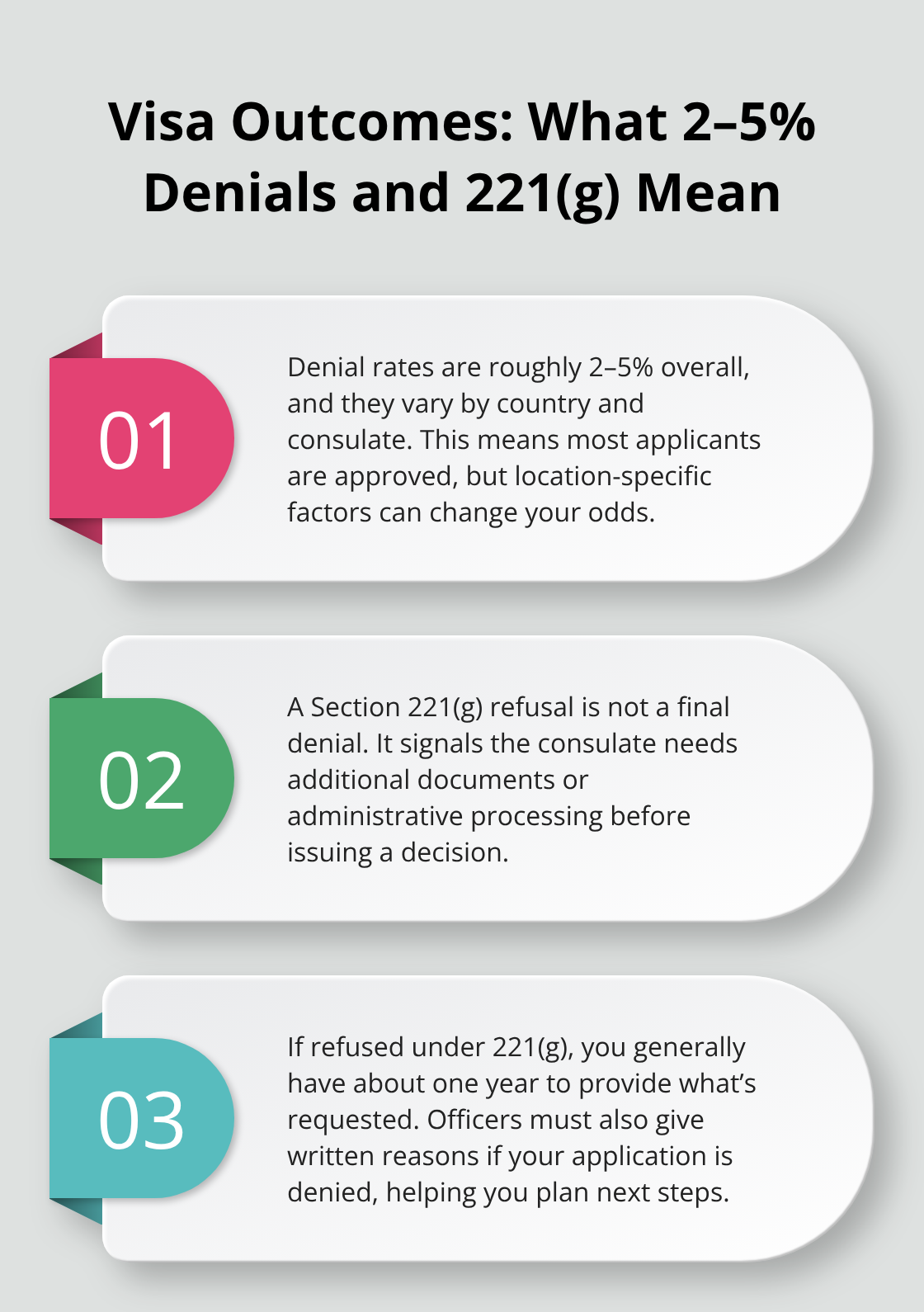
Visa denials occur in roughly 2 to 5 percent of consular processing cases according to State Department data, though rates vary by country and consulate. If your application is denied, the consular officer must provide written reasons. A Section 221(g) refusal means additional documents or administrative processing is needed, not a final denial. You have approximately one year to submit the requested materials before you must reapply entirely.
A hard denial is permanent unless you can identify and fix the underlying issue. Misrepresentation is the most serious ground for denial because discrepancies between your application and interview statements signal dishonesty. If you answer a question on your DS-260 form inaccurately and the officer discovers the discrepancy during your interview, you face denial that cannot be appealed. Every statement you must make must match your documents exactly.
Common Denial Grounds and How to Address Them
Financial sponsorship denials happen when your sponsor’s income genuinely does not meet requirements and no joint sponsor is available to bridge the gap. This situation is correctable only if you can add a joint sponsor and reapply. Public charge concerns arise when consular officers worry you will become dependent on government benefits. This ground applies primarily to applicants with significant health conditions or disabilities without adequate financial support. Providing detailed medical records and proof of private health insurance can address these concerns.
If your visa is denied, ask the officer for a specific list of documents that might strengthen a future application. You can reapply after addressing the stated deficiencies, though some grounds like misrepresentation are permanent bars. An immigration attorney can assess your vulnerabilities, prepare you for difficult questions, and ensure your documents are complete and consistent before you travel for your interview.
Final Thoughts
Consular processing steps require careful planning, accurate documentation, and realistic expectations about timelines. Consular officers verify your documents against your DS-260 application, assess your sponsor’s financial capacity, confirm your medical examination results, and determine whether any grounds for inadmissibility apply to your case. This process is not subjective or mysterious once you understand what to expect.
Working with an immigration attorney from the beginning transforms your outcome for Massachusetts applicants. An attorney identifies potential problems before they become denials, ensures your documents meet certification requirements, prepares you for difficult interview questions, and handles requests for additional evidence efficiently. We at Law Offices of Jeffrey A. Thompson assist clients in navigating the immigration process, from paperwork to overcoming legal hurdles, helping them achieve their American dreams.
Your next step is scheduling a consultation to review your specific situation, assess your eligibility, and develop a strategy that accounts for your timeline and circumstances. The difference between a successful visa approval and a costly denial often comes down to preparation and professional guidance before you step into that consulate interview room.
Share this post: