Child Visa Options Brockton: Finding Your Path to U.S. Citizenship
November 6, 2026
Bringing your child to the United States requires understanding the right visa pathway for your family’s situation. Child visa options in Brockton vary depending on your circumstances, and choosing the correct one makes all the difference.
At Law Offices of Jeffrey A. Thompson, we guide families through each step of this process. The right legal support transforms confusion into clarity and gets your family closer to building your life together in America.
Child Visa Pathways for Your Family
Immediate Relative Visas: The Fastest Route
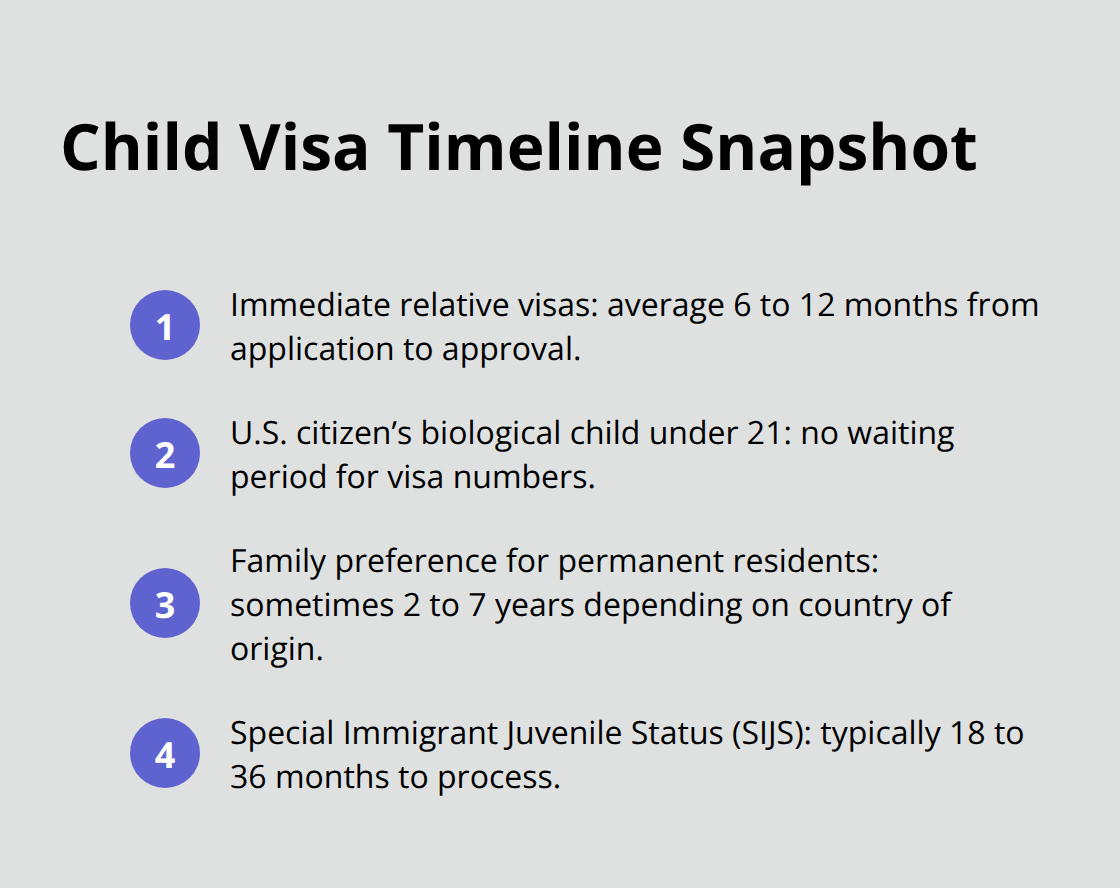
Immediate relative visas represent the fastest route for U.S. citizens and permanent residents to bring children to America. If you are a U.S. citizen, your biological child under 21 qualifies for an immediate relative visa with no waiting period, according to USCIS data. Adopted children also qualify if the adoption was finalized before the child turned 16 and you maintained legal custody for at least two years. The processing time for immediate relative visas averages 6 to 12 months from application to approval.
This speed matters because every month your child spends separated from you in their home country creates emotional and logistical strain. Permanent residents can petition for their biological children, but these cases fall into family preference categories with longer wait times, sometimes stretching 2 to 7 years depending on your country of origin. The key difference: immediate relative status eliminates the annual visa number caps that delay other applications.
Family Preference Categories for Permanent Residents
Family preference categories apply when you are a permanent resident rather than a U.S. citizen. Your sponsorship places your child into one of four preference categories, with category F2A for spouses and children of permanent residents moving fastest. Current processing times for F2A show 12 to 24 months for visa availability, though this fluctuates based on demand and visa number allocations set by Congress each fiscal year.
Country-specific considerations affect all timelines; children from nations with visa backlogs face extended waits regardless of category. Choosing the right classification from the start prevents costly reclassifications and delays.
Special Immigrant Juvenile Status for Vulnerable Children
Special immigrant visa categories exist for children who experienced abuse, neglect, or abandonment by at least one parent, allowing them to petition independently through the Special Immigrant Juvenile Status program. This pathway requires state court involvement and offers a significant advantage: these children can adjust status without requiring a U.S. citizen or permanent resident sponsor. The SIJS process typically takes 18 to 36 months and demands thorough documentation of your child’s circumstances.
Understanding which classification matches your situation accelerates your path forward and prevents months of unnecessary delays. The application process itself presents its own complexities that require careful attention to detail.
Understanding Your Documentation Requirements
Forms That Match Your Visa Category
USCIS requires specific forms and supporting documents that vary by visa category, and submitting incomplete paperwork remains the single largest reason for application delays. For immediate relative visas, you must file Form I-130 (Petition for Alien Relative) along with Form I-485 (Application to Register Permanent Residence or Adjust Status) if your child is in the United States, or Form DS-260 (Immigrant Visa Application) if processing abroad. Applications missing required documents face delays while the agency requests corrections.
Family preference cases demand additional complexity because you must prove your permanent resident status and establish the biological relationship to your child through documentation. Special Immigrant Juvenile Status cases require state court documentation proving abuse, neglect, or abandonment, which means coordinating between immigration court, state family court, and USCIS simultaneously.
Essential Documents Every Application Needs
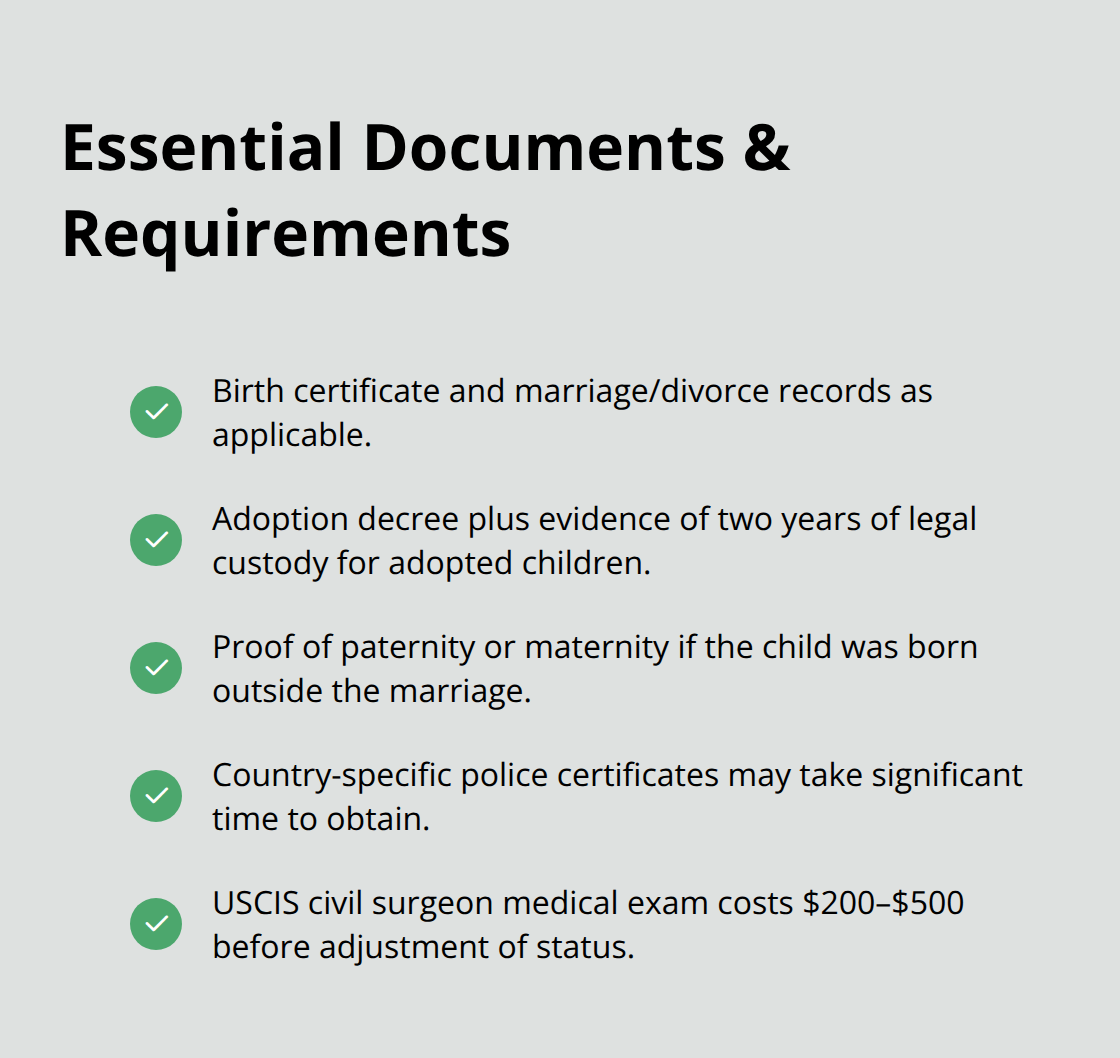
Birth certificates, marriage certificates, divorce decrees, adoption papers, and police clearance certificates form the foundation of every application, but the specific combination depends on your family structure and your child’s circumstances. For adopted children, you need the finalized adoption decree plus evidence of legal custody for at least two years. If your child was born outside your marriage, you need documentation proving paternity or maternity.
Country-specific police certificates often create unexpected delays; some nations take considerable time to issue these documents, and USCIS will not proceed without them. Medical examinations through USCIS-approved civil surgeons cost between $200 and $500 and must be completed before your child can adjust status, adding both time and expense to your timeline.
Financial Documentation and Medical Requirements
Financial documentation showing your ability to support your child (typically Form I-864, Affidavit of Support) must demonstrate income at 125 percent of the federal poverty line. Missing or insufficient financial documentation triggers requests for additional evidence that extend your timeline unnecessarily.
Gather all documents before submitting your application rather than responding to requests after filing, which accelerates processing by weeks or months. This approach prevents the back-and-forth communication that slows down even straightforward cases.
Moving Forward With Your Application
The complexity of document requirements varies significantly based on your specific visa pathway and family circumstances. An immigration attorney can review your situation, identify exactly which documents you need, and help you organize them properly before submission. This preparation work transforms a potentially chaotic process into a manageable one and positions your family for faster approval.
Why You Need an Immigration Attorney for Your Child’s Visa
Selecting the Right Visa Category
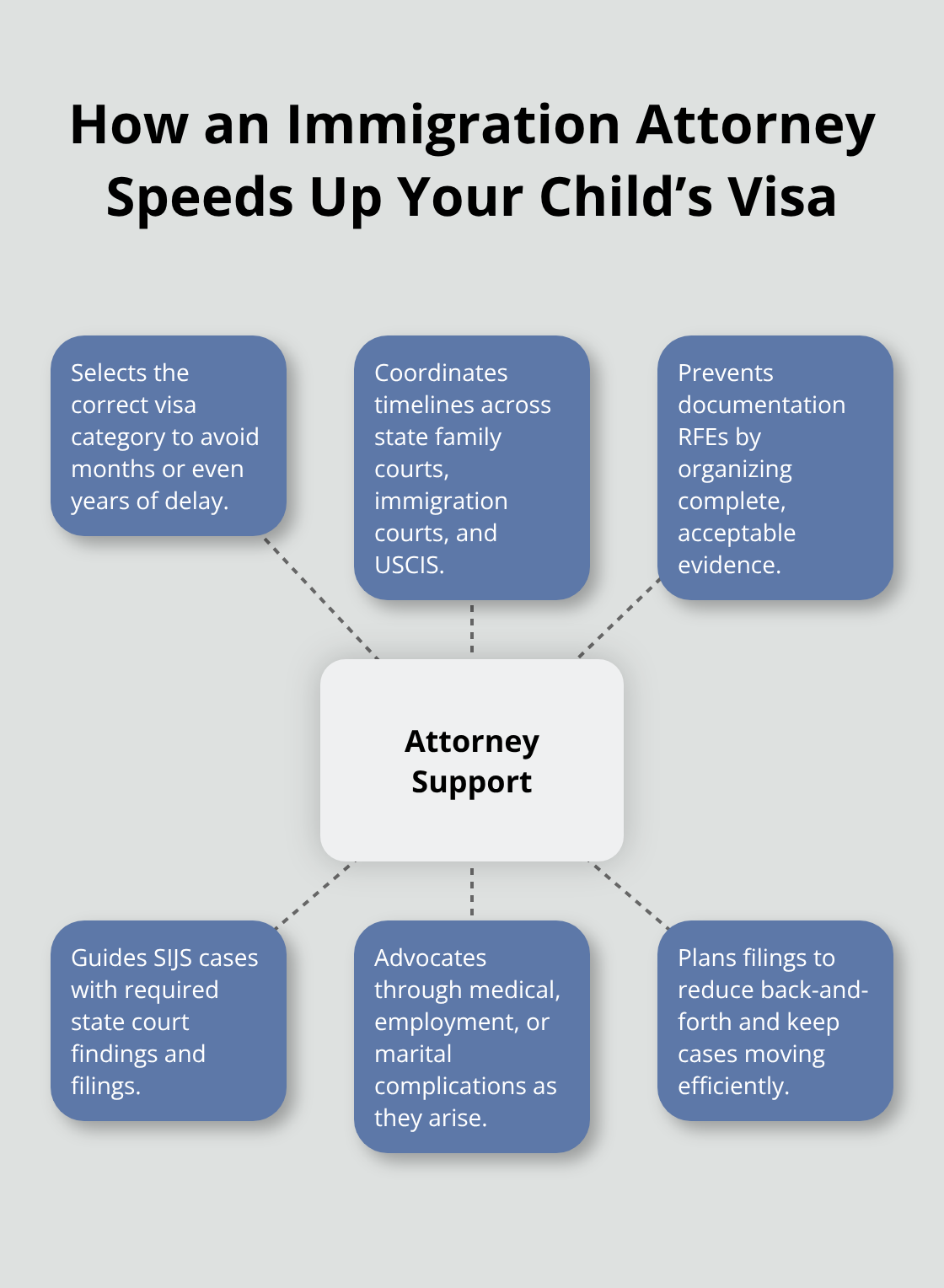
Immigration attorneys specializing in child visa cases do far more than shuffle paperwork. They identify which visa category actually fits your family’s circumstances, which saves months of wasted effort on the wrong pathway. Families sometimes file under family preference categories when they qualify for immediate relative status, costing them years of unnecessary waiting. An attorney reviews your specific situation, your child’s background, your immigration status, and your family relationships to determine the fastest legitimate route forward. This analysis happens before you submit anything to USCIS, preventing costly mistakes that require amendments or refilings. The difference between filing correctly on the first attempt and discovering errors later can exceed two years of additional processing time.
Managing Multiple Government Agencies
Attorneys handle the coordination between multiple government agencies that many families underestimate. Special Immigrant Juvenile Status cases require simultaneous work with state family courts, immigration courts, and USCIS, each with different deadlines and documentation requirements. Missing a single state court deadline can derail your federal immigration case entirely. An experienced immigration attorney manages these parallel processes, tracks all deadlines across jurisdictions, and moves documents between agencies without gaps.
They also know which state courts move faster than others and position your case for quicker state court approval, directly accelerating your overall timeline.
Preventing Documentation Delays
Documentation represents another critical area where attorney guidance prevents delays costing months or years. USCIS data shows that incomplete or incorrectly organized applications cause the majority of case delays, yet families often submit applications without understanding what constitutes acceptable evidence for their specific situation. An attorney reviews every document before submission, identifies gaps, and obtains missing evidence while your case remains in your control rather than sitting in an USCIS queue. Medical examinations, police clearances from your child’s home country, and financial documentation all have specific formatting and timing requirements that attorneys understand and manage. They also know which documents from foreign countries USCIS will accept and which require official translations or certification, eliminating the guesswork that leads families to submit unusable paperwork.
Handling Complications and Advocacy
When complications arise-your child has a medical condition requiring special consideration, or your employment situation changed, or your marital status shifted-an attorney strategizes how to present your circumstances in the strongest possible light to immigration officials. This advocacy work cannot be replicated by form-filling services or online platforms. The investment in legal representation typically ranges from $1,500 to $5,000 depending on case complexity, which sounds substantial until you calculate the cost of a two-year delay caused by filing errors or missed deadlines.
Final Thoughts
Child visa options in Brockton depend entirely on your immigration status and your child’s circumstances. U.S. citizens with biological children under 21 qualify for immediate relative visas with no waiting period, while permanent residents face family preference categories that stretch 12 to 24 months or longer depending on country of origin. Special Immigrant Juvenile Status serves vulnerable children who experienced abuse, neglect, or abandonment and allows them to petition independently without requiring a sponsor.
Documentation mistakes cost families months or years of unnecessary delays, and USCIS rejects incomplete applications regularly. Medical examinations, police clearances from foreign countries, financial documentation, and birth certificates all have specific formatting and timing requirements that attorneys understand before submission. The investment in legal representation (typically $1,500 to $5,000 depending on complexity) becomes insignificant when compared to the cost of a two-year delay caused by filing errors.
Contact Law Offices of Jeffrey A. Thompson in Brockton to discuss your child visa options and move your family toward reunification in America.
Share this post: