Parent Immigration Options Massachusetts: Family-Based Path
October 30, 2026
Bringing parents to Massachusetts through family-based immigration requires understanding multiple pathways and legal requirements. The process involves visa petitions, income documentation, and medical clearances that can feel overwhelming without proper guidance.
We at Law Offices of Jeffrey A. Thompson help families navigate parent immigration options in Massachusetts by breaking down each step and addressing obstacles before they derail your case.
Which Parent Immigration Path Applies to You in Massachusetts
Immediate Relatives: The Fastest Route for U.S. Citizens
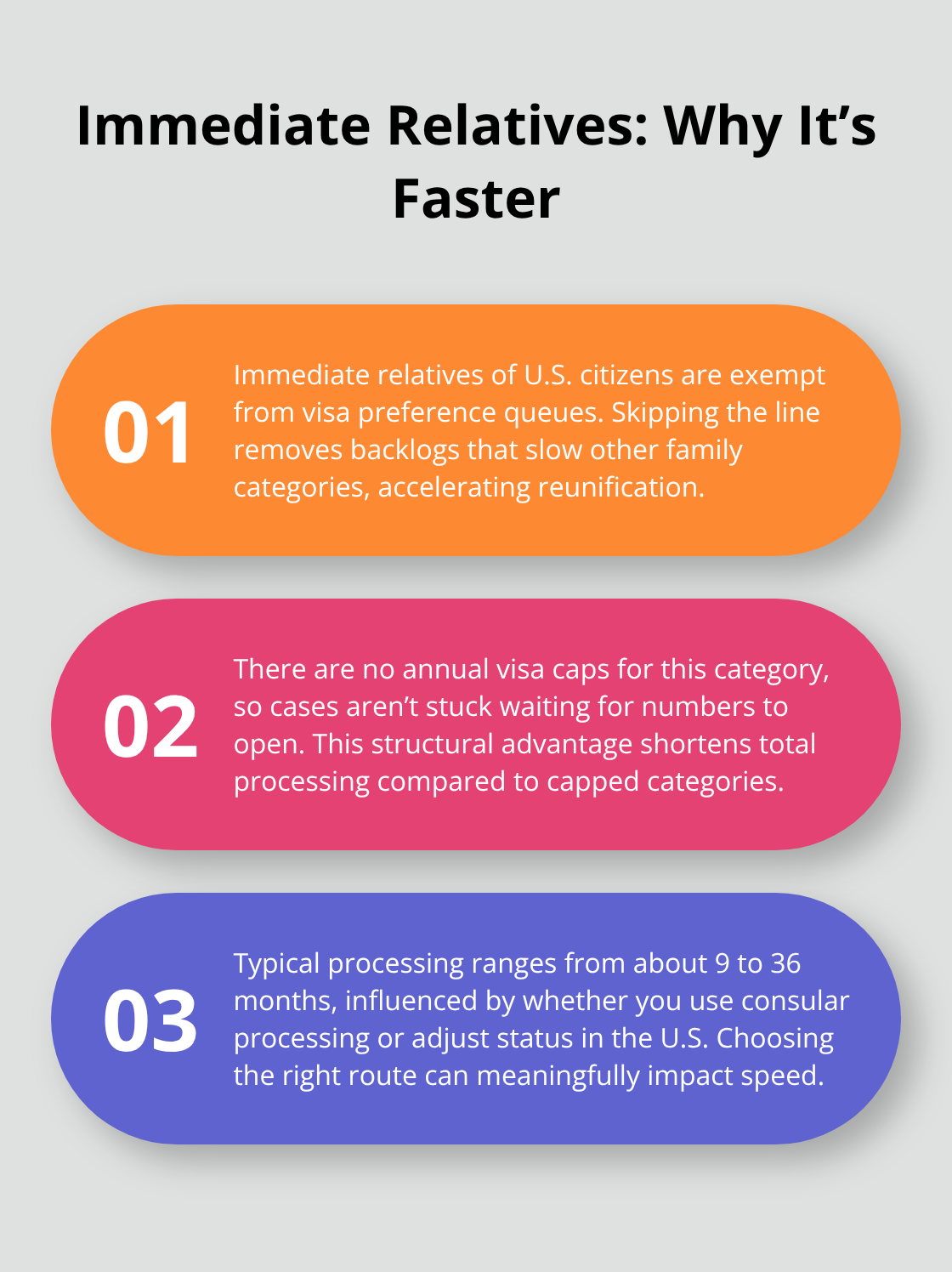
The fastest route to bringing parents to Massachusetts depends on your citizenship status and timeline expectations. If you are a U.S. citizen, your parents fall into the immediate relatives category, meaning they skip the visa preference queue entirely. This matters significantly because immediate relatives face no annual visa caps, unlike other family categories. Immediate relatives of U.S. citizens typically see processing times between 9 to 36 months, depending on whether they process through consular channels abroad or adjust status within the United States.
Family Preference Categories for Permanent Residents
For those who are lawful permanent residents rather than citizens, your parents fall into the family preference system, specifically the F2A category if you have a spouse or children. This category moves slower because it operates under annual visa limits set by Congress. The F2A category operates under annual visa limits, with processing times varying based on visa availability and country of origin. The distinction between immediate relative and family preference pathways becomes critical when planning your family’s timeline.
Income Requirements and Sponsorship Obligations
As the petitioner, you must demonstrate sufficient income to support your parents at 125 percent of the federal poverty line. You will file Form I-130 and provide tax returns, W-2s, and employment verification to prove you can support them without government assistance. If your income falls short, you can add a co-sponsor, typically a family member with higher earnings, though this expands your liability obligations.
Consider Citizenship Before Petitioning
Permanent residents should seriously consider pursuing citizenship before petitioning for parents, as the immediate relative pathway offers substantially faster outcomes. The sponsorship requirements differ based on your category, and citizenship status directly impacts how quickly your parents can join you in Massachusetts. This strategic decision can save your family years of waiting and uncertainty.
How Long Does the I-130 Petition Actually Take
Filing Form I-130: Starting Your Parent’s Immigration Journey
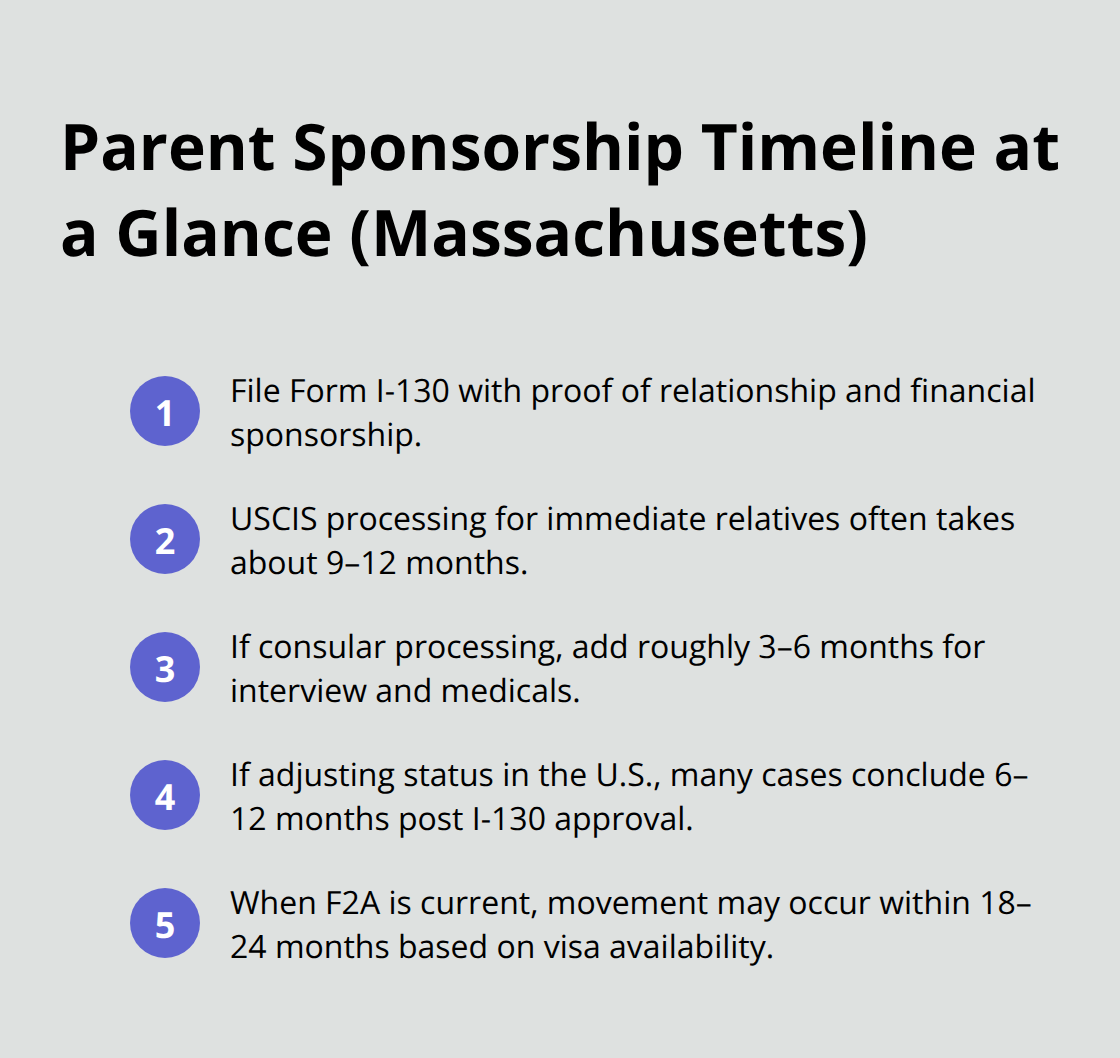
Filing Form I-130 Petition for Alien Relative initiates the entire family-based immigration process, and understanding the real timeline matters more than most people realize. You submit this form to USCIS along with evidence proving your relationship to your parent and your ability to sponsor them financially. The USCIS processes I-130 petitions in approximately 9 to 12 months for immediate relatives of U.S. citizens according to USCIS processing time data, though cases involving document requests or background complications can stretch significantly longer.
Processing Times: Immediate Relatives vs. Family Preference
Permanent residents sponsoring parents through the F2A category face different timelines because visa availability dictates when their petition can move forward. The National Visa Center publishes monthly visa bulletin updates showing exactly where F2A cases stand, and as of October 2026, F2A visa availability remains current for most countries, meaning cases filed now could see movement within 18 to 24 months rather than years. The critical difference lies in what happens after USCIS approves your I-130-your case transfers to either the National Visa Center for consular processing or proceeds directly to adjustment of status if your parent is already in the United States.
Consular Processing: The International Route
Consular processing requires your parent to attend an interview at a U.S. embassy or consulate abroad, where a consular officer verifies all documentation and conducts medical examinations. This path typically adds 3 to 6 additional months after I-130 approval, meaning immediate relatives often complete the entire process in 12 to 18 months total. Your parent must travel internationally and coordinate with U.S. government officials, which adds complexity but remains necessary if they reside outside the country.
Adjustment of Status: The Domestic Fast Track
Adjustment of status, available only if your parent is physically present in the U.S. and meets specific eligibility requirements, generally moves faster because it consolidates the visa interview with USCIS proceedings in the United States. Adjustment cases for immediate relatives typically conclude within 6 to 12 months after I-130 approval. If your parent entered the U.S. legally and maintains valid status, adjustment of status often proves faster and less stressful than consular processing.
Choosing Your Path Forward
The choice between these two routes depends on your parent’s current location and immigration status. If your parent is abroad or entered without inspection, consular processing becomes necessary despite its longer timeline. Understanding which pathway applies to your situation determines how quickly your parent can transition to permanent resident status, and this decision shapes the next critical phase of your case-addressing the medical examinations, background checks, and income documentation that immigration officials require before approval.
Common Obstacles That Block Parent Immigration Cases in Massachusetts
Income Requirements: The Primary Barrier
The income requirement stands as the single biggest obstacle that stops parent immigration cases, and most families underestimate how strictly USCIS applies this rule. You must prove income at 125 percent of the federal poverty line, which for 2026 means roughly $21,775 annually for sponsoring one parent as a single filer, or $27,575 for a married couple according to HHS poverty guidelines. USCIS examines your last three years of tax returns, and they want to see consistent income, not one-time windfalls or seasonal spikes. If your income falls short even by a few hundred dollars, USCIS will deny your petition unless you secure a co-sponsor, and that co-sponsor faces binding legal obligations to support your parent if they ever need government benefits.
Submitting all financial documentation before filing prevents unnecessary delays and strengthens your petition significantly. Self-employed individuals face particular scrutiny because USCIS compares your Schedule C net income against your personal tax return, and they reject cases where these figures don’t align. Incomplete or contradictory records force USCIS to request evidence, which delays your case by months. Waiting until USCIS asks for income verification costs you time that you cannot recover.
Medical Examinations and Background Checks
Medical examinations and background checks represent the second major obstacle, though these typically prove less problematic than income issues if your parent has no criminal history or serious health conditions. Your parent must complete a civil surgeon examination, which includes vaccinations, tuberculosis screening, and a general health assessment, and costs between $300 and $600 depending on your location in Massachusetts. USCIS requires specific vaccinations including measles, polio, and tetanus, and if your parent lacks vaccination records, obtaining them from their home country can take weeks or months.
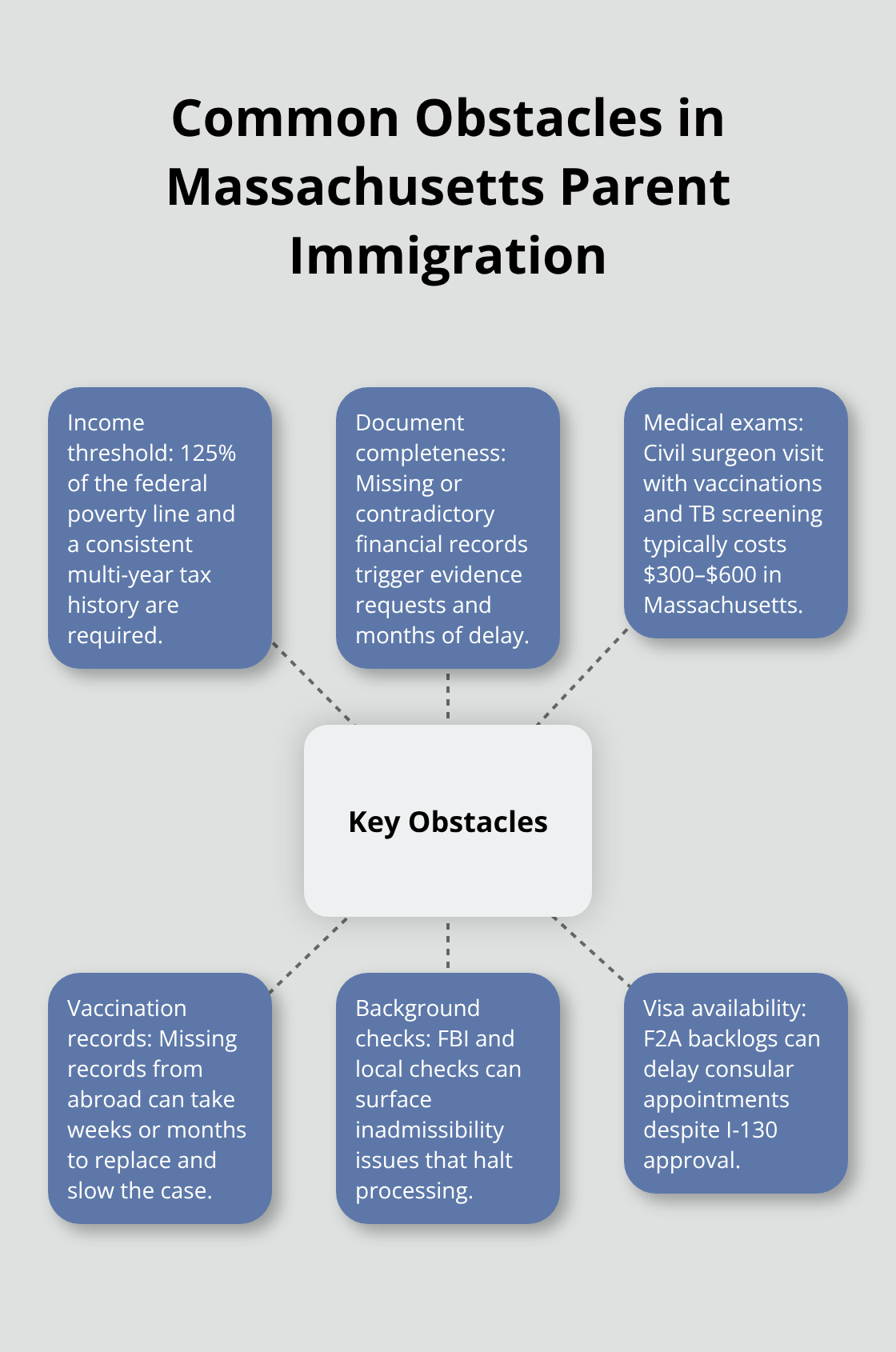
Background checks proceed simultaneously through FBI and local police channels, and criminal convictions for certain offenses automatically trigger visa ineligibility. Understanding whether your parent’s past creates complications before filing protects your case from unexpected rejections. The civil surgeon examination must occur after USCIS approves your I-130 petition, so medical costs arrive later in the process rather than upfront.
Visa Availability and Waiting Periods for Permanent Residents
Visa availability and waiting periods affect permanent residents far more severely than U.S. citizens, and this reality should drive your citizenship decision if you haven’t already naturalized. The National Visa Center updates its visa bulletin monthly, and F2A cases for parents of permanent residents currently face delays ranging from immediate processing to several years depending on worldwide visa demand. Countries with high immigration to the United States, including Mexico, Philippines, and Vietnam, experience substantially longer waits because visa numbers distribute globally rather than per-country.
If your parent is abroad and your case involves consular processing, visa availability determines when they can actually schedule their consulate appointment. An approved I-130 does not guarantee movement for months or years in high-demand countries. Permanent residents sponsoring parents should understand that this waiting period creates real uncertainty about when their parent can actually immigrate to Massachusetts.
Final Thoughts
Parent immigration options in Massachusetts hinge on your citizenship status, your parent’s location, and your financial capacity to sponsor them. U.S. citizens access the fastest pathway through the immediate relative category, while permanent residents face longer timelines through the family preference system. Understanding which route applies to your situation prevents costly mistakes and sets realistic expectations for your family’s reunification.
The steps ahead demand careful attention to detail, as USCIS scrutinizes every figure on your income documentation and rejects incomplete submissions. You must file Form I-130, gather three years of tax returns and employment verification, arrange medical examinations, and prepare for background checks. If your income falls short of the 125 percent poverty line threshold, securing a co-sponsor becomes necessary before filing, and permanent residents should seriously consider pursuing citizenship first since this single decision can reduce your waiting period from years to months.
Contact Law Offices of Jeffrey A. Thompson to discuss your parent immigration options in Massachusetts and take the next step toward bringing your family together. Attorney Thompson provides expert guidance tailored to your specific circumstances, helping you avoid the obstacles that derail cases and accelerate your path toward family reunification.
Share this post: