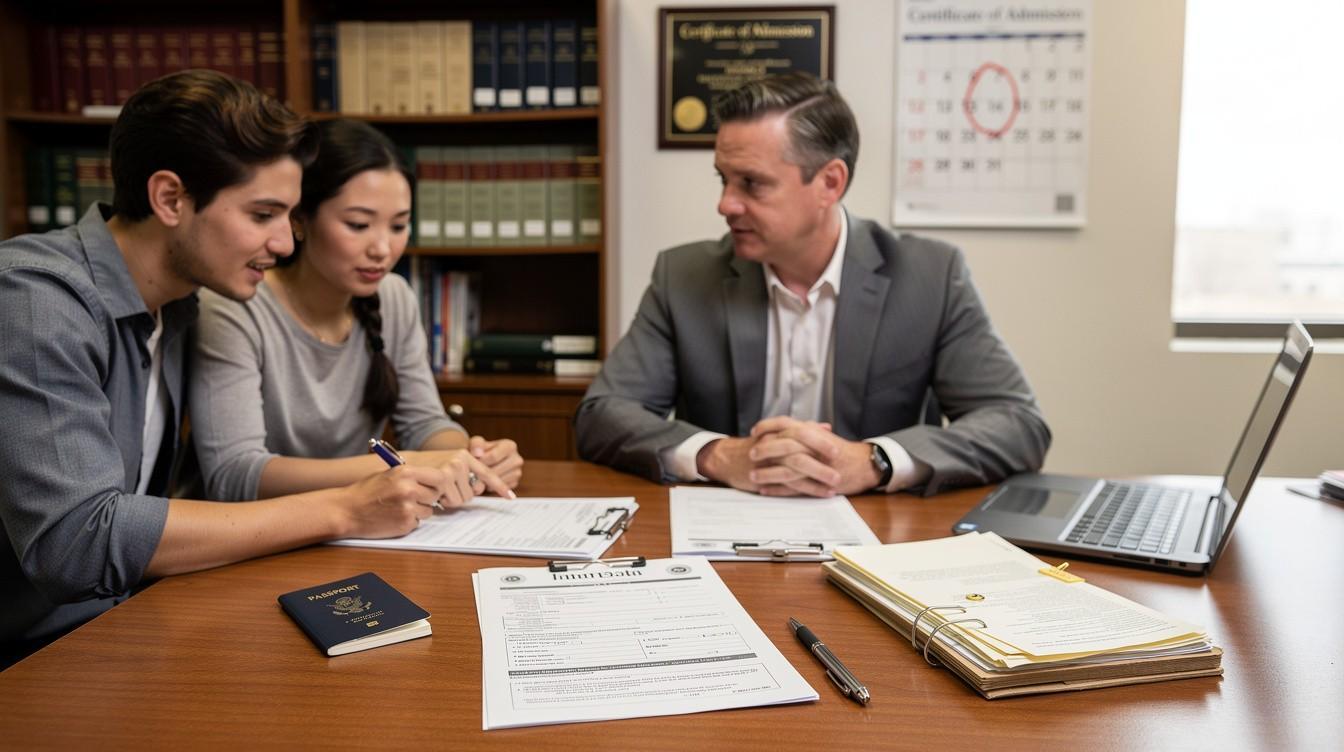
Massachusetts Immigration Attorney Brockton: Advocating for Your Family
November 2, 2026
Immigration decisions shape your family’s future. At Law Offices of Jeffrey A. Thompson, we understand the stakes when Massachusetts families navigate visa applications, deportation threats, or asylum claims.
A Massachusetts immigration attorney in Brockton can guide you through complex paperwork, represent you in court, and help you avoid mistakes that derail cases. Your rights deserve professional protection.
Why Immigration Cases Matter in Massachusetts
Family Separation and Economic Disruption
Family separation represents the hidden cost of delayed immigration cases. When Massachusetts families face visa denials, green card backlogs, or deportation threats, the economic and emotional damage compounds quickly. Spouses separated by visa processing delays miss years together. Children grow up without parents. Elderly relatives cannot access care. These delays destroy family stability and drain financial resources through repeated legal fees, travel costs, and lost income.
Employment-Based Immigration Drives Massachusetts Growth
Employment-based immigration pathways matter because Massachusetts employers in healthcare, technology, and manufacturing depend on skilled workers who need visa sponsorship. A single denied employment-based petition costs companies time, recruitment expenses, and operational disruption. Companies sponsoring foreign workers must navigate Department of Labor certification, USCIS petitions, and Department of Homeland Security requirements-processes that take months or years. Families pursuing green cards through marriage or parent-child relationships face similar complexity. Adjustment of status (applying within the U.S.) and consular processing (applying abroad) have different timelines, costs, and risks.
Brockton’s Multilingual Community Reflects Immigration’s Real Impact
Brockton’s demographic reality underscores this urgency: nearly half of Brockton Public Schools students speak multiple languages at home, with more than 30 languages represented and about 25% identified as English language learners according to Colorín Colorado.
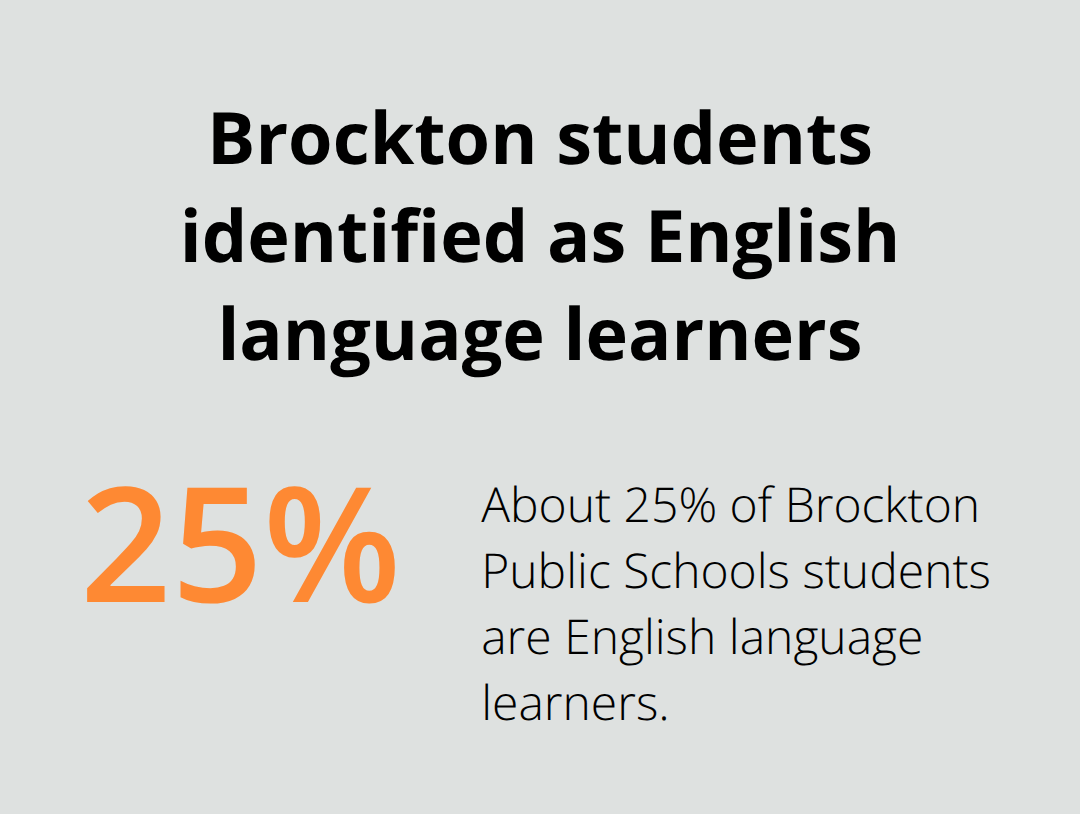
This multilingual population reflects a community where immigration status directly affects educational access, employment prospects, and family stability. The state’s immigration court system in Boston handles cases from across New England, creating unpredictable delays that intensify these pressures.
Asylum and Deportation Defense Demand Immediate Action
Asylum cases demand immediate attention because delays mean extended separation from persecution or danger. Deportation defense through cancellation of removal or Temporary Protected Status requires aggressive legal strategy from day one. Paperwork mistakes, missed deadlines, or inadequate documentation derail cases that could succeed. Massachusetts families cannot afford to navigate these systems alone or with unqualified help. The complexity of these processes-combined with the stakes involved-makes professional legal guidance not just helpful but necessary.
Common Immigration Issues Massachusetts Families Face
Visa Applications and Green Card Processing Delays
Visa applications and green card processing create the most visible bottlenecks for Massachusetts families. USCIS processing times for family-based green cards currently range from 18 months to over 7 years depending on your country of origin and visa category, according to USCIS official data. Employment-based petitions move faster for some categories but slower for others, with EB-3 (skilled workers) facing waits exceeding a decade in many countries.
The choice between adjustment of status and consular processing shapes your entire case timeline. Adjustment lets you stay in the U.S. while your case processes, but consular processing requires you to leave the country and wait abroad, sometimes facing visa denials that trap families in limbo. Common mistakes derail cases repeatedly: incomplete documentation, missing medical exams, or filing in the wrong visa category. One filing error costs months in reprocessing time and hundreds in additional fees.
Sponsorship Requirements and Financial Barriers
Green card holders sponsoring relatives must prove they earn at least 125% of the federal poverty line (higher for some cases), a threshold that disqualifies many lower-income sponsors without finding a co-sponsor. The I-864 Affidavit of Support binds sponsors financially for 10 years, a commitment many families underestimate when they file petitions.
Cancellation of Removal and Narrow Hardship Standards
Deportation defense through cancellation of removal requires proving 10 years of continuous physical presence in the U.S., good moral character, and that removal would cause exceptional and extremely unusual hardship to a U.S. citizen or permanent resident spouse, parent, or child. Courts interpret hardship narrowly, rejecting claims based solely on economic loss or emotional distress. This strict standard trips up most cases before they reach a hearing.
Asylum and Temporary Protected Status Complexities
Temporary Protected Status provides protection for nationals of designated countries experiencing armed conflict, natural disaster, or epidemic, but TPS designations change with political decisions, forcing beneficiaries to find alternative relief before their status expires. Asylum applicants must file within one year of arriving in the U.S. or face permanent bars, with very narrow exceptions.
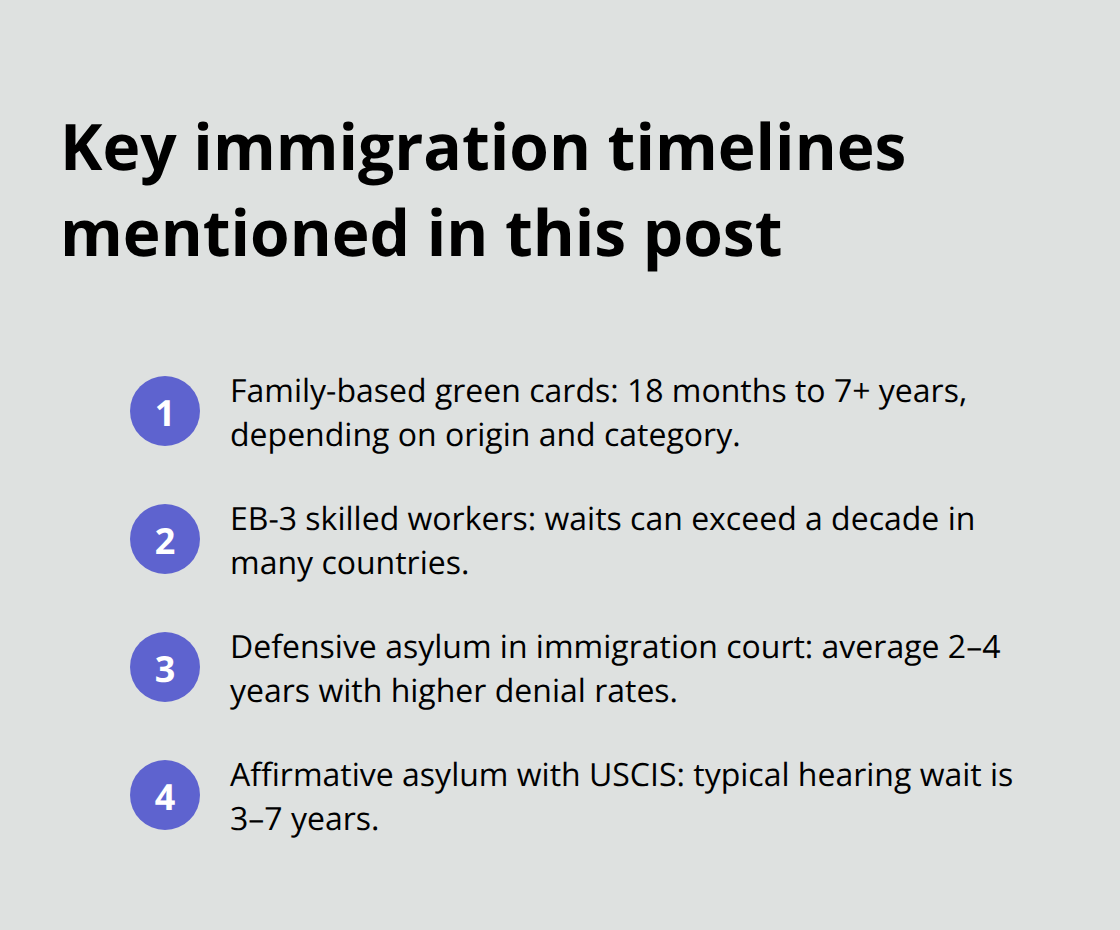
Affirmative asylum cases filed with USCIS take 3–7 years for a hearing, while defensive asylum cases heard in immigration court average 2–4 years but carry higher denial rates.
The credible fear standard at the border requires showing a substantial possibility you face persecution based on race, religion, nationality, political opinion, or membership in a particular social group. This threshold involves complex legal analysis of country conditions and personal circumstances. Withholding of removal offers narrower protection than asylum but doesn’t require the one-year filing deadline, making it a backstop relief option when asylum fails. Understanding which relief pathway fits your situation determines whether your case succeeds or stalls in the immigration system.
How an Immigration Attorney Protects Your Family’s Future
An immigration attorney transforms your case from a paperwork nightmare into a strategic advantage. Immigration attorneys handle the documentation that trips up families filing alone, represent you in immigration court where judges decide your fate, and catch errors before they become irreversible denials. The difference between success and failure often comes down to how your case gets prepared and presented. Most families underestimate the complexity until they file and receive a Request for Evidence that demands documents they didn’t know existed or a Notice to Appear in immigration court with 30 days to respond. At that point, mistakes compound. An attorney steps in immediately to assess your actual options, not the options you hoped existed.
Documentation That Wins Cases or Loses Them
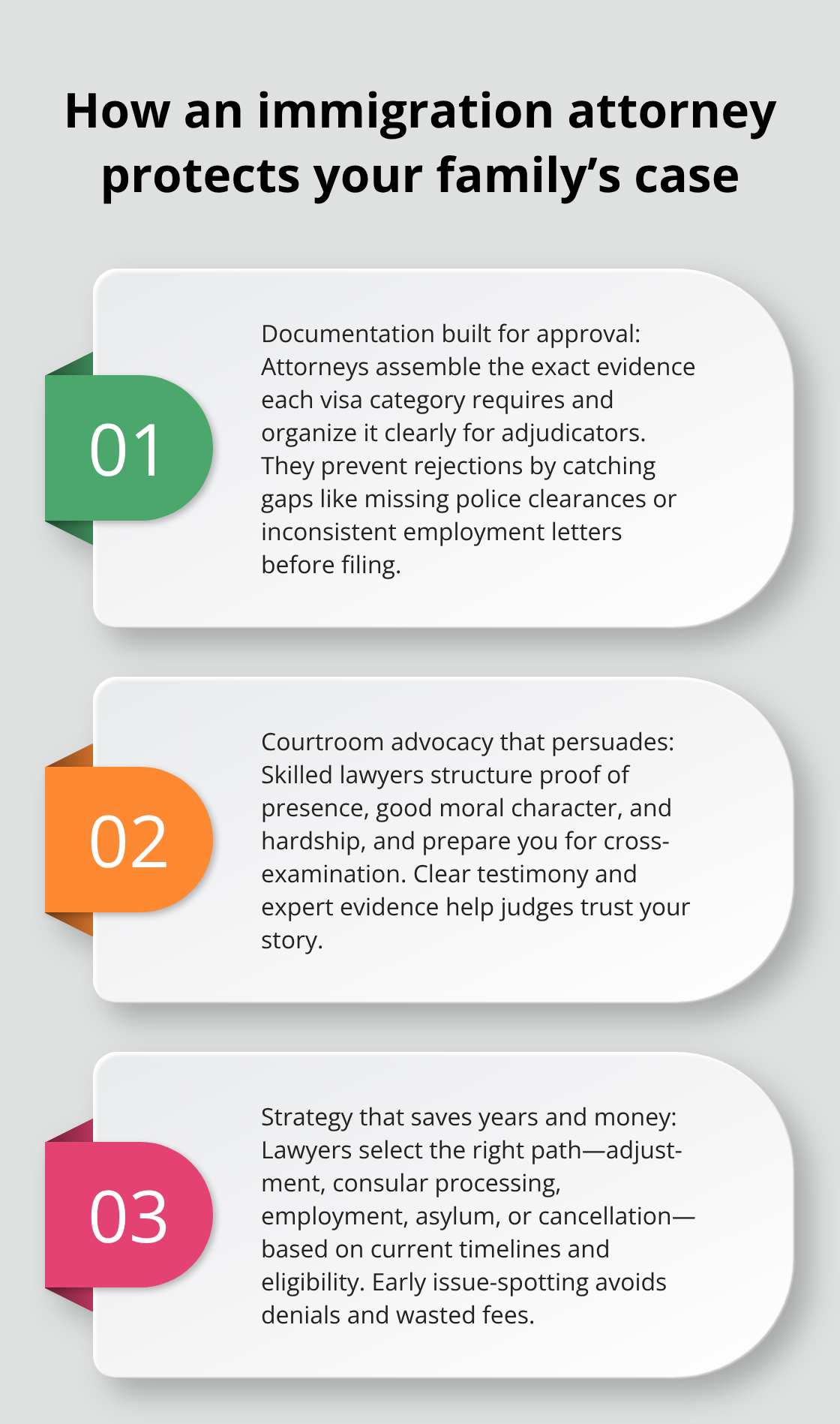
Your paperwork tells your story to USCIS or the immigration judge, and incomplete or poorly organized documentation reads like a story with missing chapters. Family-based green card petitions require birth certificates, marriage certificates, police clearances, medical exams, and financial documents that prove sponsorship, but the specific documents demanded depend on your visa category, country of origin, and whether you adjust status in the U.S. or process through a consulate. Employment-based cases demand Department of Labor certification, job descriptions that prove the position couldn’t be filled with U.S. workers, and evidence of recruitment efforts-documents that require careful coordination between employer, attorney, and government agencies. Asylum cases require detailed personal statements, country condition reports, medical documentation of trauma, and sometimes expert witness testimony about persecution risks. One missing police clearance from a country you lived in years ago delays your case six months. One employment verification letter that doesn’t match your job title gets questioned and requires resubmission. Attorneys maintain checklists specific to each visa category and country, catching these gaps before submission rather than after rejection.
Court Representation Changes the Outcome
Immigration court judges hear dozens of cases daily, and how your attorney presents your evidence determines whether the judge believes your story. Deportation defense cases involving cancellation of removal require proof of 10 years of continuous physical presence in the U.S., good moral character, and exceptional and extremely unusual hardship-a legal standard so strict that most cases fail without skilled advocacy. An attorney structures evidence to show continuous physical presence, good moral character through documentation of employment and community ties, and hardship through financial records, medical evidence, and testimony from family members. Asylum hearings demand that your attorney establish you face persecution based on one of five protected grounds (race, religion, nationality, political opinion, or membership in a particular social group) through credible testimony and country condition evidence. Judges reject asylum claims when applicants cannot clearly articulate their persecution risk or when their testimony contradicts earlier statements. Attorneys prepare you for hostile cross-examination by government prosecutors, coach you on how to answer questions clearly and consistently, and present expert witnesses on country conditions when necessary. Asylum applicants represented by attorneys have substantially higher approval rates than those representing themselves.
Early Strategy Prevents Years of Delays and Wasted Money
Choosing the wrong visa category costs time and money that can never be recovered. Some families file for family-based green cards when employment-based options would move faster for their situation. Others pursue asylum when cancellation of removal offers a more realistic path. Some attempt consular processing when adjustment of status would let them stay in the country while the case processes. An attorney evaluates your circumstances against current processing times, visa availability, and your personal timeline to recommend the strategy most likely to succeed. Attorneys catch criminal issues that affect immigration eligibility before they derail your case-a past conviction you thought was minor might trigger deportability, or a charge you were never convicted of might still create problems. Attorneys identify ineligibility issues early so you understand your actual options rather than discovering problems after paying thousands in filing fees. Filing fees alone range from several hundred dollars for individual visa petitions to thousands for employment-based cases, and wasted applications multiply these costs. Beyond fees, delays in green card processing mean years separated from family, missed opportunities for career advancement, and accumulated stress that affects your entire family’s wellbeing.
Final Thoughts
Immigration cases demand more than hope and effort-they demand strategy, documentation, and representation from someone who understands how Massachusetts immigration courts work and what USCIS actually requires. Professional legal representation transforms your case from a gamble into a plan, catching errors before they become denials and identifying the fastest pathway to your goal. You avoid wasted filing fees, unnecessary delays, and the emotional toll of fighting the immigration system without guidance.
We at Law Offices of Jeffrey A. Thompson understand what your family faces and provide compassionate, knowledgeable representation tailored to your specific immigration situation. From visa applications to deportation defense to asylum claims, we handle the paperwork, navigate the legal hurdles, and fight for the outcome your family deserves. Your American dream should not depend on luck or incomplete information.
Contact a Massachusetts immigration attorney in Brockton today to discuss your case. Massachusetts families also have access to resources beyond private attorneys, including the Southeast Massachusetts Justice Center in Brockton at 508-586-2110 or (800) 244-8393, the Massachusetts Immigrant & Refugee Advocacy Coalition Legal Services Directory, and Catholic Charities immigration services across the state. Act now while your options remain open.
Share this post: