Child Immigration Options: Paths for Minors
October 12, 2026
Navigating child immigration options requires understanding the specific pathways available to minors seeking to enter or remain in the United States. Each route has distinct eligibility requirements, documentation needs, and legal complexities that demand careful attention.
At Law Offices of Jeffrey A. Thompson, we guide families through these options to find the best fit for their situation. This guide outlines the visa categories, documentation requirements, and steps needed to move forward.
Visa Pathways Available for Children
Special Immigrant Juvenile Status
Special Immigrant Juvenile Status offers one of the most direct routes for vulnerable minors, particularly those who have experienced abuse, neglect, or abandonment. SIJS applicants must obtain a state court finding that returning to their home country would not be in their best interest-a requirement that demands careful coordination between family court and immigration authorities. Meticulous documentation of the child’s circumstances proves essential, and social workers or child welfare professionals often provide testimony to support the application. Immigration processing timelines indicate that the process typically takes 18 to 36 months from initial petition filing to green card approval. SIJS carries a significant advantage: it does not require parental consent or involvement, making it ideal for children in state custody or those without parental support.
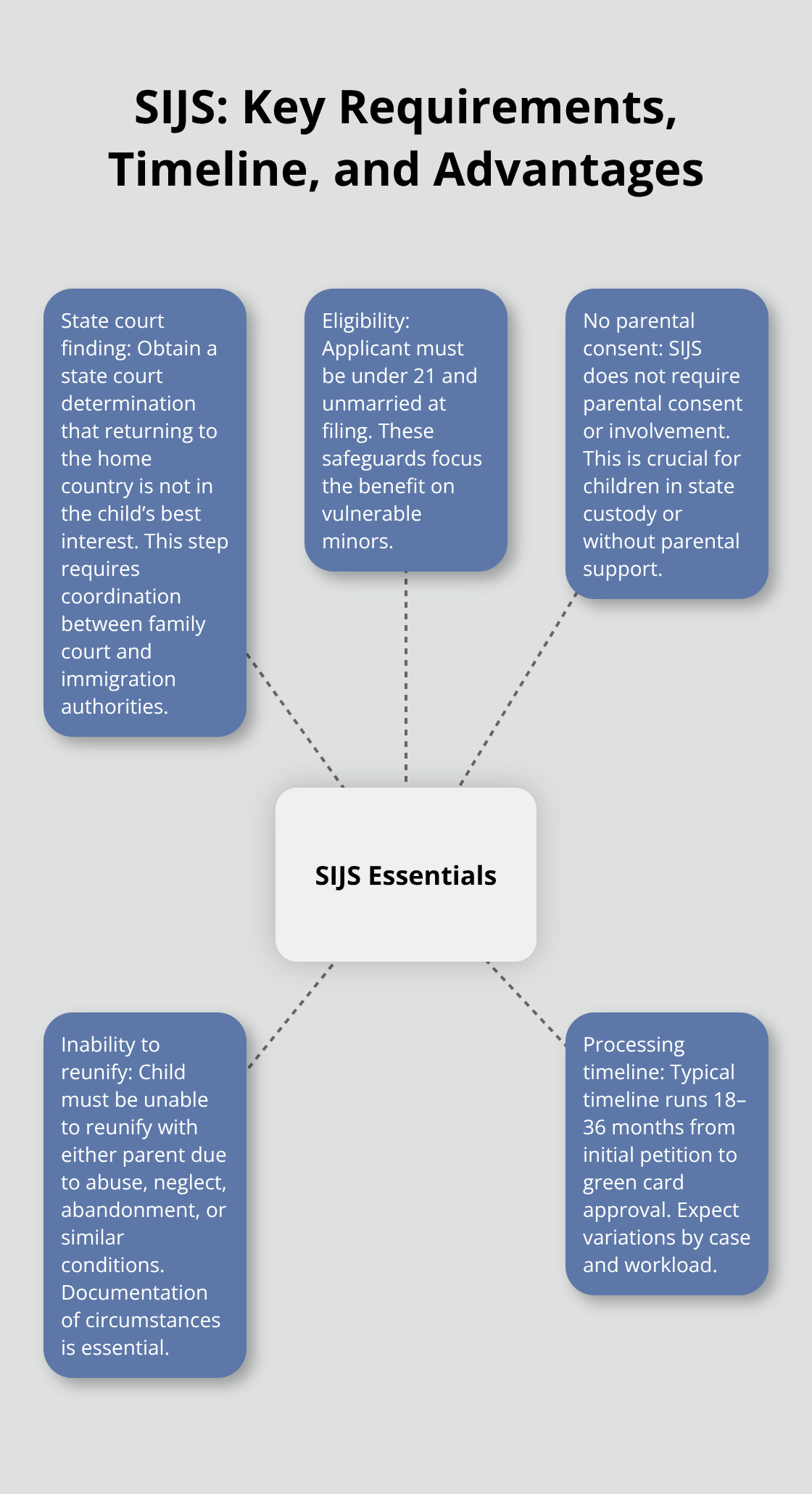
Applicants must meet specific criteria to qualify. They must be under 21 and unmarried at the time of application, and they must demonstrate that they cannot reunify with either parent due to abuse, neglect, abandonment, or similar conditions. These strict requirements protect vulnerable children while creating a clear pathway to permanent residency.
Immediate Relative Visas for Children
Immediate Relative visas for children present a faster alternative when a U.S. citizen parent, grandparent, or sibling can sponsor them. Children of U.S. citizens qualify as immediate relatives, which means they bypass the annual visa number limitations that affect other family-based categories. Family-based green cards in 2026 take about 12 to 22 months for immediate relatives of U.S. citizens. This speed advantage makes immediate relative sponsorship substantially more attractive than other family-based options.
Diversity Visas and Extended Family Sponsorship
The Diversity Visa Lottery operates on chance and affects far fewer child applicants annually, with only 50,000 diversity visas distributed worldwide across all categories each fiscal year. Family-based immigration through other relatives like aunts, uncles, or cousins involves much longer waiting periods, sometimes exceeding a decade depending on the applicant’s country of origin. The key distinction lies in urgency and certainty: immediate relative visas provide speed and security, while diversity visas and extended family sponsorship require patience and involve significant uncertainty.
Families should exhaust immediate relative options first, as they offer substantially faster processing and more reliable outcomes. Understanding these differences helps you select the pathway that best matches your family’s circumstances and timeline. The documentation requirements for each option vary considerably, which is why the next section addresses what paperwork and evidence you’ll need to gather.
Documentation You’ll Need for Child Immigration
Organizing Your Documents Into Three Core Categories
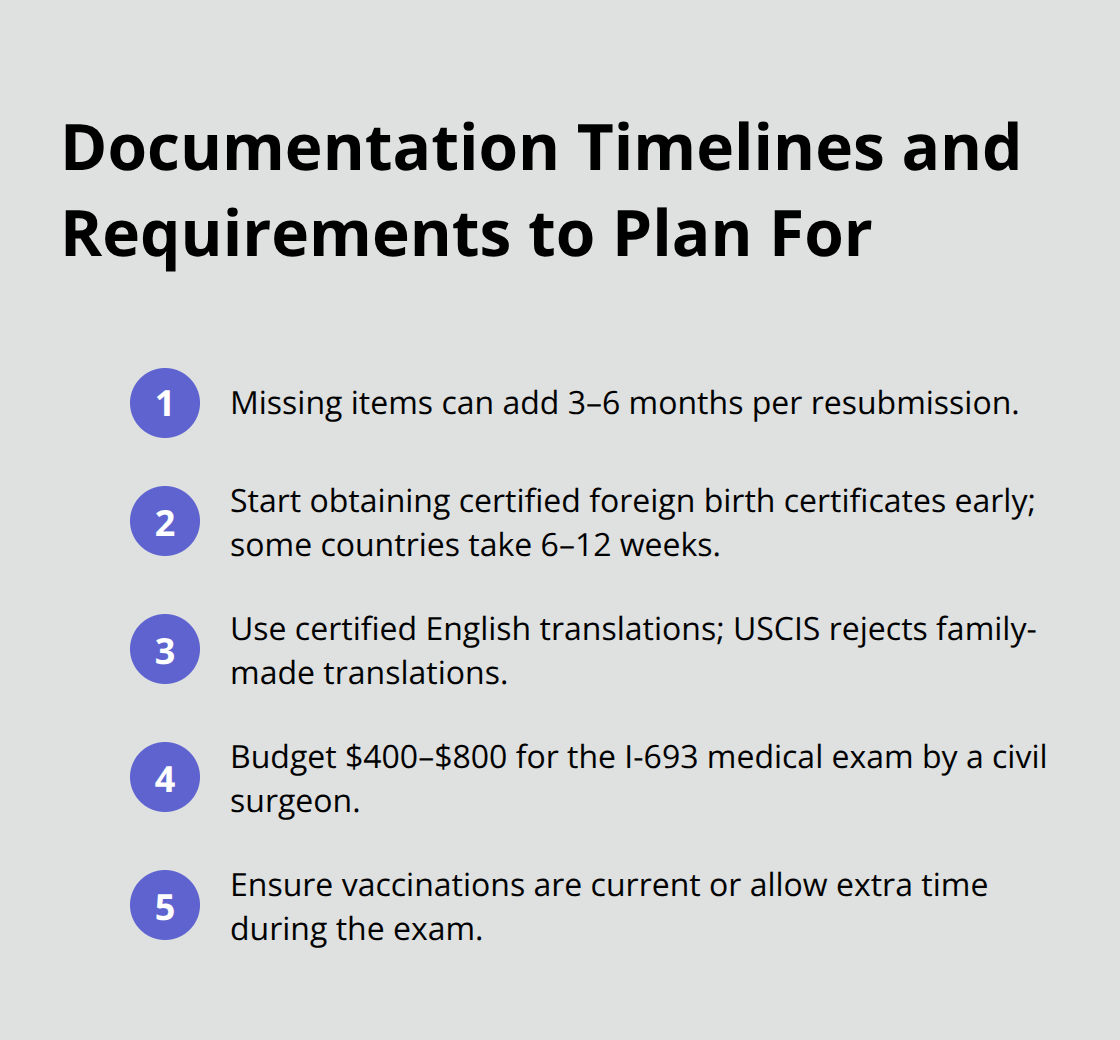
Gathering the right documentation makes or breaks a child immigration application. USCIS receives thousands of incomplete petitions annually, and missing documents create delays averaging 3 to 6 months per resubmission. We recommend organizing documents into three core categories before you file anything. This structure prevents oversights and accelerates processing significantly.
Proof of Relationship and Family Connections
You need proof of relationship first. Birth certificates form the foundation, but you’ll also need marriage certificates if parents remarried, adoption papers if applicable, and certified copies from the vital records office in the child’s country of origin. Many families underestimate how difficult obtaining certified foreign birth certificates becomes, particularly from countries with outdated record systems. Start this process immediately because some nations take 6 to 12 weeks to issue certified copies.
If original documents are in a foreign language, you must obtain certified English translations from qualified translators, not just any bilingual person. USCIS will reject translations completed by family members or untrained individuals. This requirement applies to every foreign-language document in your file.
Medical Examinations and Required Vaccinations
Medical documentation presents the second major requirement. An USCIS-designated civil surgeon must complete the I-693 medical examination, and the process costs between $400 and $800 depending on your location. The examination includes a complete physical, tuberculosis screening, and verification that the child received all required vaccinations per the CDC schedule.
If your child is missing vaccinations, the civil surgeon can administer them during the exam, but this adds time and cost. Some families attempt to use medical records from their home country, but USCIS won’t accept them without a civil surgeon’s official review and I-693 form completion. Only the civil surgeon’s official documentation satisfies USCIS requirements.
Financial Support and the Affidavit of Support
Financial documentation proves you can support the child without government assistance. The Affidavit of Support (form I-864) requires your household income to reach 125 percent of the federal poverty line, which in 2026 means roughly $32,000 annually for a single sponsor and a child. If your income falls short, you can add a joint sponsor, typically a relative, who also completes an I-864.
Tax returns from the past two years, W-2 forms, and recent pay stubs all become part of your file. Families often make critical mistakes by submitting outdated financial records or failing to include all household members’ income. Start gathering these documents at least three months before filing to avoid rushed submissions and errors.
With your documentation organized and ready, the next step involves working with an immigration attorney who understands how to present these materials effectively and navigate the complex procedural requirements that follow.
Working with an Immigration Attorney for Child Cases
USCIS Deadlines and Paperwork Management
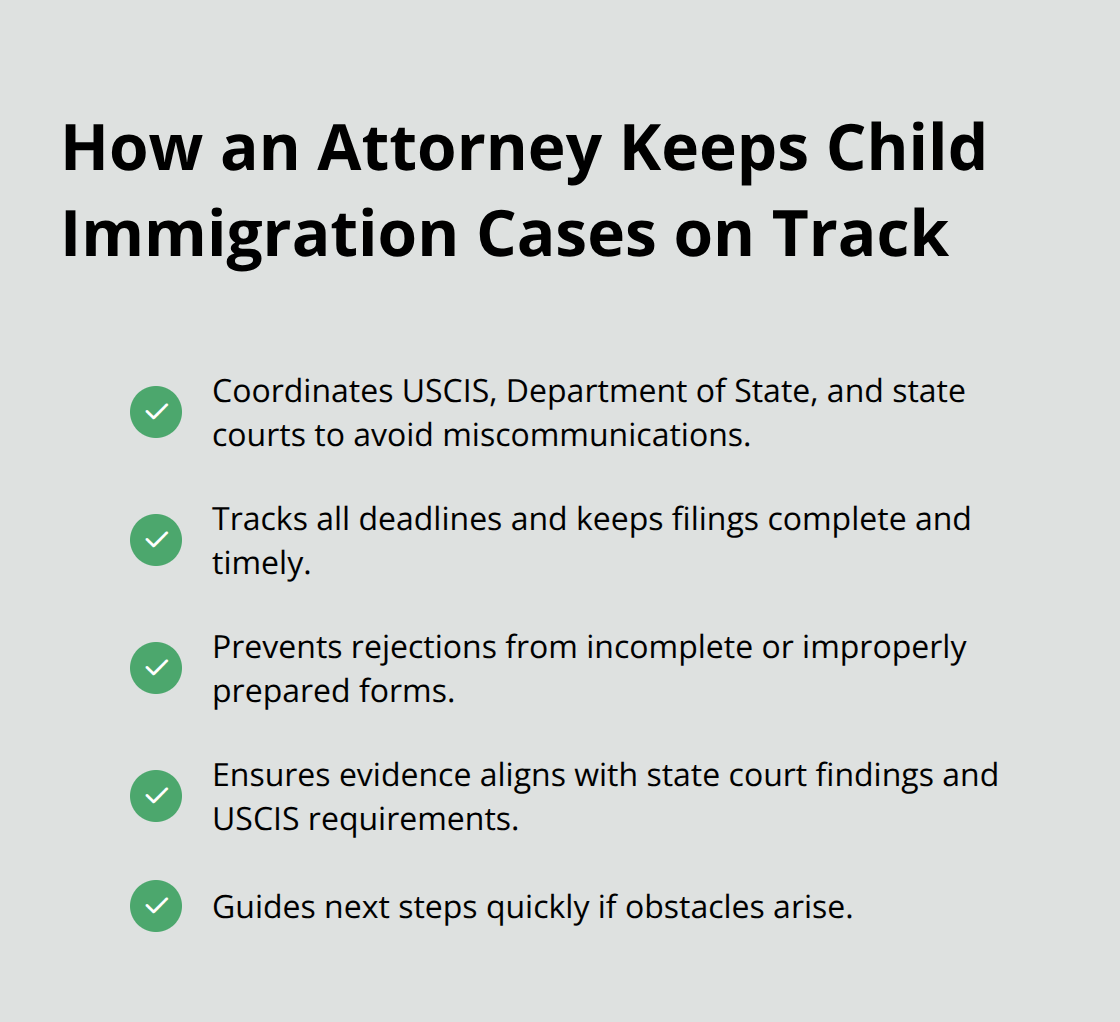
Immigration paperwork deadlines move fast, and missing even one filing date delays your child’s case by months or restarts the entire process from scratch. USCIS sets strict deadlines for responding to Requests for Evidence, allowing a maximum of 12 weeks for submission, and extensions are rarely granted. An immigration attorney tracks every deadline, manages all correspondence with USCIS, and prevents nothing from falling through the cracks. Without this oversight, families face rejections due to incomplete documentation or improper form completion that an attorney would have caught immediately.
Identifying the Right Visa Category
Attorneys identify which visa category actually fits your child’s situation best, which saves families from pursuing dead-end routes that waste time and money. Many families attempt these cases alone and select inappropriate pathways based on incomplete information. An experienced immigration attorney evaluates your child’s specific circumstances-whether SIJS, immediate relative sponsorship, or another option applies-and recommends the strategy most likely to succeed.
Coordinating Multiple Government Agencies
Immigration proceedings for minors involve multiple government agencies, each with different requirements and communication protocols. USCIS, the Department of State, and state court systems all interact in child immigration cases, particularly with SIJS applications requiring state court involvement. An attorney coordinates between these agencies, ensuring your state court finding aligns with USCIS requirements and that all parties have the documentation they need. This coordination prevents miscommunications that commonly cause delays or denials.
Handling Denials and Appeals
If USCIS denies your petition, an attorney evaluates whether you can appeal, file a motion to reopen, or pursue an alternative visa category entirely. Without legal representation, families often don’t understand why they received a denial or what options remain available to them. An attorney reviews the denial letter, identifies the specific grounds for rejection, and determines the strongest path forward. Your child’s immigration case determines their future in the United States, and the stakes justify professional legal guidance from someone with specific expertise in child immigration matters.
Final Thoughts
Child immigration options require careful evaluation of your family’s specific circumstances, timeline, and eligibility. Special Immigrant Juvenile Status works best for vulnerable minors without parental support, while Immediate Relative visas offer speed when a U.S. citizen family member can sponsor. The Diversity Visa Lottery and extended family sponsorship exist as alternatives, though they involve longer waits and greater uncertainty.
Documentation forms the backbone of every successful application, and missing birth certificates, medical examinations, or financial records creates delays that stretch months beyond initial timelines. Organizing these materials into clear categories before filing prevents costly mistakes that USCIS rejects regularly. The complexity of child immigration cases demands professional legal guidance, since immigration law changes frequently, USCIS deadlines move fast, and a single procedural error can restart your entire case from the beginning.
We at Law Offices of Jeffrey A. Thompson understand that your child’s future depends on getting this right the first time. Our immigration law team assists clients in navigating the entire process, from paperwork preparation to overcoming legal hurdles that arise during proceedings. Contact Law Offices of Jeffrey A. Thompson today to discuss which child immigration options fit your circumstances best and to begin your child’s immigration journey with experienced legal support.
Share this post: