Spousal Sponsorship Massachusetts: Obtaining a Green Card Through Marriage
October 9, 2026
Marriage to a U.S. citizen opens a direct path to permanent residency, but spousal sponsorship in Massachusetts involves specific steps and requirements that many couples overlook.
At Law Offices of Jeffrey A. Thompson, we guide foreign spouses through this process, helping them avoid costly mistakes and delays. This guide walks you through each stage, from initial eligibility to your green card interview.
How Spousal Sponsorship Works in Massachusetts
Spousal sponsorship is the immigration pathway that allows a U.S. citizen to petition for their foreign-born spouse to obtain permanent residency. Unlike other family-based immigration categories, spousal sponsorship offers an immediate relative classification, meaning no visa quota applies and processing typically moves faster. The U.S. Citizenship and Immigration Services reported that immediate relative petitions accounted for approximately 1.1 million approvals in 2023, with spousal sponsorships representing a significant portion of this volume. Massachusetts sees roughly 8,000 to 10,000 spousal green card applications annually based on USCIS regional data, making it a common pathway for couples in the state.
Who Can Sponsor and Who Can Be Sponsored
The sponsoring spouse must be a U.S. citizen, not simply a permanent resident. This distinction matters because only citizenship grants the legal authority to petition for a spouse’s green card. The sponsor must also be at least 18 years old and demonstrate sufficient income to support their spouse. The federal poverty guidelines for 2024 set the minimum income requirement at $23,792 annually for a household of two, though actual requirements vary based on family size and state location.
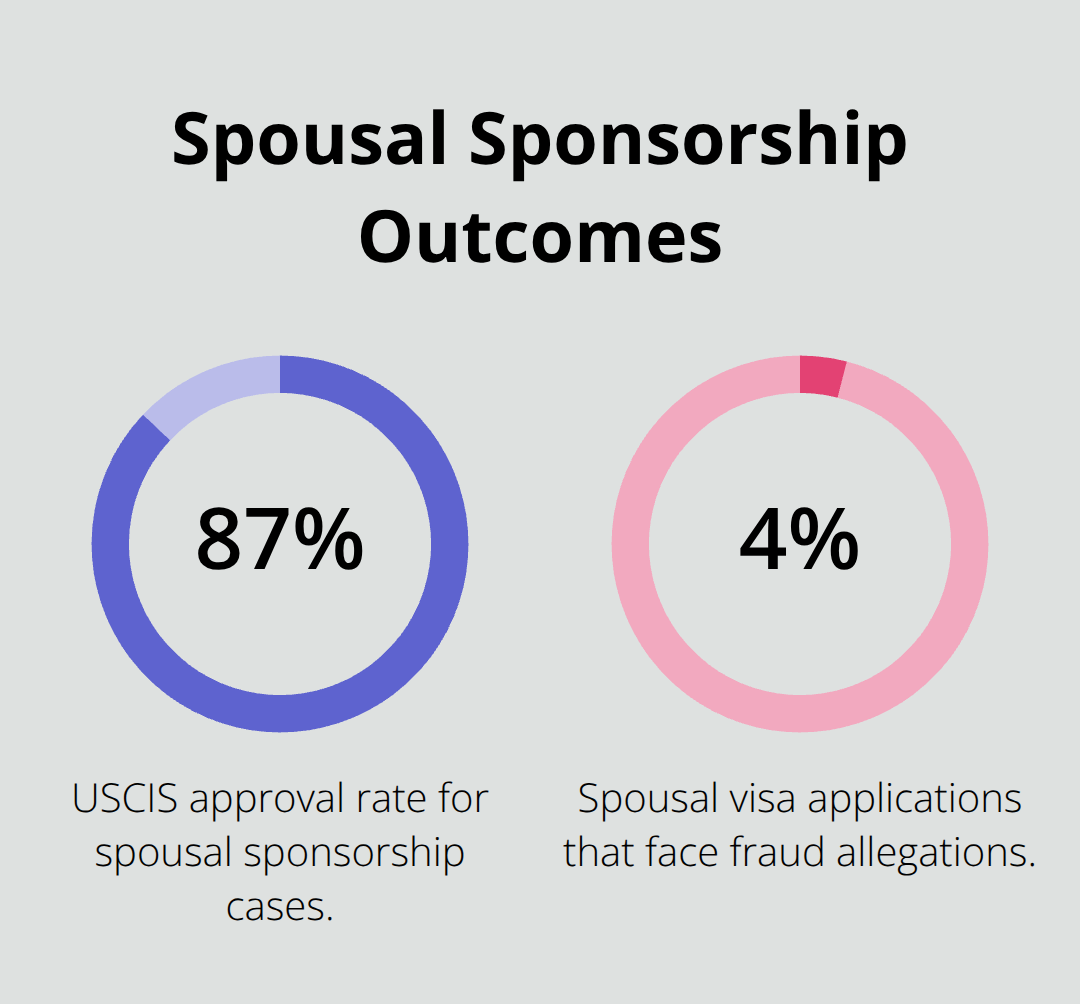
The sponsored spouse must have a valid passport, pass medical and background clearances, and demonstrate that the marriage is genuine and entered in good faith. USCIS scrutinizes marriages closely, particularly those occurring within two years of application, as statistics show that approximately 4 percent of spousal visa applications face fraud allegations according to USCIS data. The sponsored spouse cannot have been convicted of certain crimes (including crimes of moral turpitude or drug-related offenses) and cannot be inadmissible under other grounds such as having overstayed a previous visa beyond 180 days.
Income and Financial Requirements
The sponsoring spouse’s income forms the foundation of the petition’s strength. If your income falls below the poverty line, you can add a co-sponsor, typically a family member, who meets the income requirement and agrees to support your spouse financially. Many applicants overlook this option and unnecessarily delay applications.
The I-864 Affidavit of Support, which the sponsor completes, creates a binding legal obligation to support the sponsored spouse for approximately ten years or until they become a U.S. citizen. USCIS requires recent tax returns, W-2 forms, and employment verification letters. If you are self-employed, expect more scrutiny; USCIS will examine business tax returns for the past two years and may request profit and loss statements.
Documentation and Financial Proof
Couples who organize financial documentation early avoid significant delays during adjudication. Gather your most recent tax returns, pay stubs, and employment letters before you submit your petition. Self-employed applicants should prepare business tax returns for the past two years along with profit and loss statements to satisfy USCIS requirements.
The strength of your financial documentation directly impacts how quickly USCIS processes your case. Incomplete or unclear financial records prompt requests for additional evidence, which can add months to your timeline. With proper preparation, you move your application forward without unnecessary interruptions.
The Green Card Application Process
Your U.S. citizen spouse files Form I-130, Petition for Alien Relative to start the process. This form establishes the relationship and your spouse’s eligibility to sponsor you. USCIS typically processes I-130 petitions within 12 to 18 months, though Massachusetts cases sometimes move faster due to lower caseloads in certain USCIS field offices. Once USCIS approves the I-130, you become eligible to apply for adjustment of status using Form I-485, Application to Register Permanent Residence or Adjust Status.
Do not wait for the I-130 approval before preparing your I-485 documentation. Couples who organize medical records, police certificates, and birth certificates in advance compress their overall timeline by several months. The I-485 includes medical examination results and background clearance information, so USCIS processes both forms simultaneously after the I-130 approval arrives.
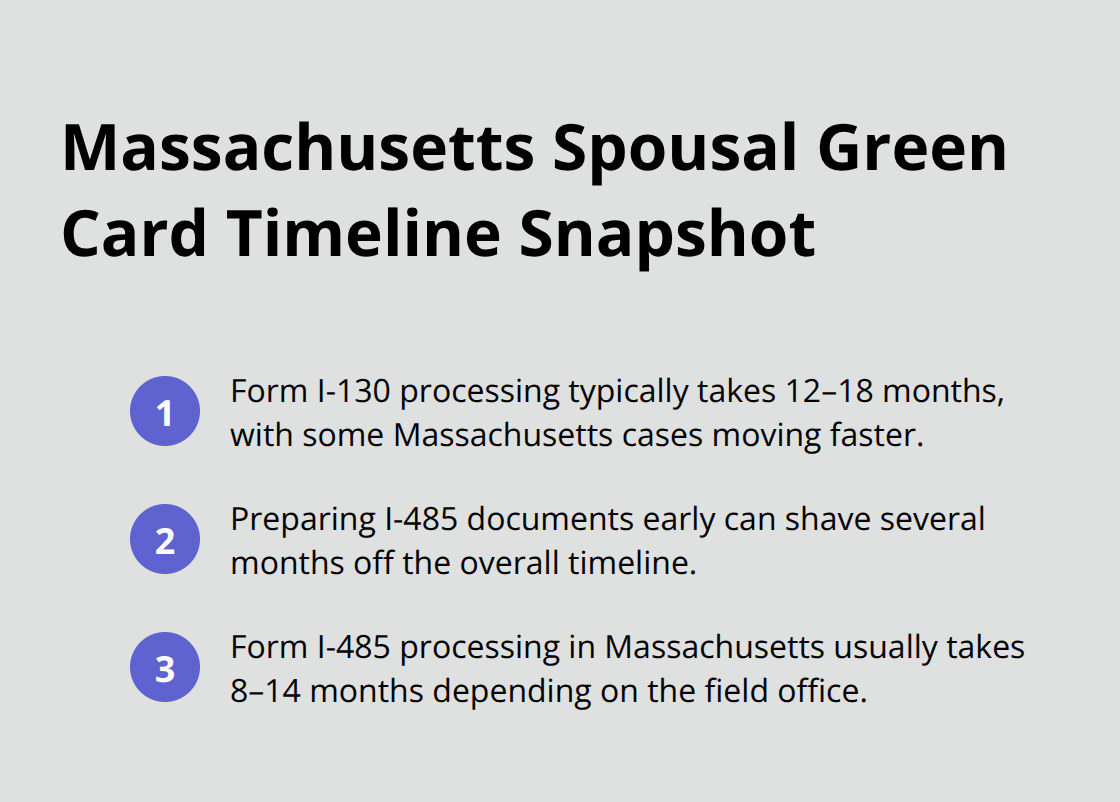
Processing times for I-485 applications in Massachusetts range from 8 to 14 months depending on your local USCIS office and whether your case requires additional investigation.
Medical Examination Requirements
USCIS requires a civil surgeon to conduct your medical examination, and you must use an USCIS-approved physician. The exam costs between $300 and $800 and includes vaccinations, tuberculosis screening, and general health assessment. Schedule this appointment only after your I-130 receives approval, as the medical results expire after one year.
Background Checks and Fingerprinting
Background checks run simultaneously with your I-485 application and include fingerprinting at a USCIS Application Support Center. Bring your passport and appointment notice when you arrive for fingerprinting. Criminal convictions, immigration violations, or fraud allegations typically trigger detailed investigation periods lasting 6 to 12 months beyond standard processing times. If you have any prior immigration violations or criminal history, contact an immigration attorney immediately so they can evaluate your specific circumstances and develop a strategy before USCIS initiates its background check.
The Green Card Interview
USCIS schedules your green card interview after background clearance completes. Bring original documents including your passport, birth certificate, marriage certificate, and financial records to your interview. The USCIS officer will ask about your relationship, your spouse’s income, and your medical history. Answer directly and honestly; inconsistencies between your I-485 application and interview responses trigger fraud investigations.
USCIS approves approximately 87 percent of spousal sponsorship cases, meaning most couples receive their green cards following the interview. If USCIS denies your application, you have the right to appeal within 30 days of the denial notice. However, many couples face obstacles during this process that require careful navigation and strategic planning.
What Could Go Wrong in Your Spousal Sponsorship Case
Fraud Allegations and Proving Genuine Marriage
USCIS scrutinizes spousal sponsorship applications with particular intensity because marriage fraud remains a persistent problem in immigration law. The agency receives approximately 40,000 fraud referrals annually across all visa categories, and spousal cases represent a meaningful portion of these investigations. When USCIS suspects fraud, it initiates a detailed investigation that extends your timeline by 6 to 12 months minimum, and in complex cases, investigations can stretch 18 months or longer.
The most common red flag involves marriages occurring within two years of the green card application, as USCIS applies heightened scrutiny to these cases based on historical fraud patterns. To overcome this challenge, you need comprehensive evidence of a genuine relationship. Photographs spanning several years showing you together at family events, vacations, and daily life carry significant weight with USCIS adjudicators.
Emails, text messages, and social media interactions demonstrate ongoing communication and shared decision-making. Bank statements showing joint accounts or regular financial transfers between spouses provide concrete proof of your financial interdependence. Affidavits from friends and family members who can attest to your relationship’s authenticity matter more than general statements; these witnesses should describe specific events they witnessed and explain how long they have known both spouses.
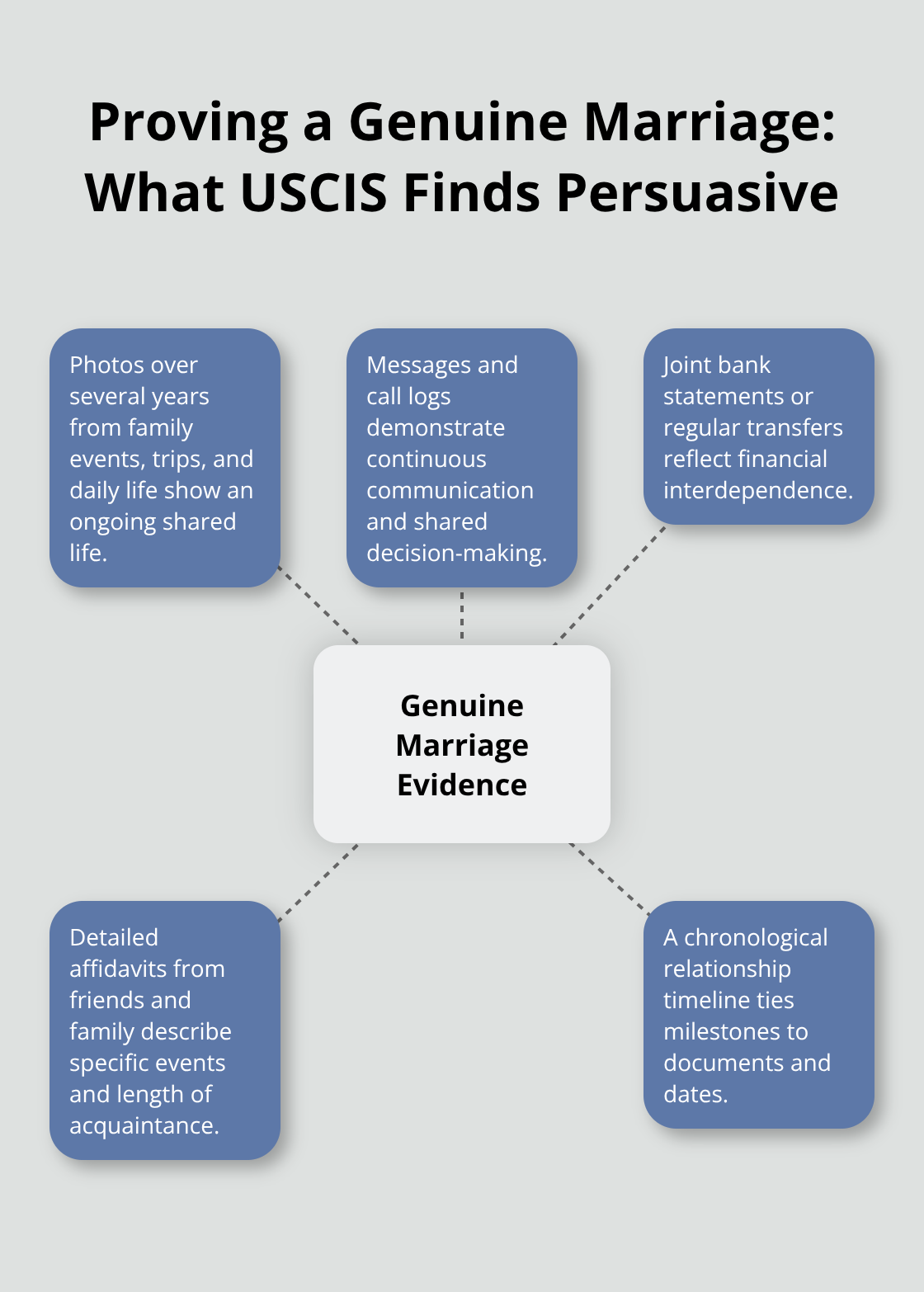
Create a detailed timeline document that shows how you met, when you decided to marry, and the progression of your relationship with supporting documentation at each stage. This organized approach helps USCIS officers quickly understand your relationship’s legitimacy without requiring extensive investigation.
Medical Issues and Criminal History
Medical issues and criminal history create different obstacles that require immediate legal evaluation before you submit any application. USCIS can deny green card applications based on medical grounds including communicable diseases, mental health conditions deemed to pose public danger, or failure to receive required vaccinations. If you have any medical condition that might trigger concern, an immigration attorney should review your situation before you schedule your civil surgeon examination, as this allows strategic planning.
Criminal convictions present even more serious complications because certain offenses create permanent bars to immigration benefits. Crimes of moral turpitude, drug-related offenses, and crimes of violence automatically trigger deportability findings that can eliminate spousal sponsorship as a viable option. Contact an immigration attorney immediately if you have any prior criminal history so they can evaluate your specific circumstances before USCIS initiates its background check.
Document Translation and Certification
Document translation problems occur frequently when couples submit foreign birth certificates, marriage certificates, or police clearance documents without certified English translations. USCIS requires certified translations for all foreign-language documents, not informal translations provided by family members. Each certified translation costs $75 to $150 depending on document length and complexity, so couples should budget $500 to $1,000 for complete translation services.
Professional translators provide the certification that USCIS requires, and attempting to save money with informal translations typically results in application rejection and resubmission delays. Plan your translation timeline carefully to avoid last-minute rushes that increase costs and compress your overall application schedule.
Processing Delays and Medical Examination Expiration
Processing delays happen regardless of your case strength, and Massachusetts cases typically experience 8 to 14 month waits for final adjudication after your I-485 submission. However, delays become critical obstacles when medical examination results expire before your case receives a decision, requiring you to undergo a second civil surgeon examination and repeat associated costs ($300 to $800 per exam).
Track your medical examination completion date carefully and understand that results remain valid for exactly 12 months from the examination date. If your case approaches the one-year mark without a decision, contact USCIS to determine whether you need to schedule a new examination. This proactive approach prevents unnecessary complications and additional expenses during an already lengthy process.
Final Thoughts
Spousal sponsorship in Massachusetts requires careful planning, thorough documentation, and realistic expectations about timelines. The process typically spans 20 to 32 months from initial petition to green card approval, and couples who understand this reality avoid frustration and costly mistakes. Your success depends on organizing financial records early, gathering relationship evidence before USCIS requests it, and addressing any potential complications like medical issues or criminal history before submitting your application.
A single missing document, an incomplete financial record, or a misunderstood requirement can delay your case by months or trigger a denial that forces you to restart the entire process. USCIS adjudicators process thousands of spousal sponsorship cases annually, and they move quickly through applications that demonstrate clear eligibility and genuine marriage. Applications with gaps in documentation or inconsistencies between forms receive extended scrutiny that compounds your timeline significantly.
Contact Law Offices of Jeffrey A. Thompson in Brockton, Massachusetts, to discuss your specific circumstances with an immigration attorney. We can review your case, identify potential obstacles before USCIS does, and develop a strategy tailored to your situation. The investment in professional guidance pays dividends through faster processing, fewer complications, and ultimately, your green card approval.
Share this post: