
How to Get Immigration Judge Granted Adjustment of Status
February 20, 2026
Adjustment of status is one of the most direct paths to a green card, but the process demands precision at every stage. At Law Offices of Jeffrey A. Thompson, we’ve guided countless clients through this complex journey, and we know what immigration judges look for when granting adjustment of status.
This guide walks you through the entire process, from understanding your eligibility to preparing for your interview and beyond.
Understanding What Adjustment of Status Actually Is
Adjustment of status offers a direct path to permanent residence without leaving the United States. You file Form I-485 while physically present in the country, rather than pursuing consular processing abroad. This approach keeps you stateside during the application process, though you must satisfy specific eligibility requirements before filing. The Department of State Visa Bulletin determines when your priority date becomes current-meaning an immigrant visa is available in your category. You cannot file until this happens, which is why tracking the visa bulletin monthly matters. The Executive Office for Immigration Review adjudicates the process through immigration courts, not standard USCIS offices, which fundamentally changes how your case progresses through the system.
Determining Your Eligibility Category
Your eligibility hinges entirely on which green card category you fall into. Family-based applicants need an approved Form I-130 petition from a relative. Employment-based applicants need an approved Form I-140 and must maintain continuous lawful status since arrival (with specific exceptions under INA 245(i)). Special immigrant categories under Form I-360 or the Cuban Adjustment Act operate under their own rules. Some categories allow concurrent filing-you submit your petition and I-485 simultaneously-while others require full petition approval first. Diversity visa winners skip the petition requirement entirely. You must independently qualify for adjustment within your specific category; generic advice fails because documentation and timing requirements shift dramatically between categories.
What the Timeline Actually Looks Like
From filing to approval, most cases take twelve to eighteen months, though complexity and location create significant variation. Your first milestone arrives within two to four weeks: the biometrics appointment. Missing this mandatory appointment results in case denial.
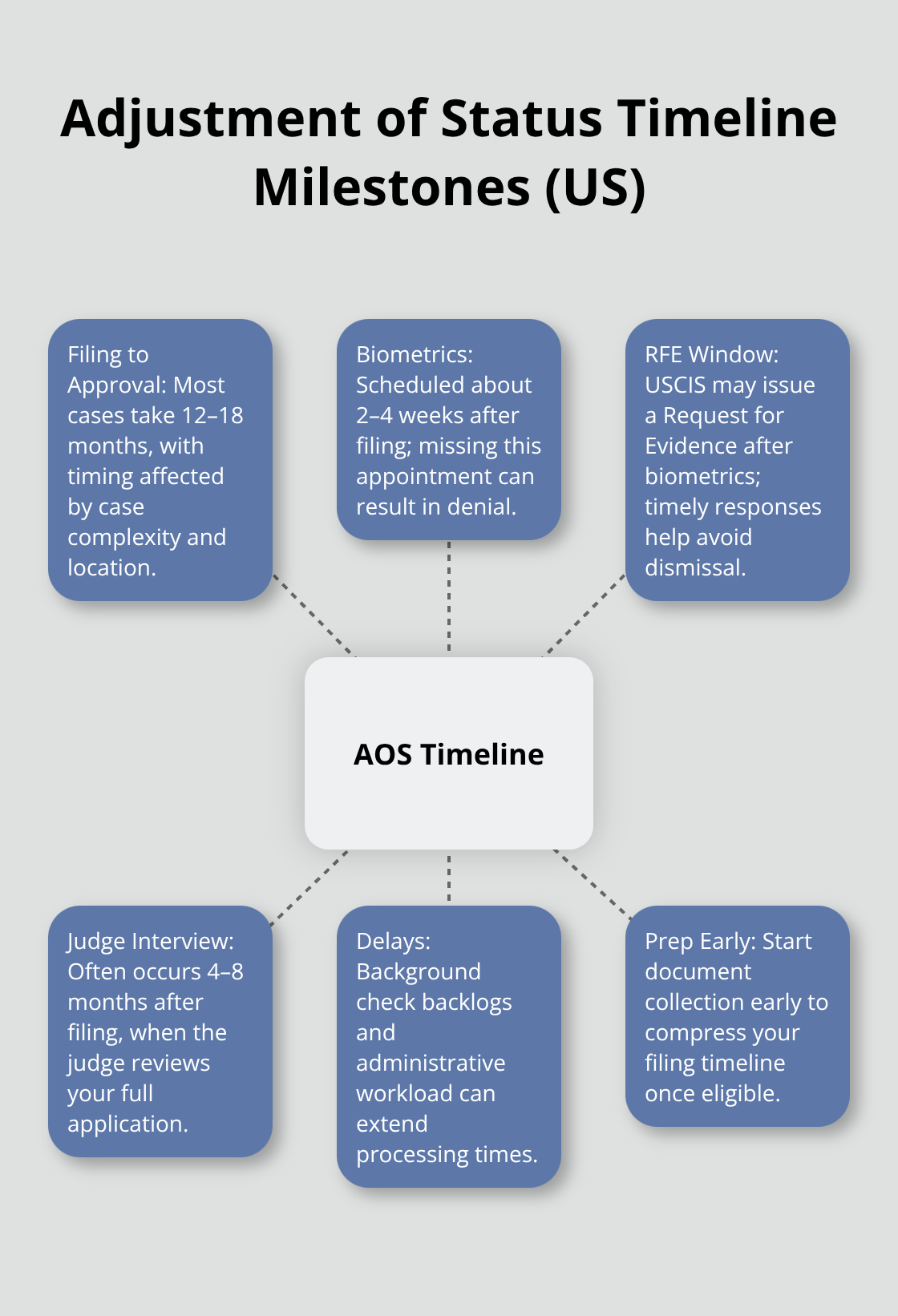
After biometrics, USCIS may issue a Request for Evidence if information is missing or unclear; responding by the stated deadline prevents case dismissal. The immigration judge interview typically occurs four to eight months after filing, where the judge reviews your entire application. Background check backlogs and administrative workload regularly cause processing delays. Starting document collection immediately-even before your priority date becomes current-compresses the timeline substantially when you’re ready to file.
Preparing Before Your Priority Date Becomes Current
You gain significant advantage by assembling documents during the waiting period. Obtain long-form birth certificates listing both parents and verify the issuing authority using your country’s reciprocity schedule. Collect marriage certificates for yourself and any dependents, along with divorce or death certificates for any prior marriages. Gather vaccination records for Mumps, Measles, Rubella, Polio, Tetanus/Diphtheria Toxoids, Pertussis, Hib, and Hepatitis B. Compile photocopies of all arrests and convictions worldwide, with originals or certified court records showing final dispositions. Have all foreign-language documents translated into English by a certified translator. This preparation phase eliminates delays once your priority date becomes current and you’re ready to file your I-485.
Assembling Your Application to Pass Immigration Court Review
Preparing an adjustment of status application demands systematic documentation and professional guidance. The Executive Office for Immigration Review, which adjudicates these cases through immigration courts rather than standard USCIS offices, scrutinizes every element of your file. USCIS requires specific forms depending on your category: Form I-485 is universal, but employment-based applicants must include Form I-485 Supplement J if filing based on a previously approved I-140 or seeking job portability under INA 204(j). Family-based applicants under INA 245(i) must file Form I-485 Supplement A simultaneously with their main application. Unsigned forms trigger automatic rejection, so verify every signature before submission.
Submitting a Complete Initial Evidence Package
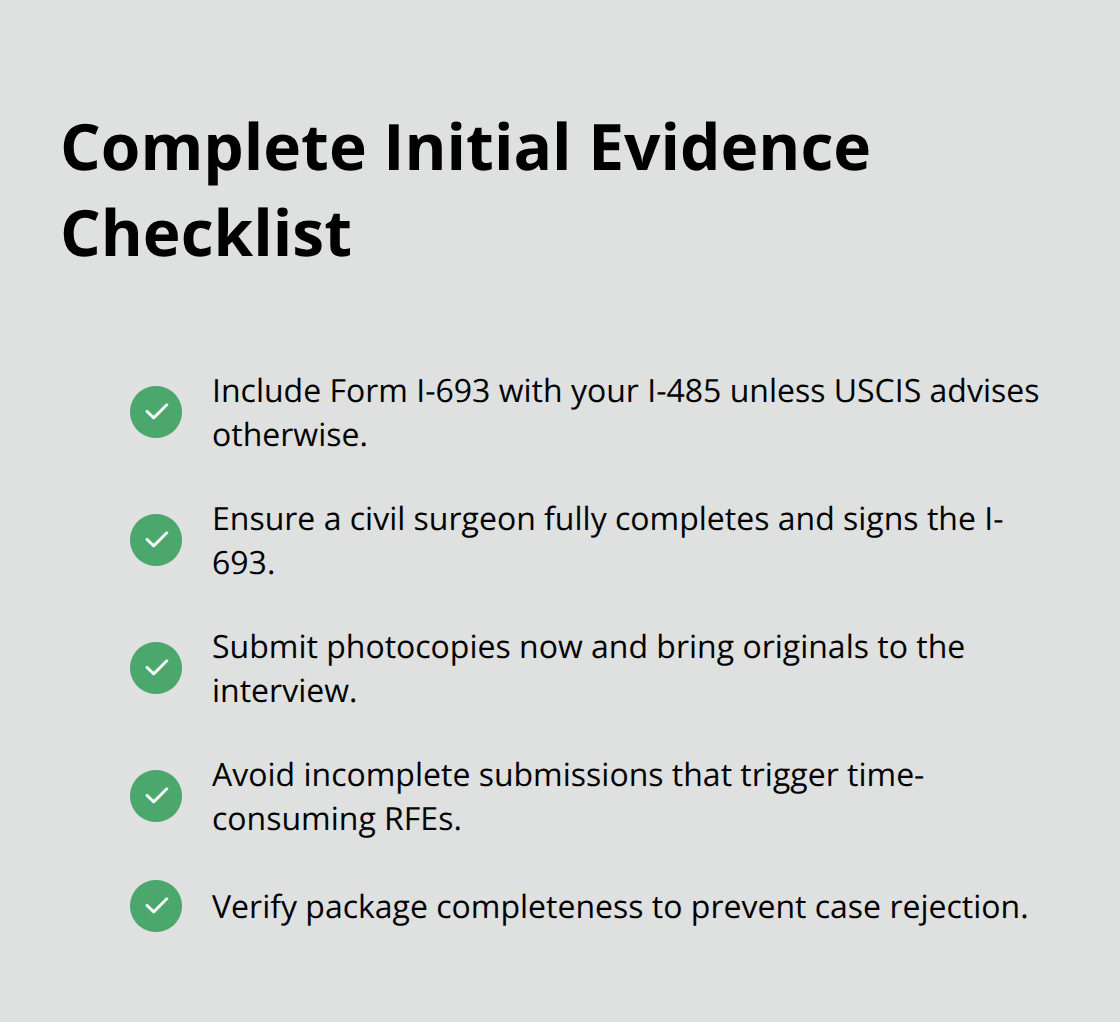
Your initial evidence package must be complete at filing because incomplete submissions generate Requests for Evidence that delay your case by months. Include Form I-693, the Report of Immigration Medical Examination and Vaccination Record, with your I-485 unless USCIS specifically advises otherwise; missing this form results in case rejection. Submit photocopies of documents, not originals, and keep originals for your interview where the immigration judge may request to see them.
The Medical Exam and Background Check Process
Schedule your medical examination only after you receive confirmation that your I-485 is ready to file. The civil surgeon conducts your examination and completes Form I-693, which documents your vaccination status and screens for medical conditions that could render you inadmissible. Vaccination requirements include Mumps, Measles, Rubella, Polio, Tetanus and Diphtheria Toxoids, Pertussis, Hib, and Hepatitis B. If you lack vaccination records, the civil surgeon can administer vaccines during your appointment. Background checks run concurrently with your biometrics appointment, where USCIS collects your fingerprints, photograph, and signature. Missing your biometrics appointment results in immediate case denial. USCIS processes background checks through multiple federal databases including the FBI, Department of Homeland Security, and the State Department. Provide certified police and court records for all criminal charges, arrests, or convictions worldwide, regardless of final disposition or how long ago they occurred. Foreign criminal records must include certified English translations with translator certification that the translation is complete and accurate.
How an Attorney Identifies Category-Specific Requirements
Immigration law contains traps that self-represented applicants frequently miss. An experienced immigration attorney identifies category-specific requirements that generic USCIS checklists overlook. An attorney determines whether you qualify for concurrent filing, which can compress your timeline substantially by months. For employment-based cases, an attorney evaluates whether you meet the job portability requirements under INA 204(j) and whether Supplement J must accompany your I-485. For family-based cases, an attorney confirms that your underlying I-130 petition is properly approved and that your relationship documentation meets the immigration judge’s evidentiary standards. An attorney identifies potential inadmissibility issues before you file, allowing time to prepare waivers like Form I-601 that address grounds of inadmissibility. If you have prior immigration violations or deportation history, Form I-212 (Application for Permission to Reapply for Admission) becomes essential and must accompany your I-485. These procedural requirements are not optional; omitting them guarantees case denial. The Law Offices of Jeffrey A. Thompson assists clients in navigating the entire adjustment of status process, from paperwork to overcoming legal hurdles that could otherwise derail your case.
The complexity of your specific category determines how much preparation work lies ahead before your interview with the immigration judge.
Obstacles That Derail Adjustment Cases
Inadmissibility Grounds and Preventable Denials
Inadmissibility grounds represent the most common reason adjustment applications fail, yet applicants can prevent them with proper planning. USCIS identifies you as inadmissible if you fall into specific categories defined by immigration statute, including criminal convictions, health conditions, security concerns, or prior immigration violations. The critical difference between denial and approval often hinges on whether you file Form I-601, Application for Waiver of Grounds of Inadmissibility, before submitting your I-485. Many applicants discover inadmissibility issues only after filing, which forces USCIS to issue a Request for Evidence and delays your case by months.
If you have any criminal history whatsoever-even arrests that didn’t result in conviction-you must disclose every detail and obtain certified court records showing final disposition. An immigration attorney identifies potential inadmissibility triggers during initial consultation because waiting until after filing creates complications. Prior deportations or removals require Form I-212, Application for Permission to Reapply for Admission, filed simultaneously with your I-485; omitting this form results in automatic denial regardless of other qualifications. Certain visa violations, overstays, or unauthorized work history create inadmissibility grounds that demand specific waivers.
The Executive Office for Immigration Review takes inadmissibility extremely seriously, and immigration judges deny cases routinely when applicants fail to address these issues proactively. You cannot overcome inadmissibility through explanation alone-you must file the correct waiver form with supporting evidence demonstrating that your U.S. citizen relative or employer would experience extreme hardship if you were denied adjustment.
Work Authorization and Travel During Processing
Employment authorization and travel documents present practical obstacles during the adjustment waiting period, particularly for applicants whose current work permits expire before their interview. Filing Form I-765 concurrently with your I-485 preserves your work authorization throughout processing, but this requires understanding fee changes implemented on April 1, 2024. Before that date, filing I-765 with I-485 incurred no additional fee; after April 1, 2024, USCIS charges separate fees for I-765 and Form I-131, Application for Travel Document.
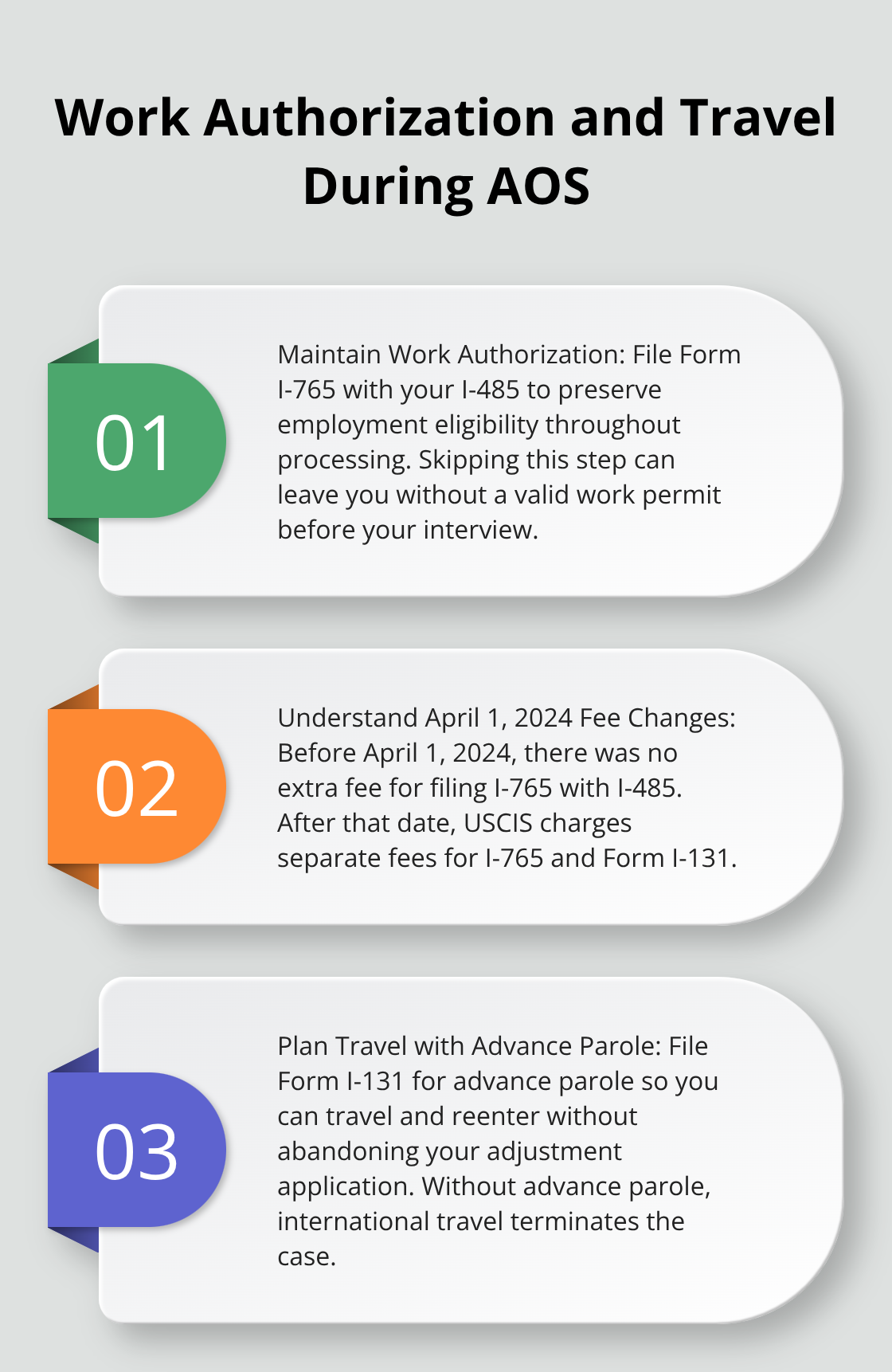
Many applicants skip these concurrent filings to avoid fees, then discover their current work authorization expires mid-process with no legal right to continue employment. Filing Form I-131 for advance parole simultaneously with I-485 allows you to travel internationally during processing and reenter the United States without abandoning your adjustment application, provided you select only item 5.A in Part 1 of the I-131. Without advance parole authorization, leaving the country before adjustment approval terminates your application entirely.
Prior Immigration Violations and Multiple Denials
Prior immigration violations or multiple denials require exceptionally thorough documentation and legal strategy. If you previously received a Notice to Appear or deportation order, you must address this history explicitly through Form I-212 and supporting affidavits explaining changed circumstances. The immigration judge reviewing your case will have access to your complete immigration history, including prior denials, so concealing or omitting information guarantees rejection.
Demonstrating rehabilitation, stable employment, family ties, and community integration becomes essential when overcoming prior violations. Each denial creates higher evidentiary burdens for subsequent applications, which is why strategic planning before filing matters far more than rushing to submit incomplete paperwork.
Final Thoughts
Your immigration interview with the judge represents the culmination of months of preparation. The judge will review your complete file, ask questions about your background and eligibility, and assess your credibility. Bring original documents for every item submitted with your I-485, including your passport, travel documents, and Form I-94, and answer questions directly and honestly because inconsistencies between your written application and verbal testimony create doubt that judges rarely overlook.
An immigration attorney fundamentally changes how judges perceive your case by presenting your evidence strategically, highlighting your strongest qualifications, and addressing potential weaknesses before the judge raises them. Your attorney cross-examines government witnesses if necessary, files post-hearing briefs that reinforce your eligibility, and ensures you understand every question before answering to prevent statements that could harm your case. The difference between self-representation and professional advocacy often determines whether an immigration judge grants adjustment of status or issues a denial.
After approval, USCIS mails your green card within weeks, and your status officially changes to lawful permanent resident on the approval date. You can work legally, travel internationally with your green card, and sponsor family members for immigration benefits, with naturalization eligibility arriving within five years if you meet residency and other requirements. Contact Law Offices of Jeffrey A. Thompson to discuss your specific situation and strengthen your adjustment application.
Share this post: