How to Navigate Parole 212.5 B 5 Adjustment of Status
March 2, 2026
A criminal conviction doesn’t have to be permanent. Parole 212.5(b)(5) adjustment of status offers a pathway for certain individuals to overcome deportation and rebuild their lives in the United States.
At Law Offices of Jeffrey A. Thompson, we guide clients through this complex process step by step. This guide walks you through everything from eligibility requirements to the interview process, so you understand exactly what to expect.
1. What Parole 212.5(b)(5) Actually Means
Parole 212.5(b)(5) is a federal regulation that allows DHS officials to grant temporary admission to the United States for individuals who don’t qualify for standard visa categories but meet specific humanitarian or public benefit criteria. The regulation operates under INA 212(d)(5)(A), which gives immigration officers discretion to parole someone into the country on a case-by-case basis rather than requiring formal visa processing. This pathway exists because some people face genuine hardship that standard immigration law doesn’t address, and their presence in the U.S. serves a documented public interest. Parole remains temporary-it’s not an admission to the country and doesn’t grant permanent status. This distinction affects your long-term planning and what happens after your parole period ends.
Eligibility requires two fundamental elements: you must demonstrate either urgent humanitarian reasons or significant public benefit, and DHS must exercise discretion favorably in your specific situation. Criminal history creates substantial barriers under this provision, as serious felonies, crimes of violence, drug trafficking offenses, and crimes involving moral turpitude typically disqualify applicants entirely. The regulation requires financial sponsorship through Form I-134, meaning someone must declare they’ll support you financially and provide documentation proving they have the income to do so. Unlike refugee status or asylum, parole doesn’t require proving persecution or fear of return; instead, it focuses on your circumstances in the U.S. and whether your temporary presence serves a legitimate purpose. Understanding these eligibility boundaries helps you assess whether this pathway applies to your situation before you invest time and resources into an application.
2. What Documents You Actually Need to Collect
Documentation makes or breaks a parole application, and most applicants underestimate how thoroughly DHS reviews evidence. Your financial sponsorship documentation is the first priority-the Form I-134 sponsor must provide recent tax returns (typically the last two years), current pay stubs, and a bank statement showing liquid assets. DHS wants proof that your sponsor earns at least 125% of the federal poverty line for their household size; for 2026, that threshold is approximately $1,563 monthly for a single-person household. If your sponsor’s income falls short, they can add household members’ income or assets, but each person must file their own I-134.
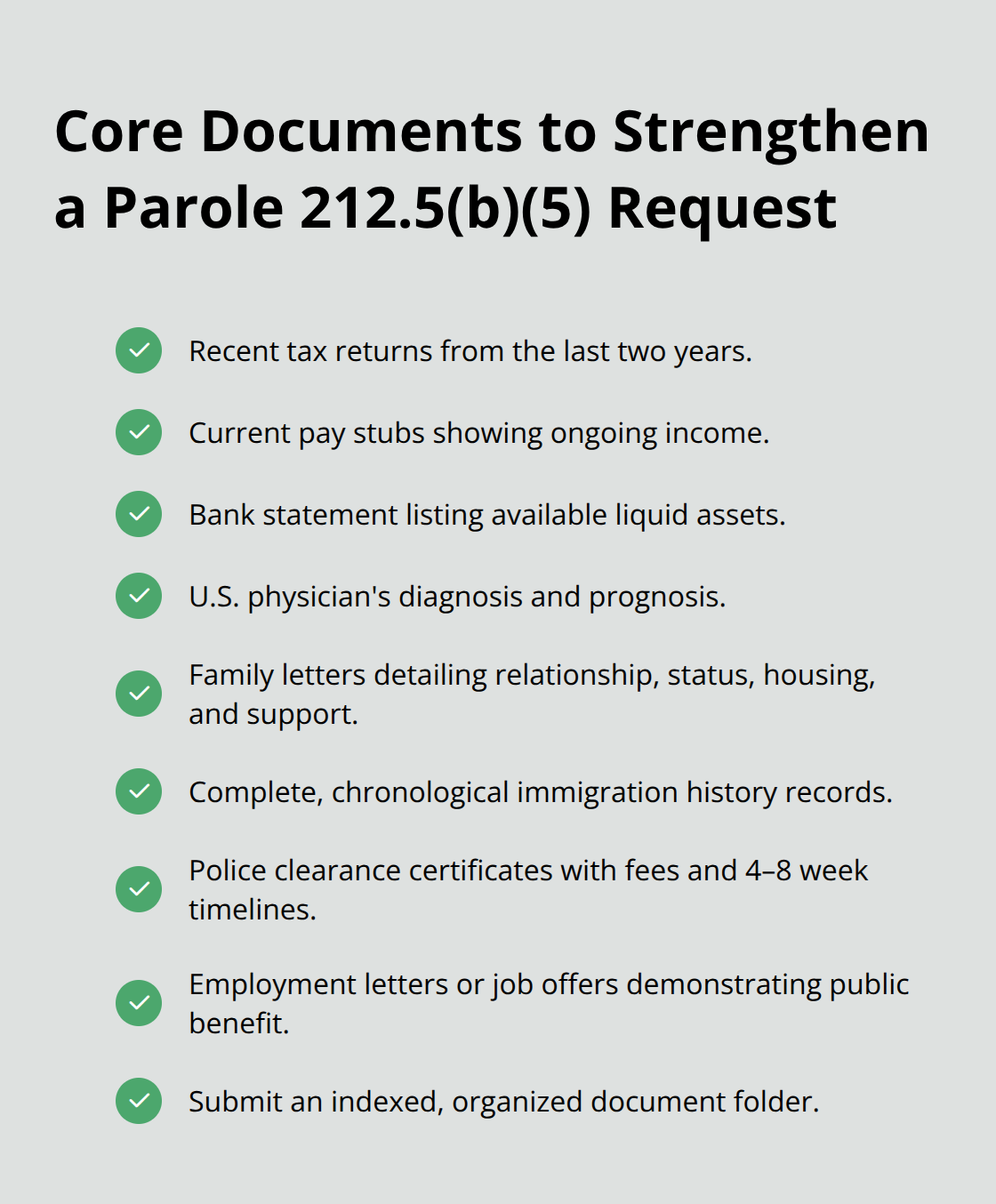
Medical records require documentation from a physician or medical facility in the United States that provides a medical diagnosis and prognosis for the individual.
Letters from doctors should state clearly whether your condition qualifies as urgent or would worsen without U.S.-based treatment unavailable in your home country. Family sponsorship letters carry weight only when they demonstrate concrete ties and financial commitment, not emotional appeals. Include letters from immediate family members explaining their relationship to you, their immigration status, and their willingness to provide housing and support during your parole period. Immigration history documentation must be complete and chronological-prior visa applications, denial letters, entry records, and any previous I-131 filings show DHS your full background. Gather police clearance certificates from your home country and any country where you’ve lived for more than six months; these typically cost $50–$200 and take four to eight weeks to obtain.
Employment records, educational credentials, and community ties documentation (such as job offers or letters from employers) strengthen applications showing significant public benefit. Organize all documents in a single folder with a written index before submission, as disorganized applications face longer processing times and higher request-for-evidence rates. This preparation positions you well when you move forward with filing your Form I-131.
3. Filing Your Form I-131 Without Mistakes
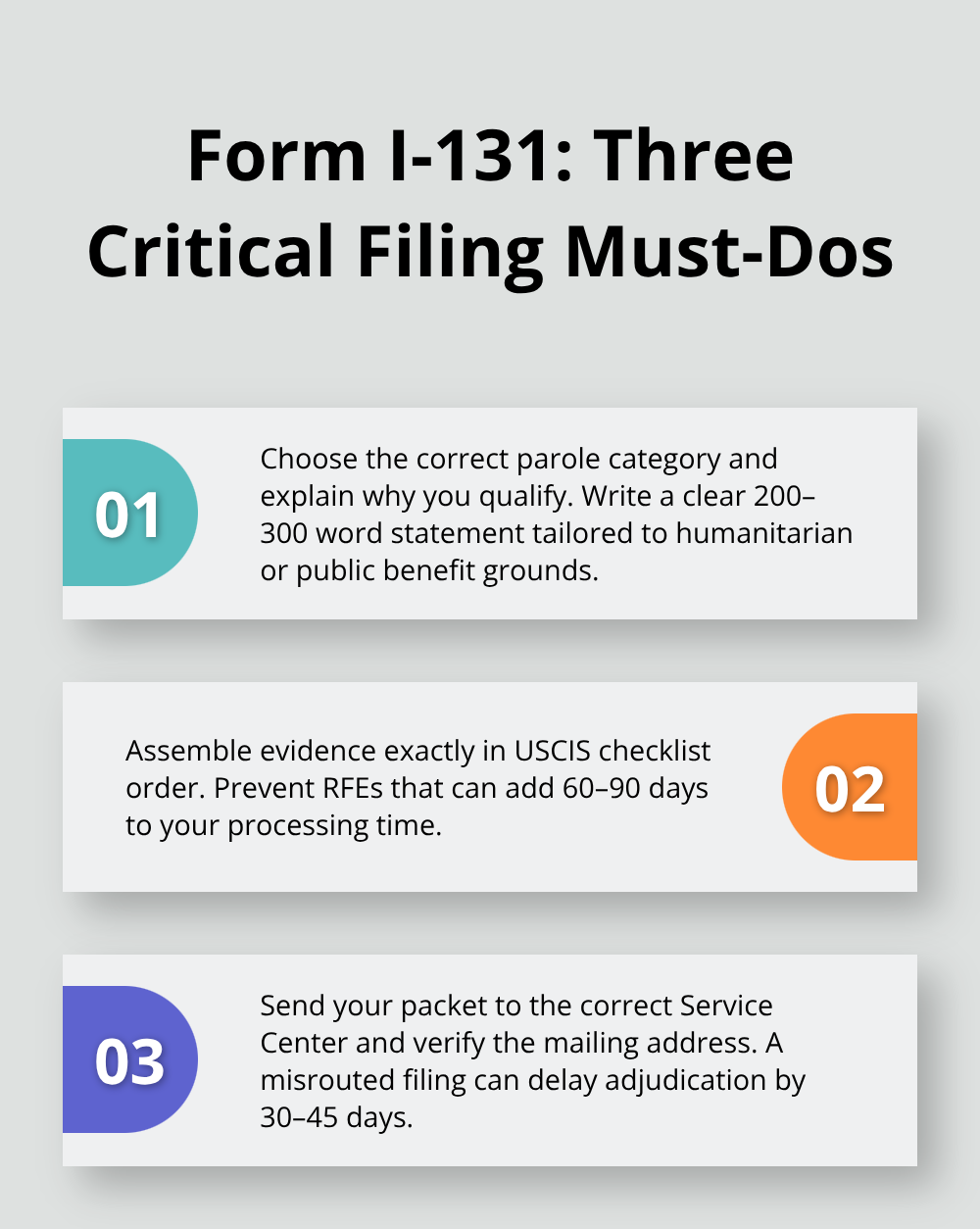
Form I-131 completion requires precision because USCIS rejects incomplete applications immediately, sending them back without review and delaying your case by weeks. Start with your current name exactly as it appears on your passport or travel document, then list any aliases you’ve used in the past ten years-officers cross-reference these against databases, and omissions raise red flags. Section 2 requires you to specify which type of parole you’re requesting; for adjustment of status under INA 212(d)(5), select the box for parole based on humanitarian reasons or significant public benefit, then write a clear statement explaining your specific situation in 200–300 words. Attach your financial sponsorship documentation, medical records, family letters, and immigration history in the exact order listed on the USCIS checklist, because out-of-order submissions trigger requests for evidence that add 60–90 days to processing time. File your application at the USCIS Service Center that covers your state; the USCIS website provides the correct mailing address, and sending it to the wrong location delays adjudication by 30–45 days.
As of October 2025, USCIS charges an immigration parole fee of $1,000 in addition to the standard I-131 filing fee, and this fee is subject to annual adjustments for inflation. USCIS processes parole applications within approximately 120 days under normal circumstances, though current volumes have extended some cases to 210 days according to recent processing statistics. Submit certified copies of your birth certificate, passport, and police clearance certificates, as originals are not returned and photocopies alone cause denials. Online filing through USCIS online accounts became available June 9, 2023, and applicants who file electronically receive status updates faster and can upload additional evidence without mailing supplements. Electronic filing eliminates mail delays and creates a documented timeline that strengthens your case if you later need to appeal a denial, positioning you well for the interview process ahead.
4. What Happens During Your USCIS Interview
Your USCIS interview occurs 60 to 90 days after your Form I-131 receives acceptance for processing, though current backlogs have extended this timeline to 120 days for some applicants. The officer reviews your entire file before meeting with you, so they already know your criminal history, medical condition, financial situation, and family ties. Expect the interview to last 30 to 45 minutes, and the officer will ask you to explain in your own words why you qualify for parole under humanitarian or public benefit grounds. The officer then cross-references your verbal account against documents you submitted, and inconsistencies between your written application and spoken testimony create serious problems. Officers note contradictions and use them as grounds for denial, so consistency matters more than perfection.
Bring original documents plus certified copies of your birth certificate, passport, medical records, and police clearance certificates, because officers request originals to verify authenticity and comparing them against your submissions prevents fraud allegations that would permanently damage your case. Criminal history questioning is direct and unavoidable, so prepare honest answers about every conviction, arrest, and charge on your record regardless of how long ago they occurred. Officers specifically probe whether you have demonstrated genuine rehabilitation through stable employment, community involvement, educational advancement, or family responsibilities since your last offense. Provide employment letters from your current employer stating your hire date, position, and performance rating, as these documents prove stability more convincingly than your testimony alone. Character reference letters from community members, religious leaders, or employers carry significant weight when they address your rehabilitation and current lifestyle rather than simply vouching for your character.
The officer will ask why you deserve parole despite your criminal record, so frame your answer around your current circumstances, family support system, and the specific humanitarian or public benefit reason that justifies your case. Focus on concrete facts that demonstrate changed circumstances since your conviction rather than emotional appeals, and this approach positions you well for a favorable decision. Understanding what officers look for during questioning helps you prepare responses that strengthen your case and move you toward the next critical stage of the parole process.
5. Why Your Application Gets Denied and How to Fight Back
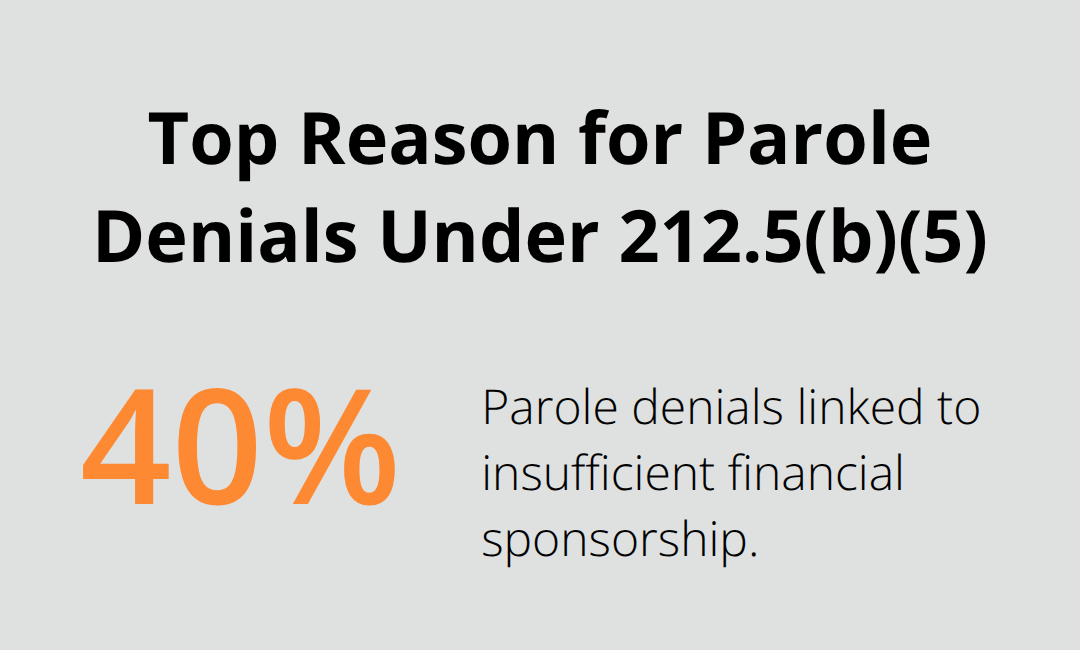
Parole applications under 212.5(b)(5) face denial far more often than approval, with insufficient financial sponsorship accounting for roughly 40% of rejections. A sponsor whose income falls below 125% of the federal poverty line triggers automatic denial, and most applicants fail to include complete tax returns or recent pay stubs that prove income stability.
Criminal history disqualifications represent the second major denial category, particularly when your conviction involves drug trafficking, crimes of violence, or moral turpitude offenses that USCIS considers barriers to parole eligibility. Incomplete documentation ranks third-missing medical records, police clearance certificates, or family sponsorship letters force USCIS to issue requests for evidence, and applicants who fail to respond within the specified timeframe face case closure. Inconsistencies between your written application and interview testimony create credibility problems that officers use as grounds for denial regardless of your underlying circumstances.
When USCIS denies your parole request, you have a deadline to file a Notice of Appeal or Motion to Reconsider using Form I-290B, and missing this deadline permanently forfeits your right to appeal. A Motion to Reconsider succeeds only when you identify a clear legal or factual error in the original decision, which means you must obtain your complete case file before deciding which remedy applies. A Notice of Appeal challenges the decision itself without presenting new evidence, making it weaker than filing a new I-131 with substantially different circumstances or corrected documentation. We at Law Offices of Jeffrey A. Thompson recommend filing a new I-131 rather than appealing when you can demonstrate changed circumstances such as increased sponsor income, additional medical documentation, or completed rehabilitation programs that address the original denial reasons. Legal representation becomes essential once denial occurs, because immigration officers scrutinize appeals more carefully than initial applications, and mistakes in your response letter can permanently damage your case before you move forward with your next steps.
Final Thoughts
Parole 212.5(b)(5) adjustment of status represents a genuine opportunity for individuals with criminal histories to rebuild their lives in the United States, but success requires meticulous preparation and realistic expectations. The pathway demands complete financial documentation, thorough medical evidence when applicable, and honest acknowledgment of your criminal record paired with concrete proof of rehabilitation. Most applicants underestimate how carefully USCIS scrutinizes every detail, and small oversights in documentation or inconsistencies between your written application and interview testimony create unnecessary obstacles.
Your next steps depend entirely on the decision you receive. If USCIS approves your parole, you will receive a Form I-94 documenting your parole period and authorization to remain in the United States temporarily. You can then apply for employment authorization using Form I-765 if your parole purpose permits work, and you should begin planning your long-term immigration strategy immediately since parole is temporary and will eventually expire.
If USCIS denies your application, obtain your complete case file and determine whether filing a new I-131 with substantially changed circumstances makes sense or whether appealing the original decision is more appropriate for your situation. The complexity of parole applications and the high stakes involved make professional guidance invaluable. Contact Law Offices of Jeffrey A. Thompson to discuss your specific circumstances and determine whether parole 212.5(b)(5) adjustment of status applies to your case.
Share this post: