Parent Visa Processing Steps: From Petition To Arrival
April 17, 2026
Bringing your parents to the United States requires navigating a complex immigration process with multiple steps and strict requirements. At Law Offices of Jeffrey A. Thompson, we guide families through parent visa processing steps so you understand exactly what comes next.
This guide walks you through each stage, from filing your initial petition to your parents’ arrival at the airport.
Understanding Parent Visa Requirements and Eligibility
Who Can Sponsor a Parent for a U.S. Visa
To sponsor your parent for permanent residence, you must be a U.S. citizen who is at least 21 years old. This is the hard requirement-green card holders cannot sponsor parents, so if you hold a green card, you’ll need to complete your citizenship application first before moving forward. The relationship itself is straightforward to establish: file Form I-130 and submit a copy of your birth certificate showing both your name and your parent’s name. If your parent was born outside the United States, include your Certificate of Naturalization or U.S. passport to prove your citizenship status.
For parents born out of wedlock, the rules tighten considerably. If you sponsor your father, you must provide evidence of an emotional or financial bond before you turned 21, plus proof that your father was legitimated before his 18th birthday. USCIS takes biological and legal relationships seriously-vague documentation triggers requests for evidence that delay your timeline.
Step-parents and adoptive parents follow different paths. For step-parents, include your birth parent’s marriage certificate to the step-parent and any divorce, death, or annulment decrees ending prior marriages. For adoptive parents, the adoption must have occurred before your 16th birthday, and you’ll need your adoptive parent’s naturalization documents if applicable, plus a certified adoption decree and a statement listing dates you lived together. Name changes-whether from marriage, divorce, or court order-require supporting documents like marriage certificates or court orders. Gather these items upfront rather than scrambling when USCIS requests them.
Income Requirements Are Non-Negotiable
The Affidavit of Support income requirements, Form I-864, proves you can financially support your parent and prevent them from becoming a public charge. USCIS requires your household income to meet or exceed 125 percent of the federal poverty guideline, or 187 percent if you sponsor multiple relatives. You’ll need recent pay stubs, tax returns from the last two years, and employment verification letters. Self-employed individuals must submit profit-and-loss statements, corporate tax returns, and sometimes bank statements.
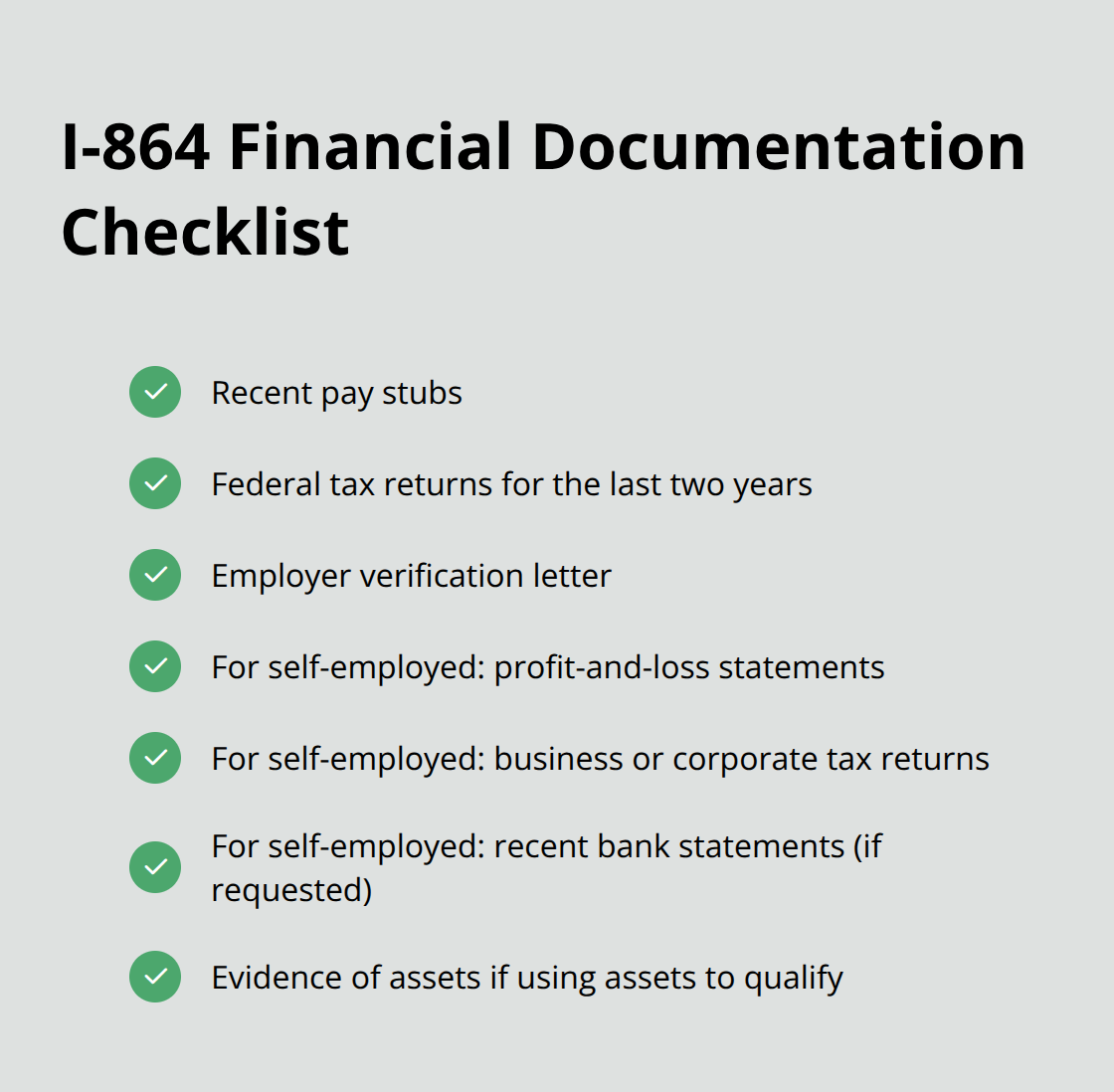
If your income falls short, you can add a joint sponsor-typically a family member or close friend with sufficient income-who also signs the I-864. This is not optional if your income is insufficient; USCIS will deny cases with inadequate financial support. Assets can count toward income under specific rules, but liquid assets must equal five times the difference between your income and the poverty guideline, making this route expensive and rarely worthwhile. Submit complete financial documentation the first time you file because gaps trigger requests for evidence that add weeks to processing.
Medical and Background Checks Happen Later
Your parent will undergo medical examination and background checks, but these don’t occur at the I-130 stage. After USCIS approves your petition, the case moves to the National Visa Center, and your parent receives instructions to schedule a medical exam at an approved civil surgeon. The exam covers vaccinations, communicable diseases, and general health-missing required vaccinations doesn’t automatically disqualify your parent, but they must receive them or obtain a waiver.
Background checks include police certificates from every country where your parent lived for more than six months. Processing timelines for the entire parent visa journey run 15 to 24 months from I-130 filing to arrival, according to USCIS and State Department data, though consular backlogs in high-demand countries can extend this significantly. Administrative processing for background checks can add 6 to 18 months with no guaranteed speed, so don’t assume a quick path if your parent is from a country with known consular delays.
With your eligibility confirmed and financial documentation prepared, the next stage involves gathering the specific forms and supporting documents that USCIS requires for your I-130 petition.
Filing Your I-130 Petition
Organize Your Documentation Package First
Start by organizing Form I-130 and the supporting documents before you submit anything to USCIS. The form itself is straightforward, but the documentation package determines whether USCIS approves your petition quickly or requests additional evidence that delays your timeline by weeks or months. USCIS data shows that incomplete filings trigger requests for evidence in a significant portion of cases, so submitting a thorough package upfront is not optional-it’s the fastest path forward.
Gather your birth certificate showing both your name and your parent’s name, your Certificate of Naturalization or U.S. passport, and any documents proving name changes like marriage certificates or court orders. If your parent is a step-parent, include your birth parent’s marriage certificate to them and any divorce, death, or annulment decrees from prior marriages. For adoptive parents, the adoption must have occurred before your 16th birthday-include the certified adoption decree and a statement listing the dates you lived together. For parents born out of wedlock, gather evidence of emotional or financial bonds before you turned 21, plus proof of legitimation before your father’s 18th birthday.
Organize these documents in the order USCIS requests them rather than in random order; this reduces the chance of missing pages and triggering additional requests.
Choose Your Filing Method and Track Your Case
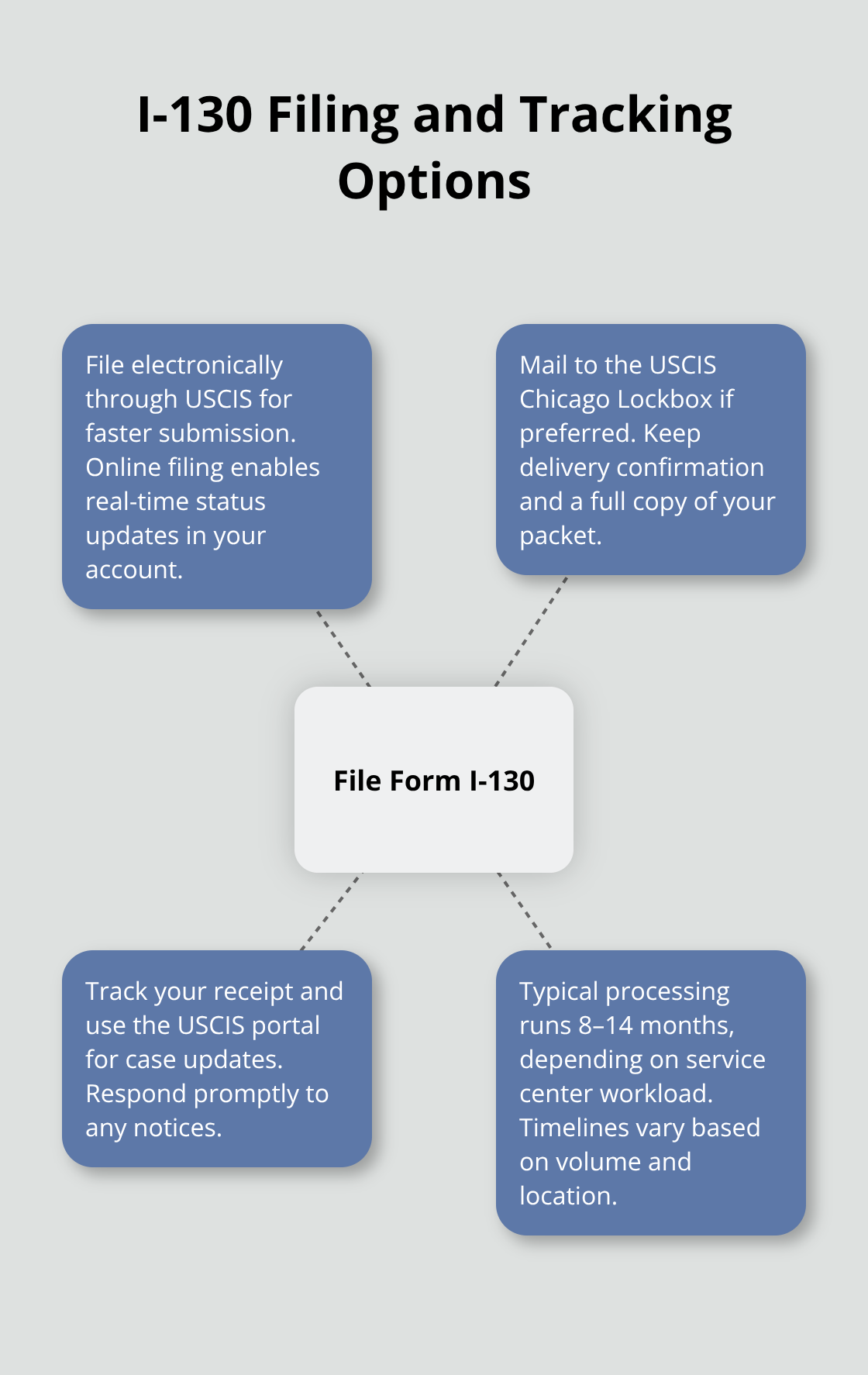
File your I-130 electronically or by mail to the USCIS Chicago Lockbox if you’re filing from within the United States. Electronic filing is faster and allows you to track your case more easily through the USCIS portal. After submission, USCIS typically processes I-130 petitions in 8 to 14 months according to USCIS processing data, though workload at your service center affects the exact timeline.
Understand Your Timeline Options
Once USCIS approves your petition, the case moves to the National Visa Center for the next phase. If your parent is already in the United States, you can file Form I-485 concurrently with your I-130 to adjust status rather than waiting for approval before moving forward-this concurrent filing approach can save several months. If your parent is outside the United States, they will receive instructions to attend visa processing at their local U.S. consulate after your I-130 approval.
Plan for the entire parent visa journey to take months from filing to arrival, though consular backlogs in high-demand countries can extend this considerably. Requests for evidence add 3 to 5 months on average, so submitting complete documentation the first time matters significantly for your timeline. With your I-130 filed and processing underway, your attention shifts to preparing for the next critical phase: the National Visa Center review and the steps that follow approval.
Consular Processing and Interview Preparation
What Happens at the National Visa Center
After USCIS approves your I-130 petition, your parent’s case moves to the National Visa Center for processing. This stage involves submitting financial documents, civil records, and medical exam results before your parent attends a visa interview at the U.S. consulate in their country of residence. The National Visa Center typically holds cases for 2 to 6 months before scheduling an interview, though consular processing backlogs can extend this timeline significantly depending on your parent’s country of birth.
Your parent must complete the online immigrant visa application during this phase and upload scanned copies of required documents. These include birth certificates, marriage certificates, police certificates from every country where they lived for more than six months, and medical examination results from an approved civil surgeon. The medical exam remains valid for two years, so time the exam close to your expected interview date rather than months early.
You must submit Form I-864, the Affidavit of Support, with recent pay stubs, tax returns from the last two years, and employment verification letters proving your income meets 125 percent of the federal poverty guideline. If your parent is from a high-demand country, consular processing backlogs can add months or years to the timeline, so prepare for an extended wait rather than assuming a quick resolution.
Prepare Documents and Arrange Interpretation Services
Your parent should gather original civil documents well before the interview and have certified English translations prepared if documents are in another language. The consulate will request specific documents at the visa interview, typically including the passport, birth certificate, marriage certificate if applicable, police certificates, medical examination results, and the approved I-130 petition notice. Bring multiple copies of each document because consular staff often keep originals for the file.
If your parent speaks limited English, arrange for an interpreter approved by the consulate rather than relying on a family member. Consular officers view family interpreters skeptically and prefer professional interpretation services. Your parent should bring the completed immigrant visa application confirmation page and any correspondence from the National Visa Center or consulate.
Understand Common Interview Questions and Answer Strategies
Common interview questions focus on your relationship, your parent’s background, your financial ability to support them, and whether your parent intends to return to their home country or settle permanently in the United States. The consular officer will ask about your parent’s medical history, criminal history, and immigration intent. Interview preparation determines outcomes, so answer directly and honestly without volunteering unnecessary information.
The consulate either approves the visa, requests additional information, or denies the petition after the interview. If approved, your parent receives the visa and can travel to the United States within six months. Upon arrival at a U.S. port of entry, your parent receives a passport stamp that grants work authorization until the physical green card arrives by mail (typically within two to three weeks).
Final Thoughts
The parent visa processing steps span 15 to 24 months under normal circumstances, though consular backlogs in high-demand countries can extend this timeline considerably. Your I-130 petition typically processes in 8 to 14 months, followed by National Visa Center review lasting 2 to 6 months, and then the consular interview and visa issuance. If your parent is already in the United States, concurrent filing of Form I-485 with your I-130 can compress this timeline by several months.
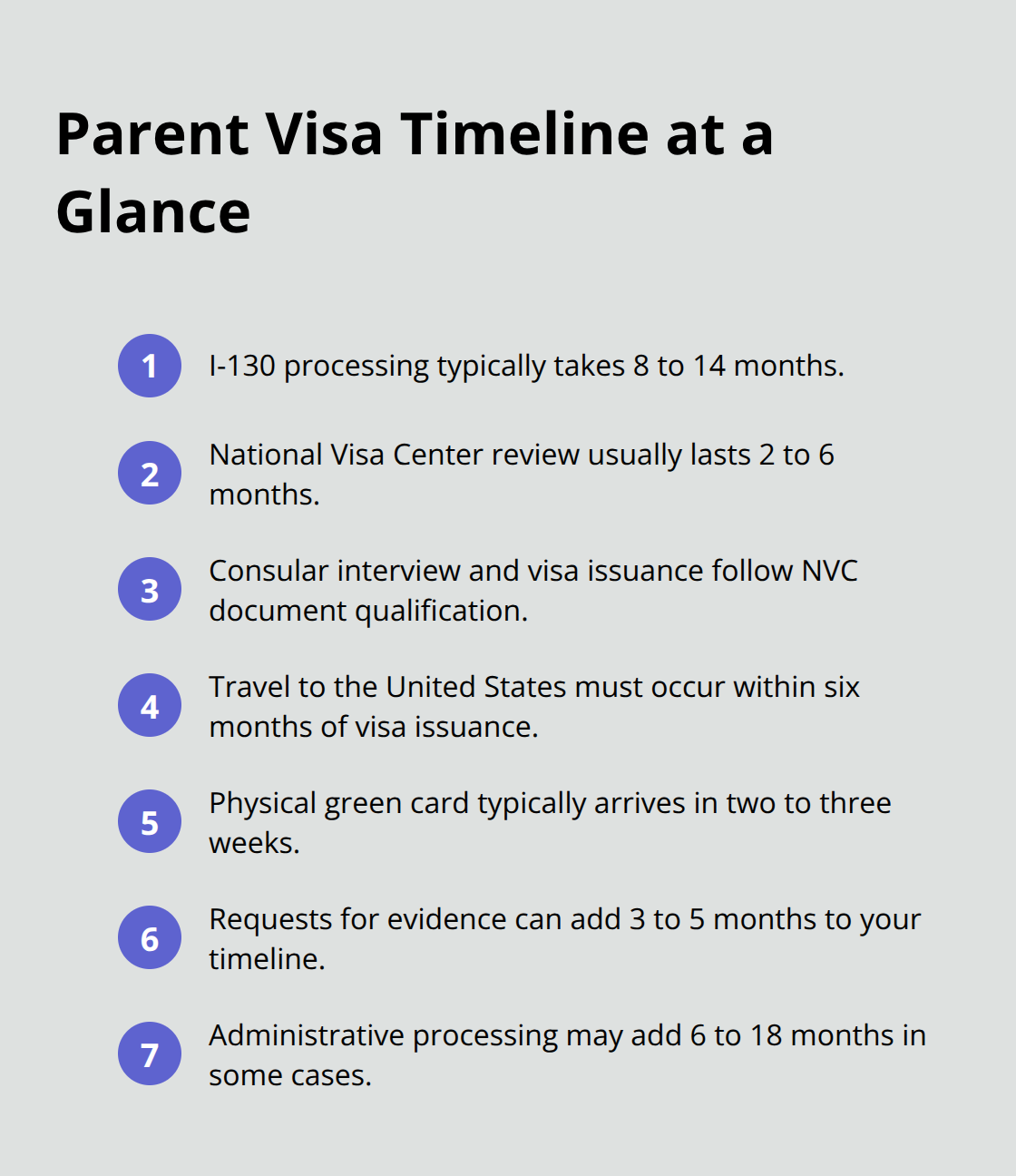
Incomplete documentation and delayed responses to government requests cause the primary timeline extensions, so you must submit thorough paperwork initially and respond promptly to any requests for evidence. After your parent’s visa approval, they can travel to the United States within six months and become a lawful permanent resident upon arrival. The physical green card arrives within two to three weeks, and your parent can then apply for a Social Security number and obtain a state identification card.
We at Law Offices of Jeffrey A. Thompson guide families through parent visa processing steps and immigration matters, helping you navigate the process and overcome legal hurdles so your parents can achieve their goal of permanent residence in the United States.
Share this post: