How to Complete Your K1 Adjustment of Status Checklist
March 6, 2026
Getting married to a foreign national requires navigating complex immigration rules. The K1 fiancé visa allows you to bring your spouse to the United States, but the adjustment of status process demands careful attention to detail.
We at Law Offices of Jeffrey A. Thompson have helped countless couples complete their adjustment of status checklist for K1 visas. This guide walks you through every requirement so you can avoid costly delays and rejections.
What Happens After Your K1 Visa Is Approved
A K1 fiancé visa grants you permission to enter the United States specifically to marry your U.S. citizen partner. Once approved, the visa remains valid for six months from issuance and allows a single entry into the country. You must marry within 90 days of arriving in the United States to maintain your immigration status and become eligible for adjustment of status. This 90-day window is strict and non-negotiable. If you marry after this period, you lose your K1 status and cannot adjust to permanent residency through this pathway.
How K1 Differs From Other Family-Based Routes
The K1 differs fundamentally from other family-based immigration pathways because it requires the marriage to occur inside the United States rather than abroad. Employment-based green cards demand years of processing and require an approved job offer plus labor certification. Spousal visas obtained through consular processing abroad allow you to enter as a permanent resident immediately, but they involve a longer international application process. The K1 approach moves faster for couples who want to marry quickly and adjust status without waiting for visa interviews at a U.S. embassy or consulate.
Your 90-Day Timeline Starts at Port of Entry
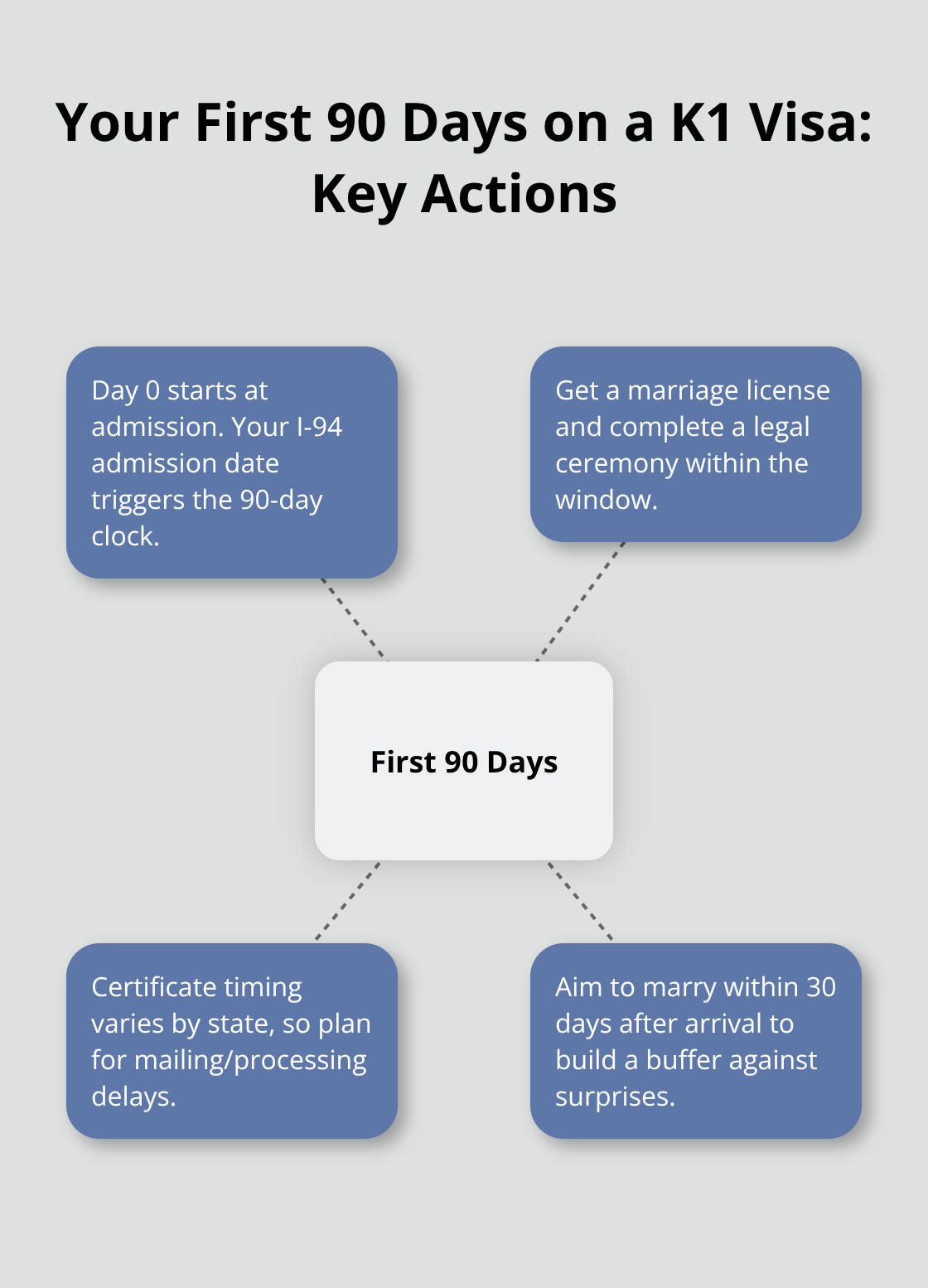
Your countdown begins the moment you arrive at a U.S. port of entry with your K1 visa. USCIS and CBP officials mark your admission date on your I-94 record, and this date triggers the 90-day window. You must obtain a marriage license, complete a legal ceremony, and have your marriage certificate issued within that period. Some states issue marriage certificates immediately after the ceremony, while others take weeks to process and mail them. Scheduling your marriage as early as possible after arrival (ideally within 30 days) protects you against unexpected delays that could push you past the deadline.
Filing Form I-485 After Marriage
Once married, you file Form I-485 to adjust your status. No official deadline exists to file I-485 after marriage, but delaying increases the risk of complications. Filing within 60 days of marriage demonstrates clear intent and helps establish the bona fide nature of your relationship. The adjustment process typically takes 8 to 12 months from filing to approval, though complex cases may take longer. During this waiting period, you remain in K1 status unless you obtain employment authorization through Form I-765, which you can file concurrently with I-485.
What Documents You Need to Gather Now
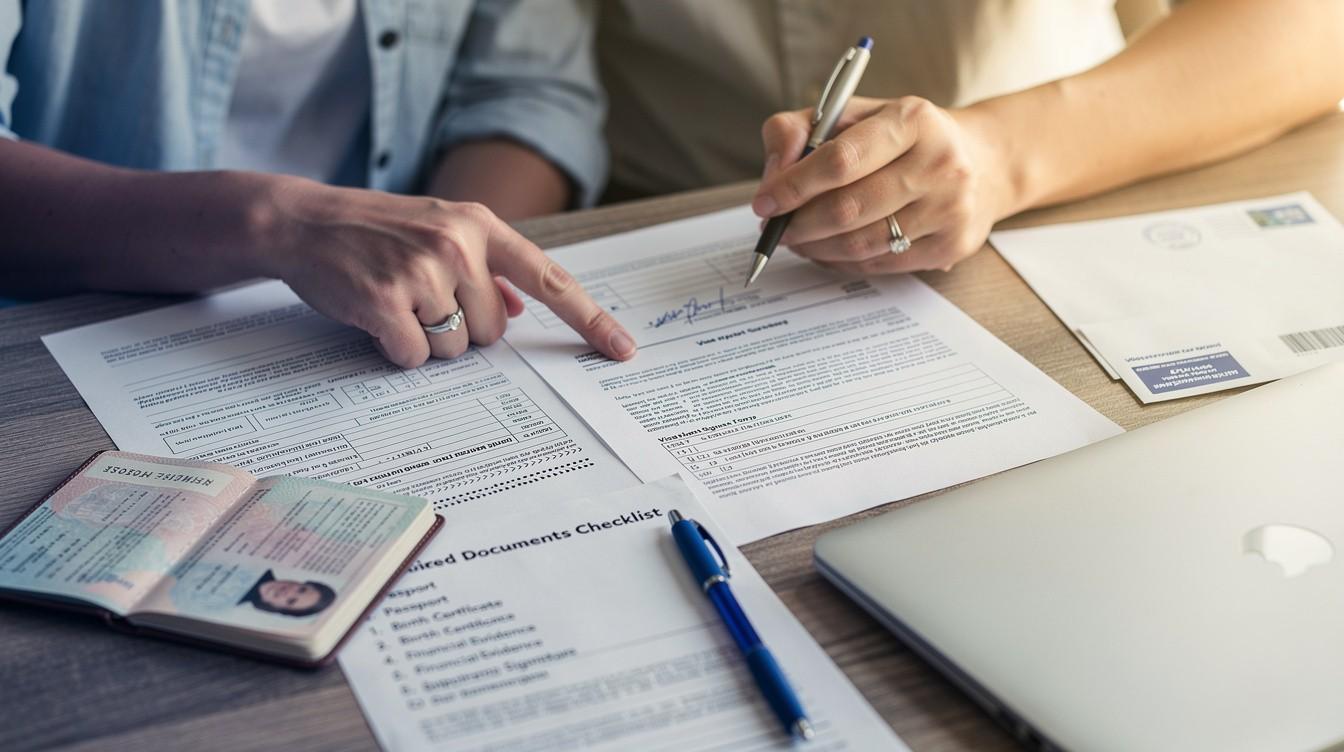
The adjustment checklist requires specific documents that you should start collecting immediately after arrival. Your marriage certificate, birth certificate, and passport pages form the foundation of your application. You also need police clearances from your home country and any nation where you lived for six months or more since age 16. Medical examination results (Form I-693) and vaccination records must be current and submitted with your I-485 package. Financial documentation, including your sponsor’s tax returns and income verification, demonstrates the ability to support you financially. These documents (gathered now, rather than rushed later) prevent delays when you file your adjustment application.
What Documents You Actually Need to Submit
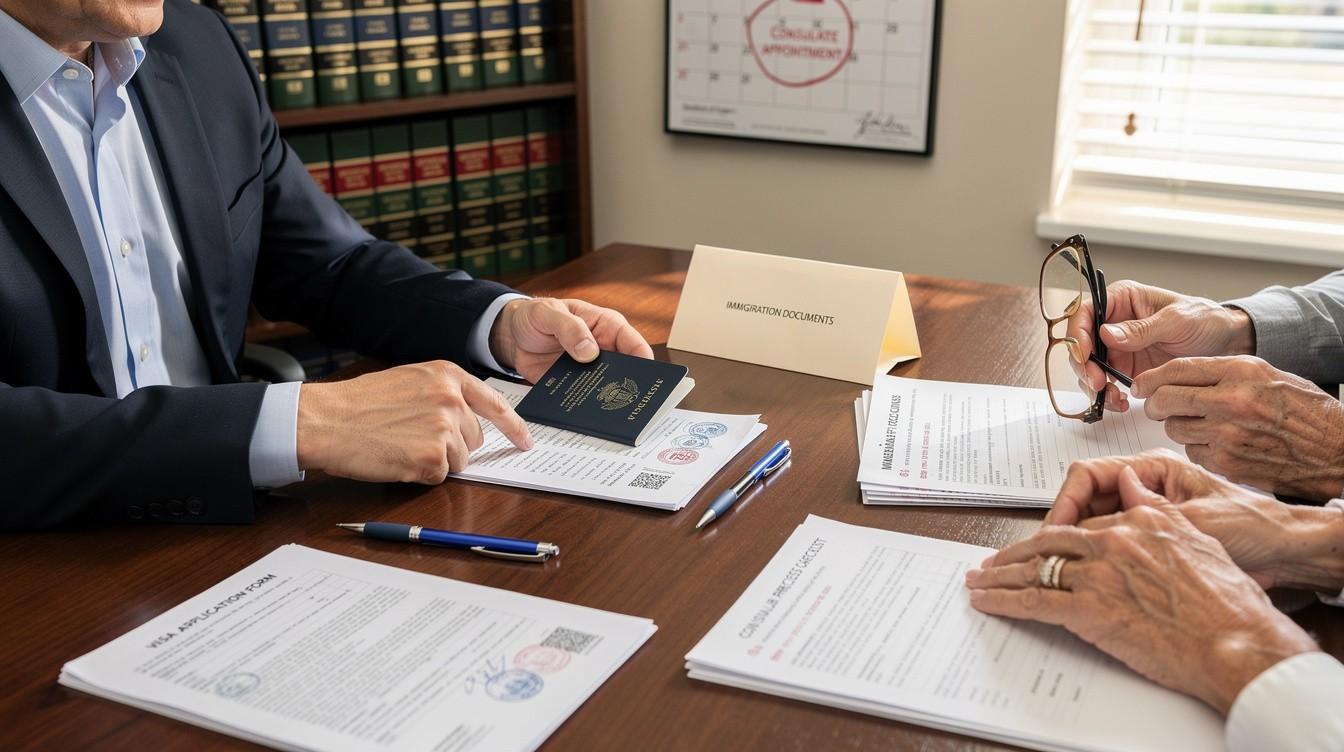
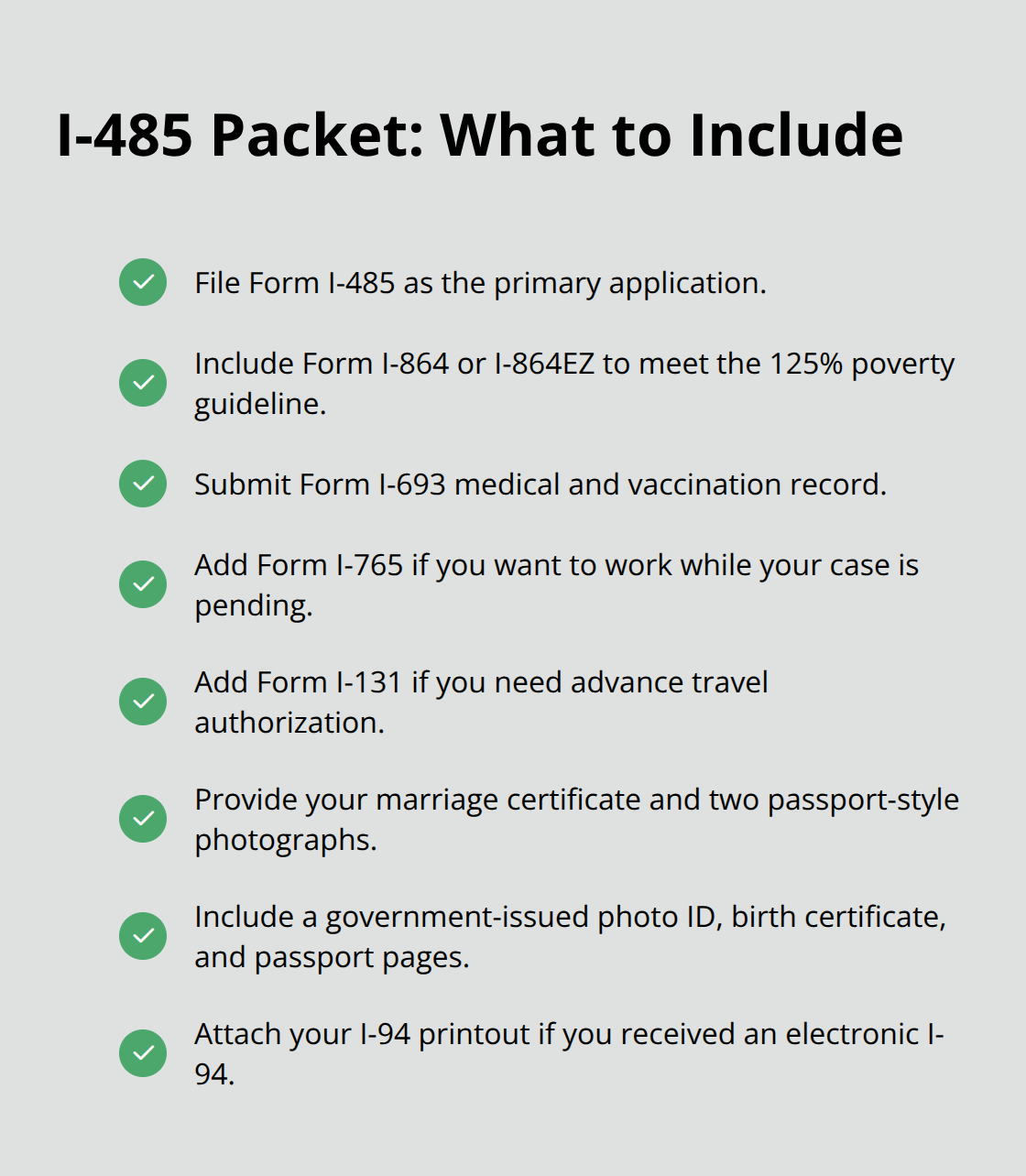
Submitting the wrong forms or incomplete documentation triggers a Request for Evidence (RFE) from USCIS, which delays your case by months. This problem occurs constantly and remains entirely preventable. You need Form I-485 (the main adjustment application), Form I-864 or I-864EZ (Affidavit of Support demonstrating your sponsor can financially support you at 125% of the federal poverty guideline), and Form I-693 (your medical examination and vaccination record). According to USCIS guidance, the I-693 completed and signed on or after November 1, 2023 does not expire and can be submitted with your I-485 package or presented later at your interview. Include Form I-765 if you want to work while your application is pending, and Form I-131 if you need travel authorization. Many couples file I-765 and I-131 concurrently with I-485, but note that as of April 1, 2024, separate fees apply when filing I-765 and I-131 alongside your main application. Your marriage certificate, two passport-style photographs, a government-issued photo ID, your birth certificate, relevant passport pages, and a copy of your I-94 (printed from the CBP website if you received an electronic I-94) are non-negotiable.
If you have criminal charges, arrests, or convictions regardless of outcome, you must submit certified police and court records. Any documents in a foreign language require a full English translation with certification from the translator confirming accuracy and completeness.
Medical Examination Timing and Vaccination Requirements
Schedule your medical examination with a USCIS-designated panel physician as soon as you marry, not weeks before filing. The examination includes required vaccinations, and the completed I-693 form proves your health admissibility. USCIS requires specific vaccinations including measles, mumps, rubella, polio, tetanus, pertussis, and others depending on your age and prior vaccination history. If you have a medical condition that prevents you from receiving certain vaccines, the panel physician documents this, and you can still proceed with your adjustment. Timing matters: obtain your I-693 early so you have it ready when you file I-485, which eliminates a common reason for RFEs.
Financial Documentation and Sponsor Requirements
Your sponsor’s income verification (tax returns for the past two years, W-2s, and pay stubs) must accompany Form I-864 to demonstrate financial capacity. The poverty guideline threshold changes annually, so verify the current year’s requirement before your sponsor completes the affidavit. If your sponsor’s income falls short, a joint sponsor with qualifying income can co-sign the I-864, though this adds complexity and requires additional documentation from that second sponsor.
Police Clearances and Civil Documents
Police certificates from your home country and any nation where you lived six months or longer since age 16 are mandatory. Obtaining these takes time-some countries require weeks or months to issue them, and many demand certified translations into English. Start this process immediately after your K1 approval, not after you arrive in the United States. Your birth certificate must be an official certified copy, not a photocopy or informal document. Marriage licenses vary by state; some states issue the license before the ceremony and the certificate after, while others combine them. Obtain an official certified copy of your marriage certificate from the vital records office in the county where you married, and request multiple copies because you will need them for other applications beyond USCIS (Social Security, state ID, employment verification).
Organization and Submission Best Practices
Do not submit original documents unless USCIS specifically requests them in writing; submit certified copies instead. If USCIS requests originals for verification, they will return them after review. Organize your entire I-485 package chronologically and clearly label each document so the adjudicator can follow your application without confusion. A disorganized packet invites RFEs and frustration; a well-organized one demonstrates seriousness and reduces processing time. With your documents prepared and organized, you are ready to address the final critical step before filing: understanding what happens during the interview process and how to present your case effectively to USCIS.
Common Mistakes That Sink K1 Adjustment Applications
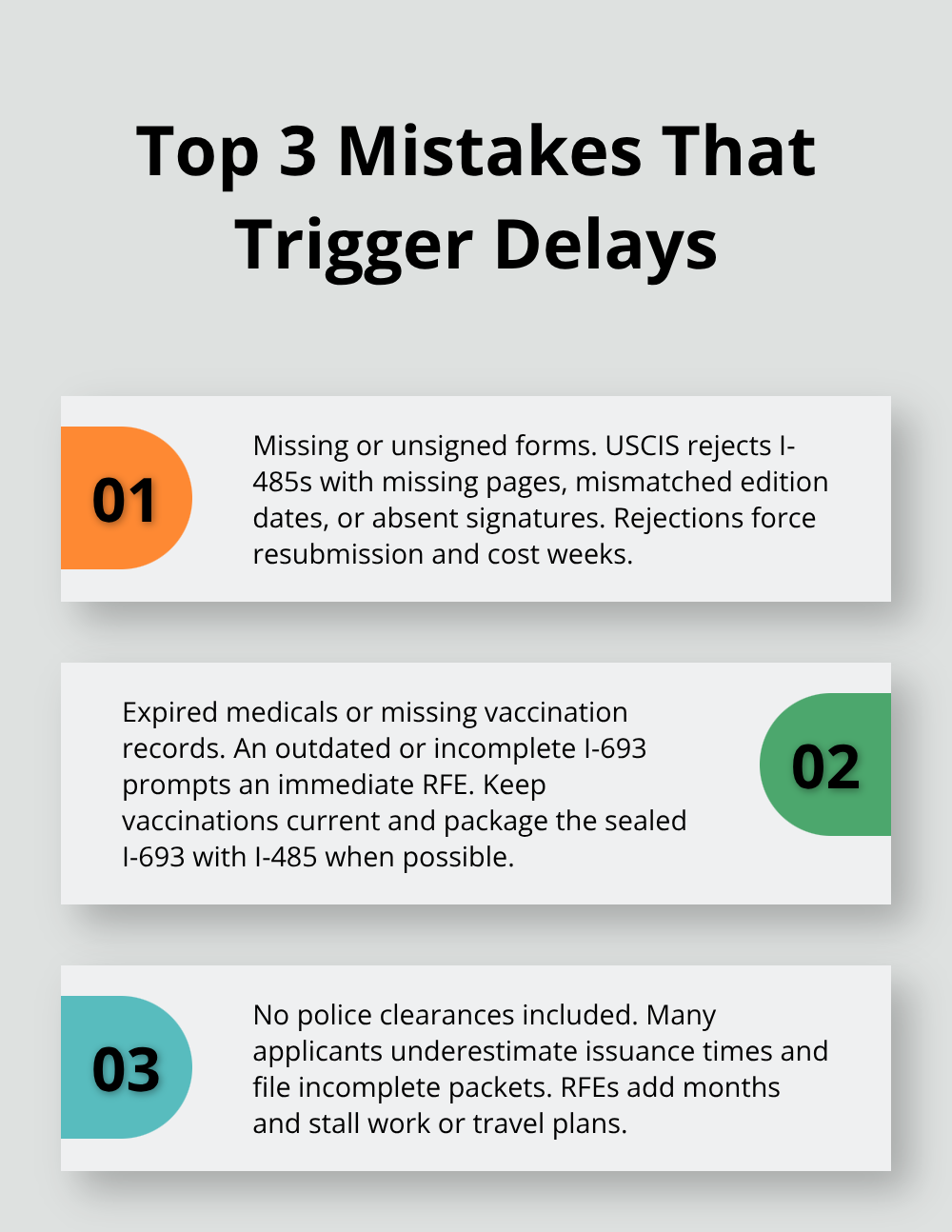
Most K1 adjustment rejections stem from three preventable errors that couples make repeatedly. USCIS receives Form I-485 packages with missing pages, unsigned forms, or forms completed in the wrong edition. USCIS rejects unsigned I-485 applications outright-this happens constantly and delays your case by weeks while you resubmit. Couples also submit expired medical examinations or fail to include vaccination records entirely, forcing USCIS to issue a Request for Evidence that extends your timeline by 60 to 90 days. Third, applicants file their I-485 without obtaining police clearances from their home country, underestimating how long these documents take to acquire. Police certificates from some countries require three to six months to obtain, and submitting an incomplete application without them triggers an RFE rather than allowing USCIS to process your case immediately. Each RFE adds months to your adjustment timeline, and during that waiting period you remain in K1 status unable to work (unless you file Form I-765 separately) or travel without losing your case.
Verify Form Edition Dates and Sign Every Page
USCIS rejects I-485 packages when the form edition date differs across pages or when pages are missing entirely. The edition date appears at the bottom of each USCIS form, and every page in your packet must show the same edition date. Download the current form directly from USCIS.gov, not from third-party websites that may host outdated versions. Sign your I-485 in black or blue ink-electronic signatures are acceptable, but the form must be signed. Many applicants skip this step thinking USCIS will request their signature later; instead, your unsigned form gets rejected and returned. When you resubmit, you lose weeks of processing time. Include all required forms with your I-485: Form I-864 or I-864EZ for financial support, Form I-693 for medical examination, Form I-765 for work authorization if you want employment while pending, and Form I-131 for travel documents if needed. Filing I-765 and I-131 with your I-485 incurs separate fees, so budget accordingly.
Obtain Police Clearances Before Arrival in the United States
Police certificates from your home country and any nation where you lived six months or longer since age 16 are non-negotiable, yet couples frequently postpone obtaining them until after they file I-485. This creates a critical problem: you cannot file a complete I-485 without these documents, and submitting an incomplete package triggers an RFE that delays your case significantly. Start requesting police clearances immediately after your K1 visa is approved, not after you arrive in the United States. Some countries issue police certificates within weeks; others take months and require you to submit requests through their embassy or consulate in the United States. Applicants from certain countries must apply through their country’s consulate in Washington, D.C., or another U.S. location, which adds processing time. Request multiple certified copies of your marriage certificate from the vital records office in the county where you married-you will need certified originals for USCIS, Social Security, state identification, and employment verification. Do not wait until you file I-485 to gather these documents; have them ready before you marry so you can submit a complete, organized package immediately after your 90-day marriage window closes.
Schedule Medical Exams Early and Verify Vaccination Status
Schedule your medical examination with a USCIS-designated panel physician as soon as you marry, not weeks before filing. The examination includes required vaccinations, and the completed I-693 form proves your health admissibility. USCIS requires specific vaccinations including measles, mumps, rubella, polio, tetanus, pertussis, and others depending on your age and prior vaccination history. If you have a medical condition that prevents you from receiving certain vaccines, the panel physician documents this, and you can still proceed with your adjustment. Obtain your I-693 early so you have it ready when you file I-485, which eliminates a common reason for RFEs.
Prepare Financial Documentation and Sponsor Requirements
Your sponsor’s income verification (tax returns for the past two years, W-2s, and pay stubs) must accompany Form I-864 to demonstrate financial capacity. The poverty guideline threshold changes annually, so verify the current year’s requirement before your sponsor completes the affidavit. If your sponsor’s income falls short, a joint sponsor with qualifying income can co-sign the I-864, though this adds complexity and requires additional documentation from that second sponsor. Organize your entire I-485 package chronologically and clearly label each document so the adjudicator can follow your application without confusion. A disorganized packet invites RFEs and frustration; a well-organized one demonstrates seriousness and reduces processing time.
Final Thoughts
K1 adjustment of status requires precision, organization, and strict adherence to deadlines that USCIS will not extend. Your adjustment of status checklist for K1 visas must include every form, document, and certification outlined in this guide, because missing even one item triggers delays that stretch your timeline from months into years. The 90-day marriage requirement, the medical examination, police clearances from your home country, financial documentation, and properly completed forms form the foundation of a successful application. Couples who gather these materials early, organize them clearly, and submit a complete package avoid the RFEs that plague incomplete applications.
Immigration law contains traps that catch even careful applicants, and USCIS interprets regulations strictly with little patience for disorganization or missing pages. An immigration attorney identifies problems before you submit your application, catches form errors that would trigger rejection, and ensures your evidence of a bona fide marriage presents your relationship convincingly to USCIS. After you submit your I-485 package, monitor your case status through USCIS online tools and respond immediately to any requests for evidence.
Once USCIS approves your application, you become a lawful permanent resident and can apply for a Social Security Number, state identification, and employment authorization. If your marriage is less than two years old at approval, your green card carries conditional status, and you must file Form I-751 to remove conditions before your card expires. Contact Law Offices of Jeffrey A. Thompson to discuss your K1 adjustment case and ensure your application succeeds.
Share this post: