
How Long Does Adjustment of Status Take for K1 Visa?
November 14, 2025
The adjustment of status timeline K1 visa holders face typically ranges from 8 to 33 months, depending on your USCIS service center and case complexity.
At Law Offices of Jeffrey A. Thompson, we see clients frustrated by unpredictable processing delays that can extend well beyond initial estimates. Understanding the specific factors that influence your timeline helps you prepare for potential setbacks and take proactive steps to avoid common pitfalls.
Current K1 Visa Adjustment of Status Timeline
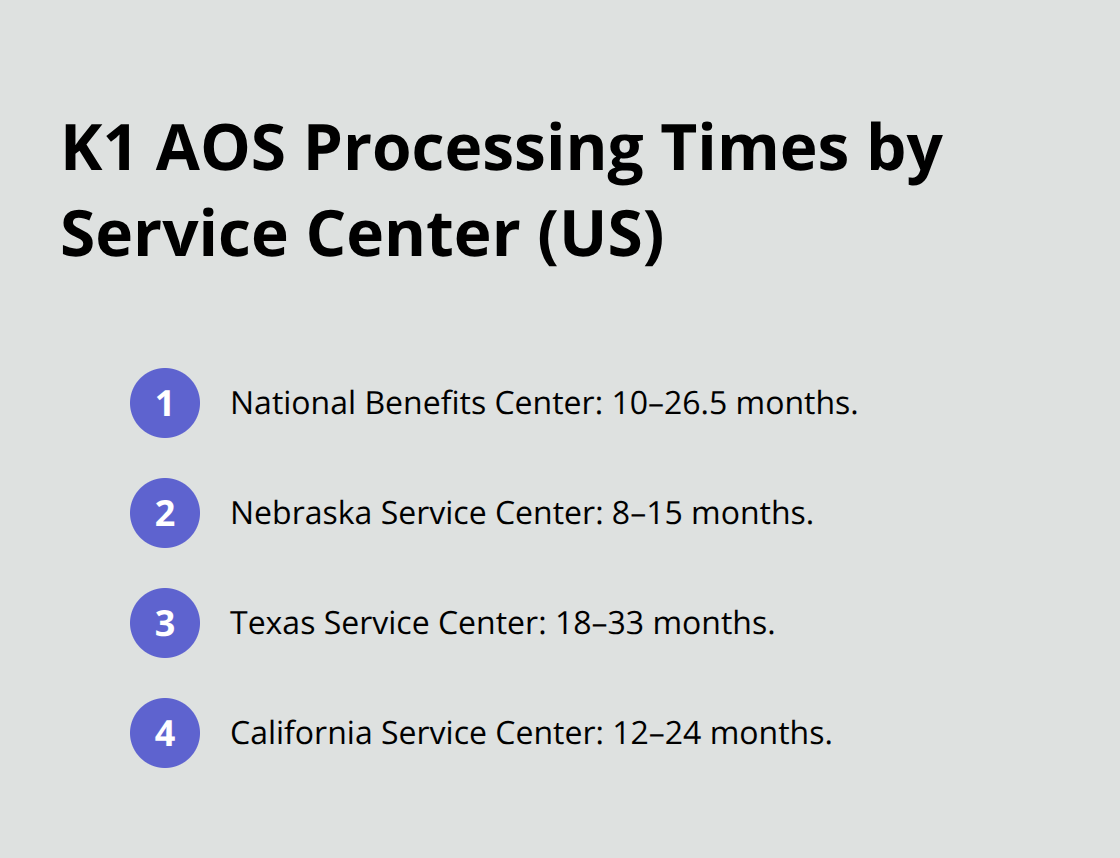
USCIS processing times for K1 adjustment of status applications vary dramatically between service centers, with the National Benefits Center handling most cases in 10 to 26.5 months for family-based applications. The Nebraska Service Center processes cases faster at around 8 to 15 months, while the Texas Service Center extends timelines to 18 to 33 months. Significant regional differences can add over a year to your wait time depending on where USCIS assigns your case.
USCIS Processing Times by Service Center
The National Benefits Center processes the majority of K1 adjustment cases and maintains processing times between 10 to 26.5 months. Nebraska Service Center offers the fastest processing at 8 to 15 months, making it the preferred destination for applicants. Texas Service Center consistently shows the longest delays, with cases taking 18 to 33 months to complete. California Service Center falls in the middle range at 12 to 24 months for most applications.
Factors That Affect Processing Speed
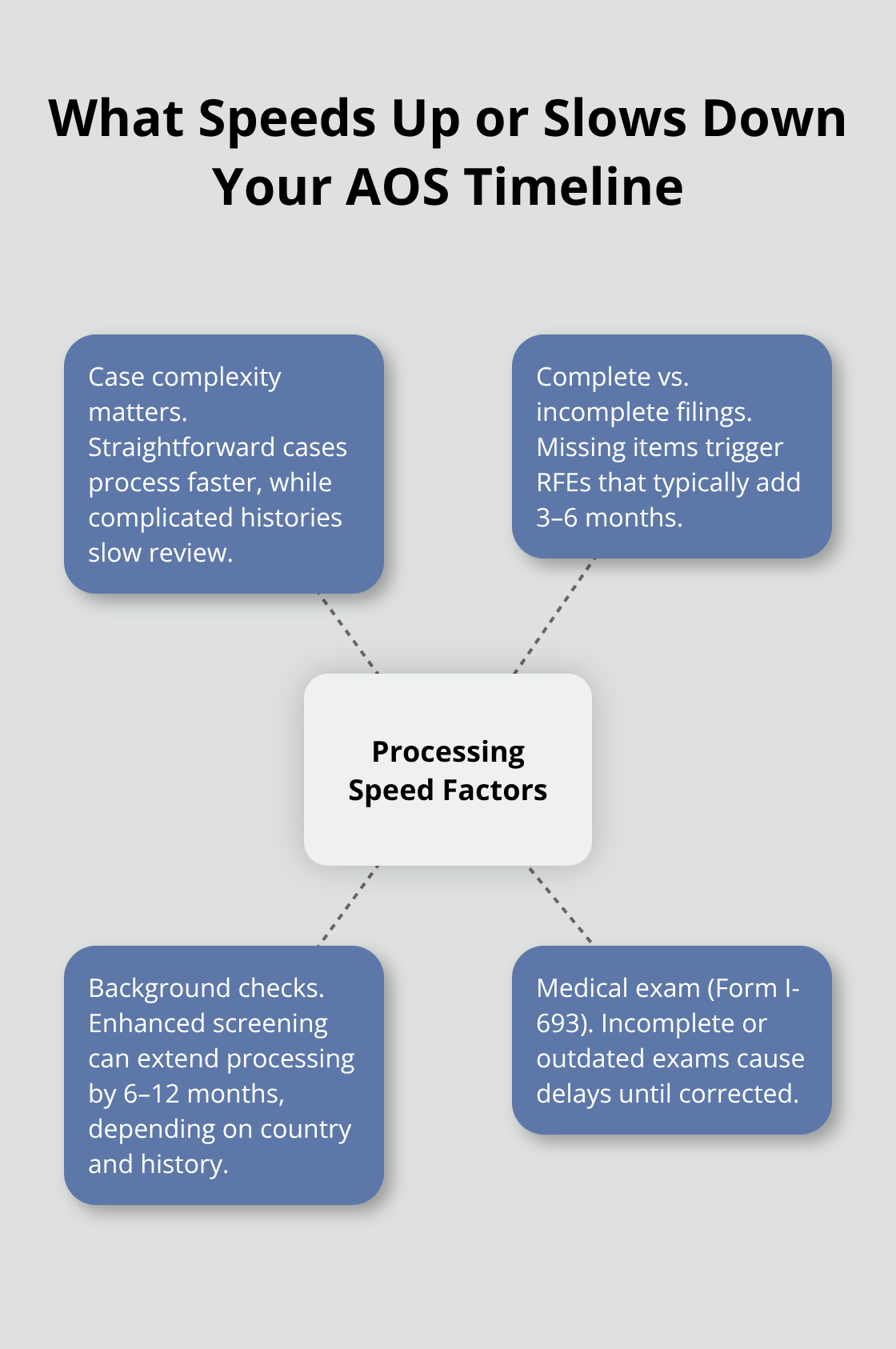
Your case complexity directly impacts processing duration. Complete applications with all required documents move faster through the system, while missing paperwork triggers Requests for Evidence (RFEs) that add 3 to 6 months to your timeline. Background check complications for applicants from certain countries extend processing by 6 to 12 months. Medical examination delays also slow cases when Form I-693 submissions are incomplete or outdated beyond the required timeframe.
Recent Changes in Processing Times
USCIS processing times have increased substantially in 2025, with pending applications creating significant backlogs across all immigration services. K1 visa processing now averages 10 to 16 months before you can file for adjustment of status. Form I-485 applications face additional delays due to USCIS staffing shortages and increased application volumes. The total timeline from initial K1 petition to green card approval now reaches 24 to 30 months for most applicants (compared to 18 to 24 months in previous years).
Understanding these timelines helps you prepare for the specific steps in the adjustment process, which we’ll examine next to show you exactly what happens after you file your application.
Steps in the Adjustment of Status Process
Form I-485 requires your marriage certificate, Form I-797 approval notice from your K1 petition, two passport-style photographs, and government-issued identification within 90 days of entry to the United States. File Form I-765 for work authorization and Form I-131 for travel documents simultaneously to save processing time and fees. USCIS mandates a medical examination with Form I-693, which a USCIS-designated civil surgeon must complete and seal in an envelope. Missing documents trigger Requests for Evidence that add 3 to 6 months to your case, so verify every requirement before you mail your application package.
Filing Form I-485 and Required Documents
USCIS processes your Form I-485 application once you submit all required supporting documents in a complete package. Your marriage certificate must show the ceremony occurred within 90 days of your K1 entry date. Include your original Form I-797 approval notice from your K1 petition as proof of your lawful entry status. Submit two identical passport-style photographs taken within 30 days of application submission (following USCIS photo specifications). Government-issued identification such as your passport or driver’s license establishes your identity for processing purposes.
Biometrics Appointment Scheduling
USCIS schedules your biometrics appointment 4 to 8 weeks after they receive your Form I-485 application. The appointment notice arrives by mail and requires you to call USCIS directly for any rescheduling needs. Your fingerprints and photographs are collected at an Application Support Center in a process that takes approximately 30 minutes. Background checks begin immediately after biometrics collection and take 2 to 12 months depending on your country of origin and previous immigration history.
Interview Process and Decision
USCIS schedules most K1 adjustment cases for in-person interviews at your local field office 6 to 18 months after you file. The interview examines your relationship authenticity through questions about daily life together, shared finances, and future plans. USCIS officers approve approximately 86% of K1 adjustment cases at the interview, with decisions issued the same day or within 2 weeks. Denials typically stem from marriage fraud concerns or inadmissibility issues that applicants failed to address properly beforehand.
Even with proper preparation, several common issues can still delay your case significantly, which makes understanding potential obstacles essential for timeline management.
Common Delays and How to Avoid Them
USCIS faces a historic 11.3 million case backlog due to missing documents, which adds 4 to 8 months to your timeline. Applicants most frequently forget birth certificates with certified translations, police clearances from countries where they lived for more than 6 months after age 16, and properly completed affidavits of support. USCIS rejects applications outright when core documents like marriage certificates or Form I-797 approval notices are absent, which forces you to restart the entire process and lose months of processing time.
Missing or Incomplete Documentation
Form I-693 medical examinations expire after 60 days if you don’t submit them with your initial application, which requires costly repeat examinations that delay cases by 2 to 4 months. USCIS designated civil surgeons must seal the completed form in an envelope, and you invalidate the entire examination if you open this envelope. Financial documentation for Form I-864 must show income levels at 125% above federal poverty guidelines, with tax transcripts directly from the IRS rather than copies of tax returns. Country-specific police certificates require apostille certification in many cases, and you need 3 to 8 months to obtain these documents from foreign governments (depending on the country).
Background Check Complications
Administrative processing for applicants from certain countries extends background checks, with most processing completed within 60 days of the visa interview based on State Department data. Name variations or common names trigger additional FBI database searches that add 3 to 6 months to processing times. Previous immigration violations, even minor overstays, require additional security clearances that USCIS cannot expedite regardless of your circumstances. Criminal history disclosure triggers enhanced background reviews, and you face automatic denials for fraud if you fail to disclose any arrests or charges.
Medical Examination Issues
USCIS-designated civil surgeons vary significantly in appointment availability, with some scheduling 6 to 8 weeks out during peak filing periods. Vaccination records from foreign countries require certified translations and verification, which adds weeks to the medical process when documents are incomplete. Class A medical conditions like tuberculosis require treatment completion before USCIS approval, which potentially adds 6 to 12 months to your timeline (depending on treatment protocols). Minor errors can cause delays or denials, making careful preparation essential for avoiding setbacks.
Final Thoughts
The adjustment of status timeline K1 visa holders experience ranges from 8 to 33 months, with most cases completing within 18 to 24 months when applicants prepare properly. Regional processing differences create significant variations, making the Nebraska Service Center your best option at 8 to 15 months versus Texas Service Center’s 18 to 33 months. Complete documentation prevents the most common delays that extend cases by 4 to 8 months.

Submit Form I-485 with all required documents, including your marriage certificate, Form I-797 approval notice, and sealed Form I-693 medical examination. File Forms I-765 and I-131 simultaneously to maximize efficiency and minimize processing delays. Background check complications and missing documentation account for most timeline extensions beyond USCIS estimates (respond immediately to any Requests for Evidence, as delays in responses add months to your case processing time).
We at Law Offices of Jeffrey A. Thompson help clients navigate complex immigration processes, from initial paperwork preparation to overcoming legal hurdles that delay cases. Professional guidance becomes essential when you face RFEs, interview preparation, or inadmissibility concerns that threaten your application success. Our team understands the specific challenges K1 visa holders encounter during the adjustment process.
Share this post: