
How to Adjust Status After Visa Overstay
February 9, 2026
Overstaying a visa puts your immigration status in jeopardy and can derail your plans to remain in the United States. The consequences are serious, but options exist for those who find themselves in this situation.
At Law Offices of Jeffrey A. Thompson, we help clients navigate visa overstay adjustment of status and explore pathways forward. Acting quickly and understanding your legal options can make the difference between staying and facing removal.
Understanding Visa Overstay and How It Affects Your Future
What Constitutes a Visa Overstay
A visa overstay occurs when you remain in the United States past the date listed on your I-94 arrival/departure record, not your visa expiration date. Many people confuse these two dates-your visa in your passport can be valid for ten years, but your I-94 might authorize you to stay for only six months. The Department of Homeland Security reports that more than 510,000 people are suspected of overstaying their visas in the United States, making this one of the most common immigration violations. Once you exceed your authorized stay, you accumulate unlawful presence day by day. Check your I-94 on the U.S. Customs and Border Protection website using your passport number if you’re unsure of your exact authorized departure date. For students on nonimmigrant visas, Duration of Status applies-you can stay for the length of your program, but overstays begin when your status ends or you violate program terms.
How Reentry Bars Block Your Path Forward
Unlawful presence triggers reentry bars that fundamentally restrict your immigration options. If you accumulated between 180 days and less than one year of unlawful presence, a three-year bar applies when you leave the United States. Exceed one year of unlawful presence, and you face a ten-year bar to readmission. These bars activate only upon departure, which is critical to understand.
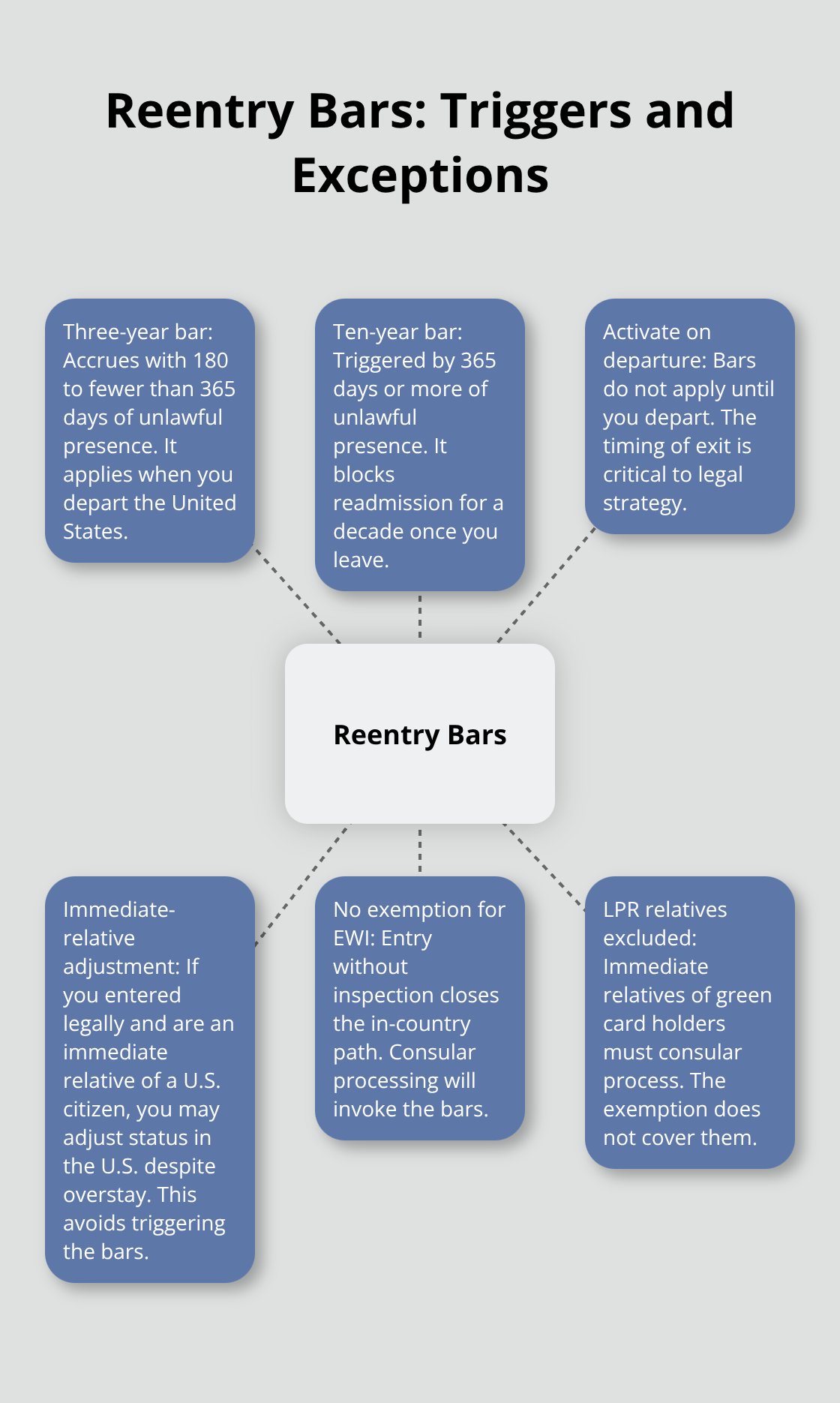
If you remain in the country and qualify as an immediate relative of a U.S. citizen (spouse, unmarried child under 21, or parent of a U.S. citizen age 21 or older), you may adjust status within the United States without triggering these bars. This exemption applies even if you worked without authorization or overstayed, provided you entered legally at a port of entry. However, if you entered without inspection, this pathway closes entirely. Immediate relatives of green card holders cannot use this exemption and must pursue consular processing abroad, where the bars apply.
Your Entry Method Determines Your Options
How you initially entered the United States determines nearly every option available to you. If you were admitted or paroled at a port of entry, you retain eligibility for adjustment of status despite overstay, unlawful presence, or unauthorized employment if you qualify as an immediate relative of a U.S. citizen. If you entered without inspection or crossed the border illegally, consular processing becomes your only path, and you will face the three-year or ten-year bar depending on how long you remained unlawfully present. This distinction matters more than any other factor in your case. Document your entry method thoroughly by locating your original I-94, passport stamps, or arrival records from Customs and Border Protection. Some categories of visa holders face additional complications. For example, J-1 exchange visitors who violate the two-year foreign residence requirement after their program ends may require an extraordinary circumstances waiver before they can adjust or obtain certain visas. The consequences of overstay compound when combined with other violations like unauthorized employment, which can trigger additional grounds of inadmissibility requiring separate waivers.
Understanding these rules sets the foundation for exploring your adjustment options, which we examine in the next section.
Your Path Forward: Adjustment vs. Consular Processing
In-Country Adjustment for Immediate Relatives
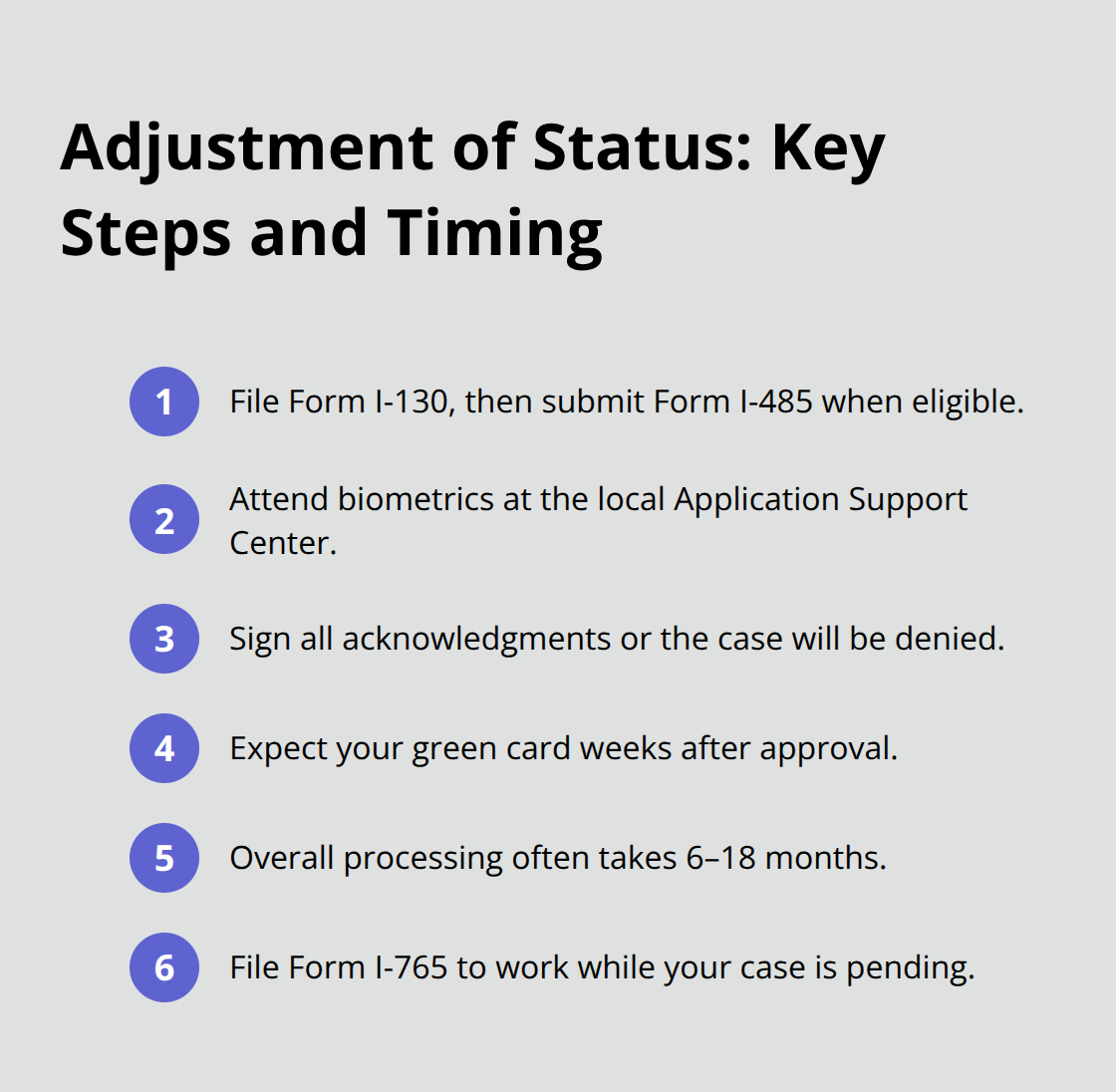
Immediate relatives of U.S. citizens hold a significant advantage: you can adjust status within the United States despite overstay, unlawful presence, or unauthorized employment, provided you entered legally at a port of entry. This in-country adjustment of status avoids the three-year and ten-year bars that activate upon departure. The process starts when your U.S. citizen relative files Form I-130 (Petition for Alien Relative) on your behalf. Once USCIS approves the I-130, you file Form I-485 (Application to Register Permanent Residence or Adjust Status). USCIS schedules a biometrics appointment at your local Application Support Center for fingerprints and photographs. You must attend this appointment and sign an acknowledgment certifying your application’s accuracy. Failure to appear or sign results in denial.
What Happens After You File I-485
After you submit Form I-485, USCIS may issue a Request for Evidence if required documentation is missing or outdated. You must respond by the stated deadline, or USCIS will deny your case. An interview may follow, where you bring originals of all documents submitted with your application, including your passport and I-94. Once USCIS approves your case, your green card arrives separately, typically weeks after the approval notice. The entire timeline varies but generally takes six to eighteen months depending on your local USCIS office workload and case complexity. During this pending period, you can file Form I-765 to obtain an Employment Authorization Document, which allows you to work legally while your adjustment processes.
Consular Processing: The Alternative Path
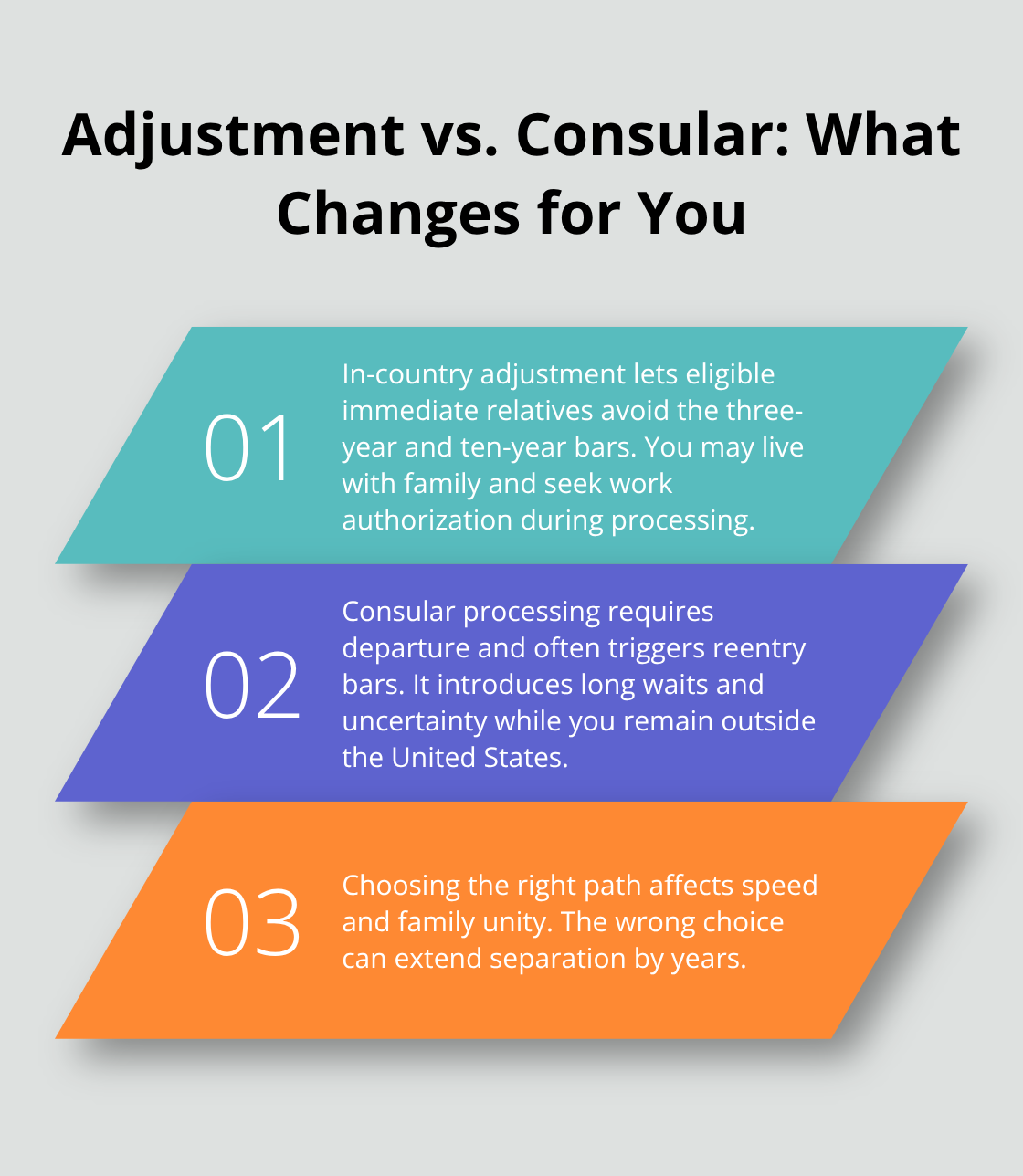
If you cannot qualify as an immediate relative or entered without inspection, consular processing becomes necessary. This path requires you to depart the United States and apply through a U.S. embassy or consulate abroad. You will face applicable bars unless you qualify for an unlawful presence waiver beforehand. The waiver application, Form I-601, is limited to spouses and parents of U.S. citizens facing extreme hardship. Processing times for consular cases average twelve to twenty-four months from start to green card issuance.
The Critical Difference: Bars and Separation
The distinction between these two paths determines your timeline and family circumstances. Immediate relatives who adjust in-country avoid bars entirely and can work legally while their application is pending. Those pursuing consular processing face mandatory departure, bars to reentry, and potential delays that stretch across years. The difference between these two paths determines not only how quickly you obtain permanent residence but whether you remain separated from family during processing.
Your specific circumstances-entry history, family relationships, and current status-determine which pathway applies to your situation. Understanding these distinctions allows you to move forward strategically.
Why You Need an Immigration Attorney for Visa Overstay
Specialized Expertise Prevents Costly Mistakes
Visa overstay cases demand specialized legal expertise because one misstep can permanently close your adjustment pathway. The distinction between adjustment of status and consular processing, the entry method requirements, the documentation standards for proving a bona fide marriage, and the timing of Form I-485 filing all require precise legal analysis. An immigration attorney identifies which pathway applies to your specific circumstances and catches eligibility issues before you file. For example, if you entered at a port of entry but worked without authorization, an attorney confirms that the immediate-relative exemption still protects you under the Matter of M.A.A. precedent. If you’re unsure whether your Duration of Status ended or whether your I-94 shows the correct departure date, an attorney obtains your official USCIS records and interprets them correctly.
The Financial Reality of Legal Representation
Attorney representation costs between $1,500 and $5,000 for straightforward immediate-relative cases. The cost of filing incorrectly-receiving a denial that bars you from reapplying for years-far exceeds these legal fees. An experienced immigration attorney handles the practical mechanics that determine approval or denial. USCIS denies cases for missing evidence, unsigned forms, inconsistent statements, or failure to respond to Requests for Evidence by the deadline. Your attorney ensures every document submitted matches USCIS requirements, that all signatures appear where required, and that your narrative remains consistent across all forms.
Managing Critical Appointments and Documentation
During your biometrics appointment, USCIS requires you to sign an acknowledgment certifying your application’s accuracy; missing this appointment results in automatic denial. Your attorney reminds you of appointment dates, confirms you bring original documents (including your passport and I-94), and prepares you for the interview questions USCIS typically asks in marriage-based cases. For marriage-based adjustments, USCIS assesses whether your relationship is genuine by reviewing joint finances, shared residence, commingled assets, travel records, and photographs. Your attorney helps you compile this evidence systematically and coaches you on interview responses so you and your spouse provide consistent accounts of your relationship timeline.
Responding to Evidence Requests and Interview Preparation
If USCIS issues a Request for Evidence requesting additional documentation, your attorney responds promptly rather than allowing the deadline to pass, which would result in denial. The maximum response time for an RFE is 12 weeks (84 days). Your attorney also prepares you for the biometrics appointment and any subsequent interview by explaining what USCIS officers will ask and how to present your case clearly and honestly.
Final Thoughts
Adjusting status after a visa overstay is possible, but only if you understand your specific circumstances and act decisively. The path forward depends entirely on how you entered the United States, your relationship to a U.S. citizen, and whether you accumulated unlawful presence. Immediate relatives of U.S. citizens who entered legally at a port of entry can adjust status within the country and avoid the three-year and ten-year bars that devastate other applicants.
A denied adjustment application can bar you from reapplying for years, and missing a biometrics appointment results in automatic denial. Submitting incomplete evidence or failing to respond to a Request for Evidence by the deadline closes your case permanently. These are not minor procedural errors-they are case-ending mistakes that an experienced immigration attorney prevents through strategic analysis of your entry history and careful documentation of your relationship.
Time matters because the longer you wait, the more unlawful presence accumulates and the more complicated your visa overstay adjustment of status becomes. We at Law Offices of Jeffrey A. Thompson help clients navigate this process from paperwork to overcoming legal obstacles, and we encourage you to contact us today to discuss your situation and determine which pathway applies to you.
Share this post: