How to Adjust Status as a Derivative Asylee
October 31, 2025
Derivative asylees who entered the United States as dependents of a principal asylee can apply to become permanent residents after meeting specific requirements.
The derivative asylee adjustment of status process involves filing Form I-485 and demonstrating continuous physical presence for one year. At Law Offices of Jeffrey A. Thompson, we guide families through each step of this complex immigration process to achieve permanent residency.
What Makes Someone a Derivative Asylee
Derivative asylees are family members who received asylum protection based on their relationship to a principal asylee, not through their own individual asylum claim. The USCIS defines derivative asylees as spouses and unmarried children under 21 who were included in the principal asylee’s original application or received asylum within two years of the principal’s approval. These family members automatically receive the same protection as the principal asylee without the need to prove their own persecution claims.
Family Relationship Requirements
The family relationship must have existed before the principal asylee received asylum status. Spouses must prove they were married before the principal’s asylum approval, while children must demonstrate they were unmarried and under 21 at the time of the original asylum application. For derivative asylees, the CSPA age is calculated based on the date the principal asylee parent filed their Form I-730 petition, allowing some children to remain classified as children beyond their 21st birthday under the Child Status Protection Act. Marriage certificates, birth certificates, and adoption papers serve as primary evidence for these relationships (with certified translations required for foreign documents).
Status Maintenance Requirements
Derivative asylees must maintain their relationship to the principal asylee throughout the adjustment process. If a derivative spouse divorces the principal asylee, they lose their ability to adjust status through the principal’s case and must file their own asylum application. Children of principal asylees retain derivative status even after marriage or after they reach age 21, provided they were unmarried and under 21 when initially included in the asylum case. The principal asylee must continue to meet the refugee definition and cannot have their asylum terminated for derivative family members to remain eligible.
Principal Asylee Dependency
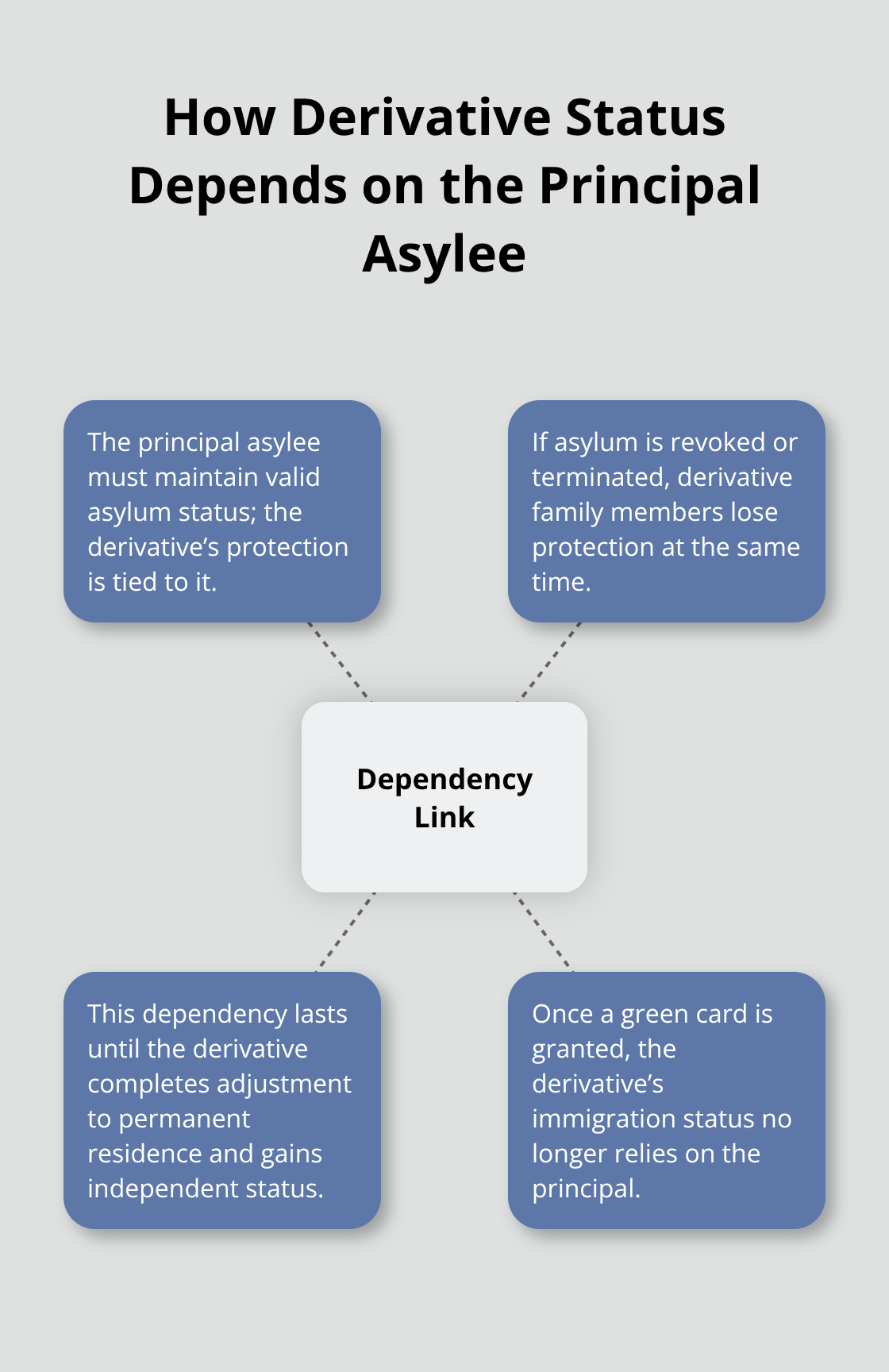
The derivative asylee’s status directly depends on the principal asylee’s continued valid status. If the principal asylee’s asylum gets revoked or terminated, all derivative family members lose their protection simultaneously. This connection remains active until derivative asylees complete their own status adjustment to permanent residence (which creates independent immigration status).
The next step involves understanding the specific requirements these derivative asylees must meet to qualify for permanent residence adjustment.
What Requirements Must Derivative Asylees Meet for Status Adjustment
Derivative asylees must satisfy three fundamental requirements to adjust their status to permanent residence. The most important requirement involves physical presence in the United States for exactly one year after asylum approval. According to USCIS guidelines updated February 2, 2023, this one-year period starts from the date asylum was granted, not from the date of arrival in the United States. The physical presence calculation excludes any trips outside the country, which means even brief departures reset the clock completely. This strict interpretation requires derivative asylees who travel abroad for family emergencies or other reasons to restart their one-year wait period upon return.
Physical Presence Documentation Requirements
USCIS requires concrete evidence that proves continuous physical presence throughout the entire year. Acceptable documentation includes school enrollment records, employment records that show consistent work history, medical records from regular checkups, lease agreements, and utility bills that span the full 12-month period. Tax returns alone cannot establish continuous presence, but when combined with employment records and lease agreements, they strengthen the evidence package significantly.

Derivative asylees should maintain detailed records from day one of asylum approval (including dated receipts, appointment confirmations, and any official correspondence that proves residence). Missing documentation for even short periods can trigger requests for additional evidence, which delays the adjustment process by months.
Admissibility Standards and Common Issues
Most derivative asylees meet standard admissibility requirements, but certain grounds of inadmissibility under Immigration and Nationality Act Section 212(a) can complicate applications. Common issues include previous immigration violations, minor criminal offenses, or health-related concerns that the required medical examination identifies. The positive aspect: many inadmissibility grounds that apply to other immigration categories do not apply to asylee adjustment cases. Serious criminal convictions (including aggravated felonies) cannot be waived under any circumstances, which makes early legal consultation essential for families with complex backgrounds.
Waiver Options for Inadmissibility
For derivative asylees who face inadmissibility issues, Form I-602 provides waiver options for specific circumstances. The waiver process requires detailed documentation that explains the circumstances and demonstrates why the waiver serves the public interest. Immigration attorneys can evaluate whether specific inadmissibility grounds qualify for waivers and help prepare the strongest possible waiver application. The next phase involves understanding the specific forms and documentation required to complete the adjustment application process.
What Documents Do You Need for Your I-485 Application
Form I-485 Application to Register Permanent Residence or Adjust Status serves as the primary document for derivative asylee status adjustment. USCIS requires the most current edition of Form I-485, which you can identify when you check the edition date at the bottom of each page. As of October 28, 2025, all applicants must pay fees electronically with credit, debit, or prepaid cards (this eliminates the traditional check payment option entirely). The application requires comprehensive documentation that proves your derivative asylee status, continuous physical presence, and admissibility to the United States.
Form I-693 Report of Immigration Medical Examination must accompany your I-485 application. Forms that civil surgeons sign on or after November 1, 2023, never expire according to current USCIS policy. Two passport-style photographs are mandatory unless you are under 14 years old. Form G-325A Biographic Information provides additional background details that USCIS uses for security screenings.
Supporting Evidence Requirements
Your evidence package must include your original I-94 arrival record that shows your derivative asylee status, plus certified copies of documents that establish your family relationship to the principal asylee. Marriage certificates for spouses and birth certificates for children require certified translations if foreign governments issued them. Adoption papers must include court seals and official translations.
Documentation that proves one year of continuous physical presence demands monthly evidence such as school transcripts, employment records, lease agreements, utility bills, bank statements, and medical records that span the complete 12-month period without gaps. Tax returns strengthen your case but cannot stand alone as presence evidence. Consistent employment records combined with residential documentation create the strongest proof of continuous presence.
Fee Structure and Waiver Options
The I-485 fee varies based on age and circumstances, with reduced fees for applicants under 14 years old. Form I-912 Request for Fee Waiver allows derivative asylees who face financial hardship to request fee elimination. You must provide extensive financial documentation that includes tax returns, pay stubs, bank statements, and proof of government assistance programs.
Afghan parolees who apply as special immigrants receive automatic fee waivers due to their humanitarian circumstances. Form G-1145 e-Notification of Application/Petition Acceptance provides electronic confirmation when USCIS receives your package, which helps you track your application from submission through processing.
Final Thoughts
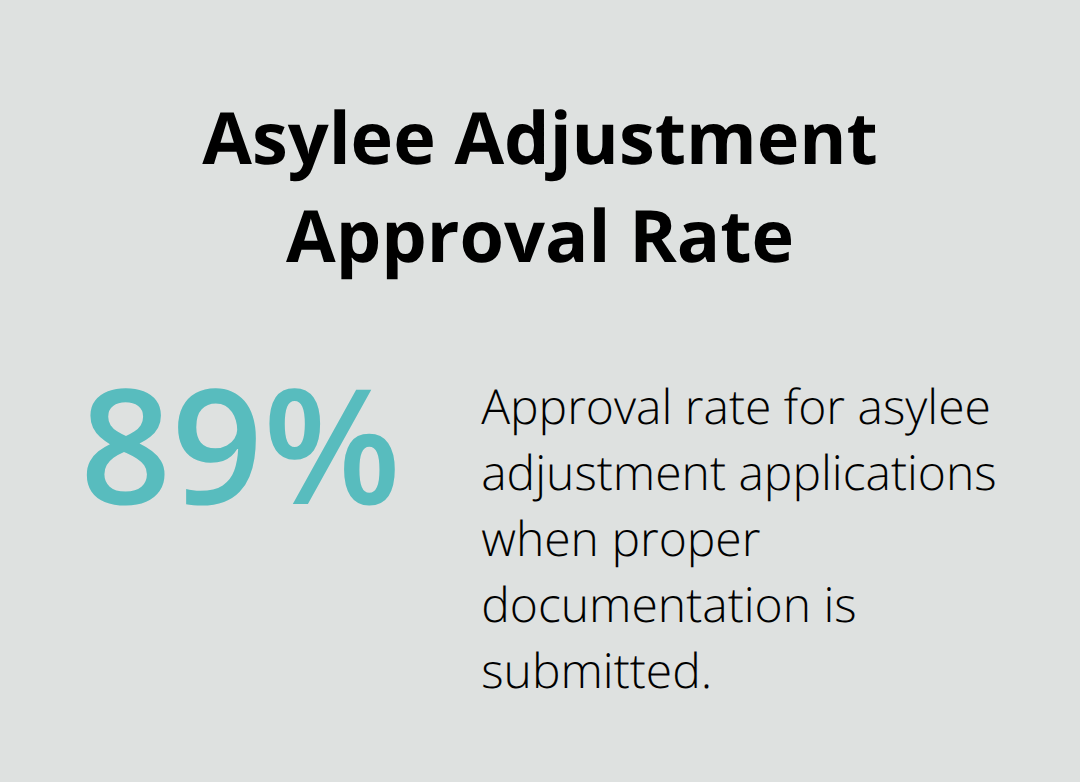
The derivative asylee adjustment of status process takes 8 to 14 months from application to approval, with processing times that differ across USCIS office locations. Current statistics show that 89% of asylee adjustment applications receive approval when applicants submit proper documentation. Your permanent resident status becomes retroactively effective one year before the approval date once USCIS approves your case.
Permanent residents receive significant advantages over derivative asylee status holders. You can travel internationally without refugee travel documents and petition for additional family members to join you. You also qualify for federal student aid programs and become eligible to apply for U.S. citizenship after five years as a permanent resident (though your asylee time counts toward this requirement).
Immigration law complexity makes professional guidance valuable throughout this process. We at Law Offices of Jeffrey A. Thompson help families navigate immigration procedures from initial paperwork through final approval. Our experience with derivative asylee cases helps prevent common mistakes that delay applications and provides support during this important transition to permanent residency.
Share this post: