
How to Navigate DACA and Adjustment of Status
November 17, 2025
DACA recipients face significant limitations when seeking permanent immigration status. The program provides temporary protection but no direct path to a green card.
We at Law Offices of Jeffrey A. Thompson understand the complexities of DACA and adjustment of status processes. Many recipients successfully transition to permanent residence through family or employment-based petitions, despite common obstacles like unlawful presence issues.
What DACA Actually Provides
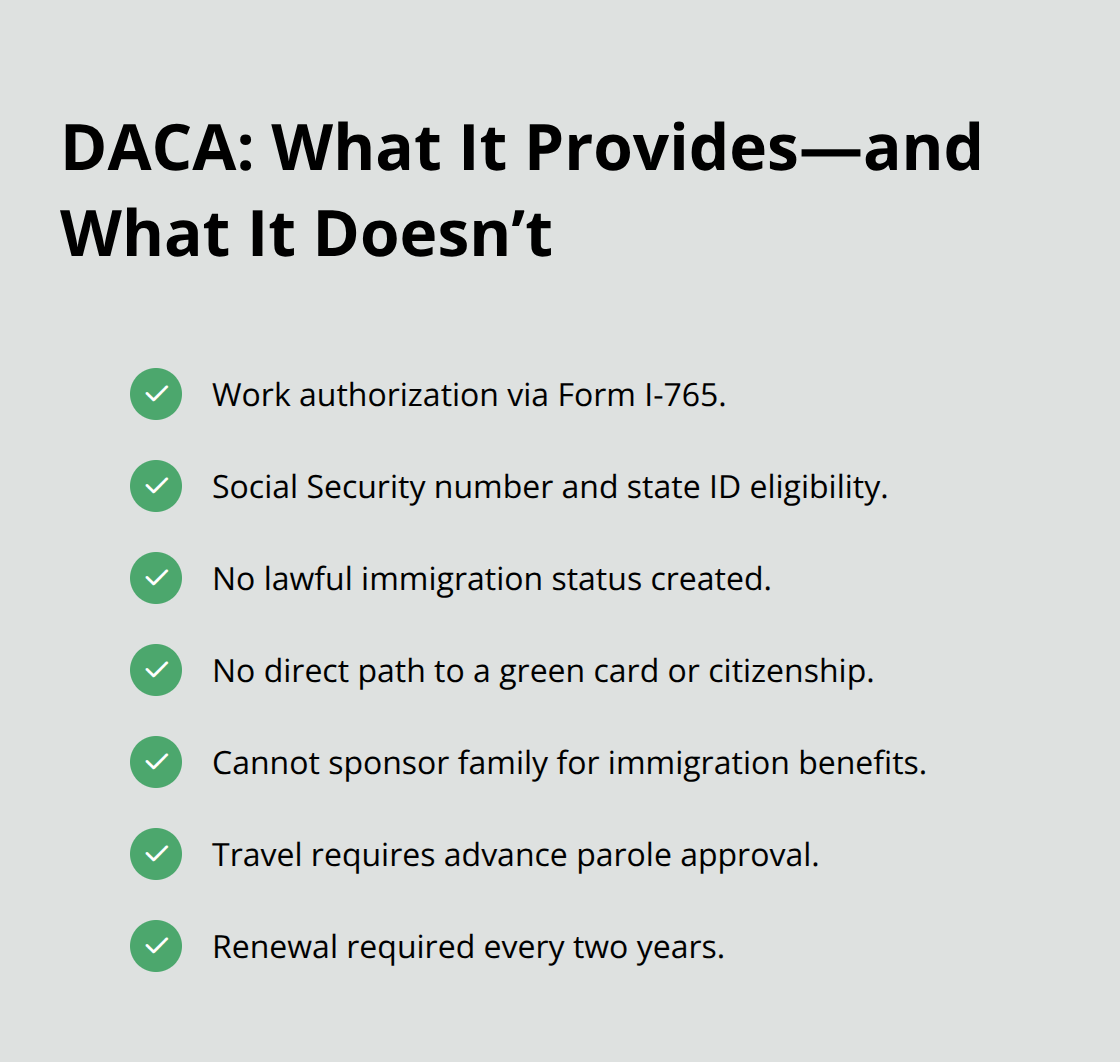
DACA grants work authorization and deportation protection, but it stops there. The program offers no lawful immigration status and creates no pathway to permanent residence or citizenship. Approximately 570,000 active DACA recipients as of Quarter 3 of Fiscal Year 2025 receive only temporary relief that expires every two years.
USCIS data shows that DACA applications receive approval, yet recipients remain in immigration limbo. The program allows you to obtain a Social Security number and state identification, plus the ability to work legally through Form I-765. However, DACA recipients cannot sponsor family members for immigration benefits, cannot travel freely without advance parole, and face constant uncertainty about policy changes.
The Reality of Temporary Protection
DACA recipients must renew their status every two years, which creates stress and expense. Processing times currently range from 6 to 12 months, and this leaves many without work authorization during gaps. The average DACA recipient arrived at age seven and has lived in the United States for over 20 years, yet remains vulnerable to policy shifts.
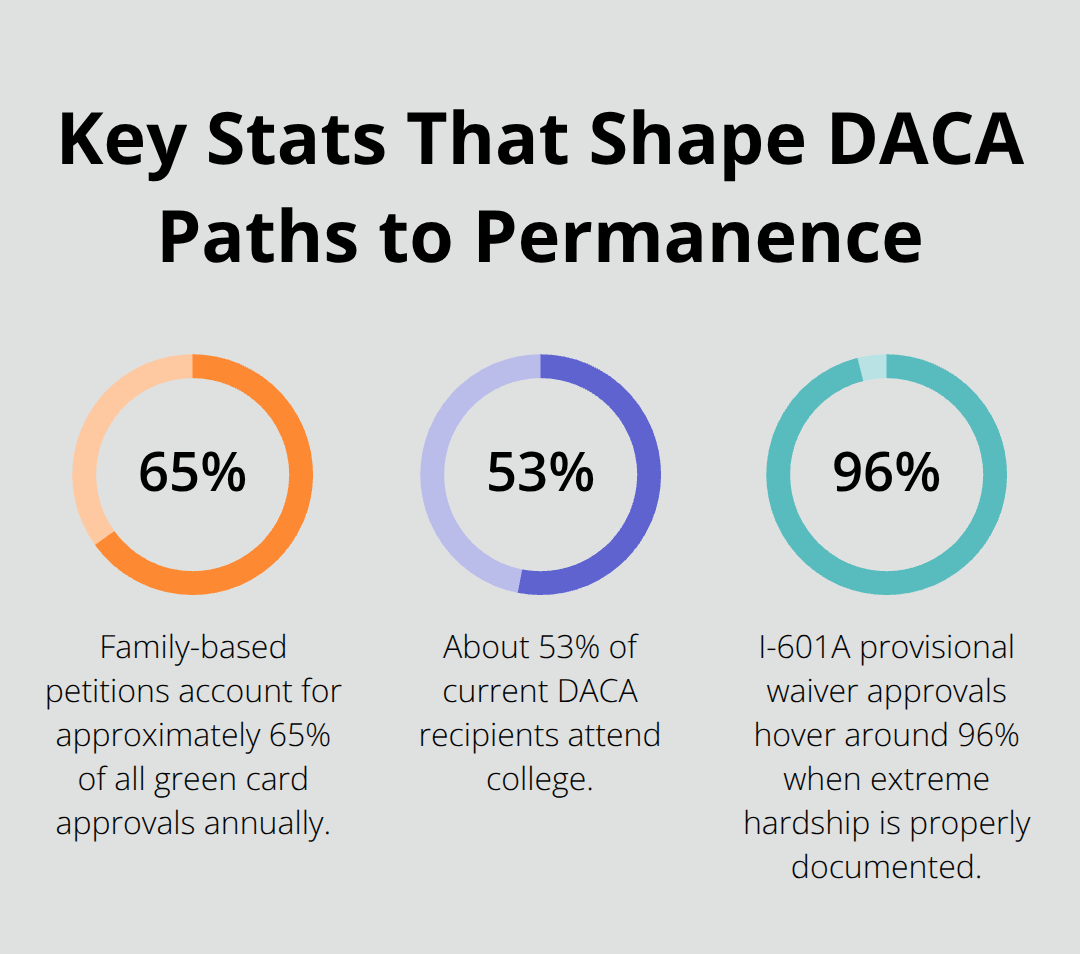
About 53% of current recipients attend college, and many pursue STEM degrees. Their education investments remain at risk without permanent status. The two-year renewal cycle prevents long-term career plans and limits professional advancement opportunities.
Financial and Personal Limitations
The temporary nature of DACA forces recipients to live in constant uncertainty. Career advancement becomes limited when employers hesitate to invest in workers with temporary status. Home ownership, business loans, and long-term financial plans remain difficult without permanent residence.
Banks often view DACA recipients as high-risk borrowers due to their temporary status. Credit cards and major purchases become harder to obtain. Professional licenses in certain fields (like law or medicine) may require permanent residence, which blocks career paths entirely.
Available Transition Options
Marriage to U.S. citizens offers the most viable path forward, though unlawful presence complications can arise. Employment-based options exist for those with bachelor’s degrees and H-1B sponsorship, but annual caps of 65,000 plus 20,000 for advanced degrees create fierce competition.
Special programs like the Violence Against Women Act provide pathways for abuse victims. Religious worker classifications offer another route for qualified individuals. These options require careful evaluation of eligibility requirements and potential obstacles that could affect your specific situation.
Which Pathways Lead to Permanent Residence
Marriage to a U.S. citizen provides the fastest route to permanent residence for DACA recipients. Family-based petitions through Form I-130 account for approximately 65% of all green card approvals annually. However, DACA recipients who entered without inspection face unlawful presence complications that require careful legal strategy.
The key advantage lies in immediate relative status – spouses of U.S. citizens bypass visa number limitations that affect other family categories. Parents who are U.S. citizens can also petition for their DACA recipient children, though age-out protections under the Child Status Protection Act become vital for those who approach 21 years old.
Employment-Based Green Card Routes
H-1B visas offer the primary employment pathway and require a bachelor’s degree plus employer sponsorship. The annual cap restricts availability to 65,000 regular positions plus 20,000 for advanced degree holders, which creates intense competition with approval rates below 30% in recent years.
DACA recipients must prove lawful entry and maintain less than 180 days of unlawful presence to qualify. Cap-exempt positions at universities, nonprofits affiliated with higher education, and government research facilities provide alternatives without numerical limitations (these positions often offer more stability than private sector roles).
Religious worker classifications through the EB-4 category serve qualified ministers and religious professionals. These applications require less than six months of unlawful presence for adjustment eligibility.
Special Relief Programs
The Violence Against Women Act protects DACA recipients who suffer abuse from U.S. citizen or permanent resident spouses, parents, or adult children. Self-petition through VAWA eliminates dependence on the abuser for immigration status and provides independent protection.
Special Immigrant Juvenile classification assists DACA recipients under 21 who experienced abuse, abandonment, or neglect by parents. These humanitarian programs often provide the most viable options when traditional family or employment routes remain unavailable due to unlawful presence issues or lack of relationships that qualify.
Each pathway presents unique documentation requirements and potential obstacles that can complicate the adjustment process significantly.
What Obstacles Block Your Path to Permanent Status
DACA recipients face three major hurdles during adjustment of status applications that can derail even well-prepared cases. Unlawful presence accumulation creates the most serious obstacle, as many DACA recipients entered without inspection and accumulated unlawful presence before their initial DACA approval. The three and ten-year bars trigger when individuals accrue more than 180 days or one year of unlawful presence respectively, which blocks reentry after departure from the United States for consular processing.

Unlawful Presence Complications and Solutions
Most DACA recipients accumulated unlawful presence between their arrival and initial DACA approval, which complicates adjustment applications significantly. The I-601A provisional waiver allows applicants to request forgiveness before they leave for consular processing, but approval rates hover around 96% only when properly documented extreme hardship to relatives exists.
USCIS requires comprehensive medical, financial, and psychological evidence that demonstrates genuine hardship. Generic hardship claims result in denials that waste months of processing time. Marriage-based applicants often qualify for adjustment within the United States if they can prove lawful entry (which avoids unlawful presence bars entirely and eliminates consular processing risks).
Documentation Standards and Evidence Requirements
USCIS demands extensive documentation that proves continuous residence, relationship validity, and eligibility for the chosen immigration category. Form I-485 applications require birth certificates, marriage certificates, tax returns, employment records, and medical examinations from USCIS-approved civil surgeons.
Financial documentation must demonstrate the petitioner meets 125% of federal poverty guidelines through Form I-864 affidavit of support. Joint sponsors become necessary when primary petitioners fall short of income requirements. Applications face delays for months when applicants submit incomplete documentation packages or fail to translate foreign documents properly through certified translators.
Medical Examination and Vaccination Requirements
USCIS requires all adjustment applicants to complete medical examinations with designated civil surgeons. These examinations cost between $200 and $500 and must include vaccination records that meet CDC requirements. Missing vaccinations can delay applications for weeks while applicants complete required immunizations.
Civil surgeons must submit Form I-693 directly to USCIS or provide sealed envelopes to applicants. The medical examination remains valid for two years from the date of completion, but vaccination requirements change periodically based on public health recommendations.
Final Thoughts
DACA and adjustment of status processes demand strategic action and precise execution. You must identify your strongest pathway through marriage to a U.S. citizen, employment sponsorship, or special relief programs. Complete documentation becomes essential, as incomplete applications face months of delays that can derail your case.
Professional legal guidance proves vital when you navigate unlawful presence complications and waiver requirements. Immigration law shifts frequently, and small mistakes destroy applications that took years to prepare. We at Law Offices of Jeffrey A. Thompson help clients overcome legal obstacles and achieve permanent residence through dedicated representation.
You should begin document collection now, even if you cannot file immediately. Time works against DACA recipients who delay action, as policy changes eliminate opportunities without warning (recent court decisions demonstrate this reality). Your future in America depends on decisive action today rather than hope for perfect conditions that may never come.
Share this post: