How to Navigate H1B Adjustment of Status Process
January 9, 2026
The H1B adjustment of status process can feel overwhelming, especially when you’re juggling work obligations and immigration requirements. We at Law Offices of Jeffrey A. Thompson have guided hundreds of professionals through this transition, and we know exactly where confusion typically arises.
This guide breaks down each phase of the process, from eligibility requirements to interview preparation. You’ll learn what documents you actually need, what delays to expect, and how to avoid common pitfalls that derail applications.
Who Qualifies for H1B Adjustment of Status
Physical Presence and Valid Status Requirements
Not every H1B worker can adjust status in the United States. USCIS enforces strict rules about who stays and pursues a green card, and many professionals mistakenly believe they qualify when they don’t.
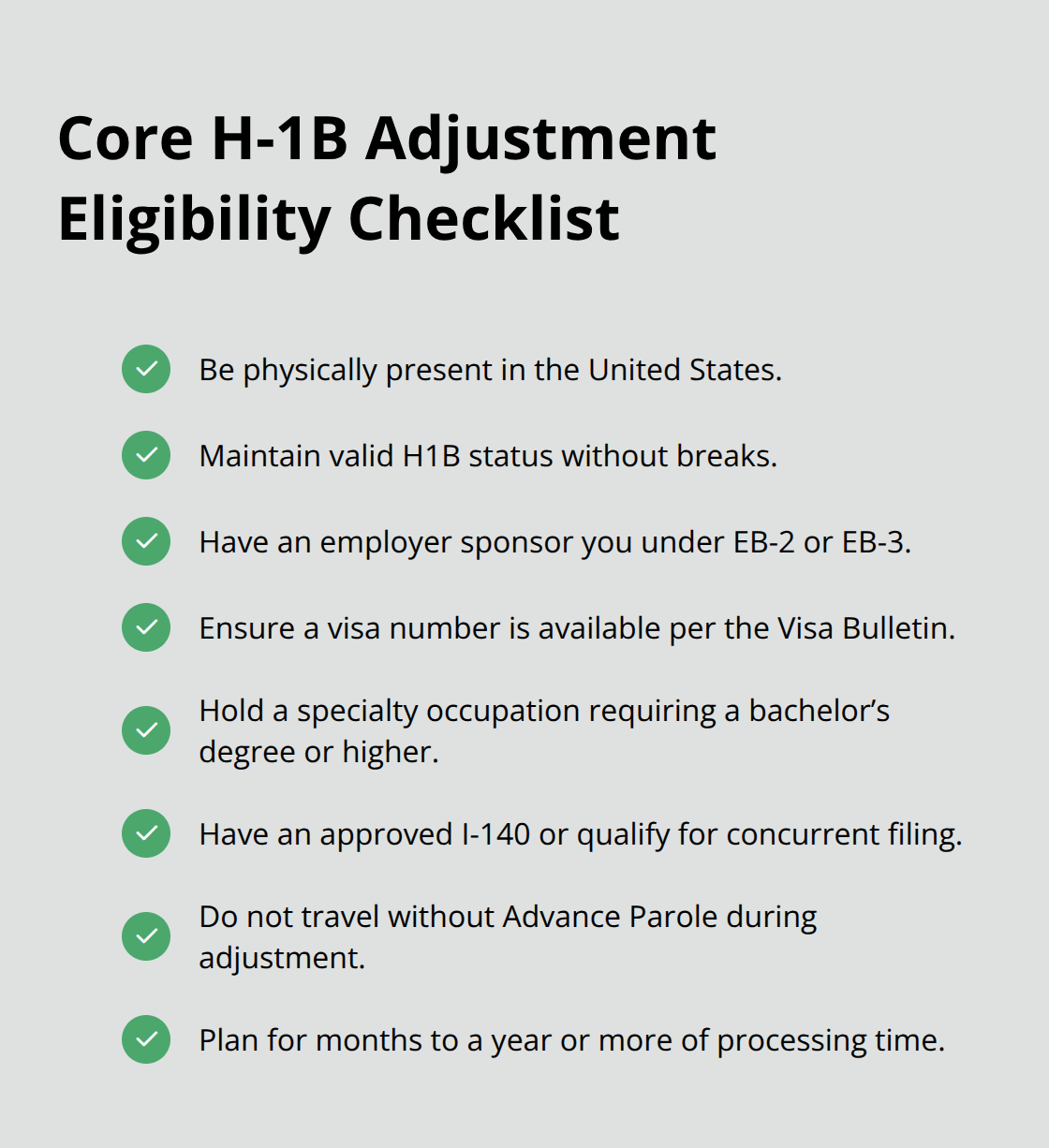
You must be physically present in the United States and maintain valid H1B status without any breaks. If you overstayed or fell out of status at any point, adjustment becomes significantly more complicated and may require filing a waiver. This foundational requirement eliminates many applicants before they even begin the process.
Employer Sponsorship and Immigrant Petitions
You need an employer willing to sponsor your green card through employer sponsorship and immigrant petitions as either an EB-2 or EB-3 petition, depending on your education and job requirements. This is non-negotiable: you cannot adjust without an active immigrant petition filed on your behalf. Additionally, an immigrant visa must be available in your category according to the Department of State Visa Bulletin. Visa availability fluctuates dramatically based on demand and country of chargeability. If you’re from India or China, your priority date may fall years behind because those countries have per-country caps that create substantial backlogs. You could file your I-485 today and wait years before approval simply because your visa number hasn’t become current.
Job Classification and Education Requirements
Your H1B position must genuinely require a bachelor’s degree or higher, and your education or experience must actually match that requirement. USCIS scrutinizes this heavily, and claiming a specialty occupation when the job doesn’t qualify leads to denial. You also need an approved Form I-140 petition before you file your adjustment application, though in some cases concurrent filing is permitted. The job classification determines whether you qualify for EB-2 or EB-3 sponsorship, which directly affects your timeline and visa availability.
Correcting Common Misconceptions
Having an H1B visa does not automatically make you eligible to adjust. Your visa status is separate from your green card eligibility. You also cannot adjust status while abroad or take extended trips outside the U.S. during the process. Leaving without Advance Parole typically abandons your application entirely. Many applicants also assume that processing times are short. National median I-485 processing times vary significantly by field office, but you should anticipate several months to over a year in many jurisdictions, particularly in high-volume areas. Planning realistically around these timelines prevents unnecessary stress and helps you make informed decisions about your employment and personal life during the adjustment period.
With these eligibility factors in mind, the next step involves understanding what documents USCIS actually requires and how to prepare your I-485 application for submission.
Filing Your I-485 and Gathering Documentation
Submitting Form I-485 with Complete Documentation
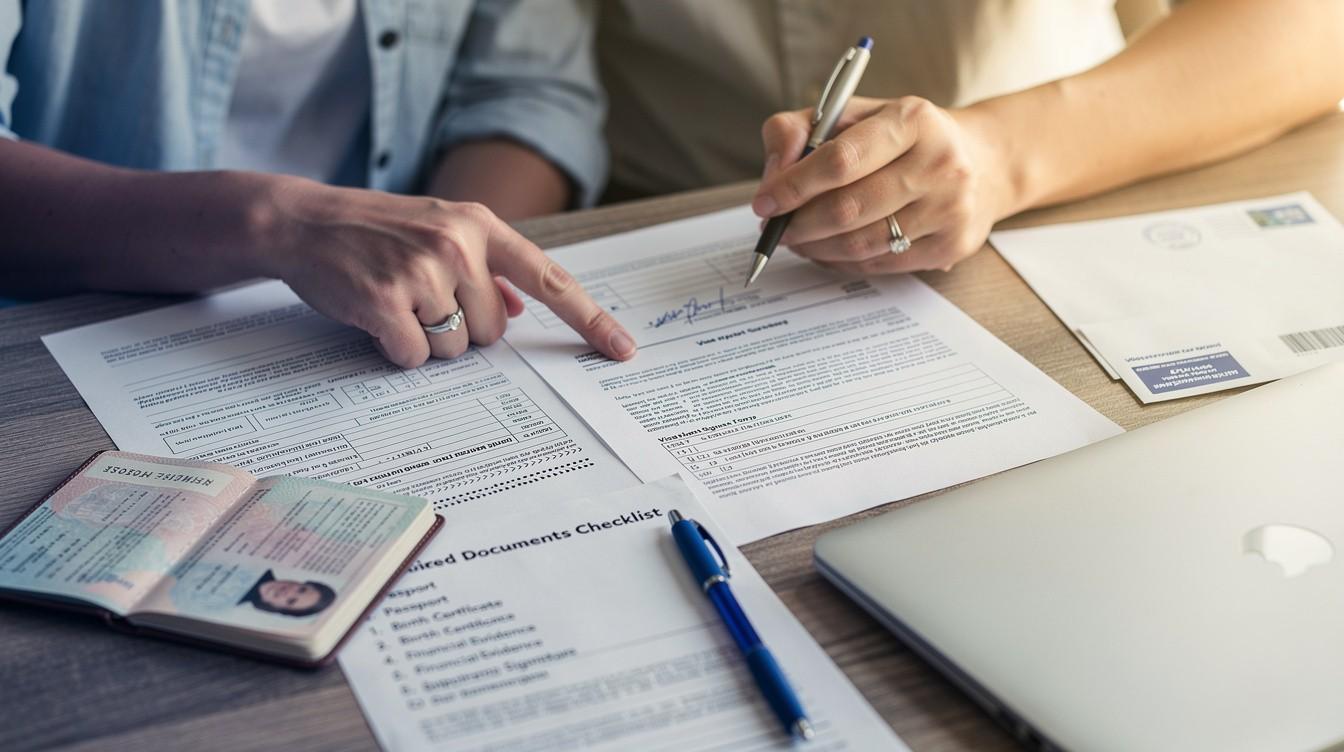
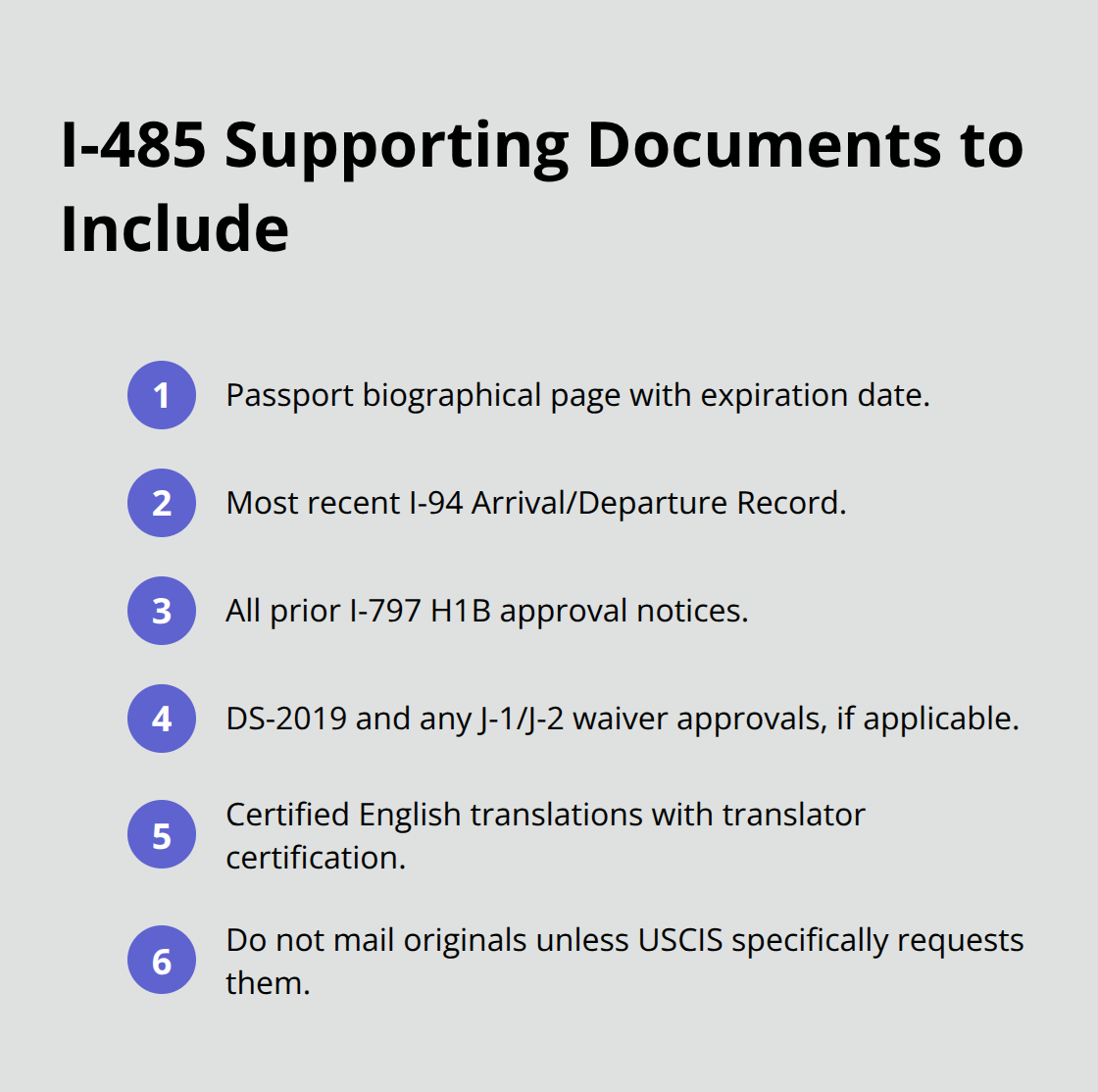
Submitting Form I-485 launches your adjustment officially, and this step determines whether USCIS will even review your case. The form itself is straightforward, but the supporting documentation is where most applicants stumble. USCIS requires originals or certified copies of your passport showing biographical data and expiration date, your most recent I-94 Arrival/Departure Record, and any prior I-797 approval notices from your H1B petitions. If you held J-1 or J-2 status previously, include those DS-2019 forms and any approved waivers of the foreign residence requirement. You must submit certified English translations of any foreign-language documents, and the translator must certify the accuracy in writing. Do not send original documents unless USCIS specifically requests them in writing.
Filing at the Correct USCIS Location
File your I-485 at the correct USCIS field office based on your residence; filing at the wrong office delays processing by months. Your employer must file Form I-485 Supplement A if you adjust under INA 245(i), which applies to certain applicants who had an immigrant petition or labor certification filed before specific dates. Include a completed and signed Maintenance of Status form and your I-94 Consent form. The filing fee is $640 as of 2026, though fee waivers exist for those who qualify based on income. Pay this through Form G-1450 and keep your receipt number, A-Number, name, and date of birth readily available for tracking your case status online or through the USCIS Help Center.
Biometrics Appointment and Interview Procedures
After USCIS receives your packet, you will receive a biometrics services appointment notice within weeks. Attend this appointment at your designated Application Support Center to provide fingerprints, a photo, and your signature. Missing this appointment without rescheduling abandons your case. USCIS may also schedule an interview; not all applicants receive one, but many do. If interviewed, bring originals of every document you submitted with your I-485, including passports, travel documents, and your I-94.
Responding to Evidence Requests and Final Decisions
USCIS may issue a Request for Evidence if documents are missing or outdated; respond by the stated deadline to avoid denial. Some cases are decided without interviews or additional evidence requests, particularly straightforward employment-based adjustments. The final decision notice arrives by mail, and if approved, your green card follows shortly after. If denied, the notice explains the reasons, and you can file Form I-290B to reopen or reconsider your case. Once approved, you officially become a lawful permanent resident. If you move during processing, notify USCIS within 10 days using their Change of Address form to prevent delays or missed communications.
With your I-485 submitted and your biometrics appointment scheduled, the next phase involves preparing for your interview and understanding what USCIS officers will examine during your case review.
Real Processing Delays and What They Mean for Your Timeline
Understanding Field Office Variations and Processing Times
Processing delays for I-485 applications are not theoretical-they directly impact your ability to work, travel, and plan your life. USCIS data shows that national median processing times for I-485 applications vary dramatically by field office, with some locations completing cases in six months while others take eighteen months or longer. High-volume offices in California, Texas, and New York consistently report longer wait times than rural field offices. Your specific timeline depends on three factors: your employment-based category (EB-2 versus EB-3), your country of chargeability, and which USCIS field office handles your case.
Country-Specific Backlogs and Visa Availability
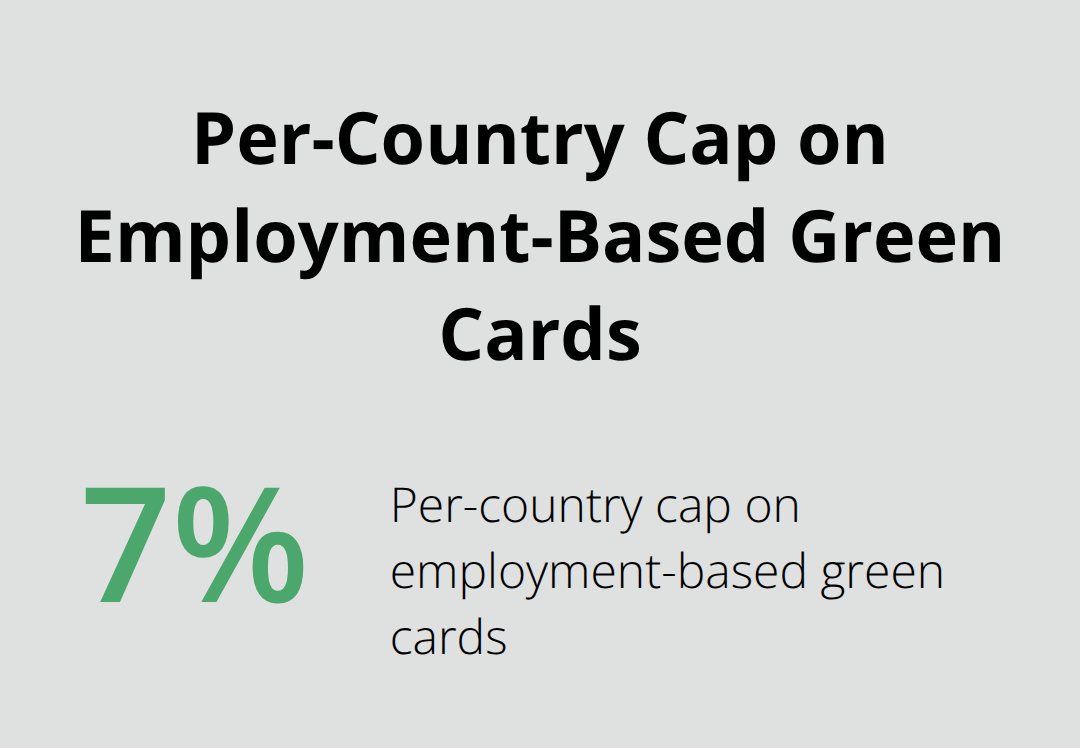
If you are from India or China, expect substantially longer delays because per-country caps limit visa availability to 7 percent of total employment-based green cards. An Indian EB-3 applicant might wait three to five years from I-485 filing to approval, while an EB-2 applicant from most other countries could see approval within twelve to twenty-four months. The Department of State Visa Bulletin updates monthly, and checking it regularly helps you understand whether your priority date is current and when you can actually file your I-485.
Many applicants file prematurely when visa numbers aren’t available, which just creates a longer waiting period. Planning your adjustment around realistic timelines prevents you from making hasty career decisions or personal commitments during the uncertainty.
Documentation Gaps and Request for Evidence Issues
Missing documents and outdated evidence derail applications far more often than applicants realize. USCIS issues a Request for Evidence when your I-485 packet lacks required items or when documents expire during processing-your police clearance, medical examination, or passport can all expire while your case sits in queue. You have a strict deadline to respond, and missing that deadline results in case denial. The most common documentation mistakes include submitting foreign-language documents without certified English translations, failing to include all prior I-797 approval notices from previous H1B petitions, or not providing an updated I-94 Arrival/Departure Record.
Tracking Expiration Dates and Address Changes
If your passport expires during processing, you must renew it and submit a copy of the new biographical page. If you move, you have ten days to notify USCIS, and failing to do so means official correspondence goes to your old address, potentially causing you to miss critical deadlines. Maintaining a detailed checklist of every document you submitted and tracking expiration dates prevents these avoidable denials. Create a folder with copies of everything submitted, noting expiration dates prominently, and set calendar reminders sixty days before any document expires. This proactive approach catches problems before USCIS issues an RFE. Immigration law is unforgiving about procedural details, and one missing page or expired document can delay your case by months or trigger a complete denial requiring you to file a motion to reopen.
Final Thoughts
The H-1B adjustment of status process demands attention to detail, realistic timeline expectations, and thorough documentation from start to finish. You now understand that eligibility hinges on maintaining valid status, securing employer sponsorship through an EB-2 or EB-3 petition, and waiting for visa availability in your category. Processing times vary dramatically by field office and country of chargeability, so planning around months or years of waiting prevents frustration and poor career decisions.
Missing documents, expired evidence, and address changes derail applications far more often than applicants expect, which is why tracking every submission and setting expiration reminders protects your case from preventable denials. Your next step involves gathering all required documentation and verifying consistency across your H-1B sponsorship documents before submitting your I-485 packet to the correct USCIS field office. Check the Department of State Visa Bulletin monthly to confirm your priority date is current and you file at the right time.
We at Law Offices of Jeffrey A. Thompson assist clients in navigating the H-1B adjustment of status process, from paperwork to overcoming legal hurdles. Contact us for expert guidance tailored to your specific situation and allow your application to receive the attention it deserves.
Share this post: