Immigration Letter of Support: Crafting Strong Documentation for Your Case
May 15, 2026
An immigration letter of support can make or break your case. These documents carry real weight in immigration proceedings, yet many applicants get them wrong.
We at Law Offices of Jeffrey A. Thompson have seen firsthand how poorly written letters tank otherwise strong applications. This guide shows you exactly what immigration officials want to see.
What Immigration Letters Actually Do
An immigration letter of support is a firsthand account from someone who knows you. It’s not a legal document, not a sworn affidavit, and not a substitute for forms like the I-864. It’s personal evidence that backs up your application by providing context and credibility that paperwork alone cannot deliver. USCIS officers and immigration judges review thousands of applications yearly. They rely on these letters to understand who you actually are beyond dates and case numbers. A letter from your employer describing how you worked there for five years, managed a team, and built your reputation carries weight because it comes from someone with direct knowledge. The same applies to letters from family members documenting a genuine relationship or from community leaders confirming your character and contributions.
Where These Letters Make a Real Difference
Immigration letters prove their value in specific scenarios. For marriage-based green card applications, a letter from a friend who visited your home and watched your relationship develop over time can corroborate the authenticity of your marriage in ways that photos and lease agreements cannot. For cancellation of removal cases, letters from employers and family members documenting your ties to the community and the hardship your deportation would cause can influence a judge’s discretion. For citizenship applications, letters highlighting your community involvement and moral character add dimension to your N-400 form. Letters based on direct knowledge and specific facts carry more weight than generic praise. This means a letter describing how you volunteered at a local food bank every Saturday for three years beats a letter saying you have a good heart. A letter explaining that your U.S. citizen daughter depends on your income for school supplies and medical care holds more power than a vague statement about family hardship.
Why Credibility Trumps Everything Else
The writer’s credibility matters far more than their title. A longtime neighbor who has known you for a decade carries more weight than a state senator who met you once. An HR manager who directly supervised you for five years outweighs a company CEO who knows you by name only. Immigration officers check consistency across multiple letters. If three family members submit nearly identical letters with the same phrases and examples, officers assume coordination or fabrication, which damages your case. The strongest letters come from writers who have something to lose by lying. An employer risks their professional reputation. A pastor risks their credibility with their congregation. A longtime friend risks the relationship. These natural incentives make letters from people with genuine stakes in your life far more persuasive than letters from people with no real connection to you.
What Separates Weak Letters from Powerful Ones
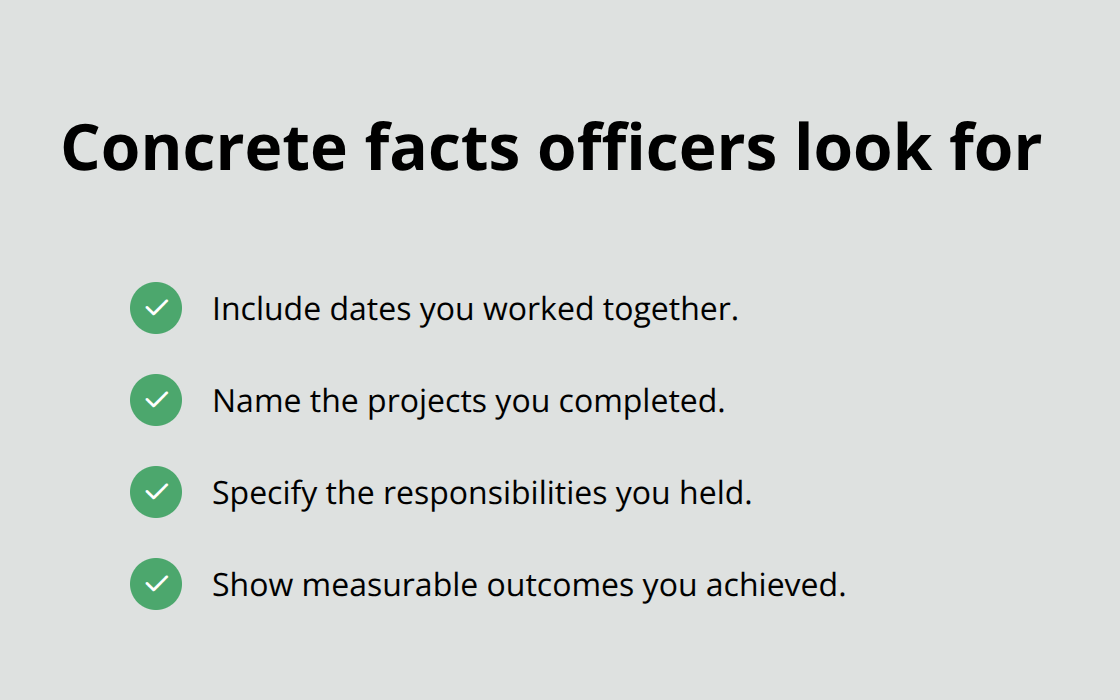
Generic praise letters fail because immigration officers encounter them constantly. A letter stating that you are hardworking and honest tells them nothing they cannot infer from your application. A letter describing how you handled opening shifts for six months while your spouse recovered from surgery shows reliability under pressure. Specific details transform a letter from background noise into evidence. Officers want to know concrete facts: dates you worked together, projects you completed, responsibilities you held, and measurable outcomes you achieved. When a letter writer includes these details, they signal that they actually know you and have observed your actions firsthand.
Vague adjectives and broad statements signal the opposite-that someone wrote the letter without real knowledge or that you coached them to write generic praise.
How Officers Evaluate Your Letters
Immigration officers assess letters through a credibility lens. They ask themselves: Does this writer have direct knowledge of what they claim? Would this writer face consequences for lying? Do the facts in this letter match the facts in other documents? A letter from your spouse about your marriage carries weight because your spouse has the most direct knowledge possible. A letter from your child about your parenting carries weight because your child lives with you daily. A letter from your boss about your work performance carries weight because your boss supervises you and risks their professional standing by vouching for you. Officers also cross-check letters against official documents. If your letter says you worked at a company for five years but your employment verification form says three years, officers flag the inconsistency and question both documents. This is why accuracy matters more than eloquence. A simple, truthful letter beats a polished letter with errors or exaggerations.
The strength of your letters determines whether immigration officials see you as a credible applicant or a risky one. Understanding what makes a letter persuasive-and what makes it fail-shapes how you approach the next critical step: identifying the right people to write for you and guiding them toward specific, powerful examples.
What Makes a Letter Persuasive to Immigration Officials
Specific Examples Transform Letters Into Evidence
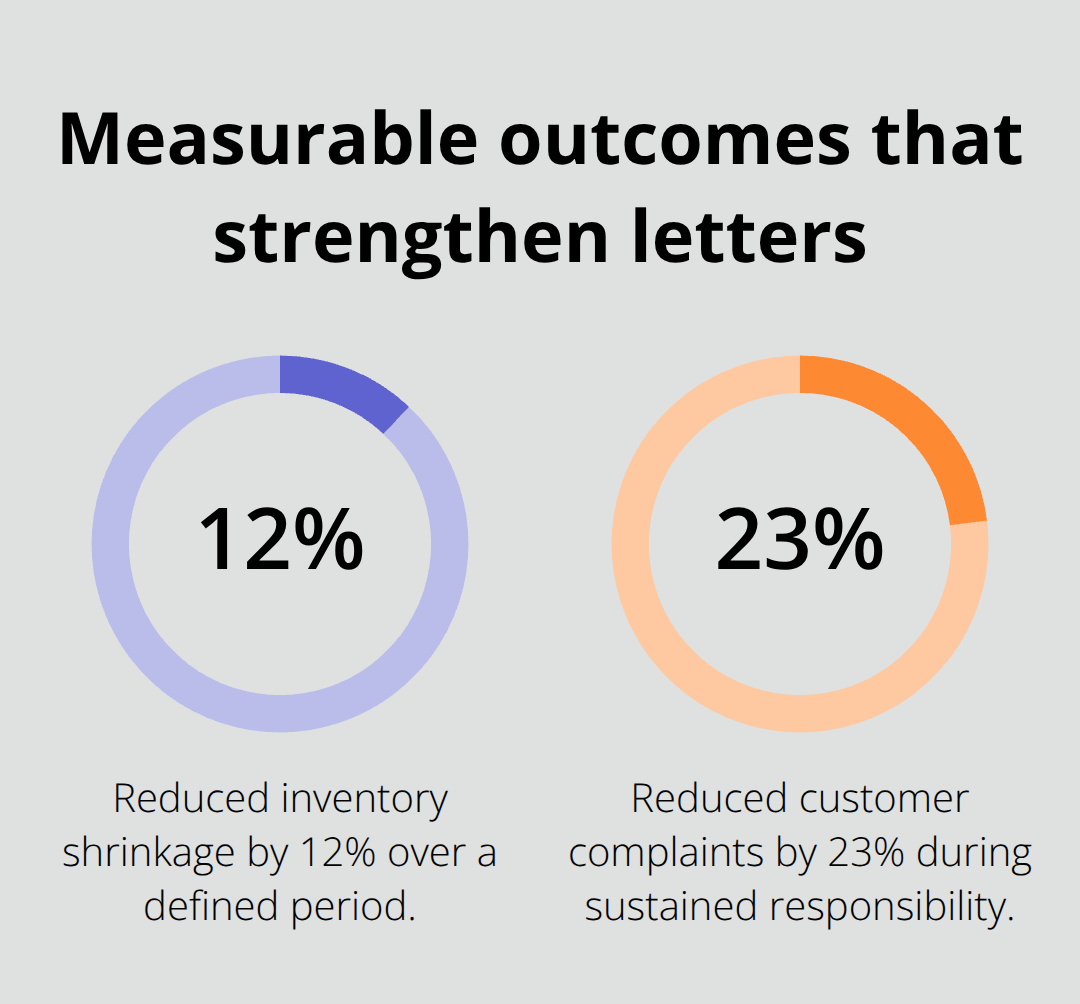
The difference between a letter that influences an officer’s decision and one that gets skimmed in seconds comes down to three concrete elements working together. Your letter needs specific examples tied to dates and measurable outcomes. When a former employer writes that you managed inventory for a retail store, that tells an officer nothing. When they write that you managed inventory for a retail store from January 2019 to March 2023, reduced shrinkage by 12 percent, and trained four new employees on stock procedures, an officer sees someone with demonstrated responsibility and impact.
The USCIS Policy Manual notes that affidavits and letters carry the most weight when based on direct knowledge and specific facts rather than broad praise. This means every sentence should answer a question an officer might ask: How do you know this person? What exactly did you observe? When did this happen? What was the outcome? A letter stating you are a good parent lacks this specificity entirely. A letter explaining that you attended every parent-teacher conference at your daughter’s school for four years, helped her with homework nightly, and managed her medical appointments while working full-time demonstrates parenting through concrete actions.
The Writer’s Relationship and Position Determine Weight
The writer’s relationship to you and their position in society determines how much weight their letter carries. An immigration officer assumes an employer has something to lose by lying because their professional reputation is at stake. They assume a longtime family friend has genuine motivation to help because the relationship is real and established. They assume a community leader like a pastor or teacher has credibility because they observe many people and would not risk their standing for someone they do not truly know.
An officer views a letter from someone who just met you with skepticism. A letter from your spouse about your marriage carries enormous weight because no one knows your relationship better. A letter from your adult child about your character carries weight because they live with you and observe your actions daily. A letter from a colleague you worked with for one month carries minimal weight because they lack the depth of knowledge needed to make a credible assessment. The writer’s legal status also matters-a U.S. citizen or lawful permanent resident who has known you for years and is willing to put their name on a letter has more credibility than someone without established legal status in the country.
Address What Officers Actually Evaluate in Your Case Type
Your letter must directly address what immigration officials actually evaluate in your specific case type. For marriage-based green card applications, officers scrutinize whether the relationship is genuine and not entered into for immigration benefits. A letter should describe how you met, how your relationship developed, what you do together regularly, and how you share finances or household responsibilities. Vague statements about love mean nothing. Specific details about joint bank accounts, shared lease agreements, or the fact that you introduced your spouse to your family years ago demonstrate authenticity.
For cancellation of removal cases, officers focus on whether you have continuous physical presence, good moral character, and whether your deportation would cause extreme hardship to a qualifying relative. Your letter must address these elements directly. A letter stating you have lived in the United States for seven years, maintained employment throughout, and have a U.S. citizen daughter who depends on your income for housing and education speaks to all three factors. For citizenship applications, officers want evidence of moral character and community ties. A letter describing your volunteer work at a local food bank, your church involvement, or your role mentoring young people in your neighborhood provides the specific evidence officers need.
Why Generic Statements Fail Every Time
Generic statements about being a good person accomplish nothing because officers cannot verify them. A letter with dates, organizations, hours contributed, and specific examples of what you accomplished provides evidence they can actually evaluate. Immigration officials read thousands of applications yearly, and they recognize boilerplate language instantly. The moment an officer spots vague praise, they move on to the next document. The moment they spot concrete details, they pause and actually consider what the letter says.
Identifying which letter writers can address these specific elements and guiding them toward the concrete details that matter most to immigration officials separates applications that succeed from those that stall. The next step involves selecting the right people to write for you and structuring their letters to hit these persuasive elements head-on.
Common Mistakes That Destroy Your Immigration Letter
Vague Language Kills Your Letter’s Impact
Weak immigration letters fail because they lack specific information. A letter stating you are hardworking tells an officer nothing because anyone can claim this about themselves. A letter explaining that you worked the opening shift alone for six months while managing a team of three employees, reducing customer complaints by 23 percent, and training new hires on point-of-sale systems gives an officer something tangible to evaluate. The difference between these two approaches determines whether your letter influences a decision or gets skipped entirely.
Officers need dates, specific responsibilities, measurable outcomes, and concrete examples tied to what they actually assess in your case type. Without these elements, your letter becomes background noise among thousands of others they review annually. Generic praise about your character or work ethic accomplishes nothing because officers cannot verify it. A letter with dates, organizations, hours contributed, and specific examples of what you accomplished provides evidence they can actually evaluate.
Inconsistencies Between Your Letter and Official Documents
Immigration officers cross-check every fact in your letter against your forms, tax returns, lease agreements, and other official paperwork. If your support letter claims you worked at a company for five years but your employment verification form shows three years, officers flag this immediately and question both documents. Cases get delayed or denied because a family member’s letter contradicted dates on a birth certificate or residency timeline.
If multiple letter writers submit nearly identical statements with the same phrases and examples, officers assume you coached them or fabricated the letters, which damages your credibility permanently. Three letters from different family members should contain different examples, different writing styles, and different perspectives on the same relationship. Consistency of facts matters; uniformity of language signals dishonesty. Cross-check every fact before submission and ensure each letter writer provides their own authentic voice and observations.
Failing to Address What Officers Actually Evaluate
The third fatal flaw is failing to address what immigration officials actually evaluate in your specific case type. A marriage-based green card application requires proof that your relationship is genuine and not entered into for immigration benefits, yet many letters never mention how you met, when you moved in together, or how you share finances. A cancellation of removal case requires evidence of continuous physical presence, good moral character, and hardship to a qualifying relative, yet some letters waste space on irrelevant personal qualities.
A citizenship application demands evidence of moral character and community ties, yet letters sometimes focus on the applicant’s job performance instead. Before any letter is written, you and your letter writers must understand exactly what the immigration category requires and structure each letter to address those specific criteria directly. A letter tailored to your actual case carries ten times more weight than a generic letter that could apply to anyone. Officers spot misaligned letters within seconds and move on to documents that actually address their evaluation criteria.
Final Thoughts
An immigration letter of support succeeds when three elements work together: specific examples tied to dates and measurable outcomes, credibility of the writer based on their genuine relationship to you, and direct alignment with what immigration officials evaluate in your case type. Without these elements, your letter becomes another generic document that officers skip. With them, your letter becomes evidence that shapes how officials perceive your application.
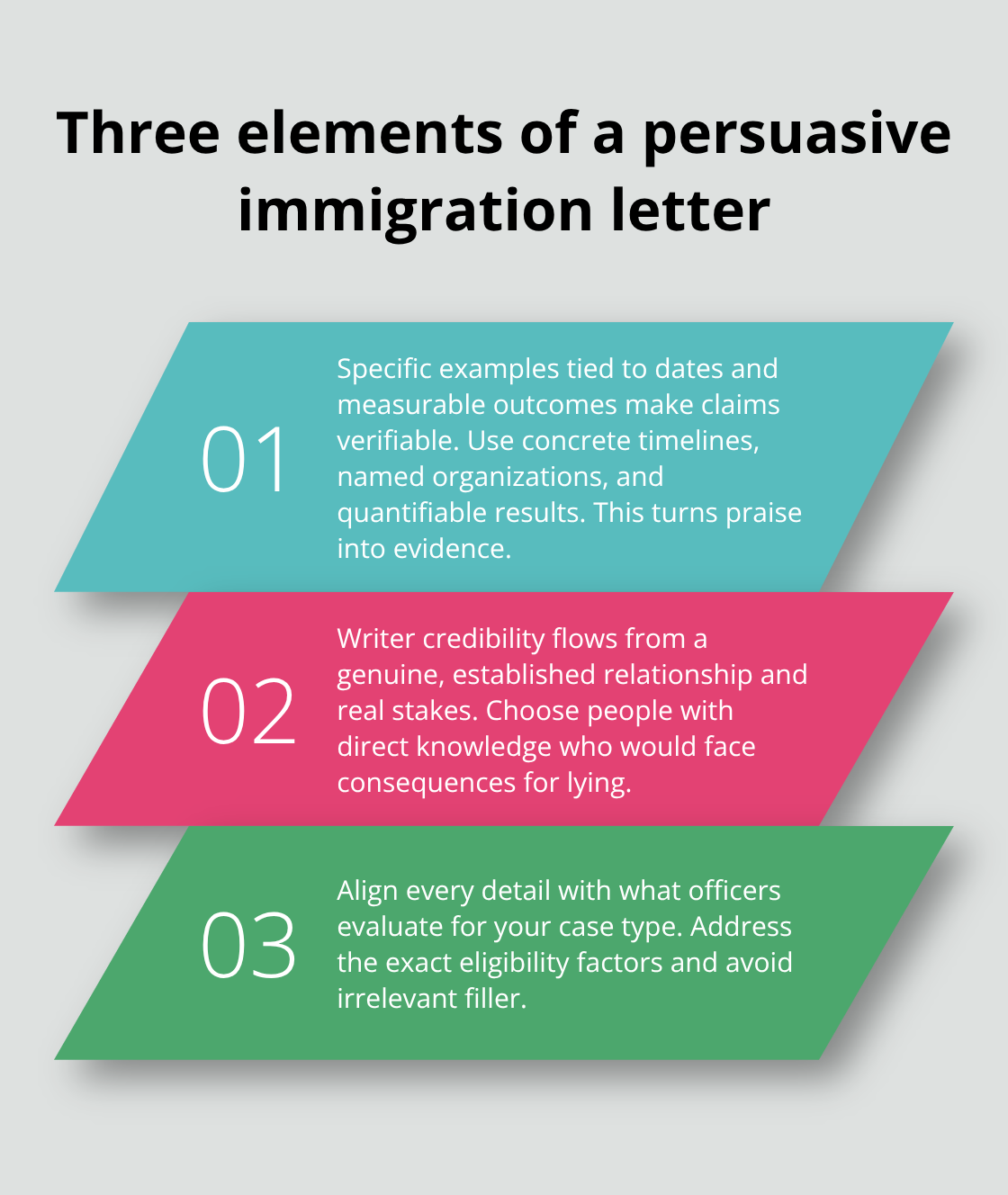
The mistakes that destroy letters are equally preventable. Vague language about your character accomplishes nothing. Inconsistencies between your letter and official documents raise red flags that damage your entire case. Failing to address what your specific immigration category requires wastes the opportunity that a well-crafted letter provides. You control all three of these factors when you understand what immigration officials actually need to see.
Identify the people in your life who have direct knowledge of you and can speak to what immigration officials need to see, then contact Law Offices of Jeffrey A. Thompson to discuss your specific situation and how support letters fit into your overall case strategy. The strength of your letters can determine whether your application moves forward or stalls.
Share this post: