Consular Processing Steps: A Practical Roadmap to U.S. Residency
May 11, 2026
Consular processing is one of the most common paths to U.S. residency, yet many applicants find the steps confusing and overwhelming. We at Law Offices of Jeffrey A. Thompson have guided thousands through this process, and we know exactly where people get stuck.
This roadmap breaks down each phase of consular processing into actionable steps you can follow.
Understanding Consular Processing and Your Path to U.S. Residency
Consular processing means you apply for an immigrant visa at a U.S. embassy or consulate in your country of residence, not inside the United States. You remain outside the U.S. throughout the entire application process until your visa receives approval and you travel to the port of entry. This differs fundamentally from adjustment of status, where you apply while already inside the U.S. and become a permanent resident without leaving. The choice between these two paths depends entirely on where you live and your immigration history. If you are abroad and have never overstayed a visa or violated U.S. immigration law, consular processing is typically your path. If you are already in the U.S. and eligible, adjustment of status may be faster and simpler.
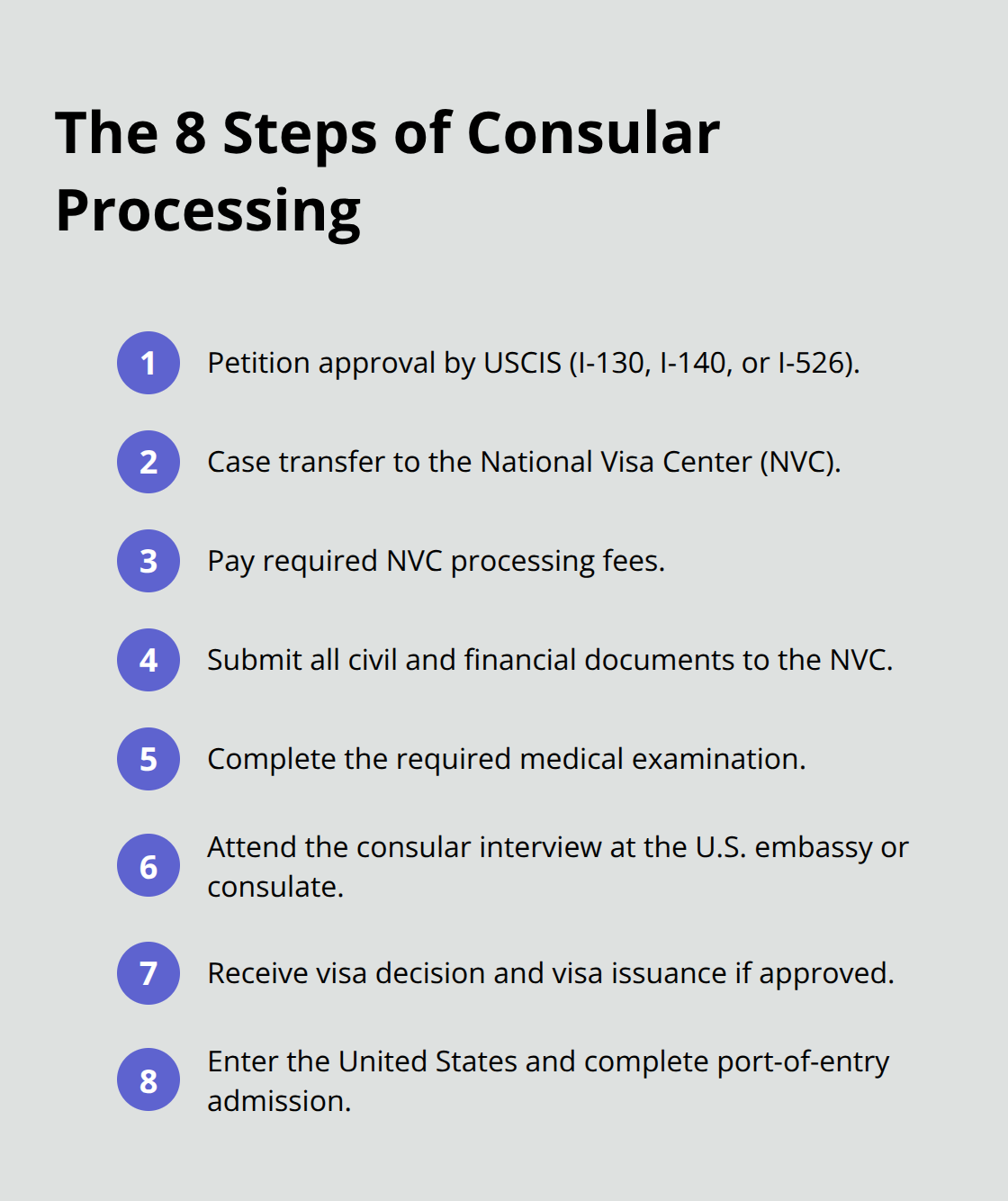
Many applicants waste months trying to pursue the wrong path because they do not understand this core distinction. Consular processing applies to hundreds of thousands of applicants every year across family-based, employment-based, diversity visa, and special immigrant categories. The process involves eight distinct steps: petition approval, National Visa Center processing, fee payment, document submission, medical examination, consular interview, visa issuance, and port-of-entry admission. Each step has specific requirements and deadlines that, if missed, can delay your case by months.
Who Qualifies for Consular Processing
You qualify for consular processing if you live outside the United States and have an approved immigrant petition or diversity visa selection. Family-based applicants need a U.S. citizen or lawful permanent resident relative to file Form I-130 on your behalf. Employment-based applicants require a U.S. employer to file Form I-140, or if you are an investor, you file Form I-526. Special immigrants, widow(er)s, and Amerasians can file Form I-360 themselves or have a sponsor file it. Diversity visa winners selected through the annual lottery also use consular processing.
The critical factor is that your priority date must be current, meaning a visa number is available for your category and country. According to the U.S. Department of State Visa Bulletin, visa availability varies significantly by category and country. Immediate relatives of U.S. citizens (spouses, unmarried children under 21, and parents of citizens) have no annual cap, so they are nearly always current. Family-sponsored and employment-based categories have annual limits, and countries like Mexico, Philippines, China, and India often face multi-year waits because demand far exceeds visa availability. If your priority date is not current, you cannot schedule an interview no matter how complete your file is.
This is why you must monitor the Visa Bulletin monthly. Many applicants fail to track visa availability and waste time gathering documents when their visa number will not be available for years.
The Visa Categories That Use Consular Processing
Family-based green cards account for the majority of consular processing cases. Immediate relatives move quickly because they are not subject to annual caps. Family-sponsored categories (F2A through F4) have longer waits depending on your country and the relationship type. Employment-based categories include EB-1 for priority workers and outstanding researchers, EB-2 for professionals with advanced degrees, EB-3 for skilled workers and professionals, EB-4 for special immigrants, and EB-5 for immigrant investors.
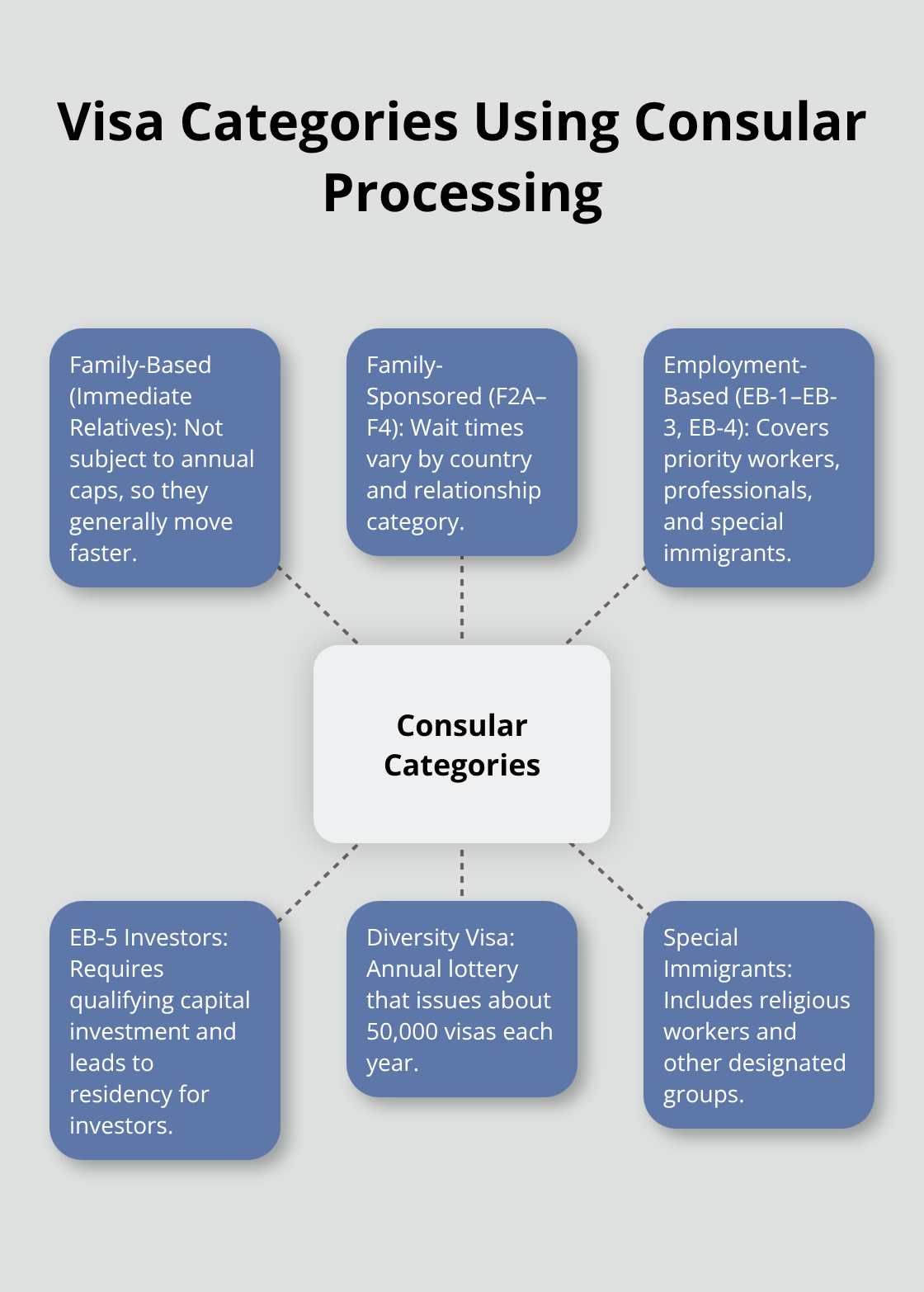
The EB-5 investor category requires a minimum capital investment of either $1.05 million or $800,000 if you invest in a targeted employment area, and it typically takes three to four years from application to green card. Diversity visas from the annual lottery represent about 50,000 visas yearly, but only a tiny fraction of the millions who enter actually win. Special immigrant categories include religious workers, Afghan and Iraqi translators, and various other groups with specific eligibility criteria.
The timeline varies dramatically by category. Immediate relatives often complete consular processing in four to eight months once the petition receives approval. Employment-based cases can take one to three years or longer if your country has a backlog. Your category determines visa availability, interview scheduling, and ultimately how long you wait. Identifying your strongest category early matters because pursuing the wrong one wastes time and money.
Now that you understand which path applies to you and what category fits your situation, the next phase involves the actual steps you must take to move your case forward.
From Petition to Interview: The Eight-Step Timeline
Your immigrant petition must be filed and approved before consular processing begins. For family-based cases, Form I-130 goes to USCIS, while employment-based petitions use Form I-140 or Form I-526 for investors. This petition stage typically takes two to six months depending on USCIS processing times and your category. Once USCIS approves your petition, they issue a Notice of Action that includes your priority date-the exact date your petition was filed. This priority date determines when your visa number becomes available and when you can schedule your interview.
Do not move forward with document collection until your petition receives approval. Many applicants waste time and money collecting documents before USCIS approves their case, only to discover their priority date will not be current for years. After approval, your case transfers to the National Visa Center, which handles fees, document collection, and interview scheduling. The NVC will contact you with a case number and instructions within two to four weeks of receiving your approved petition from USCIS.
Submitting Documents the NVC Requires
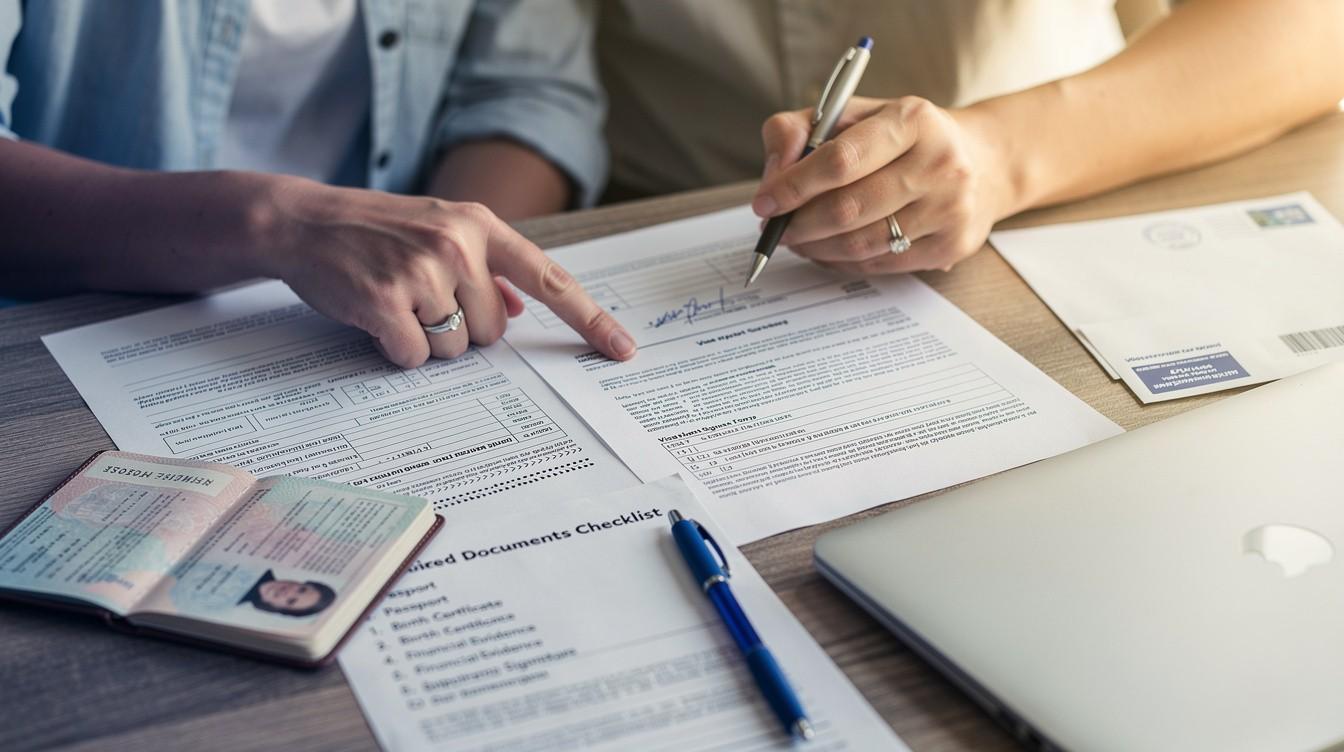
The National Visa Center requires specific documents before your case can proceed to interview scheduling. You must pay NVC processing fees, which range from $325 to $1,000 depending on your case type and whether you have derivative beneficiaries. Complete the DS-260 online immigrant visa application with extreme accuracy-errors on this form create unnecessary interview delays and raise red flags with consular officers.
Submit civil documents including your birth certificate, marriage certificate, divorce decrees for any prior marriages, police certificates from every country where you have lived for more than six months, and a photocopy of your valid passport’s biographical page. If you were adopted, provide the adoption decree and legal custody documentation. For employment-based cases or if your spouse is your visa sponsor, submit Form I-864 Affidavit of Support along with the sponsor’s tax returns for the past two years, recent pay stubs, W-2 forms, and bank statements showing liquid assets.
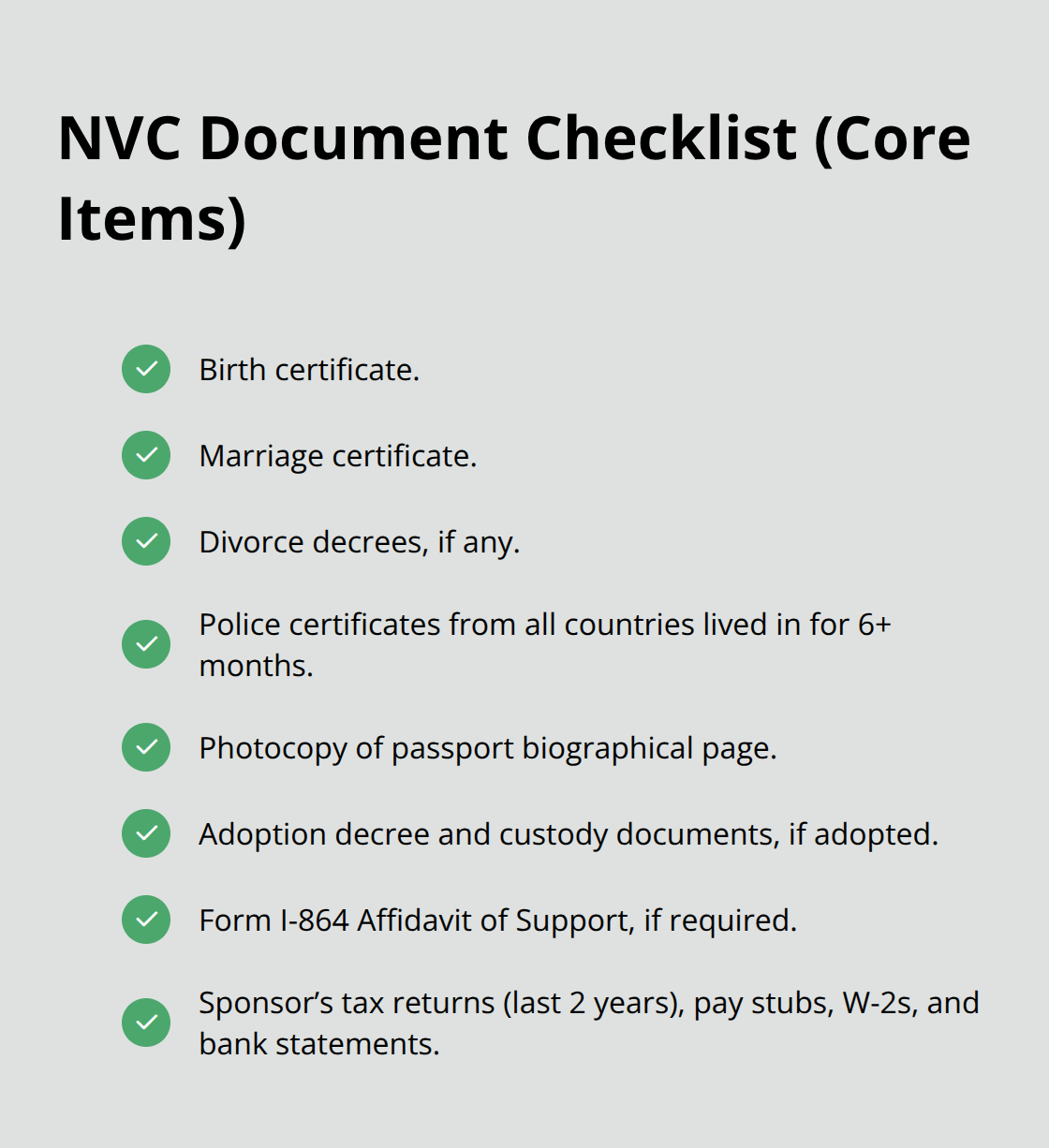
The entire document package typically takes four to eight weeks to assemble, and missing even one required document can delay your case by months. Country-specific guidelines vary significantly-applicants from India or the Philippines may need additional documentation compared to applicants from Western Europe. Check the Department of State’s country-specific document finder for your exact location before you submit anything to the NVC.
What Happens During NVC Review
The National Visa Center reviews every document you submit and confirms that your priority date is current according to the monthly Visa Bulletin. This review stage takes two to four months on average, though some cases move faster. The NVC verifies that all fees have been paid, all forms are complete, and all supporting documents match your visa category and country requirements.
Once the NVC completes its review, your case status changes to Paid and Complete, which you can monitor through the CEAC system using your case number and passport number. At this point, the NVC coordinates with the U.S. embassy or consulate where you will interview to schedule your appointment. Interview scheduling typically occurs two to three months after your case becomes Paid and Complete, though this varies by embassy and current visa availability.
Monitoring Visa Availability and Interview Scheduling
Some embassies are backlogged and schedule interviews slowly, while others move quickly. The U.S. Department of State publishes the IV Scheduling Status Tool monthly, which shows which embassies are actively scheduling interviews and approximately when documentarily complete cases can expect appointments. If visa numbers retrogress-meaning your priority date moves backwards in the Visa Bulletin-your interview cannot be scheduled until your date becomes current again, which can add six months to a year to your timeline.
You must monitor the Visa Bulletin monthly. This is the only way to know when your case will actually move forward. Once the NVC confirms your case is complete and your visa number becomes current, the embassy will contact you to schedule your interview appointment.
Preparing for Your Consular Interview
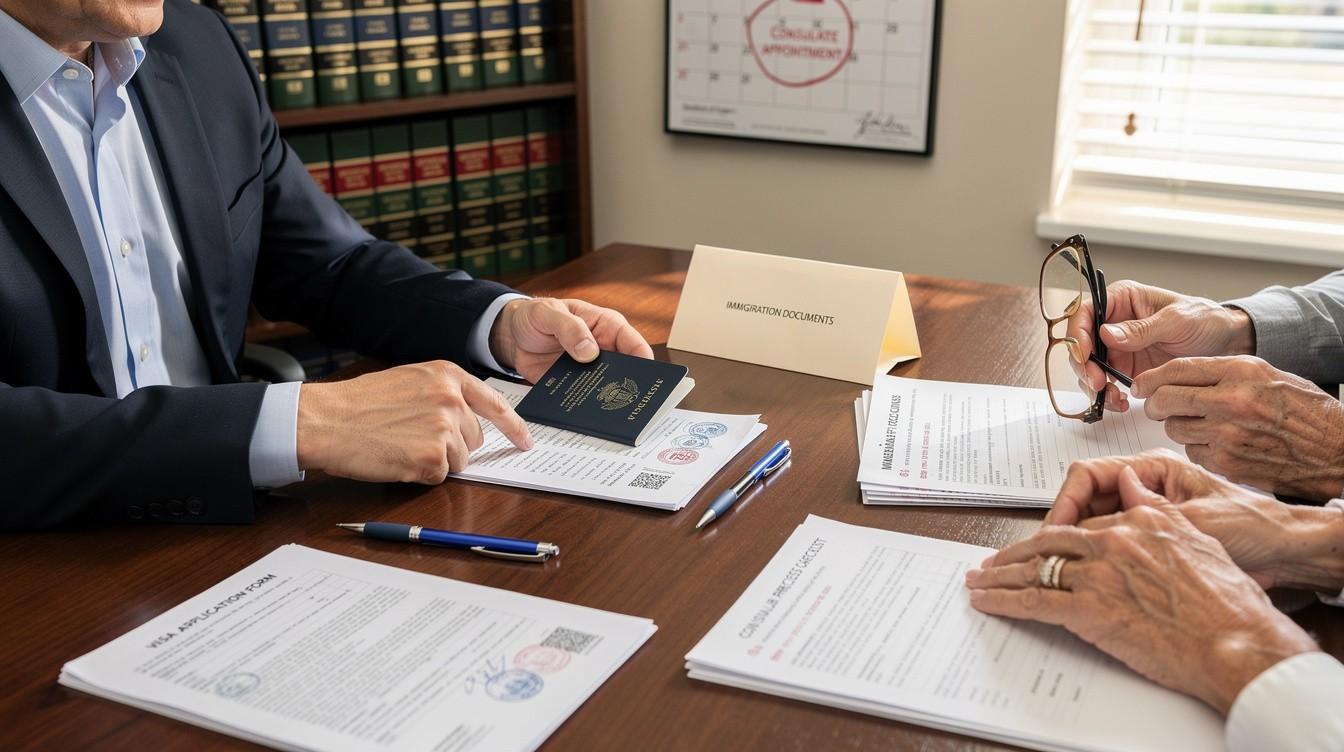
Your consular interview determines whether you receive your immigrant visa, so preparation directly impacts your outcome. Bring originals or certified copies of every civil document you submitted to the National Visa Center: birth certificate, marriage certificate, divorce decrees, police certificates, and your valid passport. The consular officer will review these documents again and may ask you to explain discrepancies or missing information.
Documents You Must Present
Bring additional copies of your DS-260 form, your NVC case number documentation, and any correspondence from the embassy or National Visa Center. If you have derivative beneficiaries such as a spouse or children, bring their original documents as well. The medical examination results from the embassy-approved physician must arrive in the sealed envelope provided by the clinic, unopened and unaltered. Many applicants lose their cases because they open the medical envelope or attempt to review the results before the interview, which invalidates the examination.
Bring your affidavit of support if applicable, along with the sponsor’s recent financial documents showing income and assets. The consular officer will review these materials to confirm financial capacity.
Interview Questions and Preparation Strategy
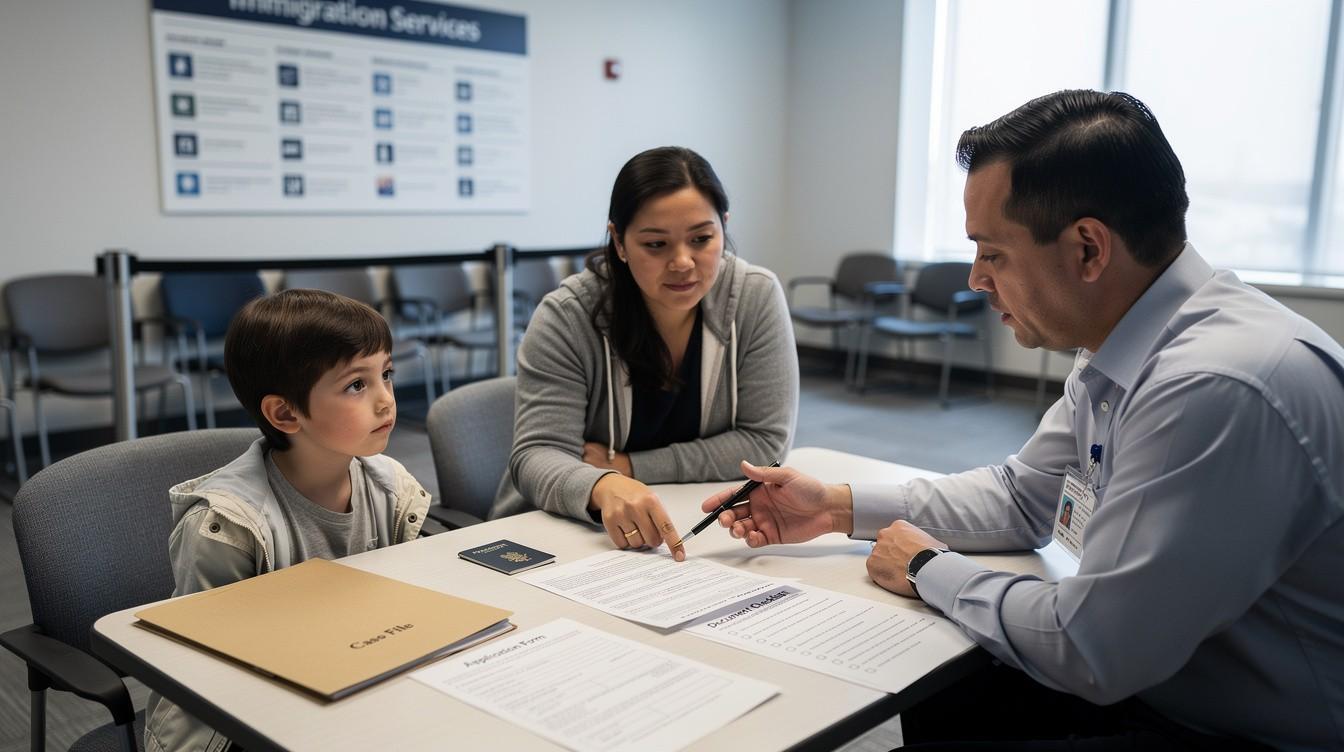
The consular officer will ask about your relationship to the petitioner, your work history, your plans in the United States, and whether you have ever faced arrest, overstayed a visa, or violated immigration law. Answer directly and honestly without elaborating beyond what was asked. Consular officers conduct approximately 150 to 200 interviews per day at busy posts, so they move quickly and have limited patience for lengthy responses.
If you do not understand a question, ask for clarification rather than guessing. Prepare for questions about your employment history, educational background, family relationships, and financial situation. Practice your answers out loud beforehand so you respond naturally without hesitation. If your case involves marriage to a U.S. citizen, the officer will ask detailed questions about how you met, your relationship timeline, and plans after immigration to verify the marriage is genuine. Prepare specific details and dates.
Medical Examination Requirements
The medical examination is non-negotiable and must occur at a clinic designated by the U.S. embassy in your country. The examination includes a physical evaluation, blood tests for communicable diseases, and verification of vaccinations required by U.S. immigration law. Certain health conditions may require waivers, but the examination itself cannot be skipped or substituted with results from your private physician.
Schedule your medical examination only after you receive your official interview appointment, as results expire one year from the examination date. If you schedule too early, your results may expire before your interview occurs, forcing you to repeat the examination and pay the fee again (typically ranging from $300 to $800 depending on your country). Applicants from countries with high tuberculosis rates may face additional screening requirements. The consular officer will verify that your medical examination is complete and that no communicable diseases or health conditions make you ineligible for immigration.
If you have a health condition that might raise concerns, consult with an immigration attorney before your interview to determine whether a waiver is necessary. Grounds for inadmissibility based on health are rare but include untreated tuberculosis or certain criminal histories.
What Happens During and After Your Interview
The entire interview typically lasts five to fifteen minutes, though complex cases may take longer. The officer makes an immediate decision in most cases and either approves your visa, requests additional documentation, or denies your application. If denied, you receive a written explanation and information about appeal options or reapplication procedures. Background checks typically complete before your interview, though the consular officer may request additional documentation if security concerns arise.
Final Thoughts
After your interview concludes, the consular officer makes a decision that is typically final. If approved, you receive your immigrant visa in your passport and can travel to the United States within six months. Present your visa packet unopened to a U.S. Customs and Border Protection officer at the port of entry, and you become a lawful permanent resident. Your physical green card arrives by mail within two weeks if you paid the USCIS immigrant fee before arrival.
If the consular officer requests additional documents, respond within the specified timeframe-delays at this stage do not indicate denial. If your application faces denial, you receive written reasons and information about reapplication or appeal options. Many denials stem from missing documents or security checks that proper guidance can resolve.
The consular processing steps demand patience and organization, but the outcome justifies the effort. We at Law Offices of Jeffrey A. Thompson have guided thousands through this journey and understand exactly where cases encounter obstacles. Contact us for a consultation to discuss your specific situation and keep your case moving forward smoothly.
Share this post: