Massachusetts Green Card Attorney: How Expert Guidance Accelerates Your Path to Permanent Residency
May 4, 2026
Getting a green card involves navigating multiple pathways, strict eligibility rules, and complex paperwork. At Law Offices of Jeffrey A. Thompson, we’ve guided hundreds of applicants through this process and know exactly where delays and rejections happen.
A Massachusetts green card attorney can transform your application from a source of stress into a strategic plan with real deadlines and clear next steps. This guide walks you through the main categories, common pitfalls, and how professional representation makes the difference.
What Are Your Green Card Options
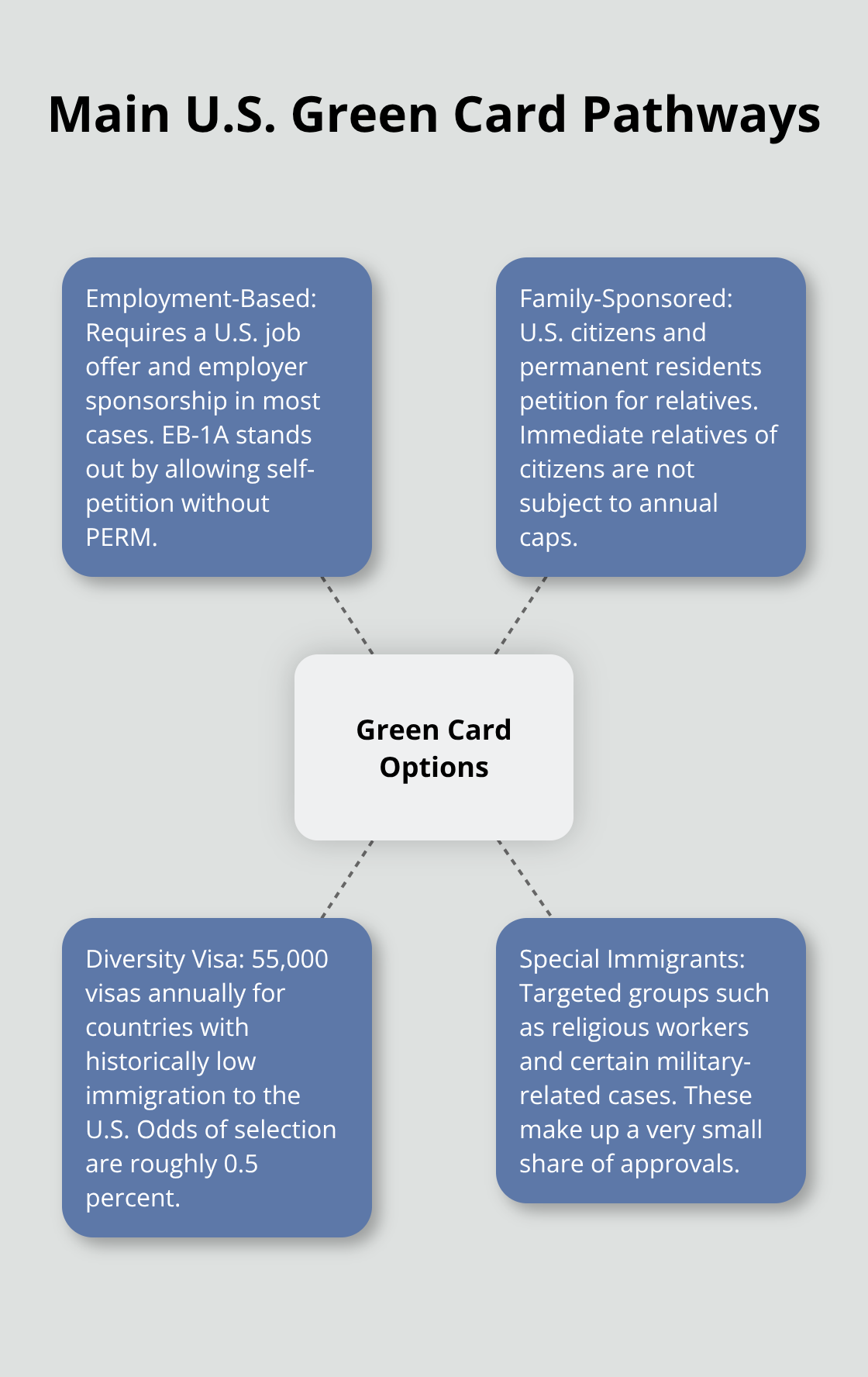
Three main pathways exist for obtaining permanent residency in the United States, and which one applies depends entirely on your situation. Employment-based green cards require a job offer from a U.S. employer who sponsors your application, though certain categories like EB-1A allow self-petition without employer involvement. Family-sponsored immigration lets U.S. citizens and permanent residents petition for relatives, with immediate relatives of citizens facing no annual cap while other family preferences compete within visa quotas. The diversity visa program allocates 55,000 green cards annually to countries with historically low immigration rates to the U.S., though odds of selection stand at roughly 0.5 percent according to the State Department. Special immigrant categories exist for religious workers, armed forces members, and other groups, but these represent a tiny fraction of approvals.
Employment-Based Categories Demand Strategic Planning
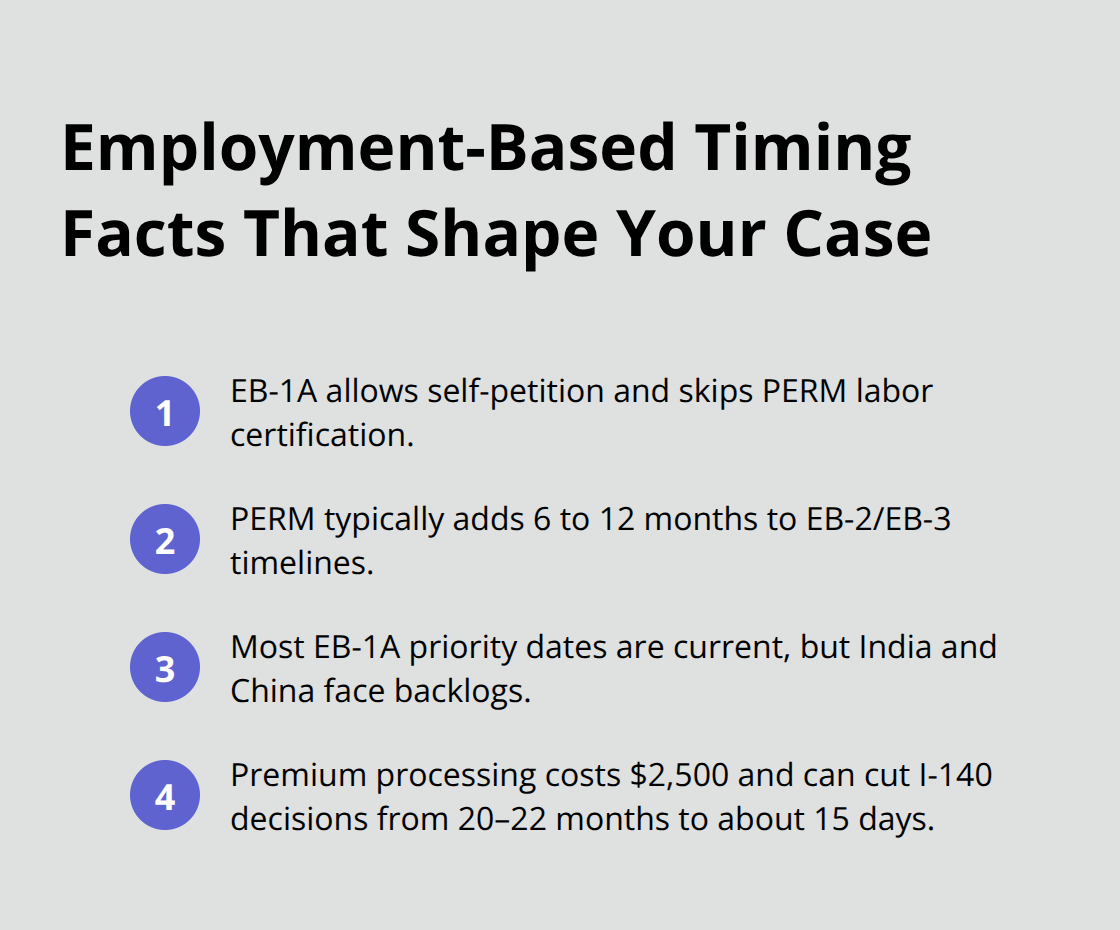
If you pursue employment-based immigration, understand that EB-1A for individuals with extraordinary ability stands apart because you can self-petition without waiting for employer sponsorship or completing the PERM labor certification process. This category benefits professionals in STEM fields, and Massachusetts offers exceptional advantages with major employers like iRobot, PTC, Akamai, and HubSpot plus research institutions including MIT and Harvard that strengthen evidence of extraordinary ability. Other employment categories (EB-2 and EB-3) require PERM certification, which typically adds 6 to 12 months to your timeline. As of December 2024, EB-1A priority dates for most countries remain current, meaning no waiting beyond processing times, though India and China face significant backlogs. Premium processing for EB-1A I-140 petitions costs $2,500 but reduces decision time from 20 to 22 months down to approximately 15 days.
Family-Sponsored Pathways Move Faster for Immediate Relatives
Family-based green cards follow two tracks with vastly different timelines. Immediate relatives of U.S. citizens-spouses, unmarried children under 21, and parents of citizens over 21-face no visa quota and typically see approvals within 6 to 12 months when paperwork is complete. Other family preferences compete within annual visa quotas, creating waits that can extend years depending on the relationship category and your country of origin. I-130 petitions form the foundation of family sponsorship, and accuracy matters tremendously because inconsistencies between your I-130 and supporting documents trigger requests for evidence that delay processing. Filing I-485 to adjust status while in the United States moves faster than consular processing abroad, but you must have an available visa number and qualify to adjust. The visa bulletin shows current priority dates for most family preference categories, though this changes monthly and directly affects when you can file your adjustment application.
Visa Backlogs and Priority Dates Shape Your Timeline
Visa availability determines when you can actually file your green card application, and this factor separates successful applicants from those who face unexpected delays. The visa bulletin, published monthly by the State Department, lists priority dates for each employment and family category by country of origin. If your priority date has not yet become current, you cannot file your I-485 adjustment application, even if all other requirements are met. Employment-based categories experience longer backlogs than family-based ones, particularly for applicants from India and China (where EB-1A applicants from India face an April 15, 2022 priority date). Family preference categories also experience delays, though immediate relatives bypass this system entirely. Understanding where your priority date stands and monitoring monthly bulletin updates prevents wasted effort and keeps your timeline realistic.
The obstacles that follow-documentation gaps, medical exam complications, and USCIS requests-hit harder when you lack a clear strategy for your specific category and timeline.
What Derails Green Card Applications
Incomplete Forms and Missing Documentation
Incomplete forms and missing documents represent the leading cause of delays in green card processing, with even small oversights adding weeks or months to your timeline. The I-130 and I-485 forms demand precision-every field must be completed, dates must match across all documents, and signatures must appear in every required location. Leaving a field blank instead of writing N/A triggers automatic requests for evidence that halt your case. Downloading outdated form versions from sources other than USCIS compounds the problem, since form requirements change and rejected submissions restart the clock.
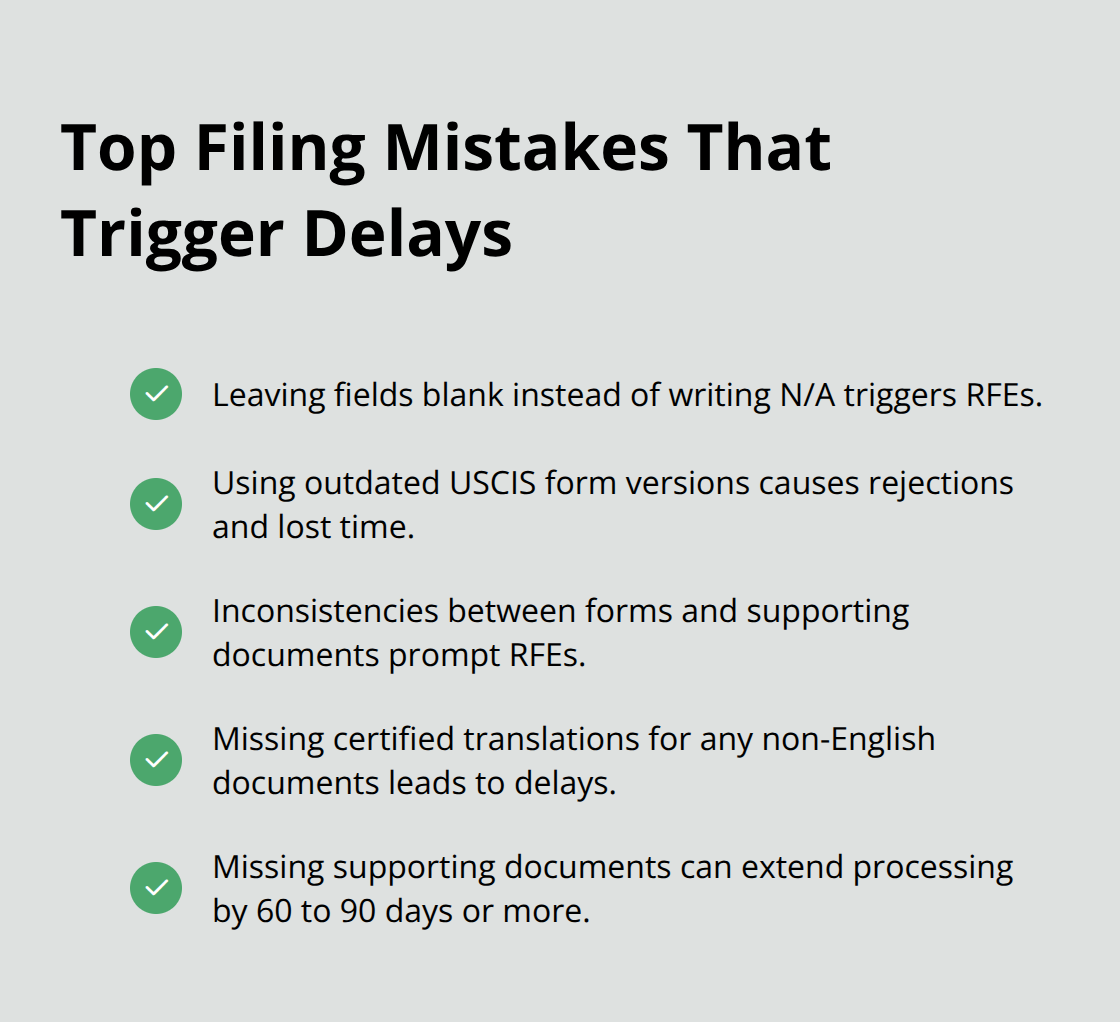
Create a comprehensive organizational checklist before filing to verify employment dates align across your resume, I-485, and employer verification letter. Confirm your passport number, visa dates, and entry status appear consistently throughout all materials. Ensure all family relationships match between your I-130 and birth certificates or marriage licenses. Attach certified translations for every non-English document without exception. Missing supporting documents trigger the most common Requests for Evidence, extending processing by 60 to 90 days minimum.
Medical Exams and Background Checks
Medical examination and background check complications often surface during the final stages of processing, when you believed your case was nearly complete. The USCIS-designated civil surgeon must complete your I-693 medical examination using the current form, and outdated versions cause rejections. Certain medical conditions or vaccination records trigger additional review that delays your case by months.
Criminal history, prior immigration violations, or public health concerns can render you inadmissible and require waivers that demand expert navigation of waiver applications and appeals. Travel history inconsistencies between your passport, visa stamps, and application statements raise red flags about credibility, particularly if you left the United States without advance parole while your adjustment application was pending-this abandons your case and forces you to restart the entire process from abroad. Unlawful presence or unauthorized work may disqualify you from adjusting status and require consular processing instead, fundamentally altering your timeline.
Why Professional Guidance Prevents Costly Mistakes
Understanding these complications early prevents surprises and allows time to gather necessary waivers or evidence before USCIS raises concerns. A report from the American Immigration Council found that immigrants with legal representation achieved significantly better outcomes than those filing alone, with representation improving release from detention, preventing removal in absentia, and securing immigration relief. Professional guidance identifies potential problems during the planning stage rather than discovering them when USCIS issues requests that demand immediate response. These obstacles hit harder when you lack a clear strategy for your specific category and timeline-which is exactly where an immigration attorney steps in to protect your case and accelerate your path forward.
How an Attorney Organizes Your Path Forward
Assessment and Strategic Planning
An immigration attorney’s first task transforms the chaos of your green card application into a structured, verifiable system. We at Law Offices of Jeffrey A. Thompson start with a thorough eligibility assessment specific to your situation-employment category, family relationship, country of origin, and current immigration status all determine which forms you need, what documents matter most, and where delays are most likely to occur. Once your category is confirmed, we build a customized document checklist that goes far beyond what USCIS lists on their website. This checklist identifies which employment letters must include specific language about your job duties, which birth certificates require certified translations, and which financial documents prove your sponsor’s income. We organize these materials in the exact sequence USCIS expects, with color-coded tabs and numbered sections that match your application forms.
Preparation and Filing Precision
This level of preparation prevents the most common delay: incomplete submissions that trigger Requests for Evidence adding significant time to processing. During the filing stage, we verify every date, every name spelling, and every signature field across all forms before submission. We download current form versions directly from USCIS on the day of filing to eliminate rejections from outdated templates. We also prepare you for what happens after submission-we explain which USCIS notices require immediate response, how to check your case status online, and when to expect biometrics appointments or medical exam scheduling.
Strategic Communication With USCIS
When USCIS contacts you with questions or requests additional evidence, having an attorney respond on your behalf transforms the interaction from stressful uncertainty into strategic communication. We draft responses that address USCIS concerns with precision, attaching evidence that directly answers each question without volunteering unnecessary information that could complicate your case. If your application faces complications (criminal history requiring a waiver, travel inconsistencies raising credibility concerns, or medical conditions flagged during your exam), we assess whether adjustment of status remains viable or if consular processing becomes necessary.
Representation in Interviews and Appeals
In interview situations, we attend with you and advocate directly with the USCIS officer, clarifying any confusion about your documents or your relationship to your petitioner. If your application receives a denial notice, we conduct a detailed legal analysis to determine whether an appeal, motion to reopen, or entirely new petition makes strategic sense. Having a lawyer is one of the most powerful tools to increase fairness in immigration court. An attorney transforms your green card application from a paperwork nightmare into a managed process with clear accountability at each stage.
Final Thoughts
Green card pathways vary dramatically depending on your employment category, family relationships, and country of origin, but all of them share one reality: incomplete applications and missed deadlines cost months or years of your life. Employment-based routes like EB-1A offer faster timelines when you qualify, while family-sponsored immigration moves quickly for immediate relatives but faces visa backlogs for other preferences. Understanding which category applies to you and monitoring visa bulletin priority dates prevents wasted effort on applications you cannot yet file.
The obstacles we covered-incomplete forms, documentation gaps, medical exam complications, and background check issues-derail applications far more often than applicants expect. A 2016 American Immigration Council report found that immigrants with legal representation achieved significantly better outcomes than those filing alone, with representation improving release from detention, preventing removal in absentia, and securing immigration relief. These statistics reflect a hard truth: the immigration system punishes mistakes severely, and small errors compound into months of additional processing time.
A Massachusetts green card attorney transforms your application from a source of anxiety into a managed process with clear accountability. We at Law Offices of Jeffrey A. Thompson assess your specific situation, build a customized document checklist, verify every detail before filing, and respond strategically to USCIS requests or complications. Contact us in Brockton, Massachusetts to schedule a consultation and receive a tailored strategy for your green card application.
Share this post: