Spouse Visa Interview Brockton: Tips for a Smooth Appointment
June 12, 2026
Your spouse visa interview in Brockton is one of the most important steps in your immigration journey. At Law Offices of Jeffrey A. Thompson, we’ve helped countless couples navigate this process successfully.
The interview determines whether your relationship is genuine and whether you meet all legal requirements. Getting it right means understanding what USCIS officers look for and preparing thoroughly.
What Happens During Your Spouse Visa Interview
Interview Length and Focus
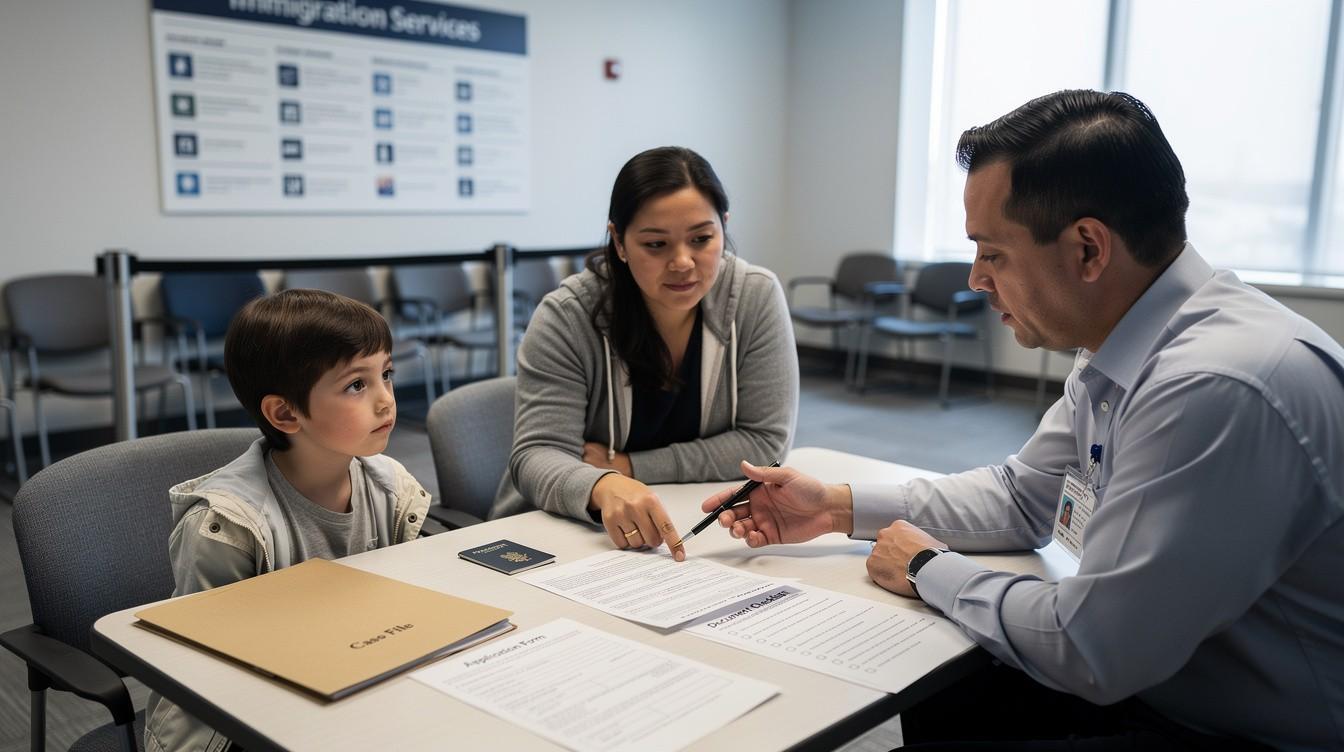
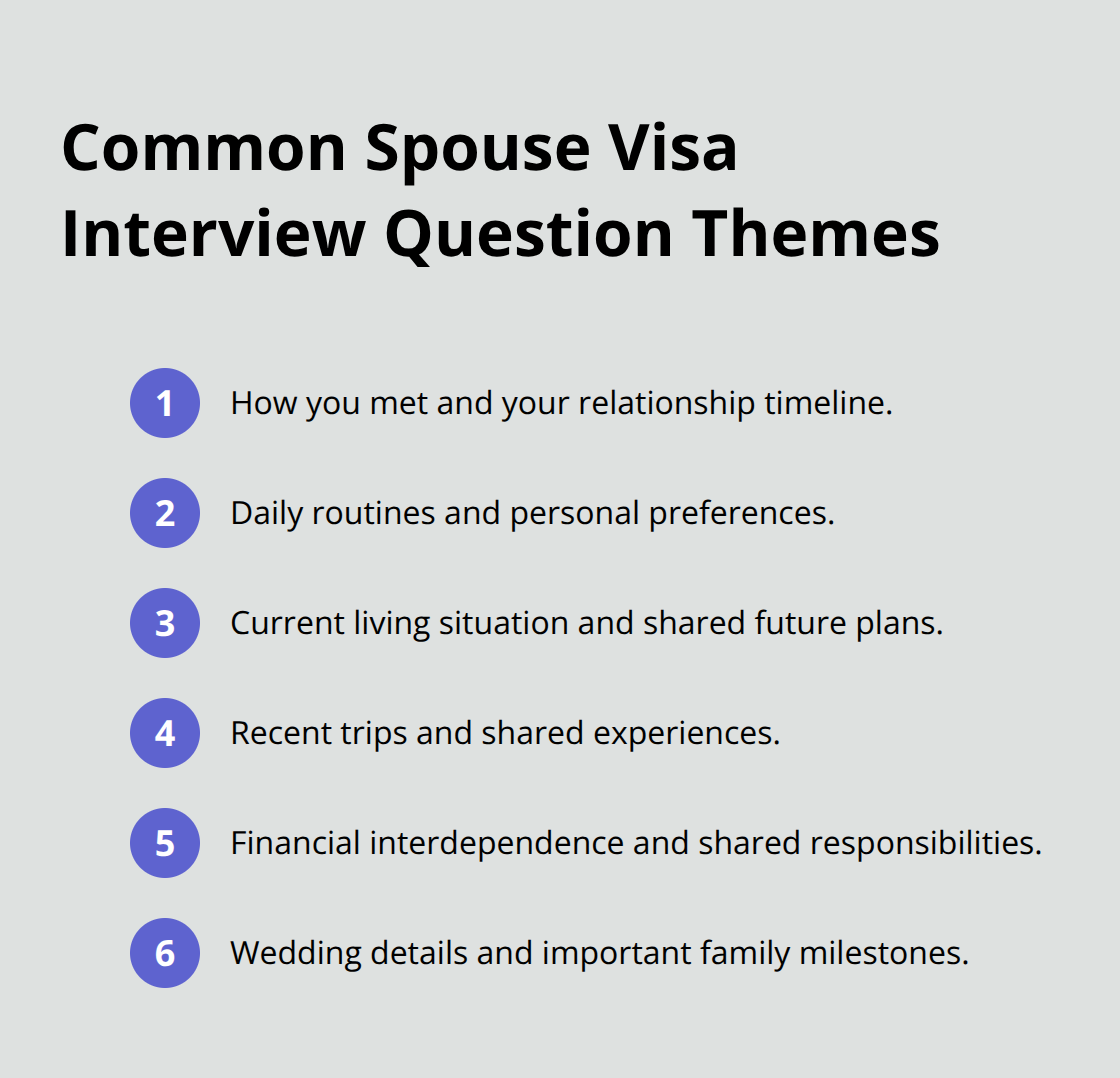
Your spouse visa interview in Brockton typically lasts between 20 and 30 minutes, though this varies based on your specific circumstances and how straightforward your case appears. USCIS officers use this time to verify that your marriage is genuine and that you meet all legal requirements for sponsorship. The officer will ask about how you met, your relationship timeline, your current living situation, and your future plans together.
Questions That Reveal the Truth
Expect detailed questions about everyday details-what your spouse’s favorite food is, where you spent your last vacation together, or how you typically spend weekends. These questions sound simple, but they reveal whether you actually know each other or if your marriage exists only on paper. The tone of the interview depends largely on the completeness of your initial application; officers spend less time questioning applicants with comprehensive documentation and clear evidence of a bona fide relationship.
Essential Documents to Bring
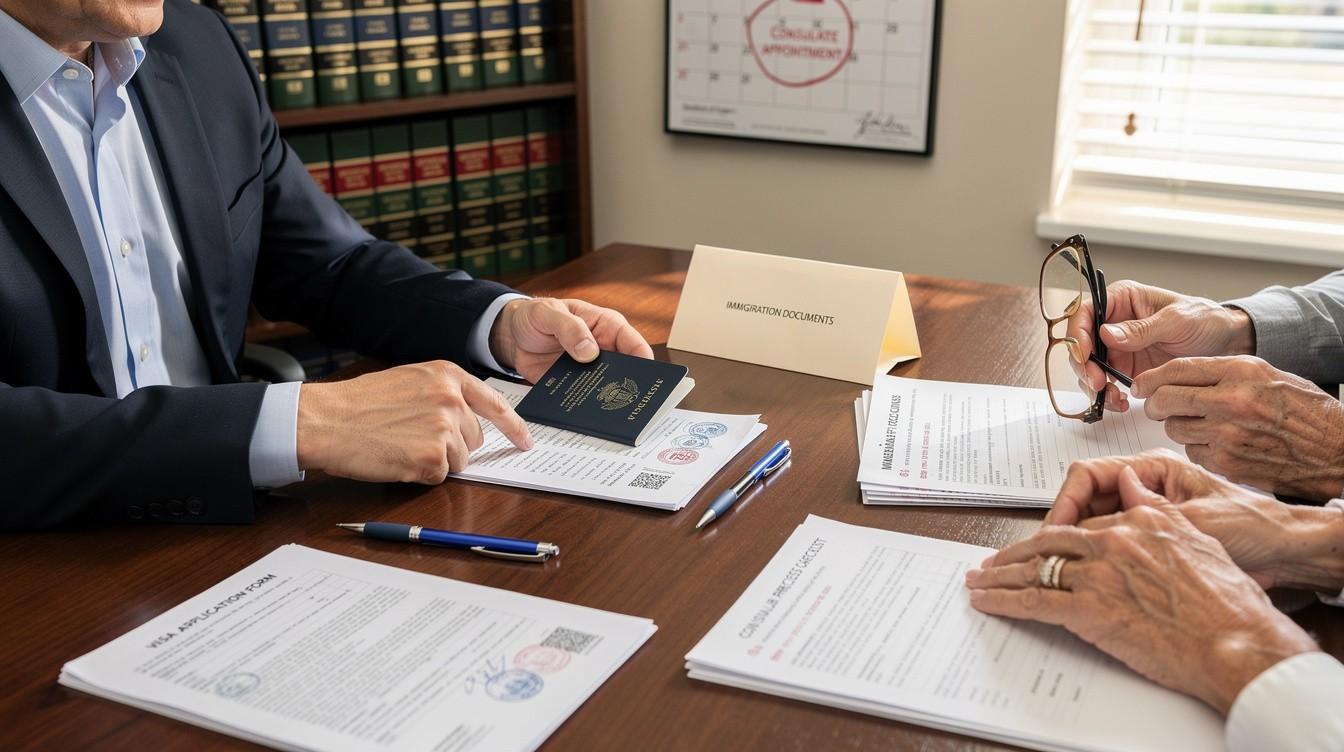
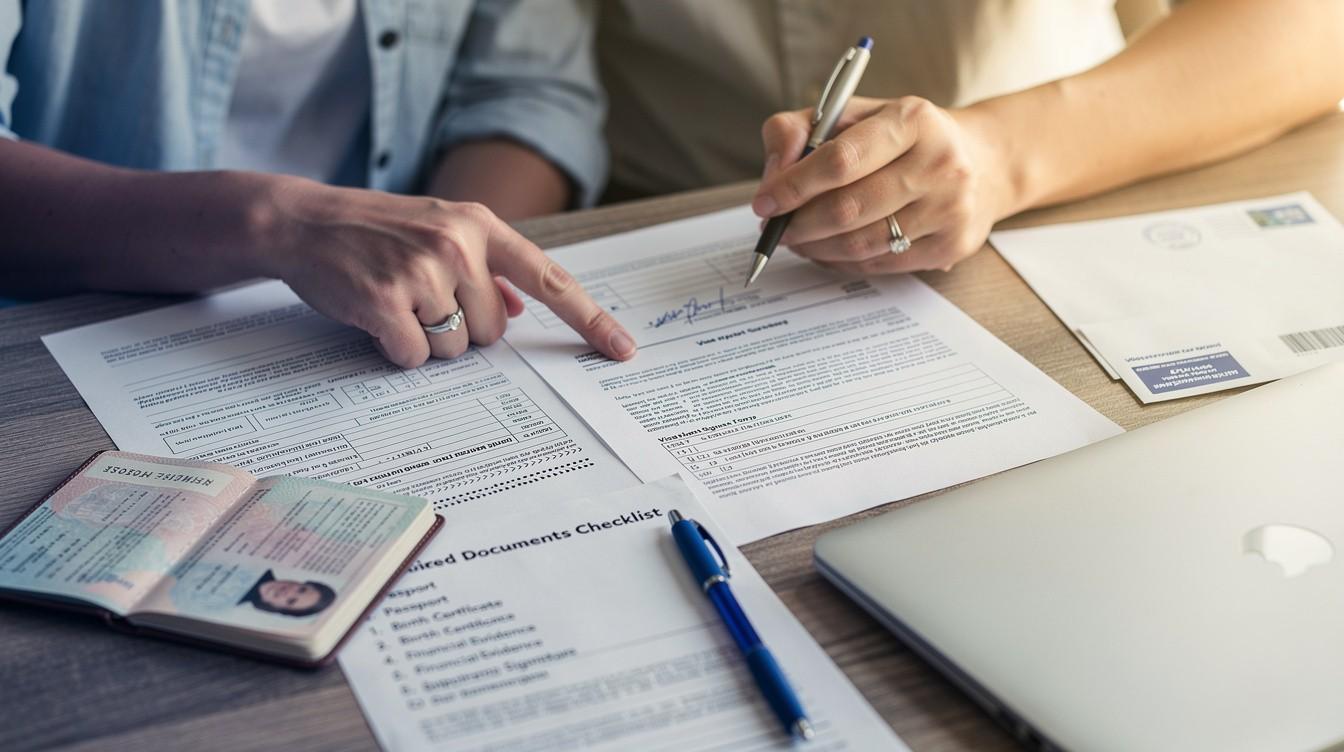
Bring originals and copies of your birth certificate, marriage certificate, passport, and I-94 arrival record. Include at least three months of recent pay stubs, bank statements showing joint accounts or shared financial responsibility, and a lease or mortgage in both names if possible. Organize photos chronologically spanning your relationship-the officer wants to see genuine moments, not just posed pictures. Include travel itineraries, hotel receipts, and airline tickets that show you’ve spent time together.
Supporting Evidence That Strengthens Your Case
Affidavits from friends or family members who can verify your relationship carry significant weight; these letters should be specific about what they’ve witnessed and how long they’ve known you both. Tax returns and joint utility bills strengthen your case by demonstrating financial interdependence. If your marriage is recent, bring evidence of ongoing communication-text messages, emails, or social media interactions-that show consistent contact. Inconsistencies between what you say in the interview and what your documents show will trigger additional scrutiny or requests for evidence, which delay your case by months.
Organizing Your Materials for Maximum Impact
A well-organized folder with clear labels and a logical structure impresses officers and signals that you take the process seriously. This preparation sets the stage for the next critical phase: understanding which red flags can derail your application and how to address them before they become problems.
How to Prepare for Your Spouse Visa Interview
Create a Document Organization System
Start your preparation at least six weeks before your interview date. Create a physical folder with three sections: originals, copies, and a timeline document. The originals stay in a safe place at home; you bring copies to the interview. Inside your copies section, arrange documents chronologically-starting with how you met, progressing through your relationship milestones, and ending with your current life together. This chronological structure helps you tell a coherent story without fumbling through papers.
Build Your Relationship Timeline
Print out a one-page relationship timeline that lists key dates: when you met, when you started dating, when you moved in together, when you got engaged, and when you married. During the interview, officers often ask questions about specific moments in your relationship. A clear timeline prevents contradictions and shows you remember your own story accurately.
Compile Financial and Residency Evidence
Include all financial documents from the past 12 months: joint bank statements, mortgage or lease agreements in both names, utility bills showing your shared address, and tax returns if applicable. Applications with comprehensive documentation help strengthen your case and reduce the likelihood of delays.
Practice Your Answers and Mock Interview
Practice answering questions out loud, not just in your head. Ask your spouse to quiz you on details about their job, their family members’ names, their daily routine, and personal preferences. Real officers ask specific questions because vague answers raise suspicion. If your spouse works as an accountant, know what firm they work for, how long they’ve been there, and what their typical day looks like. If you spent a vacation together in Florida, know which cities you visited, which restaurant you ate at, and what you did on specific days. Weak answers like “I don’t remember” or “we did typical tourist things” signal that you haven’t actually lived this experience together.
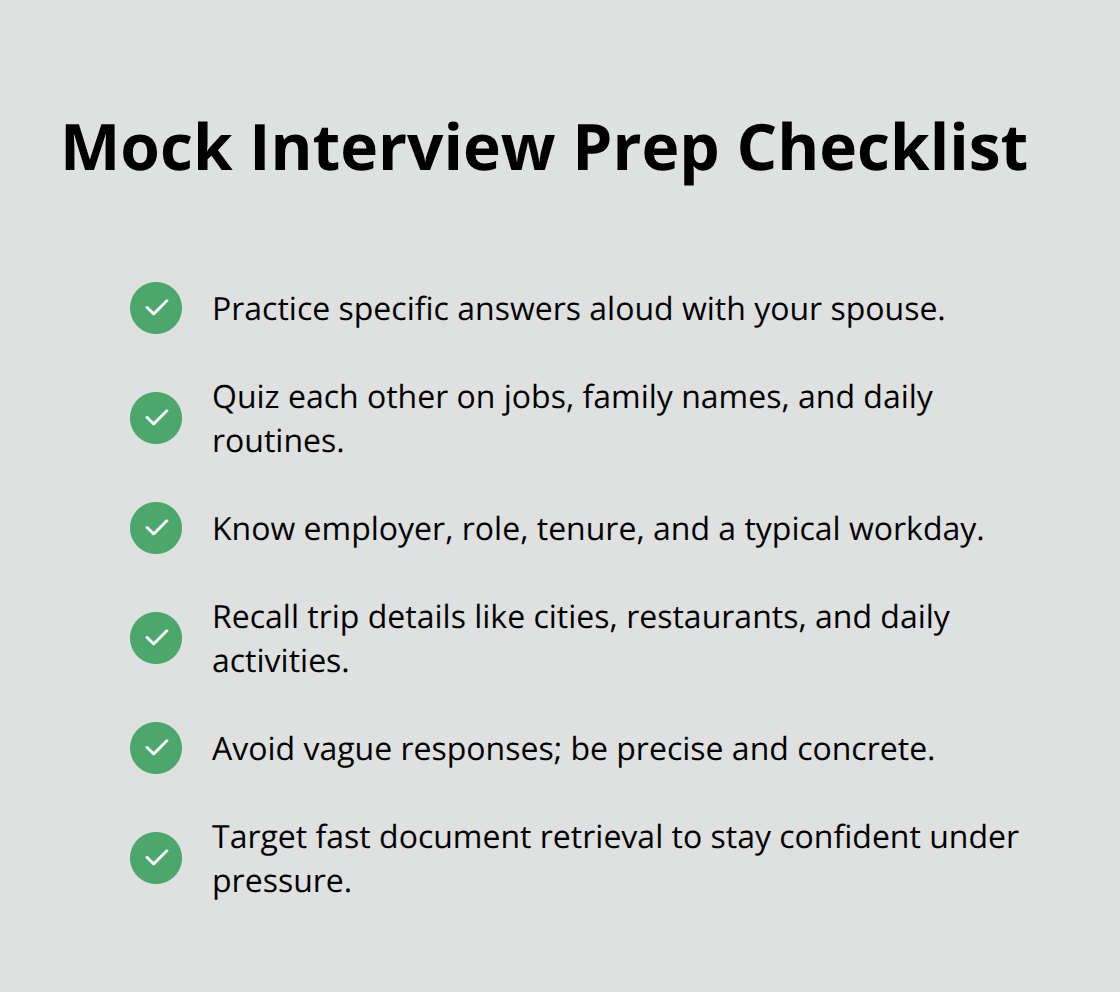
Mock interviews reduce interview anxiety significantly and improve your ability to deliver credible answers under pressure. Organize your documents so you can retrieve any specific item within 10 seconds-officers notice when applicants fumble through papers for five minutes looking for a single document.
Verify Consistency Across All Your Filings
Review every statement you made in your I-130 petition and I-485 application before the interview. Check that your employment history, residence history, and relationship timeline match exactly what you submitted in writing. Even small inconsistencies (saying you lived in Boston in the application but telling the officer you lived in Brockton) create problems that extend your case or trigger additional scrutiny. Print your actual petition and application pages to review them word-for-word before your appointment. This level of preparation positions you to handle the most challenging aspect of your interview: addressing red flags that officers watch for closely.
Red Flags That Can Derail Your Spouse Visa Interview
Inconsistencies Between Your Statements and Documentation
Inconsistencies between what you told USCIS on paper and what you say in the interview destroy credibility instantly. If your I-485 application states you lived in Boston from 2022 to 2024 but you tell the officer you were in Brockton during that time, the interview stalls. Officers document every contradiction and use it as evidence that either your application was fraudulent or you’re lying now.
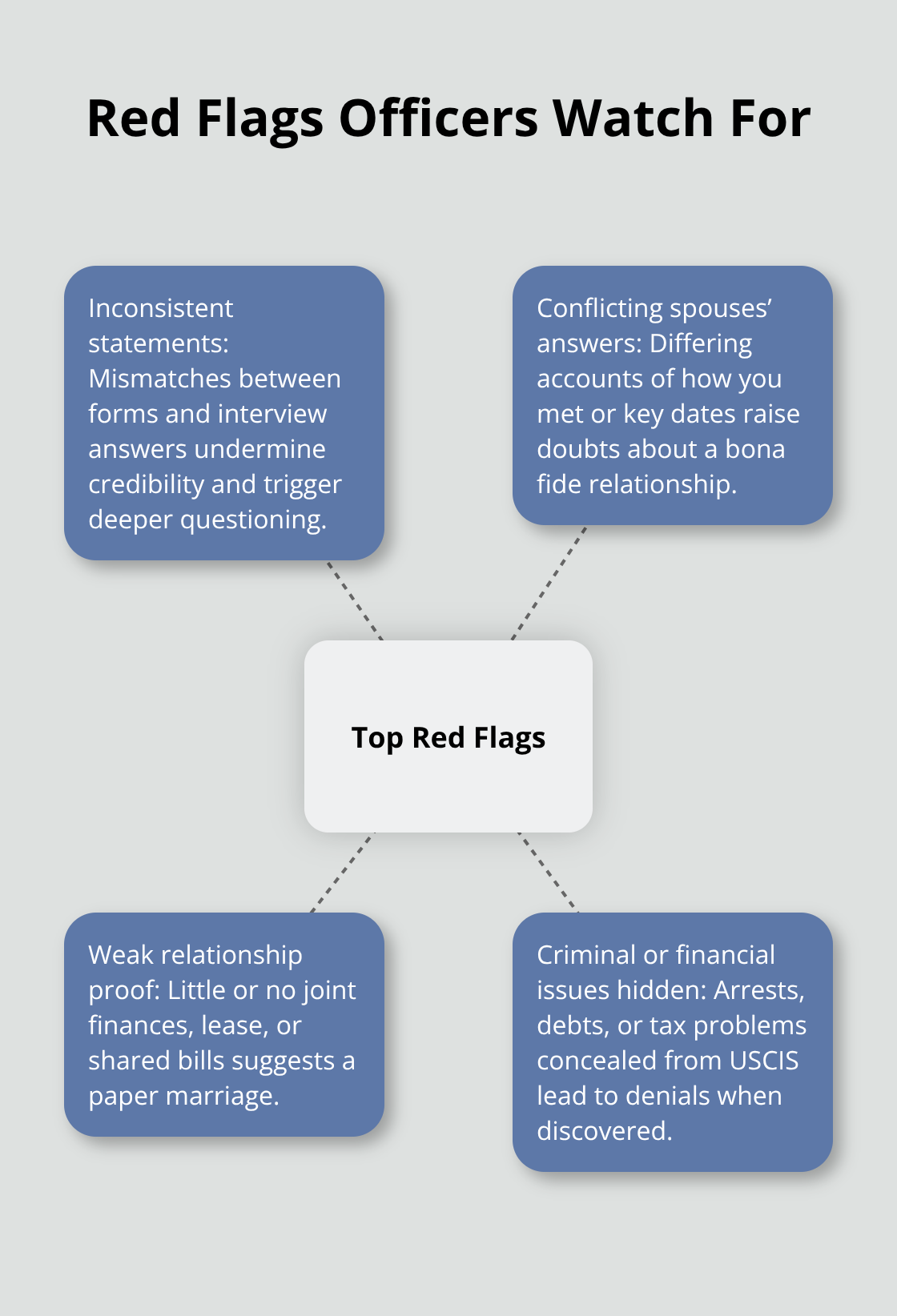
Your spouse’s answers must align with yours too. If you say you met at work in March 2022 but your spouse says April 2022, the officer will dig deeper into whether your relationship is genuine.
The solution is straightforward: review every single word in your submitted petitions and applications before the interview. Print the actual pages you signed, read them word-for-word, and memorize the exact dates and locations you wrote. When the officer asks about your employment history, your residence, or your relationship timeline, your verbal answers must match your documents precisely. Small errors feel intentional to officers trained to spot fraud.
Inability to Demonstrate a Genuine Relationship
Inability to demonstrate a genuine relationship is the most common reason interviews fail. If an officer asks what your spouse’s job title is and you answer vaguely or incorrectly, the relationship authenticity collapses in that moment. Weak financial evidence compounds this problem. If you have no joint bank accounts, no shared lease, and no utility bills in both names, officers assume you live separate lives and the marriage exists only on paper.
Affidavits from friends and family who can verify you actually spend time together carry significant weight. Demonstrate your joint finances with bank statements and shared utility bills. Prepare to answer specific questions about your spouse’s daily life with confidence and detail. Documentation of shared experiences-photos, travel records, correspondence-reinforces that your relationship is real and ongoing.
Criminal History and Financial Problems
Criminal history or financial problems worsen everything. If you have an arrest record, outstanding debts, or tax issues, disclose them truthfully before the interview and bring documentation that explains the situation. Hiding these issues guarantees denial when the background check reveals them. Financial instability alone does not disqualify you, but failing to disclose it does.
Transparency about past problems, combined with clear evidence of how those problems were resolved, actually strengthens your case because it shows honesty. The officer expects perfection less than they expect truth. When you address red flags head-on with documentation and explanation, you signal that you have nothing to hide and that your application reflects reality.
Final Thoughts
Your spouse visa interview in Brockton succeeds when you combine thorough preparation with honest, detailed answers. Consistency between your documents and statements, genuine evidence of your relationship, and transparency about complications in your background determine outcomes more than anything else. The 20 to 45 minutes you spend in that interview room carry weight because officers assess whether your marriage is real and whether you meet legal requirements.
The preparation work you do before your interview determines the outcome far more than the interview itself. A well-organized document package, a practiced relationship timeline, and mock interviews with your spouse eliminate surprises and build confidence. When you walk into that interview knowing exactly what you submitted, what your spouse will say, and how your documents support your story, the officer sees an applicant who takes the process seriously.
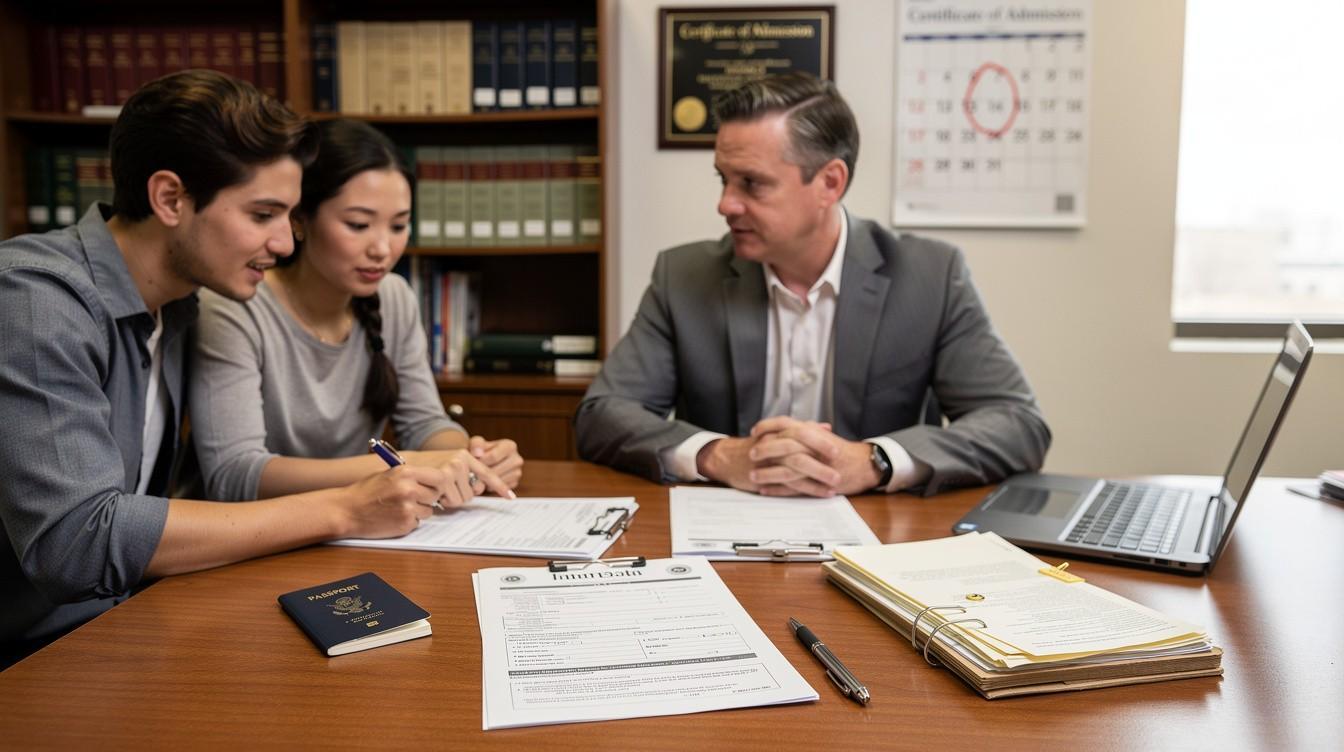
We at Law Offices of Jeffrey A. Thompson understand that immigration matters involve both legal complexity and personal stakes. An experienced immigration attorney catches inconsistencies before your interview, identifies weak documentation, and helps you address red flags with supporting evidence and clear explanations.
Share this post: