Fiance Visa Processing Time: Timelines and What to Expect (Fiance visa processing time)
June 5, 2026
Waiting for fiancé visa approval can feel endless. The fiancé visa processing time varies significantly depending on where you apply and how well you prepare your case.
At Law Offices of Jeffrey A. Thompson, we’ve guided hundreds of couples through this process. This guide breaks down realistic timelines, shows you what slows applications down, and gives you concrete steps to move faster.
How Long Does USCIS Actually Take to Process Your Fiancé Visa
The current processing time for Form I-129F at USCIS is 8 to 10 months, according to USCIS data. This timeline represents a meaningful improvement from late 2025, when wait times stretched closer to 10 months. USCIS momentum recovered after a slowdown in early March 2026, which had temporarily disrupted processing pace. The 8 to 10 month window applies specifically to USCIS approval of your petition. After that, your case moves to the Department of State’s National Visa Center for further processing toward the actual visa interview and approval.
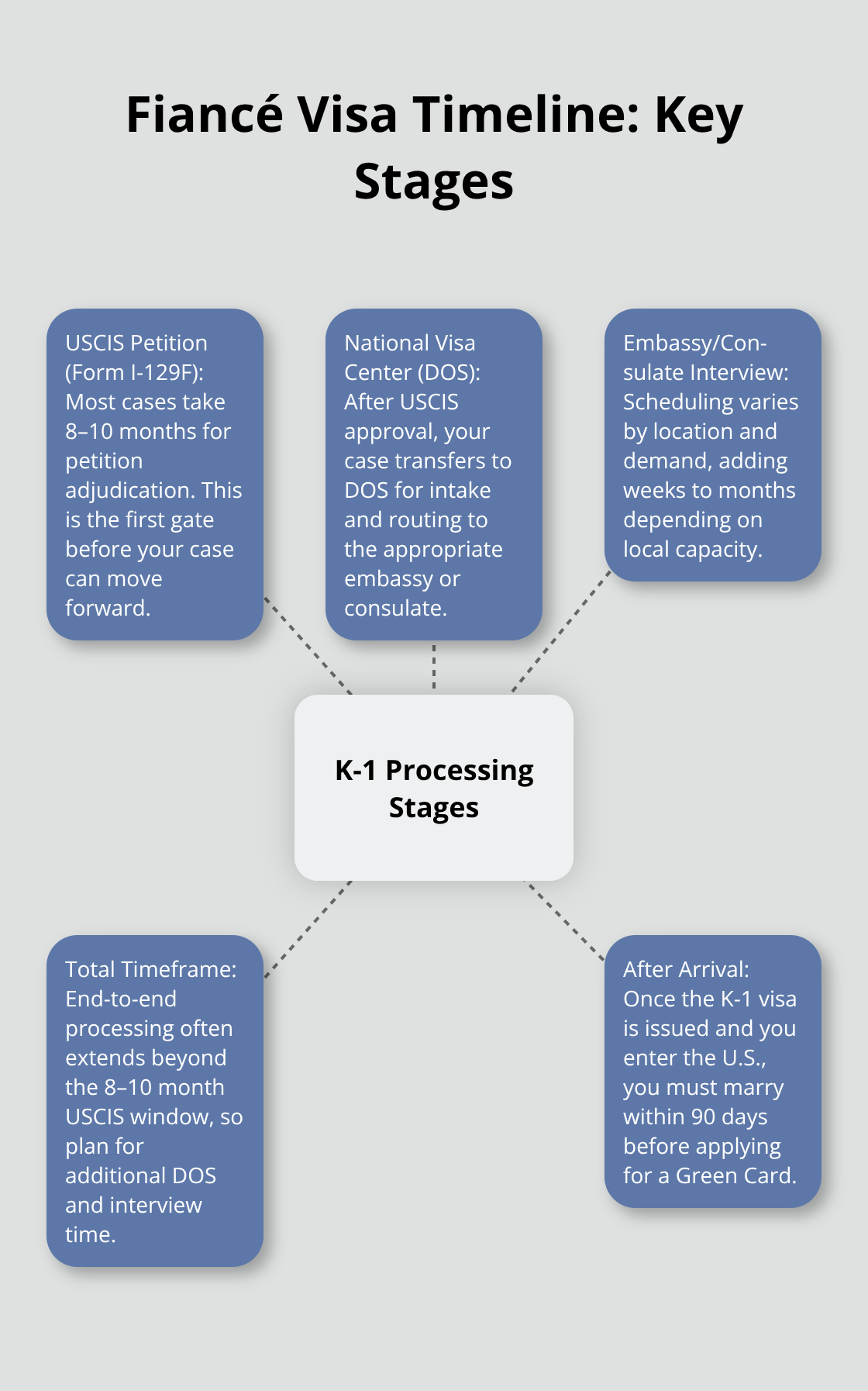
This means the total time from filing Form I-129F to arriving in the United States typically extends beyond the USCIS timeline alone.
What Slows Down Your Application
A small share of I-129F filings face rejection within a few weeks due to improper filing, but among the remaining cases, the majority eventually receive approval. The real delays occur when USCIS issues a Request for Evidence. When USCIS needs additional information to verify your relationship or background, processing time can stretch significantly depending on how quickly you supply the evidence. Missing documents, incomplete sections, or inconsistencies in your application materials trigger these RFEs. Name variations across your documents, gaps in relationship documentation, or background check complications are common culprits that extend timelines. Applicants who respond to RFEs within 30 days typically move toward approval much faster than those who delay.
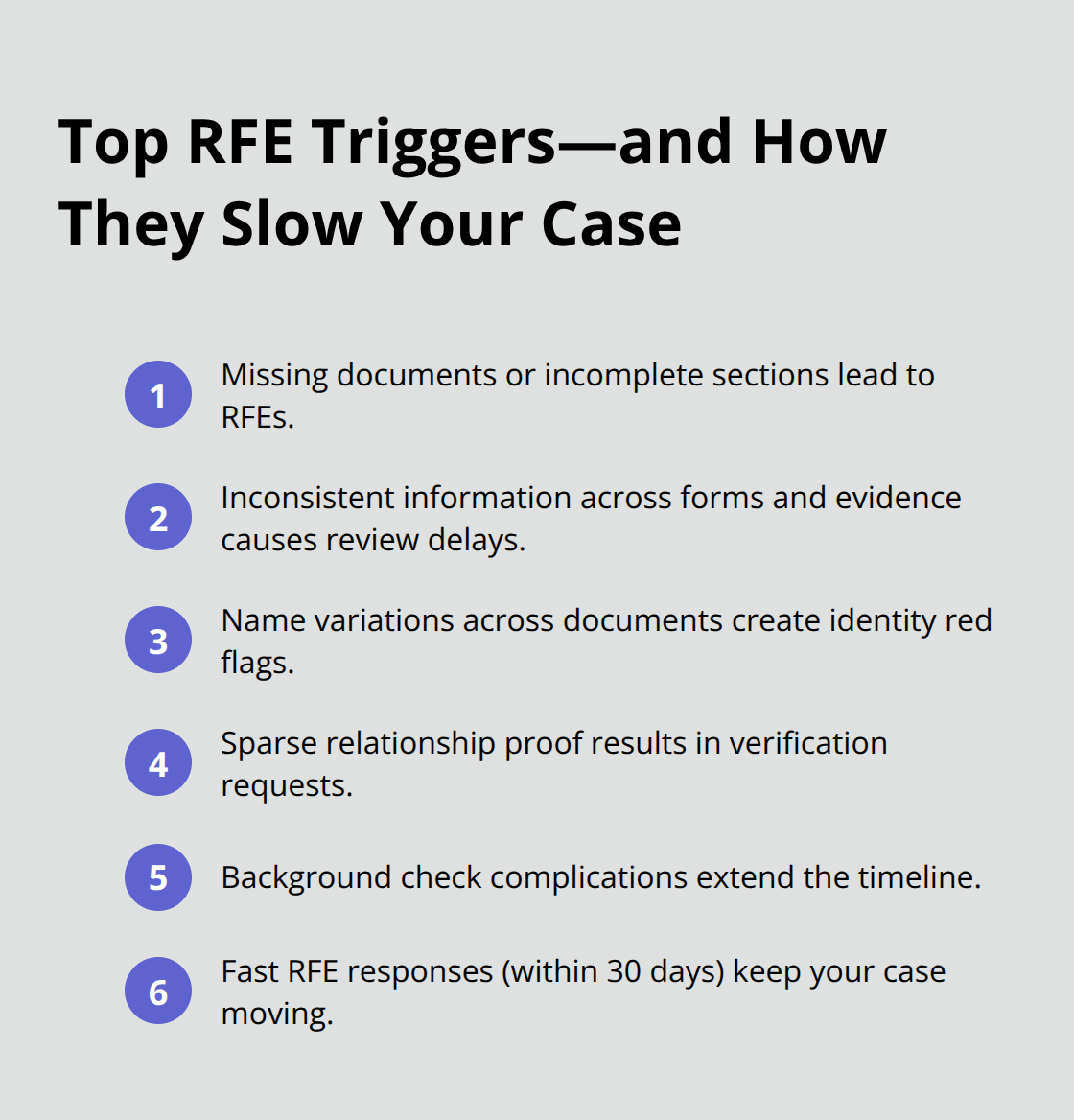
After USCIS approves your I-129F, the petition moves to DOS for visa processing, which operates on its own timeline that varies by location and current demand.
Processing Varies Where You Apply
Your geographic location matters more than many applicants realize. Different U.S. embassies and consulates process visa interviews at different speeds based on staffing levels and application volume. Some locations complete interviews and issue decisions within weeks, while others take several months. The USCIS Check Processing Times page shows current wait times by service center, but this reflects only the USCIS portion. After DOS receives your approved petition, interview scheduling depends on the specific embassy or consulate where your fiancé will apply. Applicants filing from countries with high visa application volumes often experience longer waits at the DOS stage than those from lower-volume countries. This is why tracking your case status matters. Tools like Track My Visa provide free basic case tracking and email alerts that show you exactly where your petition sits in the queue, helping you set realistic expectations based on actual processing patterns rather than guessing.
Why Documentation Accuracy Determines Your Speed
Complete and accurate documentation separates fast approvals from delayed cases. USCIS rejects applications with missing forms, unsigned pages, or incorrect fee amounts within weeks. Inconsistent information across documents-such as name spelling variations between your birth certificate and passport-creates red flags that trigger RFEs. You must verify that every document you submit matches your official records exactly. Relationship evidence matters equally; USCIS wants to see photos together, communication records, and proof of shared financial commitments. Applicants who compile thorough documentation upfront avoid the back-and-forth that can add months to processing. The difference between a well-prepared application and a rushed one often amounts to 2 to 4 additional months in total processing time.
How to Speed Up Your Fiancé Visa Application
Getting your fiancé visa approved faster requires precision at every step. The difference between a rushed application and a well-prepared one often amounts to 2 to 4 additional months. USCIS processes cases in the order they were received, meaning a complete application moves through the queue faster than one that triggers a Request for Evidence.
Organize Your Documentation Before Filing
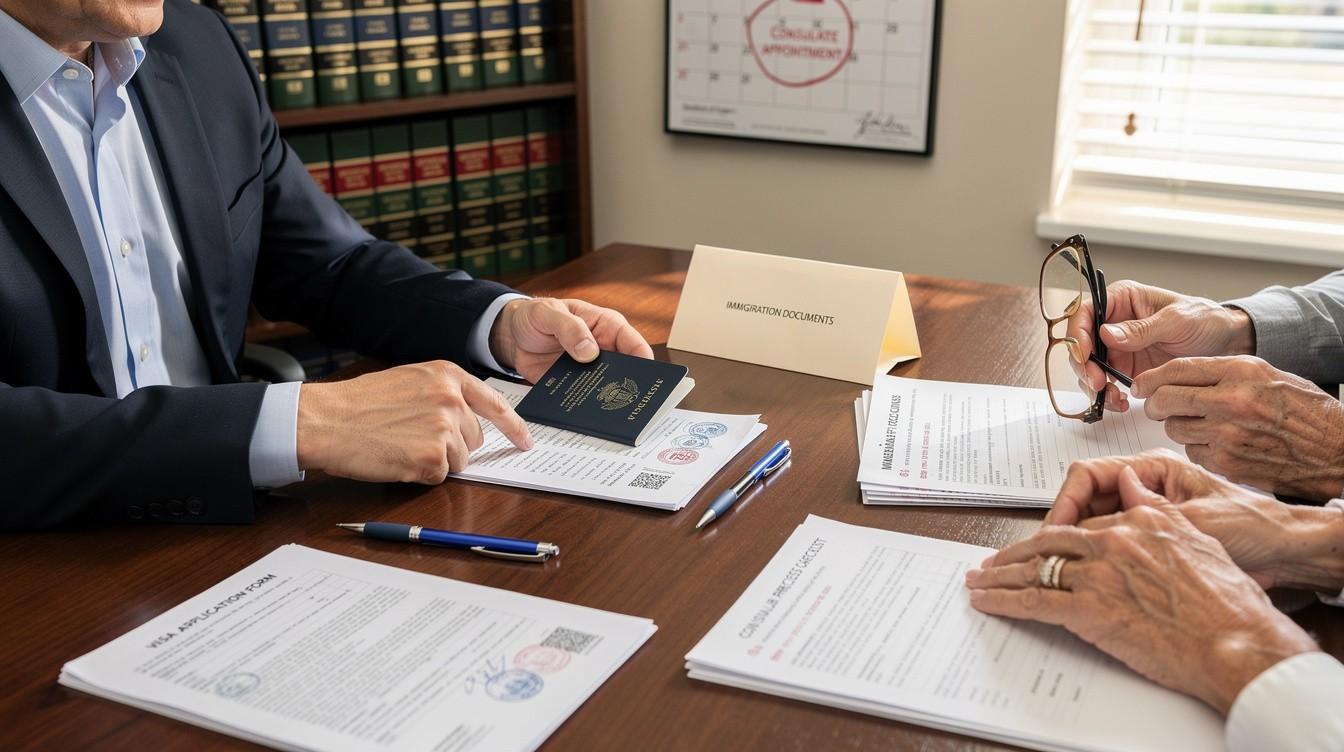
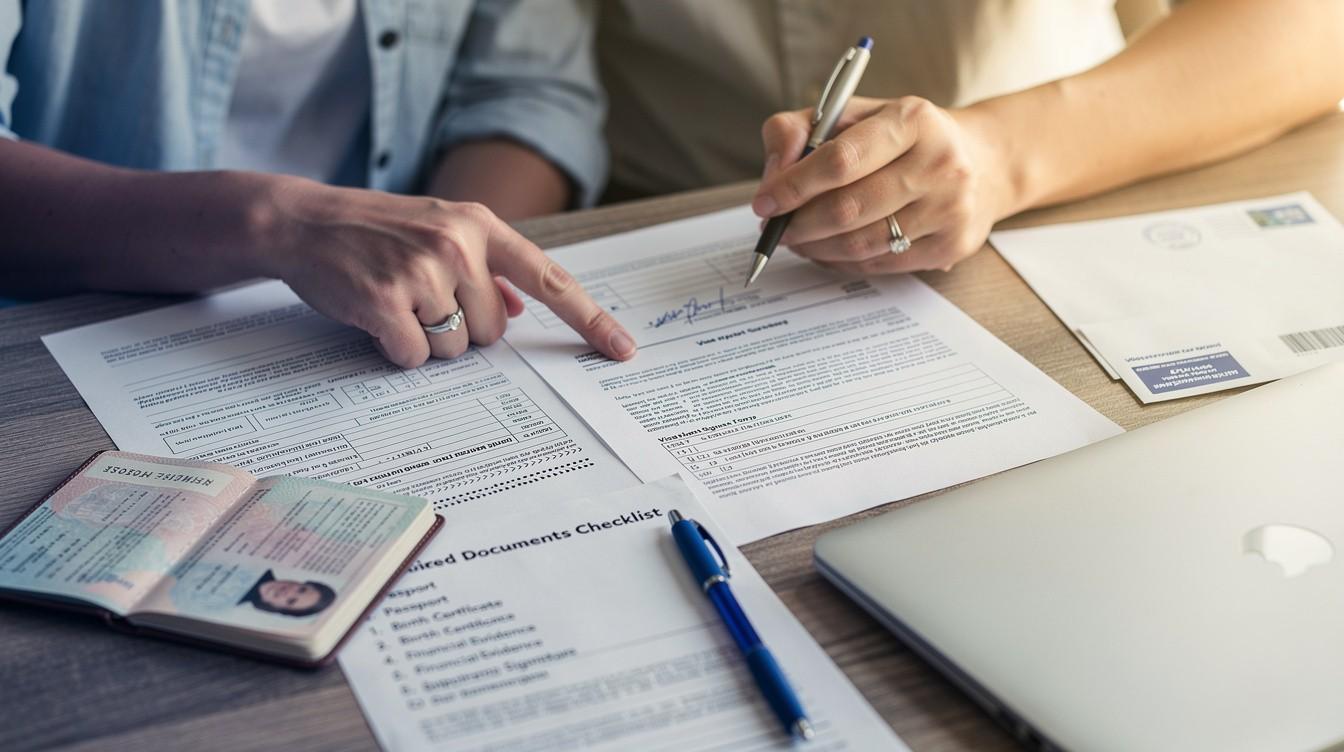
The first critical action is organizing your documentation before you file anything. Create a checklist that mirrors USCIS requirements exactly: passport copies, birth certificates, police clearance certificates, medical exam results, and financial documents showing you can support your fiancé. You must also compile evidence of your relationship including photos, communication records, and proof of shared commitments.
Name inconsistencies across documents represent one of the fastest ways to trigger delays. Verify that your name appears identically on your birth certificate, passport, and all supporting documents. If variations exist, you should obtain official name change documents or certified corrections before filing. Missing signatures, unsigned pages, or incorrect fee amounts cause USCIS to reject applications within weeks, sending you back to square one. The USCIS fee for Form I-129F is currently $639, and paying the wrong amount or using an outdated fee schedule guarantees rejection.
Submit Form I-129F With Zero Defects
When you submit Form I-129F, every field must be completed accurately and every required document must be included. USCIS data shows that among applications rejected early, most fail due to improper filing rather than substantive issues with your relationship or background.
Your relationship evidence must demonstrate a genuine connection. USCIS wants to see consistent communication records, photos spanning months or years together, proof that you have met in person within the last two years as required by law, and financial interdependence such as joint bank accounts or shared rent payments. Applicants who provide excessive documentation actually move faster than those who provide minimal evidence, because excessive documentation prevents RFEs. You should include dated messages, emails, and social media interactions showing genuine communication, not just screenshots from a single week. Financial documents should show shared expenses, joint savings, or one partner supporting the other.
After you file, monitor your case status using the USCIS online case tracker, which provides free basic tracking and email alerts showing exactly where your petition sits in the queue.
Address USCIS Requests Without Delay
When USCIS issues a Request for Evidence, the clock starts ticking and your response speed directly impacts your timeline. USCIS allows 30-90 days for your response, but applicants who submit evidence within 30 days typically move toward approval much faster than those who wait until the deadline approaches. Delays in responding extend your overall processing time significantly because USCIS must re-review your case after receiving new evidence, and backlogs mean your case goes to the back of the queue if you respond slowly.
If you receive an RFE, read it carefully and provide exactly what USCIS requested, nothing more and nothing less. Submitting irrelevant documents wastes time in the review process. Common RFE triggers include insufficient relationship evidence, unclear financial documentation, or background check complications that require explanation. If background checks delay your case, you should obtain certified copies of all relevant documents immediately and submit them within two weeks of receiving the RFE.
After USCIS approves your I-129F, your petition moves to the Department of State’s National Visa Center. DOS processing times vary significantly by embassy location, so you must contact the specific embassy or consulate where your fiancé will interview to understand their current wait times and interview scheduling procedures. This step determines how quickly your fiancé can schedule the visa interview and move toward entry into the United States.
What Actually Causes Fiancé Visa Delays
Most fiancé visa delays stem from three preventable mistakes that applicants make before or after filing. The first and most damaging mistake is submitting incomplete or inconsistent information on Form I-129F. USCIS rejects applications with missing pages, unsigned declarations, or outdated fee amounts within two to three weeks, forcing you to restart the entire process. The second major delay comes from name variations across your documents. If your birth certificate lists your name as Margaret Ann Smith but your passport shows Margaret A. Smith, USCIS flags this as a potential identity concern and issues a Request for Evidence.
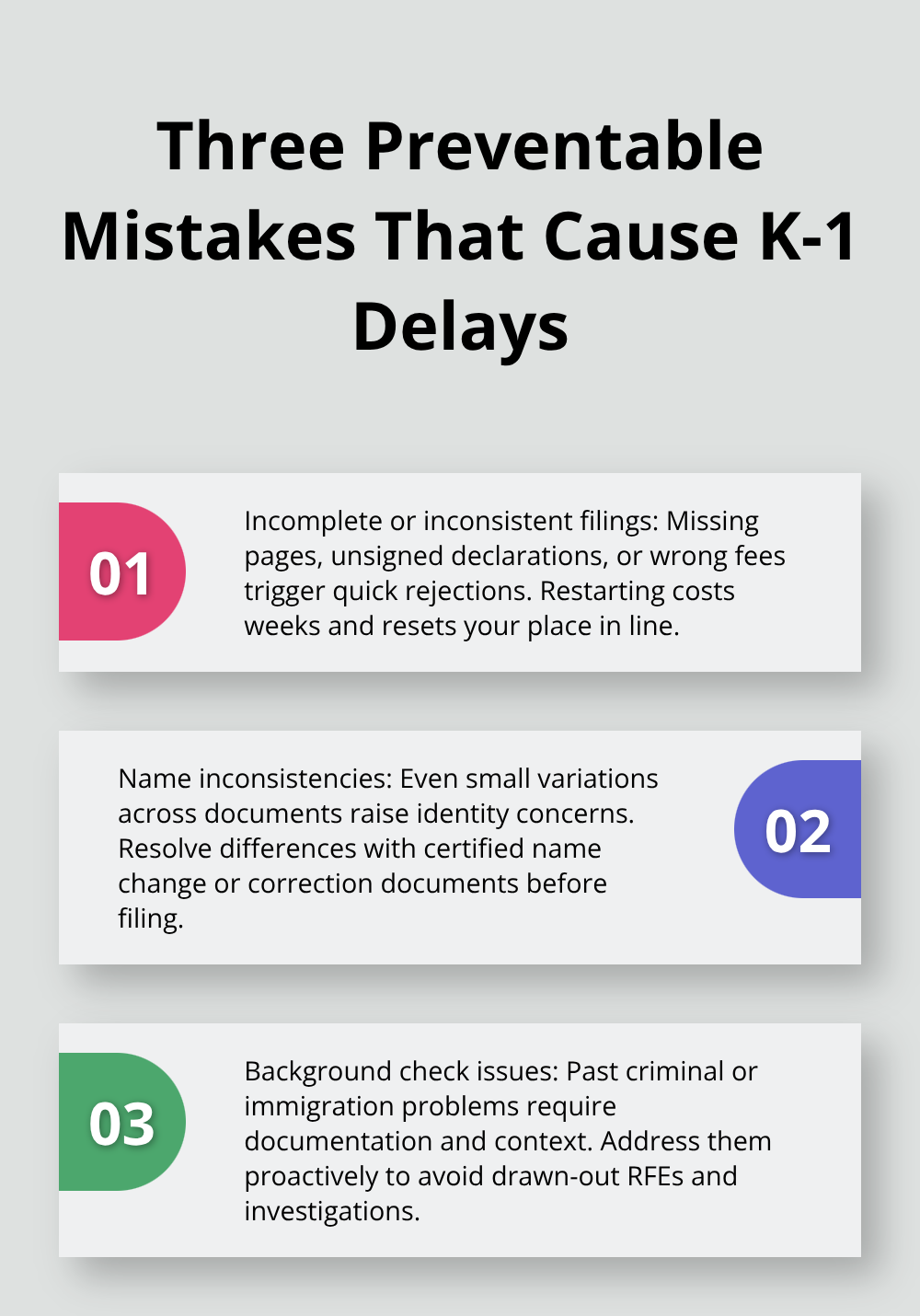
This single inconsistency can add three to six weeks to your timeline because USCIS must verify that both documents reference the same person. The third category involves background check complications that surface during USCIS processing. The background and security checks include collecting fingerprints and requesting a “name check” from the Federal Bureau of Investigations (FBI), extending your case well beyond the standard eight to ten month window.
Verify Every Name Spelling Before You File
Name inconsistencies represent the fastest way to trigger unnecessary delays in your fiancé visa application. Pull copies of your birth certificate, passport, Social Security card, and driver’s license right now and compare them word for word. If your middle name appears as Michael on one document and M on another, USCIS will question whether you are the same person. If your surname changed due to marriage or legal action, you must obtain a certified copy of the court order or marriage certificate proving the change. Do not assume that USCIS will connect the dots or accept your explanation later. Submit certified copies of any name change documents with your original I-129F filing, making the relationship between your names crystal clear. This single step eliminates one of the most common RFE triggers and keeps your case moving forward without interruption.
Compile Complete Evidence Before Submission
Incomplete relationship documentation triggers Requests for Evidence in many fiancé visa cases. USCIS wants to see consistent evidence that you and your fiancé have a genuine, ongoing relationship. Gather photos spanning at least six months to two years together, showing both of you in different settings and with other people. Collect email threads, text message screenshots, and social media interactions that demonstrate regular communication. Include joint financial documents such as bank statements showing shared savings, lease agreements listing both names, or utility bills addressed to both of you. Medical records showing you as an emergency contact on your fiancé’s paperwork also strengthen your case significantly. Applicants who provide comprehensive relationship evidence move through processing faster than those who submit minimal documentation, because thorough evidence prevents USCIS from requesting additional materials. Missing or sparse evidence sends your case backward into the RFE queue, adding months to your timeline.
Address Background Complications Head On
Background check delays occur when USCIS discovers criminal records, prior immigration violations, or security concerns that require clarification. Rather than hoping USCIS overlooks something in your past, address it proactively. If you have a criminal conviction, obtain official court documents explaining the charge, conviction date, and sentence. Write a brief explanation of the circumstances and what you have done since to demonstrate rehabilitation. If you previously overstayed a visa or violated immigration law, gather documentation showing that you have since complied with all legal requirements. Submit these materials with your I-129F application under a cover letter explaining the situation and why it should not disqualify you from fiancé visa eligibility. This approach gives USCIS the complete picture upfront rather than forcing them to investigate and issue an RFE. Cases that address background concerns proactively move toward approval or denial much faster than cases where USCIS must hunt for explanations. When background complications exist, we at Law Offices of Jeffrey A. Thompson can help you present your circumstances in the strongest possible light to USCIS.
Final Thoughts
The fiancé visa processing time from initial filing to arrival in the United States typically spans 8 to 10 months at USCIS, followed by additional time at the Department of State for visa processing and interview scheduling. This timeline assumes your application is complete, accurate, and free from complications that trigger Requests for Evidence. Real-world processing varies significantly based on where your fiancé applies, how thoroughly you prepare your documentation, and how quickly you respond to any USCIS requests.
Your success depends on three concrete actions taken before and after filing. Verify every detail in your application matches your official documents exactly, compile comprehensive relationship evidence, and organize your financial documentation to demonstrate your ability to support your fiancé. Submit Form I-129F with zero defects, understanding that incomplete applications face rejection within weeks and force you to restart entirely. Respond to any USCIS requests within 30 days rather than waiting until the deadline, because speed in responding directly determines how fast your case moves through the queue.
After USCIS approves your I-129F, your fiancé must schedule a visa interview at the appropriate U.S. embassy or consulate and contact that specific location immediately to understand their current interview wait times and required documentation. Once your fiancé arrives in the United States on the K-1 visa, you have 90 days to marry, and after marriage your fiancé can apply for a Green Card by filing Form I-485. We at Law Offices of Jeffrey A. Thompson assist clients in navigating immigration matters from paperwork to overcoming legal hurdles, so contact our immigration law team if you face complications or want to ensure your application is bulletproof before filing.
Share this post: