Consulate Appointment Scheduling: Secure Your Interview Without Stress
August 14, 2026
Consulate appointment scheduling doesn’t have to be overwhelming. At Law Offices of Jeffrey A. Thompson, we’ve helped countless clients navigate this process smoothly and efficiently.
This guide walks you through every step-from understanding how consulate systems work to preparing for your actual interview. You’ll learn practical strategies to book your appointment quickly and arrive fully prepared.
How Consulate Scheduling Actually Works
The consulate appointment system varies significantly by country and visa type, but the fundamental process remains consistent across most locations. You submit your application through the consulate’s official portal or a contracted visa processing service, then receive a scheduling window where you can book your interview. Most U.S. consulates worldwide now operate on a first-come, first-served basis within that window, meaning speed matters when slots open. The State Department reported that consular processing times vary based on workload and staffing at each location and case complexity.
Understanding Your Specific Consulate’s System
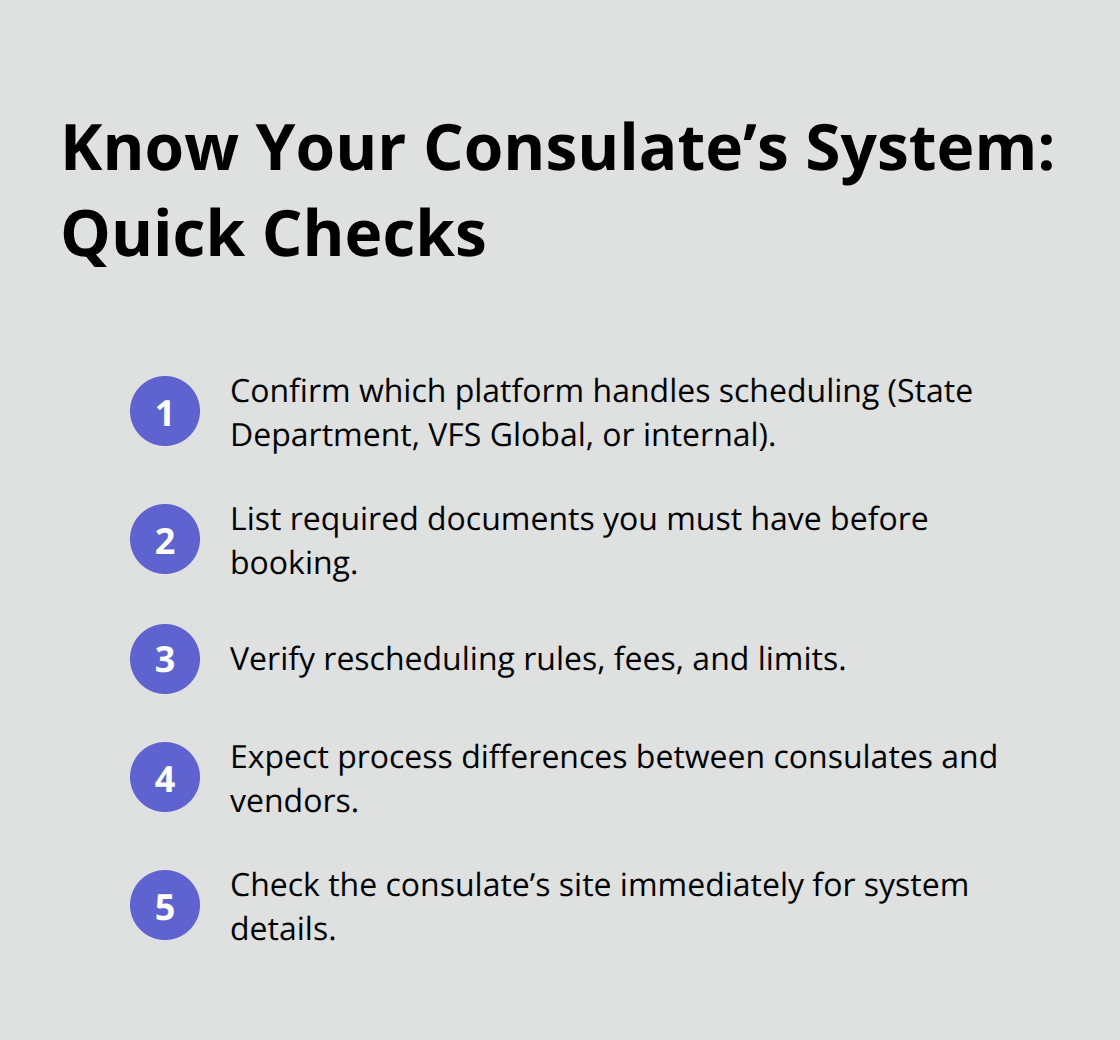
Countries like Mexico, Philippines, and India experience significantly longer wait times due to high application volumes, sometimes extending beyond six months. You must understand your specific consulate’s system before you apply, not after. Each consulate operates independently, and some use different vendors for scheduling-the system in Manila works differently from London or Toronto. Check your consulate’s official website immediately to identify whether they use the State Department’s own system, a third-party service like VFS Global, or an internal platform. This determines how you’ll book, what documentation you’ll need upfront, and whether you can reschedule if necessary.
Required Documentation Before You Schedule
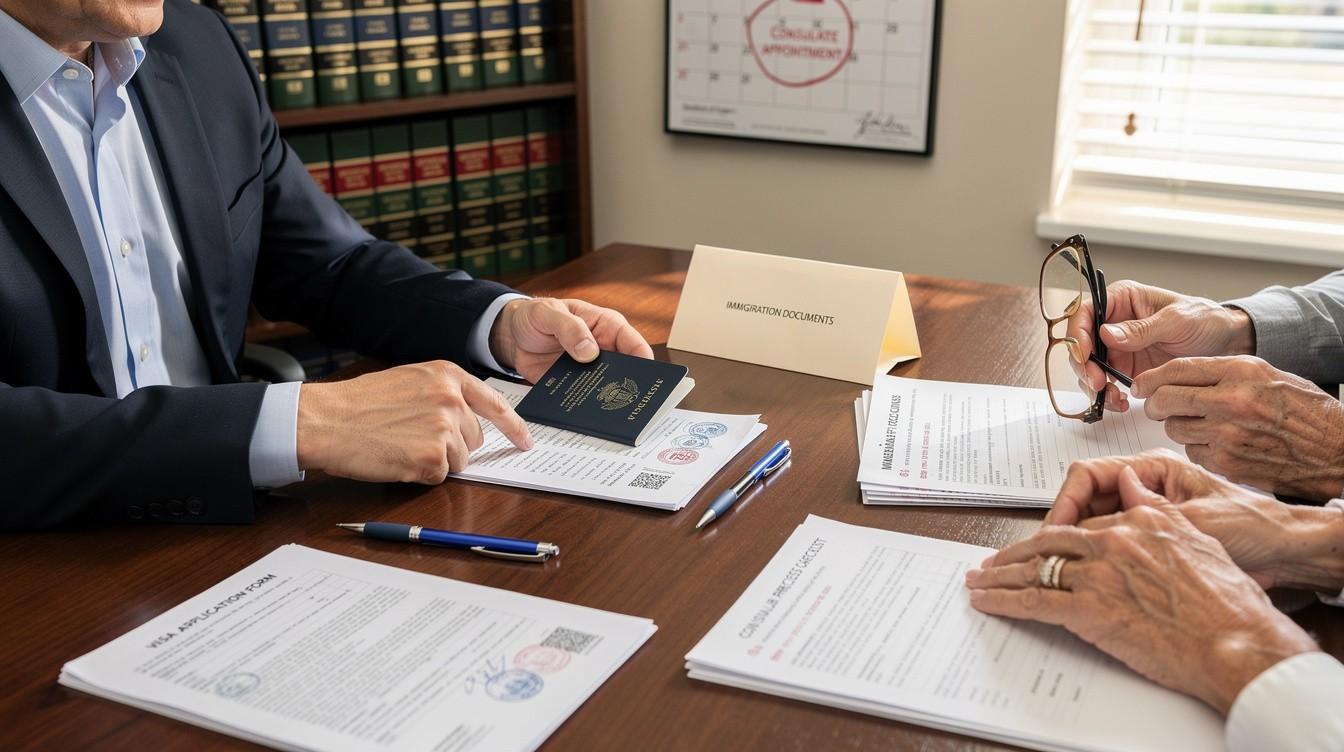
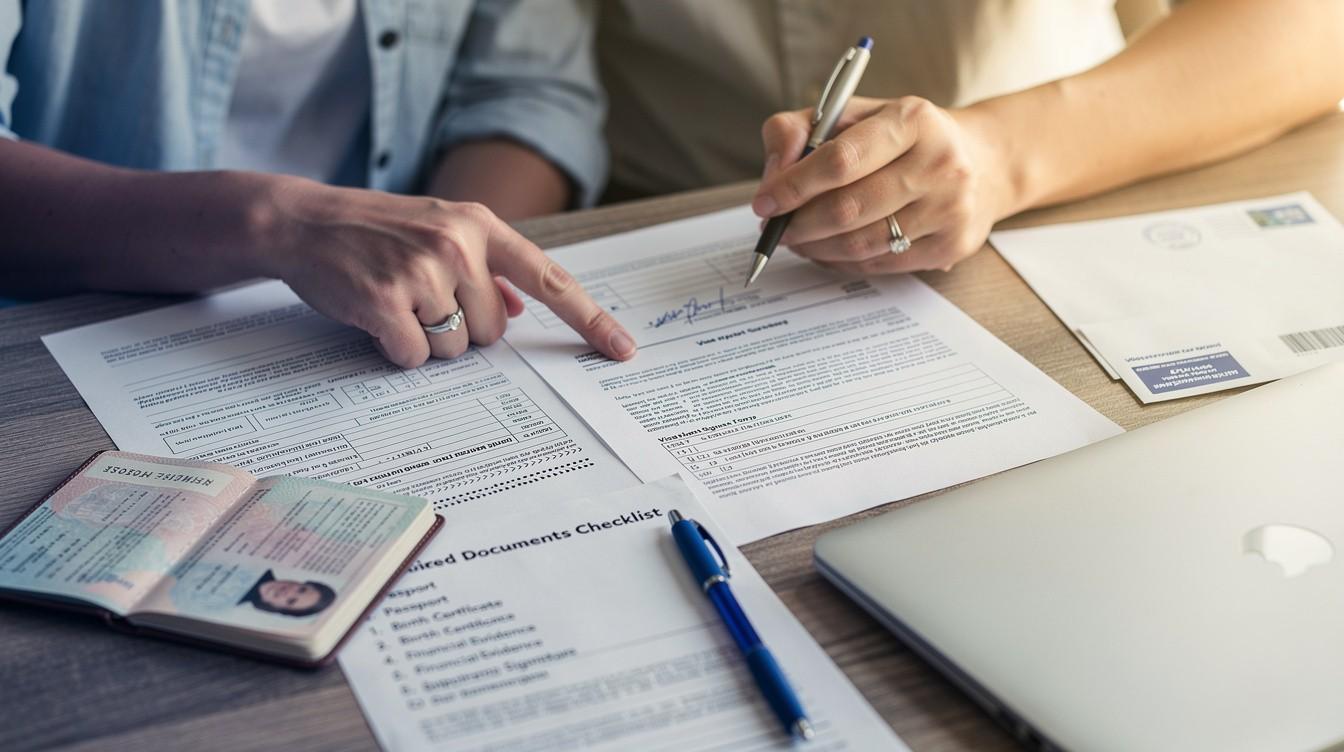
Most consulates require you to submit your DS-260 form (Application for Immigrant Visa) or DS-160 form (Online Nonimmigrant Visa Application) and have it processed before you can schedule. Your passport must have at least six months of validity beyond your intended U.S. entry date-this is non-negotiable and consulates will reject appointments for applicants who don’t meet this requirement. You’ll also need proof that an approved panel physician completed your medical examination, and your vaccination records must match what the consulate requires. The medical exam remains valid for six months from the examination date, so timing your appointment correctly prevents costly repeat exams.
Organizing Your Supporting Documents
You should have your birth certificate, marriage certificate (if applicable), divorce decrees, police certificates, and any previous visa documentation organized and ready before scheduling. Consulates increasingly verify employment history and educational background against official records, so inaccuracies between your application and official documents will delay your appointment or trigger interview complications. Organize all documents in a tabbed folder before you attempt to schedule, because missing documentation often forces applicants to reschedule entirely. This preparation step (though it takes time upfront) saves you from costly delays later.
With your documents organized and your consulate’s scheduling system identified, you’re ready to explore the actual booking process and learn which times offer the best availability for your situation.
Timing Your Appointment for Maximum Availability
When Consulates Release Appointment Slots
Consulates release appointment slots in batches, typically on specific days of the week or at fixed intervals. The State Department’s visa appointment system shows that slots fill fastest in the first 24 to 48 hours after release, with some premium time slots disappearing within hours in high-demand consulates like Mexico City, Manila, and New Delhi. You must know your consulate’s exact release schedule before you become eligible to book. Contact the consulate directly or check their website for the specific day and time slots open-this information isn’t always advertised, but staff will confirm it. Early morning bookings (between 8 and 10 a.m. local consulate time) offer better availability than afternoon slots, since fewer applicants attempt to schedule at those hours.
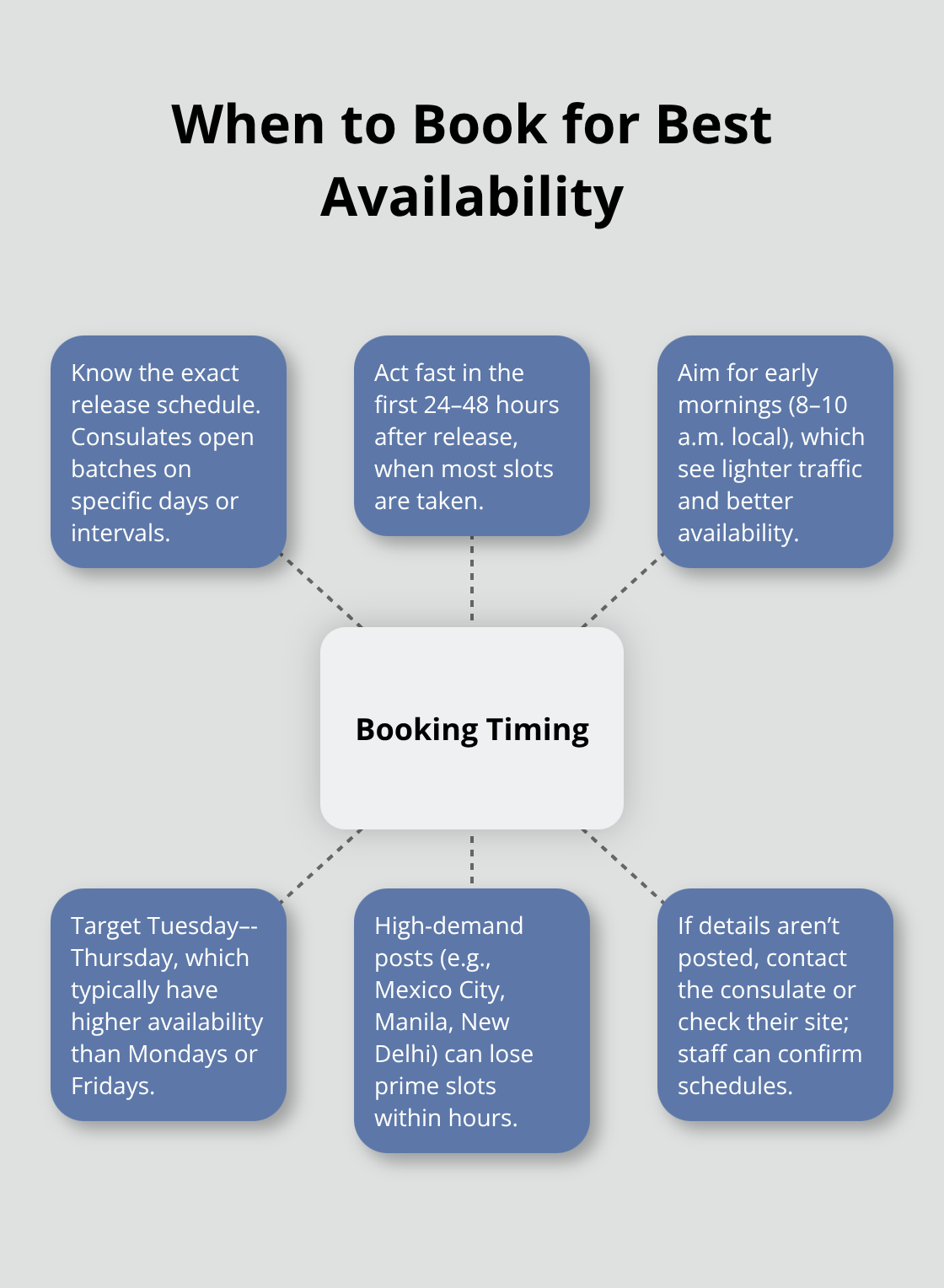
Tuesday through Thursday typically have higher availability than Monday or Friday, when applicants cluster their scheduling attempts.
Online Scheduling vs. Phone Booking
Online scheduling through your consulate’s official portal or contracted vendor gives you speed and documentation proof that phone booking cannot match. The online method creates an immediate confirmation email with your appointment details, passport number, and reference code-critical records if scheduling disputes arise later. Phone booking requires navigating consulate hold times that often exceed 45 minutes, and representatives occasionally provide conflicting information about availability or documentation requirements. Online scheduling eliminates communication gaps and provides instant written confirmation. If your consulate uses a third-party vendor like VFS Global, their website usually displays real-time availability, allowing you to check open dates before committing to the booking process.
Handling Unavailable Preferred Dates
If your preferred date remains unavailable after multiple attempts, contact the consulate to ask about cancellation waitlists or expedited processing options for documented emergencies. Some consulates maintain cancellation pools where appointments become available when other applicants reschedule, though you typically need to check daily or request email notifications. If your situation qualifies for emergency processing (medical hardship, job transfer with proof, or family emergency with documentation), the consulate may prioritize your case. This requires submitting a formal request with supporting evidence rather than simply requesting an earlier date.
Once you secure your appointment, the real preparation work begins-and this preparation directly determines whether your interview proceeds smoothly or encounters complications.
How to Prepare for Your Consulate Interview
Your consulate interview determines whether you receive your visa or Green Card. The most common reason applicants face delays or denials isn’t missing documentation-it’s misalignment between what they say during the interview and what appears on their written forms. Consulate officers have access to extensive background databases and can verify employment history, educational credentials, and travel records within seconds, so any inconsistency raises immediate red flags.
Align Your Verbal Answers With Your Written Application
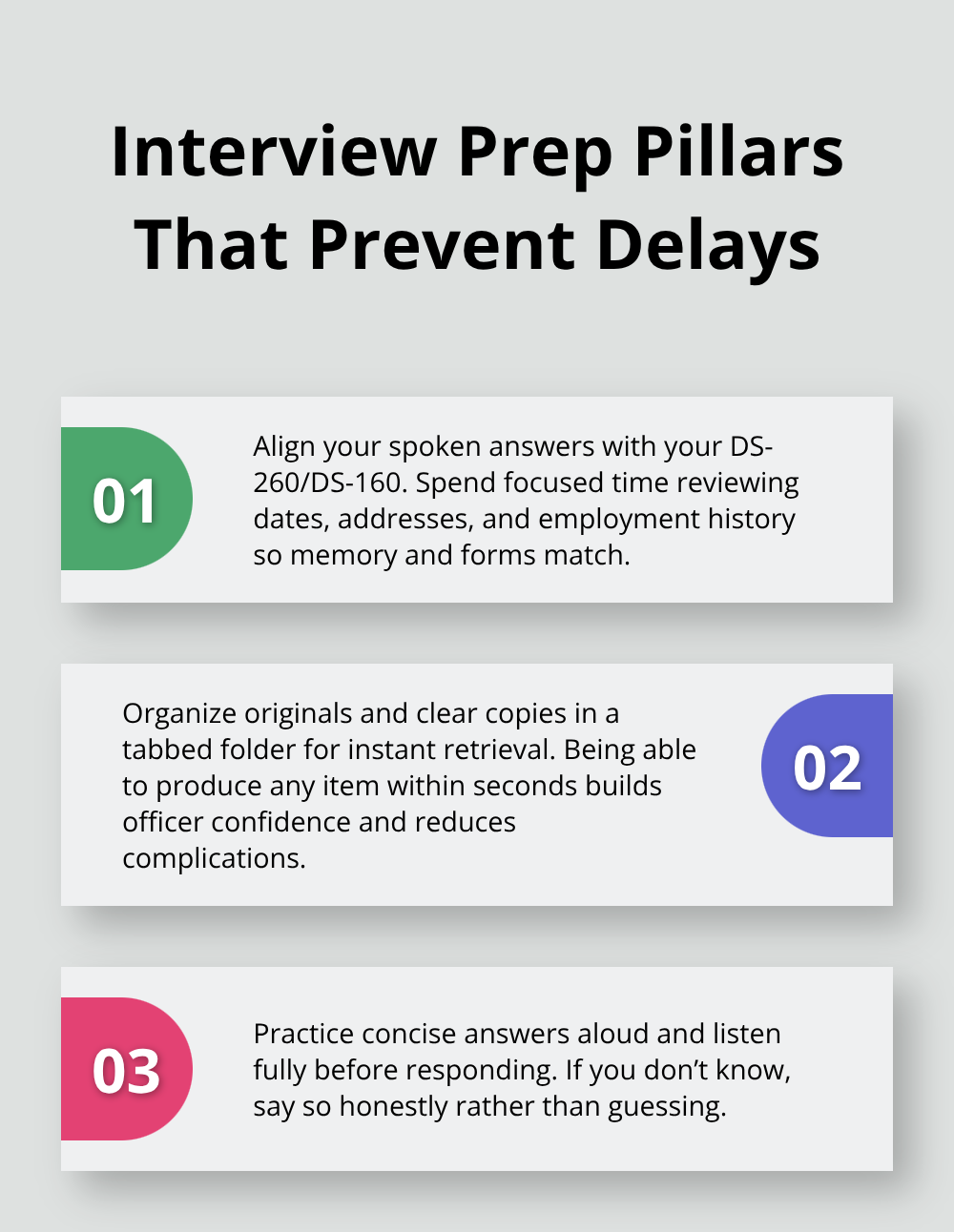
You must review every document you submitted, including your DS-260 form, to refresh the specific dates, addresses, and employment history you listed. Spend at least two hours reviewing your application materials before your interview date, because this single step prevents the majority of interview complications. Officers will ask about details you provided months earlier, and your memory must match what you wrote. Any contradiction-even minor ones about job titles or address changes-signals potential dishonesty to the officer.
Organize Your Documents for Instant Access
Your documents must be organized so you can produce any item within seconds if requested. Bring originals of your civil documents alongside clear photocopies organized in a tabbed folder-consulate staff appreciate applicants who can locate information instantly rather than fumbling through disorganized papers. Bring original documents to your interview, not copies, and bring certified English translations for every document not in English. Your passport must remain valid for at least six months beyond your intended U.S. entry date, and your medical exam results must still fall within the six-month validity window from the examination date.
Practice Your Answers Before the Interview
Practice answers to common interview questions aloud before your appointment, because speaking your answers reveals whether your verbal responses match your written application. Consulate officers ask about your employment history, your sponsor’s financial situation, your travel plans, and your ties to your home country-answer each question concisely and wait for the officer to finish asking before responding. If you don’t understand a question or genuinely don’t know the answer, say so rather than guessing, because officers recognize evasion immediately.
Prepare Your Online Presence and Arrival Details
Check your social media accounts before your interview and remove any content that contradicts your visa application details, since officers increasingly screen applicants’ online presence. Arrive early, dress professionally, and bring all required documents even if you think they won’t be needed. On interview day, listen carefully to each question, provide direct answers without volunteering extra information, and maintain respectful eye contact with the officer throughout the conversation.
Final Thoughts
Consulate appointment scheduling requires careful planning, but the process becomes straightforward when you understand your specific consulate’s system and prepare thoroughly. Review your DS-260 or DS-160 form one final time, verify that your passport and medical exam remain valid, and practice your interview answers aloud before your appointment date. Check your social media accounts and remove any content that contradicts your application, then arrive at your consulate early with all original documents organized in a tabbed folder.
After your interview concludes, the consulate will inform you of the outcome within days and provide instructions for visa issuance or Green Card processing if approved. If the consulate requests additional documentation, respond immediately to prevent further delays in your case. We at Law Offices of Jeffrey A. Thompson recognize that immigration matters shape your future, and complications during consulate appointment scheduling or interview preparation warrant professional legal support.
Contact us for a consultation to discuss your specific situation and ensure you’re fully prepared for every step ahead.
Share this post: