Naturalization Interview Questions: What to Expect
August 31, 2026
The naturalization interview is one of the most important steps in your path to U.S. citizenship. We at Law Offices of Jeffrey A. Thompson know that preparing for naturalization interview questions can feel overwhelming, but understanding what to expect makes a real difference.
This guide walks you through the three main areas USCIS officers focus on: civics and government knowledge, English language skills, and your personal background. You’ll find practical tips to help you feel confident and ready.
Civics Questions You’ll Face in Your Naturalization Interview
Understanding the USCIS Civics Test Structure
USCIS officers ask civics questions to verify you understand how the U.S. government works and what citizenship means. The civics test covers three areas: the Constitution and government structure, citizen rights and responsibilities, and American history. Out of 100 possible civics questions USCIS maintains, officers ask up to 10 questions during your interview, and you need to answer at least 6 correctly to pass.
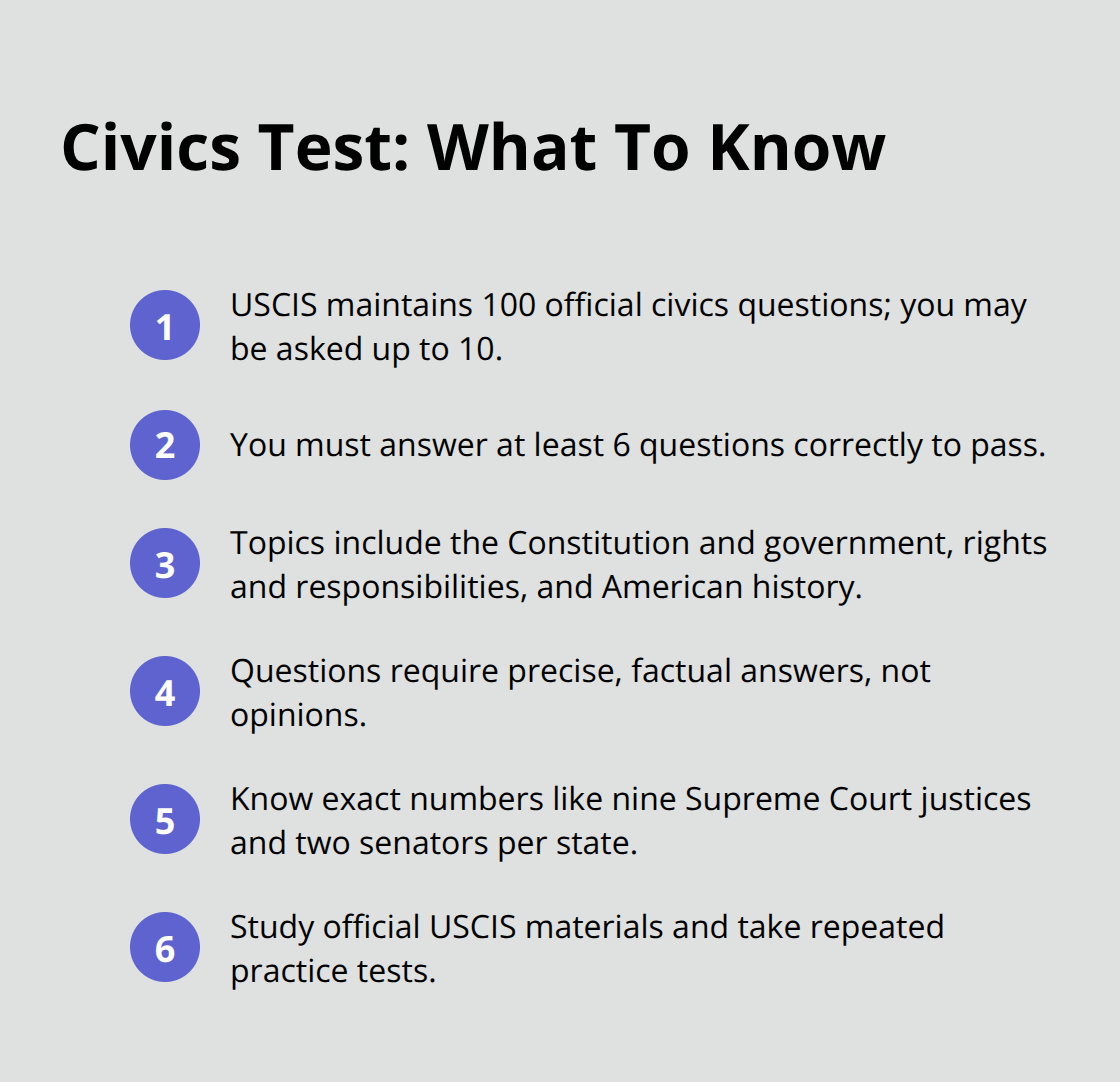
Most applicants underestimate how specific these questions become. USCIS doesn’t ask vague questions about democracy or freedom. Instead, they ask concrete questions like naming the number of Supreme Court justices (nine), identifying the first president, or explaining how many senators represent each state (two). The questions test factual knowledge, not opinion or interpretation.
Constitution and Government Structure Questions
Constitution and government structure questions focus on the document’s basic framework. USCIS asks which document outlines the structure of the U.S. government (the Constitution), how many branches government has (three), and what those branches are (legislative, executive, judicial). You’ll encounter questions about specific powers, such as which branch makes federal laws (Congress) or which branch interprets laws (the Supreme Court).
Questions about the president appear frequently. Officers ask who the current president is, how long a presidential term lasts (four years), and how many times a president can be elected (two terms). These questions require exact answers, not general knowledge.
Rights and Responsibilities Questions
Rights and responsibilities questions test whether you understand what citizenship means in practice. USCIS asks about the Bill of Rights, which amendments protect which freedoms, and what responsibilities citizens have. Common questions include naming rights guaranteed by the First Amendment (freedom of speech, religion, press, assembly, petition), explaining what the Fourteenth Amendment addresses (equal protection and citizenship rights), or identifying citizen responsibilities like serving on juries or paying taxes.
History and Government Process Questions
History and government process questions connect past events to current systems. Officers ask when the Declaration of Independence was signed (1776), which documents established the nation’s framework (Declaration of Independence and Constitution), and how amendments get added to the Constitution (proposal by Congress or convention, ratification by states).
The most effective preparation strategy involves studying the official USCIS civics study materials and taking practice tests repeatedly, not just reading through questions once. Try focusing on learning the exact answers USCIS expects rather than general understanding. Your English language skills matter just as much as your civics knowledge, and the next section covers what officers evaluate during the speaking and comprehension portion of your interview.
English Language Assessment During Your Naturalization Interview
How USCIS Officers Evaluate Your English Skills
The English assessment during your naturalization interview isn’t a formal test with a passing score. Instead, USCIS officers evaluate whether you can understand and speak English well enough to function as a U.S. citizen. Officers listen for your ability to understand questions, respond appropriately, and communicate clearly about your background and civics knowledge. The conversation flows naturally throughout your entire interview, so every word you speak gets evaluated.
Most applicants fail not because their English is poor, but because they misunderstand questions or panic when nervous. The officer asks questions in standard English at normal speed, not simplified or slow speech. If you don’t understand something, ask for clarification-this is acceptable and won’t hurt your chances.
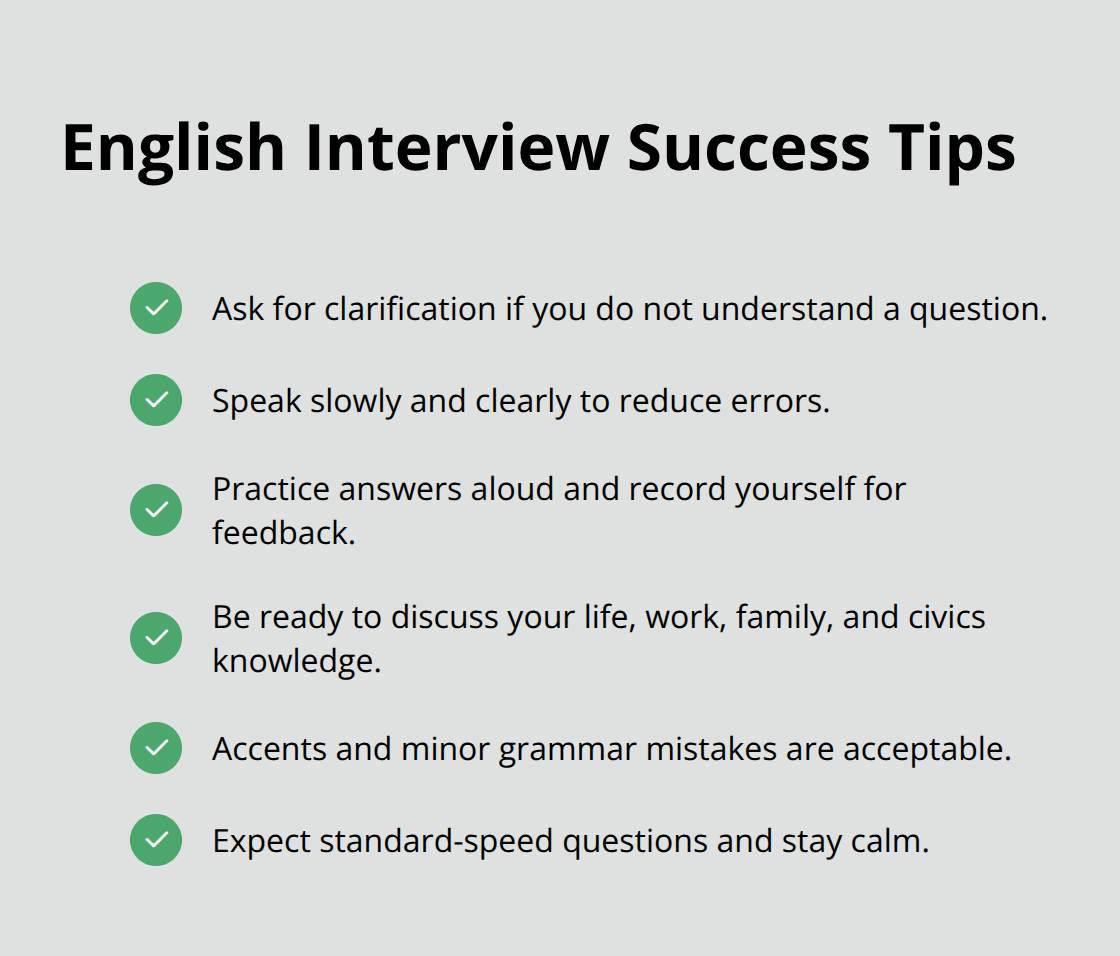
Officers expect non-native speakers to have accents and occasional grammar mistakes. What matters is whether you can hold a conversation and answer questions about your life, work, family, and civics knowledge without significant difficulty.
Topics Officers Discuss During the Speaking Portion
Officers focus the speaking portion on information you provided in your N-400 application. They ask about your employment history, family members, where you’ve lived, trips outside the United States, and why you want citizenship. These aren’t trick questions. Officers verify that your spoken answers match your written application. They also discuss your civics knowledge using conversational language, so you might hear questions phrased differently than in practice materials. For example, instead of asking “What is the supreme law of the land,” an officer might ask “What document is the highest law in America?”
Preparation Strategies That Actually Work
Preparation requires you to practice answers to common questions aloud, not just read them silently. Record yourself answering questions about your job, your family, and civics topics, then listen back to identify unclear pronunciation or awkward phrasing. Practice with a friend or family member who can ask you questions and point out when you’re hard to understand. Speak slowly and clearly during your actual interview, even if it feels unnatural. Rushing through answers increases mistakes and makes comprehension harder.
If an officer asks a question you don’t fully understand, pause for a moment and ask them to repeat it rather than guessing at an answer. This approach shows you take the interview seriously and want to answer accurately. Your personal background and immigration history matter just as much as your English skills, and the next section covers the questions officers ask about your application, residence, travel, and character.
Personal Background and Immigration History Questions
Verifying Your N-400 Application Details
USCIS officers verify that your N-400 application is accurate and complete by asking detailed questions about every section you filled out. They ask about your employment history, including specific job titles, employers, dates worked, and reasons for job changes. Officers cross-reference your spoken answers against your written application, and inconsistencies raise red flags. If you listed that you worked at a company from 2015 to 2018 but tell the officer you worked there until 2019, the discrepancy matters.
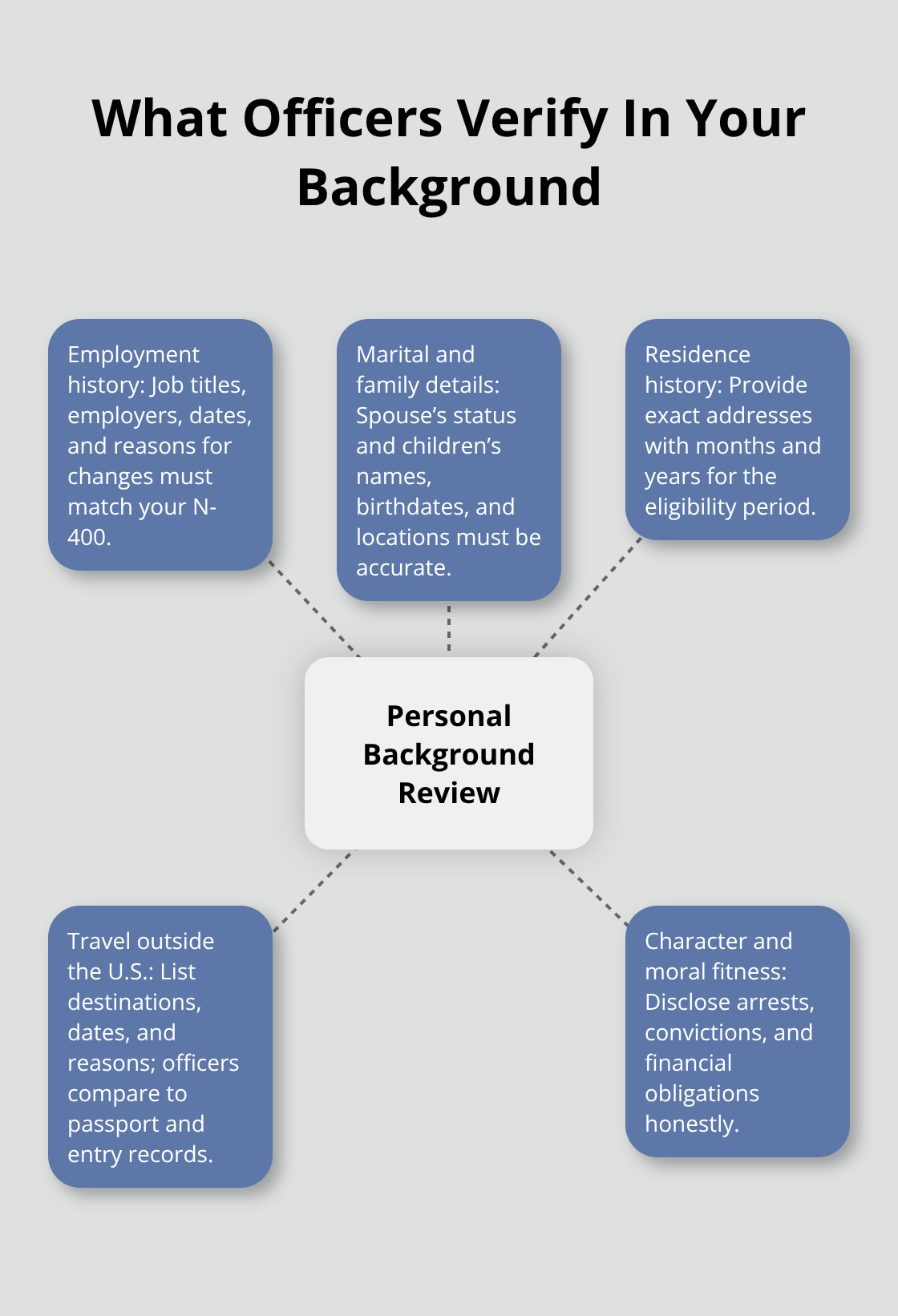
Bring copies of your employment records, tax returns, and pay stubs to your interview. These documents prove your work history and show you prepared thoroughly. Officers also ask about your marital status, your spouse’s citizenship status if applicable, and details about your children including their names, birthdates, and where they live. If you’ve been married multiple times, expect questions about previous marriages, divorce dates, and custody arrangements. Accuracy here is non-negotiable because false statements on your N-400 can result in denial and potential deportation proceedings.
Application inconsistencies are a significant factor in naturalization denials. This underscores why you must align your spoken answers with your written application word-for-word.
Residence and Travel History Requirements
Your residence and travel history receives equal scrutiny because officers need to confirm you’ve met the continuous residence and physical presence requirements for naturalization. Officers ask where you’ve lived since arriving in the United States, including specific addresses and dates. They want exact months and years, not approximate timeframes. Bring a list of every address where you’ve lived during your naturalization eligibility period.
They also ask about trips outside the United States, including destinations, dates, and reasons for travel. Each trip outside the country can affect your continuous residence requirement, and officers verify this information against your passport stamps and entry records. Be honest about every trip, even short visits to your home country. Officers expect complete transparency about your movements.
Character and Moral Fitness Assessment
Officers assess your character and moral fitness by asking about arrests, criminal convictions, traffic violations, and financial obligations like unpaid taxes or child support. They ask whether you’ve ever been involved in activities that could disqualify you from citizenship, such as persecution, torture, or terrorist activities. Honesty matters more than the specific answers here.
If you have a criminal record, disclose it fully because USCIS will discover it anyway through background checks. Address any character concerns proactively before your interview rather than hoping the officer doesn’t ask about them. This approach demonstrates integrity and prevents surprises during your interview.
Final Thoughts
Your naturalization interview questions test three core areas: civics knowledge, English communication, and personal background accuracy. Start your preparation by studying the official USCIS civics materials and taking practice tests repeatedly until you answer at least six out of ten questions correctly. Practice speaking your answers aloud, record yourself discussing your employment history and residence timeline, and gather supporting documents like tax returns and your passport before your interview date.
The USCIS civics study guide contains all 100 possible civics questions and answers, available free on the USCIS website. Use this as your primary study resource rather than relying on general civics knowledge. Practice with a friend or family member who can ask you questions and provide feedback on your clarity and confidence, and review your N-400 application multiple times to verify your spoken answers match exactly what you wrote.
If you face complex immigration circumstances, character concerns, or application inconsistencies, professional guidance makes a significant difference. We at Law Offices of Jeffrey A. Thompson assist clients in navigating the naturalization process, from paperwork review to addressing legal hurdles that could affect your approval. Contact Law Offices of Jeffrey A. Thompson if you need guidance preparing for your interview or addressing any concerns about your application.
Share this post: