Spouse Green Card Processing: From Petition to Interview
August 24, 2026
Spouse green card processing involves multiple steps, strict documentation requirements, and careful preparation. At Law Offices of Jeffrey A. Thompson, we guide clients through each stage of this complex journey.
This guide walks you through filing the I-130 petition, completing your green card application, and preparing for your USCIS interview. You’ll learn what documents matter most and what questions to expect.
Starting Your I-130 Petition
The Foundation of Your Green Card Process
The I-130 petition is your formal request to USCIS that your spouse qualifies as an immediate relative. This form serves as the foundation of the entire green card process, and filing it correctly matters far more than most people realize. The I-130 requires you to establish your relationship, prove your spouse’s eligibility, and demonstrate that you meet income requirements to support them financially.
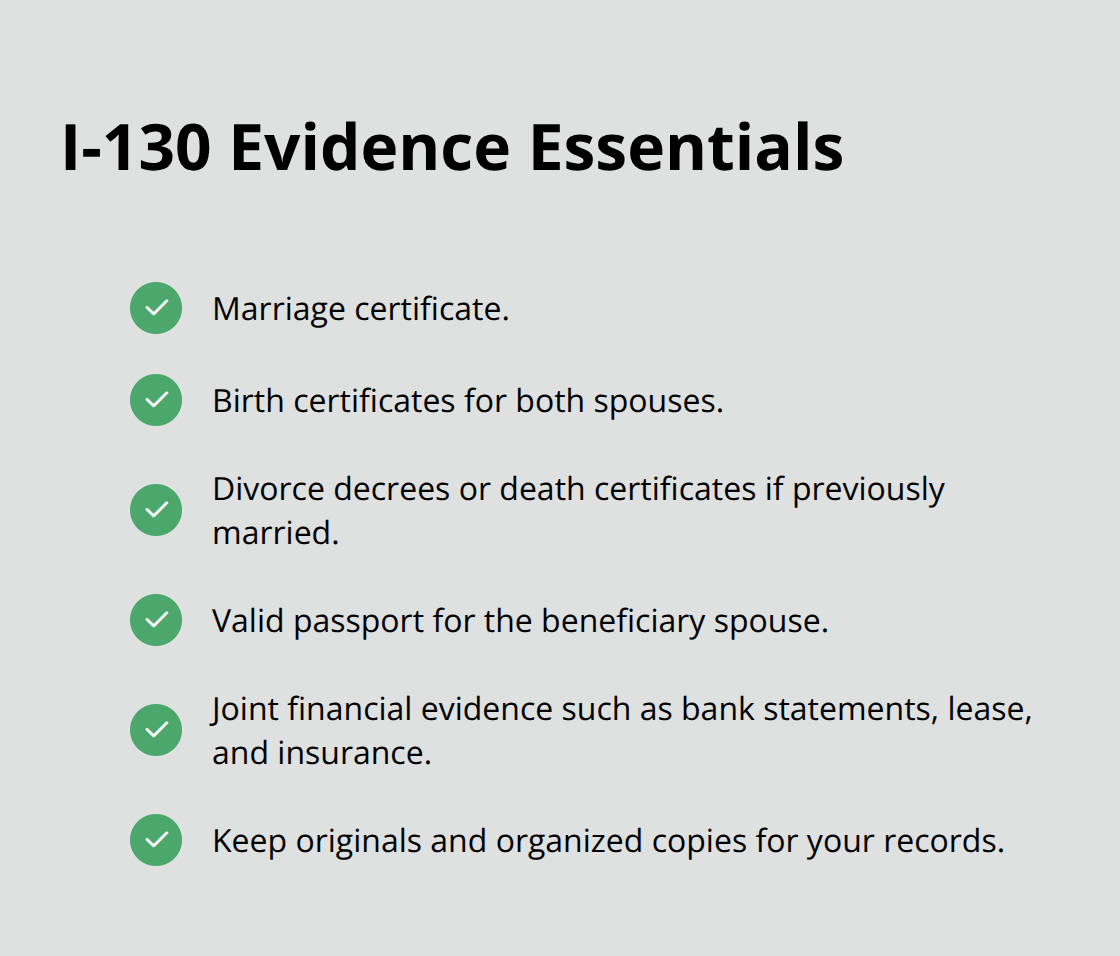
USCIS receives hundreds of thousands of I-130 petitions annually, and incomplete or poorly documented submissions create delays that can stretch your timeline by months. Start by gathering your marriage certificate, birth certificate, and any divorce decrees or death certificates from previous marriages. Your spouse needs a valid passport and birth certificate as well.
Essential Documents That Drive Approval
The I-130 itself is straightforward, but the supporting documents determine whether USCIS approves your petition quickly or requests additional evidence. Include at least 40 photographs spanning different locations, events, and people to establish your shared life together. Joint bank statements, shared lease agreements, and co-mingled insurance policies demonstrate financial integration far better than explanations alone.
If you have children together, include their birth certificates. Affidavits from family members and friends who know both of you carry weight, though they don’t need notarization to be effective. Submit originals and copies as instructed on the form, and keep detailed records of what you submit.
Timeline Expectations and Concurrent Filing
Processing timelines for the I-130 currently range from 18 to 36 months depending on your spouse’s location and visa category, though some cases move faster. If your spouse is in the United States and eligible for adjustment of status, filing the I-130 and I-485 concurrently accelerates the process significantly. You can also file the I-765 work permit application and I-131 advance parole document at the same time, allowing your spouse to work and travel while the petition processes.
Accuracy and Organization Matter
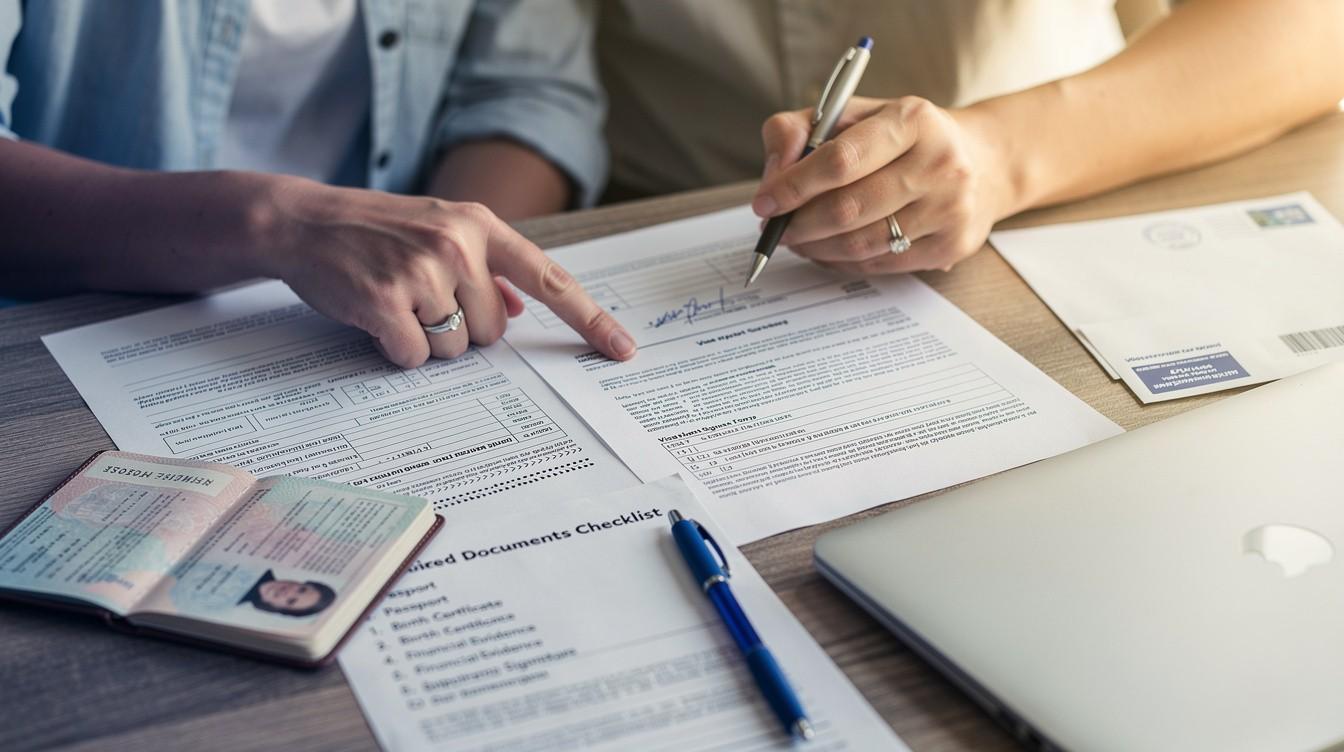
A single error like a misspelled name or incorrect date can trigger requests for evidence that add weeks to your timeline. Organize all documents in chronological order before submission and create a checklist to verify completeness. Include your spouse’s employment history with W-2s and pay stubs, proof of your income with recent tax returns and pay stubs, and updated evidence of everyday life like recent photos or text message screenshots.
Your I-130 petition succeeds when it tells a complete, documented story of your genuine relationship and your financial capacity to support your spouse. Once USCIS approves your petition, you move forward to the green card application itself, where additional forms and medical requirements come into play.
Completing Your I-485 Application
Why the I-485 Demands Your Full Attention
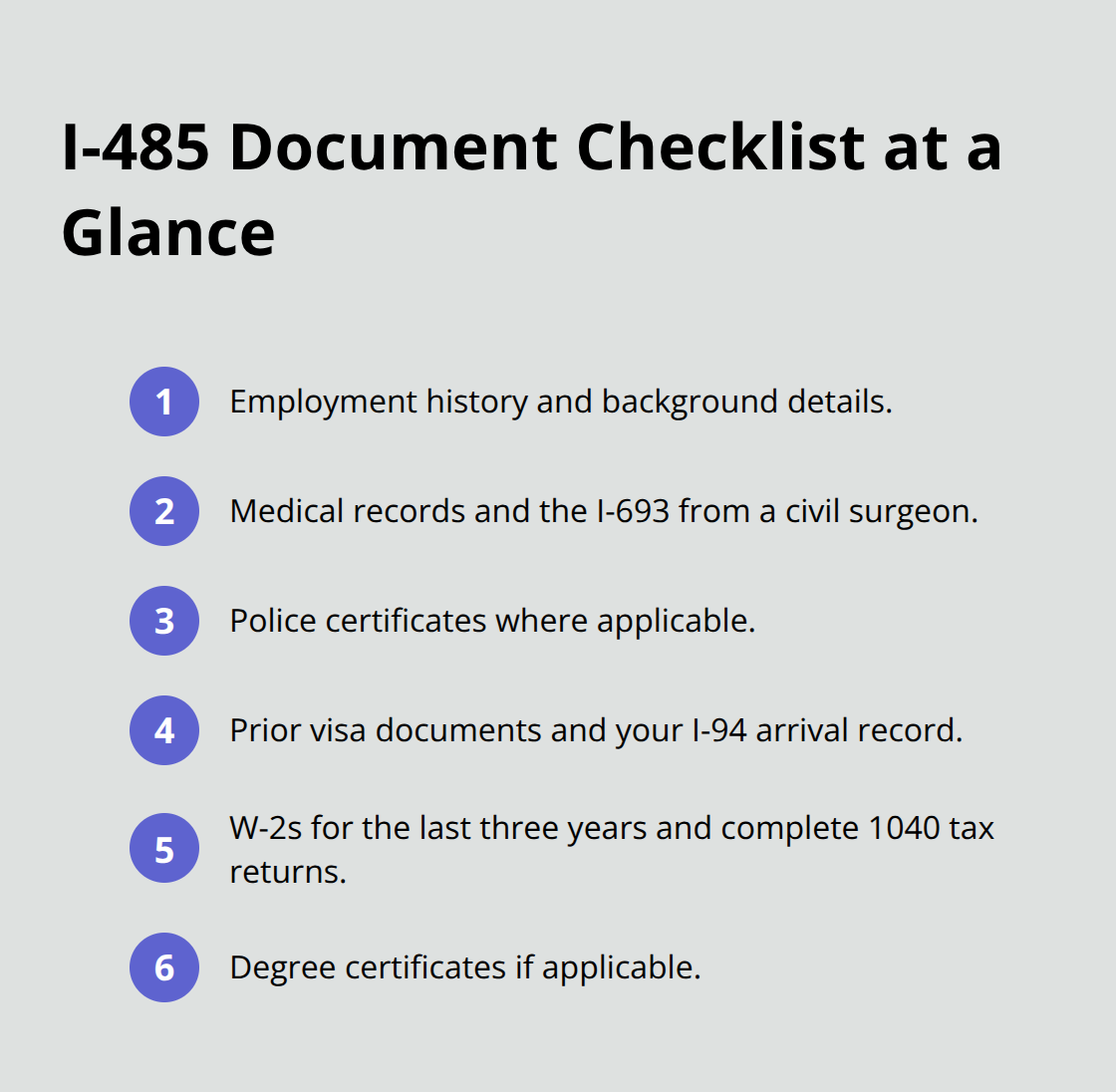
Your I-485 form is where you formally apply for permanent residence, and incomplete submissions cause the most damage to your case. USCIS scrutinizes every page, every signature, and every supporting document you attach. Unlike the I-130, which establishes your relationship, the I-485 verifies your eligibility and background. You provide your complete employment history, medical records, police certificates, and financial documentation. Include your prior visa documents, I-94 arrival record, W-2s covering the last three years, complete 1040 tax returns, and degree certificates if applicable.
This form demands accuracy-a single inconsistency between your I-485 and earlier submissions triggers a Request for Evidence that delays your case by months. Take time to verify every date, every address, and every employment entry against your actual records. Rushing through the I-485 creates problems that haunt your timeline later.
Medical Examination and the I-693 Report
The medical examination through USCIS-designated civil surgeons happens next, and the I-693 report becomes part of your permanent file. Schedule this exam early because delays at the civil surgeon’s office slow your entire timeline. The exam includes blood work, chest X-rays, and vaccination records review, costing between $300 and $800 depending on your location.
Bring your valid passport and any prior medical records to the appointment. USCIS officers review the I-693 thoroughly, so the civil surgeon must document everything completely and clearly. A thorough medical report strengthens your application and prevents complications later.
Background Checks and Processing
Background checks run simultaneously through the FBI, Department of State, and local law enforcement. These checks typically clear within 60 to 90 days for most applicants, though criminal history or immigration violations extend the timeline significantly. You cannot control the speed of these checks, but you can prepare by being transparent about your background.
Fees and Submission Requirements
Pay your I-485 filing fee and biometric services fee together and submit copies of your payment receipt with your application. Submit everything by mail or through USCIS online systems according to your local field office instructions, keeping detailed copies of every document for your records.
With your I-485 submitted and medical exam completed, your attention shifts to the final and most critical phase: preparing for the USCIS interview where an officer will assess whether your marriage is genuine and entered in good faith.
The Spouse Green Card Interview
Understanding Your Interview’s Purpose and Format
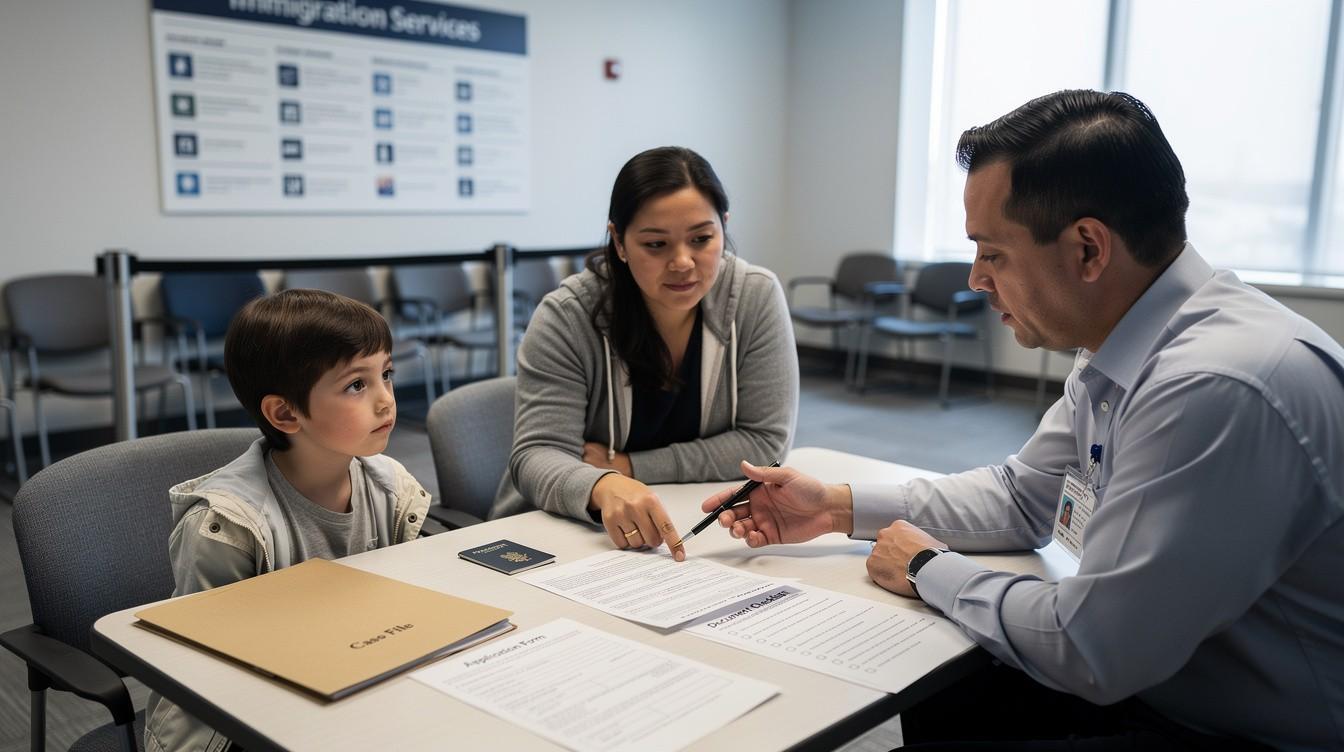
Your USCIS interview is the final verification step before your spouse receives permanent residence. The officer conducting your interview will assess your relationship authenticity through detailed questions about your household, relationship history, finances, and personal knowledge of each other. Interviews typically last 25 to 30 minutes, though complex cases extend longer. Both you and your spouse will attend if adjusting status in the United States, though consular processing interviews vary by embassy.
USCIS may separate you for questioning if inconsistencies arise-a procedure called a Stokes interview-where officers compare your answers to assess credibility. A poorly handled interview causes delays through Requests for Evidence, second interviews, or outright denial. Preparation determines your outcome far more than luck or hope ever will.
Aligning Your Statements with Your Written Record
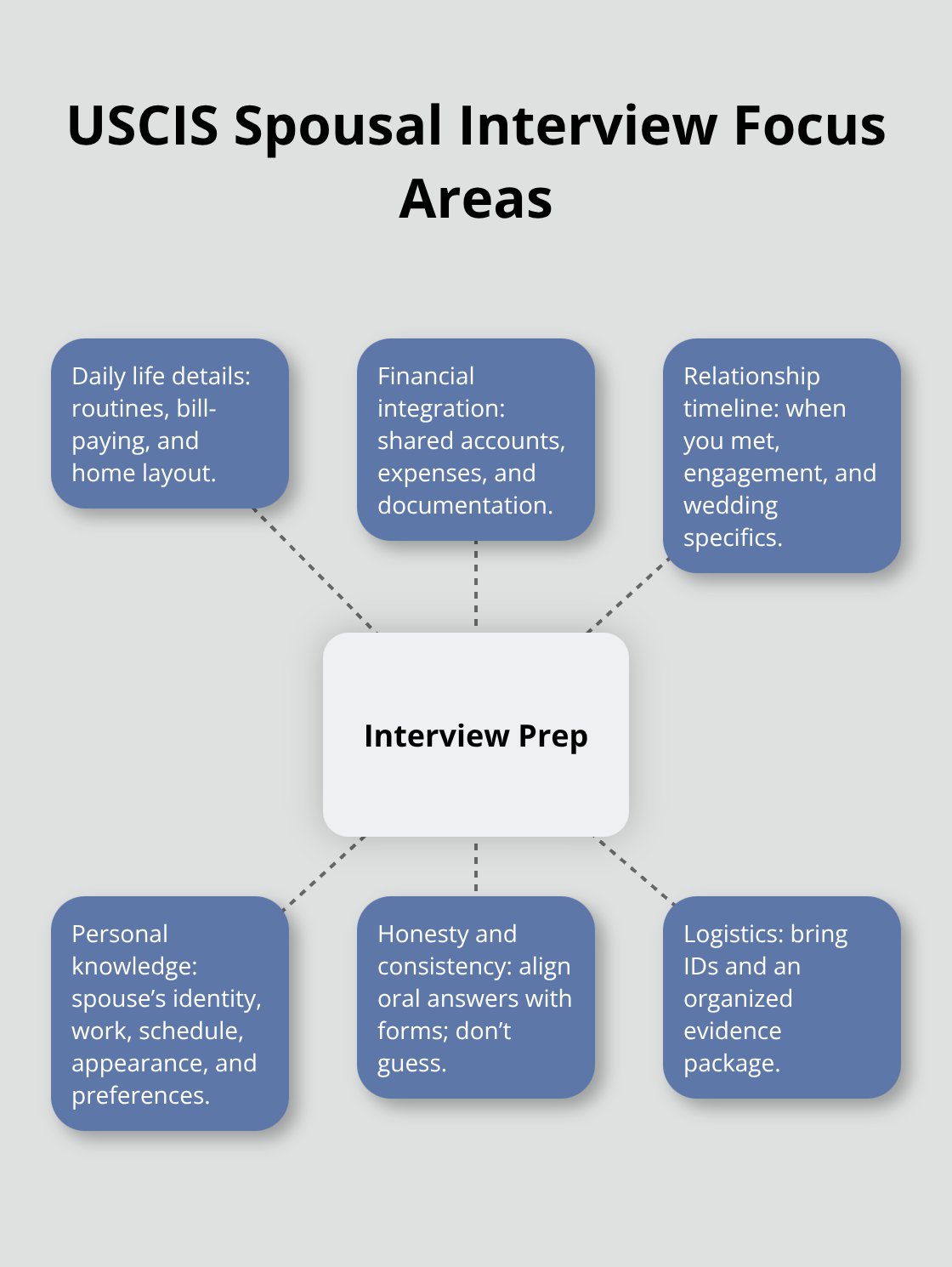
Start by reviewing your complete I-130 and I-485 applications line by line to verify your oral responses align perfectly with every written statement. Create a timeline of your relationship including the exact date you met, when you began dating, your engagement date, and your wedding date with specific details about the location, who attended, and how you traveled there.
Prepare to discuss your daily routines together, who pays which bills, your shared bank account details, your home’s physical layout (including wall colors and appliance colors), the number of bathrooms, rent or mortgage amount, and whether you have an elevator. Know your spouse’s full legal name, birthdate, birthplace, current employment, work schedule, tattoos or scars, eye color, smoking status, and favorite meals or television shows. Answer every question honestly and directly without over-explaining; if you cannot remember specific details, say so rather than guessing, because contradictions between spouses destroy credibility.
Assembling Your Evidence Package
Bring originals and copies of your joint lease or mortgage with all renewals, shared bank statements covering the last 12 months, joint tax returns, and co-mingled insurance policies listing both spouses. Include birth certificates of any mutual children, approximately 40 photographs across different locations and events with various family members and friends, emails or group chats with family, and text message screenshots from 2024 to present showing regular communication.
Affidavits from mutual friends and family members describing your relationship strengthen your case significantly. Include your spouse’s W-2s, 1040s, and recent pay stubs, your own employment records and income documentation, and copies of your assets like 401(k) statements and stock accounts to demonstrate financial stability. Bring your I-693 medical examination report, police certificates, and all prior visa documents and I-94 arrival records.
Identifying Red Flags That Trigger Heightened Scrutiny
Large age differences, living at separate addresses without explanation, material inconsistencies between your written application and interview statements, limited shared finances, limited shared language, or rapid marriage following a visa overstay trigger heightened scrutiny and increase your risk of denial. If red flags exist in your case, engage an experienced immigration attorney before your interview to address vulnerabilities and strengthen your evidence package.
Dress professionally but comfortably to establish the right tone. Your demeanor and preparation communicate respect for the process and confidence in your relationship’s authenticity.
Final Thoughts
Your spouse green card processing journey spans months of documentation, careful preparation, and strategic decision-making. The timeline from petition to interview typically ranges from 18 to 36 months, though concurrent filing accelerates this significantly if your spouse qualifies for adjustment of status in the United States. Some cases move faster, with approvals occurring within two months of filing, while others require additional evidence requests or second interviews.
After your interview concludes, USCIS may approve your case immediately and your spouse receives their green card within weeks. The officer may request additional evidence through a Request for Evidence, giving you time to submit missing documents and address concerns. In rare cases involving serious red flags or fraud indicators, denial occurs, though proper legal guidance and thorough preparation prevent this outcome.
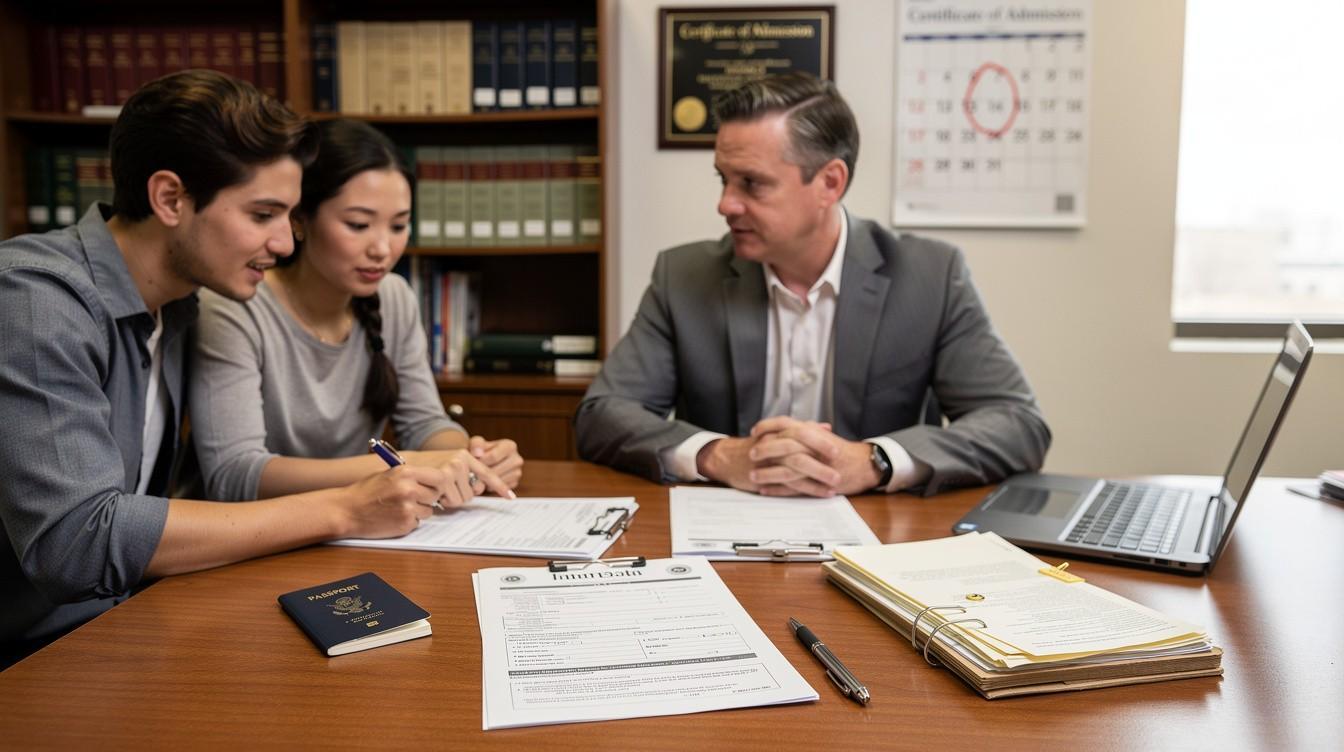
The complexity of spouse green card processing demands more than hope and good intentions-it requires strategic documentation and expert guidance. If your case involves complications, prior immigration violations, or significant red flags, contact our office before your interview occurs. We at Law Offices of Jeffrey A. Thompson help clients navigate these challenges and prepare for interviews with confidence.
Share this post: