Adjustment of Status Filing: A Step-By-Step Guide to Your Green Card Application
September 14, 2026
Adjustment of status filing is one of the most direct paths to obtaining a green card while remaining in the United States. At Law Offices of Jeffrey A. Thompson, we guide clients through this complex process every day.
This guide breaks down each step, from initial eligibility through your final interview. You’ll learn how to avoid common mistakes that delay applications and what to expect at every stage.
What Adjustment of Status Really Means for Your Green Card Path
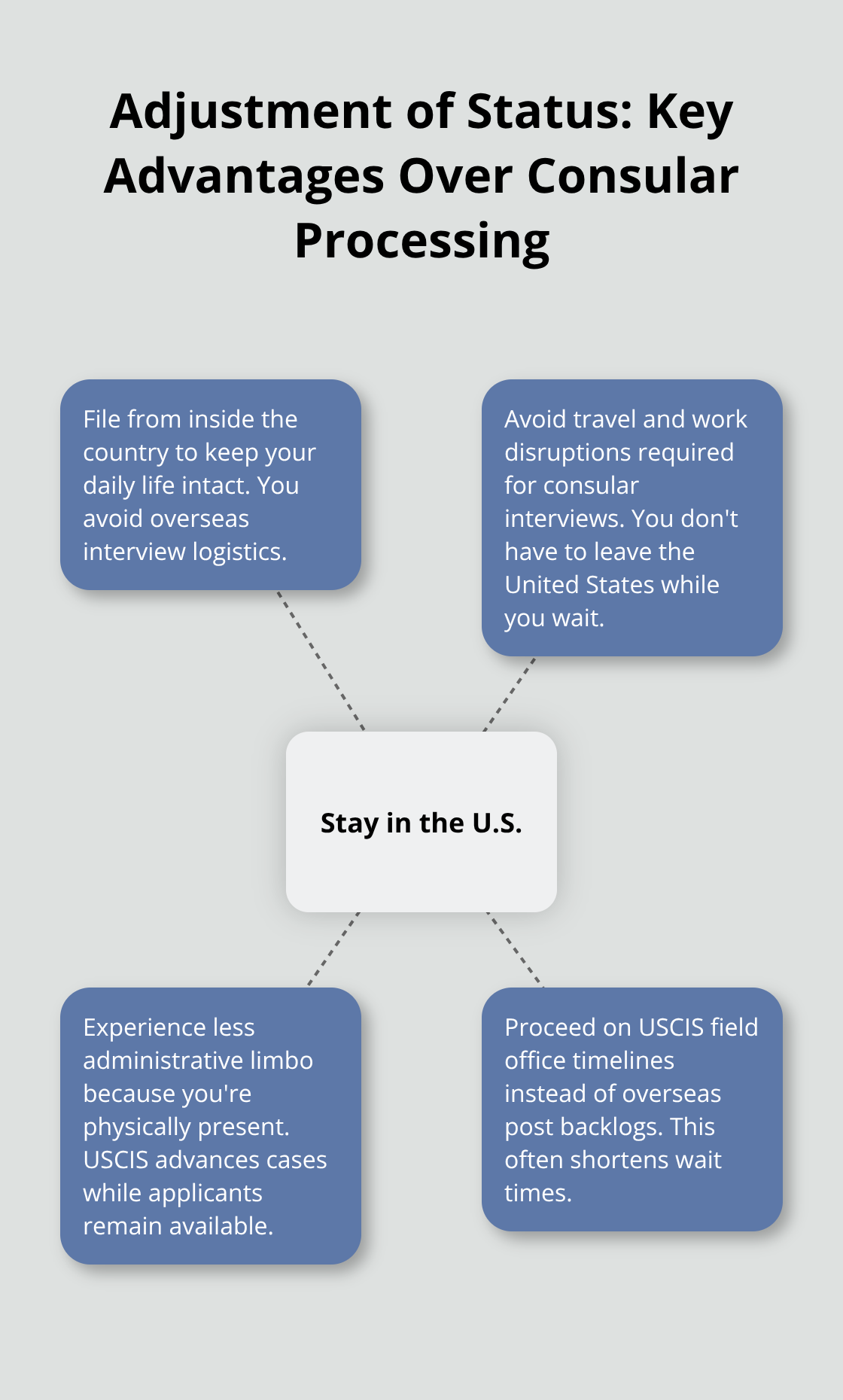
Adjustment of Status allows you to apply for permanent residency without leaving the United States. Rather than traveling abroad for consular processing, you file your green card application from inside the country. This distinction matters enormously because consular processing requires you to attend an interview at a U.S. embassy or consulate outside the United States, which means you must leave and cannot work or travel freely during the wait. According to USCIS data, Adjustment of Status applicants typically spend less time in administrative limbo because they remain physically present while their case processes.
The USCIS received approximately 800,000 Adjustment of Status applications in 2024, making it the dominant pathway for green card seekers already in the country.
Why Staying in the Country Matters
Filing Adjustment of Status while remaining in the United States offers concrete advantages over consular processing. You can continue working on your current employment authorization and maintain your address stability, which strengthens your application narrative. Your family members stay together during the process rather than being separated by international travel. Additionally, if complications arise during your case, you have immediate access to U.S. legal counsel and can respond quickly to USCIS requests. Consular processing applicants often face 6-to-12-month delays just scheduling interviews at overseas posts, whereas Adjustment of Status applicants proceed through USCIS field offices operating on tighter timelines. The USCIS reported median processing times for Adjustment of Status at approximately 12 to 18 months as of 2024, though this varies significantly by location and background complexity.
The Three Core Eligibility Factors
You must satisfy three non-negotiable requirements to qualify for Adjustment of Status: an approved immigrant petition filed on your behalf, an available visa number in your category, and your physical presence in the United States when you file. Employment-based applicants need an approved Form I-140, while family-based applicants require an approved Form I-130. You must also demonstrate that you’re not deportable and that your entry to the United States was lawful, meaning you didn’t sneak across a border or overstay a visa obtained through fraud. Some applicants entered without inspection, which historically barred them from Adjustment of Status, but recent policy changes have expanded eligibility for certain immediate relatives of U.S. citizens.
What USCIS Evaluates During Review
Your background check, medical examination results, and financial stability all factor into approval odds. USCIS officers scrutinize your employment history, tax records, and any prior immigration violations to assess your admissibility. The agency also verifies that your petitioner can support you financially and that you won’t become a public charge. Mistakes in these foundational elements derail applications months or years down the road, far more costly than fixing errors upfront. An immigration attorney can help you navigate these requirements and strengthen your case before you submit it to USCIS.
How to File Form I-485 and Prepare for Your Medical Exam
Submit Your I-485 with Complete Documentation
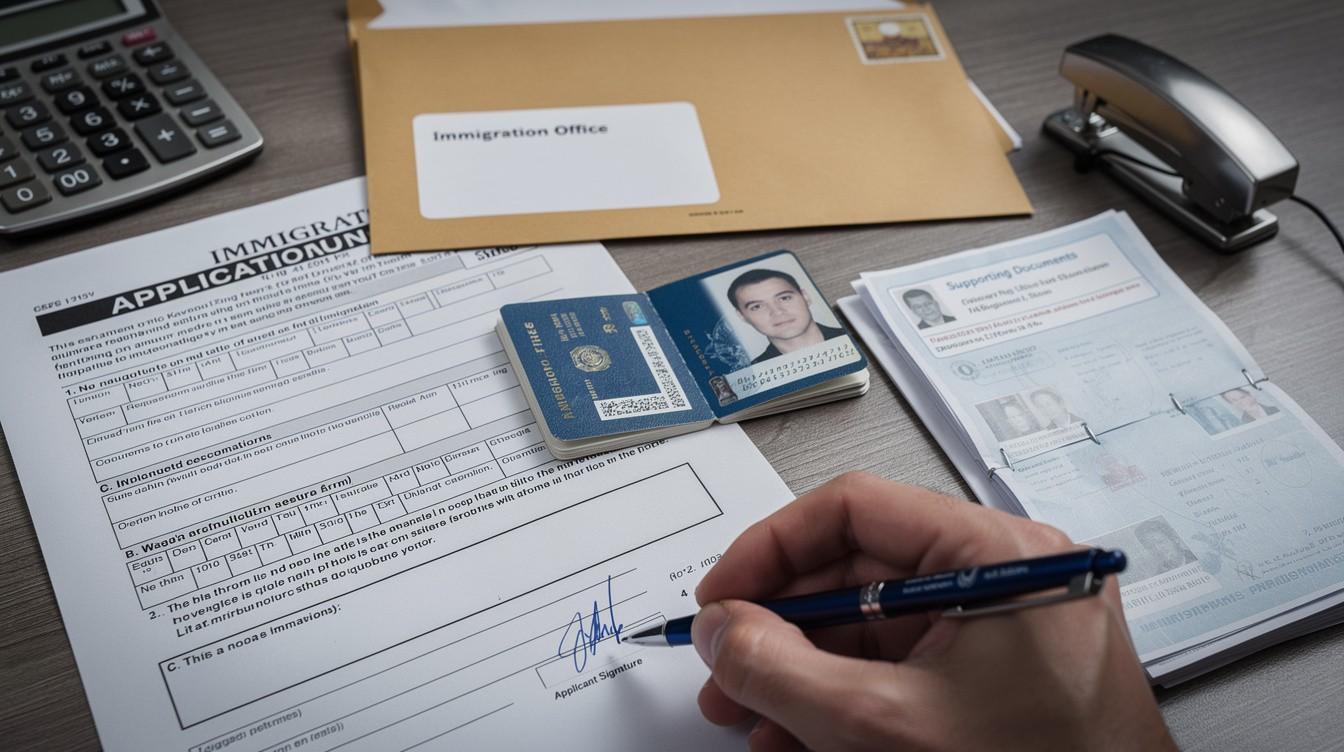
Form I-485 launches your Adjustment of Status application with USCIS. This form serves as your green card petition and requires a complete package of supporting documents, or USCIS will reject it immediately. The agency receives thousands of incomplete I-485 filings monthly, and incomplete submissions cause delays while officers request missing evidence.
You must include your birth certificate, passport, police clearance letter from your home country, medical examination results from a USCIS-designated civil surgeon, and proof of financial support through Form I-864 signed by your petitioner. Employment-based applicants add their approved Form I-140 and labor certification, while family-based applicants submit their approved Form I-130. Photographs meeting specific USCIS dimensions and your state identification or driver’s license are non-negotiable.
Organize documents in the exact order USCIS specifies rather than submitting them randomly. Officers process your file faster when materials follow the official sequence. Submit your I-485 to the appropriate USCIS Service Center based on your state of residence, and retain copies of everything for your records before mailing.
Schedule Your Medical Examination with a USCIS-Designated Civil Surgeon
Your medical examination must occur before or immediately after you file Form I-485, and this examination is not optional. The civil surgeon evaluates your vaccinations, communicable diseases, and mental or physical health conditions that might render you inadmissible. USCIS maintains a searchable database of authorized civil surgeons on its website, and you cannot use your personal doctor regardless of your relationship with them.
Schedule your appointment early because civil surgeons often maintain waiting lists in major metropolitan areas. Delays in receiving your medical results directly delay your entire case. The civil surgeon completes Form I-693 and seals it in an envelope that you must submit with your Form I-485 application package.
Complete Your Biometrics Appointment and Background Investigation
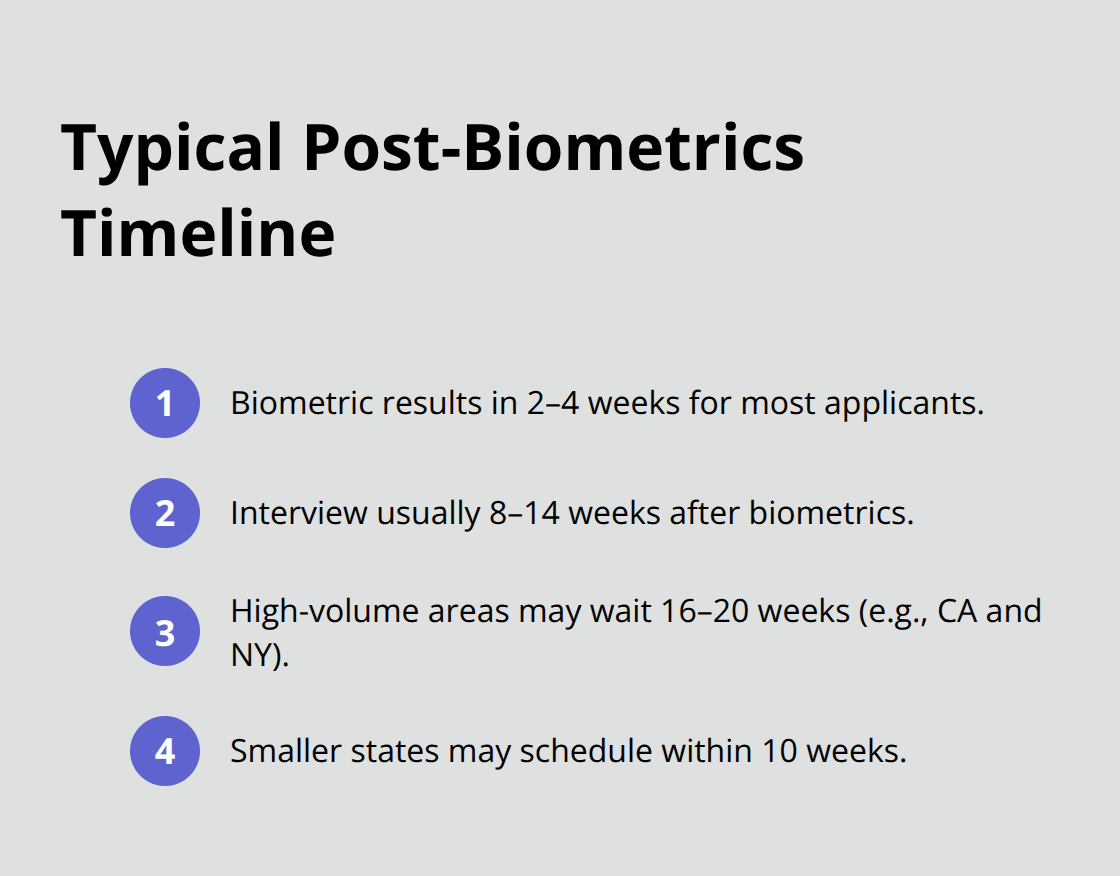
Biometrics appointments follow within weeks of filing, where USCIS collects your fingerprints and photographs for background investigations. Arrive 15 minutes early to your appointment with your appointment notice and valid identification. No-shows result in case dismissals.
USCIS processes biometric results within 2 to 4 weeks for most applicants, though security concerns or name matches can extend this timeline significantly. Your interview typically occurs 8 to 14 weeks after biometrics completion, though this varies dramatically by location and background complexity. Applicants in high-volume jurisdictions like California and New York often wait 16 to 20 weeks, while smaller states may schedule interviews within 10 weeks.
Prepare for What Comes Next in Your Case
The timeline from I-485 submission to your interview decision spans months, and understanding each phase helps you stay organized. Your USCIS officer will review your complete file, verify your background check results, and assess your admissibility before calling you for an interview. This preparation phase determines whether your interview proceeds smoothly or whether the officer raises concerns that require additional evidence.
Common Obstacles and How to Overcome Them
Incomplete Documentation Causes Immediate Rejection
Incomplete documentation ranks as the single largest reason USCIS rejects Adjustment of Status applications before they ever reach an officer’s desk. Applicants submit missing birth certificates, incomplete police clearances from multiple countries they’ve lived in, or outdated medical examinations that fall outside the required 60-day window before filing. USCIS does not contact you to request these items first-the agency returns your entire application and you must refile from scratch, adding 4 to 6 months to your timeline.
Filing errors compound this problem significantly. Transposing your name differently across forms, listing incorrect USCIS receipt numbers, or failing to sign documents where required creates administrative chaos that forces USCIS officers to send Requests for Evidence. The solution is straightforward: obtain a detailed checklist from USCIS’s official I-485 instructions and gather every document before you file. An immigration attorney can review your entire package before submission. This upfront investment of time prevents months of delays and protects your application from preventable mistakes.
Background Checks Create Delays Outside Your Control
Background checks represent the second major obstacle, and this one sits entirely outside your control. USCIS conducts name-based searches against FBI, CIA, and Department of State databases, and common names frequently produce false matches that require manual investigation to clear. Applicants with prior arrests (even those dismissed or expunged) face extended security reviews lasting 6 to 12 months beyond the standard 12-to-18-month processing timeline.
Travel to countries designated as terrorism concerns or family connections to individuals in those regions trigger additional screening that can extend your case indefinitely. During this waiting period, USCIS will not schedule your interview, leaving you in limbo.
Work Authorization and Travel Documents Protect Your Status
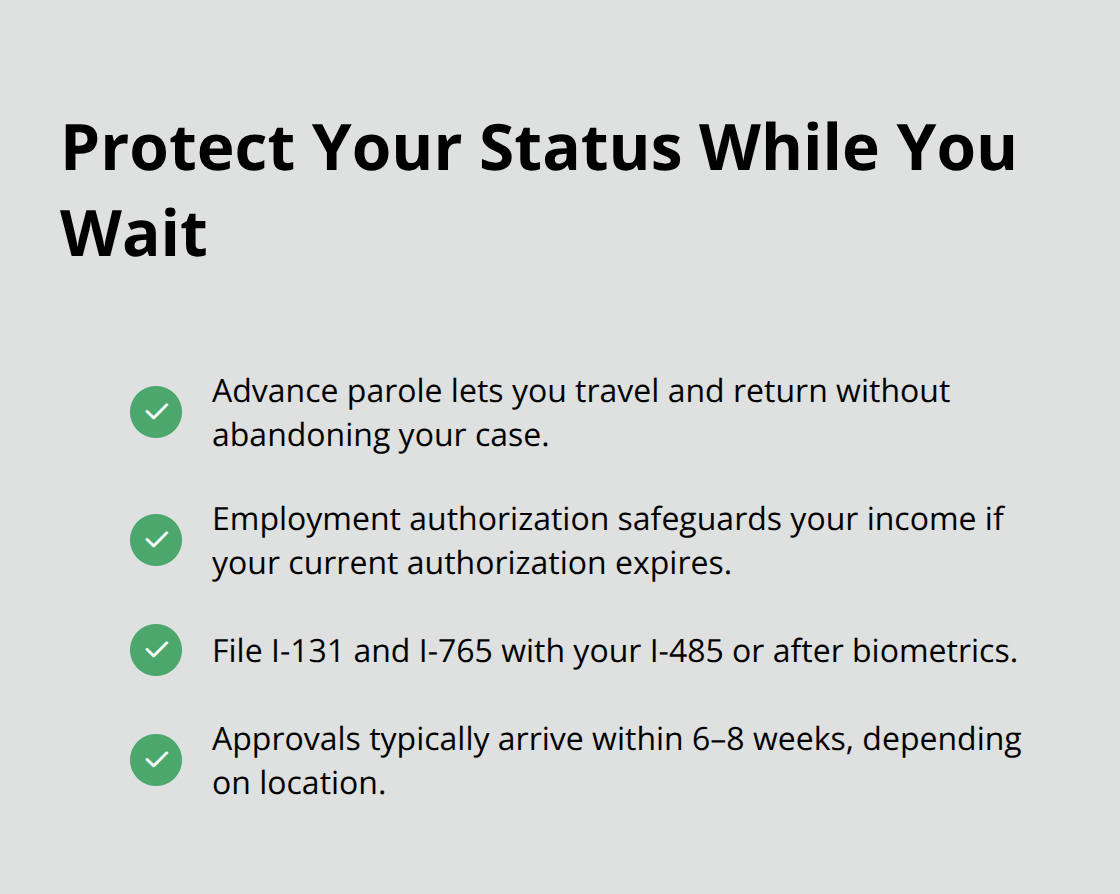
Work authorization and travel documents become critical lifelines during background check delays. File Form I-131 for advance parole and Form I-765 for employment authorization simultaneously with your I-485 or immediately after biometrics completion. Advance parole allows you to travel internationally and return without abandoning your application, while employment authorization protects your ability to earn income if your current authorization expires.
USCIS typically approves these ancillary forms within 6 to 8 weeks, though processing varies by location. Without these documents, you face unemployment and travel restrictions that can last longer than your entire application timeline. These forms act as insurance policies that keep your life stable while your background investigation proceeds.
Final Thoughts
Adjustment of status filing succeeds when you submit a complete I-485 package with all supporting documents organized in USCIS’s specified order, schedule your medical examination with a designated civil surgeon immediately, and attend your biometrics appointment without fail. Your timeline typically spans 12 to 18 months from I-485 submission to final decision, though background complexity and your location significantly affect this duration. File Form I-131 for advance parole and Form I-765 for employment authorization alongside your I-485 to protect your ability to work and travel during processing.
Incomplete documentation and background check delays represent the two obstacles you’ll most likely encounter during adjustment of status filing. Prevent the first by obtaining USCIS’s official checklist and gathering every required document before you file. Accept that the second sits outside your control, but advance parole and employment authorization insulate you from its impact.
We at Law Offices of Jeffrey A. Thompson understand that this process involves complex paperwork, strict deadlines, and high stakes for your future. Our immigration law team assists clients in navigating adjustment of status from start to finish, helping you overcome legal hurdles and achieve your American dream. Contact Law Offices of Jeffrey A. Thompson in Brockton, Massachusetts, to discuss your specific situation and receive expert guidance tailored to your case.
Share this post: