US Visa Interview Tips: Mastering the Process
September 18, 2026
Your US visa interview can determine whether your application moves forward or gets denied. At Law Offices of Jeffrey A. Thompson, we’ve helped countless clients navigate this critical moment with confidence.
These US visa interview tips will walk you through what to expect, how to prepare effectively, and which mistakes could cost you your visa.
What Consulate Officers Actually Ask
The Three Core Assessment Areas
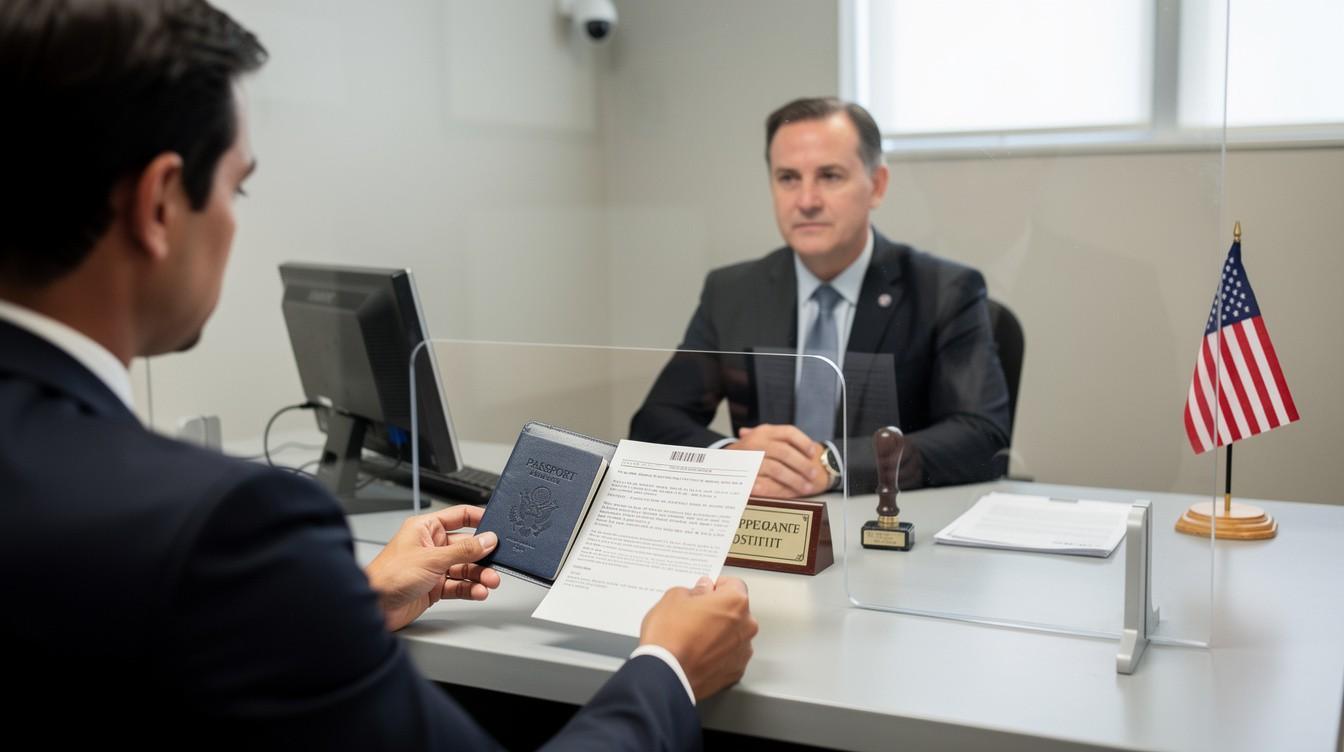
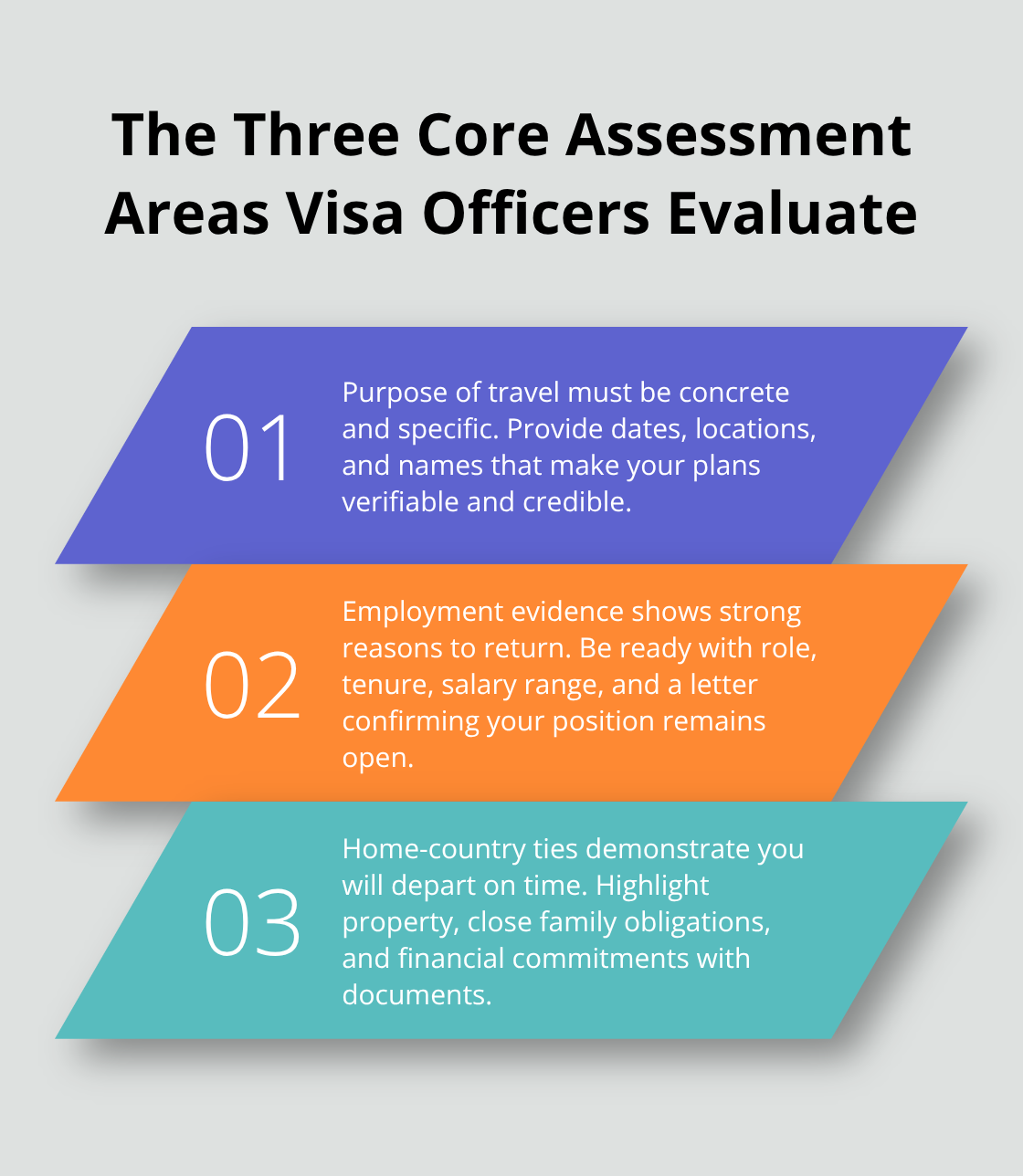
Visa officers ask roughly the same questions to every applicant, but your specific answers matter far more than generic preparation. The State Department doesn’t publish official question lists, but consular data shows officers focus on three core areas to assess whether you’ll actually return home after your visa expires. Your purpose of travel, employment status, and ties to your home country form the foundation of every interview.
Purpose of Travel: Specificity Wins
Your purpose of travel gets scrutinized first because overstaying is the primary concern for US immigration officials. Officers want concrete details about your trip, not vague statements. If you travel for business, have specific meeting dates, client names, and contract details ready. For tourism, mention particular attractions and how long you’ll spend at each location.
A study by the Migration Policy Institute found that applicants with detailed itineraries face fewer follow-up questions than those giving general answers. The difference between “I’m visiting family” and “I’m visiting my sister Maria in Denver for two weeks, staying at her home on Maple Street” determines how an officer perceives your credibility.
Employment: Proof You Have Reasons to Return
Employment questions test whether you have genuine reasons to return home. Officers ask about your current position, salary range, job responsibilities, and career plans. They want proof you have something valuable waiting for you. Employment letters from your employer become essential, not just helpful. Include your job title, start date, and confirmation that your position remains open during your absence.
Some consulates request tax returns or payroll statements to verify employment details. These documents transform vague claims into verifiable facts that officers can trust.
Home Country Ties: Documentation Matters
Your ties to your home country determine whether the officer believes you’ll leave the United States when required. Questions about property ownership, family members, financial accounts, and community involvement all address this concern. If you own property, bring documentation. If you have children in school or aging parents depending on you, mention these specifics.
Officers assess your stability through concrete facts, not emotional appeals. The more verifiable information you provide, the less suspicion an officer develops about your intentions. With these three areas covered, you’re ready to move into the preparation phase that transforms nervous applicants into confident interviewees.
How to Prepare for Your US Visa Interview
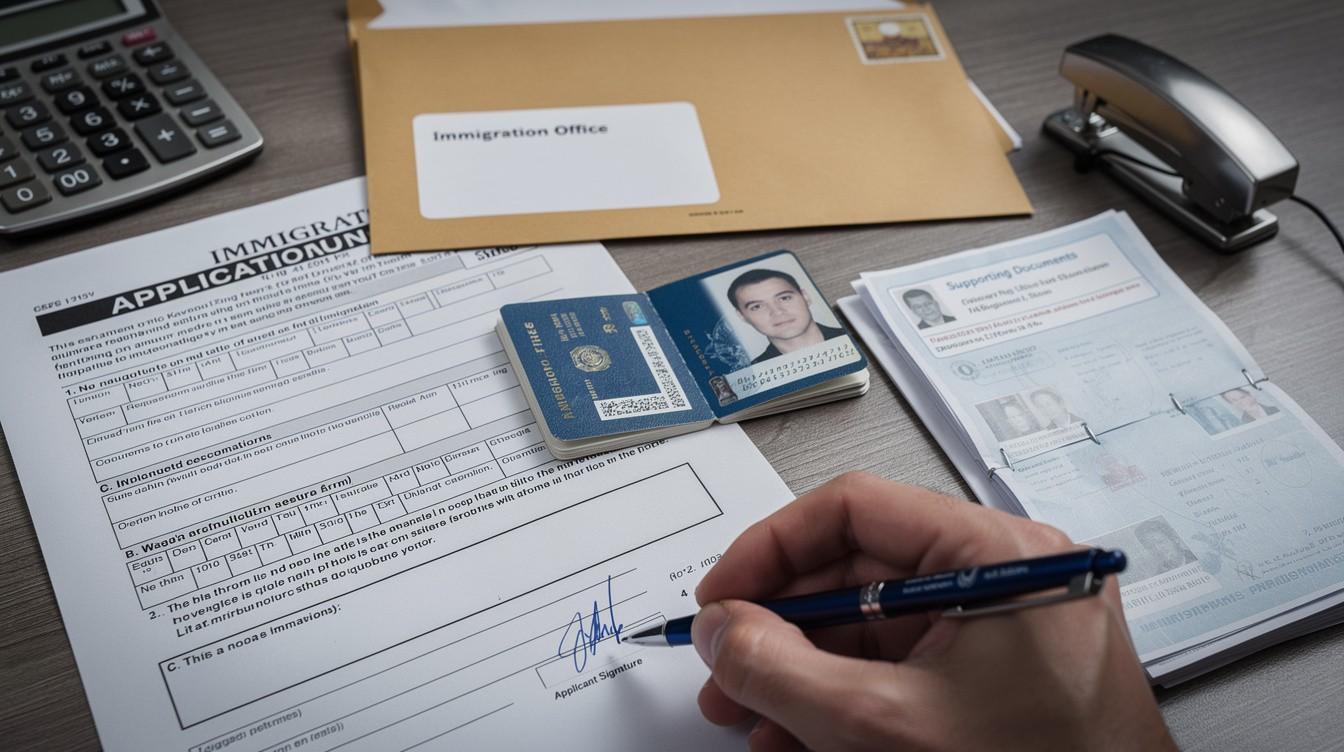
Organize Your Documents Before Interview Day
Consulate officers review your documents before and during your interview. Disorganized paperwork signals carelessness to visa officers, and they interpret this as a red flag about your overall credibility. Create a physical folder with documents arranged chronologically or by category, then create a digital backup on your phone. Include your passport, birth certificate, financial statements, employment letter, property deeds, and any correspondence from the consulate. Add a one-page summary listing every document you’re bringing, with page numbers. This summary prevents the officer from asking where something is while you fumble through papers.
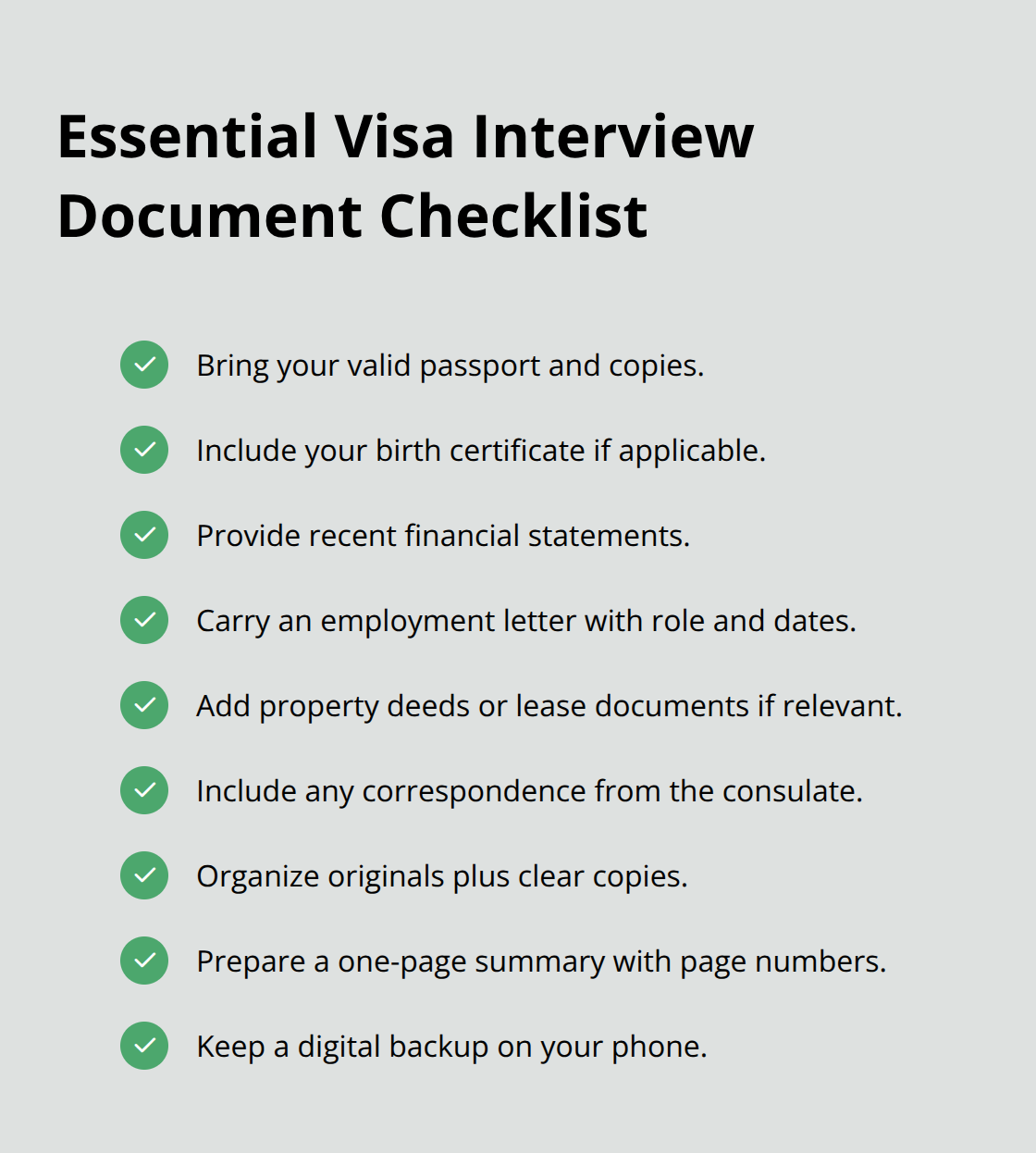
Don’t assume the officer will ask for specific documents. Bring originals of everything and copies of critical items. Visa officers appreciate applicants who anticipate their needs rather than force them to request information repeatedly.
Speak Your Answers Aloud Multiple Times
Mental preparation fails during interviews because stress activates different parts of your brain than quiet thinking does. Speak your answers out loud multiple times before your interview date. Record yourself answering questions about your employment, family, finances, and travel plans, then listen back. You’ll catch awkward phrasing, filler words, and vague statements that weaken your credibility. Practice with a friend or family member who can ask follow-up questions, because officers always push deeper into your initial answers. Expect questions like “How much do you earn monthly?” “What happens to your job while you’re gone?” and “Who depends on you financially?” Your answers should be specific and conversational, not memorized scripts that sound robotic.
Research Your Specific Consulate Location
Different consulates conduct interviews differently, so targeted research matters. The US State Department publishes consulate-specific information on their website that shows average interview duration and document requirements. Visit your consulate’s website and read recent visa applicant experiences on forums to understand what officers at that location typically ask. This targeted preparation transforms you from a nervous applicant into someone who responds naturally to unexpected questions and demonstrates genuine knowledge about where you’ll interview. With your documents organized and your answers practiced, you’re ready to identify the specific mistakes that derail countless applicants at the final stage.
Mistakes to Avoid During Your US Visa Interview
Contradictions Destroy Your Credibility
Consistency is everything in a visa interview, and contradictions destroy your credibility instantly. If you tell the officer you work as an accountant but your employment letter lists you as a financial analyst, that discrepancy triggers suspicion about everything else you say. Officers compare your verbal statements against your documents line by line, and they’ve conducted thousands of interviews, so they spot inconsistencies immediately.
Before your interview, read through every document you’re bringing and align your spoken answers with what’s written. If your passport shows you traveled to five countries but you only mention three during your interview, the officer will ask why you omitted the others. This doesn’t mean you lied intentionally, but it signals you’re either hiding something or unreliable with details.
Vague answers create more problems than honest ones. If an officer asks about gaps in your employment history and you say you were traveling, have specific dates and destinations ready. The moment an officer suspects inconsistency, they shift into skeptical mode and scrutinize every remaining answer with heightened doubt.
Timing and Preparation Signal Your Respect
Arriving late eliminates any goodwill before you speak a single word, and unprepared applicants signal they don’t take the process seriously. Consulates operate on strict schedules, and arriving even five minutes late can result in interview rescheduling or outright denial. Plan to arrive 30 minutes early, which means leaving your accommodation 90 minutes before your appointment time.
Bring originals of all documents plus copies, your passport, and a pen. This preparation prevents you from scrambling through your materials while the officer waits. Officers notice applicants who anticipate their needs versus those who force them to request information repeatedly.
Emotional Control Matters More Than Confidence
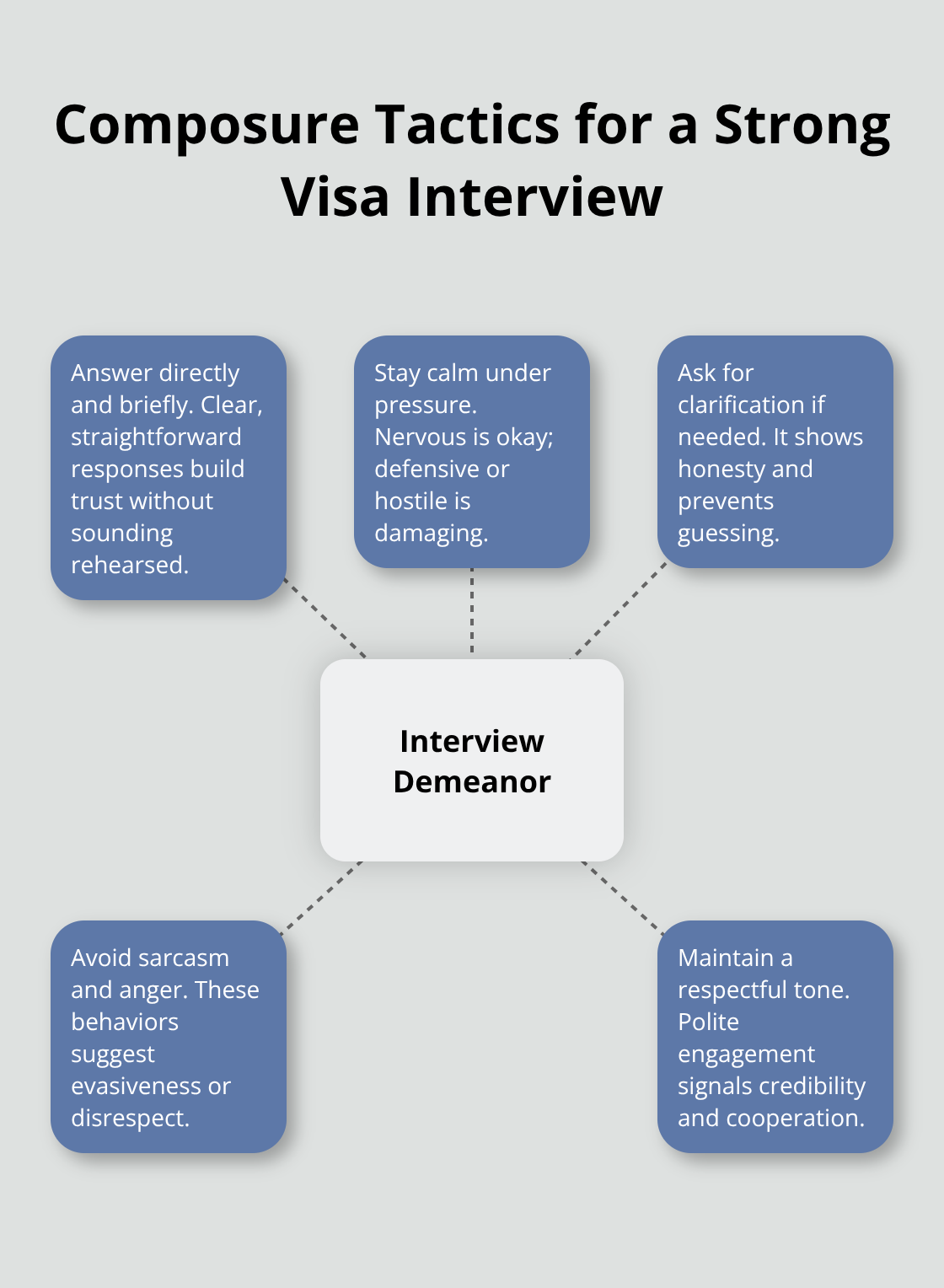
Nervous behavior during the interview doesn’t disqualify you, but defensive behavior does. If an officer asks a challenging question and you respond with hostility or evasiveness, they interpret this as dishonesty. Answer questions directly without becoming emotional, even if you disagree with the premise.
Officers expect applicants to feel anxious, so controlled nervousness won’t harm you. What damages your application is sarcasm, anger, or refusal to answer questions clearly. If you don’t understand a question, ask for clarification rather than guessing at what the officer meant. This demonstrates honesty and respect for the process.
For additional guidance on preparing for your consulate visa interview, consider consulting with an immigration professional who can review your specific circumstances.
Final Thoughts
Your visa interview success rests on three concrete actions: organizing your documents, practicing your answers aloud, and researching your specific consulate. These US visa interview tips transform nervous applicants into prepared ones who answer questions directly and demonstrate genuine ties to their home country. Consistency between your documents and spoken statements matters more than confidence or eloquence.
After your interview concludes, the consulate will notify you of the decision within days or weeks, depending on your location. Some applicants receive approval on the spot, while others face administrative processing that extends the timeline. Check your consulate’s website for typical processing times and contact procedures, and avoid contacting the consulate repeatedly about your status.
If your application receives a denial, you have the right to reapply and address the specific concerns that officers raised. Common denial reasons include insufficient ties to your home country, inconsistent statements, or incomplete documentation (each reapplication gives you the opportunity to strengthen weak areas). We at Law Offices of Jeffrey A. Thompson assist clients navigating immigration matters from paperwork through overcoming legal hurdles, and our immigration law team in Brockton, Massachusetts stands ready to help if your visa application faces complications or you need guidance after an interview denial.
Share this post: