Fiance Visa Processing Time: Planning Your Timeline For A Petition
October 5, 2026
Fiancé visa processing time varies significantly depending on where you’re in the application journey. At Law Offices of Jeffrey A. Thompson, we’ve guided countless couples through this complex process and know firsthand how delays can derail even the best-laid plans.
This guide breaks down exactly what to expect at each stage, from initial USCIS review to final consular approval. You’ll learn which factors speed things up and which ones cause bottlenecks, so you can plan accordingly.
Understanding the K-1 Fiancé Visa
What is a K-1 Fiancé Visa
The K-1 fiancé visa is a nonimmigrant visa category that allows a U.S. citizen to bring their foreign fiancé into the United States for the purpose of marriage. U.S. immigration law recognizes that couples may want to marry on American soil rather than abroad, and it provides a structured pathway to make that happen. The K-1 is not a path to permanent residency on its own, but rather a temporary status that gives you 90 days after entry to marry. Once you marry, your fiancé can adjust status to become a permanent resident, but that’s a separate process that happens after the wedding.
Eligibility Requirements You Must Meet
The eligibility requirements for a K-1 visa are straightforward but nonnegotiable. You must be a U.S. citizen, not just a permanent resident. You and your fiancé must have met in person within the two years before filing the petition, with very limited exceptions for extreme hardship. Your fiancé must be legally single and free to marry, which means divorced, widowed, or never married individuals qualify, but those in current marriages do not. You must intend to marry within 90 days of your fiancé’s arrival, and you must demonstrate that you can support your fiancé financially. The income requirement varies by state and household size, but as of 2024, the minimum is around 125 percent of the federal poverty line. For a single sponsor in most states, that translates to roughly $23,000 annually. If you fall short, you can use a co-sponsor’s income, typically a family member who meets the requirements themselves.
How K-1 Differs from Marriage-Based Green Cards
The K-1 visa differs fundamentally from marriage-based green card immigration compared to K-1 fiancé visa eligibility requirements and timeline differences. With a marriage-based green card, you marry your foreign spouse first, then petition for them to immigrate. This means you’re already married when the process begins. With K-1, you petition first while engaged, your fiancé enters the U.S., and then you marry within 90 days. The K-1 typically results in a shorter time apart compared to marriage-based immigration. The K-1 is faster for couples who want to marry in the United States, but it requires more careful planning because you have a strict 90-day window to actually marry. If you miss that deadline, your fiancé must leave the country or go through a completely different process to adjust status.
Why Processing Times Affect Your Real-World Plans
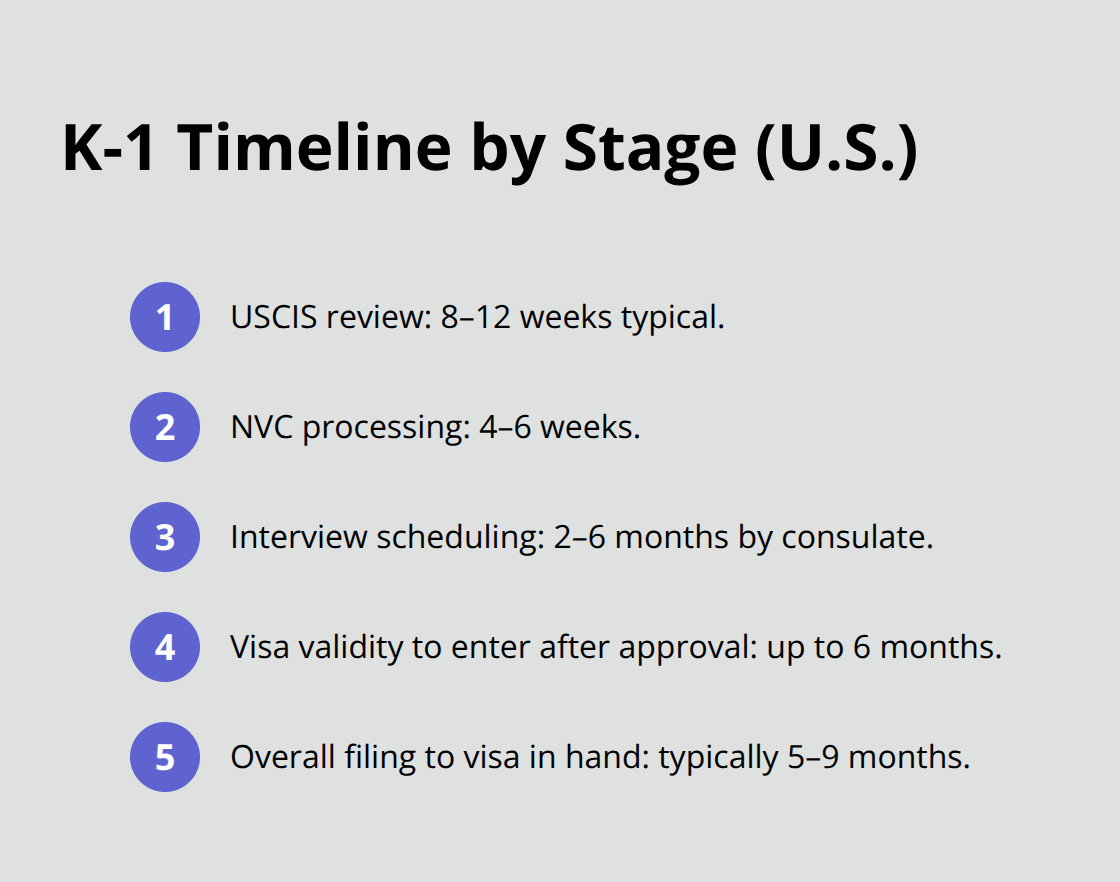
K-1 visa processing times vary significantly across the country. USCIS typically takes 8 to 12 weeks to review your initial petition, but some applications move faster and others slower depending on completeness and background complexity. After USCIS approval, the National Visa Center takes another 4 to 6 weeks to prepare your file for the consulate. The consulate where your fiancé applies then schedules an interview, which can happen anywhere from 2 to 6 months after NVC processing, depending on the specific embassy or consulate and current workload.
Some countries like the Philippines, Mexico, and India experience longer waits than others. These timelines matter because you need to coordinate your wedding plans, time off work, venue bookings, and family arrangements around a process you cannot fully control. Understanding where delays typically occur gives you realistic expectations and reduces the stress of unexpected setbacks.
The actual timeline you face depends on which stage of the process creates the biggest bottleneck for your situation. That’s where the next section breaks down each phase in detail.
How Long Does Each Stage Actually Take
USCIS Review: The First Major Checkpoint
USCIS takes 8 to 12 weeks to review your I-129F petition after you file it, though some cases move faster if your documentation is complete and your background check clears without complications. The timeline depends heavily on whether you submit everything correctly the first time. Incomplete applications trigger requests for additional evidence, which adds weeks to your wait. USCIS processes these petitions in the order they arrive, so filing early gives you an advantage over couples who delay.
National Visa Center Processing: The Often-Overlooked Stage
The National Visa Center then needs 4 to 6 weeks to process your file and prepare it for the consulate, assuming no missing documents trigger requests for additional evidence. This stage receives far less attention than USCIS review, yet it creates real delays when couples fail to prepare properly. NVC staff review your file for completeness and forward it to the appropriate consulate. Any gaps in your documentation at this point send your file back to you, costing 2 to 4 weeks while you gather what you missed.
Consular Interview Scheduling: Where Timelines Diverge
After NVC approval, your fiancé’s consulate schedules the visa interview, and this is where timelines diverge dramatically depending on location. Consulates in high-volume countries like the Philippines, Mexico, and India often schedule interviews 3 to 6 months out, while smaller posts might move faster. The actual consular interview itself typically takes 15 to 30 minutes, but the wait to get that appointment slot is what extends your overall timeline. Check the State Department website for your specific consulate’s average processing times before you set your wedding date.
From Approval to Entry: The Final Steps
Once your fiancé passes the interview and receives visa approval, they can enter the United States within six months. The entire process from initial filing to visa stamp in hand typically takes 5 to 9 months, though cases with documentation issues or background complications stretch considerably longer. Many couples underestimate the NVC and consular stages because they focus heavily on preparing for USCIS review, then assume the hard part is over once they receive approval. In reality, USCIS approval is just the midpoint. If your fiancé’s consulate is in a country experiencing visa processing backlogs, you could face an additional 2 to 4 month delay beyond normal timeframes.
Preparing Documents Now Prevents Delays Later
Have your fiancé gather all required documents now, including police certificates, medical exams, and birth certificates, rather than waiting for NVC requests. Incomplete documents at the NVC stage cost you 2 to 4 weeks of waiting while they request what you missed. Missing even one item means another round trip to obtain it, compressing your timeline further. Start your wedding planning and time-off requests after NVC processing begins, not after USCIS approval, because the consulate stage is where surprises happen most often.
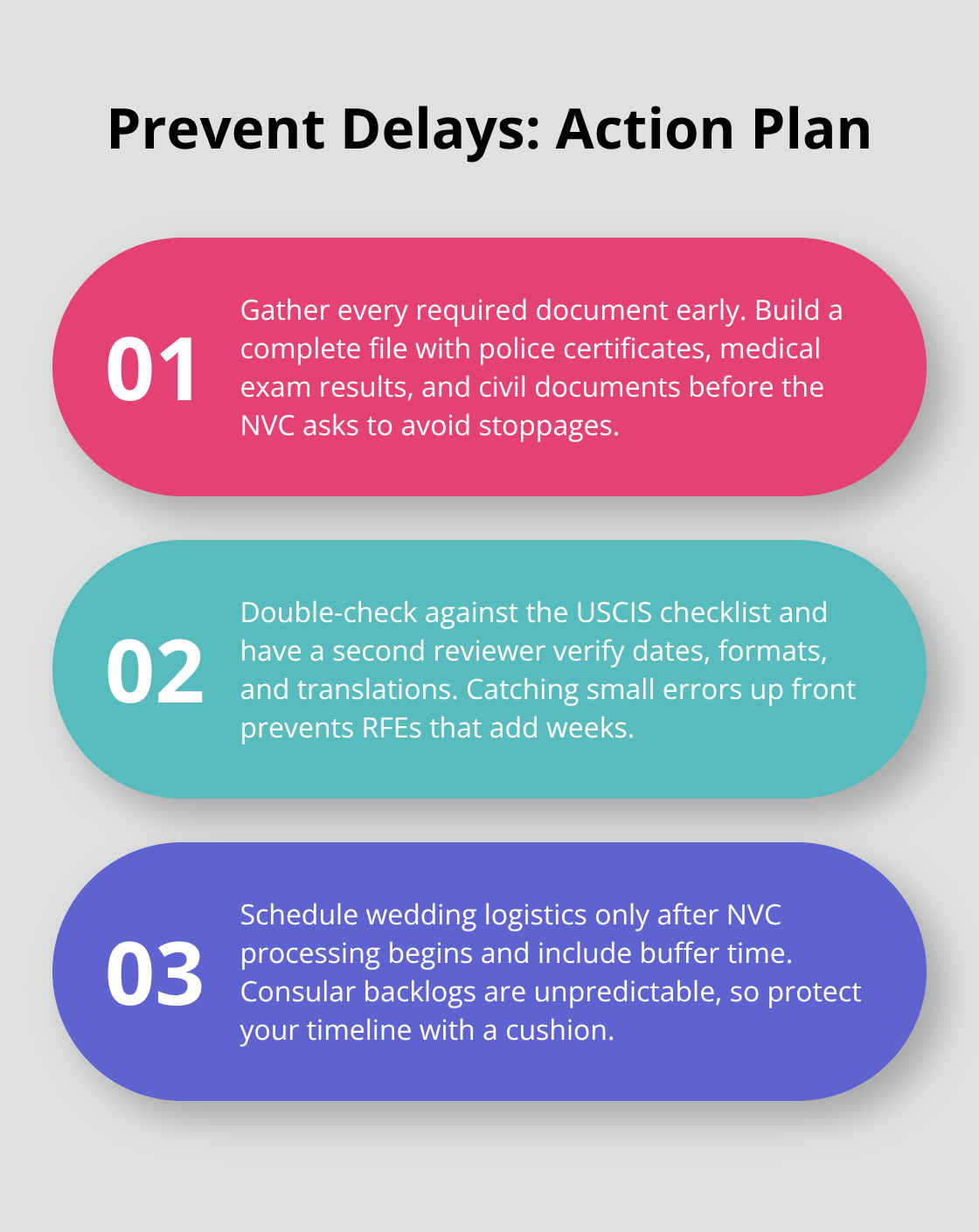
Understanding these timelines helps you identify which factors actually control your processing speed. The next section examines what causes delays and what accelerates your case.
What Actually Delays Your K-1 Application
Documentation Errors Cost You Weeks
Documentation errors destroy timelines faster than anything else. Incomplete applications trigger delays repeatedly, and each missing item costs you weeks. USCIS doesn’t contact you immediately when something is wrong-they batch requests for additional evidence, meaning you might wait three weeks before learning your police certificate format doesn’t match their requirements or your financial documents lack the right dates.
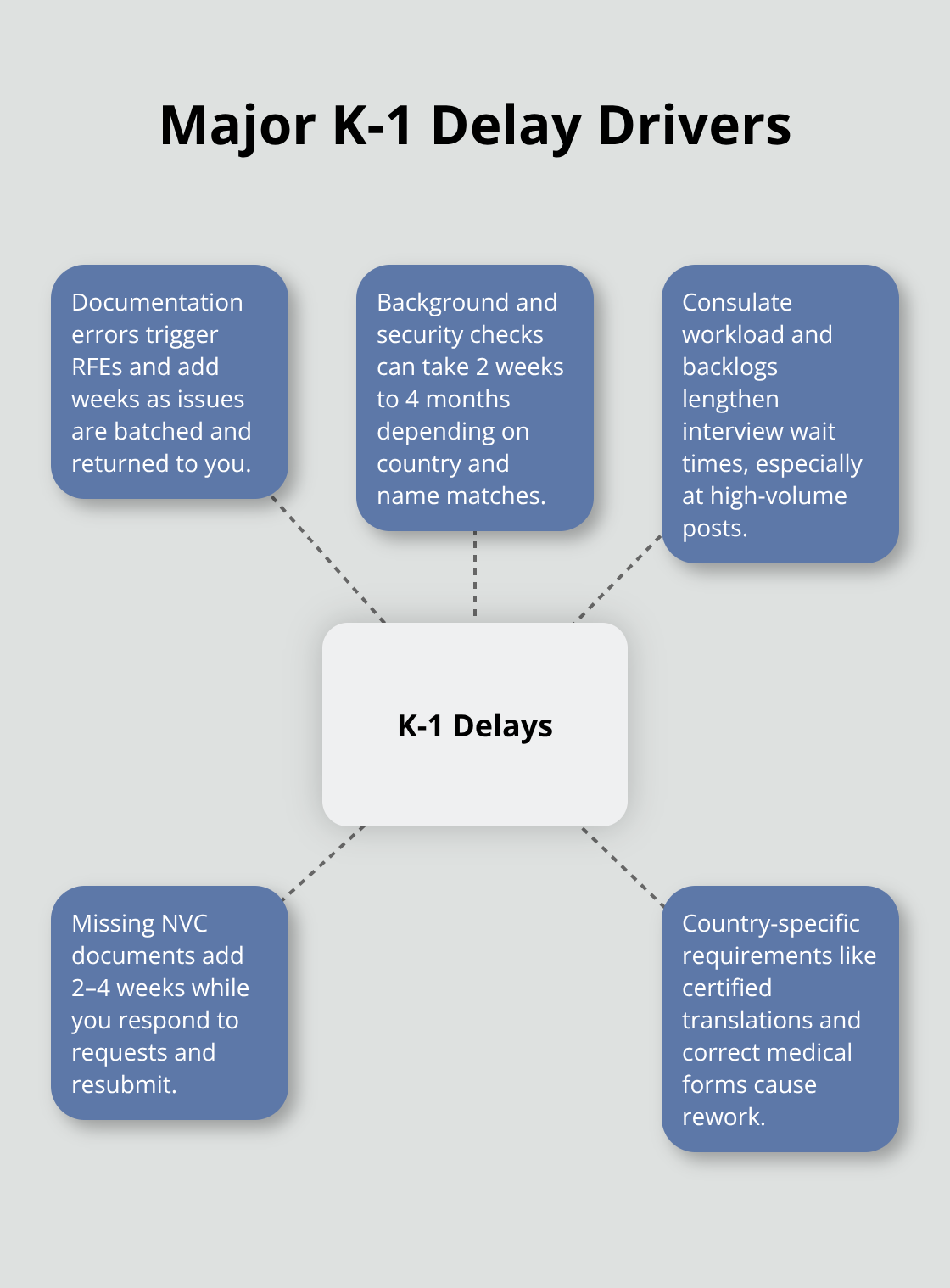
Documentation issues account for processing delays at the NVC stage.
Your fiancé needs certified copies of documents, not photocopies. Certain countries require documents translated by certified translators, not just anyone fluent in the language. Medical exams from civil surgeons must use the exact I-693 form-outdated versions trigger rejections. Birth certificates need to show both parents’ names and marriage status, details many people overlook when gathering paperwork.
Start collecting everything six months before you plan to file. Verify each document against the USCIS checklist twice, and have a second person review your packet before submission. This approach prevents the most common delays that we at Law Offices of Jeffrey A. Thompson observe in K-1 cases.
Background Checks Present Unpredictable Delays
Background checks and security clearances present a different problem because delays happen outside your control. USCIS and the consulate run name checks, criminal history checks, and security database searches that can take anywhere from two weeks to four months depending on your fiancé’s country of origin and whether their name matches common variations in U.S. databases.
Applicants from countries flagged for security concerns face additional vetting that extends timelines unpredictably. You cannot accelerate this stage, so plan your wedding date conservatively if your fiancé comes from a country with heightened security screening. Factor in an extra two to three months beyond standard timelines as a safety margin.
Consulate Workload Creates the Final Bottleneck
Consulate workload creates the final major bottleneck, and this one varies dramatically by location. The State Department’s visa bulletin shows that consulates in Manila, Mexico City, and New Delhi currently schedule K-1 interviews four to six months after NVC processing, while smaller posts in Eastern Europe or Africa might move cases in six to eight weeks.
Some consulates prioritize K-1 cases while others treat them as lower priority than employment visas. Check your specific consulate’s historical processing times on the State Department website before setting your wedding date-don’t assume your timeline matches your friend’s experience at a different post. High-volume consulates experience staffing shortages that compress interview availability, meaning even a perfectly prepared application sits waiting for an appointment slot that won’t open for months.
Final Thoughts
The fiancé visa processing time you face depends largely on decisions you make right now. Stop waiting for the perfect moment to start gathering documents-your police certificates, medical exams, and financial records won’t prepare themselves, and delays at any stage compound into months of additional waiting. We at Law Offices of Jeffrey A. Thompson have seen couples miss their wedding dates because they underestimated how long the NVC and consular stages actually take.
Build your timeline around the consulate stage, not the USCIS stage. Most couples focus intensely on preparing their I-129F petition, receive approval, then assume the hard work is finished. Your consulate’s current processing backlog determines when your fiancé actually enters the country, and that stage sits entirely outside your control. Check the State Department website for your specific consulate’s average wait times, then add two months as a safety buffer.
An immigration attorney streamlines this process by catching documentation errors before they trigger delays and by knowing which consulates move cases faster than others. We at Law Offices of Jeffrey A. Thompson assist clients in navigating the immigration process, helping you avoid the costly mistakes that extend your fiancé visa processing time unnecessarily.
Share this post: