Green Card Renewal Requirements: How to Stay Authorized
September 28, 2026
Your green card is your proof of permanent residency, and letting it expire can create serious legal complications. We at Law Offices of Jeffrey A. Thompson help clients navigate green card renewal requirements every day, and we’ve seen how costly mistakes can be.
This guide walks you through the entire renewal process, from understanding expiration timelines to avoiding common pitfalls that delay approval.
Understanding Green Card Expiration and Renewal Timelines
When Your Green Card Expires
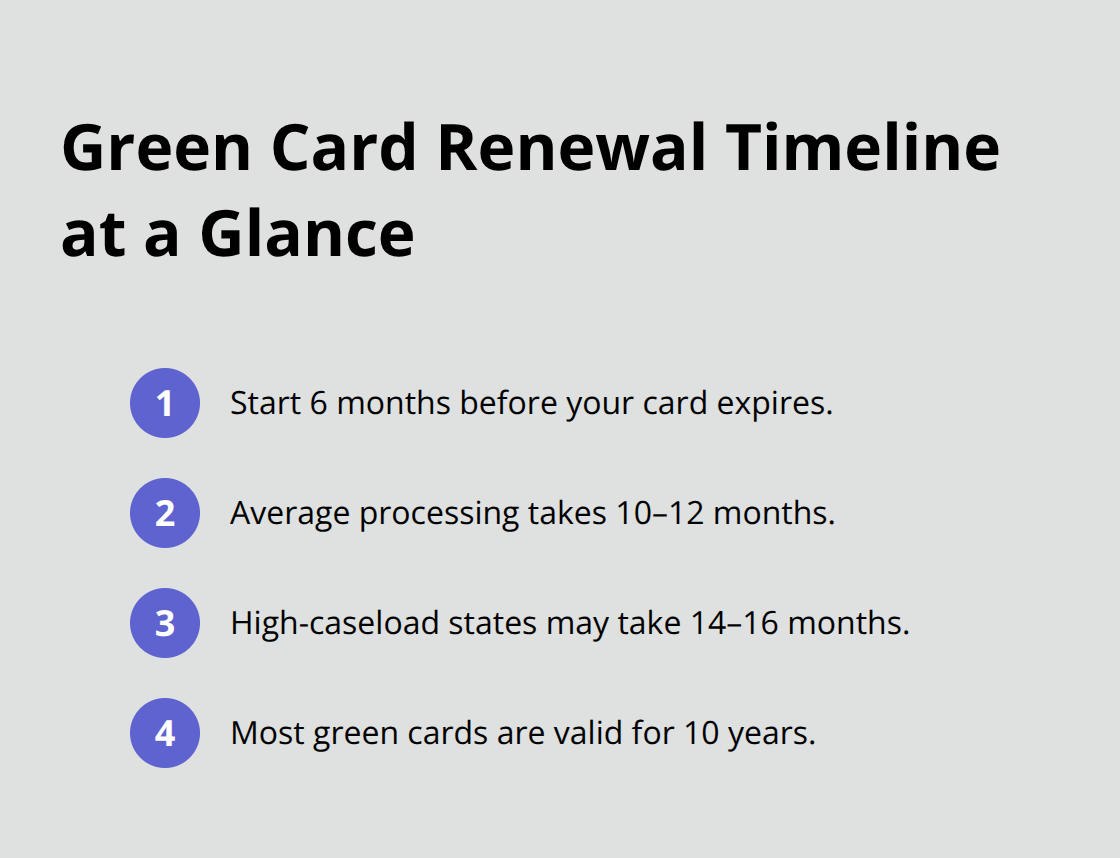
Your green card typically remains valid for 10 years from the date of issue, though some cards issued before 1989 may have different expiration dates printed on the back. USCIS recommends starting your renewal process at least 6 months before expiration, yet many people wait until the last minute and face unnecessary stress. The renewal itself takes 10 to 12 months on average according to USCIS processing times, though this varies significantly by location and current application volume. In states with high immigration caseloads, delays can extend to 14 or 16 months, which is why early action matters.
How Long the Renewal Process Takes
The timeline for green card renewal depends on several factors beyond your control. USCIS processing times fluctuate based on regional office workload, staffing levels, and the completeness of your application. Starting your renewal 6 months before expiration gives you a reasonable buffer (though not a guarantee) against processing delays. If you file closer to your expiration date, you risk running out of time before approval arrives.
Penalties for Operating with an Expired Green Card
An expired green card doesn’t immediately revoke your permanent resident status, but it severely limits your ability to travel, work, and prove your legal standing. If you attempt to re-enter the United States with an expired card, USCIS may deny entry and question whether you’ve abandoned your residency. Employers can face penalties for hiring workers without valid employment authorization documents, and they increasingly verify card validity through the E-Verify system. The financial cost adds up quickly: USCIS charges $540 for the standard I-90 renewal form, plus $85 for biometrics services. Operating with an expired card creates unnecessary risk when the process is straightforward and predictable with proper planning.
The next section walks you through the specific steps required to file your renewal application and what to expect at each stage.
Filing Your Green Card Renewal Application
Gathering and Submitting Your I-90 Application
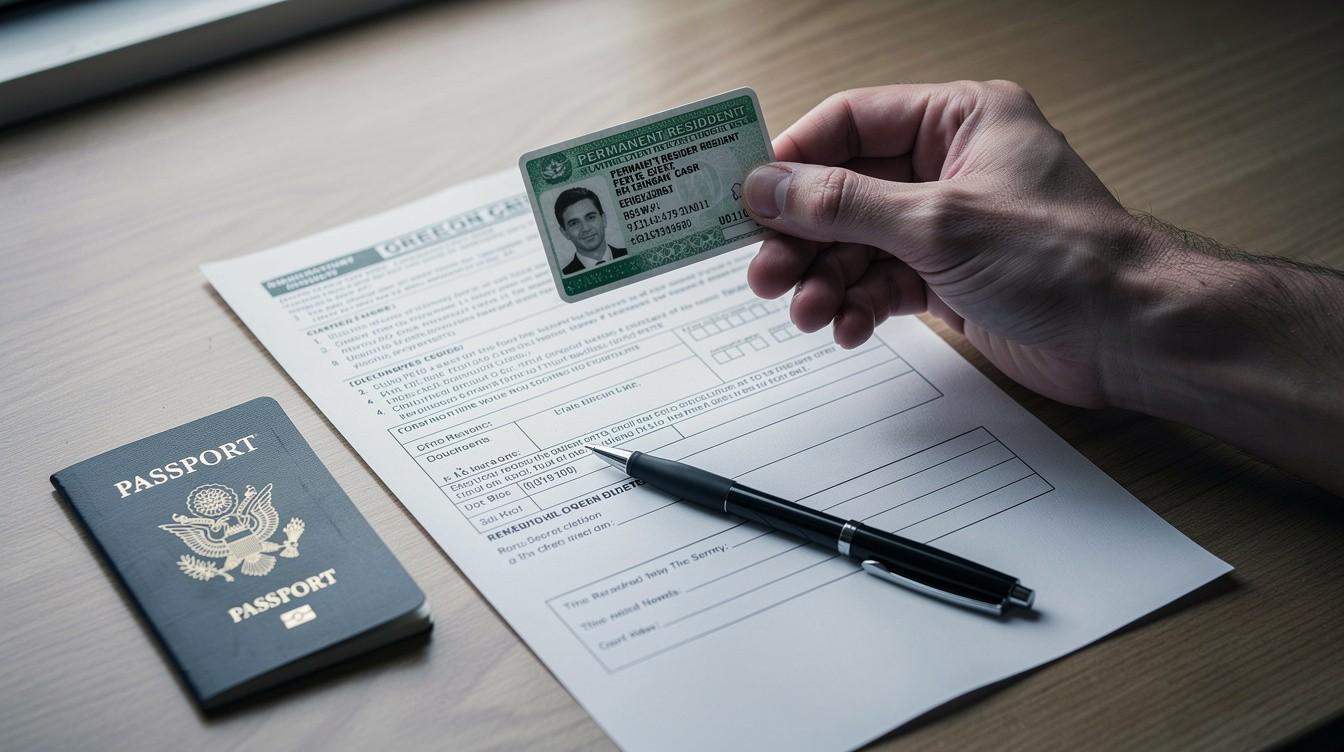
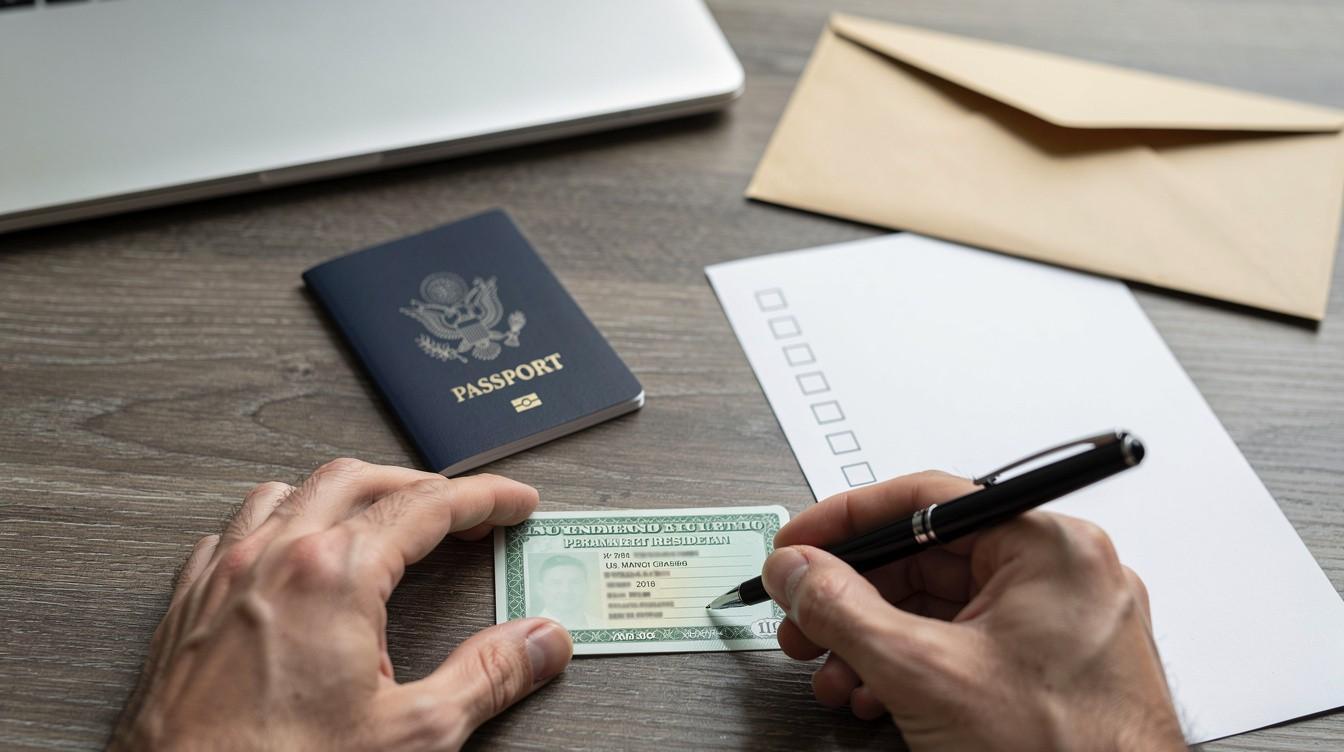
The Form I-90 is your official application for green card renewal, and submitting it correctly on the first attempt saves months of back-and-forth with USCIS. Start by gathering your current green card, passport, state ID, and birth certificate before you begin the application. USCIS requires specific documentation depending on your circumstances: if you changed your name through marriage or court order, bring the original or certified copy of the legal document. Applicants with criminal history must disclose all convictions, even minor ones, as USCIS cross-references court records.
Filing your Form I-90 application correctly requires paying the $415 filing fee when you submit, and USCIS only accepts checks, money orders, or credit cards through their online portal. Many applicants handwrite the form instead of using the official USCIS online system or downloading the fillable PDF, which leads to rejection for illegibility. File your application at least 6 months before expiration, not 6 weeks before, because processing delays are common and you cannot travel internationally with an expired card while waiting for approval.
Preparing for Your Biometrics Appointment
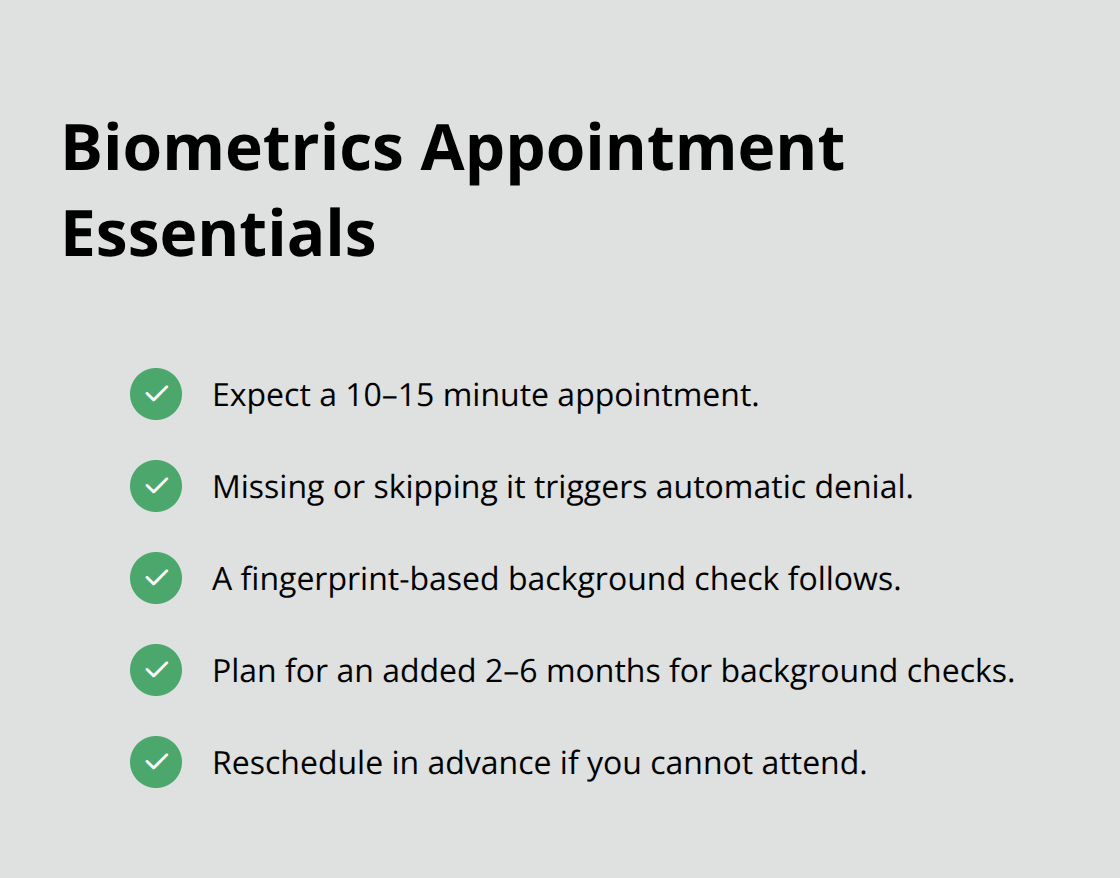
After USCIS receives your I-90, they schedule a biometrics appointment where they photograph you, take fingerprints, and collect your signature, typically 3 to 6 weeks after filing. Arrive 15 minutes early with your appointment notice, valid ID, and green card in hand.
The entire process takes 10 to 15 minutes, and USCIS staff will inform you immediately if anything is missing or incorrect. Some applicants skip this step or miss their appointment date, which automatically denies the entire renewal application. After biometrics, USCIS conducts a background check using your fingerprints, and this stage can add 2 to 6 months to your timeline depending on whether any issues arise.
Receiving Your New Green Card
Once background clearance completes, USCIS mails your new green card directly to your address on file, so maintaining a current address with USCIS is non-negotiable. The entire process from filing to receiving your new card typically spans 10 to 12 months under normal circumstances, making early action the only realistic strategy for avoiding an expired card situation. Missing even one deadline or appointment during this process restarts the clock and extends your wait time significantly.
Common mistakes during renewal often stem from incomplete paperwork or overlooked address changes-issues that we at Law Offices of Jeffrey A. Thompson help clients avoid through careful attention to detail.
What Derails Green Card Renewals Most Often
Incomplete or Incorrect Form Submissions
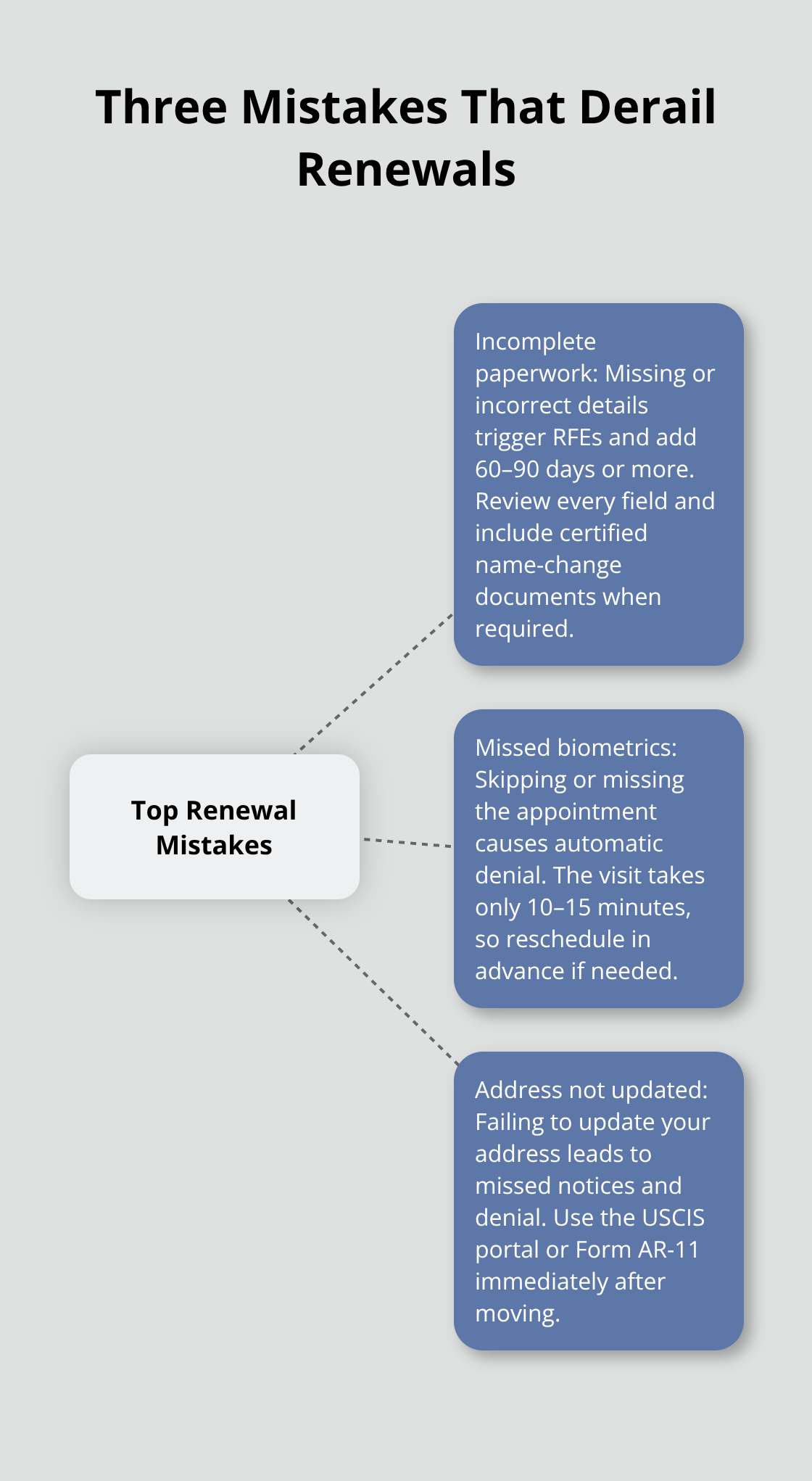
The difference between a smooth renewal and a months-long delay often comes down to three specific errors that we see repeatedly in immigration cases. The first mistake is submitting an I-90 form with missing information or incorrect details. When USCIS sends a Request for Evidence (RFE), you lose at least 60 to 90 additional days waiting for their letter, collecting the missing items, and resubmitting.
The most common gaps include failing to list all addresses from the past five years, omitting employment history, or not providing certified copies of name change documents. Use the official USCIS online filing system or the fillable PDF directly from USCIS.gov to eliminate most handwriting rejection issues. Print the form, complete it in black or blue ink with capital letters, and review every single field before submitting payment. One applicant missed checking the box for filing under humanitarian grounds, which triggered an unnecessary RFE that extended her timeline by three months.
Missing Your Biometrics Appointment
The second critical error is missing your biometrics appointment or not updating your address with USCIS before they mail the appointment notice. USCIS automatically denies your entire application if you miss this appointment without requesting a reschedule in advance. The appointment itself takes only 10 to 15 minutes (they photograph you, take fingerprints, and collect your signature), yet skipping it destroys your entire renewal application. After biometrics, USCIS conducts a background check using your fingerprints, and this stage can add 2 to 6 months to your timeline depending on whether any issues arise.
Failing to Update Your Address
The third mistake compounds the first two: you fail to notify USCIS of an address change. If you move during the renewal process and do not update your address through the USCIS online account portal or by submitting Form AR-11, appointment notices and your new green card will arrive at your old address. You then miss the biometrics appointment because you never received the notice, and USCIS denies your application. Your new green card sits in an abandoned mailbox while your application status shows denied.
Update your address immediately after moving, not weeks later. The USCIS portal lets you change your address in under two minutes, and this single action prevents cascading failures throughout the entire renewal timeline. Starting your renewal process six months before expiration gives you time to correct these mistakes without losing your legal status, but only if you avoid them in the first place.
Final Thoughts
Green card renewal requirements are straightforward when you understand the timeline and avoid the three mistakes that derail most applications: incomplete paperwork, missed biometrics appointments, and unreported address changes. Starting your renewal six months before expiration gives you a realistic buffer against processing delays, and filing your Form I-90 through the official USCIS online system eliminates handwriting rejection issues. The $540 filing fee and $85 biometrics charge are minimal compared to the consequences of operating with an expired card, which can trigger employment verification failures, travel denials, and questions about your permanent resident status.
Staying current with your green card renewal protects your legal standing and your ability to work, travel, and prove your authorization without interruption. An expired card creates unnecessary complications even though your permanent residency technically remains valid, and employers increasingly use E-Verify to confirm card validity before hiring. The renewal process takes 10 to 12 months on average, making early action the only realistic strategy for avoiding gaps in your documentation.
If you face questions about green card renewal requirements or need guidance through the application process, contact our office in Brockton, Massachusetts to speak with Attorney Thompson about your specific situation.
Share this post: