Green Card Renewal Requirements Explained
September 21, 2026
Your green card won’t last forever. Most green cards expire after 10 years, and renewal is mandatory to maintain your legal status in the United States.
At Law Offices of Jeffrey A. Thompson, we’ve helped countless immigrants navigate the green card renewal process. This guide walks you through the eligibility requirements, necessary documents, and exact steps you need to follow to get your new card on time.
Who Qualifies for Green Card Renewal
Expiration Timeline and Filing Windows
Your green card won’t last forever, and USCIS sets strict deadlines for renewal. Most green cards expire after 10 years, and you must file Form I-90 before that expiration date arrives. USCIS allows you to submit your application up to six months before your card expires, which provides a reasonable window to gather documents and prepare. If your card expired more than two years ago, you face a significantly longer processing timeline and must provide additional documentation to prove continuous residence in the United States.
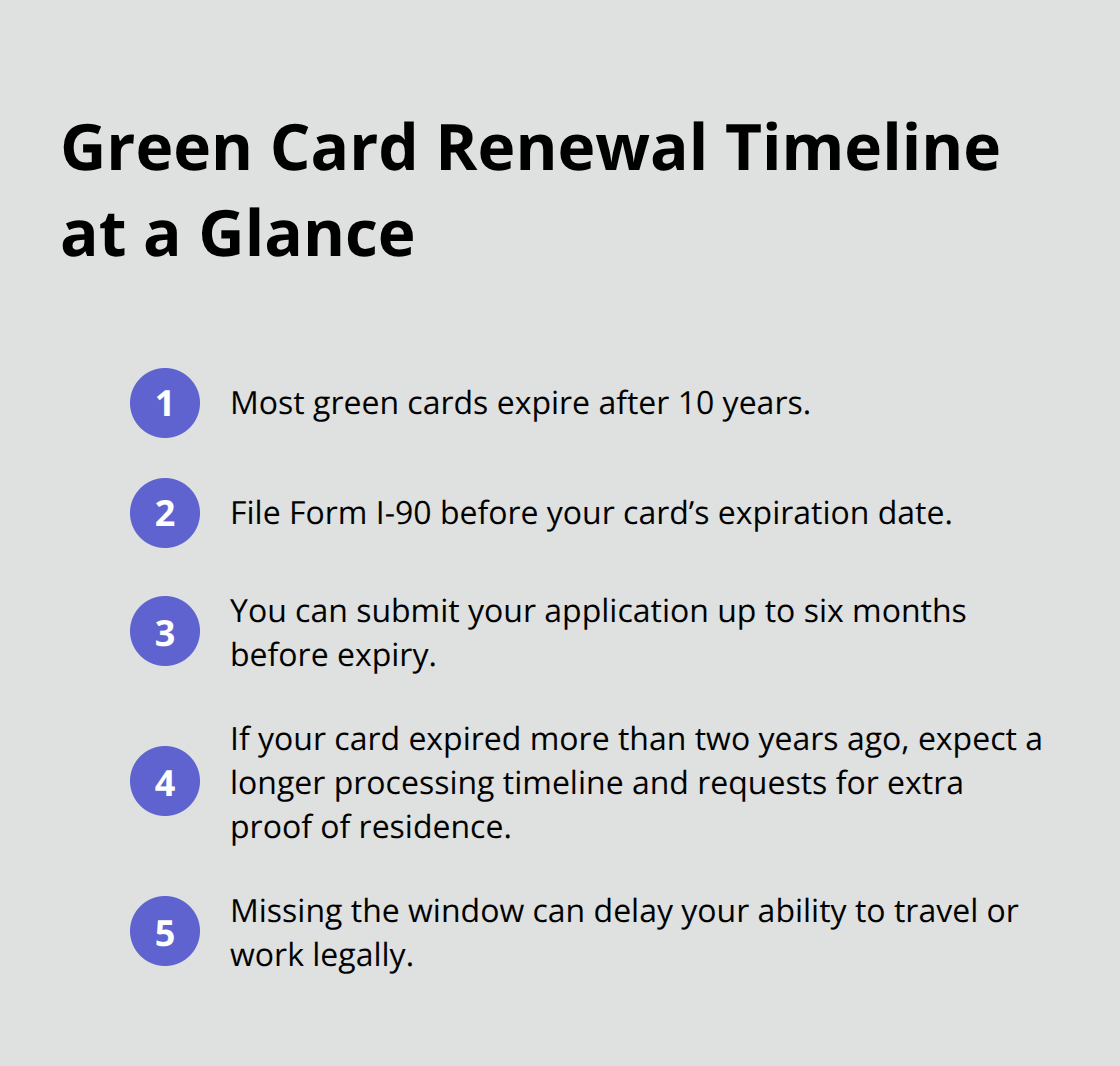
Missing this window creates unnecessary complications and delays your ability to travel or work legally.
Continuous Presence Requirements
The continuous presence requirement stands as one of the most misunderstood eligibility rules. You cannot spend more than six months outside the United States in any single trip during your green card validity period. Extended absences-even for legitimate reasons like family emergencies or business obligations-can jeopardize your eligibility for renewal. If you traveled abroad for more than six months, you likely need a returning resident visa rather than a simple renewal, which requires advance planning and a completely different application process. Track your travel dates carefully, as USCIS reviews your passport stamps and entry records thoroughly.
Criminal History and Immigration Violations
Your criminal record determines whether you qualify to renew your green card at all. Any felony conviction, drug-related offense, or crime of moral turpitude makes you ineligible for renewal and potentially deportable. Even misdemeanors carry serious consequences depending on the specific circumstances and nature of the offense. If you have been arrested or convicted of anything since obtaining your green card, you must disclose this information on your I-90 application. USCIS investigates your background thoroughly, and dishonesty on the form gives them grounds for denial and removal proceedings.
Fraud and Misrepresentation Issues
If you obtained your green card through fraud or misrepresentation, renewal will expose that history and trigger serious legal consequences. Applicants sometimes hope that years of residence will allow them to slip through the renewal process undetected, but USCIS maintains detailed records and cross-references your application against original documentation. An immigration attorney can assess whether your situation warrants disclosure before filing. The next section covers the specific documents and forms you need to gather for your renewal application.
What Documents You Need for Green Card Renewal
Form I-90 and Core Documentation
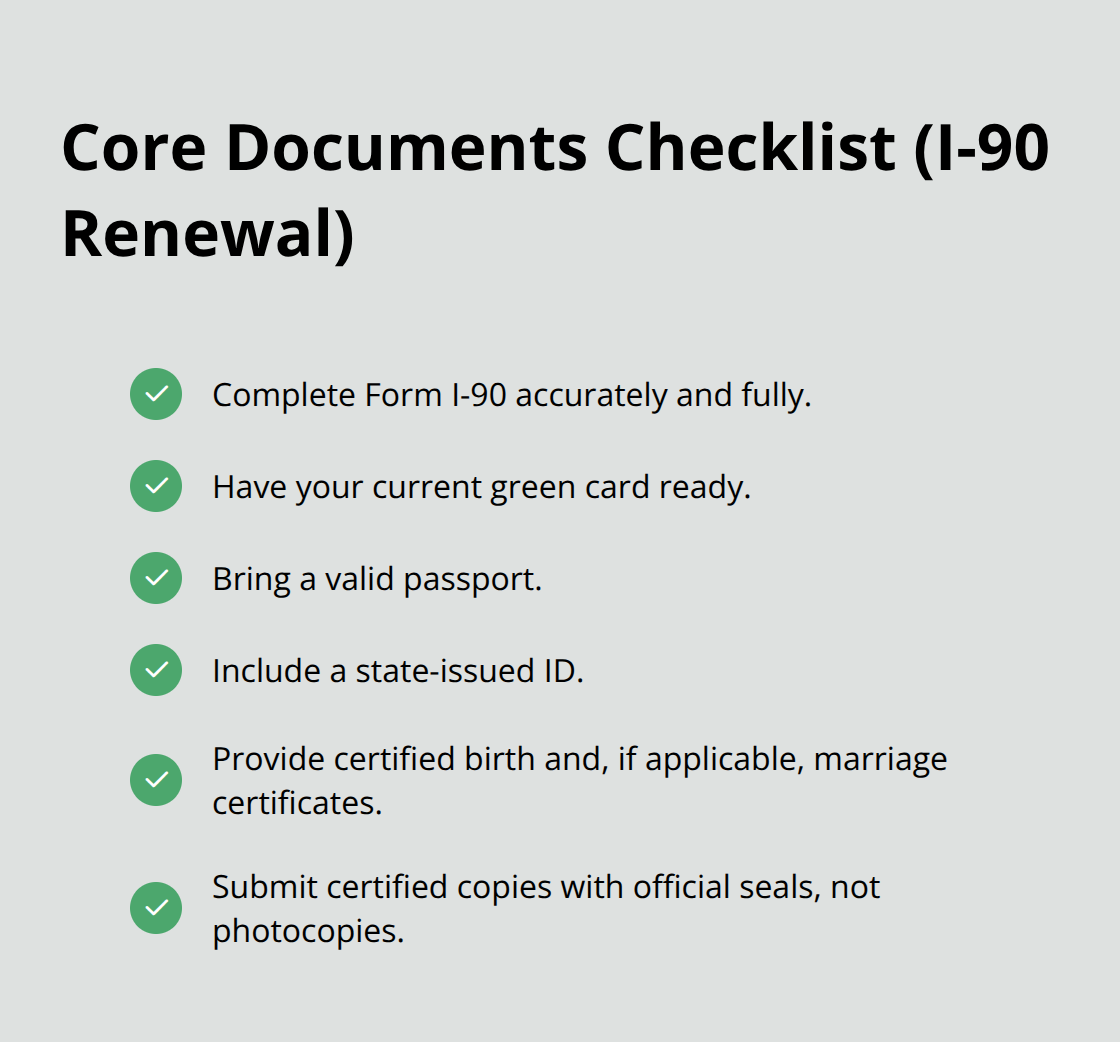
Form I-90 serves as the foundation of your renewal application, and you cannot move forward without it. USCIS requires this form completed in full with accurate information matching your original green card documentation. Beyond the form itself, you need your current green card, a valid passport, and state-issued identification. Your birth certificate and marriage certificate (if applicable) must be included, and USCIS specifically requires certified copies with official seals, not photocopies. Many applicants waste weeks resubmitting documents because they provided uncertified versions.
Photographs and Identity Verification
You need two passport-style photos meeting USCIS specifications: exactly 2 by 2 inches, taken within the last six months, with a white background. If your name changed since obtaining your green card, divorce decrees or court-ordered name change documents become mandatory. These identity documents establish that you are who you claim to be on your application.
Proof of Continuous Residence
Proof of continuous residence matters tremendously, and USCIS wants documentation spanning your entire green card validity period. Utility bills, lease agreements, tax returns, and employment letters all demonstrate that you maintained your U.S. residence. The agency recommends submitting at least five documents covering different time periods throughout your green card tenure (ideally spread across multiple years).
Medical Examination Requirements
USCIS-designated civil surgeons must conduct your medical examination, and you cannot use your personal physician. The agency maintains a searchable directory of certified civil surgeons on its website, and you schedule the appointment yourself before filing your application. Expect to pay between $150 and $300 for this examination, which includes vaccinations, tuberculosis screening, and a general health assessment. Bring your vaccination records because the civil surgeon needs documentation of your immunization history.
Biometric Services and Travel Documentation
The biometric services appointment happens after USCIS receives your application, typically within two to four weeks. At this appointment, USCIS collects your fingerprints, photographs, and signature for background checks. You cannot reschedule this appointment casually-missing it results in application denial without opportunity to reschedule. Your travel documents must remain valid throughout the entire process, as you cannot leave the country while your application is pending without advance permission from USCIS. Once you have gathered all these materials and completed your medical exam, you move into the actual filing phase.
How to File and Complete Your Green Card Renewal
Submitting Your I-90 Application
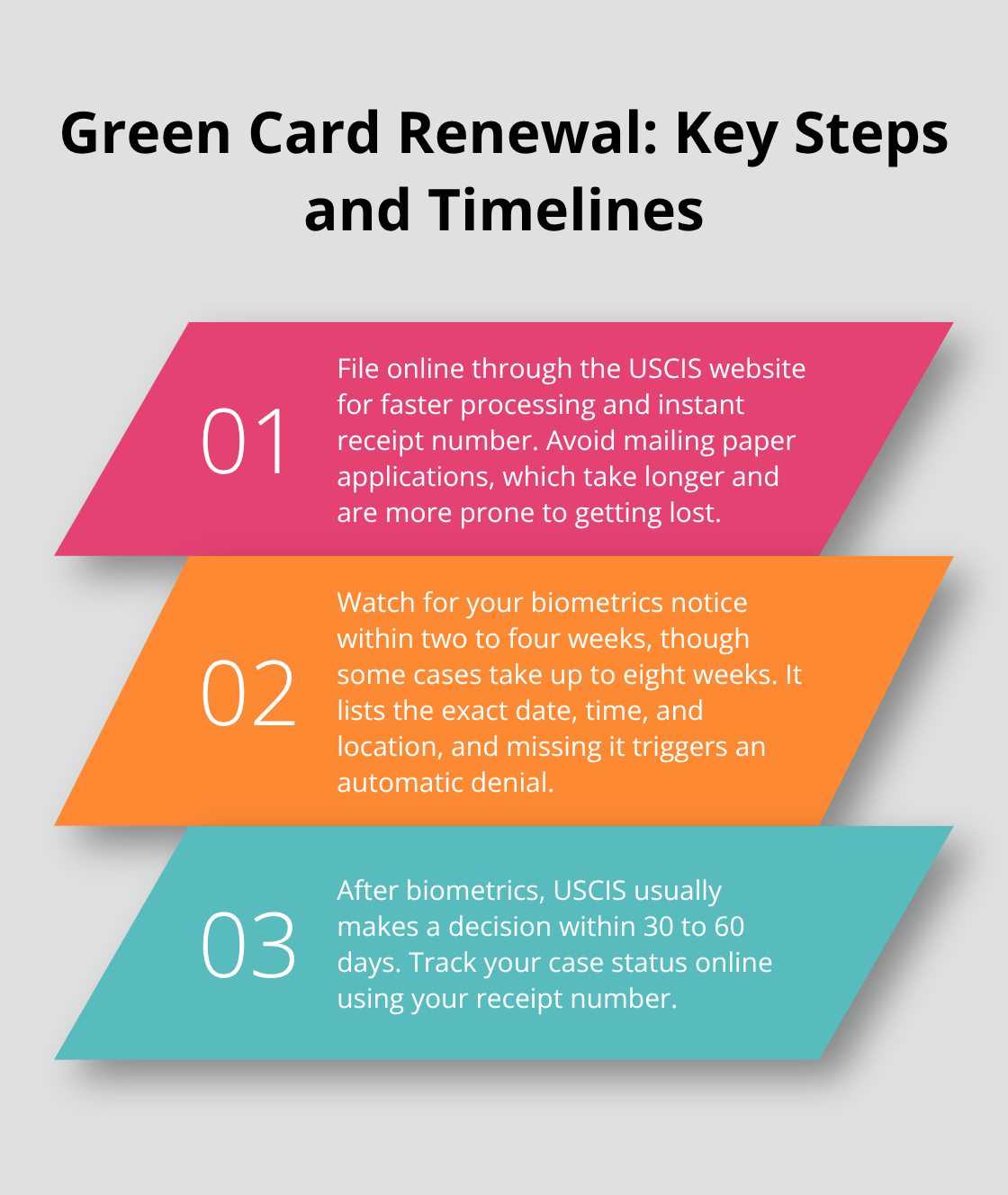
USCIS rejects incomplete submissions without warning, forcing you to start over from scratch. Submit your application online through the USCIS website rather than by mail-online processing moves your application faster and provides immediate confirmation of receipt. When you file online, USCIS generates a receipt number instantly, which you need for tracking and your biometrics appointment. Paper applications take significantly longer to process and get lost more frequently in USCIS mailrooms.
After you submit, USCIS sends you a biometrics appointment notice within two to four weeks, though some cases stretch to eight weeks depending on your local office’s workload. This notice specifies your exact appointment date, time, and location-missing this appointment results in automatic denial with no second chances offered.
Attending Your Biometrics Appointment
Arrive at your biometrics appointment at least 15 minutes early with your appointment notice, valid passport, and state ID. USCIS collects your fingerprints digitally, takes a new photograph, and captures your signature for background checks and identity verification. The entire appointment typically lasts 15 to 30 minutes.
After your biometrics appointment, USCIS processes your background check and typically makes a decision within 30 to 60 days. You can track your case status online using your receipt number on the USCIS case status portal.
Receiving and Verifying Your New Green Card
When USCIS approves your application, they mail your new green card directly to your address on file-expect delivery within one to two weeks after approval. Your new card arrives in a plain envelope with no tracking number, so check your mail carefully. Once you receive your new green card, verify that all information matches your records before using it for travel or employment. If anything appears incorrect, contact USCIS immediately to request corrections before your card becomes your primary immigration document.
Final Thoughts
Green card renewal requirements demand attention to detail and strict adherence to USCIS deadlines. The most common mistake we see involves applicants missing their biometrics appointment or submitting incomplete documentation, which forces them to restart the entire process and adds months of unnecessary delay. Another frequent problem occurs when people travel internationally while their renewal application sits pending-USCIS will deny your application if you leave the country without advance permission, even for brief trips.
Applicants also underestimate the importance of proving continuous residence, so gather your utility bills, tax returns, and employment letters now rather than scrambling at the last minute. The stronger your documentation, the faster USCIS processes your case. Check your case status regularly and avoid any international travel until your new card arrives in your mailbox.
Your next step depends on where you stand in the renewal timeline. If your green card expires within six months, file your I-90 application immediately through the USCIS website, and if you face complications like criminal history, fraud concerns, or extended absences from the United States, professional guidance becomes essential. We at Law Offices of Jeffrey A. Thompson assist clients in navigating the green card renewal requirements, from paperwork preparation to overcoming legal hurdles-contact us for a consultation if you need expert guidance on your specific situation.
Share this post: