Marriage based green card: Eligibility and Steps
November 20, 2026
A marriage-based green card offers a direct path to permanent residency for spouses of U.S. citizens and permanent residents. The process involves specific eligibility requirements, detailed documentation, and several potential hurdles that catch many applicants off guard.
We at Law Offices of Jeffrey A. Thompson have guided countless couples through this journey. This guide walks you through what you need to know to move forward successfully.
Who Qualifies for a Marriage-Based Green Card
Your marriage must be legally valid and genuine, not entered into for immigration purposes alone. The U.S. government takes this seriously-USCIS denies applications regularly when it suspects fraud. You need either a U.S. citizen or a lawful permanent resident as your spouse. If your spouse holds permanent resident status rather than citizenship, you’ll face visa availability delays according to the Visa Bulletin, meaning you could wait months or years for a visa number to become available. The sponsor must also prove financial stability by meeting 125% of the Federal Poverty Guidelines, which for 2026 ranges from roughly $20,000 to $51,000 annually depending on household size. Form I-864 verifies this requirement, and failing to meet this threshold ranks among the top reasons applications face rejection. If your household income falls short, you can add a joint sponsor-typically a family member or friend willing to co-sign the financial responsibility.
Demonstrating a Genuine Marriage
USCIS demands concrete evidence that your marriage is authentic. Tier 1 evidence carries the most weight: joint bank accounts, shared leases or mortgages, joint tax returns, and utility bills in both names. These financial documents demonstrate ongoing commitment and shared life responsibilities. Tier 2 evidence supports your case when Tier 1 documents are limited-travel itineraries showing trips together, 10 to 20 photos spanning your relationship timeline, communication logs like emails or messages, and affidavits from friends and family who can speak to your relationship.
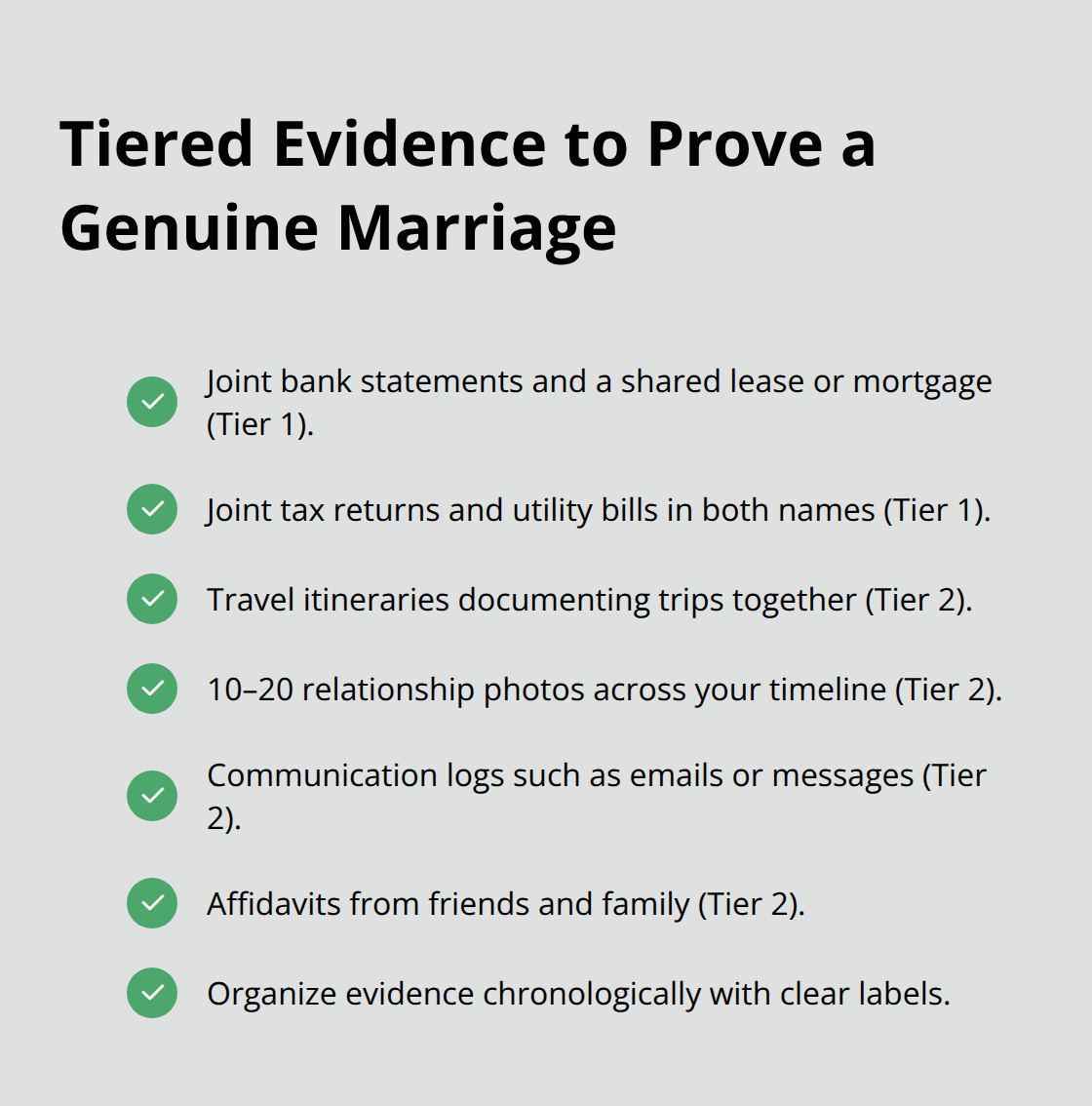
Many applicants submit primarily wedding photos, which proves insufficient. USCIS examiners want to see evidence of daily life together: shared responsibilities, joint financial decisions, and legal obligations binding you as a couple. Start gathering these documents now. Organize them chronologically and label each one clearly so the examiner can follow your relationship’s progression.
Medical Examination and Background Screening
You must complete Form I-693, a medical examination performed by a USCIS-approved civil surgeon or panel physician, depending on whether you apply inside or outside the U.S. This exam typically costs $200 to $500 and must be submitted in a sealed envelope at your adjustment of status interview. The examination screens for communicable diseases and certain criminal or security-related conditions that could make you ineligible. For consular processing cases filed abroad, you must obtain police certificates from every country where you’ve lived since age 16. These documents verify you have no criminal history that would bar admission. For adjustment of status cases filed within the U.S., police certificates are generally not required, though USCIS may request them in specific situations. Background checks happen automatically during processing-USCIS runs your name against multiple databases including criminal records, immigration violation records, and security watch lists. Any prior immigration violations, criminal convictions, or fraud can result in denial.
Understanding Visa Categories and Timeline Implications
The visa category you receive depends on your marriage duration at the time of approval. If you marry less than two years before your green card approval, you receive a CR-1 visa (for consular processing) or conditional resident status (for adjustment of status), valid for two years. Marriages of two years or longer at approval result in an IR-1 visa or permanent resident status, valid for ten years. This distinction affects not only your timeline but also your obligations after approval-conditional residents must file Form I-751 within 90 days before expiration to remove conditions and obtain a permanent card. Understanding which category applies to you now helps you prepare for what comes next in your immigration journey.
How to File Your Marriage-Based Green Card Application
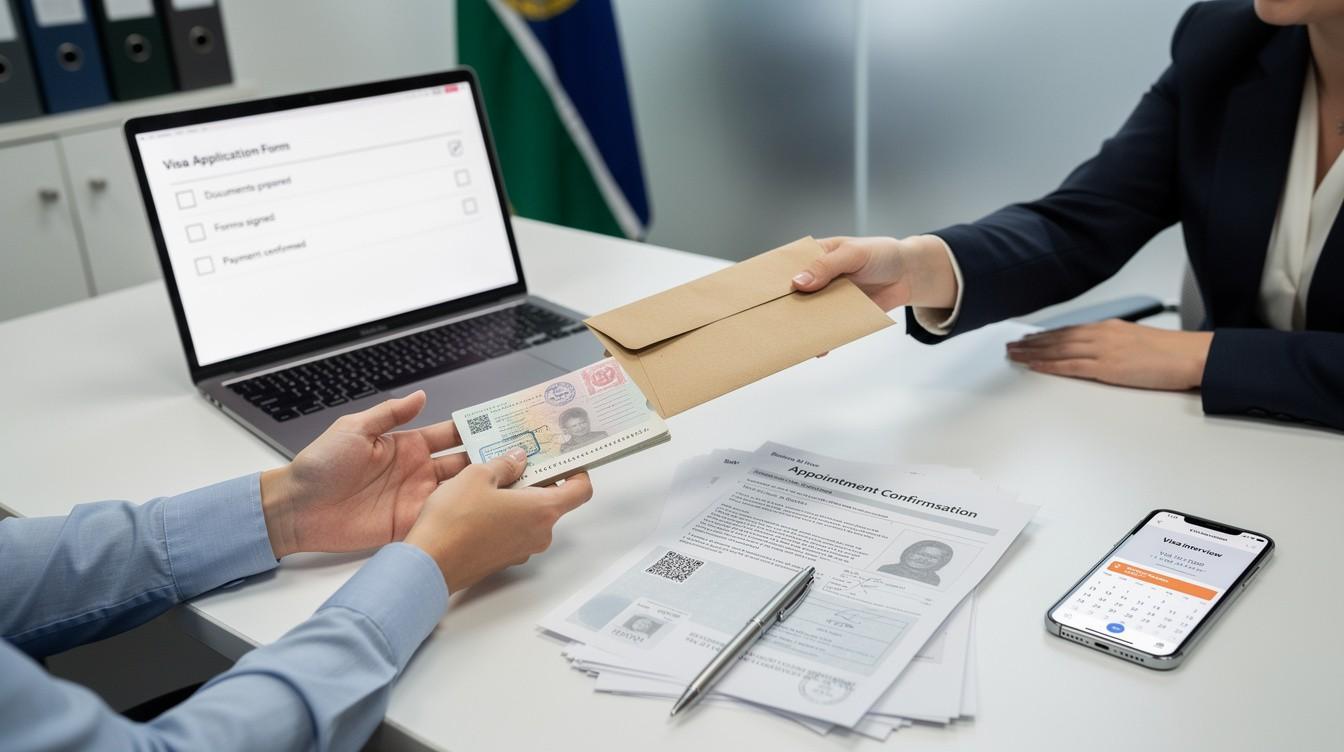
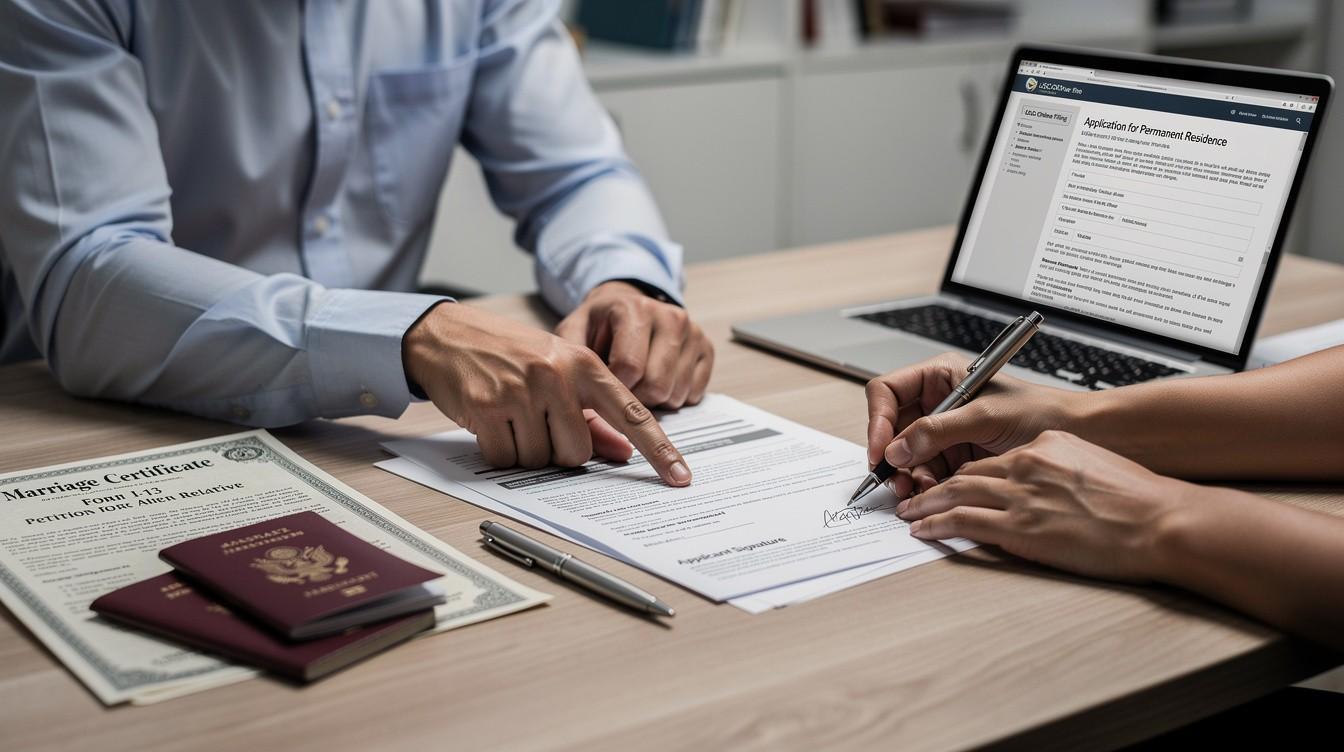
Your path forward splits into two distinct routes: Adjustment of Status if you’re already in the U.S., or Consular Processing if your spouse lives abroad. Adjustment of Status typically takes 10 to 24 months for standard cases involving spouses of U.S. citizens, while Consular Processing often stretches 13 to 24 months or longer depending on your country and embassy workload. The Adjustment route lets you file Form I-130 and Form I-485 simultaneously, which accelerates your timeline considerably. Consular Processing requires you to file Form I-130 first, wait for approval, then move through the National Visa Center and complete Form DS-260 before your visa interview at a U.S. embassy or consulate. Government fees total roughly $2,065 to $2,115 for Adjustment of Status and $1,305 to $1,355 for Consular Processing, with medical exams adding $200 to $500 more.
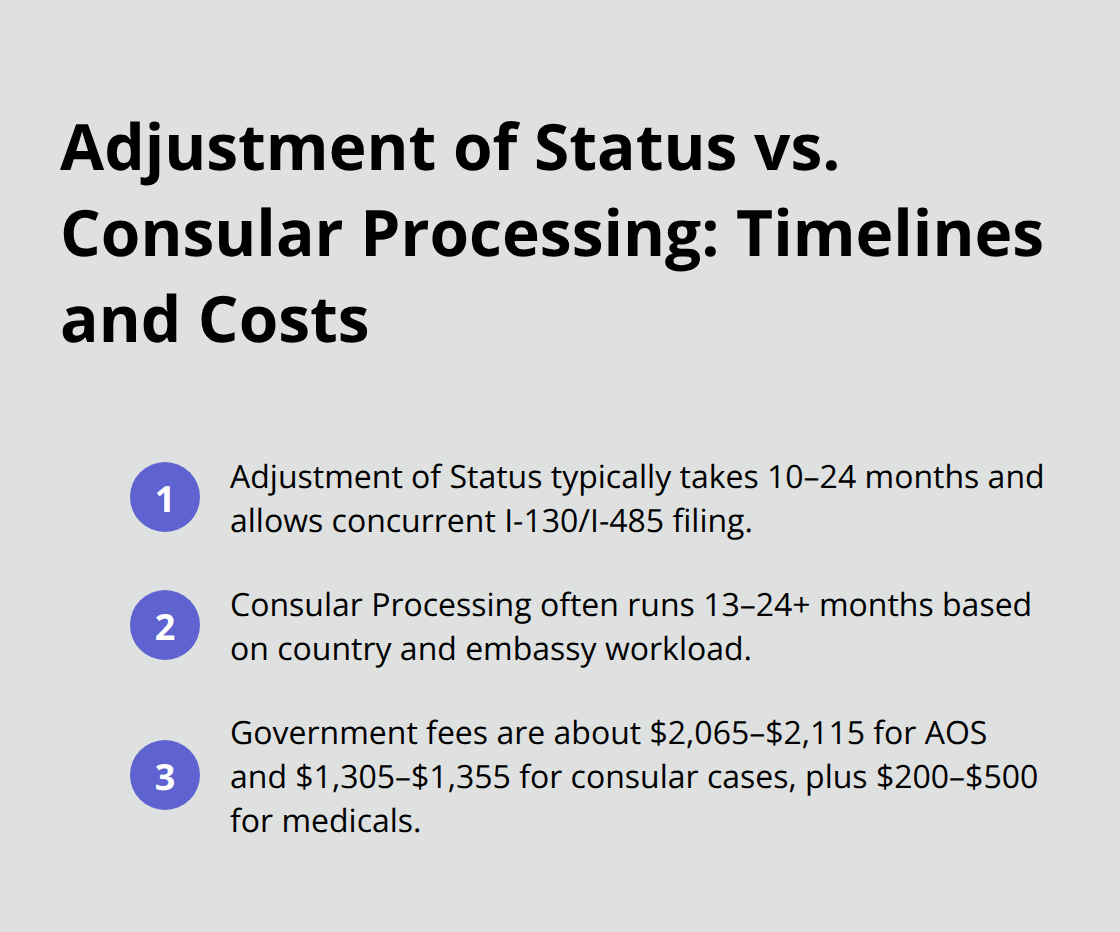
If your spouse holds permanent resident status rather than citizenship, the Visa Bulletin determines when a visa number becomes available for you-this can mean additional waiting time beyond the standard processing period. Determine which route applies to your situation first, as this decision shapes every subsequent step and directly impacts how long you’ll wait for your green card.
Choose Your Filing Route Based on Your Location
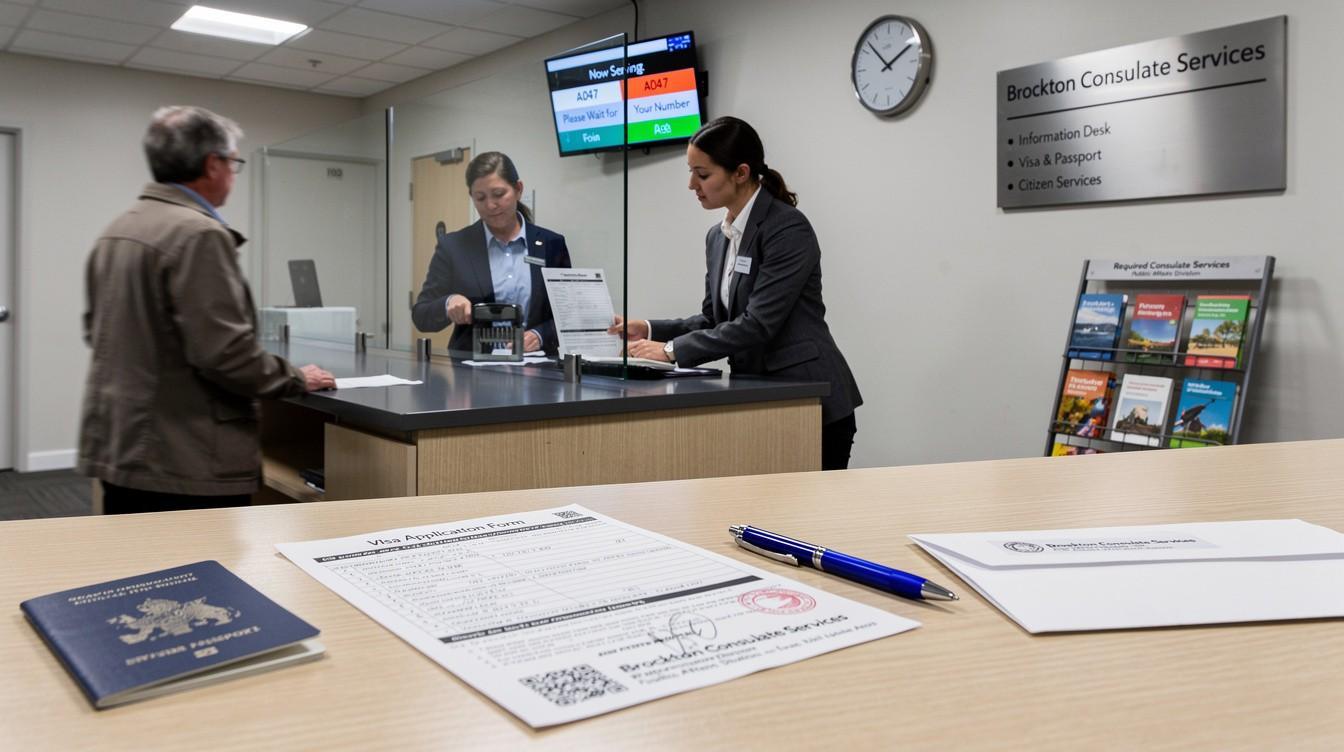
Your location determines whether you file for Adjustment of Status or Consular Processing. If you currently reside in the U.S. with a valid entry (documented on your I-94 arrival record), you can file for Adjustment of Status and submit Form I-130 and Form I-485 at the same time. This simultaneous filing accelerates your timeline significantly compared to the sequential process required abroad. If your spouse lives outside the U.S., you must pursue Consular Processing instead. This route requires your spouse to file Form I-130 first, wait for USCIS approval, then transfer your case to the National Visa Center before you complete Form DS-260 and attend your visa interview at a U.S. embassy or consulate. Each route carries different processing times and fee structures, so understanding which applies to you prevents costly mistakes and delays.
Compile Your Documentation Package Systematically
USCIS requires 15 to 30 supporting documents beyond the main application forms, and organization determines whether examiners approve or request additional evidence. Create a checklist immediately: you need your spouse’s proof of citizenship or permanent resident status, your birth certificate in long form, valid passport, two passport-style photos, police certificates from every country where you’ve lived since age 16 (required for Consular Processing), and the sealed medical exam envelope from your USCIS-approved doctor. Your spouse must provide three years of federal tax returns or transcripts, current pay stubs or employment verification letters, and proof of meeting 125% of the Federal Poverty Guidelines on Form I-864. Compile Tier 1 evidence in a dedicated folder: joint bank statements from the past six months, shared lease or mortgage documents, joint tax returns, insurance policies naming both spouses, and utility bills in both names.
Prepare Your Evidence for Maximum Impact
Use certified translations for any non-English documents-translations must be accurate and completed by a qualified translator, not amateur translations. Label every exhibit clearly (Exhibit A, Exhibit B, and so forth) and include a cover letter listing each form and exhibit in order. Avoid bulky binders that make examiners struggle to navigate your packet; use simple folders with clearly marked tabs instead. Submit copies, not originals, unless USCIS specifically requests the originals. This approach (straightforward organization and clear labeling) helps examiners process your case efficiently and reduces requests for additional evidence that delay approval.
Understand Fee Structures and Timeline Expectations
Government fees total roughly $2,065 to $2,115 for Adjustment of Status and $1,305 to $1,355 for Consular Processing, with medical exams adding $200 to $500 more. These costs vary slightly depending on whether you file online or submit paper forms. Adjustment of Status typically takes 10 to 24 months for standard cases involving spouses of U.S. citizens, while Consular Processing often stretches 13 to 24 months or longer depending on your country and embassy workload. If your spouse holds permanent resident status, the Visa Bulletin determines visa availability, which can extend your wait considerably beyond these standard timelines. Understanding these costs and timelines upfront helps you plan financially and set realistic expectations for when you’ll receive your green card.
The next phase of your application involves preparing for the interview that USCIS or the consulate will conduct to verify your marriage is genuine and you meet all eligibility requirements.
What Happens After Approval and Common Application Pitfalls
Managing Conditional Green Cards and Form I-751
Conditional green cards create a critical obligation that catches many applicants unprepared. If you marry less than two years before your green card approval, USCIS issues a conditional card valid for two years rather than the standard ten-year permanent card. This conditional status means you must file Form I-751 within the 90-day window before your card expires to obtain permanent residency. Missing this deadline can result in deportation proceedings, and USCIS does not grant extensions for late filings.
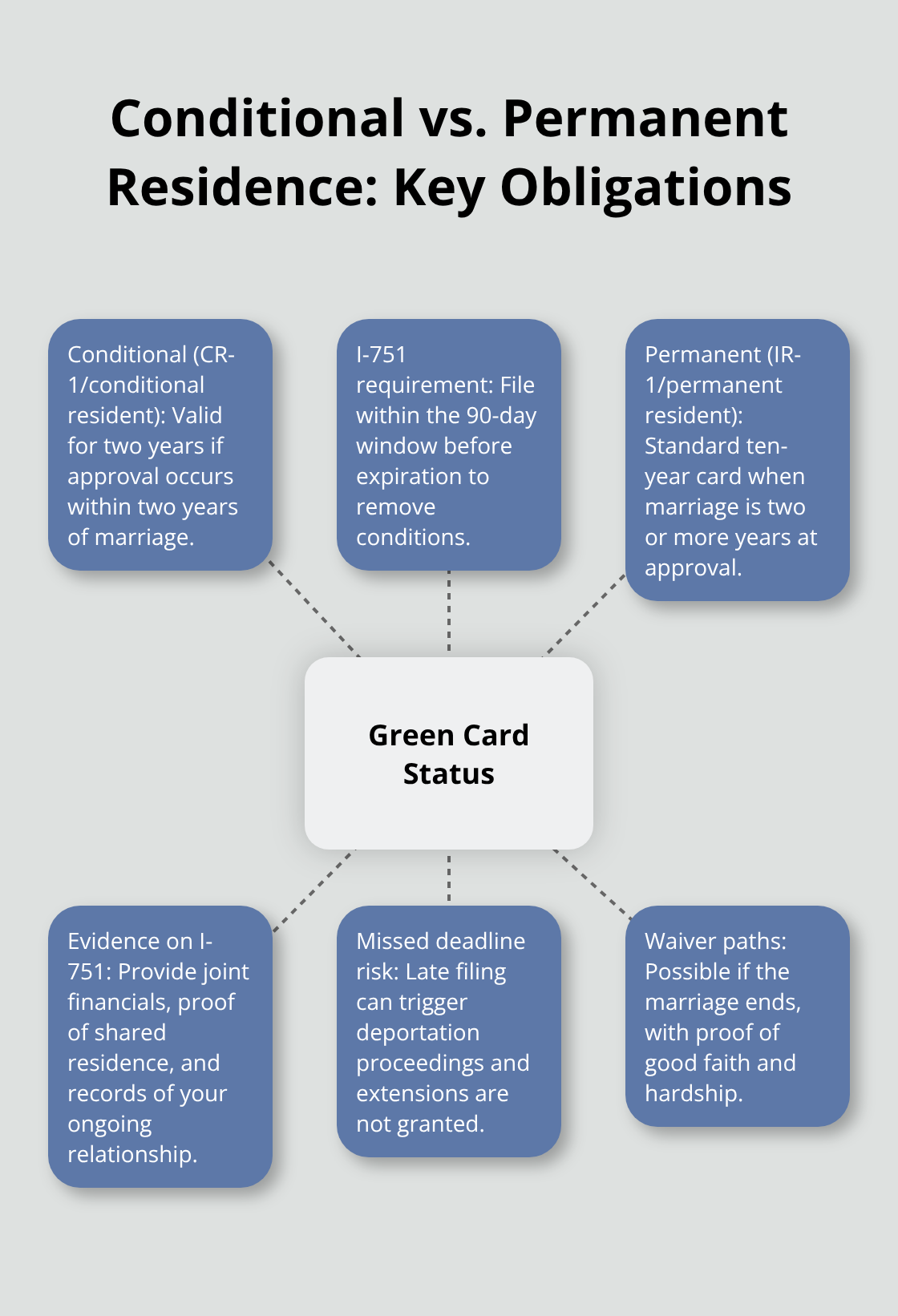
The removal of conditions process requires you to demonstrate that your marriage remains genuine and ongoing. You’ll submit the same tier of evidence that supported your initial application: joint financial documents, proof of shared residence, and communication showing your continued relationship. If your marriage ends before you remove conditions, waivers exist in limited circumstances, but they require proving extreme hardship or that you entered the marriage in good faith and the separation was not your fault. Start marking your calendar now with the expiration date of your conditional card and set reminders for filing Form I-751 at least four months before expiration to account for processing delays.
Responding Effectively to Requests for Evidence
Requests for evidence arrive frequently during marriage-based applications, and how you respond directly determines approval or denial. USCIS issues these requests when examiners need clarification or additional documentation to verify your eligibility or the authenticity of your marriage. You typically receive 12 weeks to respond to an RFE. The most common requests target insufficient proof of bona fide marriage, missing financial documentation, or unclear evidence of shared residence. Respond with specificity rather than submitting duplicate documents or unrelated materials. If USCIS asks for proof of joint residence, provide utility bills, lease agreements, or mortgage statements from multiple time periods rather than repeating the same document. For proof of financial interdependence, submit bank statements showing regular transfers between accounts, insurance policies naming both spouses, or tax returns listing dependent children. Common pitfalls include inconsistencies with previous immigration documents and omissions of past addresses or employment history, so review all materials carefully before submission.
Preparing for Your Immigration Interview
Immigration interviews present your final opportunity to convince USCIS that your marriage is genuine. Expect questions about how you met, your courtship timeline, wedding details, daily life together, and future plans. Prepare answers that are specific and consistent with your written application materials. Bring updated evidence to your interview: recent photos together, travel itineraries, communication records, and joint financial statements. Examiners look for hesitation, contradictions, or vague responses as red flags indicating potential fraud. Practice your answers with your spouse beforehand so both of you tell the same story about your relationship. If you struggle with English, request an interpreter well in advance rather than relying on your spouse to translate, as this raises suspicion about whether your spouse influences your responses. Document any recent life events since you filed your application: births of children, job changes, or relocations, as these demonstrate your marriage is progressing naturally rather than stagnating for immigration purposes.
Final Thoughts
A marriage-based green card demands meticulous attention to documentation and timing, but the path forward remains clear once you understand the requirements. Your marriage must be legally valid and genuine, your sponsor must meet income thresholds, and you must pass medical and background screenings-these fundamentals determine your eligibility. What separates approved applications from denied ones is evidence quality: joint bank accounts, shared mortgages, and tax returns outweigh wedding photos significantly, so start organizing these documents immediately and label everything with precision.
Your timeline and costs depend on your location and your spouse’s immigration status. Adjustment of Status inside the U.S. typically takes 10 to 24 months and costs roughly $2,065 to $2,115, while Consular Processing abroad often stretches 13 to 24 months or longer and costs $1,305 to $1,355 (medical exams add $200 to $500 regardless of route). If your spouse holds permanent resident status rather than citizenship, the Visa Bulletin introduces unpredictable waiting periods that extend your timeline considerably.
The immigration interview represents your final opportunity to prove your marriage is authentic. Prepare specific answers about how you met, your daily life together, and your future plans, then practice these responses with your spouse to ensure consistency. We at Law Offices of Jeffrey A. Thompson help clients navigate the complexities of marriage-based immigration and overcome legal obstacles that block approval-contact our office to discuss your case with Attorney Thompson.
Share this post: