Family Green Card Application: A Step-By-Step Guide
July 24, 2026
Getting a family green card application approved requires understanding multiple steps and avoiding common pitfalls. At Law Offices of Jeffrey A. Thompson, we’ve guided hundreds of families through this process and know where mistakes happen most often.
This guide walks you through eligibility requirements, the filing process, and critical mistakes to avoid. By the end, you’ll have a clear roadmap for your family’s immigration journey.
Who Qualifies for a Family Green Card
Immediate Relatives: The Fast Track
The first step in any family green card application is determining whether you actually qualify. USCIS divides family-based immigration into two distinct categories, and understanding which one applies to you changes everything about your timeline and process.
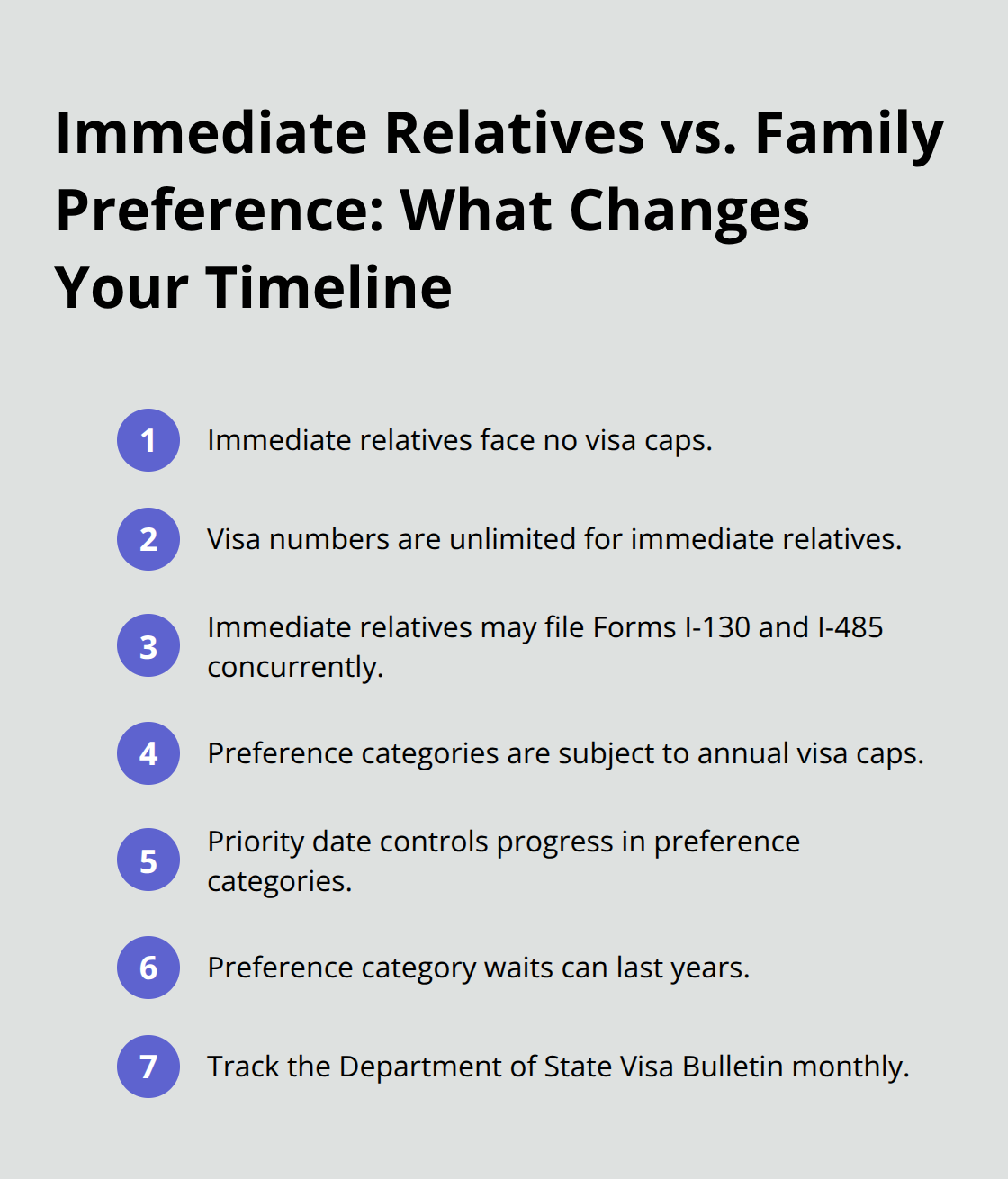
Immediate relatives of U.S. citizens face no visa caps and can move forward relatively quickly once petitions are filed. According to USCIS, immediate relatives include spouses of U.S. citizens, unmarried children under 21, and parents of U.S. citizens aged 21 and older. If you fall into this category, visa numbers are unlimited, meaning you won’t face the years-long waits that plague other applicants.
The critical advantage here is that you can file Form I-485 (your adjustment of status application) at the same time as Form I-130 (the petition itself), rather than waiting for approval. This concurrent filing can compress your timeline significantly. However, concurrent filing only works if you meet specific requirements: you must be physically present in the United States, have been inspected and admitted or paroled upon entry, and maintain continuous lawful status. Many applicants overlook the continuous lawful status requirement and make mistakes that derail their cases months into processing.
Family Preference Categories: Understanding the Wait
Family preference categories cover everything else: adult children of U.S. citizens, siblings of U.S. citizens, and spouses and children of green card holders. These categories operate under annual visa caps set by Congress, which means you’ll typically wait years for a visa number to become available. USCIS tracks visa availability monthly through the Visa Bulletin published by the Department of State, and this document should become your constant reference. If you’re in a preference category, your priority date (the date your petition was filed) determines when you can move forward, and current processing times vary wildly depending on your specific category and country of origin.
Income Requirements and Sponsorship
For family preference cases, income requirements hit differently than immediate relative cases. Your sponsoring relative must prove they earn enough to support you without government assistance, and USCIS publishes income guidelines annually based on household size and the federal poverty level. If your sponsor falls short, they can add a joint sponsor (typically a family member or close friend) to combine incomes.
This joint sponsor must also meet income requirements and sign the Affidavit of Support Form I-864, which creates a legal obligation to financially support you. Many families underestimate how strictly USCIS enforces income requirements, and insufficient documentation of income causes real delays. Your sponsor needs recent tax returns, pay stubs, and employment verification letters, not vague promises of future support. Once you’ve confirmed your eligibility and your sponsor’s financial capacity, the actual filing process begins-and this is where most applicants encounter their first real obstacles.
How to File Your Family Green Card Petition
Starting with Form I-130
Filing your family green card petition begins when your sponsoring relative submits Form I-130, Petition for Alien Relative, to USCIS. This form officially notifies USCIS of your qualifying relationship and launches the entire process. Your sponsor must complete the form accurately, provide proof of their U.S. citizenship or green card status, and submit documents confirming your relationship-marriage certificates, birth certificates, or adoption papers depending on your category.
USCIS processes I-130 petitions at a median speed of 8 to 12 months, though this varies significantly by service center and case complexity. Once USCIS approves your petition, your I-130 receipt notice becomes critical evidence for your next step.
Timing Your I-485 Application
If you’re an immediate relative, you can file Form I-485 (adjustment of status) simultaneously with the I-130, meaning you don’t wait months for approval before moving forward. For family preference categories, you must wait for visa availability before filing I-485, which is why tracking the Department of State Visa Bulletin becomes non-negotiable.
This monthly publication shows current priority dates for each family preference category, and your priority date is the date your I-130 was filed. Visa availability moves slowly for most categories; the F2B category (adult children of green card holders) has experienced waits exceeding 10 years in recent years. Check the Visa Bulletin monthly rather than quarterly, since priority dates can move forward or even retrogress without warning.
Choosing Your Path: Adjustment or Consular Processing
Your path after I-130 approval depends entirely on where you physically live. If you’re already in the United States with valid entry (inspected and admitted or paroled), you file Form I-485 to adjust status without leaving the country. This adjustment application includes medical examination requirements through Form I-693, biometrics collection, and a USCIS interview.
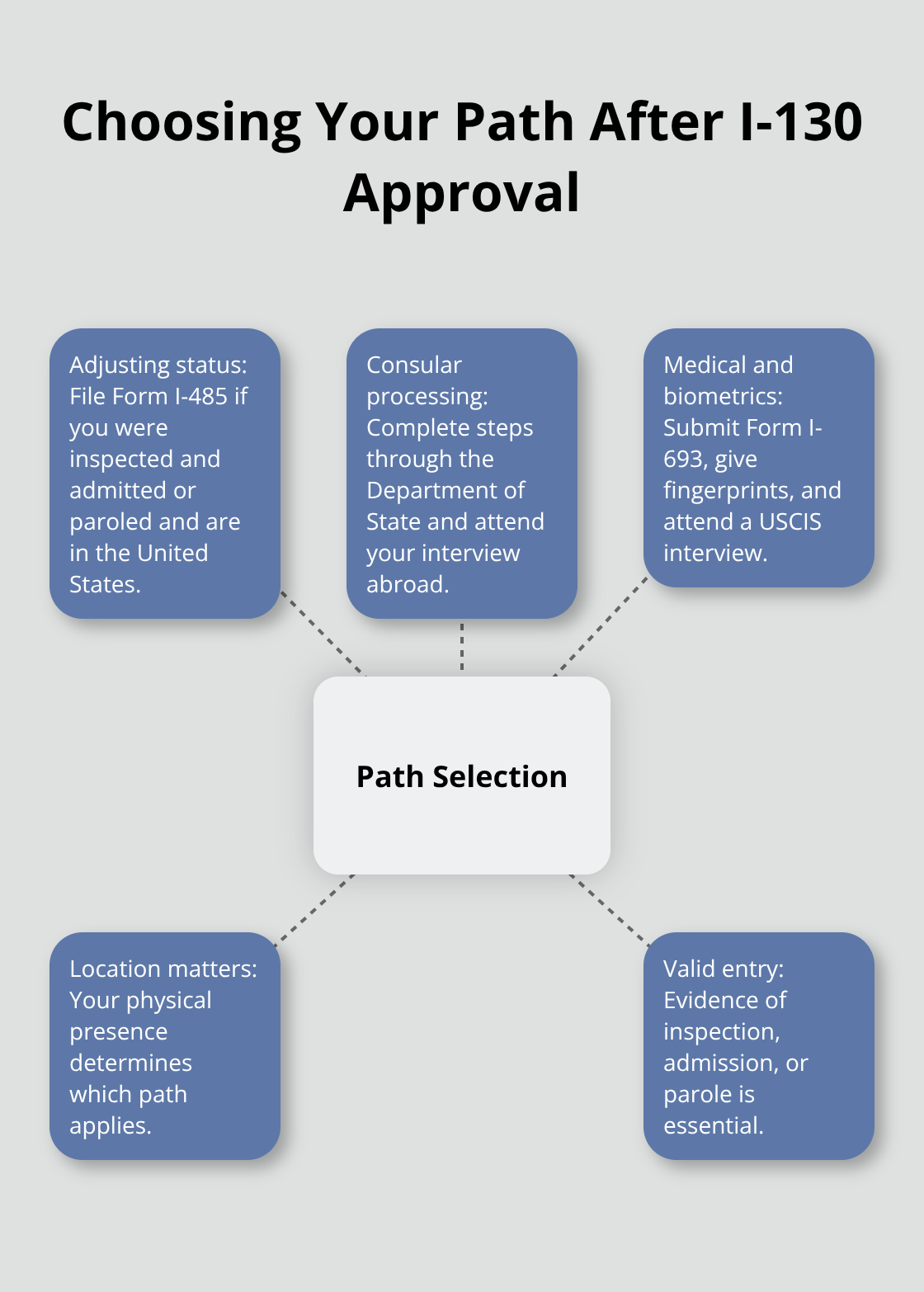
If you’re outside the United States, you pursue consular processing instead, which means your case transfers to a U.S. embassy or consulate in your home country. Consular processing involves similar steps but through the Department of State rather than USCIS, and you attend your interview abroad.
Avoiding Path Selection Mistakes
Choosing the wrong path creates serious complications. Filing I-485 when you’re ineligible to adjust status can trigger deportation proceedings, while attempting consular processing when you should adjust wastes months. The determining factor is your inspection and admission or parole status upon entry to the United States.
If you entered with a valid visa and were inspected, you can adjust. If you entered without inspection or overstayed a visa, consular processing becomes your only legitimate option in most circumstances. Verify your exact entry status with documentation before filing anything, since immigration officers review these details carefully and mistakes here derail entire cases.
Processing Timelines and Next Steps
Processing times for I-485 adjustment average 8 to 14 months, though family preference cases sometimes take longer depending on visa availability and service center workload. Once USCIS receives your I-485, the agency schedules your biometrics appointment and medical examination, which we’ll cover in detail in the next section.
Common Mistakes That Derail Family Green Card Applications
Documentation Errors That Trigger Rejections
Documentation errors cause more family green card rejections than any other single factor, and most of these errors are entirely preventable. Applicants submit birth certificates that lack official seals, provide marriage licenses instead of certified marriage certificates, or include employment verification letters dated months before filing. USCIS requires certified copies of vital documents, not photocopies or uncertified originals, and the agency rejects incomplete packages without hesitation. The cost of rejection isn’t just the filing fee you’ve already paid-it’s the months of reprocessing time you lose.
Organize your documents in a single folder before you file anything. Verify each document matches USCIS requirements exactly, and obtain certified copies directly from government agencies rather than relying on documents you already have at home. For the affidavit of support, your sponsor’s tax returns must cover the past two years, and recent pay stubs must show current income.
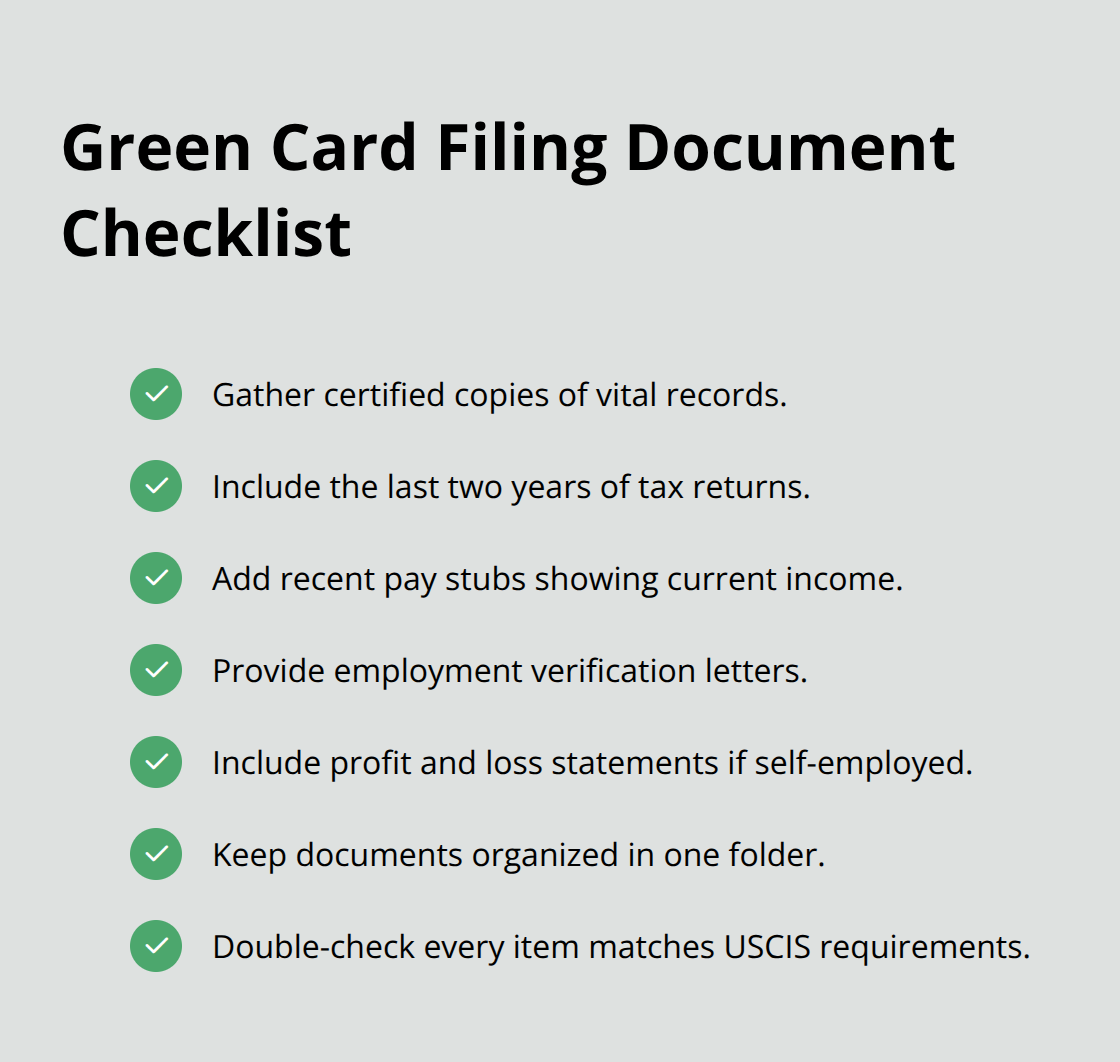
If your sponsor is self-employed, include profit and loss statements along with tax returns, since USCIS scrutinizes self-employment income far more carefully than W-2 wages. Missing even one required document triggers a Request for Evidence, which extends your processing timeline by an additional 60 to 90 days.
Visa Bulletin Timing and Priority Dates
Timing failures destroy cases that solid documentation would have saved. The Department of State Visa Bulletin changes monthly, and if you miss the moment when your priority date becomes current, you lose your place in the queue and must wait for the next opening. Set calendar reminders to check the Visa Bulletin on the first business day of each month rather than checking sporadically, because priority dates can move forward or retrogress without warning.
If you pursue consular processing, your National Visa Center appointment is finite-missing that interview date without rescheduling in advance can result in case denial. For adjustment of status applicants, biometrics appointments arrive with strict deadlines, and failing to attend without requesting a reschedule gives USCIS grounds to deny your entire I-485.
Interview Preparation and Document Verification
Interview preparation separates approved cases from denials more often than applicants realize. Conduct practice interviews with someone unfamiliar to you, not just family members, because strangers ask tougher questions and expose weak spots in your answers. Review your entire I-485 application line by line before your interview and write down any inconsistencies between what you wrote and what you plan to say, then resolve those inconsistencies before you walk into the USCIS office.
Bring original documents to your interview even though you’ve already submitted copies, because officers frequently request to see originals to verify authenticity. This step (verifying documents in person) catches fraudulent submissions and confirms that your supporting evidence matches your application statements exactly.
Final Thoughts
Your family green card application succeeds when you master the process, organize your documentation meticulously, and avoid the timing mistakes that derail most cases. Immediate relatives move faster because visa numbers never run out, while family preference applicants must monitor the Department of State Visa Bulletin monthly and accept that waits often stretch years. Once USCIS approves your I-485 or the consulate approves your visa application, you become a lawful permanent resident with the right to live and work in the United States.
After approval, your responsibilities shift immediately. Your green card arrives by mail within weeks, and you must update your address with USCIS if you move before it arrives (enrolling in USPS Informed Delivery helps you track delivery and set up alerts for important mail). Your green card remains valid for ten years, and you’ll need to renew it before expiration if you plan to remain a permanent resident.
We at Law Offices of Jeffrey A. Thompson understand that family immigration involves complex rules, tight deadlines, and high stakes. Our team assists clients throughout the entire process, from paperwork preparation to overcoming legal hurdles and preference category delays. Contact our immigration law team to discuss your specific situation and move your family green card application forward smoothly.
Share this post: