National Visa Assistance: Streamlining Your Immigrant Visa Journey
June 19, 2026
Navigating the immigrant visa process feels overwhelming when you’re handling it alone. The application requires precise documentation, strict timelines, and knowledge of which visa category fits your situation.
We at Law Offices of Jeffrey A. Thompson help clients access national visa assistance that removes confusion and prevents costly mistakes. This guide walks you through each stage, from understanding your visa options to working with legal representation that strengthens your case.
The Immigrant Visa Process Explained
Understanding the 12-Step Sequence
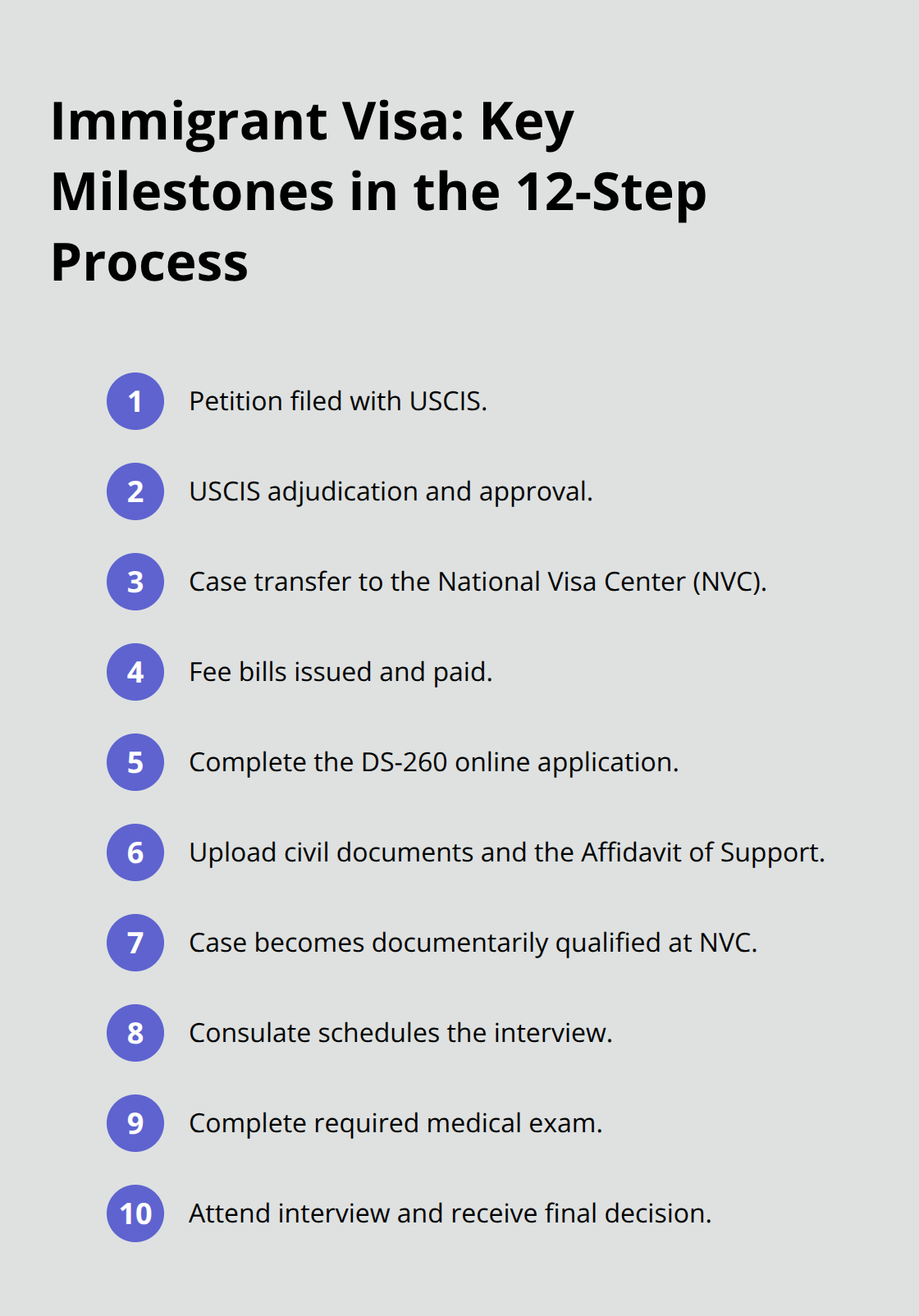
The immigrant visa process follows a strict 12-step sequence that begins with petition submission and ends after your consulate interview. USCIS approves your petition first, then your case transfers to the National Visa Center for document collection and fee processing. The timeline depends heavily on your Priority Date-the date you filed your petition-and whether it matches the Cut-Off Date published monthly in the Visa Bulletin by the U.S. Department of State. If your Priority Date is current, the NVC starts processing immediately and requests your documents and fees. If it’s not yet current, the NVC waits and notifies you when processing can begin. This means USCIS approval does not guarantee immediate movement to the next stage.
What You Must Gather and Submit
You’ll need to gather financial documents to support an Affidavit of Support, complete the DS-260 online application, collect civil documents like birth certificates and marriage certificates, and scan everything for NVC submission. The entire process from petition filing to interview can take anywhere from several months to over a year, depending on your visa category, country of origin, and whether administrative processing is required.
Why Applications Get Denied
Denials happen frequently, and the most common reason is missing or incomplete documentation. According to the U.S. Department of State, while the majority of applications are approved, denials commonly occur when required information is missing or when the applicant falls under grounds of ineligibility. The public charge rule is a leading cause of denial-if consular officers believe you’re likely to rely on government assistance, they’ll deny your visa unless you provide strong financial evidence.
Overcoming Public Charge Concerns
An Affidavit of Support from a U.S. sponsor, backed by tax transcripts, bank statements, and pay stubs, is the primary way to overcome public charge concerns. If you’re denied under 221(g) due to missing information, you have up to one year to submit the required documents and have your case reassessed. Other grounds for denial include fraud or misrepresentation, which results in permanent ineligibility unless a waiver is granted, and unlawful presence in the U.S., which can trigger bars of 3 to 10 years depending on how long you stayed unlawfully.
Moving Forward After a Denial
The consular officer’s decision is final, but if you receive a denial letter specifying the exact legal section cited, you can explore whether a waiver exists or whether reapplication is your path forward. An immigration attorney helps you identify potential ineligibilities before your interview, reducing the risk of costly denials and positioning you for success in the next phase of your case.
Which Visa Category Matches Your Immigration Path
Family-Sponsored Immigration: The Largest Pathway
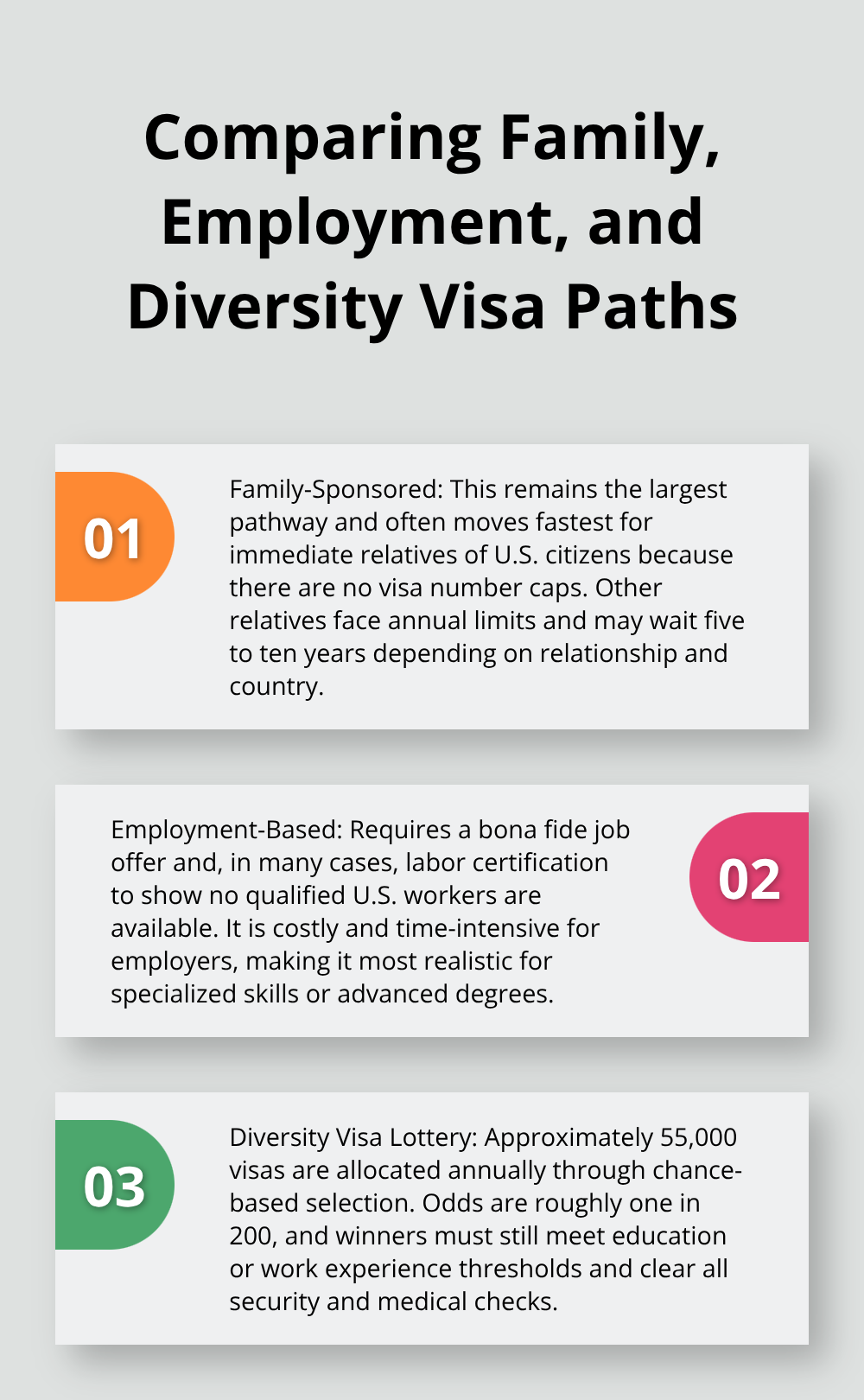
Family-sponsored immigration accounts for the majority of immigrant visas issued annually and remains the largest pathway into the United States. If you have a U.S. citizen spouse, parent, or child willing to petition for you, this route typically moves faster than employment-based categories because immediate relatives of U.S. citizens face no visa number caps. Adult children and siblings of U.S. citizens, along with relatives of lawful permanent residents, do face annual limits and longer waits-sometimes five to ten years depending on your relationship and country of origin.
Employment-Based Visas: Specialized Skills and Employer Sponsorship
Employment-based visas demand a job offer from a U.S. employer who must prove no available U.S. workers can fill the position, a costly and time-intensive process. The employer bears the financial burden of recruitment advertising and labor certification, making this category realistic only if you possess specialized skills or advanced degrees that genuinely cannot be sourced domestically.
The Diversity Visa Lottery: Chance-Based Selection
The diversity visa lottery program allocates roughly 55,000 visas annually through a chance-based selection process. Your odds of selection stand at roughly one in 200 if you submit an entry, and winners must still prove they meet educational or work experience requirements and pass all standard security and medical checks.
How Your Visa Category Shapes Your Path Forward
Your visa category determines your documentation requirements, processing timeline, and which consular post handles your interview. Family-sponsored applicants need birth certificates, marriage documents, and police clearances, while employment-based candidates must gather extensive labor certification paperwork and job offer letters. Diversity visa winners face the same background checks and Affidavit of Support requirements as other immigrant visa applicants, despite winning through lottery.
Selecting the Right Category From the Start
Many people qualify through multiple pathways, and selecting the fastest realistic option saves months or years of waiting. An immigration attorney reviews your specific circumstances, identifies which category minimizes processing delays, and prevents the costly mistake of discovering mid-process that you selected the wrong category and must restart your petition. This strategic choice at the beginning shapes everything that follows in your visa application.
Why Hiring an Attorney Strengthens Your Visa Application
The Cost of Going It Alone
Handling your immigrant visa case alone puts you at a significant disadvantage. The consular officer reviewing your file has no obligation to point out missing documents or warn you about ineligibilities before denial. According to the U.S. Department of State, an application may be denied because the consular officer does not have all of the information required to determine if the applicant is eligible to receive a visa. An immigration attorney identifies these gaps before your interview, catches ineligibilities that derail applications, and positions your documents so the consular officer sees a complete, compelling case.
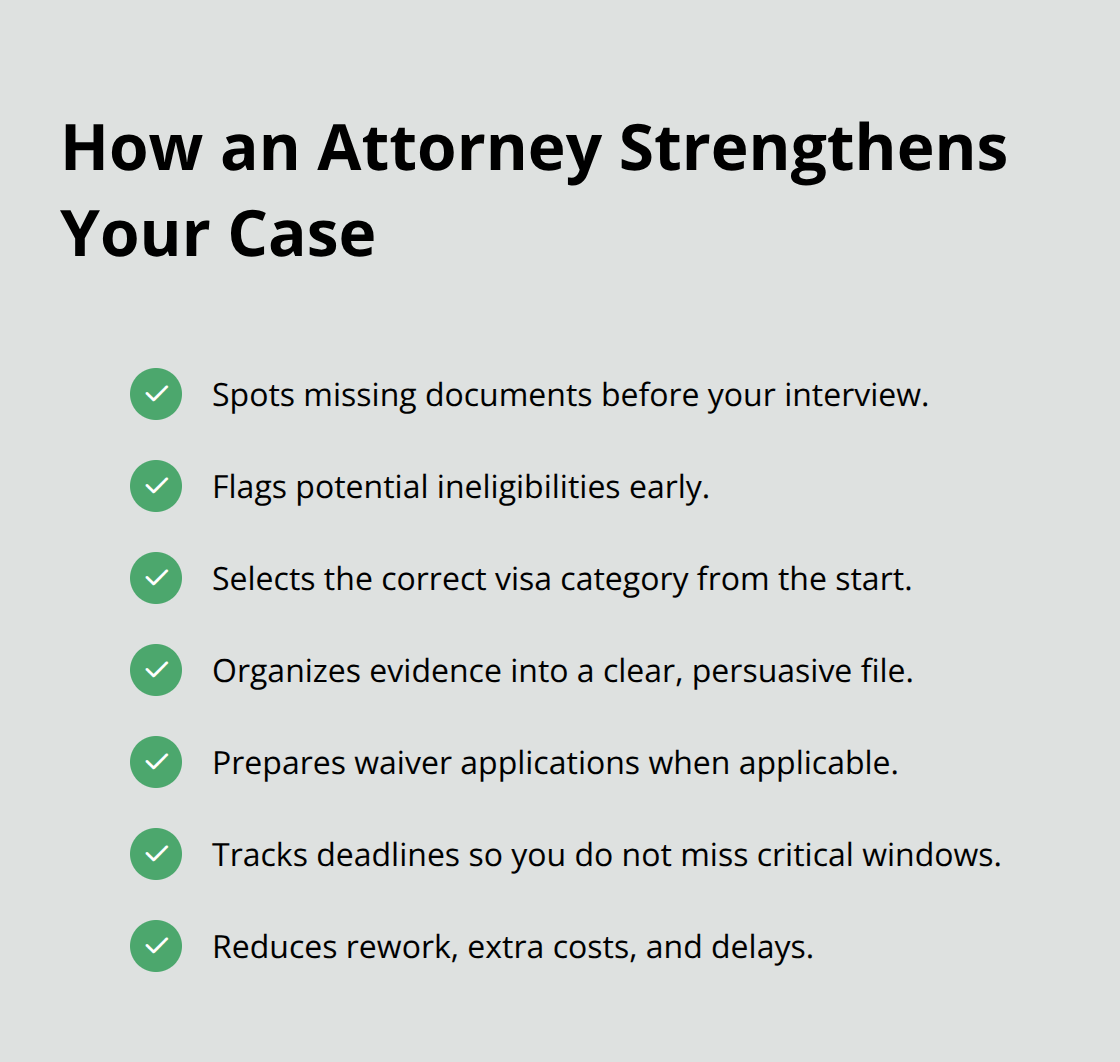
The cheapest option upfront becomes expensive when a denial forces you to restart your petition, pay new filing fees, and wait months or years to reapply. An attorney also prevents category selection errors-the mistake of discovering mid-process that you chose the wrong visa pathway and must start over. This strategic guidance at the beginning saves time and money throughout your case.
Understanding Denial Letters and Your Options
The consular officer’s decision is final, and their denial letter specifies only the legal section cited for rejection, not the practical steps to overcome it or whether a waiver even exists for your situation. If you receive a 221(g) denial due to missing information, you have up to one year to submit required documents, but many applicants miss this deadline because they don’t understand the process or don’t receive proper guidance.
If you face denial for fraud, misrepresentation, or unlawful presence in the U.S., waivers may be available, but the application process is complex and discretionary-DHS approval is never guaranteed. An attorney evaluates whether a waiver is realistic for your case, prepares the required paperwork correctly, and explains the extreme hardship standard that applies to certain waivers. This level of detail separates applicants who successfully overcome denials from those who give up or waste money on applications destined to fail again.
Strategic Guidance That Prevents Costly Mistakes
An immigration attorney recognizes ineligibilities before your interview and positions your case for success. The attorney reviews your specific circumstances, identifies potential obstacles early, and addresses them through proper documentation or waiver applications. This proactive approach transforms your application from a collection of forms into a persuasive narrative that demonstrates your eligibility and commitment to following U.S. immigration law.
Final Thoughts
The immigrant visa journey demands precision, timing, and knowledge of which category fits your circumstances. A single missing document or overlooked ineligibility can force you to restart your petition, pay new fees, and wait months or years longer to reunite with family or pursue employment in the United States. National visa assistance from an experienced immigration attorney transforms your application from a collection of forms into a strategic case that addresses potential obstacles before they derail you.
An attorney identifies missing documentation before your interview, catches ineligibilities that consular officers will not warn you about, and positions your case so the officer reviewing your file sees a complete and compelling narrative of your eligibility. The consular officer’s decision is final, and their denial letter provides little guidance on whether a waiver exists or how to overcome the rejection. If you face denial for missing information, fraud, or unlawful presence, the path forward becomes complex and discretionary, and an attorney evaluates whether your situation qualifies for a waiver and prepares the required paperwork correctly.
Contact Law Offices of Jeffrey A. Thompson to discuss your visa category, timeline, and next steps with an attorney who understands the details that separate approval from denial.
Share this post: