Naturalization Test Questions Study: Practice for the Civics Exam
June 15, 2026
The U.S. civics exam is one of the most important hurdles in the naturalization process. Passing it requires solid knowledge of American government, history, and civic principles.
At Law Offices of Jeffrey A. Thompson, we’ve helped countless applicants prepare for this test. This guide walks you through effective study methods and sample naturalization test questions to build your confidence before exam day.
Understanding the Civics Exam Structure and Requirements
How the Test Format Changes Based on Your Filing Date
The civics exam tests your knowledge of U.S. history and government, and the format depends entirely on when you file your Form N-400 application. If you file on or after October 20, 2025, you’ll take the 2025 civics test, which consists of 20 questions drawn from a list of 128 possible questions. You must answer at least 12 questions correctly to pass. The test is oral, meaning you’ll answer verbally during your interview, not on paper. If you file before October 20, 2025, you’ll take the 2008 civics test instead, which pulls from 100 questions and requires you to answer 6 out of up to 10 questions correctly. The 2025 version covers more ground with its 128-question pool, so your preparation needs to be more comprehensive. USCIS stops administering questions once you either reach the passing threshold or fail too many answers, so the test adapts to your performance in real time.
Core Topics You Must Master
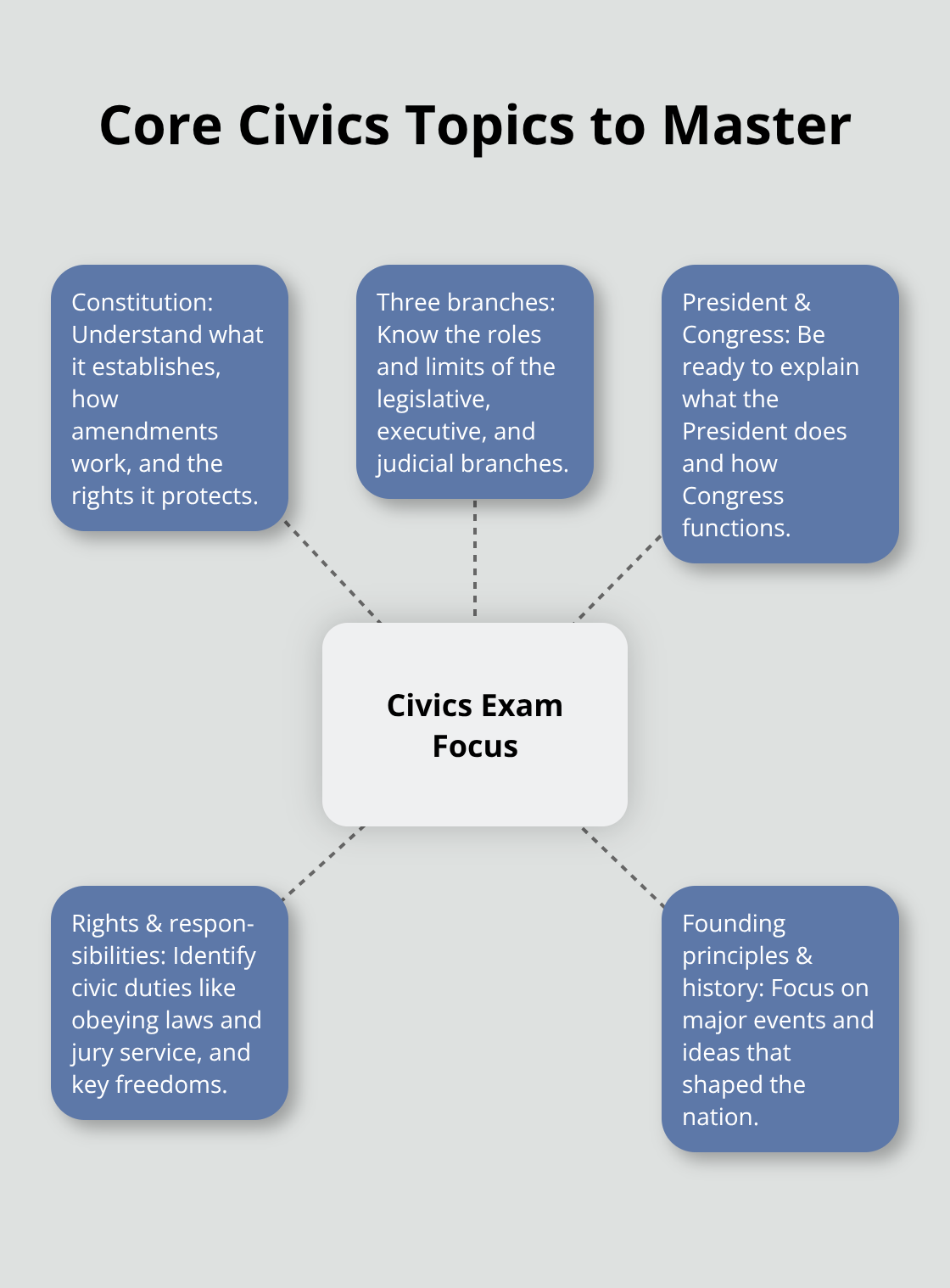
The civics content focuses squarely on American history and the structure of U.S. government. Questions cover the Constitution, the three branches of government, the roles of the President and Congress, and the rights and responsibilities of citizens. Some questions change based on current events and elected officials, which means you must verify the names of sitting U.S. Senators, Representatives, and your state governor before your interview.
USCIS publishes a Civics Test Updates page that lists any questions affected by elections or appointments, so you should check this page shortly before your interview. The civics test also assesses your understanding of founding principles and historical events that shaped the nation. You’ll see better results when you focus on these specific areas rather than studying vague civics concepts. The 2025 version is based on the 2020 civics test with modifications to how it’s administered, so the official USCIS study materials prepare you for the actual test format and content.
English Language Skills Matter Just as Much
The civics exam is only half the battle. You must also pass the English portion, which includes speaking, reading, and writing assessments. According to FY2022 USCIS data, the overall national pass rate for the naturalization test was 95.7%, with civics at 92.4% and English language skills ranging from 93% to 97% depending on the specific skill tested. Reading is your easiest hurdle: you simply read one of three sentences aloud correctly. Writing requires you to write one of three sentences correctly. Speaking ability gets evaluated throughout your eligibility interview, so your ability to communicate with the USCIS officer matters more than formal perfection. USCIS provides official vocabulary lists focused on civics and history topics specifically designed for the reading and writing portions.
Special Accommodations You May Qualify For
If you’re 65 years old or older with at least 20 years of permanent residency, you qualify for a reduced civics study set of just 20 questions instead of 100 or 128, and you can take the test in your native language. About 122,866 applicants qualified for an English language exception in FY2022, representing 11.6% of all applicants, so you should not overlook whether accommodations apply to your situation. These exceptions can significantly reduce your study burden and increase your chances of passing on the first attempt. Understanding which accommodations you qualify for allows you to tailor your preparation strategy accordingly.
What Questions Actually Appear on the Civics Exam
The Official Question Banks Define Your Study Path
The civics exam pulls directly from official USCIS question banks, and knowing what actually gets tested separates serious candidates from those who waste time on irrelevant material. For the 2025 test, you draw from 128 specific questions published by USCIS, not some vague collection of civics trivia. The FY2022 pass rate for civics was 92.4%, meaning nearly 8% of applicants failed, often because they studied general civics concepts instead of the actual 128 questions USCIS uses. If you filed before October 20, 2025, you take the 2008 test instead, which pulls from 100 questions and requires only 6 correct answers from up to 10 questions asked. Either way, the strategy remains identical: master the official question bank rather than studying theoretical civics.
Government Structure Dominates the Test Content
Government structure dominates the exam because it forms the foundation of American civics. You face repeated questions about the three branches of government, what the President does, how Congress functions, and the basic framework of the Constitution. The Constitution questions test your knowledge of what it establishes, how it can be changed, and what rights it protects. Questions about rights and responsibilities ask you to identify what citizens must do-obey laws, serve on juries, vote-and what freedoms they possess. U.S. history questions focus on founding principles and key historical events, not obscure dates or minor figures.
Current Officials and Test Updates Matter
You must answer questions about current elected officials by name, and since senators, representatives, and governors change, USCIS updates specific questions when elections occur. The 2025 test is based on the 2020 civics framework with administrative modifications, meaning the content hasn’t shifted dramatically but the delivery has. Check the Civics Test Updates page before your interview to identify which questions have shifted due to recent elections or appointments. Verify current officeholder names on official government websites (senate.gov, house.gov, usa.gov) before your interview to ensure accuracy.
Study the Exact Questions You’ll Face
The practical approach is to study the official 128-question list directly rather than reading civics textbooks or taking random practice quizzes from non-official sources. USCIS publishes the complete list as a PDF called 128 Civics Questions and Answers (2025 Version), and this document contains every question you might face plus the correct answers. Spend your study time on these exact questions, answer them aloud to simulate the oral exam format, and verify current officeholder names on official government websites before your interview. Some applicants waste weeks reading about American history when they should spend 30 minutes daily reviewing the actual questions they’ll face.
Vocabulary Lists Target Your Reading and Writing Skills
The reading and writing portions test civics-related vocabulary specifically, so USCIS provides vocabulary lists designed exactly for these sections. This focused approach dramatically improves your odds because you study what will appear, not what might appear. The 2025 version covers more ground with its 128-question pool, so your preparation needs to be more comprehensive than earlier test formats. With the official question bank in hand and a clear study schedule, you position yourself to move forward with confidence into the specific topics that appear most frequently on the exam.
How to Study the Civics Exam Effectively
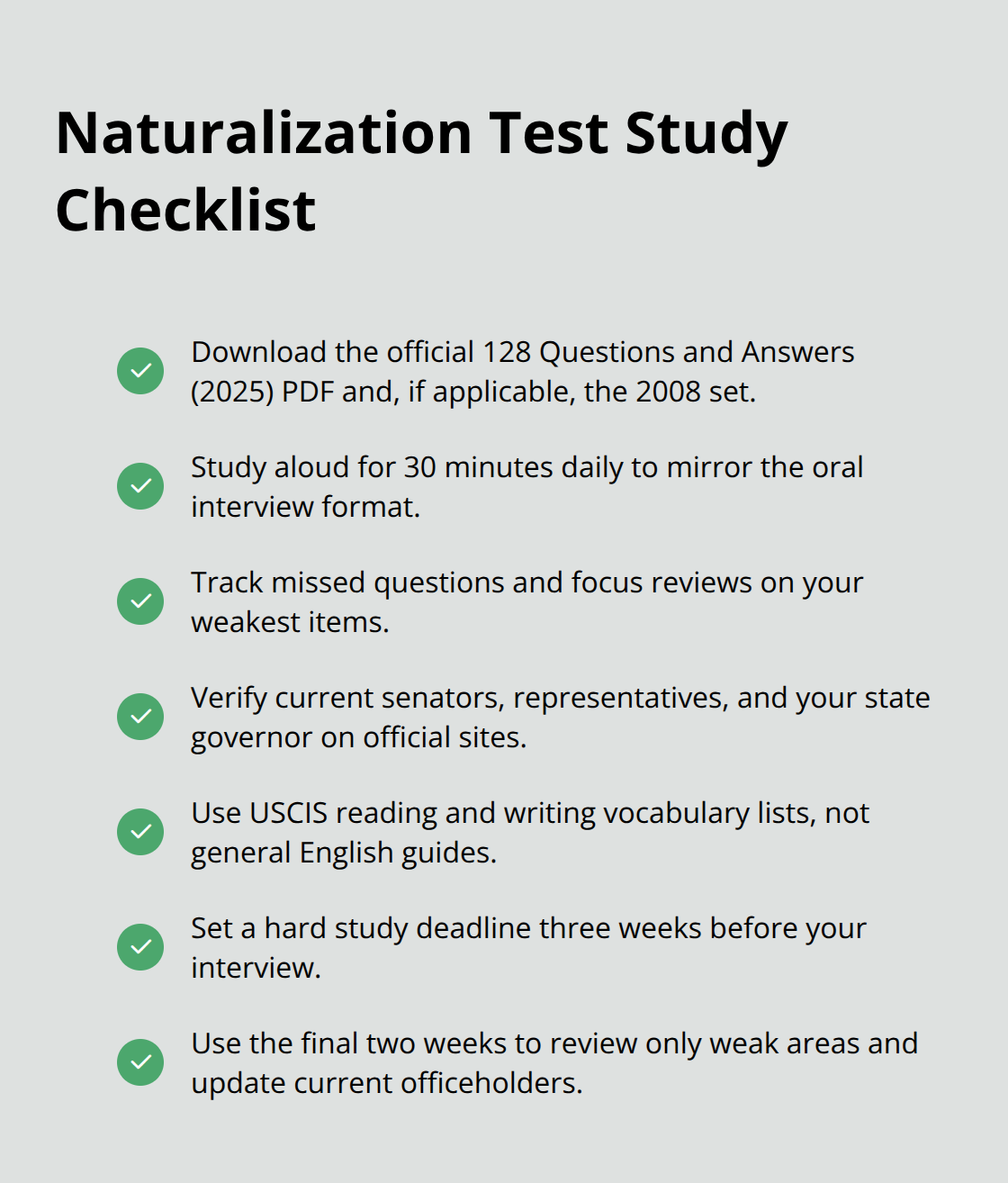
Start with the official USCIS question bank and stop wasting time on generic civics textbooks. The 128 Civics Questions and Answers PDF contains every question you might face on the 2025 test, so your study plan should center entirely on mastering these specific questions rather than reading broad overviews of American history. Spend 30 minutes daily reviewing questions aloud to simulate the oral exam format, which forces you to speak answers naturally rather than simply recognizing correct responses on paper.
Focus Your Study on What Will Actually Be Tested
FY2022 data from USCIS shows that 92.4% of applicants passed the civics portion, but the 7.6% who failed typically studied theoretical civics concepts instead of the actual question bank. The gap between passing and failing often comes down to this single decision: study what will be tested, not what might be tested. Create a spreadsheet tracking which questions you answer incorrectly, then focus your review time on those specific questions rather than re-reading questions you already know. Most applicants overestimate how much study time they need because they dilute their effort across too many sources. Consolidate everything into one place: the official question bank, a vocabulary list for reading and writing sections, and a list of current officeholders from senate.gov and house.gov.
Prioritize High-Frequency Topics in Your First Week
High-frequency questions about the three branches of government, the President’s role, and basic Constitutional principles appear repeatedly across test variations, so prioritize these topics heavily in your first week of study. Verify current U.S. Senators, Representatives, and your state governor on official government websites before your interview, because questions about these officials change with elections and USCIS updates the Civics Test Updates page accordingly. The reading and writing portions test civics-related vocabulary specifically, so use the official USCIS vocabulary lists designed for these sections rather than general English vocabulary guides.
Build Automaticity Through Repeated Practice
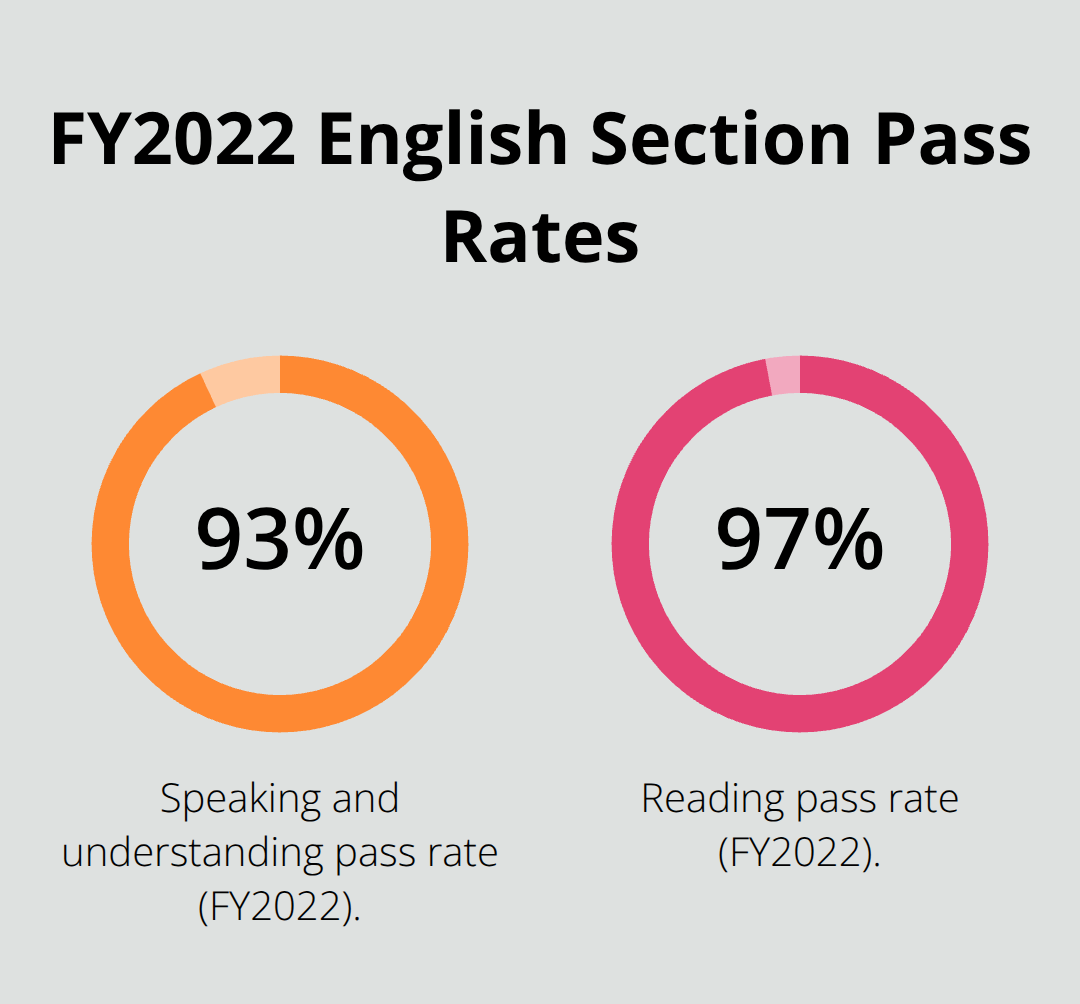
Practice writing sample sentences aloud and on paper to build automaticity, since you must produce correct written sentences under interview pressure. If you qualify for accommodations because you’re 65 or older with 20 years of residency, study only the 20 starred questions in the official materials rather than the full 128, and you can take the test in your native language. This focused approach cuts your study burden dramatically while maintaining the same passing standards. The English portion pass rates in FY2022 ranged from 93% for speaking and understanding to 97% for reading, showing that most applicants succeed on these sections with minimal preparation.
Maintain Momentum Through Your Final Weeks
Your civics knowledge and ability to speak clearly during the interview matter far more than grammatical perfection. Set a firm study deadline three weeks before your scheduled interview, then spend the final two weeks reviewing only your weakest areas and verifying current officeholder names, which prevents last-minute cramming and keeps your knowledge fresh.
Final Thoughts
Passing the naturalization test requires focused preparation on the exact questions USCIS will ask, not theoretical civics knowledge. Your naturalization test questions study should center on the official 128-question bank for the 2025 test or the 100-question bank for the 2008 test, depending on your filing date. Spend 30 minutes daily reviewing questions aloud, verify current officeholder names on official government websites before your interview, and use the USCIS vocabulary lists for reading and writing sections. The FY2022 pass rate of 95.7% shows that most applicants succeed when they study strategically rather than broadly.
Gather the official USCIS study materials immediately and download the 128 Civics Questions and Answers PDF, the vocabulary lists for reading and writing, and check the Civics Test Updates page to identify any questions affected by recent elections or appointments. If you qualify for accommodations because you’re 65 or older with 20 years of residency, focus only on the 20 starred questions and take the test in your native language. Set a firm study deadline three weeks before your scheduled interview, then spend your final two weeks reviewing only your weakest areas.
The naturalization process involves more than just passing the civics exam-you’ll face an eligibility interview where USCIS evaluates your background, English speaking ability, and civics knowledge simultaneously. We at Law Offices of Jeffrey A. Thompson assist clients in navigating the entire immigration process, from paperwork to overcoming legal hurdles, and contact us today for compassionate, knowledgeable legal representation tailored to your specific situation.
Share this post: