US Citizenship Naturalization Guide: A Step-By-Step Overview
July 31, 2026
Becoming a US citizen through naturalization is one of the most significant decisions you’ll make. The path involves specific eligibility requirements, detailed paperwork, and a formal interview process.
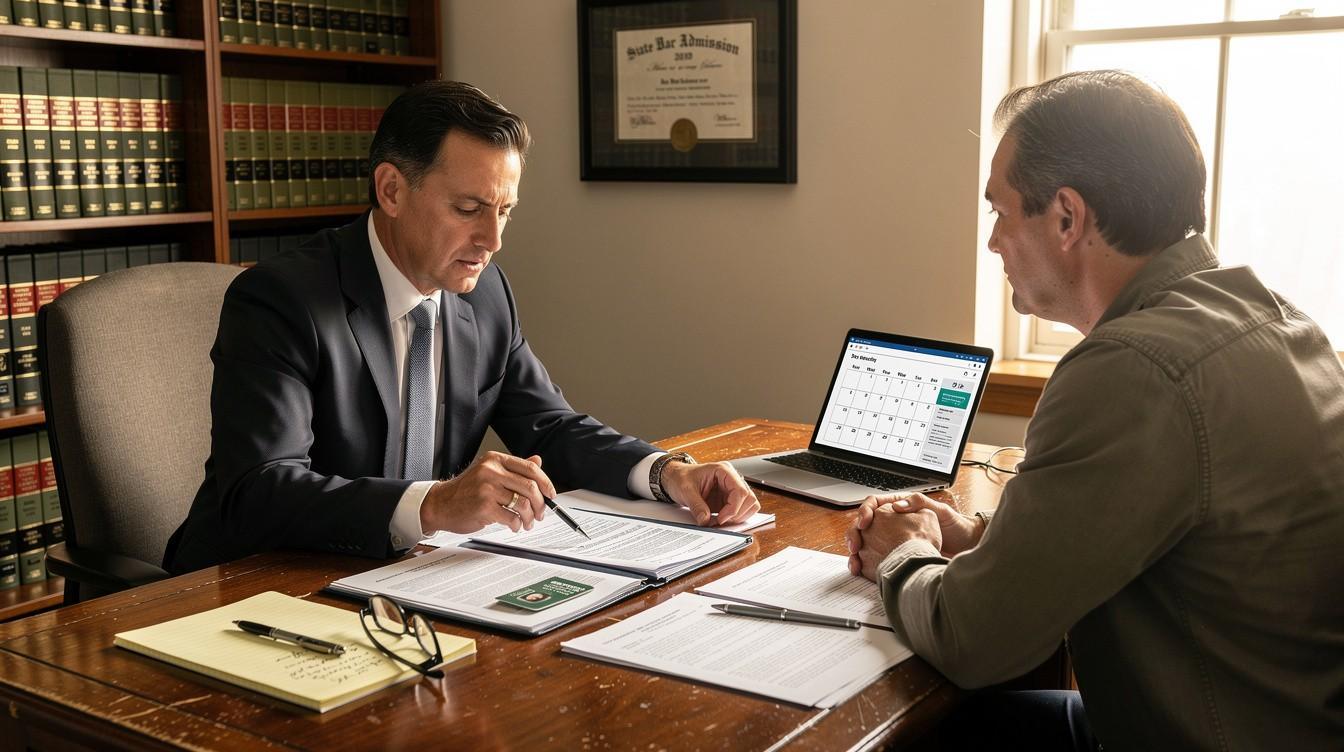
We at Law Offices of Jeffrey A. Thompson have guided countless applicants through this journey. This guide breaks down each step so you understand exactly what to expect.
Who Qualifies for US Citizenship
Residency and Timing Requirements
Not every permanent resident can apply for naturalization right now. The timeline matters most. You need to hold your green card for a continuous period, and USCIS counts this strictly. If you are married to a US citizen, the requirement drops to three years of permanent residency. If you are single, divorced, or widowed, you need five years. Filing too early wastes your application fee and delays your citizenship.
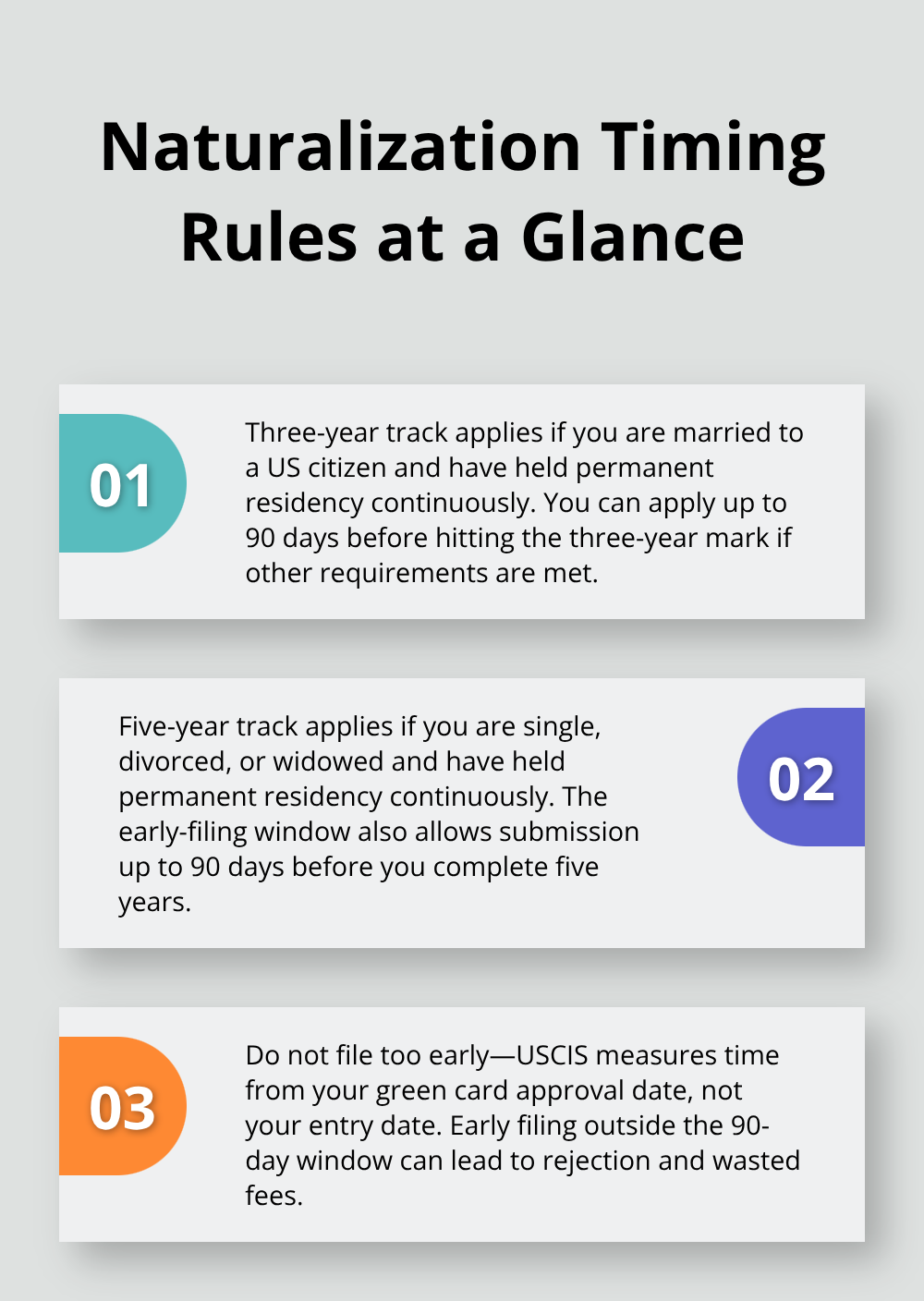
The clock starts from the date USCIS approved your green card, not the date you entered the country. You can file up to 90 days before completing your residency requirement, which gives you a small window to plan ahead, but crossing that line results in rejection.
Physical Presence and Continuous Residence
Physical presence matters just as much as residency length. You must remain physically present in the United States for at least half of your required residency period. For the five-year track, that means 30 months in the country. For the three-year track, it means 18 months. Any trip outside the US lasting more than six months but less than one year breaks your continuous residence, requiring you to provide evidence that you maintained ties to the country through rent payments, mortgage statements, bank records, or tax returns. A single trip over one year automatically resets your clock to zero.
Good Moral Character and Legal Obligations
Good moral character is non-negotiable. Arrests, convictions, or immigration violations must be disclosed. USCIS will request court documents and dispositions. If you completed rehabilitation programs or served sentences, document that completion thoroughly. Selective Service registration is required for males between 18 and 26. If you missed this deadline, obtain a status letter from Selective Service explaining your circumstances and include a brief written explanation with your application.
English Proficiency Assessment
You must demonstrate basic English ability through reading, writing, and speaking. Speaking happens naturally during your interview as the USCIS officer assesses your ability to understand and respond to questions. Reading requires you to read one of three sentences aloud correctly. Writing requires you to write one of three sentences correctly. These are not academic tests. The vocabulary focuses on everyday topics and basic civics concepts. USCIS provides free study materials that align exactly with interview requirements. Certain applicants qualify for exemptions. If you are 65 years or older and have been a permanent resident for 20 or more years, you can take a reduced English test. Form N-648 allows medical exemptions for applicants with physical or developmental disabilities that prevent English proficiency.
Civics Test Format and Content
Two different civics tests exist based on your filing date. If you file on or after October 20, 2025, you take the 2025 civics test, which draws 20 questions from a list of 128 published questions. You must answer 12 correctly to pass. The USCIS officer stops questioning once you reach 12 correct answers or 9 incorrect answers, whichever comes first. If you file before October 20, 2025, you take the 2008 civics test with up to 10 questions from a list of 100.
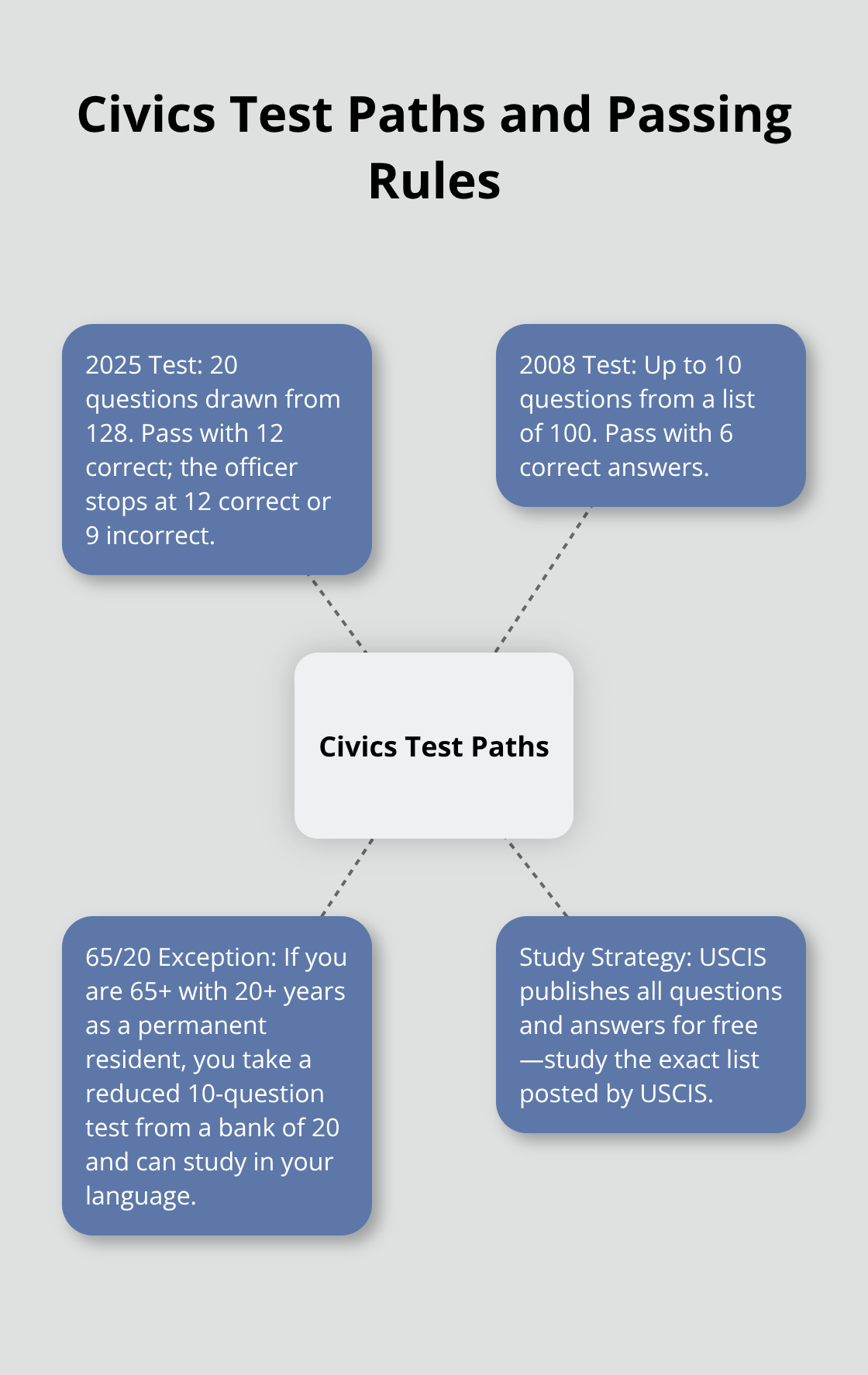
You need 6 correct answers to pass. The 2025 test is more efficient and covers the same civics content about US history and government structure. USCIS publishes all 128 questions and answers online for free. Studying these exact questions is your best strategy. The test includes questions about the Constitution, the three branches of government, rights and responsibilities of citizens, and historical facts. Some answers change with elections or appointments. Answer with the official serving at the time of your interview. If you are 65 or older with 20 or more years of permanent residency, you can take a reduced 10-question civics test from a bank of 20 questions and study only those 20 questions in your language of choice.
Once you confirm your eligibility and understand what the tests require, the next step involves preparing your application materials and filing Form N-400 with USCIS.
Filing and Submitting Your N-400 Application
Creating Your USCIS Online Account
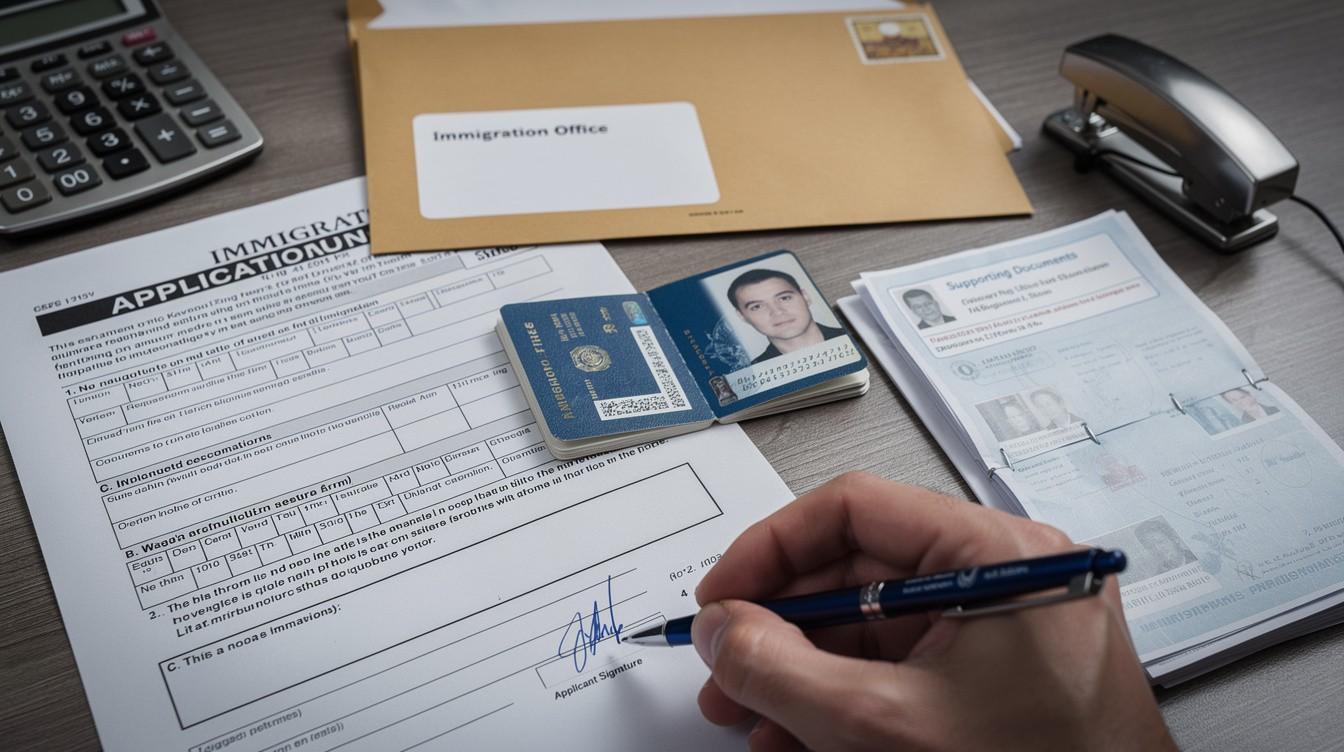
Start your naturalization journey at myaccount.uscis.gov by creating a free USCIS online account. This account lets you submit Form N-400 digitally, track your case in real time, and receive notifications about appointments and decisions without waiting for mail. Filing online costs $710 compared to $760 by mail, and you avoid the risk of sending documents to the wrong address-a problem that still affects applicants who file by paper. The online system automatically extends your green card for two years once USCIS receives your properly filed N-400, so you do not need to file a separate I-90 renewal application during processing.
Timing Your Application and Gathering Documents
You can file up to 90 days before completing your residency requirement, which gives you a strategic window to plan your submission. Gather your green card copy, marriage or divorce documents as applicable, arrest reports and court dispositions if relevant, and evidence of continuous residence like rent statements, mortgage papers, bank records, or tax returns. If you qualify for a reduced fee, submit documentation of your income with Form I-912. Submitting complete documentation the first time prevents delays and rejection notices.
Attending Your Biometrics Appointment
USCIS will mail your biometrics appointment notice or send it through your online account within weeks of filing. Bring your green card and a second photo ID to this appointment at an ASC location. USCIS will photograph you, take your fingerprints, and collect your signature for the FBI background check. The photo taken at biometrics may appear on your Certificate of Naturalization, so dress professionally. You will receive a study booklet at this appointment to prepare for your interview.
Preparing for Your Interview and Tests
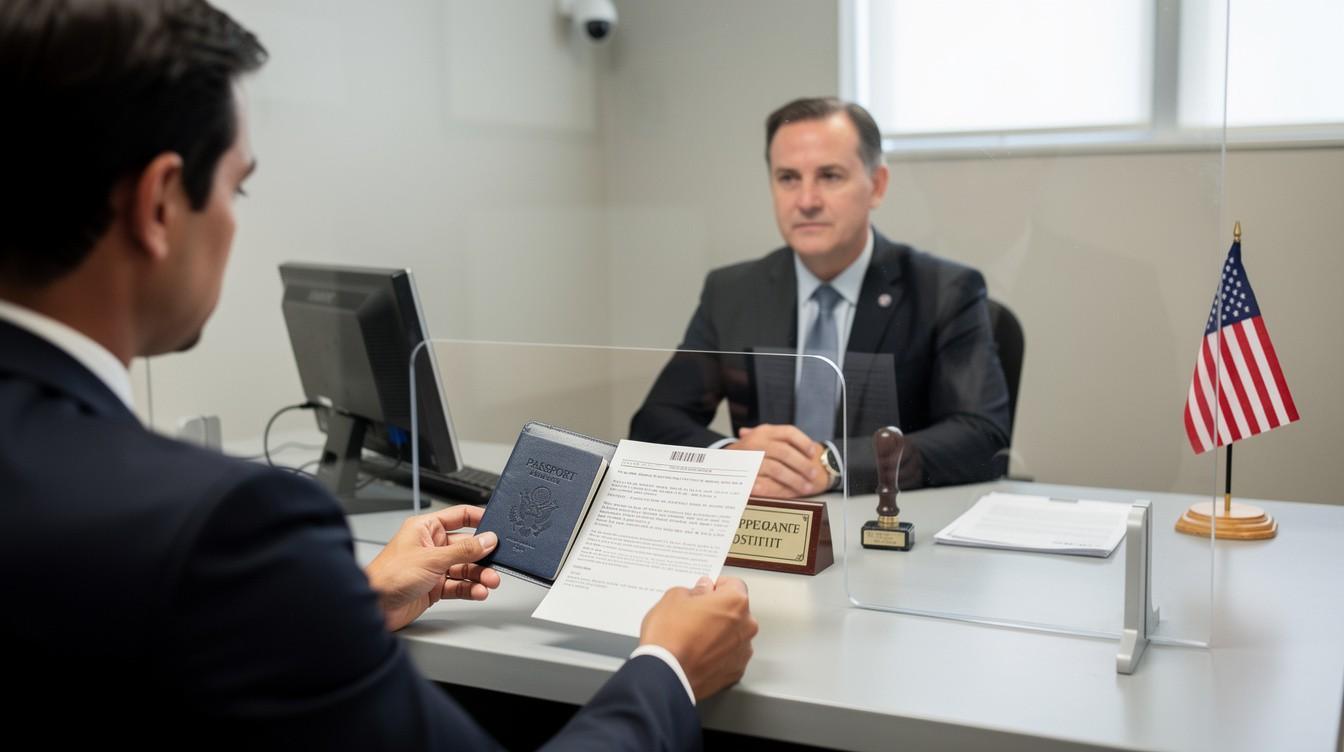
Your interview notice specifies the exact date, time, and USCIS office location. Bring the appointment notice, your green card, a state-issued ID, and all passports or travel documents showing any absences from the United States since becoming a permanent resident. Consult the Form M-477 Document Checklist for additional requirements specific to your situation. The USCIS officer will conduct your English assessment during the conversation itself, evaluating your ability to understand questions and respond appropriately. You then read one of three sentences aloud and write one of three sentences correctly. These tasks take minutes, not hours.
Mastering the Civics Test
Your civics preparation determines your success on this portion. If you file after October 20, 2025, you face 20 questions drawn from a published question bank, needing 12 correct answers to pass. The officer stops once you reach 12 correct or 9 incorrect answers. USCIS publishes all civics questions and answers free online, and studying these exact questions is non-negotiable. If you file before October 20, 2025, you answer up to 10 questions from the official list and need 6 correct. The content covers the Constitution, branches of government, rights and responsibilities, and historical facts. Some answers change with elections or appointments, so answer with the official serving at your interview date. USCIS offers free naturalization information sessions in many communities and provides practice tests through their Citizenship Resource Center. After your interview, USCIS will inform you of results immediately or request additional evidence if needed. Once you pass your tests and receive approval, the final step involves taking the Oath of Allegiance at a formal ceremony.
Obstacles That Stop Naturalization Applications
Criminal History and Disclosure Requirements
Criminal history and immigration violations are the primary reasons USCIS denies naturalization applications. You must disclose every arrest, regardless of outcome, and every conviction on your N-400 form. USCIS will obtain your complete criminal record through the FBI background check anyway, so hiding anything guarantees rejection. If you were arrested but charges were dropped or dismissed, provide court documents proving the dismissal. If you were convicted, submit the full court disposition showing your sentence and completion date.
USCIS interprets good moral character strictly, and certain crimes create automatic bars to relief (crimes of violence, drug trafficking, and aggravated felonies). However, many applicants with criminal records still succeed by demonstrating rehabilitation. If you completed a rehabilitation program, provide certificates of completion. If you served probation or jail time, obtain official documents from the court proving you fulfilled all requirements.
Immigration Violations and Reform Documentation
Immigration violations like working without authorization, overstaying a visa before obtaining your green card, or failing to maintain valid status require disclosure. The key is providing evidence that you have reformed and now comply with all laws. USCIS evaluates your current conduct and commitment to legal compliance, not just your past mistakes. Applicants who show sustained lawful behavior after violations often receive approval.
Addressing Documentation Gaps
Documentation gaps and missing records create unnecessary delays and rejections. USCIS requires proof of continuous residence through specific documents like rent receipts, mortgage statements, utility bills, bank statements, and tax returns covering your entire residency period. Many applicants assume old documents are unavailable, but financial institutions maintain records for seven to ten years. Contact your bank and request account statements from your naturalization period. If you rented an apartment, request a letter from your landlord confirming your lease dates and residence. Property tax records and utility bills also prove residence.
If you cannot locate original documents, USCIS accepts affidavits from witnesses who lived with you or knew you during your residency period. The affidavit must include the witness’s full name, address, signature, and detailed description of how they know you and your residence dates. This approach works when paper records no longer exist.
Interview Preparation and Civics Test Success
Prepare for your interview by practicing actual civics questions from the official USCIS list. The 128 civics questions for the 2025 test cover specific topics like the Constitution, the three branches of government, the amendment process, and historical facts. Many applicants fail because they study general civics knowledge instead of the exact questions USCIS publishes. Download the complete question list from the USCIS Citizenship Resource Center and study each question and answer thoroughly.
Practice reading and writing English sentences at the level USCIS requires, which focuses on common words and simple structures. USCIS offers free naturalization information sessions in many communities where instructors review interview procedures and civics content. These sessions are superior to paid test prep services because they come directly from USCIS officers and cost nothing.
Consistency and Document Preparation
Interview questions often focus on your N-400 responses, so review every answer you submitted before your appointment. USCIS officers ask follow-up questions about your residency dates, employment history, family relationships, and why you want citizenship. Inconsistencies between your written answers and your verbal responses trigger requests for additional evidence or interview continuations. Arrive at your interview fifteen minutes early, bring all required documents, and answer questions directly without unnecessary elaboration.
Final Thoughts
The naturalization process demands attention to detail, honest disclosure, and thorough preparation. You now understand the eligibility requirements, the application timeline, the biometrics appointment, the interview structure, and the civics test format. This US Citizenship Naturalization Guide has walked you through each obstacle and provided concrete strategies to overcome them.
USCIS provides free study materials, free information sessions, and free civics question lists that cost nothing and come directly from the agency that will decide your case. Many applicants waste money on paid test prep services when official USCIS materials are superior and completely free. The naturalization journey is achievable, but it requires precision and honesty-mistakes in documentation, inconsistencies in your answers, or incomplete disclosure create delays and denials that set you back months or years.
We at Law Offices of Jeffrey A. Thompson understand the weight of this decision and the complexity of immigration law. If you face complications with your application, have questions about your eligibility, or need guidance navigating obstacles, contact our immigration law team for expert assistance tailored to your specific situation.
Share this post: