Citizenship by naturalization requirements: What Applicants Should Know
October 2, 2026
Becoming a U.S. citizen through naturalization is a significant milestone, but the path forward requires careful attention to citizenship by naturalization requirements. Many applicants stumble because they misunderstand eligibility rules, submit incomplete paperwork, or underestimate the civics test.
We at Law Offices of Jeffrey A. Thompson have guided countless clients through this process. This guide breaks down what you need to know to get it right.
Eligibility Requirements for Naturalization
Green Card Status and Duration
The foundation of any successful naturalization application rests on meeting four core eligibility requirements, and getting these right from the start prevents costly delays or denials. First, you must hold a valid green card and maintain it for a specific duration before applying. Most applicants need to hold their green card for five years, though this drops to three years if you’re married to a U.S. citizen. The green card itself must remain valid throughout your application, so if it’s expiring soon, renew it before submitting Form N-400.
Physical Presence and Continuous Residence
Physical presence in the United States matters significantly. You must be physically present in the country for at least 30 months out of the five years you hold your green card, or 18 months out of three years if married to a citizen. Many applicants underestimate how trips abroad impact this calculation. Each day outside the U.S. counts against your total, and extended travel can reset your continuous residence clock entirely.
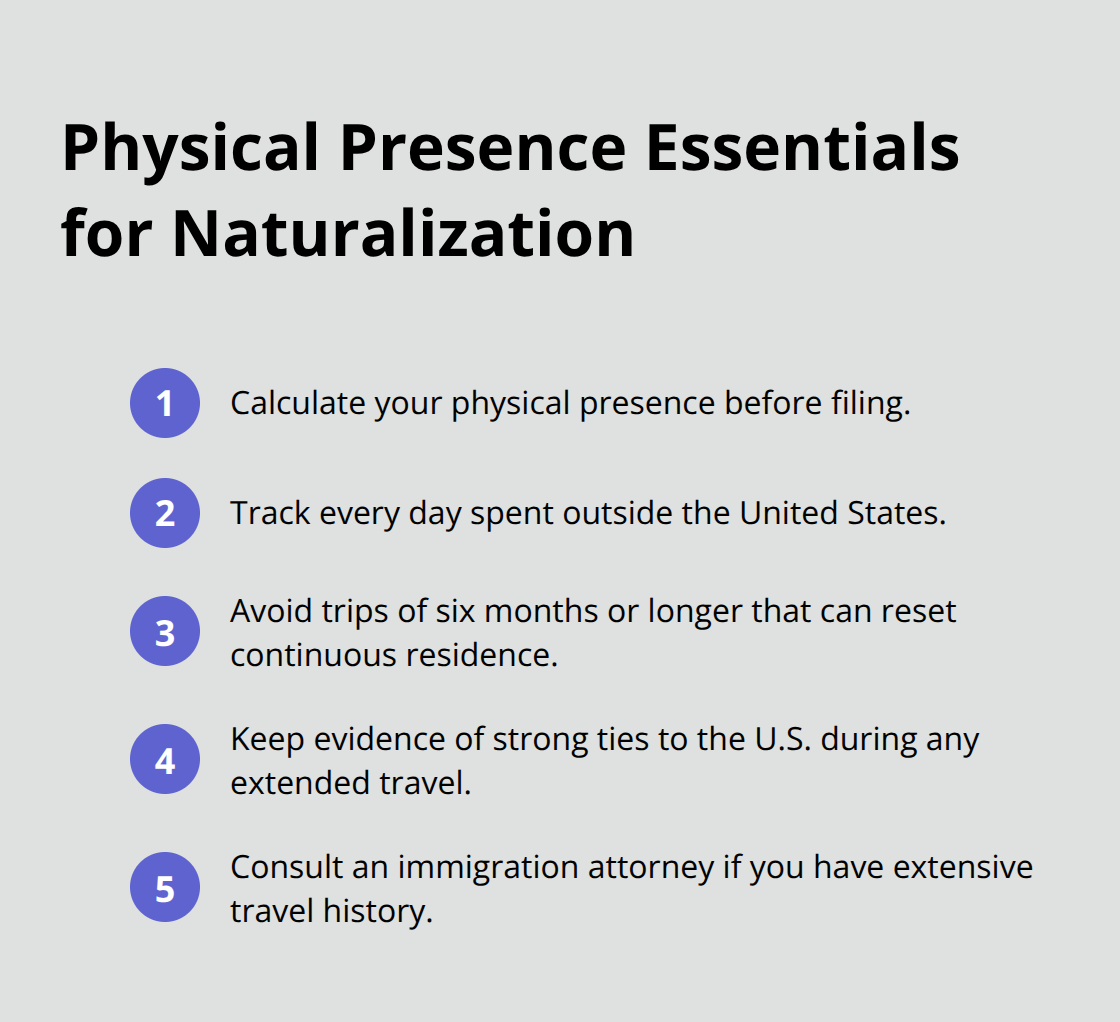
If you take a six-month trip abroad, that single journey could eliminate months of qualifying time, forcing you to wait longer before reapplying.
Demonstrating Good Moral Character
Good moral character is a requirement that trips up more applicants than any other single factor. USCIS interprets this broadly, examining your criminal history, traffic violations, financial responsibility, and truthfulness on applications. Even minor infractions matter. A DUI conviction, unpaid taxes, or multiple traffic tickets within your residency period can trigger a denial. The agency does not publish a written checklist of disqualifying offenses, which means your specific situation requires careful evaluation.
Misdemeanor convictions generally do not automatically disqualify you, but felonies do, with very limited exceptions. You must also disclose everything accurately. If USCIS discovers you omitted information about past arrests or convictions, your application faces immediate rejection, and you could face deportation proceedings. Background investigations are thorough. USCIS cross-references fingerprint records with FBI and state law enforcement databases, so hiding anything is futile.
If you have any criminal history, convictions, or arrests, discuss this with an immigration attorney who can assess your specific situation and determine whether naturalization is viable right now or if waiting longer improves your chances significantly. An attorney can also help you understand how your particular circumstances affect your eligibility before you invest time and money in the application process.
How to Navigate the N-400 Application and USCIS Process
Completing Form N-400 with Accuracy
Form N-400 separates applicants who succeed from those who face rejection, and the difference almost always comes down to meticulous attention to detail and honest answers. USCIS receives over 800,000 naturalization applications annually, and the agency rejects thousands each year for preventable errors. Your form must match every detail in your immigration file, from your green card number to your previous addresses. Inconsistencies between your N-400 and prior USCIS documents trigger requests for additional evidence or outright denials.
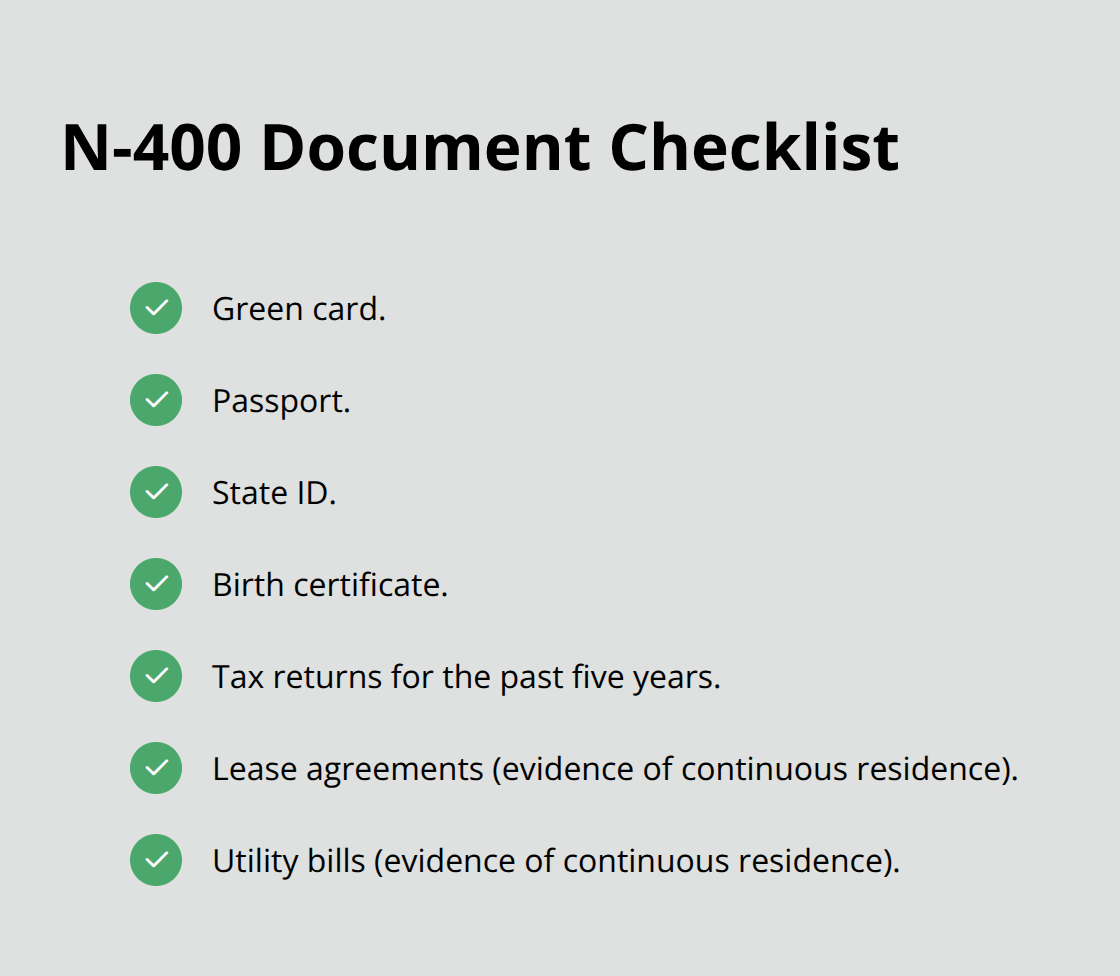
Most applicants rush through the form in a few hours, but you should spend at least a week on it, reviewing each answer multiple times before submission. The application fee is $640, plus an $85 biometrics fee, so investing time upfront saves you money and months of delay. Gather all supporting documents before you start writing: your green card, passport, state ID, birth certificate, tax returns for the past five years, and evidence of continuous residence like lease agreements or utility bills.
If you have changed your name, moved frequently, or have any gaps in your residence history, document everything clearly. USCIS will cross-check your answers against Social Security Administration records, IRS files, and state databases, so accuracy matters far more than presenting yourself in the best light.
The Biometrics Appointment and Background Investigation
After you submit your application, USCIS schedules a biometrics appointment where officials take your fingerprints and photograph. This appointment typically occurs within two to three months of filing, and missing it results in automatic denial. Bring your appointment notice and valid ID; the process takes about 15 minutes.
The real investigation happens behind the scenes as USCIS runs your fingerprints through FBI databases and state law enforcement records. Officials cross-reference multiple government systems to verify your identity and background. This thorough vetting protects the integrity of citizenship and explains why accuracy on your N-400 matters so much.
Your Naturalization Interview
Your naturalization interview typically occurs four to six months after you file and determines your English proficiency and civics knowledge. USCIS evaluates your English through conversation during the interview itself, not a formal test, so speaking clearly and honestly matters more than perfect grammar. The officer will ask you questions about your background, residence history, and commitment to the Constitution.
The civics test is far simpler than applicants imagine: USCIS asks up to ten questions from a pool of 100 publicly available civics questions about U.S. government, history, and the Constitution. You need to answer at least six correctly to pass. Study these 100 questions for two to three weeks, and you will feel prepared. Many free resources exist online, including the official USCIS civics test study materials.
Interview Preparation and Performance
Arrive at your interview well-rested and bring all requested documents in a folder. Answer questions directly without volunteering extra information that the officer did not ask for. If you do not understand a question, ask the officer to repeat it rather than guessing.
Your performance during the interview can make or break your application. Officers assess not just your answers but your demeanor, honesty, and willingness to engage with the process. Inconsistencies between your interview answers and your N-400 form will raise red flags and may result in a denial or request for additional evidence.
If you have any concerns about your background, criminal history, or ability to pass the civics test, an immigration attorney can help you prepare and assess your realistic chances before you invest time and money in the application. At Law Offices of Jeffrey A. Thompson, we assist clients in navigating this process, from paperwork to overcoming legal hurdles. With proper preparation and honest answers, most applicants pass their interviews and move forward to the oath ceremony.
Common Mistakes That Delay or Deny Applications
Form Errors and Documentation Gaps
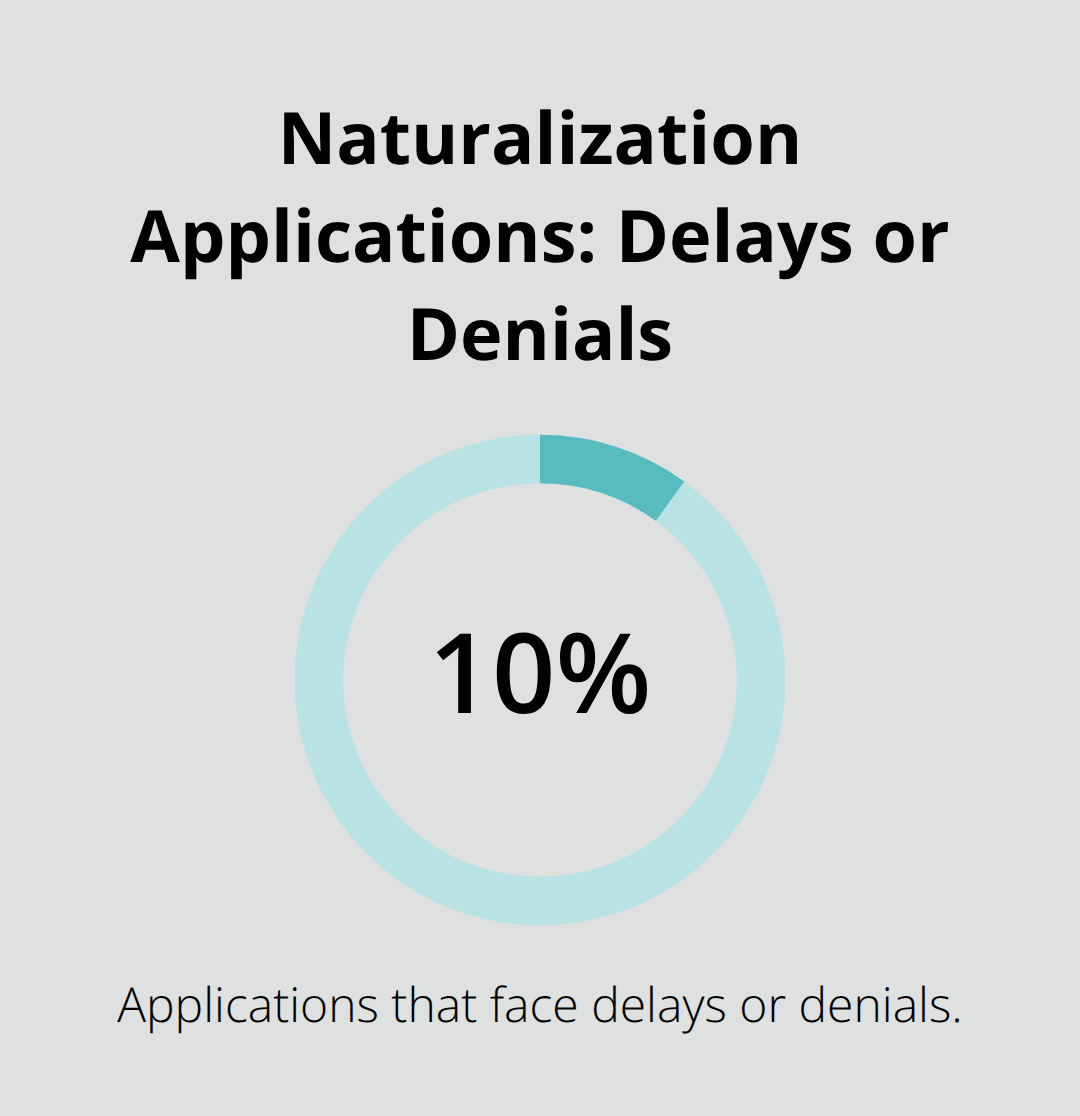
USCIS processes over 800,000 naturalization applications annually, and roughly 10 percent face delays or denials.
Form errors top the list of preventable mistakes. Applicants rush through N-400 submissions, mismatching dates, addresses, or employment history with their immigration files. When your form contradicts prior USCIS documents, the agency requests additional evidence or outright rejects your application. One discrepancy between your green card application and your N-400 can trigger months of delay. The application fee is $640 plus an $85 biometrics fee, so submitting an error-free form saves money and time.
Spend at least a week reviewing your N-400 before submission. Verify every detail matches your immigration file exactly. Gather supporting documents beforehand: your green card, passport, state ID, birth certificate, tax returns for the past five years, and evidence of continuous residence like lease agreements or utility bills.
Continuous Residence Violations
Many applicants underestimate how international travel affects their timeline. A single six-month trip abroad resets your continuous residence clock, forcing you to wait years longer before reapplying. USCIS defines continuous residence strictly: you cannot take extended absences without documenting your intent to return to the U.S. If you traveled abroad for more than six months during your qualifying period, your application will face denial.
Calculate your physical presence carefully before filing. Track every day outside the U.S. during your qualifying period. If you have traveled extensively, verify your continuous residence calculation with an immigration attorney before submission. This step prevents costly rejections.
English and Civics Performance Issues
English and civics performance issues round out the top three reasons for denial. Applicants who score below 6 out of 10 on the civics test fail immediately, and those who cannot communicate clearly during their interview face rejection. Unlike the civics test (which pulls from 100 published questions), English proficiency gets evaluated through conversation. If you speak haltingly, struggle to understand the officer’s questions, or provide incoherent answers, the officer will note deficiencies in your file.
Study the 100 civics questions for two to three weeks before your interview. Practice answering questions aloud under interview conditions. Free resources exist online, including official USCIS civics test study materials. If English is not your first language, realistic practice matters far more than cramming facts.
Criminal History and Good Moral Character
Criminal history creates the most serious barrier to naturalization. Good moral character determinations examine your criminal record, traffic violations, financial responsibility, and truthfulness on applications. Even minor infractions matter. A DUI conviction, unpaid taxes, or multiple traffic tickets within your residency period can trigger a denial. Felonies almost always disqualify you, with very limited exceptions.
You must disclose everything accurately. If USCIS discovers you omitted information about past arrests or convictions, your application faces immediate rejection, and you could face deportation proceedings. Background investigations are thorough-USCIS cross-references fingerprint records with FBI and state law enforcement databases, so hiding anything is futile. If you have any criminal history, convictions, or arrests, discuss this with an immigration attorney who can assess your specific situation and determine whether naturalization is viable right now or if waiting longer improves your chances.
Final Thoughts
Naturalization becomes achievable when you understand citizenship by naturalization requirements and prepare with precision. The path forward demands accuracy on your N-400 form, honest disclosure of your background, and realistic assessment of your eligibility before you file. One form error, one undisclosed arrest, or one extended trip abroad can derail your entire application and cost you months or years of delay.
Calculate your physical presence and continuous residence with precision before you submit anything. Gather all supporting documents, study the 100 civics questions for several weeks, and review your form at least five times before submission. If you have any criminal history, traffic violations, or gaps in your residence record, professional guidance protects you from investing time and money in an application that may fail.
We at Law Offices of Jeffrey A. Thompson assist clients in navigating immigration matters, from paperwork to overcoming legal hurdles. If your background raises concerns or you want expert review of your eligibility before filing, contact our office for a consultation.
Share this post: