Child Immigration Options Brockton: Family-Based Paths to Residency
November 13, 2026
Bringing a child into your family through immigration involves multiple legal pathways, each with distinct requirements and timelines. At Law Offices of Jeffrey A. Thompson, we help Brockton families navigate child immigration options that align with their circumstances.
Whether you’re sponsoring an immediate relative, pursuing humanitarian visas, or exploring adoption-based immigration, the process demands careful attention to documentation and legal procedures. Our team guides you through every step to protect your child’s rights and achieve your family’s goals.
Family-Based Sponsorship Pathways for Children
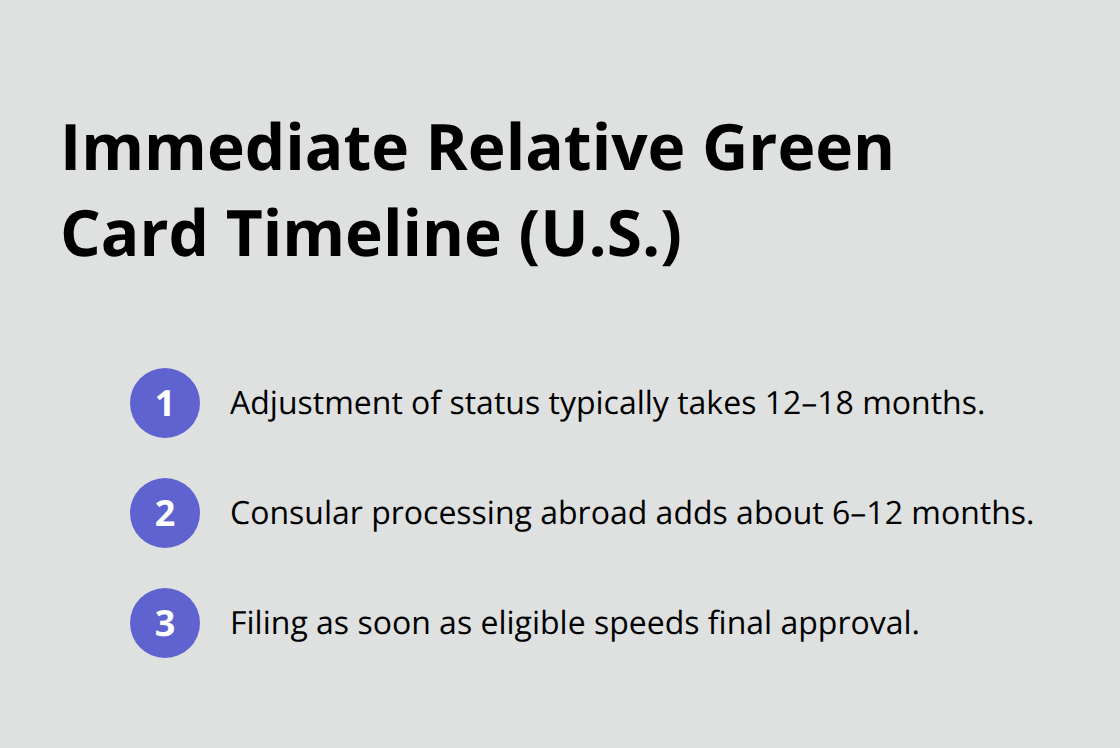
The fastest route to permanent residency for children involves sponsoring them as immediate relatives of U.S. citizens. Unmarried children under 21 of U.S. citizens qualify as immediate relatives and face no annual visa caps, which means no wait times beyond standard processing. This immediate relative category moves significantly faster than other family-based options because it bypasses the annual numerical limitations that affect other categories. If you’re a U.S. citizen at least 21 years old, you can file Form I-130 on behalf of your child right now without waiting for visa availability. The process typically takes 12 to 18 months from filing to green card approval when your child adjusts status within the United States. However, if your child lives abroad, consular processing adds roughly 6 to 12 additional months to the timeline. Filing immediately produces the fastest results if you meet the immediate relative criteria, as the sooner you petition, the sooner your child can secure permanent resident status.
Understanding Family Preference Categories
If you’re a permanent resident or a U.S. citizen sponsoring adult children or siblings, your case falls into family preference categories that come with annual visa caps and substantially longer wait times. Children under 21 with a permanent resident parent fall under the F2A category, where wait times fluctuate annually based on visa availability and country of origin. Adult unmarried children aged 21 or older of U.S. citizens fall under the F1 category, where current processing can stretch several years depending on the visa bulletin data from the Department of State. Married children of U.S. citizens face even longer delays under the F3 category. The Child Status Protection Act offers protection if your child turns 21 before the visa becomes available, potentially preserving their dependent status under specific conditions. You should track the visa bulletin monthly on the Department of State website to monitor your priority date and understand realistic timelines for your situation.
Financial Sponsorship and Documentation Requirements
Filing a petition requires you to demonstrate your ability to financially support your child through an Affidavit of Support Form I-864 financial sponsorship. USCIS sets income thresholds based on household size and the federal poverty guidelines. You must gather birth certificates, proof of the parental relationship, evidence of your U.S. citizenship or permanent resident status, and recent tax returns or employment letters showing stable income. If your income falls short, you can add a co-sponsor who meets the financial requirements. You should provide proof through a driver’s license, lease or mortgage documents, utility bills, and employer correspondence to avoid delays during processing. You should start collecting these documents now rather than waiting until you file, as incomplete submissions trigger Requests for Evidence that extend processing by months. The next section covers the humanitarian and specialized visa options available when family sponsorship alone does not address your child’s circumstances.
Beyond Family Sponsorship: When Your Child Needs Specialized Immigration Pathways
When standard family-based sponsorship doesn’t fit your situation, specialized visa categories exist for children facing dangerous circumstances or unique family structures. These pathways require different documentation and often move faster than traditional family preference categories, but they demand precise legal execution. We at Law Offices of Jeffrey A. Thompson recognize that one-size-fits-all sponsorship rarely works for vulnerable children, and we help Brockton families identify the right specialized option for their circumstances.
Special Immigrant Juvenile Status for Vulnerable Children
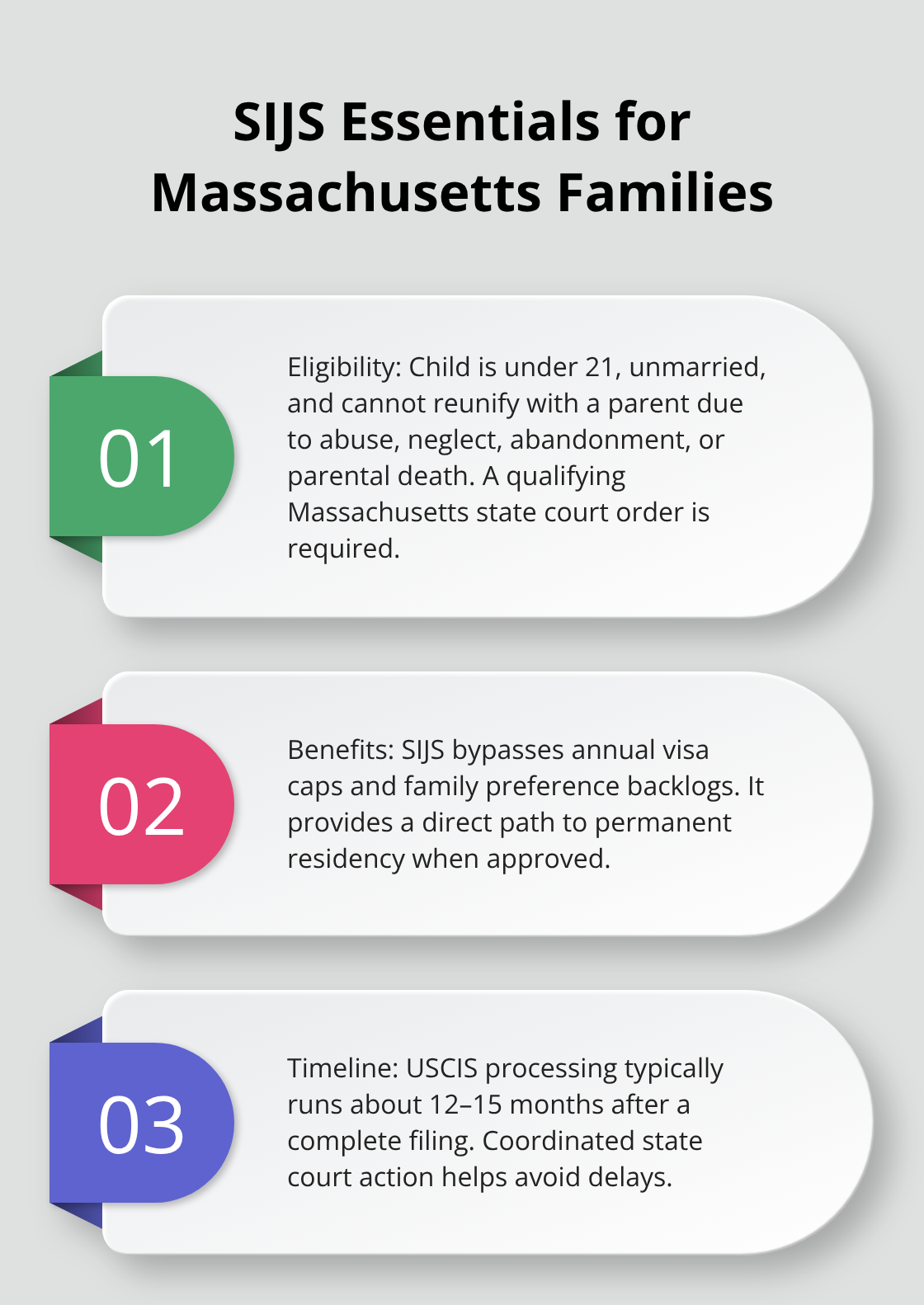
Special Immigrant Juvenile Status addresses children who cannot reunify with either parent due to abuse, neglect, abandonment, or parental death. If your child is under 21, unmarried, and has experienced one of these situations, SIJS offers a direct path to permanent residency without waiting years for family preference visas. Unlike family-based categories, SIJS bypasses annual visa caps entirely, meaning no numerical limitations affect your timeline. The Department of State reports that juvenile status determinations have increased substantially as more families recognize this option for children facing family instability.
You must first obtain a court order from a Massachusetts state court declaring that your child cannot reunify with at least one parent and that SIJS approval serves the child’s best interests. This court order becomes your foundation for the USCIS petition, and experienced counsel ensures the state court process moves smoothly. Processing typically takes 12 to 15 months once USCIS receives your complete petition, significantly faster than F1 or F3 family categories that can stretch five to ten years.
Humanitarian Visas for At-Risk Children
Humanitarian visas for at-risk children follow a different track, typically reserved for children facing severe persecution based on political opinion, religion, ethnicity, or other protected grounds. These visas require documentary evidence of danger in the child’s home country and often involve international organizations or government referrals rather than individual family petitions. The application process differs substantially from family-based sponsorship, as government agencies assess persecution claims rather than family relationships.
Adoption-Based Immigration Pathways
Adoption-based immigration offers another pathway for families seeking to adopt children from abroad or formalize guardianship relationships. If you adopt a child before age 16, that child qualifies as an immediate relative once the adoption finalizes, eliminating visa caps and wait times. Domestic adoptions completed before the child turns 16 also qualify for immediate relative status, provided USCIS approves the adoption petition and home study.
The adoption must be finalized in a U.S. court or recognized foreign jurisdiction, and you must demonstrate that you meet income requirements and can provide a stable home. Documentation for adoption-based cases includes the finalized adoption decree, evidence of custody transfer, the child’s birth certificate, and proof of your financial stability. Processing moves faster than family preference categories because adoptive children become immediate relatives, typically completing within 12 to 18 months.
Navigating Documentation and Legal Obstacles
Each specialized pathway carries distinct documentation requirements that differ from standard family sponsorship. SIJS cases demand state court orders and evidence of parental inability to reunify, while humanitarian visas require country conditions documentation and persecution evidence. Adoption cases require finalized decrees and home study approvals. Gathering these materials correctly from the start prevents delays that can extend timelines by months. The next section addresses the common obstacles that families encounter during child immigration processing and how to overcome them.
What Derails Child Immigration Cases
Documentation Errors That Halt Processing
Missing or incorrect documentation stops cases for months. USCIS reports that Requests for Evidence account for significant processing delays, and many families submit incomplete birth certificates, relationship proofs, or financial affidavits on the first attempt. You need certified copies of birth certificates from the vital records office in the child’s state or country of birth, not photocopies or uncertified versions. For proof of relationship, affidavits alone rarely satisfy USCIS; you need hospital records, school enrollment documents showing the parent-child relationship, or DNA test results if biological parentage is contested.
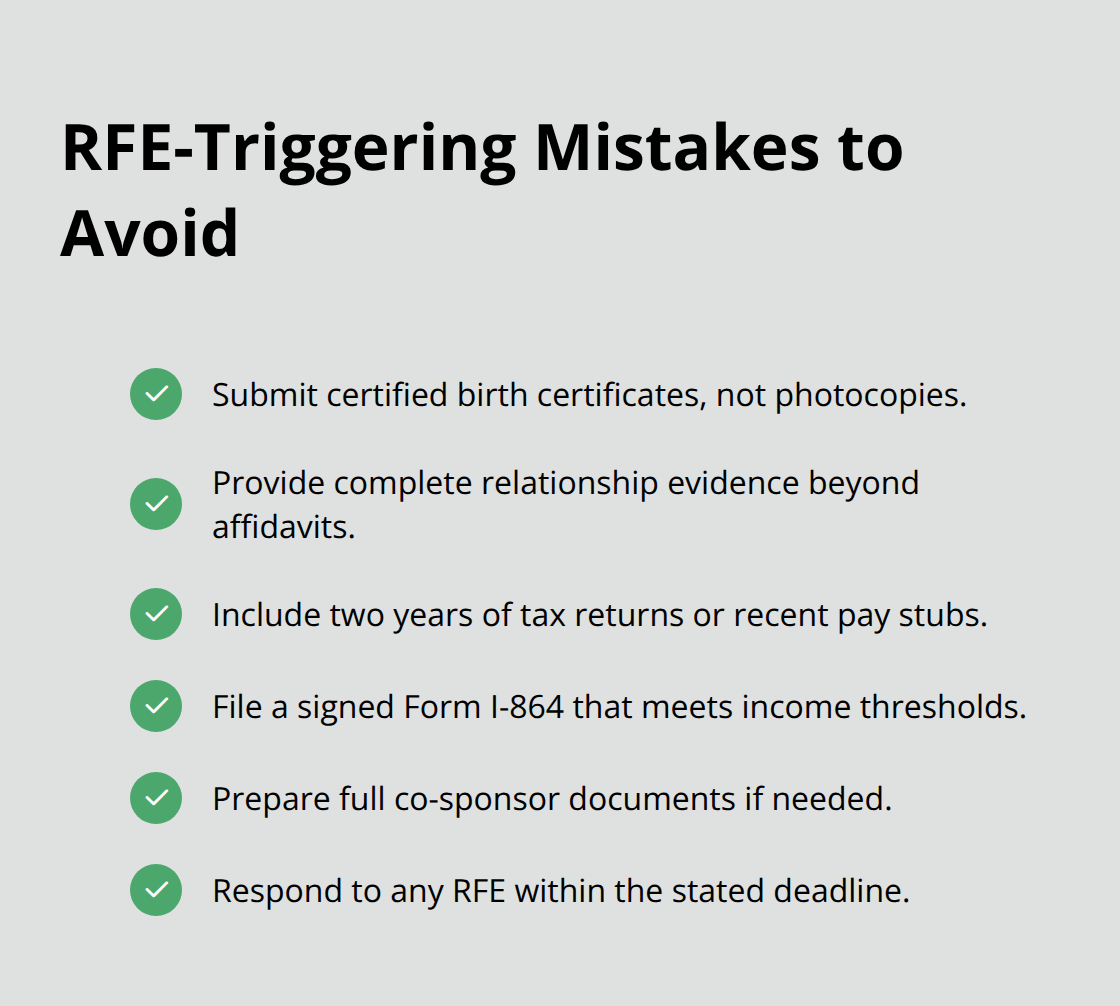
Financial documentation must show at least two years of tax returns or recent pay stubs paired with a signed I-864 affidavit. If your income falls below federal poverty guidelines, your co-sponsor’s documentation must be equally complete. When USCIS issues an RFE, you typically have 30 days to respond, and families who miss this deadline lose their place in processing and must refile. Gathering every document now rather than assembling materials after filing prevents delays at this stage from compressing your entire timeline by months.
Biometrics and Medical Examination Delays
Processing backlogs create secondary obstacles that families cannot control but must anticipate. USCIS biometrics appointments in the Boston and Lawrence area now schedule 8 to 12 weeks after filing, whereas historically they occurred within 4 to 6 weeks. Your medical examination cannot occur until biometrics completes, which pushes the entire timeline backward. These delays stack on top of each other and extend your overall processing period substantially.
Visa Availability and Priority Date Complications
If your child falls into F1, F2A, or F3 categories, the Department of State Visa Bulletin determines when your priority date becomes current. These dates move backward in some months when demand exceeds available visa numbers. Interviews typically last 20 to 45 minutes, but scheduling delays push interview dates further out as USCIS offices manage higher caseloads. Financial complications arise when sponsors cannot meet income thresholds or when co-sponsors become unavailable mid-process, forcing you to identify replacement sponsors and resubmit financial documentation.
Age-Out Risk and Timing Pressures
If your child is aging toward 21, the Child Status Protection Act provides relief only if I-130 petition was filed before child’s 21st birthday, so timing matters enormously for older children in family preference categories. Filing immediately once you confirm eligibility and working with experienced counsel prevents the documentation errors that trigger months of additional delays. The safest approach involves anticipating these obstacles before they derail your case.
Final Thoughts
Child immigration options in Brockton require strategic planning that starts before you file any paperwork. Families who work with experienced counsel avoid the documentation errors that trigger Requests for Evidence and extend processing by months. Those who anticipate biometrics delays, visa availability complications, and age-out risks position their cases to move forward without unnecessary obstacles.
We at Law Offices of Jeffrey A. Thompson understand that your child’s future depends on selecting the right pathway and executing it correctly from the start. An experienced attorney identifies which visa category fits your family’s circumstances-whether immediate relative sponsorship, SIJS, humanitarian visas, or adoption-based immigration-and guides you through paperwork preparation and complete documentation gathering. We handle communications with USCIS, respond to requests for evidence promptly, and address legal obstacles that could otherwise derail your case.
Contact Law Offices of Jeffrey A. Thompson to discuss your family’s child immigration options in Brockton and take the first step toward achieving your immigration goals. We provide compassionate, knowledgeable guidance tailored to your specific circumstances. Your child’s rights and your family’s future matter-let experienced counsel help you navigate this complex process.
Share this post: